Blog

¡Ceviche!


Ours pals Chris and Grant hail from northern Minnesota, land of 10,000 lakes, most of which have great fishing. Among the various options to go after, panfish are a personal favorite. They’re fun, feisty, and you can harvest a very decent catch relatively guilt free, ’cause those suckers breed like there’s no tomorrow.

But wait a minute, you ask, what are panfish anyway? Great question! The term has some wiggle room is the broadest answer; panfish mean different things to different regions and fishers. Some folks will tell you it means any species that, fully grown, fit well in the ol’ cast iron frying pan, while others claim it’s because the fish themselves are frying pan shaped. I’ve heard Crappie, Blue Gills, Sunfish, Perch, Pumpkin Seeds, and Small Mouth Bass all referred to as pan fish. To me, any of these small, plentiful species qualify for the term.

Anyway, I digress; back to why Chris got in touch. She wrote, “We caught lots of Crappies. The fillets are thin and the flesh is quite soft, but they’re nice and sweet. Any tips?”

Sure do; while a simple butter poach is lovely, or a sauté in olive oil, lemon, and dill, sometimes it’s fun to go a bit farther afield and try something new. Ceviche is the ticket. This favorite of the coastal Americas derives from an Incan dish of fish cured with salt and chiles, and marinated in passion fruit juice. The modern incarnation in its simplest form is fresh, raw fish cured in citrus juices and seasoned with chiles. Ceviche is fabulous with any white fleshed fish, and that certainly includes the pan varieties. 

If you’ve never tried making or eating ceviche and are maybe a bit squeamish about it, don’t feel bad, so was Chris; she wrote, “Have never had anything like that before, so I was wary. Not anymore! I knew you wouldn’t steer me wrong!” (That’s my kinda endorsement). 

Nonetheless, what makes folks nervous is the lack of cooking involved in making ceviche. Technically speaking, cooking requires heat, so ceviche isn’t cooked, but it’s not raw either; it’s fish cured in a citric acid bath. Fact is, both processes initiate a chemical reaction called denaturation, which alters the proteins in the fish chemically and physically. The end result of either method is fish that becomes firm to the touch, opaque to the eye, and a ‘cooked’ taste.

So, how long should fish be marinated in citrus juices in order for denaturation to take place? That depends on the variety of fish you use, and how well you like your fish cured. Just a few minutes in citrus juices and your fish will start to go opaque, though the interior will still look raw and the flesh won’t have firmed up yet. Just as with cooking, you can marinate too long, leading to a tough texture and an overpowering citrus note. The key to even, dependable results is to always butcher your fish down to roughly bite sized pieces. Doing so increases the fish’s surface area and makes it easier for the citric acid to do its thing. Generally, the flakier and softer the fish, the faster it will cure in citrus. Watching for the complete opaque appearance and firm feel you expect when you cook fish will give you good results.

The freshness of the fish you choose to marinate is a critical consideration, because citric acid curing doesn’t kill bacteria the way cooking does. If you’ve got any concern about this, it’s best to freeze your fillets at or below -4° F for a good week prior to making ceviche. That will kill potential parasites like tapeworms and roundworms. Alternatively, you can do a quick blanch with your fish, dropping the fillets into boiling water for a full minute, then immediately plunging them into ice water to stop the cooking process, before you marinate it. This quick shock also helps softer fleshed fish maintain a firmer texture when cured.

There’s a world of variety waiting for you to explore once you wade in. Just varying the citrus creates truly unique dishes, so try lemon, lime, blood orange, grapefruit, or yuzu. Same goes with the chiles; from light heat and fruity to truly fiery, each one creates a different finish. A touch of a varietal vinegar does the same thing. A bit of mango in your finished mix beautifully compliments the sweetness of the fish, and on and on.

Here’s the one I did up for Chris; It’s a pretty classic swing at the dish, and super easy to make

1 Pound Fish
6-8 Limes
2 medium varietal Tomatoes
3-4 Green Onions (Sweet Onion is fine as a sub)
1 stalk Celery
1-2 Jalapeño Chiles (Again, you can vary the variety as you like)
1/2 Cup fresh Cilantro

Cut fillets into bite size pieces. 

Place fish in a non-reactive bowl and cover completely with lime juice.

Refrigerate covered for 6-8 hours, until the fish has turned completely opaque.

When the fish is ready, fine dice all the remaining veggies and mix well, including the olive oil.

Discard the marinating juice from the fish.

Add the juice from 2 fresh limes and the cured fish to the mix and toss gently.

Serve with fresh tortillas, crema, guac, and ice cold beer!


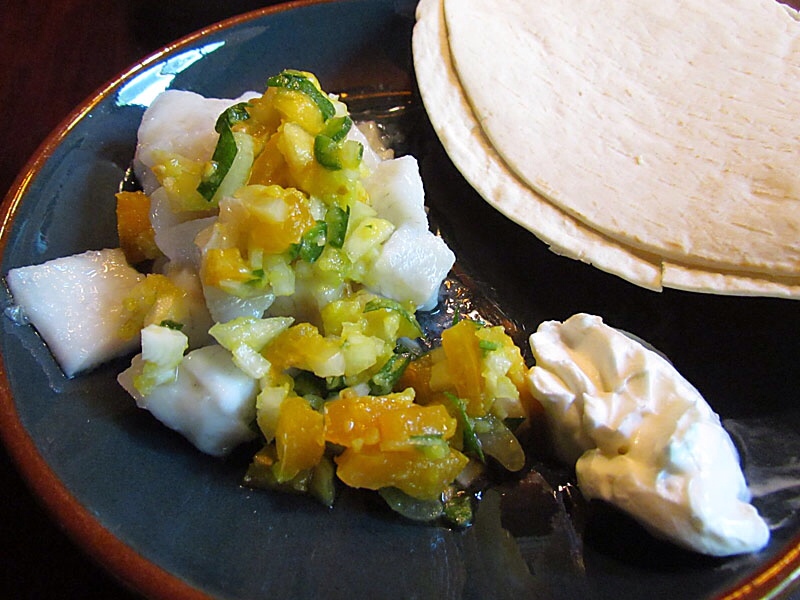
Here’s Chris’ gorgeous plate, made with Golden Jubilee heirloom tomatoes.
Les Gastriques


So, if you’re a lover of food porn TV, you have without a doubt heard the term ‘Gastrique’ thrown about by an Iron Chef or Chopped contestant. While ya might hear that term and nod sagely, do ya know what one is and how to make it? I’ll bet you do, though you might not know it.  

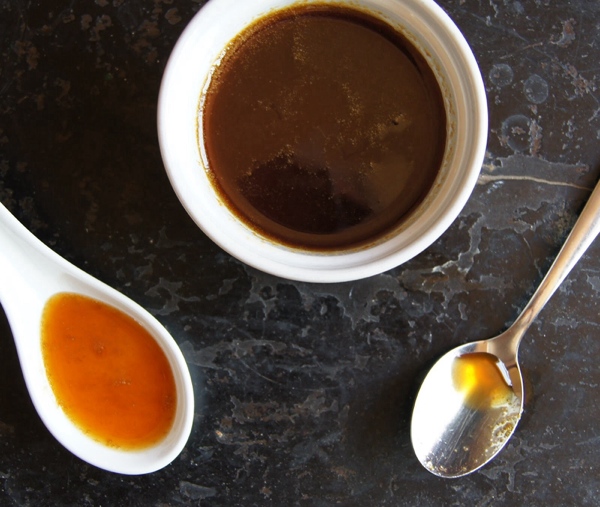
Stripped of the fancy moniker, a gastrique is just a sweet-and-sour sauce designed to compliment and coax out the bold flavor notes of a protein; they work well on beef, pork, chicken, fish, meaty vegetables like mushrooms and eggplant, and even tofu, (in fact they’re spectacular with tofu), even sweet stuff.

Gastriques are easy to make and visually stunning; they’ll make a simple dish look and taste like something turned out by a seasoned pro. Simply caramelize a sweetener and blend it fifty-fifty with vinegar, (the acid, or sour component), and you’ve formed a sauce of sublime beauty. 

Gastriques are wonderfully tweakable, given the wide of sweeteners and vinegars available to us these days. Make the same one with different variants and you’ll have a bunch of distinct sauces, each with its own charm. Consider vinegar; there’s everything from the spicy, sharp notes of cider, to the amazing depth and subtlety of good balsamic. Varietal wine vinegars, sherry, champagne, rice, malt – the other day I saw blood orange and fig vinegars in the store, and all of these you can make yourself at home, too, so once again, the sky’s the limit. For sweeteners, you might choose sugar, (white, brown, dark brown, turbinado), honey, agave nectar, maple syrup, molasses, and so on.

 Additional flavor notes can be supplied by a myriad of things, from booze, to fruit, veggies, herbs and spices. Gastriques can stand on their own with a main ingredient, or act as an adjunct with heavier partners like a pan sauce made after searing a protein. 

 Regardless of what you decide to make, the process is the same;

Combine the sweetener and vinegar in a sauce pan over low heat.

Reduce the sauce, stirring occasionally, until you’ve got roughly 50% of your original volume. 

When you’re just about to the volume and consistency you like, add your additional flavor notes, heat through, and reduce a bit further if need be.

When the gastrique is right, it should nicely coat a spoon.

Take a taste, and that’s it, you’re done.

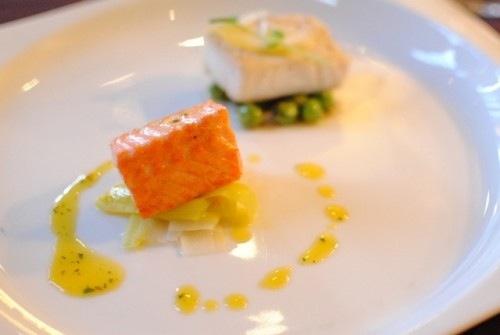
 Gastriques are pretty but potent, so use them sparingly. You don’t have to get uber fussy, but this is one of those cases where you want to pour or brush a little line across your plate, or around your entrée; a big ol’ puddle of gastriques is too much. Also, you need to pair wisely. It’s like with like, so  a stronger flavored protein like duck or game will like a strong gastrique, like brown sugar/malt vinegar/blackberry. Likewise, something more delicate like chicken will go better with agave nectar/champagne vinegar/kiwi. Citrus or herb variations go great with seafood and veggie dishes. Don’t forget cheeses; from Brie to Myzithra, a gastriques can turn cheese into a serious appetizer just like that. And that ain’t all; try a slightly sweet favored fruit gastrique over homemade ice cream, on a fresh granita, or crepes. You can even use a gastriques in a cocktail where you might normally opt for bitters. Once you get hooked, the sky is the limit.

 As I mentioned above, gastriques can also be combined with other sauces; when you want to try this, think of the gastrique as specifically providing a tangy element to your overall presentation. For instance, you might use a honey/malt vinegar/tomato/lemon gastrique to provide that function for a pan sauce made from a whole roasted chicken.

 Gastriques will keep for two or three weeks refrigerated in an airtight bottle. Repurposed hot sauce bottles are perfect for the task. That said, I like them fresh best, so I build in small batches that will get used pretty quickly. 


Sherry Gastrique is great for chicken, fish, and veggie dishes and sides. Just blend all three ingredients from the get go and reduce accordingly. Raspberries also go great with this combination of sweetener and vinegar.

1 Cup Champagne Vinegar

1 Cup Amber Agave Nectar

1/2 Cup Dry Sherry


Blackberry Gastrique is seasonal, of course, but if you pick ’em, then freeze ’em so you’ll have them year round. This goes great with beef, pork, and meaty mushrooms like porcini. Blueberries and cranberries also are great with this combination of sweetener and vinegar.

1 Cup Malt Vinegar

1 Cup dark brown Sugar

1 Cup fresh Blackberries

Purée the blackberries in  by blender, then add them when your sugar/vinegar reduction is roughly 60% of initial volume. Continue to reduce until you hit 50%.

Catfish? yeah, catfish!


I’m a goin’ fishin’…

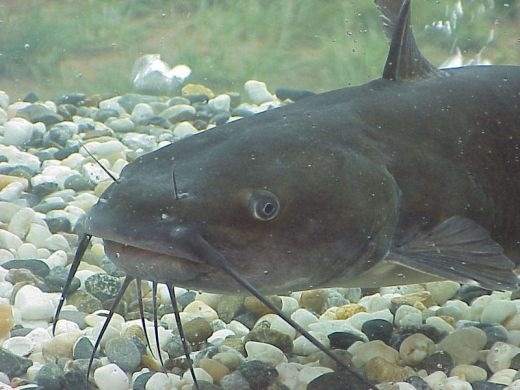
Catfish kinda piss me off fishing-wise. I’ll do the bobber thing and all, but when those big suckers hit, they just kinda tug, ya know? I’d like a little more action, personally. That’s probably because once, and once only when fishing for bass, one hit my fly and took me for a ride that was better than the large mouth I was after. He was 6 pounds and fought like a real cat – why can’t they all do that?

Anyway catfish is one of those things people either like or they don’t, like oysters or single malt scotch. I think it’s the gamy flavor that does it. There’s not a lot about the fundamentals of that taste you can alter, because they’re bottom feeders, and as such, wild or farmed, they taste like they do. Here are a couple recipes, one for purists, and one for the not-so-sure.

Love Catfish? Then this ones for you. All too often, catfish is overloaded with breading and heavy flavors that disguise the fish. Strip all that away and try this; the butter poach, fresh citrus and light herbs will complement rather than cover.

4 Catfish fillets
1 fresh Lemon
3 Tablespoons Butter
1 Tablespoon dry white Wine
1/2 teaspoon Sea Salt
A few twists fresh ground Pepper
A shake or two Tabasco Sauce

Preheat oven to 200° F

Heat a cast iron skillet large enough to handle all 4 fillets over medium flame.

Cut lemon in half, then cut half into 1/8 pieces for the table. Zest and juice the other half and set aside.

Melt butter in skillet; watch the butter closely. As soon as it finishes foaming, put the fillets into the pan.

Tilt the pan enough to make the butter pool; with a spoon, ladle hot butter over the fillets repeatedly, as the butter begins to brown. Continue ladling evenly over all the fillets until the butter is quite brown, but don’t let it start to burn. This poaching process will take about 4-5 minutes.

Transfer the fillets to an ovenproof platter and slip that into the oven. Turn the oven off and keep the door closed.

Return the skillet to a medium-low flame. Add the white wine, lemon zest and juice, salt, pepper, and. Tabasco. Whisk with a fork to incorporate. When all is well blended, add one more tablespoon butter, blend that and heat through, then remove the skillet from the heat.

Serve a fillet or two each, as you see fit. Drizzle each fillet with the pan sauce. Serve promptly with some more of that dry white wine, fresh crusty bread, and a nice green salad.


Not so sure you love catfish? Try this zippy cornmeal fried version. Between the buttermilk soak, crunchy light coating and the house made rémoulade, you’ll be hooked for sure.

4 Catfish fillets
1/2 Cup fine ground Yellow Cornmeal
1/2 Cup Wondra Flour
1-2 teaspoons flaked Tabasco Chile, (crushed cayenne chile is OK, but not as fruity)
1 teaspoon sweet smoked Paprika
1 teaspoon Sea Salt
1/2 teaspoon freshly ground Pepper
2-3 Cups Vegetable oil for frying
1 fresh Lemon

Place oil in a 10″ to 12″ cast iron skillet over medium-high heat, with a candy or heat-proof thermometer handy.

Preheat oven to 200° F; fit a wire cooling rack within a baking sheet lined with paper towels and have that ready beside your skillet.

In a mixing bowl, add the cornmeal, flour, chile, paprika, salt, and pepper in a shallow dish and combine thoroughly.

Cut fillets in half lengthwise, so you’ve got 8 pieces total. Pat each half fillet dry with a clean paper towel.

Toss each fillet one by one into the coating mix, making sure they’re evenly and thoroughly covered. Tap each fillet off on the edge of the bowl to remove excess coating.

Check your oil temp; when you’ve got 350° F, adjust your heat to maintain that.

Fry fillets in twos, so that the oil doesn’t lose temperature to too much fish being introduced. Fry each side for about 2-3 minutes until golden brown, flipping once.

Use a slotted spoon or tongs to transfer finished fillets to the wire rack. Sprinkle each lightly with a but more sea salt. Place in the oven to stay hot until all your fillets are done.

Serve piping hot with lemon wedges, rémoulade, and a cold, local Extra Special Bitter Ale.


House Made Rémoulade

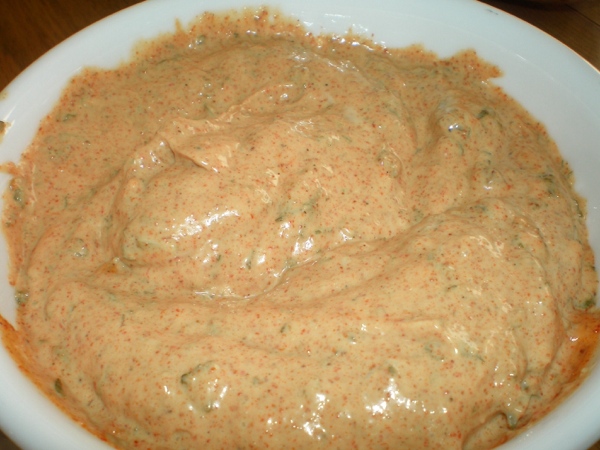
Rémoulade is, at heart, a mayonnaise with more goodies added to the mix. This classic sauce was created in France, but it’s been adopted and adapted to New Orleans cookery in many forms. Our take has a little sweet and a little heat and goes perfectly with cornmeal crusted catfish. If you’ve never made rémoulade at home, it’s time to try; it’s one of those little secrets that separates the pros from the wanna bees, and it’s really pretty easy to do. Here’s how.

PRODUCTION NOTES:
1. Get the freshest eggs you can when making mayo or rémoulade at home. This is an emulsion, which depends on the ability of the proteins in the egg yolks to stretch and encompass the oil; old eggs just don’t have the elasticity you need for this dish.
2. Have all your ingredients at room temperature before you start; that’ll allow the primary ingredients of this emulsion to mesh readily.
3. While you can make mayo or rémoulade with olive oil, the stronger flavor isn’t always complimentary; a light vegetable oil like canola will better allow the herbs and spices to shine in this recipe.

1 Cup Vegetable Oil
2 fresh, large Egg Yolks
1 tablespoon Dijon Mustard
1 fresh Lemon
1 teaspoon Tabasco Sauce
1 Jalapeño Chile
1 small sweet Onion
2 teaspoons Capers
1/4 teaspoon Sea Salt
1/4 teaspoon freshly ground Grains of Paradise

Zest and juice one half of the lemon.

Top, core, seed, and mince the jalapeño.

Mince 1 packed tablespoon of the onion.

Mince the capers.

Those ingredients can all be combine and set aside at this point.

In a non-reactive mixing bowl, combine the egg yolks and the Dijon mustard; whisk to incorporate thoroughly.

Continue whisking and slowly add the oil by pouring a very thin stream into the middle of the yolk and mustard blend. Watch the mixture, and pour slowly enough that the oil is constantly fusing with the yolk and mustard blend. Those proteins in the egg yolk, uncoiled by your whisking, are wrapping around air bubbles and the oil, allowing all of that to blend and remain combined. You’ll progress from a little yolk and mustard to a thicker, deeper pool of liquid with that mayo consistency you know so well.

Once all of the oil has been incorporated, whisk in the lemon juice and zest, Tabasco, salt and grains of paradise, until thoroughly combined.

Add the onion, jalapeño, and capers and blend thoroughly. Taste and adjust the seasoning with additional salt and grains of paradise as needed.

Transfer the rémoulade to an airtight container and refrigerate for at least an hour to allow the flavors to marry. Rémoulade will keep refrigerated in that airtight container for 2 or 3 days.

Tell the FDA it’s time for transparency.


I’ve posted my opinion on this issue many times. It’s time for all of us to take a little stand.

Here’s a Petition asking the FDA to take a stand on requiring proper GMO labeling. Click it, sign it, and share it. Whether or not we choose to eat things that are or contain GMOs ain’t to be up to each and every one of us, period.

Frankly, I sure as hell don’t trust big business to do it for me, or of their own volition. Let’s make ’em accountable, gang.