Spuds Three Ways


Ah, potatoes;
Do we ever get tired of them? Counting all the ways they’re enjoyed for all three daily meals, I’d say not.
Maybe you’re stuck in a rut for variety, though, and need a little push? I got yer back on this. Here’s a delicious trio to try, one over the top, one pretty healthy, and one in between.


Twice Baked

4 large Russet Potatoes
1 Cup heavy Cream
1/2 Cup Sour Cream
1 Cup Extra Sharp Cheddar Cheese
4 ounces Butter
4 strips thick cut Bacon
4 Green Onions
Sea Salt & fresh ground Pepper
Extra Virgin Olive Oil
Dash of Tabasco

Preheat oven to 325° F

Rinse your spuds and pat dry with a clean towel.

Coat whole spuds with olive oil by hand, place in a glass baking dish. Season the skins evenly with salt and pepper.

Slide the spuds into the oven and bake for about an hour, until the spuds are fork tender.

Fry bacon, dry on paper towels and chop to a 1/4″ dice.

Rinse, strip roots and any nasty stuff from green onions, and chop those to a 1/4″ dice.

Grate cheddar cheese.

When the spuds are ready, pull them out of the oven and let them cool just long enough to handle with a clean towel, (in other words, still quite hot).

Reduce oven heat to 250° F.

Cut the spuds into lengthwise halves, then carefully scoop the guts into a mixing bowl, keeping the skins intact.

Add cream, sour cream, half the cheese, bacon, onions and butter to spuds and blend thoroughly. Add salt and pepper to taste.

Refill the skins with the spud mixture, top with the remaining cheese and slide those guys back into the oven; bake for another 15 to 20 minutes.

Serve hot. Great by themselves, or with a nice salad. Pair with a nice Fumè or Dry Reisling.


Roasted

8 – 10 small potatoes, (try a red, white and blue variety)
1\2 Sweet Onion
1-2 cloves Garlic
1 small sweet Pepper, (red, yellow or orange as you please)
2″ sprig Rosemary
1/2 teaspoon Thyme
Sea Salt and fresh cracked Pepper
Extra Virgin Olive Oil

Preheat oven to 325° F.

Rinse and field strip onion, garlic and pepper, (in case you’re new here, ‘field strip’ means remove outer skin, cores, seeds and membranes, as needed.)
Rough chop onion and pepper into about 1″ pieces, quarter the garlic cloves.

Rinse, pat dry, and halve potatoes.

Toss spuds and veggies into a large mixing bowl. Add a couple tablespoons of EVOO, ( Extra Virgin Olive Oil), and toss to incorporate. Strip leaves from rosemary and add to bowl with thyme, salt and pepper. Toss to blend.

Throw everybody into a glass baking dish, and bake for 30 to 40 minutes, until potatoes are fork tender.

These are a great side for broiled fish, roasted game or bird.


Latkes, (AKA, best potato pancakes ever)

5 medium Russet Potatoes
2 medium Sweet Onions
3 medium Eggs
1/4 to 3/4 Cup Flour
1 teaspoon Sea Salt
1/2 teaspoon fresh ground Black Pepper
1/2 to 3/4 Cup Oil

For the flour, unbleached all purpose is fine, but try whole wheat pastry as well, it’s very nice indeed.

For the oil, stick to Sunflower, Canola, or Corn; they won’t add any heavy flavor notes to the latkes. And speaking of oil, oil temperature is critical to good results when frying; oil maintained at 350° F will ensure nice light, crispy results that don’t taste and feel soggy. Use a candy thermometer to track oil temperature, and always add foods to be fried sparingly to allow the temperature to stay where it needs to be.

Peel your spuds and toss them into a large mixing bowl filled with enough ice water to completely submerge them.

Skin and trim ends from onions. Toss them into the ice water with the spuds.

Add oil to a frying pan over medium high heat; you’ll want about 1/4″ of oil or so. Have your thermometer handy for gauging oil temp.

Drain your spuds and onions and pat dry with a clean paper towel.

Grate the potatoes and onions with the finer side of a hand grater, or use a food processor or blender if you prefer. The hand method gives the best results for my mind. You want a nice, consistent size and blend of spuds and onions.

Check your oil and adjust heat so you’re sitting right at 350° F.

Place a platter lined with paper towels in your oven and preheat to Warm.

Toss the spud and onion blend into a colander lined with paper towels and gently squash the mix to remove excess water.

Dry off that large mixing bowl and toss your spud/onion blend in.

Lightly beat the eggs by hand and add them to the spuds and onions, then add the salt and pepper.

Add flour 1/4 cup at a time until the mixture holds together on its own, like a chunky pancake batter.

Fill a large soup spoon with a heaping hunk ‘o batter. Slip that puppy into the hot oil and gently squash it down into a cake. Fry one side for approximately 3-5 minutes, until golden brown, then and fry the other side for another 2 to 3 minutes. Look for that nice golden brown on both sides.

Now slide those little golden beauties onto the paper towel covered platter in the oven and keep fryin’. Add a little more oil if needed and watch that oil temp.

Serve nice and hot with the applesauce and a little dish of sour cream, crèma or crème fraîche. Latkes deserve to be a meal and they won’t disappoint; pair with a local sparkler or hard cider.

Beautiful Baguettes


In France, every day includes a trip to a Boulangerie, the local bakery, for a baguette or two. If you love bread like I do, then there are few versions more likely to float your boat than this fabulous French staple. Now for a disclaimer; I took some baldy poetic license calling this post Baguettes, ’cause this ain’t Julia’s Pain Français. This is a quick and dirty, want some fresh bread now, rough loaf, but it’ll beat the shit outta anything from the store. That said, I’ve revised the process a bit to make this version a bit more flavorful and true to its name.

If you love bread like I do, then there are few version more likely to float your boat than this fabulous French staple.

This recipe came with my Kitchen Aid mixer; I know a bunch of y’all have one too, but it seems many have lost the little recipe book, which is really a wealth of good stuff. This one will make two beautiful baguettes.

7 cups all-purpose flour
2 packages active dry Yeast
2 1/2 Cups warm Water (110° F)
1 Tablespoon Sea Salt
1 Tablespoon Butter
1 Tablespoons Cornmeal
1 Egg White
1 Tablespoon ice water

As noted, this recipe is meant for a KitchenAid mixer, but you can certainly do it by hand.

Dissolve the yeast in the warm water in a mixing bowl that has also been warmed to about 100° F. Allow the yeast to bloom for about 5 minutes.

Add the flour, butter and salt to the water and yeast.

Using the dough hook for your KitchenAid, attach The bowl and slide the speed setting to 2; mix for 1 to 2 minutes, until everything is well incorporated.

Continue to knead on Speed 2 for 2-3 minutes longer.

Dough will begin to pull away from the sides of the bowl, but will still feel somewhat sticky; it’s important to make sure you stop kneading when the dough still is still sticky, 

Turn dough into a large lightly buttered bowl, and coat the dough evenly.

Cover with a clean, dry towel and allow to rise in a quiet, relatively cool spot, free from drafts, until the dough has doubled in bulk. You want a cooler, slower rise than you might be accustomed to. This helps the baguette develop is characteristic flavor and texture.

Punch the dough down gently and divide it in half.

Roll each half into a rectangle about 12″ x 15″.

Starting on a long side, roll the dough tightly and evenly into a baguette shape, about 15″ long and 2″ wide.

Cover with a clean, dry towel and allow to rise in a quiet, warm spot, free from drafts, for about 1 hour, or until the dough has doubled in bulk.

Preheat oven to 425° F. Place one rack square in the middle, with another below; leave enough room for a cast iron skillet full of boiling water. Ideally, you’ll have a heavy pizza stone or baking pan of the same material; this really makes a difference, just as the stone does for pizza. Put the stone or pan in the oven to preheat as well. 

Place a large cast iron skillet on the lower rack, filled with boiling water. If you want to go all out, find a nice big rock, clean it up,  and heat it separately through the preheat cycle, then carefully lower it into the skillet of water when you begin to bake. Our ovens at the bakery are stoned line, and have precise temperature and steam controls. We don’t at home, and just like Julia discovered 40 some years ago, this is the best way to approximate a real baking oven at home.

With a very sharp knife, make 4 diagonal cuts on top of each loaf, about 1″ long for each.

Carefully slide your baguettes onto the hot stone or sheet and bake for 20 minutes.

Combine egg white and cold water and whisk lightly. Pull the rack with your loaves on it out carefully, and brush each loaf lightly with the egg wash.

Return to the oven and bake 5 minutes longer.

Immediately remove baguettes from oven and transfer to a wire rack to cool.

Try not to eat it all before dinner.

By the way, those beauties at the top of the post were made by our Producer, Steve, right after we recorded; bread is powerful stuff!

Cheese Update


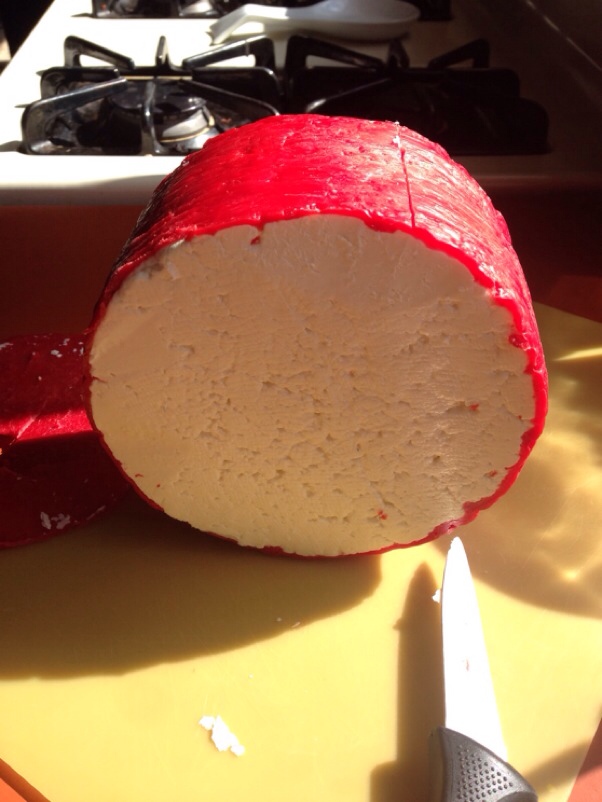
Well, the first aged, hard cheese we’ve produced and is out of the cave.

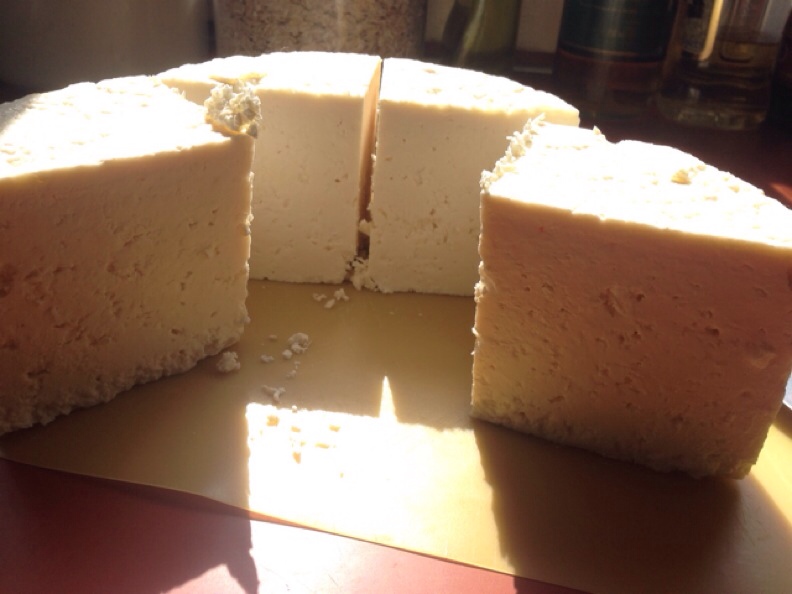
This is a nice 6 week old Monterey Jack; purty, ain’t it?

It’s a lovely, slightly sharp, fragrant cheese. Can’t wait to cook with it! 

We pulled, unwaxed, and quartered it, taking one to eat now, and vacuum packing the other three and returning them to the cave. We’ll let them go 2, 3, and 6 months to see how that impacts taste. It joined a lovely wheel of Cheddar that just started it’s cave time; we’ll give that one 90 days before we give it a try.

Have to say, what I’ve learned is how little I know. Very humbling. Cheesemaking, like many other pursuits, is a blend of science, art, experience, and feel. In the words of a great guitar maker I know, “The next one will be better!”

New England Roasted & Steamed Dinner


So, St. Patty’s Day is coming quick. All of a sudden, you experience a big tinge of traditional cooking fever. ‘Corned beef and cabbage’, your internal idea light bulb reads; now, that’s a good idea, but here’s one better from my New England homeland. Boiled Dinner is traditional where I grew up, and done like we’re gonna do it, it’ll have a leg or two up on just plain ol’ cabbage.

We’ll start this take on a regional specialty with house made corned beef. I realize this post is gonna hit you guys too late for this year’s Green Day, so go buy some corned and some fresh beef; use the former for Monday, and the latter for next week. It’s so good, you’ll have no problem enjoying it twice.

So, corned beef; had an email the other year asking why I bother making my own, when it’s so cheap at the store. The simple answer is that good homemade is far better than dang near anything in the store. And with any great housemade dish, you can put your own signature stamp on it.

So what is ‘corned’ beef anyway? For this use, the term stems from Old English for grain, which included grains of salt. So this corn means curing meat with salt. The great thing about making it at home is that corned beef lends itself to rougher cuts of beef. Brisket is perfect for this, ’cause it’s cheap, flavorful, and readily available these days.

Oh, and for the record; do not limit yourself to beef once you’ve got the hang of it. I’ve corned deer, elk, and moose and they’ve all been fantastic, so keep that in mind next time you poke your nose in the freezer.

House Made Corned Beef
2-3 Pounds Beef Brisket
1 Quart fresh, clean Water
3/4 Cup Kosher Salt
1/4 Cup light brown Sugar
2 teaspoons Pink Salt
1-2 cloves fresh Garlic

NOTE: Sodium Nitrite, AKA curing or pink salt, can often be found in hunting and fishing stores that carry grilling, smoking, barbecue and sausage making supplies, if your grocery doesn’t carry it. If you can’t find it in your town, Butcher & Packer, Leeners, and Amazon all carry it as well. While it’s not needed in this recipe for food safety considerations, it is, for my mind, absolutely necessary, because it imparts a distinct color and taste that you can’t get otherwise.

Alright, here we go.

Prepare pickling spice. (If you don’t have all these goodies in your pantry, shame on you! And yes, it’s OK to buy a jar of pickling spice this time, but don’t let me catch you without them again…)
1 Tablespoon whole Black Peppercorns
1 Tablespoon whole brown Mustard Seed
1 Tablespoon whole Coriander seed
1 Tablespoon whole Allspice Berries
1 teaspoon whole Szechuan Peppercorns
2″ Cinnamon Stick
2 Bay Leaves
1 teaspoon whole Cloves
4-6 Juniper Berries

Break up cinnamon stick, crush juniper berries, crumble bay leaves, then combine all ingredients and blend thoroughly. Set aside.

Prepare a quart of ice cold water; put it in fridge or freezer.

If your brisket has a fat cap, trim that and any obvious external fat prior to Corning.

Mince your garlic.

Add 1 quart fresh water to a stock pot and bring to a rolling boil. Add salt, curing salt, sugar, garlic, and half the pickling spices. Stir until sugar and salts are dissolved.

Remove brine from heat and add 1 quart of ice cold water. Stir to incorporate and cool brine rapidly. Place brine in fridge for at least 3 hours.

Place brisket in a bowl, dish or storage container just large enough to hold it with at least 2″ above the top of the meat. Pour brine over brisket until it’s completely submerged; again, at least 2″ of brine above the meat. If your meat wants to float, weight it with a plate.

Refrigerate for 5 days. You may turn the beef once if you like, but it’s not critical to the process.

When the magic day arrives, pull your beef outta the fridge.

Prepare a soup or stock pot just big enough for the beef and plenty of liquid.

Gather, rinse, peel and rough chop 1 medium sweet onion, 1 carrot, and 1 stalk celery, (Or, if you’re fortunate enough to have leaves on a nice, fresh bunch of celery, use those instead!)

Pull your beef outta the brine and rinse it thoroughly under cold running water.

Toss the beef into your pot and then add clean, fresh water until you’ve got about 2″ over the beef. Toss in the onion, carrot, celery, and all but 1 teaspoon of the pickling spices.

Bring to a boil over high heat, then cover and reduce heat until you’ve achieved a low, steady simmer.

Cover the pot and let the meat simmer for two hours, or until fork tender. If your water level drops, add more to keep the meat covered.

When the beef is fork tender, remove from the pot, and let rest for at least 30 minutes prior to cutting.

Now, for that New England Dinner; I love this stuff, with real brown bread redolent of molasses and plenty of nose stinging horseradish on the side. As mentioned, boiling can take a bit more of the flavors and nutritional value out than we’d like, to I’ve taken to a combined roast and steaming process.

For four people, gather
16 small potatoes, (waxy reds and whites are nice)
2 Sweet Onions
1 head Green Cabbage
6 Carrots
2-3 cloves Garlic

NOTE: If there are other nice winter veggies you love, add them! Parsnips, Jicama, Brussels sprouts instead of cabbage, chiles, tomatillos, your imagination is the limit.

Preheat oven to 250° F.

Rinse all produce. Halve potatoes; skin, cut off ends and quarter onions. Remove outer leaves, cut off stalk and quarter cabbage. If you carrots aren’t fresh, peel them and cut into roughly 3″ chunks. Peel and halve garlic.

Arrange veggies in a baking pan, drizzle with a little extra virgin olive oil, lightly salt and pepper. Roast them for twenty minutes, to bring the sugars out a bit and deepen flavors.

Prepare a steamer with at least 2″ of fresh water. Use a pot large enough to fit all veggies plus about half your beef, (or a quarter pound for each person).

When your steamer is producing steam actively, toss in the remaining teaspoon of pickling spices and 1/2 teaspoon of salt. Add beef and all veggies. Steam until veggies are fork tender, about 15 minutes.

Transfer to a platter and serve hot, with fresh horseradish, brown bread, and a nice local IPA.

And WEAR GREEN on Monday!

Flour Power


So, I got an online message thanking me for the Wondra post, but asking where the scoop on all the other common varieties of flour was. I went and opened the flour cabinet in our pantry area and saw… Seven variations on the theme – Hard White Whole Wheat, All Purpose White, Semolina, Whole Wheat Pastry, Wondra, White Pastry, and Cake flours. Looks like the writer was right; time to clarify things a smidge.

That said, the real question of course is, whataya got in your pantry? I’ll bet most home kitchens out there have All Purpose and maybe one other variety at most, and that’s a shame; more to the point, it may be a good reason why your stuff isn’t as good as the stuff you eat elsewhere, and nowhere as good as it could and should be, so let’s fix that, eh?

I’m sure most of us have stood in the aisle, gawked at all those flour varieties and wondered, ‘Do I knead that?’ (Sorry, couldn’t resist…) Nowadays, it’s even more complex, ’cause there’re far more varieties than ever before. Take Bob’s Red Mill, my favorite source for flours and meals. They make sixty eight varieties at last count, from Almond to Whole Wheat with a bunch of letters in between, (Garbanzo, flaxseed, green pea, amaranth, and coconut, just to name a few). Some of those are riding the Anti-Gluten train, but many are things that may be new to us, yet have been around for many moons.

For this post, I’m just gonna cover the wheat-based scene; we’ll save the others for another day.

First things first, let’s talk about the ‘bad’ stuff, AKA, white processed flours. Should these be the only flours in your kitchen? My answer is a firm NO. That’s for three very good reasons, so allow me to elaborate.

One: Regular Old White Flour, by definition, means that the bran and the germ of the wheat kernel have been removed. As such, it contains significantly less fiber than its whole-grain counterpart, (in the neighborhood of 10 grams less per cup), and notably less of the nutrients you want from grain, (like folate, riboflavin, niacin, and several B vitamins).

Two: Then there’s bleaching. Some white flour is white because it’s, well… whitened. Is that done in this country still, you might ask? Answer; oh yeah it is, and it’s commonly achieved with a variety of organic peroxides, even chlorine – yummy huh? Bleached white is far and away the most commonly used flour in processed food, by the way. As such, even if you don’t buy it for home, if you do buy that stuff, you’re still screwed. Need any other reasons on your list to look for ‘Unbleached’ on the label? I don’t use cheap iodized salt, I sure ain’t using this…

Three: ‘Enriched‘, just what the hell does that mean? Well, here again, it can mean a bunch of things. Now, I bet you thought ‘processed’ flour just meant that its milled and sifted to make it a uniform flour, right? Nope, there’s more. See, with the white stuff, since they remove a good chunk of the wheat berry to make it whiter, they gotta do stuff to compensate; this is euphemistically referred to as ‘Enriching’. One of those things they do is called ‘Bromating’, meaning treating the flour with Potassium Bromate. This is done to strengthen the dough and encourage rising, because they have to compensate for proteins they removed, and by the way, they do not have to tell you if they did this in most U.S. States… Enriching also means putting back other stuff they removed, like folate, riboflavin, niacin, and several B vitamins. U.S. Law required this since around the start of WWII, to counter rising health issues caused by diets deficient in… Wait for it… The very same essential nutrients that were in the whole wheat berries they started with in the first place but removed. Ya got all that? Catch 22 anybody?

Now when you’re gawking at bags and read ‘Bleached & Enriched’, you got the full scoop, yeah? My final advice on this crap is to avoid it like the plague…
BIG FYI: In the United States, ya can’t enrich any flour or meal certified and labelled ‘Organic’, so if you want an end around all that B. S., there ya go.

The obvious next step is to say yes, it’s best to use whole grain as much as possible, but before ya do, know this: Most of the Giant Flour Companies here in the U.S. do not grind whole wheat flour from whole grain: They separate everything and then, almost as an afterthought it would seem, put ’em back together to make ‘whole wheat flour’. Why on God’s green earth would they do that, you ponder? Economics, that’s why; the lions share of their sales is white flour. The caveat here is to know who makes your flour, out of what, and how, before you buy. Up there where I said that what you make probably isn’t as good as it could or should be? The where and who of your flour is damn well as important as the which.

I like and recommend Bob’s Red Mill in Oregon and Arrowhead Mills down in Texas, because they’re conscientious folks that make good products. They’re transparent about what goes into it, where it came from, and what they do to make it what it is. Just as with any other thing you eat, the fresher and better the quality, the better off you are, so find out if there’s a local mill near you and try their stuff. If you don’t have one, or you can’t find the varieties you want, check out my guys.

White Flour Caveat. I’m not saying you should only use whole wheat flours. We don’t… Some things, for our taste preferences, simply need white flour. If you feel thus, fear not, there are options. If you can and do go all whole grain, more power to ya.

Alright, ALRIGHT, you say – we get it; on with the show!

As you wish…

Looking back above, I mentioned white versus red wheat in two different kinds of flours. Well, fact is, there are six generally recognized types of wheat, and all of them have different best uses. If you’re gonna truly grok flour, you gotta know your wheat. Here they are in a nutshell.

HARD RED WINTER is the Mac Daddy of U.S. Production and export. This variety makes most of our bread, rolls, and All Purpose flour out there. Hard Red Winter grows in the Great Plains, from the Mississippi River west to the Rocky Mountains, and Canada to Mexico.

HARD RED SPRING is the protein content winner, which makes it the U.S. Baking champ. It’s grown in Montana, North Dakota, South Dakota and Minnesota.

SOFT RED WINTER is the go-to wheat for flour that ends up as cakes, pastries, crackers and flat breads. This low protein variety is grown mostly east of the Mississippi River.

DURUM is the hardest U.S. wheat and is famous mostly for making Semolina flour; that goes into great pasta. Roughly 80% of our Durum hails from North Dakota.

HARD WHITE is the youngster variety of U.S. Wheat crop. It’s closely related to the reds, but sports a milder, sweeter flavor. Hard White is used for bread and rolls, bulgur, tortillas and Asian noodles, (and my favorite Whole Wheat White Flour). Kansas and Colorado lead U.S. Production.

Finally, SOFT WHITE WHEAT, is a low protein variety that yields flours used for crackers, cookies, quick breads, muffins and other snack foods. It’s grown mostly here in The Pacific Northwest.

Alright, there’s the wheat, let’s get on to flour. If we talk flour, we gotta use The G Word. Yep, Gluten. Now first and foremost, gluten is not a dirty word, ok? Unless you’re genuinely gluten intolerant, gluten is a necessity; its what gives the things we make with flour structure, strength, and texture. Without it, many things just don’t work; without it, bread just ain’t bread. So what is Gluten; fundamentally, it’s a protein matrix that develops in dough when it absorbs water and is subsequently manipulated by kneading. Gluten forms strong, flexible strands which, as yeast produces gases, (mostly CO2), in the dough, traps the gas in bubbles of various size, depending on the flour and what you’re making. That is the essence of what allows dough to rise and expand. When we finally bake it, the gluten matrix solidifies, providing the end result with its desired structural qualities.

My friend Holly is a great cook with a fine food blog, (check out her link to the right of this post). She has family members who are genuinely gluten intolerant, so she’s found ways to build most things without it, but she’d be the first to admit that many substitutions just don’t work very well. It’s genuinely hard to make good bread from flours other than wheat. Heck, you gotta add wheat flour to rye to make bread out of that common grain. If you think you have genuine issues with gluten or would benefit from a gluten free diet, read up before you act to exclude it from your diet. Fact is, if most folks stopped eating the shit food that contains the lions share of bleached, white flour in this country, they’d likely solve their dietary problems right there…  If you are genuinely intolerant, I’ll recommend Bob’s again for a wealth of organic, gluten free flours and meals, including a great A.P. Flour Blend.

So, here’s the lineup, and this will answer the ‘why so many flours in your pantry’ question. I think you’ll find that these all do a couple things really well, and by golly, if you’re out to produce the best food at home that you can, that’s what you need! Fortunately, you can find small bags of many of these, and for the most-used varieties, you’ll want more anyway. Flour varieties are ranked by protein content, high to low.

Vital Wheat Gluten isn’t really a flour, per se. It’s made from wheat flour that’s been washed to activate the gluten, then dried and ground back into a powder. At 75% to 80% protein, it’s seriously concentrated stuff. Unless you do a bunch of baking, you’re not likely to have tried it, but you might want to. Just a little bit added to a yeast-risen bread recipe can yield great results. Try it in breads containing dried fruit and nuts for a higher rise and better volume. Some bakers who regularly use bread machines add it to all their doughs.

Whole Wheat Flour, most often made from that Hard Red Spring Wheat we talked about, is the highest protein content you’ll find at 12% to 14%, about the same as bread flour. The caveat for this stuff is that quality really matters. Don’t bother with the mass produced crap, get good, locally milled organic flour.

Bread Flour is made from hard wheat and as such, also has a high 12% to 14% protein content. This yields very elastic doughs that are great for bread and pizza; it’ll give you that chewy texture you’re looking for. You’ll find bread flour milled in everything from relatively coarse American stuff to very fine Italian, (Antimo Caputo ’00’, designed for pizza dough).

Semolina is a high protein flour, (give or take 13%), prized for pasta making. Milled from Durum wheat, Semolina is also great for old style varieties of Italian bread, like pugliese and altamura. This variety can be found milled from coarse to fine. The finer milled stuff does better in extruding pasta makers, like the attachment for KitchenAid mixers, while the coarser versions do great for hand rolled pasta and breads. NOTE: coarser milled Semolina can take notably longer than the finer stuff to absorb water.

All-Purpose Flour, (called plain flour outside the U.S.), is a blend of hard and soft wheat with a fairly high 10% to 12% protein content; many have a touch of malted barley flour added as well. I’ll remind you once again of the B.S. that gets perpetrated on flour in general when I state without reservation that an Organic Unbleached White Flour like Bob’s is what you want to find. All Purpose flour is great for pie and quiche crusts, cookies and bars, and as the white component in mixed flour uses like corn bread. NOTE: There is some significant regional variation in A.P. Flour; southern U.S. bleached brands can be as low as 7% protein.

Self-Rising Flour is a medium protein flour (about 9% to 10%), that has had salt and baking powder incorporated into it. There are quite a few Southern cooking recipes that’ll call for self-rising flour, especially for biscuits, quick breads, muffins and pancakes. I hope I don’t need to say that one does not use this stuff to make yeast breads with, but I will just in case…

Pastry Flour is a soft wheat flour with a relatively low protein content, about 8% to 10%. This makes pastry flour perfect for stuff that demands a light and flaky consistency, like biscuits, tart crusts, pastries, (of course), and many cakes. It spans the gap between cake flour that’ll yield a crumbly end product, and the higher protein varieties that’ll make things too hard and chewy. Here again, this stuff ain’t made to build bread with.

Instant Flour, like Wondra, is pre-gelatinized, meaning a fine ground, low protein, (7% to 9%), soft wheat flour is steamed, dried and then has a bit of malted barley flour added to it. The result is a flour that doesn’t need cooking or a whole lotta time to blend seamlessly with liquids. That is its primary claim to fame, but there are other good uses for Instant, so check out that post I did a few days back.

Finally, there’s Cake Flour, which is a very finely milled, soft wheat product with a high starch/low protein make up, (6% to 8% protein). Know, however, that 99% of the cake flour out there is bleached, because among other things, that process makes cake flour more acidic, which aids in rising delicate batters; the low protein content also helps produce a light and fluffy cake.
King Arthur does make an unbleached cake blend that they claim doesn’t have any added chemicals; I’ve yet to try it. Grain Brain has an organic cake flour, unbleached, unenriched and very nice indeed, along with a bunch of other well done flours. 
If you don’t make a lot of cake, you can also build a very workable homemade alternative. Toss 2 Tablespoons of cornstarch in a measuring cup, then top it up to an even 1 cup with pastry flour. Use a sifter or a fine mesh strainer and sift the mixture at least 3 times; this helps incorporate, aerate and homogenize the blend. Pastry flour is about as close to cake in protein content as you can get and is almost as fine; the sifting will bring it even closer. The cornstarch inhibits gluten development in cake batter by competing for liquid absorption, thereby promoting a lighter texture. Give it a try, it works quite well!

Now, a few thoughts on subbing whole wheat for white flours. The main complaint in this arena, which I fully support, is that your baked goods come out kinda heavy. If you simply switch one flour for the other without further adjustment, that is pretty much what will happen, but there are some tricks to help makes things more palatable.

Try a high quality White Whole Wheat flour like Bob’s; you’ll get the whole grain nutrients and fiber with a taste you’ll be hard pressed to tell from white – Yes, it’s that good. You can sub this flour 1:1 for any recipe that calls for white.

Sub good quality Whole Wheat Pastry Flour for things other than bread. The stuff Bob’s makes is sublime. It makes incredibly tender, flaky biscuits, pie and tart crusts and the like. It has yet to disappoint me.

Try a 50% – 50% blend of wheat to white. You’ll get better nutrition and lighter results.

Use less whole wheat flour; if the recipe calls for a cup of white, sub 3/4 cup of whole wheat.

Try a little Vital Wheat Gluten in whole wheat and other heavy grain bread recipes; it can really help give you a better rise and a lighter loaf.

For cookies and brownies, reduce the fat content by 20%, which will encourage a softer end product.

For cakes made with all whole wheat flour, add a couple extra tablespoons of liquid; this’ll help produce a lighter cake.

When subbing whole wheat for white flour in a bread recipe, add an additional 1/4 cup of liquid to compensate.

So there ya go. Just like your spice cabinet, I just removed a bunch if free space from your pantry, huh? Go shopping!

Great Stew Fer Yew


A few weeks back, we covered Burgoo. Just like that regional specialty, there’s no one genuine beef stew recipe, but there sure is a right way to do it.

 photo image-18.jpg

The lovely Mrs. Atwater has a favorite jibe she uses from time to time. When I make stew with any method other than the one we’re gonna share here, she tries the finished product, smiles sweetly and says “Good soup, Dear.” Funny girl…

Fact is, she’s pretty much right. If you want the real McCoy, you gotta follow the right path to getting there; that means making as much as you can from scratch; here’s how.

Like homemade chili or chicken noodle soup, stew is a critical component to making it through the long, cold winter months. A great stew will feed you and yours several times, and truth be told, gets better in the couple of days after its made.

The first must-do is to make your own stock. Get in the habit of saving beef and pork bones, poultry carcasses, and fish heads and racks. If you’re not ready to use them right away, freeze ’em for later, every time. These are the key to killer homemade stock. The other thing you’ll need is mirepoix, (meer pwah), the go-to veggie blend for many good things. It’s super easy to do.

 photo image-19.jpg

Mirepoix
50% Onion
25% Celery
25% Carrot

It’s definitely a best practice to collect enough bones and devote a day to stock making. Stock freezes easily and is great to have ready any time. If you just get a sudden jones for stew and don’t have any ready to go, it’s no big deal to whip out a small one-time batch, so that’s what we’ll do.

One medium onion, a couple of stocks celery and a couple small carrots will do. Rough chop everything, meaning big ol’ 1″ chunks are fine, just make everybody about the same size.

If you were just making veggie stock, you might add a tomato, a clove of garlic, some parsley or cilantro, a splash of olive oil and call it good right there. If you’re making critter stock, then we’ve got a bit more to do first. For this stew, the bones from a good family steak night will work just fine; if you don’t have any on hand, then pick up some soup bones when you buy beef for this recipe. Ask your butcher if you don’t see any handy.

We could just simmer this stuff gently in nice, fresh water; this will make what is generally referred to as a white stock if you’re doing critter. You’ll get the essence of whatever your simmering, but roasting them is gonna make things much more interesting. That’s where we get into the dark stock world.

Preheat your oven to 375° F. It’s time to develop some nice, deep caramelized flavors.

Put your bones onto a sheet pan, drizzle a little olive oil on them, a sprinkle of good salt, and a twist or three of ground pepper. Slide the pan onto a middle rack and let the magic begin for about 30 minutes; your bones should be nicely browned when they’re ready for the next step.

 photo image.jpg

Slide the pan out, add the mirepoix with a bit more oil, salt, and pepper, then slip everything back onto that middle rack for another 20 minutes.

One last step, grab a healthy smear of tomato paste and give the bones a nice, even coating of that. Continue roasting for another 10 minutes. The tomato adds a bit of richness and color to the stock, and the acidity helps breakdown bone and connective tissue.

Pull everybody out of the oven and toss them into a stock pot with a gallon of fresh water. Bring evening to a boil, then reduce to a simmer, toss in 2 Bay leaves and go find something to do for a couple hours.

When you come back to the stock, you’ll likely see some fat floating on the surface. Get as much of that as you can with a fine mesh strainer, or use a paper towel to blot it up.

Pour your stock carefully through a fine mesh strainer or chinois; if you have cheese cloth on hand, (Which you aughta, by the way), strain through that. Strain at least a couple times so that you get the chunks and bits and whatnot out of your stock and end up with a relatively clear liquid.

Now taste it: If you had questions as to why we went through all that just for a pot of stew, they should now be answered. Carefully pour that stock back into a nice, big soup pot over the lowest heat you got.

Alright, let’s get after it. We’re gonna do beef stew, because that’s what we’ve got that needs using, but again, you can use venison, elk, moose, bear, whatever you have in your freezer that needs using. You can use dang near any cut for stew, and frankly, the cheaper the better; it’s a major reason why stew is a great freezer cleaner dish.

Cut your meat into roughly 3/4″ cubes, and trim out any really big hunks of fat or gristle.

Now it’s searing time. This is one of the non-negotiable steps to making a great beef stew, (And to keep Mrs. Atwater from calling it soup). To paraphrase Yosemite Sam, when I say sear, I mean sear, and browning ain’t searing, FYI. Here’s how we do it.

Preheat a dry, heavy frying or sauté pan over medium-high heat; cast iron is perfect for this. Let the pan get truly heated through before you add meat; when a drop of water dances like a maniac when introduced to the pan, it’s ready.

Prepare a coating of
1/2 Cup All Purpose Flour
1 teaspoon Sea Salt
1 teaspoon fresh ground Pepper

Throw that in a bowl or plastic bag, add your meat and get all of that thoroughly and evenly coated. Tap or shake the meat as you pull it out to remove excess coating. The coating not only facilitates the searing of meat, it provides all the thickening you’ll need for your stew.

Now, start searing meat in batches. Put enough into the pan to make a single layer and no more. Leave the beef in there, untouched, long enough for it to form a fond, a nice, deep brown, sticky glaze; that’ll take a good 3 to 5 minutes a side. The fond is the lion’s share source of those glorious roasted, nutty flavors that make people roll their eyes when the eat. Let that fond form before you stir/flip/turn your beef, and let it form on all sides before you start the next batch. Keep a constant hand and eye on this process; you want seared, not burned! Throw your seared meat into the stock pot.

 photo 57A108EB-787B-4BC6-AD85-91FA3F3B8072.jpg

Grab a bottle of good local beer or ale; I like a nice winter ale, porter, or even a stout for this job, for their nice, deep caramel taste notes. Pour it into a bowl and set it aside; we’re just looking to let it flatten for a bit while we work.

Return your attention to that pan you seared the beef in; peel and fine dice,
1 small Sweet Onion
2 cloves of Garlic

Toss the onion into the pan and sauté until it starts to go translucent; add the garlic and continue to sauté, taking care not to let the garlic burn. When they’re done, toss them into the stock pot with the meat.

With your pan still on medium-high, pour in the beer and let it go to work. As the beer starts to simmer, grab a spoon or spatula and start working loose all that stuff on the bottom of the pan. That’s concentrated goodness and it’s all gong in the stew. Work all those bits into the beer and allow it to reduce for about 5 minutes, concentrating the flavors and allowing the alcohol to dissipate. Pour that all into the stock and give it a good stir.

 photo BF635B49-1476-42FB-A703-96F60F11CADA.jpg

Allow your stew to work for the first hour with nothing else in it. This will let the marriage between meat and stock to come to full fruition.

Now, the other thing that ain’t negotiable with great stew is low and slow for the cooking. You must allow at least 2 hours and 4 is better. If you have a crock pot hiding in the cupboard somewhere, pull it out and use it. If not, then turn your chosen burner down to low and leave it there.

Alright, it’s taste time, so we can adjust seasoning. All you really need is good salt and pepper, but here again, do what you like. We find a shot of Tabasco, Worcestershire, and a touch of Turkish Oregano nice as well. You can use smoked salt and/or pepper, or anything else you like, in moderation: Just make sure that the meat and stock are the stars of the show.

Now it’s veggie prep time. Classic beef stew is nothing more than carrot, potato and a little more onion, but you can and should add what you like to yours. In addition to those staples, we like crushed tomatoes, celery, peas, green beans, a little sweet corn and some cilantro; again, do what you like. Cut everybody into a uniform dice, about 1/4″ to 1/2″ so they’re reasonably bite sized and will cook evenly.

Throw everybody into the pot, cover it and let it go for at least another hour and again, 2 or 3 is better yet. Stir occasionally, getting all the way down to the bottom so everything is nicely incorporated.

Serve nice and hot, with a little sour cream for those that like it, and maybe a little Jalapeño-Cheddar corn bread.

 photo image-20.jpg

 photo 5BE6CBFD-0B82-435B-87B9-CC12CE9550B0.jpg

Here’s the basic recipe for your shopping or gathering needs; once again, this is our version, so you adjust the veggies and seasoning as you prefer!

2-3 Pounds meat, (Stew or Chuck are best cuts)
1-2 Pounds Beef Bones
1 Pound Potatoes, (a waxy variety works great)
1 large can crushed Tomatoes
2 sweet Onions
3-4 stalks Celery stalks
5-6 Carrots
1 Cup Peas
1 Cup sweet Corn
1 Cup Green Beans
2 cloves Garlic
5-6 stalks Cilantro
1 12 ounce bottle Beer or Ale
2 Bay leaves
Shot of Worcestershire sauce
Shot of Tabasco
Sea Salt and Pepper