Our Go To Ginger Ale


If you missed our original home ginger recipe, I can tell you it was a huge hit. That said, there’s always room for improvement. We tweaked this and that, and have tried many a batch since – this one has remained a consistent favorite. It’s easy to make, lasts well, and is perfect for the sultry days of summer, (assuming such days ever show up with any frequency here in the Great Pacific Northwet).

Specifically, what this recipe does is replace some kind of concentrated sugar with pineapple juice, and the results are spectacular; you get a delightful pineapple note on the front end, with a well-tempered ginger finish, a more natural sweetener, and a much more natural sweetener. We also increased the citrus, and added lemongrass and vanilla for some really lovely background notes.

We have a fabulous juicer that we used to extract the pineapple, but you could effectively employ a blender or processor as well.

1 Pound fresh Ginger Root

6 Cups Water

2 Fresh Pineapples

2 small Limes

1 small Lemon

Roughly 12″ Lemongrass

8-10 Kaffir Lime Leaves (not absolutely necessary, but a very nice touch)

1 teaspoon Vanilla extract

Pinch Sea Salt

OPTION: If this isn’t sweet enough for you, you can adjust each glass as you see fit, but try this first!

Rinse and dice ginger root – No need to peel it – This saves time, and there’s no difference in flavor or extraction.

Wash, rinse, zest and juice lemon and one lime. Cut second lime into quarters. Rough chop lemongrass into 1/2″ chunks.

In a large sauce pan over medium high heat, bring water to a simmer. Add ginger, quartered lime, citrus zest, lemongrass, and kaffir leaves.

When water begins to bubble, reduce heat to low and simmer, covered, for 45 minutes.

Remove pan from heat and let the mixture steep, covered, for 30 minutes.

Rinse and trim pineapple. Blend, process, or press flesh to extract all the juice.

Run the steeped mixture through a single mesh strainer, then discard the root.

Return strained liquid to the pan over medium-low heat. Add pineapple juice, citrus juice, vanilla, and pinch of salt.

Stir gently and allow to fully incorporate and heat through. Taste and adjust sweet balance with a little honey or sugar if needed, (you probably won’t, but you do want to taste hefty ginger and distinct sweet – This is your concentrate, so it should taste fairly over the top).

Remove from heat and allow syrup to cool. Transfer to a glass bottle or jar and refrigerate for at least 4 hours.

Mix drinks in a tall glass with plenty of ice. Start with 1/4 cup syrup to 1 cup club soda; stir, taste and adjust blend to your liking. A fresh squeezed wedge of lime goes very nicely.

Refrigerated and sealed air tight, the syrup will last for a good two weeks, though it’s not likely to survive that long.

NOTE: Some folks prefer to mix fresh citrus in to the final blend, rather than incorporating it into the syrup.

Ginger Ale II


If you missed our original home ginger recipe, I can tell you it was a huge hit. That said, there's Alaways room for improvement. Specifically, while the ginger taste was front and center, we found that honey not only added a fairly dominant taste note, but was rather expensive. Replaced with cane sugar, we found the recipe still good, but the sugar tended to bring the heat of the ginger out even more. We thought bake to that Reed's we liked so much and decided to try pineapple. The results were spectacular; you get a delightful pineapple note on the front end, with a well-tempered ginger finish, a more natural sweetener, and with pineapples at 2 for $5, a genuine bargain. We also increased the citrus, and added lemongrass And vanilla for some really lovely background notes.

We have a fabulous juicer that we used to extract the pineapple, but you could effectively employ a blender or processor as well.

1 Pound fresh Ginger Root

6 Cups Water

1 Pineapple

2 small Limes

1 small Lemon

Roughly 12″ Lemongrass

8-10 Kaffir Lime Leaves

1 teaspoon Vanilla extract

Pinch Sea Salt

Rinse, peel, and dice ginger root.

Wash, rinse, zest and juice lemon and one lime. Cut second lime into quarters. Rough chop lemongrass into 1/2″ chunks.

In a large sauce pan over medium high heat, bring water to a simmer. Add ginger, quartered lime, citrus zest, lemongrass, and kaffir leaves.

When water begins to bubble, reduce heat to low and simmer, covered, for 45 minutes.

Remove pan from heat and let the mixture steep, covered, for 30 minutes.

Rinse and trim pineapple. Blend, process, or press flesh to extract all the juice.

Run the steeped mixture through a single mesh strainer, then discard the root.

Return strained liquid to the pan over medium-low heat. Add pineapple juice, citrus juice, Vanilla, and pinch of salt.

Stir gently and allow to fully incorporate and heat through. Taste and adjust sweet balance with a little honey or sugar if needed, (you probably won't, but you do want to taste hefty ginger and distinct sweet – This is your concentrate, so it should taste fairly over the top).

Remove from heat and allow syrup to cool. Transfer to a glass bottle or jar and refrigerate for at least 4 hours.

Mix drinks in a tall glass with plenty of ice. Start with 1/4 cup syrup to 1 cup club soda; stir, taste and adjust blend to your liking. A fresh squeezed wedge of lime goes very nicely.

Refrigerated and sealed air tight, the syrup will last for a good two weeks, though it's not likely to survive that long.

NOTE: Some folks prefer to mix fresh citrus in to the final blend, rather than incorporating it into the syrup.


Shrubbery


With apologies to Monty Python, when you hear someone wax poetic about shrubs these days, they're likely referring to a beverage, as opposed to landscaping. Shrubs have become tragically hip of late, and for good reason; they're a delightful drink resurrected from colonial days.

There are two primary variants of the shrub as beverage; which one you're thinking of probably depends on which side of the pond you were raised on.

Here in the former colonies, shrubs were vinegar and fruit based creations popular in the 18th and 19th centuries, with their origins in home preserving, the vinegar having been employed to extend the shelf life of fruit and fruit extractions. Over in England, shrubs were blends of booze, citrus and sugar, drunk iced, or used as a base for punch; this version's roots sprung from popular patent medicines of the time. Both variants were often infused with herbs and spices and use in mixed drinks as well as flying solo.

American shrubs fell out of favor in the early 1900s, with the rising popularity of home refrigeration. Recent resurgence in home growing and preserving has renewed interest in 'drinking vinegars,' as shrubs were sometimes known. That has lead in turn to many commercial offerings, and a subsequent rise in price of same. Fortunately, shrubs are simple and inexpensive to make at home. Shrubs are a sweet-tart treat, and readily lend themselves to experimentation. Combining a favorite fruit or two with a complimentary herb or spice yields a truly refreshing drink far better for us than the artificial crap so popular these days.

Making shrubs requires a few simple steps and about a week's time, so it's a fun project to finish on a spring weekend.

We'll start with a basic recipe and expand from there.


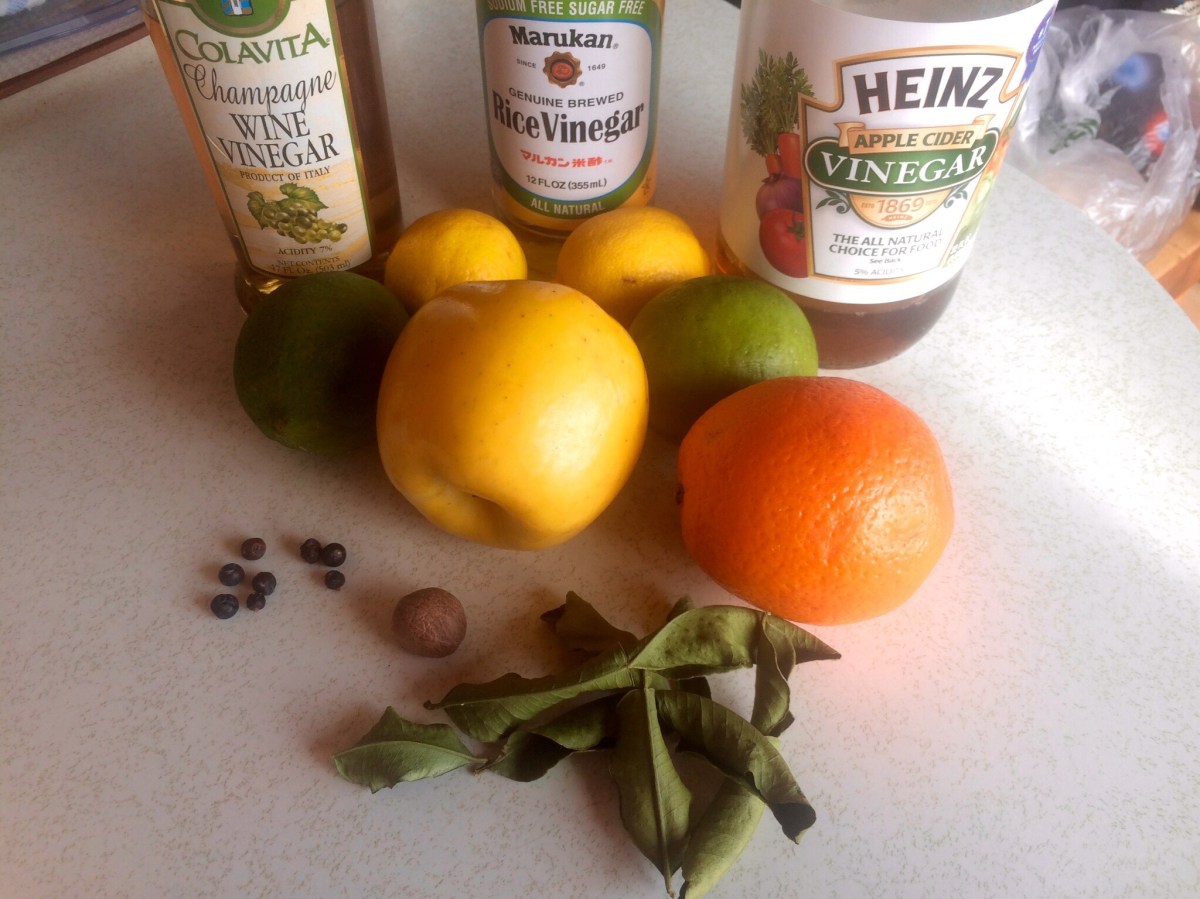
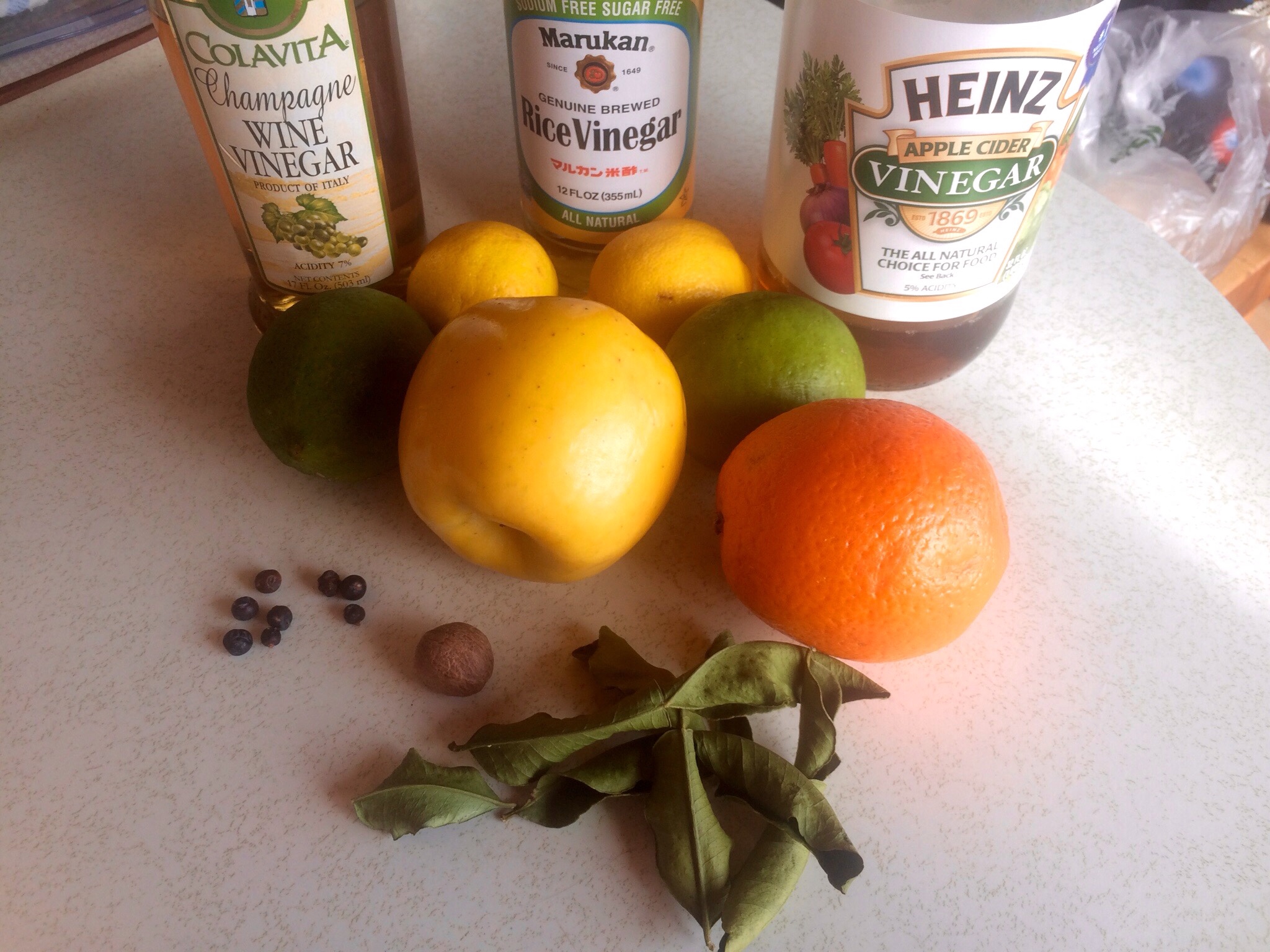
Citrus Shrub

1 Lime

1 Lemon

1 Navel Orange

2 Cups Cane Sugar

2 Cups Apple Cider Vinegar


Rinse the citrus, then place that in a large mixing bowl with 4 cups cold water and 1/4 cup white vinegar. Allow the fruit to soak for 15 minutes, then pour out the water, rinse and pat the citrus dry. This step is highly recommended for all store bought fruit, as a means of removing wax and residual chemicals prior to use.

Zest all citrus, then juice, and rough chop the remainder. Toss all into a glass or stainless steel bowl, preferably one with a nice, tight fitting lid.

Add the sugar and toss to thoroughly coat the fruit.

Cover the bowl tightly and refrigerate for three days, tossing gently once each day; the sugar will draw moisture from the citrus as it blends.

Remove the fruit from fridge and add the vinegar, stirring to blend thoroughly. Cover and return the bowl to the fridge for three more days, stirring once daily.

Now you're ready for final clarifying. Wash thoroughly and then sterilize a glass jar or bottle by immersion in water at a rolling boil for 3-4 minutes.

Remove the bowl from the fridge and carefully run the mixture through a double mesh strainer, (A colander with cheese cloth will also work.) squeeze the fruit by hand to get all the liquid out, then discard the fruit.

Strain a second run using a couple of layers of cheesecloth, or a single layer of butter muslin; this will remove excess pulp and clarify the final product nicely.

Pour the syrup into your sterilized glass bottle.

The syrup will be good for 2 weeks refrigerated, though I doubt it'll last that long.

Portion 2-3 ounces into a pint glass, then top up with sparkling water or seltzer and plenty of ice. A sprig of mint with a leaf rubbed around the rim makes a lovely garnish.

There you have the basics. The process is virtually identical for any variant you can think of. If you're using fresh or dried herbs and spices, they'll do best added with the vinegar, (for instance, that mint I mentioned makes a very nice adjunct to the basic citrus version we just made.)

Lemon, lime, Meyer lemon, orange, mandarins, tangerines, grapefruit, yuzu, berries, pomegranate and cranberry, solo or combined, will all make wonderful variants. By the same token, different vinegars yield broadly different shrubs; distilled white, cider, champagne, balsamic, wine, and fruit or herb infused have tremendous potential. Certainly there's room to play with sweeteners as well; local honeys, agave nectar, or raw sugars all will impart different notes to the finished product. Finally, add herbs and spices and the possibilities are bound only by your creative imagination. Here are a few more to try, then strike out on your own.


Very Lemony Shrub

4 Meyer Lemons

2 Cups Cane Sugar

2 Cups Champagne Vinegar

About 4″ fresh Lemongrass

5-6 Kefir Lime Leaves, (Fresh is best, dried will do)

1/4 teaspoon Lemon Thyme

Prepare as detailed above. Cut lemongrass into roughly 1/4″ rounds and add that plus the lime leaves to the initial mix with the sugar. Add the lemon thyme when you add the vinegar.


CranApple Shrub

8 ounces fresh or frozen Cranberries

2 Opal or Honeycrisp Apples

1 small Lemon

1 1/2 Cups Cane Sugar

2 Cups Red Wine Vinegar

1/2 Cup Water

1/2 teaspoon Ginger Root

1/4 teaspoon Fennel Seed

Pinch of Sea Salt

Rough chop apples, zest, juice, and rough chop remained of lemon.

Combine cranberries, apples, water, salt and sugar in a saucepan over medium heat. Simmer until about half the cranberries have popped.

Remove from heat, add lemon zest, juice, and pulp. Store in the fridge for 3 days.

Remove, mince ginger and add, plus fennel seed and vinegar; store refrigerated three more days.

Strain and bottle as per above.


Grapefruit Shrub

3 large Pink or Red Grapefruit

2 Cups Cane Sugar

2 Cups Rice Wine Vinegar

1 small Lime

2 sprigs Fresh Mint

2 Tablespoons Cashews

Zest, juice and rough chop grapefruit and lime, add to sugar and rest 3 days.

Chops cashews, and add with vinegar and lime for next 3 day rest.

Strain and bottle as above.


Shrubbery


With apologies to Monty Python, when you hear someone wax poetic about shrubs these days, they’re likely referring to a beverage, as opposed to landscaping. Shrubs have become tragically hip of late, and for good reason; they’re a delightful drink resurrected from colonial days.

There are two primary variants of the shrub as beverage; which one you’re thinking of probably depends on which side of the pond you were raised on.

Here in the former colonies, shrubs were vinegar and fruit based creations popular in the 18th and 19th centuries, with their origins in home preserving, the vinegar having been employed to extend the shelf life of fruit and fruit extractions. Over in England, shrubs were blends of booze, citrus and sugar, drunk iced, or used as a base for punch; this version’s roots sprung from popular patent medicines of the time. Both variants were often infused with herbs and spices and use in mixed drinks as well as flying solo.

American shrubs fell out of favor in the early 1900s, with the rising popularity of home refrigeration. Recent resurgence in home growing and preserving has renewed interest in ‘drinking vinegars,’ as shrubs were sometimes known. That has lead in turn to many commercial offerings, and a subsequent rise in price of same. Fortunately, shrubs are simple and inexpensive to make at home. Shrubs are a sweet-tart treat, and readily lend themselves to experimentation. Combining a favorite fruit or two with a complimentary herb or spice yields a truly refreshing drink far better for us than the artificial crap so popular these days.

Making shrubs requires a few simple steps and about a week’s time, so it’s a fun project to finish on a spring weekend.

We’ll start with a basic recipe and expand from there.


Citrus Shrub

1 Lime

1 Lemon

1 Navel Orange

2 Cups Cane Sugar

2 Cups Apple Cider Vinegar


Rinse the citrus, then place that in a large mixing bowl with 4 cups cold water and 1/4 cup white vinegar. Allow the fruit to soak for 15 minutes, then pour out the water, rinse With clean, cold water and pat the citrus dry. This step is highly recommended for all store bought fruit, as a means of removing wax and residual chemicals prior to use.

Zest all citrus, then juice, and rough chop the remainder. Toss all into a glass or stainless steel bowl, preferably one with a nice, tight fitting lid.

Add the sugar and toss to thoroughly coat the fruit.

Cover the bowl tightly and refrigerate for three days, tossing gently once each day; the sugar will draw moisture from the citrus as it blends.

Remove the fruit from fridge and add the vinegar, stirring to blend thoroughly. Cover and return the bowl to the fridge for three more days, stirring once daily.

Now you’re ready for final clarifying. Wash thoroughly and then sterilize a glass jar or bottle by immersion in water at a rolling boil for 3-4 minutes.

Remove the bowl from the fridge and carefully run the mixture through a double mesh strainer, (A colander with cheese cloth will also work.) squeeze the fruit by hand to get all the liquid out, then discard the fruit.

Strain a second run using a couple of layers of cheesecloth, or a single layer of butter muslin; this will remove excess pulp and clarify the final product nicely.

Pour the syrup into your sterilized glass bottle.

The syrup will be good for 2 weeks refrigerated, though I doubt it’ll last that long.

Portion 2-3 ounces into a pint glass, then top up with sparkling water or seltzer and plenty of ice. A sprig of mint with a leaf rubbed around the rim makes a nice fragrant garnish.

There you have the basics. The process is virtually identical for any variant you can think of. If you’re using fresh or dried herbs and spices, they’ll do best added with the vinegar, (for instance, that mint I mentioned makes a very nice adjunct to the basic citrus version we just made.)

Lemon, lime, Meyer lemon, orange, mandarins, tangerines, grapefruit, yuzu, berries, pomegranate and cranberry, solo or combined, will all make wonderful variants. By the same token, different vinegars yield broadly different shrubs; distilled white, cider, champagne, balsamic, wine, and fruit or herb infused have tremendous potential. Certainly there’s room to play with sweeteners as well; local honeys, agave nectar, or raw sugars all will impart different notes to the finished product. Finally, add herbs and spices and the possibilities are bound only by your creative imagination. Here are a few more to try, then strike out on your own.


Very Lemony Shrub

4 Meyer Lemons

2 Cups Cane Sugar

2 Cups Champagne Vinegar

About 4″ fresh Lemongrass

5-6 Kefir Lime Leaves, (Fresh is best, dried will do)

1/4 teaspoon Lemon Thyme

Prepare as detailed above. Cut lemongrass into roughly 1/4″ rounds and add that plus the lime leaves to the initial mix with the sugar. Add the lemon thyme when you add the vinegar.


CranApple Shrub

8 ounces fresh or frozen Cranberries

2 Opal or Honeycrisp Apples

1 small Lemon

1 1/2 Cups Cane Sugar

2 Cups Red Wine Vinegar

1/2 Cup Water

1/2 teaspoon Ginger Root

1/4 teaspoon Fennel Seed

Pinch of Sea Salt

Rough chop apples, zest, juice, and rough chop remained of lemon.

Combine cranberries, apples, water, salt and sugar in a saucepan over medium heat. Simmer until about half the cranberries have popped.

Remove from heat, add lemon zest, juice, and pulp. Store in the fridge for 3 days.

Remove, mince ginger and add, plus fennel seed and vinegar; store refrigerated three more days.

Strain and bottle as per above.


Grapefruit Shrub

3 large Pink or Red Grapefruit

2 Cups Cane Sugar

2 Cups Rice Wine Vinegar

1 small Lime

2 sprigs Fresh Mint

2 Tablespoons Cashews

Zest, juice and rough chop grapefruit and lime, add to sugar and rest 3 days.

Chop cashews, and add with vinegar and lime for next 3 day rest.

Strain and bottle as above.


Housemade Ginger Ale


I’ve liked Ginger Ale ever since I was a kid. I remember a stand off of Truro Beach, on Cape Cod, that had fabulous Ginger Ale and Birch Beer. To my recollection, they tasted like something other than sugary water.

Segue forward about four decades, and stuff that good is a bit hard to find. Check the labels of famous brands, and you’ll see water, high fructose corn syrup, a bunch of other crap, with ‘natural flavors’ last in line. They taste exactly like what they’re made of, too.

There certainly are good ginger ales out there still. We found Reed’s Ginger Beer at the store, made with cane sugar, pineapple juice, honey, fresh ginger, and lemon and lime juice. 25% of the stuff is juice, and when you take a sip, you taste ginger, first and foremost. It’s great, but it’s also a buck fifty a bottle, which is a bit rich for my taste. Ginger beer, by the way, is a fermented product, like root or birch beers. They’re certainly makable at home, but do require a significant amount of time and effort to produce.

Naturally, we decided to build our own, and opted for ginger ale, the non-fermented cousin of those beers mentioned above.

This recipe made 4.5 cups of syrup, enough for 22 glasses. The ginger cost us about $5, same for the honey, for the lion’s share of the cost. All told, we had about $15 into the recipe, or roughly 65¢ a glass, a much more palatable cost, and a delicious treat.


1 Pound fresh Ginger Root

5 Cups Water

1 Cup local Honey or Agave Nectar

NOTE: There is not a thing wrong with using good cane sugar either; any of these beat the hell out of High Fructose Corn Syrup.

2 Liter bottle of Club Soda

1 small Lime

1 small Lemon

Pinch Sea Salt

Option: 3-4 Keffir Lime Leaves


Rinse, peel, and dice ginger root.

Zest and juice lemon and lime.

In a large sauce pan over medium high heat, bring water to a simmer. Add ginger and citrus zest; when water simmers again, reduce heat to low and simmer, covered, for 45 minutes.


Remove pan from heat and let the mixture steep, covered, for 30 minutes.

Run the mixture through a single mesh strainer, pressing gently on the ginger. Discard the root.

Return strained liquid to the pan over medium heat. Add honey or agave, and 1 tablespoon each of lemon and lime juice, and a pinch of salt.

Stir gently until sweetener is completely dissolved. Taste and adjust sweetener and citrus as desired.

Remove from heat and allow syrup to cool. Transfer to a glass bottle or jar and refrigerate for at least 4 hours.

Mix drinks in a tall glass with plenty of ice. Start with 1/4 cup syrup to 1 cup club soda; stir, taste and adjust blend to your liking. A fresh sprig of mint goes very nicely.


Refrigerated and sealed air tight, the syrup will last for a good two weeks, though it’s not likely to survive that long.


NOTE: Some folks prefer to mix fresh citrus in to the final blend, rather than incorporating it into the syrup.


Caffea Domus


Are you a coffee snob? Would you know it if you were? I live in the northwest corner of Washington State, an area rife with perceived snobbery; fact is, few really are and here's why. They don't roast, store, grind, or brew coffee properly. Today, we're going to wade through all that, so grab a hot cuppa, and have a sit. First off, let's get something straight. For the record, Starbucks sucks; they're the WalMart of coffee. They have always over-roasted their dark stuff, (burned, actually), their light roasts are anemic, and as the company responsible for single handedly turning coffee into a carton of generic neapolitan ice milk, they've Disney-fied a beautiful thing and put a boatload of local coffee houses out of business. I lived across the street from their first store, back when Seattle had billboards up imploring the last person out of town to turn off the lights. That place had 90% tea and one little corner of coffee. The tea was fabulous, with several grades of truly amazing jasmine. Frankly, they should have stuck to that. I can't think of anything else to say about them just now, so let's move on…

In our home town, there are four roasters that I know of, supplying locals and many restaurants with great, fresh beans. That's good, and a First Degree Coffee Snob is buying those local beans on a regular basis, which is as it should be. I would too if I didn't love roasting my own, for that is the hallmark of a Second Degree Coffee Snob; one who knows from first hand experience that 'fresh' coffee means coffee roasted within the last 3 or 4 days, tops. If you're going to be a snob, be all you can be. Back before WWII, almost everybody roasted their own coffee at home. The drive to keep GIs in coffee needed something to do after the war ended, so the industry turned its jaded eye on the American public. A couple decades later, very few folks knew how to roast at home, and that's a sad thing. It's high time to reverse that trend.

First, a bit of back story. Coffee derives from the roasted or baked seeds of an evergreen shrub found within the genus coffea, the most prominent variants being coffeas arabica and robusta. The plant is native to parts of Africa and the Middle East, where documented cultivation stretches back to the Sixteenth Century. Nowadays, it's cultivated in some seventy countries worldwide, and is arguably the world's most popular beverage. Of those two most common variants, Arabica is generally recognized as producing better coffee, that is, coffee with unique aroma, taste, and mouth feel. Robusta is used, frankly, because it's somewhat more disease resistant and produces higher yields. That said, just as jug wine is not often the best option on the shelf, neither is robusta coffee.

The plant yields reddish berries that contain hard seeds within a thin fleshy layer. The berries, (AKA cherries), are edible; they taste like watermelon, or maybe rose water, but there's precious little to taste. Traditionally, coffee was a shade grown crop, planted among other species that provided a canopy, helped fix nitrogen in the soil, and made for fine habit for forest creatures. The drive for more bucks per crop has lead to full-sun monoculture cultivation, which in turn has lead to greater use of pesticides and herbicides, as well as significantly more water waste and contamination. Thankfully, there are still a few growers that practice traditional shade growing, and they deserve your consideration.

Throughout most of its cultivated history, coffee berries were picked at the peak of ripeness, by hand. For many high-end coffee producers today, hand picking is still the rule, but the majority of modern growers employ strip picking, wherein humans or machines literally strip every berry off the plant at one time, regardless of the degree of ripeness. It goes without saying that coffees made from such methods leave much to be desired. The sad fact is that the vast majority of coffee drinkers don't notice a lack of quality, and as such, that's exactly how it's done. If you truly like coffee with unique, notable tastes, aromas and mouth feel, it's safe to say that you're not drinking strip picked, monoculture robusta each morning.

After picking, green coffee is processed to remove the berry and other plant materials from the beans, (seeds). This is done either by various styles of air and sun drying, or via a 'wet method', wherein fermentation is employed, which some believe to yield a milder coffee. While arguably the preferred process for certain kinds of beans, wet fermentation also happens to be the cheapest, most profitable process. As high-end coffee has gained traction, more producers are employing dry processing, resulting in less wasted water; this is a good thing, FYI. Shade grown, hand picked, dry processed coffees can be found via reputable sellers, and you should seek them out. The end result of drying coffee beans is the reduction of moisture content to a level viable for storage and transport; from roughly 50% when picked to somewhere around 10% fully dried.

Now we have green coffee beans ready to be graded and sorted. Back when, this is the form that most coffee traveled in, a green bean ready for roasting. The advent of coffee 'ready to brew' has largely changed that, and today the majority of beans are roasted before they're shipped. Fortunately for us, a resurgence in home roasting is underway, and green beans of admirable quality are abundant. Additionally, social conscience has reached the coffee world, and you can find not only green beans, but fair trade beans, which assures that growers receive a much needed reasonable share of the pie. Buying from a reputable dealer like Sweet Maria's assures high quality, fresh beans, and a wealth of information about the growers, processing, and best roasts for a given bean: I am not, by the way, paid by or endorsing Sweet Maria's as The Source for green beans, etc. they are who I use and like. You're welcome to try them or find others as you see fit.
Speaking of roasting, you may wonder if this really is a practical option for your kitchen. The answer is that roasting can be as simple or complex as you wish to make it. For hundreds of years, it's been done with very simple equipment, and it still can be. You can roast in a cast iron pan on a stove top if you like. The process does generate some smoke, so it helps to have a good range hood; consider an outdoor option if you don't. For the record, I don't have a range hood at all, so I roast using a Whirly Pop popcorn popper over a single propane burner, outside, which I find quite enjoyable, (I also employ a comal as a heat-sink/defuser). There is a broad range of home roasters available, from my $20 popper to $300 fully automated machines. Whirly Pop poppers are commonly found at garage sales; if while you're out and about you come across an air corn popper with a solid metal base and a decent fan, you'll find those to be perfectly effective roasters for smaller batches.

Roasting isn't hard, but there is certainly some trial and error for rookies. Success requires one to use multiple senses; smell, sound and sight all come in to play in a process that takes somewhere around 20-30 minutes.

Roasting fundamentally changes both the physical and chemical nature of a bean. Physically, they lose weight as moisture is driven out, grow somewhat in volume, and decrease in density, not unlike popping kernels of corn. The structural changes are significant enough that beans make notable noises during critical points in the roast; they 'crack' in two distinct manners and times. Keeping in mind that those coffee berries were sweet, so it follows that the dried beans contain significant sugars, oils and acids within. Roasting will affect all those constituents. Sugars will caramelize and the rigid structure of the bean itself will carbonize to some degree. Like ponderosa pine cones that require fire to germinate, certain oils in a coffee bean require roasting to come to fruition; for instance, caffeol, created when the internal temperature of a bean reaches roughly 390° F, is largely responsible for what we recognize as the flavor and aroma of a great cup o' joe.

Here, in a nutshell, is what happens when coffee roasts.

Roasting at home occurs when the chosen roasting vessel is heated over a medium flame to between 350° F and 400° F, (It helps to have a thermometer integrated into whatever set up you use). Green beans exposed to roasting temperatures first begin to turn yellow, which occurs over the first several minutes of the process and is accompanied by a delightful, grainy scent

At this point, the beans will begin to emit steam as their internal water content starts to vaporizes.

Now, somewhere around 7-10 minutes into the process, beans are turning light brown as their sugars begin to caramelize. You'll now see and smell a bit of smoke mixed with the steam, and the scent becomes more complex, with some hot cereal and baking bread notes. I'm not being a snob here, one really does smell these things…

At this point, 10-13 minutes into the roast, you'll hear what is known as the First Crack. It sounds somewhat like popcorn popping. This is where the real roasting begins. Bean structure is changing as moisture is driven out and oils begin to move to the surface.

First crack typically lasts several minutes. When it is done, (and if you're a light roast lover), your roasting is done. This is what is known as a City Roast.

Continuing for another three to five minutes or so results in darker beans as sugars continue to caramelize. The beans expand and their density drops. Now notably darker than a City Roast, this is a Full City roast.

These lighter roasts are considered more esoteric and flavorful than their darker cousins, as oils are present here that may be driven out or overshadowed by further roasting.

With the advent of Second Crack, we enter the realm of the dark roasts, (which sounds rather Hobbitish), where sugar content is highly caramelized and the presence and flavor of essential oils becomes more pronounced. Full City Plus, Vienna, Italian, and French roasts are all characterized thus. The differences are subtle, and vary for each type and batch of beans. Some varieties just don't do well above a Full City roast, so care must be taken with your choices.

Second Crack is more violent and faster than First Crack. The sound is more like the snap of burning twigs than the pop of corn popping, and that adage is not misplaced. Caramelization, carbonization, oil migration and the last moisture turning to steam can literally blow beans apart. Steam is overtaken by smoke. Bean structure itself becomes relatively brittle. A few snaps of Second Crack yields a Full City Plus roast. Thirty seconds or so more leads to Vienna, another 30 seconds, Italian. Working right up to the end of second crack yields the glistening, unctuous glory of a perfect french Roast, the stuff that M and I dearly love.

Go too far past second crack and you'll end up with charred, tasteless beans, so close attention to sound, smell and appearance is critical when working a roast this dark.

Cooling is as critical a step as the roast itself. Like roasted meats or fowl, coffee beans will continue to roast after removed from heat. You can clearly hear the continuation of first or second crack while your beans are cooling in an aluminum colander or baking sheet, (Aluminum is preferred over steel, as it dissipates heat quickly, while steel tends to store it.) Tossing your beans in a colander allows you to have a good look at your roast. Stop a bit shy of your goal, go to the colander, and you have pinpoint control to allow or curtail roasting right in front of your eyes, nose and ears.

All roasts generate chaff from the skin left on the beans after processing. Chaff will not impart flavor to a brew, and it is easily blown off during cooling.

Spread the beans evenly on an aluminum baking sheet to cool quickly and voila, fresh roasted coffee is yours.
On to proper storage, the test of a Third Degree Coffee Snob. Freshly roasted beans off-gas CO2 for somewhere in the range of 12 to 24 hours; darker roasts tend to take longer. They must be allowed to undergo this process in order to reach their prime. Roasted beans also abhor oxygen, which begins to rob them of their flavor in a matter of hours. An airtight glass, ceramic, or steel container is the solution. Allow your beans to sit in a open mason jar for 24 hours, then seal it tightly. Better yet, allow them 12 hours to off-gas and then put them into a container with a one-way valve that allows off-gassing and prevents air infiltration. Solid containers and heavy gauge plastic bags equipped with such valves are readily available from purveyors like Sweet Maria's. In addition to keeping air out, a good container also excludes moisture, light, and smells from strong natured neighbors, (Garlic Java, anyone?)

Store your beans in a cool, dark place.

How does one achieve the elusive Forth Degree Snob rating? This has to do with grinding, brewing, and drinking, so whether you get your black belt in coffee or not may have as much to do with the dojo you're in as it does your routine, (My Tiger Crane Kung Fu is superior to your Wing Chung Karate…). While all schools agree that coffee beans must be ground, brewed, and drunk, that's about the extent of the friendly consensus. Choices of grinder, brewer, and drinking style vary widely and are fiercely defended. Here is a very basic overview.

Grinding seems simple, but considering that good, fresh coffee will begin to go stale within ten minutes of grinding, having something that works specifically for your preferred style of brewing is critical. Will you use a hand grinder or an electric version? What kind of electric; spinning blade, conical mill, or espresso? Allow me to remove one of those options, post haste. If like most of us, you drink drip or pressed coffee, a conical burr grinder, manual or electric, is critical to really good coffee. The spinning blade grinders are frankly crap for coffee; they're great for spices, so keep yours for that, but seriously, get a good grinder if coffee is dear to you. Until you've tried fresh beans ground by a good burr grinder, you have no idea what a difference that makes. The best example of why can be discerned from our experience with a new Melitta drip brewer; with coffee ground from a spinning blade machine, the Melitta was horrible, barely dripping, even when the grounds were stirred, which lead to nasty coffee. When we graduated to a conical burr, (A Capresso 560), we got excellent performance from the Melitta with any grind from fine to coarse. This is because the whirling blade quite literally shatters beans, making a profusion of dust and shards of all sizes, with very little if any uniformity; that leads to lousy coffee, from any brewing platform. If you drink espresso and plan to roast your own, you'll need a high quality grinder that can achieve a fine, even grind; there are both power and manual models that will get the job done, (and although espresso snobs will howl when I say it, the relatively inexpensive Capresso does a very decent job for a lot less than most dedicated espresso grinders.)
Brewing is no less of a battlefield: Do you drip, vacuum, or press? Whatever your preferred method, from a chemistry perspective, we're all after the same end; using hot water as a solvent to wash soluble solids out of the ground coffee and into a uniform solution. From a simple drip rig like a Melitta, to techno-marvels costing hundreds or even thousands of dollars, the choices can be somewhat dizzying. Brewing method certainly impacts final product, but the centering truth is that any of these variants will get the job done; brewing correctly is more important than the manner in which it is achieved. If, as we do, you brew with some form of water drip through a paper filter, what you end up with is that desired cup of soluble solids. If you prefer the French press, vacuum, or espresso, you're opting for the addition of some insoluble solids into your cuppa as well. This is why a pressed cup often tastes a bit thicker towards the bottom, and may actually be a bit gritty at last sip. That's not a bad thing, as it can add body or mouth feel, although too much can make a cup bitter. It's a matter of personal taste, as it should be.

Regardless of method, there are some basic brewing tenets that must be adhered to.

The ratio of coffee to water matters. Like all things professional in cooking, professionals weigh their coffee and even their water at least once to determine proper baseline, so that proper ratio can be duplicated. For most of us, 20% soluble solids extracted from the ground coffee is what we're after. Play with your go-to method and see where you stand.

Grind matters, somewhat. If you use a drip system, there's a fairly wide margin of error for the best grind, so it is worth experimenting with your rig to determine the sweet spot. While it stands to reason that a finer grind exposes more bean to water, that's not always what we're after, so again, some experimentation is called for. Most coffee drinkers know by trial and error about using the right amount of ground coffee; too little yields a notable insipid result, and too much does not mean better. In all variations on the theme, a uniform grind is desirable. Finally, if you use an electric grinder, do not simply stuff beans in there and let 'er rip. Several sources agreed that a high speed, whirling blade left on for the time required to achieve a viable grind can heat things up and impact flavor, (Remember, be all you can be…). For best results, pulse steadily until you get where you need to be.

Water temperature absolutely matters; 195° F to 205° F is the prime range because, chemically speaking, water is most efficient as a solvent therein.

Contact time matters. Got a Mr. Coffee that flushes that water through your ground in under a minute? If so, you're getting ripped off. 2:30 is the ideal hot water to grounds contact time for almost all drip variants, while French presses want right around 5 minutes. Try this, and see if you don't get a better brew. And you paper filter users, pre-wet your filter in clean, hot water before your next brew; you'll lose less coffee to the filter by doing so.

Agitation counts. That said, if you have a drip system with an enclosed filter basket, pouring hot water over grounds effectively counts as stirring. Stirring does increase the rate of extraction of soluble solids, so if you use an open filter, pour-through rig, try a little stirring and see what it does for you.

Heat under your brewed coffee is an absolute no no. Frankly, anything with a hot plate is not the best thing for your brew. If you brew pots rather than cups, transferring freshly brewed to a thermal carafe is the trick. Coffee over heat is degrading in flavor and quality by the minute, so…

In addition to these basics, obviously the quality of your water, coffee, filters, and the condition of your brewing rig also matters. Use good quality, including your water, and keep everything faultlessly clean. Coffee isn't cheap, so it makes sense to do it right.

Last but not least, there's drinking. Frankly, if you're really a snob, a Fifth Degree Snob, you don't put anything in your coffee; nada, ever. A quad caramel macchiato isn't coffee, it's a dessert-like abomination with coffee in it. Pouring cream or sugar into a cup of carefully roasted, ground, and brewed single-origin coffee is akin to mixing Mountain Dew with a 42 year old single malt scotch; it's just not done. If you need that stuff, one of two things is going on; either you don't really like coffee, or you're drinking shitty coffee.

Drink your good, carefully prepared coffee neat, right after it's brewed.

Make small batches and enjoy them.

You don't need to genuflect before the offering, slurp loudly, spit into a bucket, or use terms such as 'brightly floral' or 'evanescent'.

Just brew a great cup and enjoy it.

Then, later on, we'll cook with it…