Honor Your Herbs


Do you grow herbs at home? If the answer is no, then quit screwing around and get to it. Fact is, most if not all of what you love is relatively easy to produce, and tastes far superior to anything dried or ‘fresh’ from a grocery store.
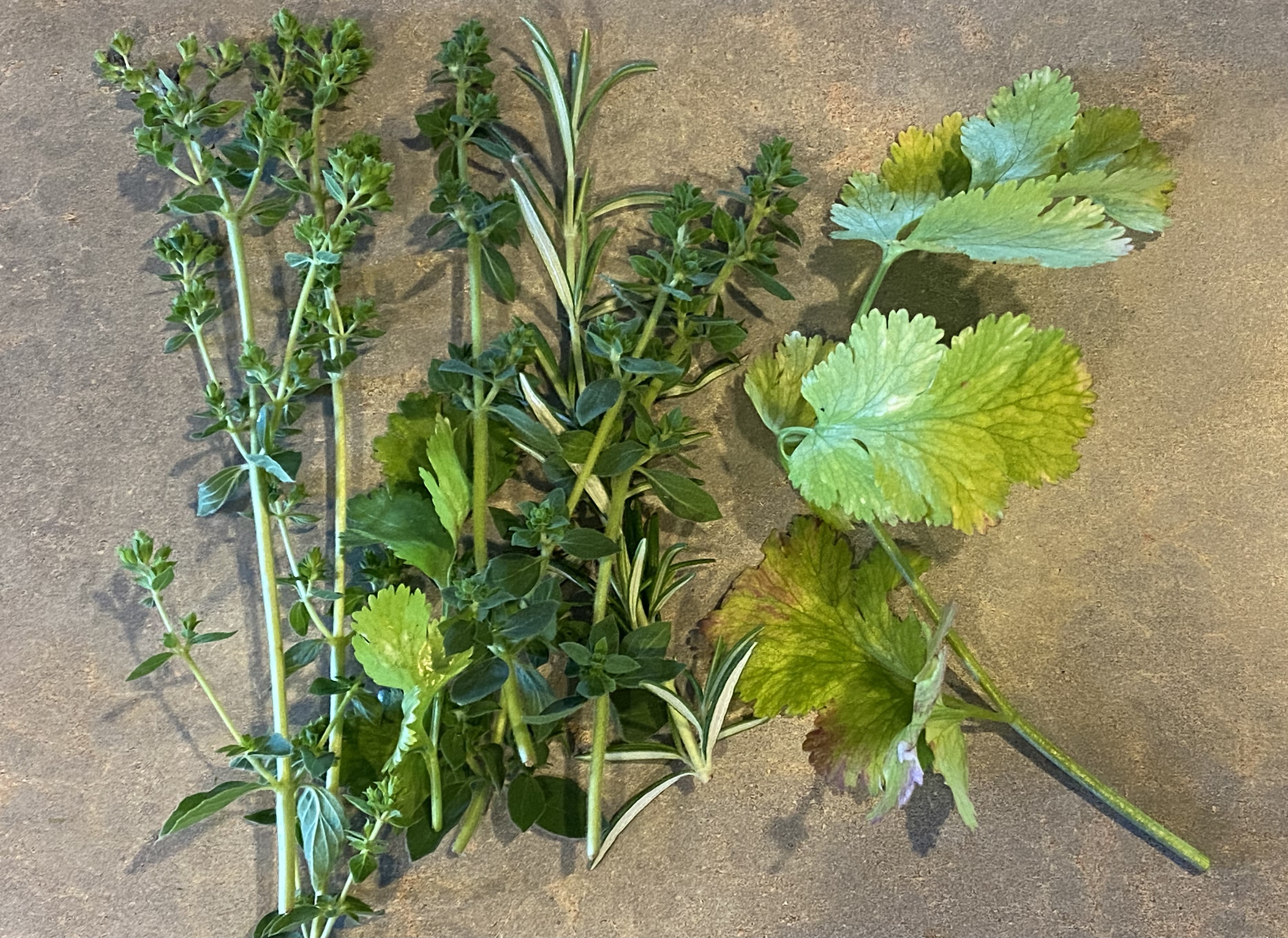

Even if you live in a tiny space, you can do up a single pot with three or four things you fancy – and time of year doesn’t matter much for that project. If you’ve got outdoor garden space, then herbs are a must. Let alone fresh flavors, I’m here to tell you that grabbing a paring knife and heading out the door to peruse and choose is a delight for the senses – scent, sight, texture – it’s a lovely zen cooking moment.
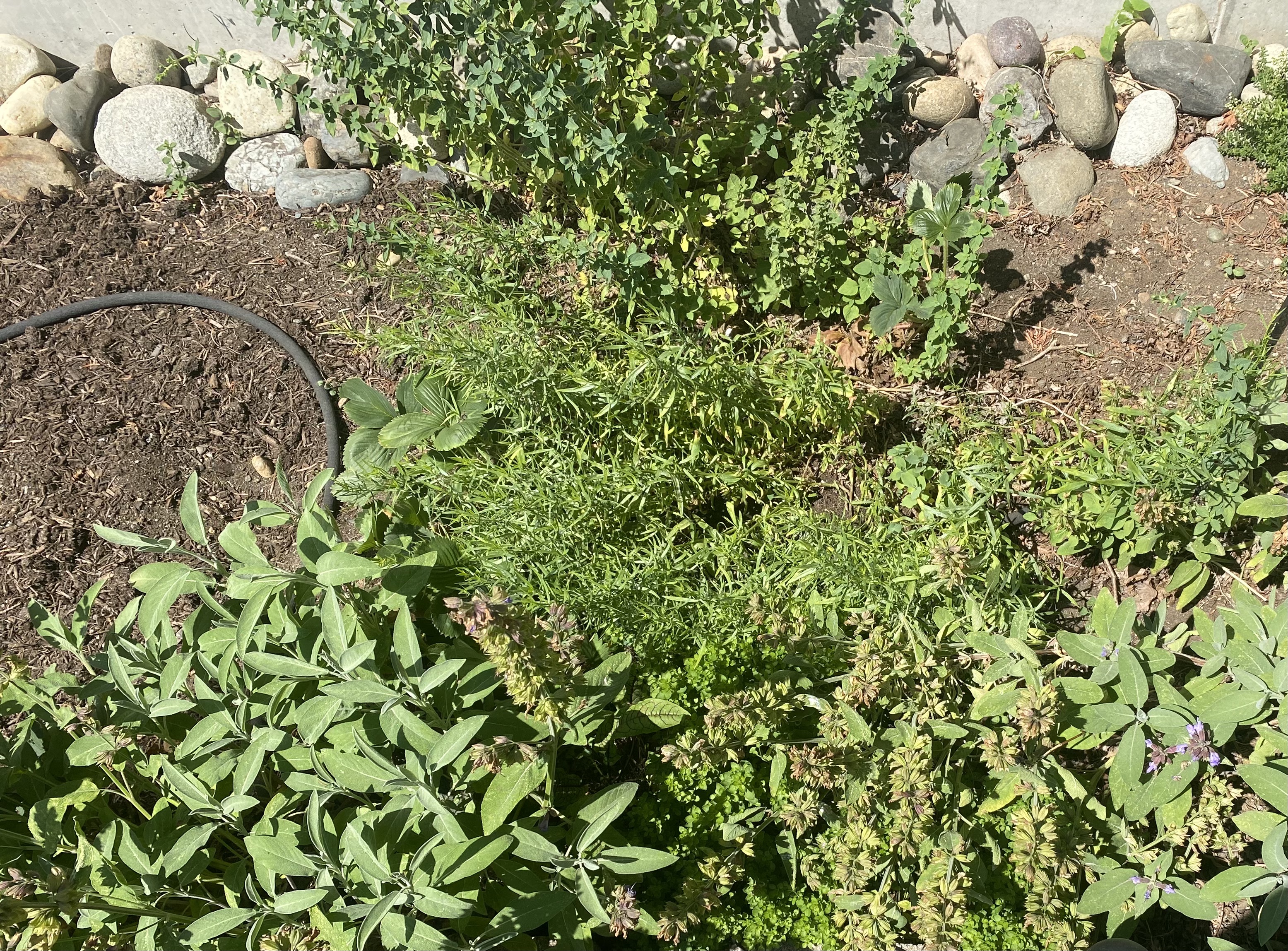

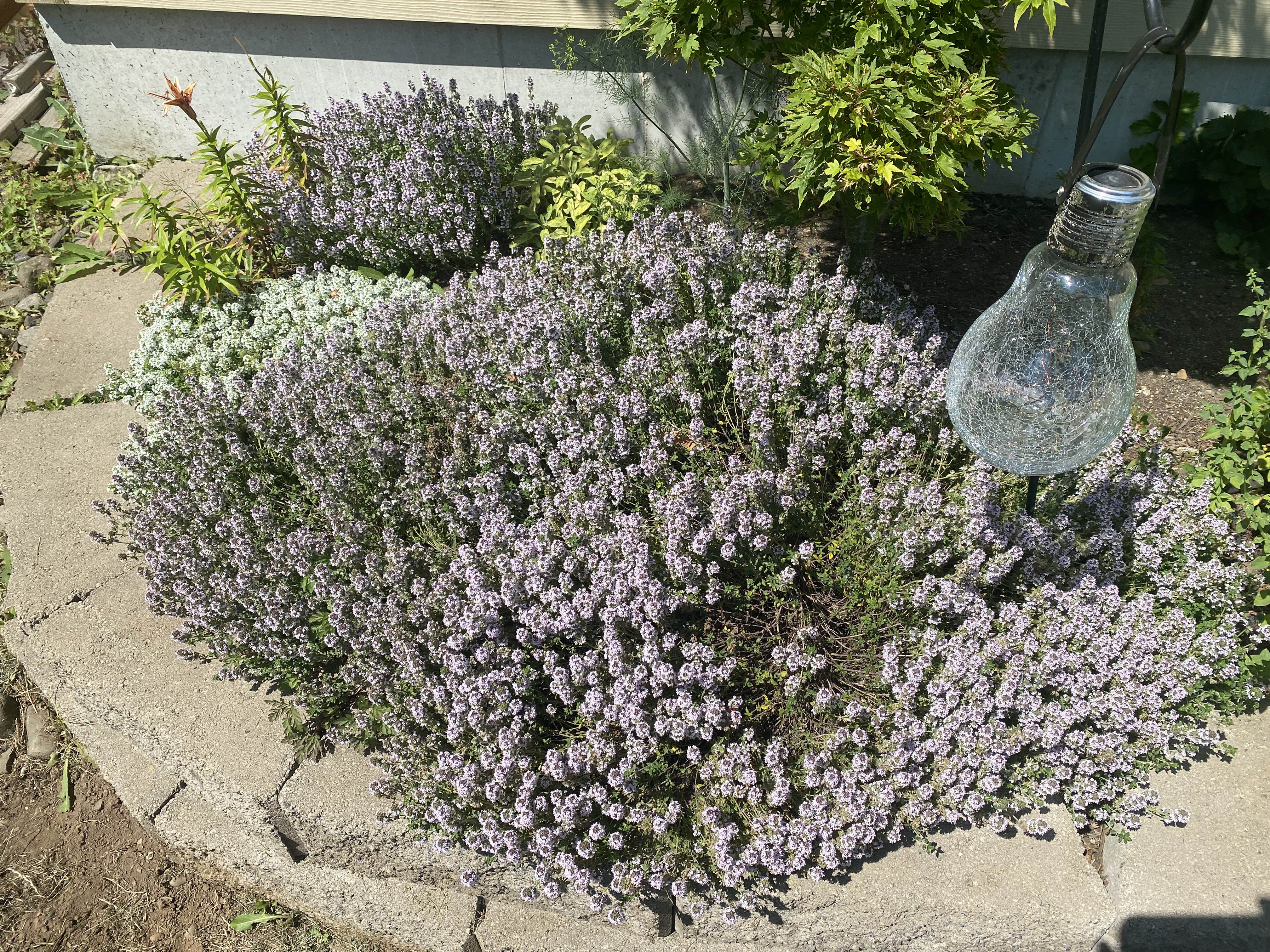
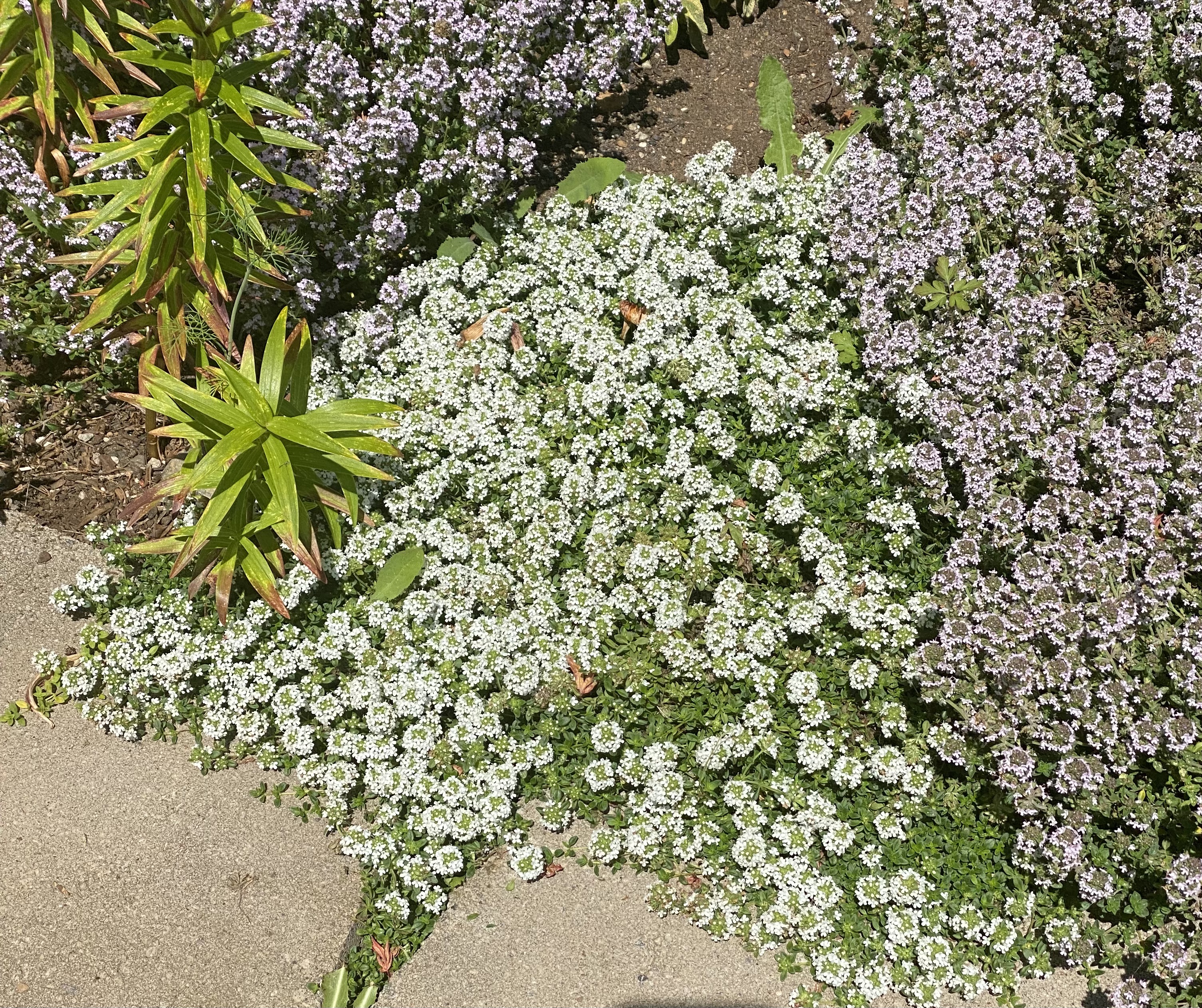
What you grow is absolutely up to you – it’s such an individual journey, I’m not going to suggest a thing. What I will suggest is that you maximize your pleasure once they’re up and growing. As you’ll see from the images here, our herbs are extremely happy, enjoying warm sunny days after cool rainy ones. It would be easy to write something like ‘they’re running late this year,’ but what the hell does that even mean in our world? Now more than ever, we just need to accept and appreciate what we get when we get it.
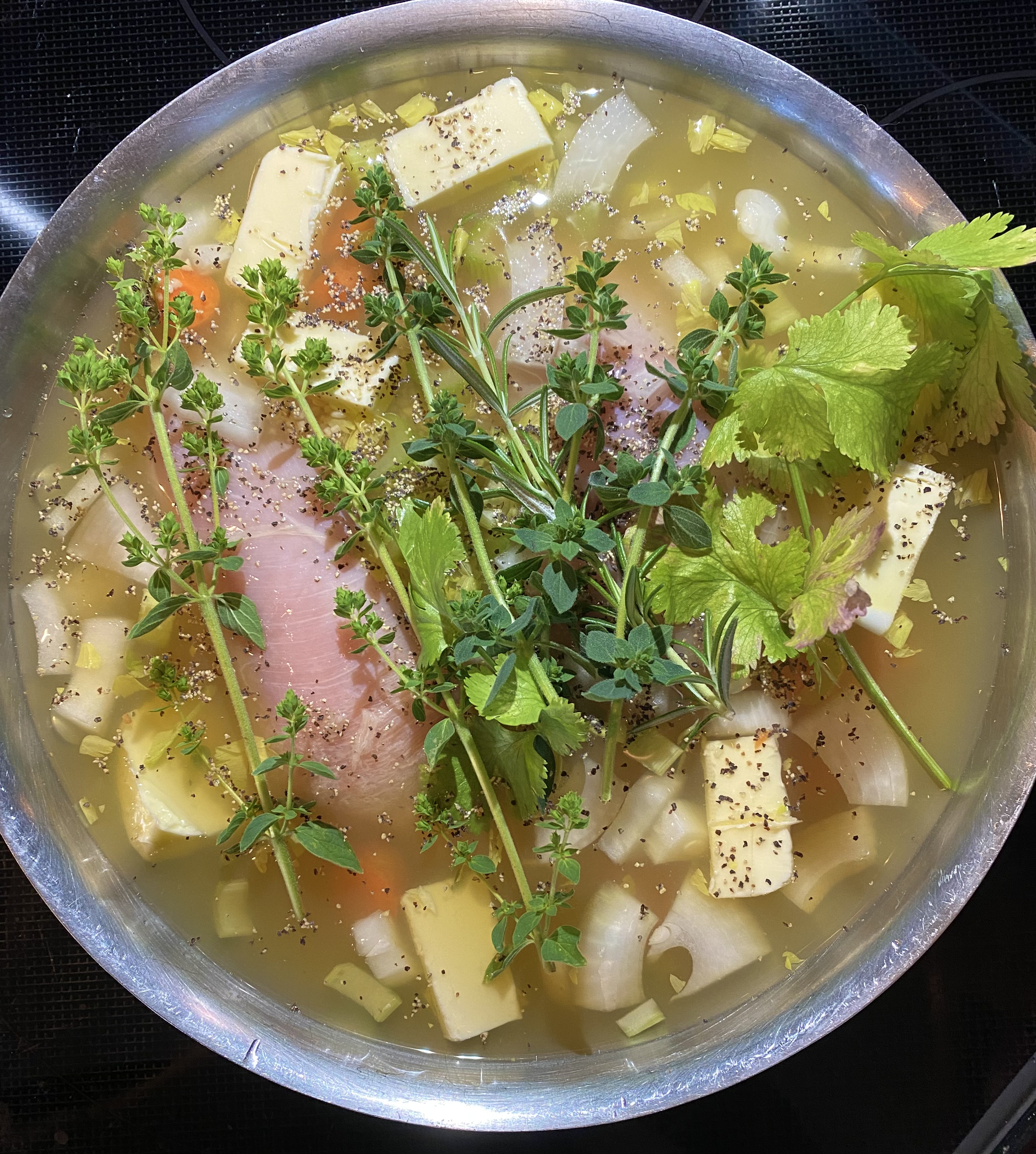

If you’re out picking, cut a couple good sized stems from the ones you realize you’ve not paid enough attention to lately. Bring those in, put them in a little jar with fresh water, and set them right by your primary prep area – let that be your reminder to include whatever it is a bit more often.

Think about using herbs where you generally don’t and expand your horizons – love hen nuts for breakfast? There’s little more delicious than fluffy scrambled eggs with fresh herbs. Add ‘em to a sandwich and make it extraordinary. Put ‘em in your salad mix and not just in dressing – your taste buds will thank you.
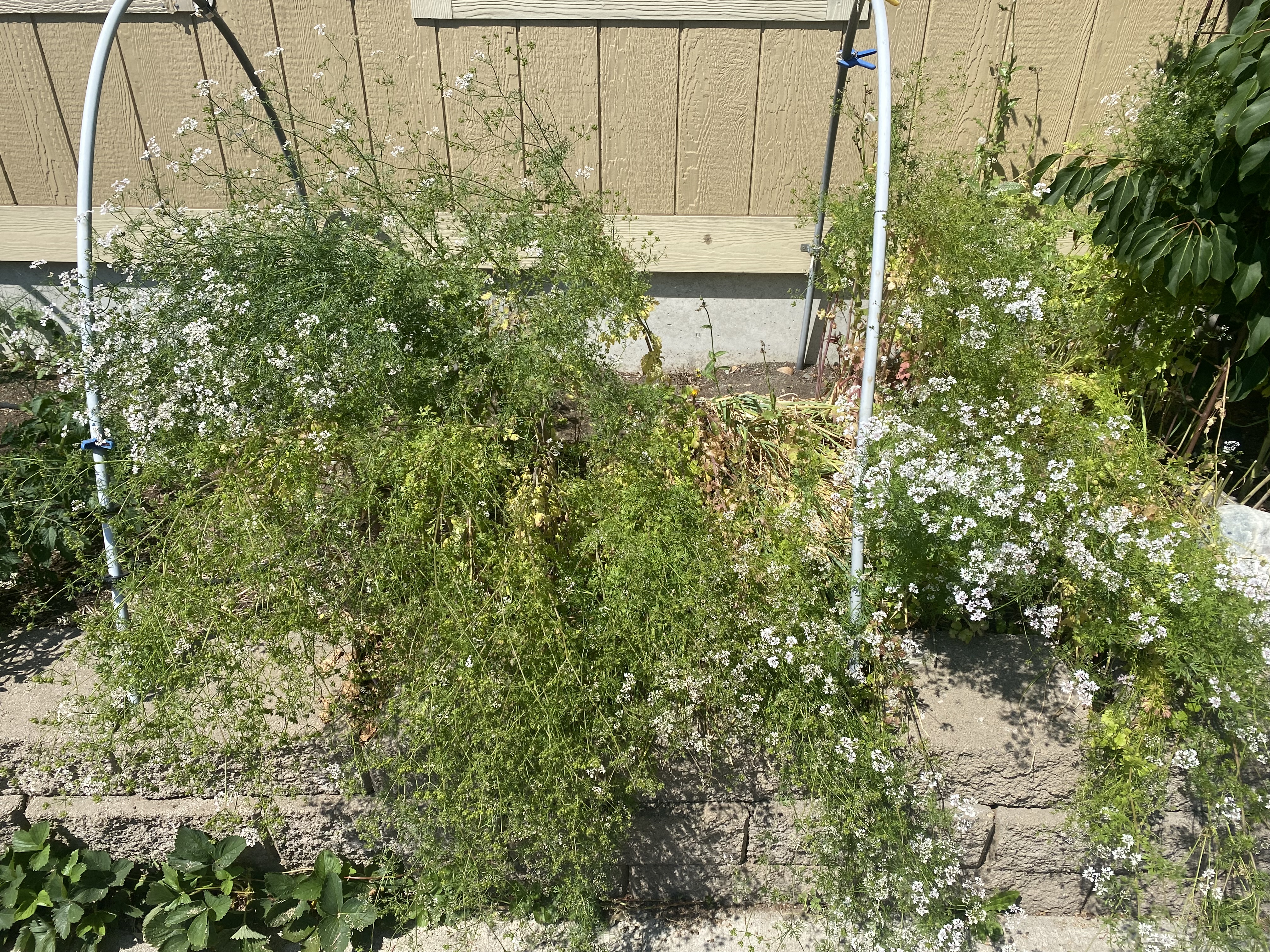

If something starts to bolt so quickly that there’s no way to keep up with it, think preserve or extend – let it go to seed, like this cilantro is doing and later, gather up fresh coriander seed. We enjoy a steady stream of volunteers in our garden beds each year, all of which stem from letting nature do its thing – the results are always a wdelight and keep things nicely diversified as well.


Harvest a bunch of whatever it is that’s going wild right at peak freshness and dry it. You don’t need to strip things down too much – take stems of rosemary, oregano, thyme, what ever you have, and let them air dry on a clean kitchen towel. Once dried, gently strip the leaves, separate out the stems, and freeze in clean, airtight glass jars. Pull out what you need when you need it, and of course keep some in your usually herb storage area as well – that stuff will overwinter just fine with very reasonable potency.

Make your own herb blends. From Herbs de Provence to Italian, Greek, and Mexican, or whatever you happen to love, pre-blended mixes save a time and are a great use during abundant growth years. Always keep in mind that whatever gets called a ‘classic’ mix is nothing more than a guideline – every Nonna and Abuela makes their own version and you should too.

Donate herbs to your local food bank. These folks are thrilled enough when they get salt and pepper, but lay some serious variety on them, and they’ll be turning cartwheels. Blends are especially appreciated here, so once again, if your place is growing like gangbusters, make the best use you can of the bounty and share the love the way it aughta be shared.


Mace, Nutmeg, and Allspice – Everything Nice


Yeah, OK – I got a lot of herbs and spices on hand here at the Urban kitchen – maybe too much, even considering all the developing work I do. Since the Lunar New Year is fast approaching, I started pulling stuff down, making keep or trash decisions, and performing a thorough cleaning before Zao Jin, the Kitchen God, heads back up to heaven with his kitchen report to the Jade Emperor – Never screw with the Kitchen God, folks.

I got to the top shelf left, which is, mas o menos, sweeter stuff. Everything from several different varieties of vanilla bean and cinnamons, to clove, powdered citrus, honey, molasses, agave nectar, and finally, allspice, whole nutmegs, and mace – and those last ones got me wormholin’ a bit.

Why these three spices? ‘Cause I think they’re under appreciated for their savory powers and maybe not as well understood as they might be – so let’s have a gander.

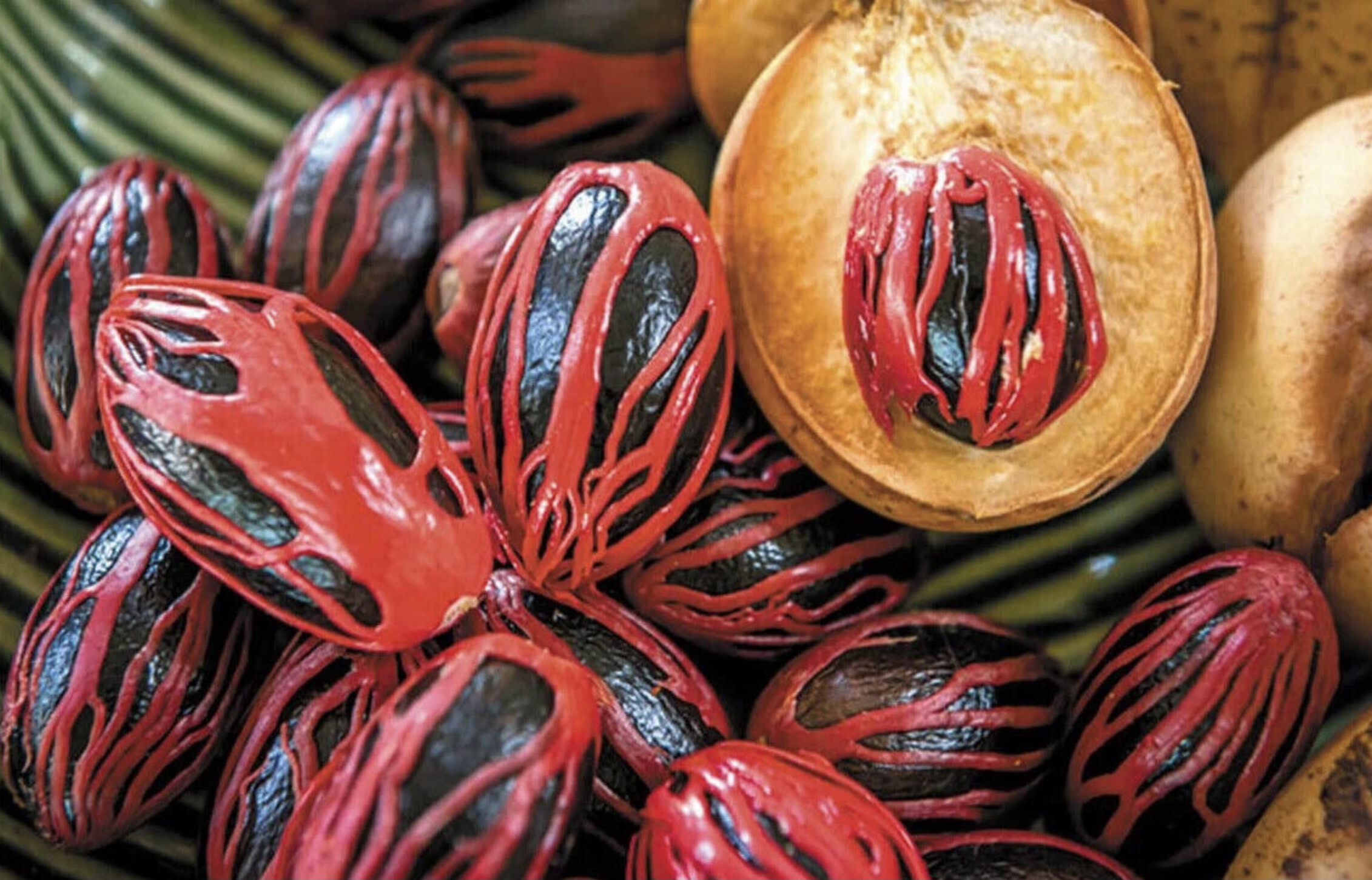
Mace and nutmeg both come from Myristica fragrans, a tree native to Indonesia. The two spices literally grow intertwined – Mace is the bright red aril, the ropy outer layer that surrounds each nutmeg seed. The fleshy peach-colored fruit is made into jam and candy, and the rind gets used for local dishes and nutmeg juice.


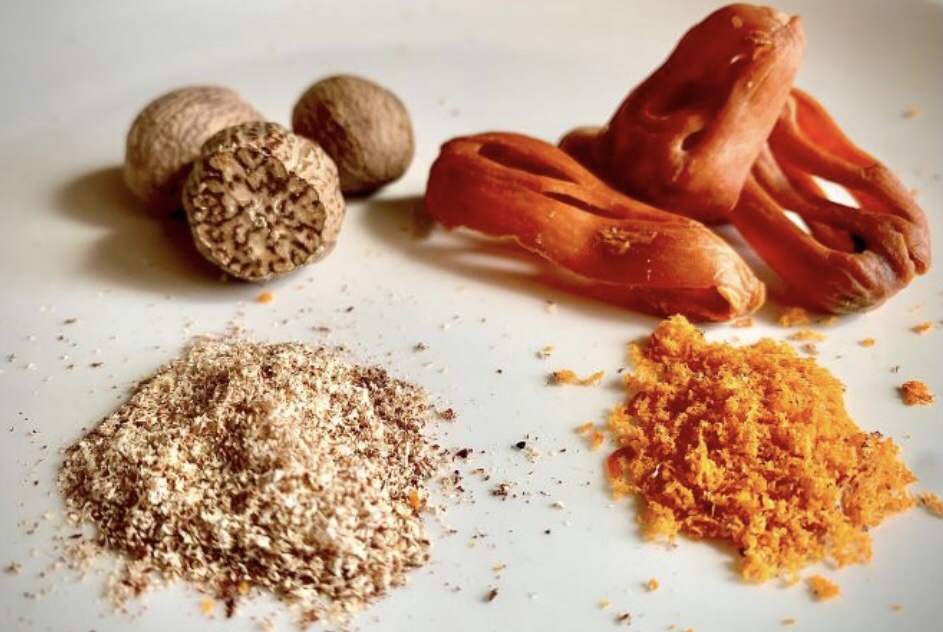
Mace, good mace, has that bright red color when it’s fresh. Peeled off the nutmeg, it dries to a yellowish, rather brittle leather which then makes for a very nice powdered spice. You can buy mace wrapped around a nutmeg, or whole dried – the latter is a great way to keep it, as it’ll last a lot longer and provide a cleaner, more distinct taste profile. Mace has the same nutty, peppery notes as nutmeg, but is subtler.


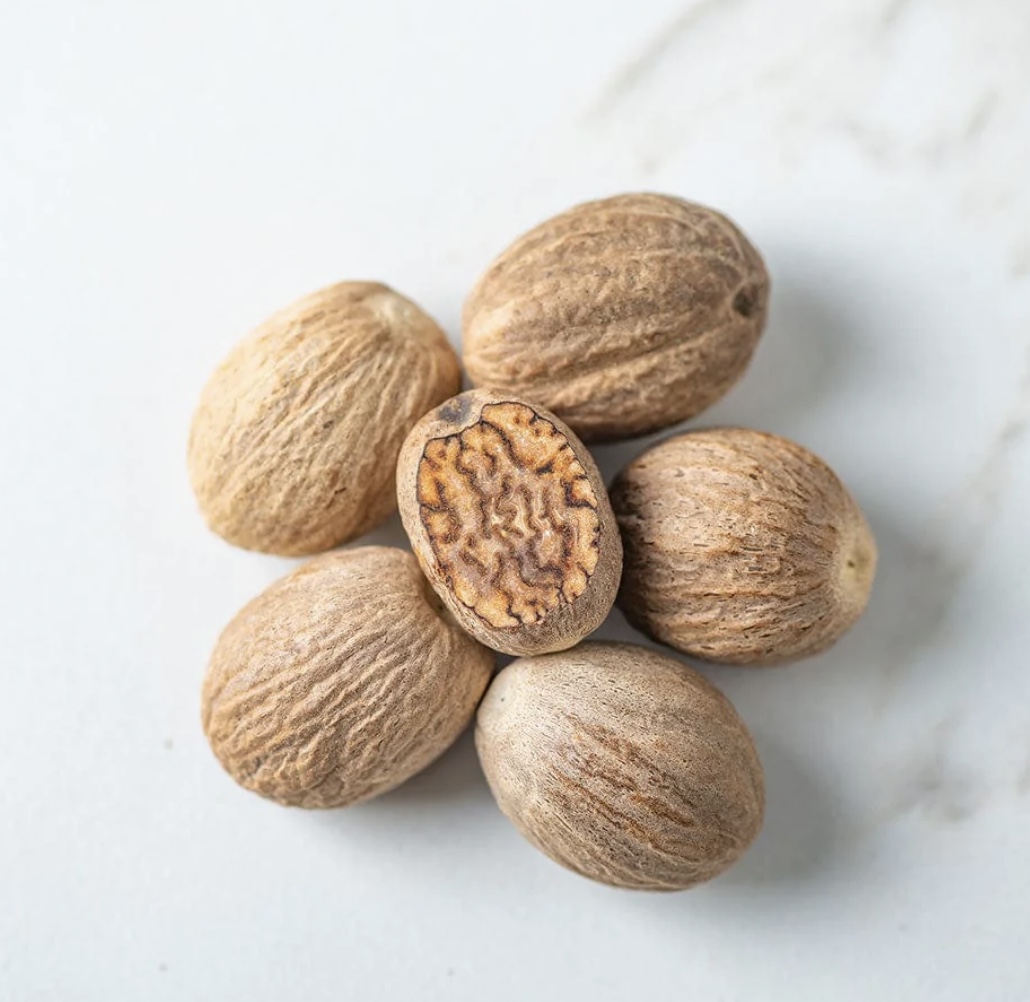
Whole nutmegs are gorgeous – They’re hard, and grate wonderfully into the pungent powder we know and love. Buy fresh whole nutmeg when you need to reload – while the powdered spice will degrade quite quickly, whole nutmegs are good for 2-3 years, and will give you much richer flavor. Nutmeg has a warm, nutty, peppery profile with a lot of potency.

Whole Nutmeg & Mace
Whole Nutmeg & Mace


Allspice is a berry from the Pimenta dioica tree, a shrubby evergreen native to the West Indies – they’re grown across many warm climes these days. The berries are picked green and sun dried, finished, they look like large peppercorns. Biy allspice as whole berries and grind what you need fresh – that’ll give you much bolder flavor and longer storage life.

Dried whole allspice berries

Allspice, especially good, fresh stuff, has an amazing depth and breadth to it – it smells and tastes like a blend of cinnamon, clove, nutmeg, and pepper, and is simply fantastic – like Mace and nutmeg, it is great for so much more than sweet stuff, too.

Jamaican Jerk Rub
Jamaican Jerk Rub

Allspice is the heartbeat of Jamaican jerk seasoning, the scotch bonnet chile fueled spice rub that lights up poultry, fish, and veggies.

Garam masala
Garam masala

Mace is used widely in regional Indian cooking, especially in Mughai cuisine. Quite a few masalas (spice blends) feature it.

Nutmeg makes its way into savory dishes as a je ne sais quoi – a subtle hint of something more – from Mac and cheese to soups and stews, it’s fantastic.

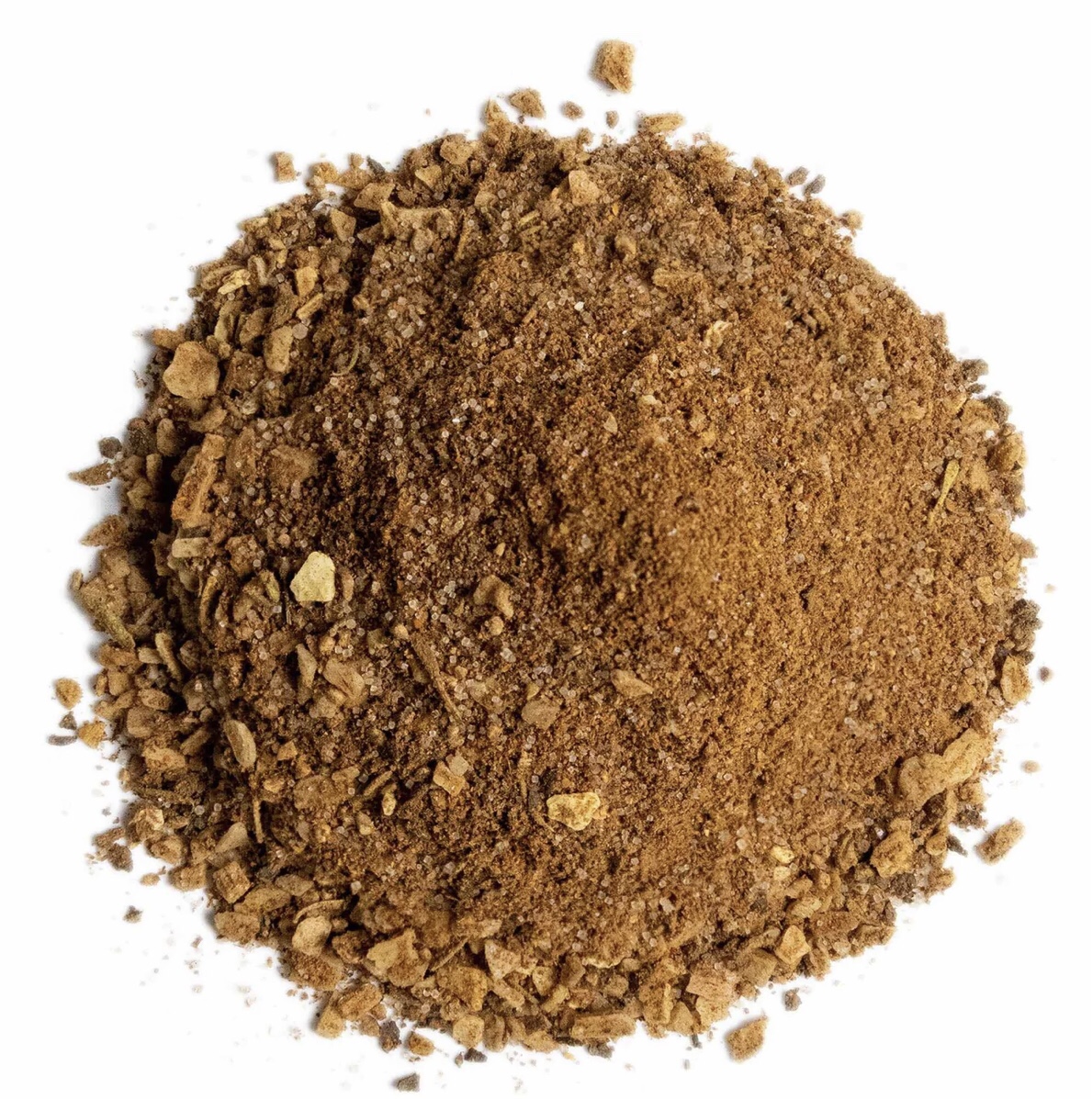
All three of these spices will shine in spice rubs for proteins and veggies. They’re best as warm, minor notes that add a subtle bass note to the stronger headliners like salt, sugar, and pepper. Like Chinese Five Spice blend? Any of these could be one of the five, or added to, and would absolutely shine.
You really can’t go wrong deploying them that way. So dive in and have some fun.

Celery Does Not Suck


Celery gets a totally undeserved bum rap. Need proof? Grow your own from heirloom seeds this year – you can thank me later. Still not convinced? Think of it this way – If we judged all apples by the qualities of the red delicious, we’d think they all sucked, too.

Wild Celery

Celery has been around for a long time, though it’s changed quite a bit from its wild roots. Celery cultivation likely began in the Mediterranean, around three thousand years ago. It’s found and cultivated widely around the globe today, (which doesn’t sound like a loser crop to me). The name derives from a late Latin word, celenon. Apium graveolens is the official moniker.

While we can plant celery and eat it in the same growing season, wild celery is a biennial plant – it flowers and seeds only in its second year.

Called Smallage, wild celery is a marshland plant up to three feet tall, with small, tough stalks and broad, spade shaped leaves. The stalks are generally not eaten, as they’re rather acidic, but the leaves are used as an herb and the seeds are the ones you want as a spice. Wild celery has a notably earthier and more potent flavor profile than its domesticated cousins.

Celery cultivars are generally hearty things that will do well in a bunch of zones and seasons. There’s 8” of snow on the ground as I write this, with temps in the high teens, and ours is merrily growing away out in the garden. Back before big Agra, it was planted as a winter to early spring crop, sewn in September and lasting until April. Celery likes moist to wet nutrient rich soils, with a little salt content.

This stuff really isn’t grown for taste

Now, about that bad rap – First and foremost is the charge that celery has no taste. Fact is, it has tons of taste, but you won’t find it in the grocery store. Here in the states, the über dominant commercial celery cultivar is one version of Pascal, and it’s frankly boring – again, think red delicious. Big Agra commercial pascal is not grown for flavor, it’s grown for durability and longevity in transport and on store counters.

Find locally grown stuff from a CSA or farmer’s market, or better yet, grow your own from a wide choice of cultivars, and you’ll find the flavor.

Celery leaf is where the real flavor is

Next, use the leaves – when I post pics of cooking with fresh celery leaf, bunches of folks take note – as well they should. The leaves are where the signature flavors of celery really are at – good celery is earthy and complex, and those leaves will add a delightfully herbaceous, peppery note to stews, soup, stir fries, braises, and bakes.

The second charge is to the effect that celery has zero nutritional value – that old saw about burning more calories chewing it than it delivers. Again, if you’re eating shitty grocery store celery, it’s probably all true – but not if you choose wisely.

A hundred grams of good celery will give you just shy of 18 Kcals, about 4 grams of carbs, and a gram of protein. You’ll also get decent shots of vitamins K, A, C, as well as follate, manganese, potassium, and calcium – so there.

What can you grow? Over a dozen cultivars – there’re stalk, leaf, and root bulb versions to try. USDA Zones 2 to 10 are good to go for much of this stuff. Choose a spot with indirect sunlight and make sure to water regularly, and fertilize once a month – it takes about 60 to 90 days for celery to mature, but once it does, it’s generally hearty and prolific.

Real stalk celery, not the grocery store kind

For stalk celery, there are some dandy Pascal variants – Monterey is deep green, with really lovely flavor, complex and peppery. Tall Utah has good flavor and big, juicy stalks. Conquistador is early maturing, great for zones with a short growing season. And if you like color, Red Stalk is a zesty cultivar from the early 18th century.

Leaf Celery

Leaf celery varieties generally have thinner stalks and notably more flavor in the leaf – they’re sometimes packaged as Chinese celery. Safir is my fave, with a crisp leaf and an excellent, peppery flavor, Par Cel is another great choice – it’s another delightful 18th century heirloom cultivar.

Tom Thumb Celeriac

In Europe, celeriac gets far more use than it does here, and we’d be wise to join the team. It’s the root bulb, or hypocotyl that’s eaten with this one, cooked or raw. There are a bunch of varieties to try, though celeriac will only thrive in zones 7 – 9. Find the Tom Thumb variety, and you’ll have a great choice for small gardens – and maybe steer clear of Giant Prague and Early Erfurt unless you’ve got a big garden – they grow humongous roots in the 2 to 3 pounds range.

What to cook with your celery? First off, any and every aromatic base mix that employs celery will be far superior with good stuff in the mix, as will the soups, stews you make from them.

Use them leaves in aromatic base mixes

When you discover that there really is flavor to go with the legendary crunch, something as simple as fresh butter and sea salt on stalks just out of the garden are pretty sublime – or maybe work up a compound cream cheese or three.

Don’t use high heat when drying celery leaf – it robs flavor and nutrients

The leaves dry well and will maintain their potency for several months, but the real joy of growing your own is having fresh available whenever the spirit moves you – I probably use celery leaf more often than I do cilantro, and I like cilantro a lot.

Thai inspired Celery Salad

Cold celery-based salads also rock – how about something with Thai Basil, cilantro, and carrot, with a spicy vinaigrette, or a celery and dried cranberry salad with nuts? Celeriac and apple salad with a creamy dressing is sublime.

Celery salad with dried cranberries and walnuts

The great thing is that once your taste buds have been alerted to the true nature of this under-sung veggie, the sky’s the limit for your creativity.