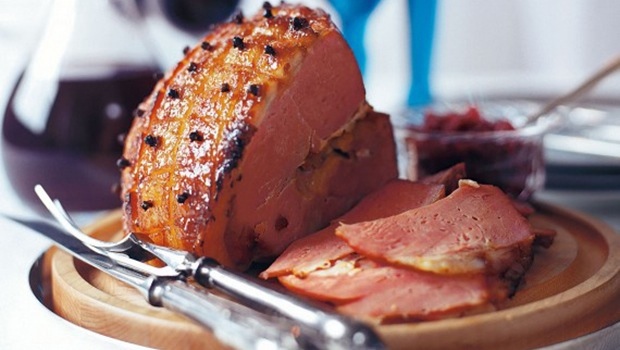
Easter Ham & Potatoes Gratiné


Easter dinner is one of those Gotta Cook a Ham Days, if ever there was one.  

Technically, ham refers to a back leg or shoulder cut of pork, which is then salt-cured, smoked or dry aged. Hams are found both bone-in and boneless. It may be a bit harder to find bone-in hams from any of the big national butchers, and frankly, that’s just fine with me; like everything else, the closer to you the ham is produced, the fresher and better it is. We have a couple local butchers that do beautiful bone in hams; that’s what we opt for and what I’ll recommend to you: That beautiful bone just has more flavor, for my mind, and that big juicy bone will make fantastic stock for soup. When choosing your ham, figure about a quarter pound per person for a boneless jam and a half pound for a bone in.

 Now, that said, there are a bunch more variations on the ham theme out there, so us cooks have to pay attention to what we buy in order to provide optimal cooking, because techniques vary widely. Fresh hams take longer to cook than canned ones, cold-smoked hams are typically simmered, not baked. 

The BIG ham FYI is that most store-bought hams come fully cooked and only need to be heated through to 140° F internal temperature. 

With all that variety, it’s best to carefully follow the instructions from your butcher, (or on the package), for preparation and cooking methods and times. After cooking, rest hams for 10 minutes before carving.

Now for any of those varieties up there, here’s our take on the famous glaze that so many go nuts for, the Honey Glazed Ham; whip this up for your brood without the big price tag. This recipe will be just right for a 5 to 6 pound pre-cooked ham.

2 Cups Honey or Agave Nectar

3/4 Cup Unsalted Butter

1/4 Cup Dark Corn Syrup

1/4 Cup whole Cloves

Juice of 1/2 fresh Orange

Pinch of Sea Salt

Preheat oven to 300° F.

With a very sharp paring knife, score a diamond pattern into the ham roughly 1/4″ deep; make the diamonds about 1 1/2″ or so.

Put the ham into a foil lined baking pan; pin a whole clove into the center of each diamond. 

In a heavy saucepan over medium heat, add the honey, corn syrup, butter and orange juice. Stir constantly to fully incorporate. Once the glaze is blended and heated through, add a tiny pinch of sea salt to taste; the salt should just brighten up the flavor a bit, not make it salty. Reduce heat to warm and stir occasionally.

Brush glaze evenly over ham, set ham onto rack in middle of your oven and bake for 1 hour and 15 minutes, re-basting ham every 15 minutes. 

For the last 5 minutes of baking, turn on broiler to caramelize the glaze; watch carefully during this phase so the glaze doesn’t burn!

Remove ham from oven and rest for 10 minutes before carving.
 

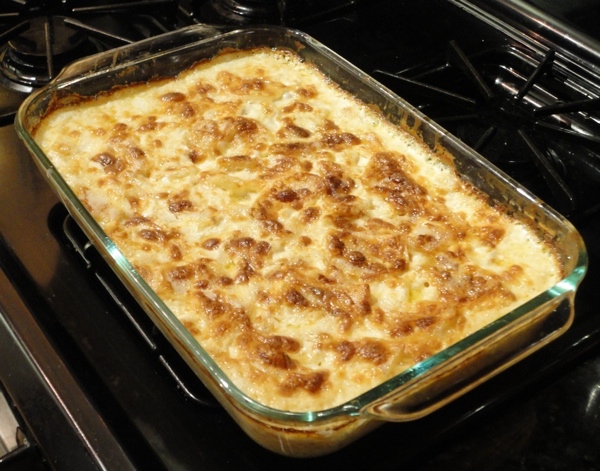
Scalloped Potatoes

House made scalloped potatoes not only beat the pants off anything store bought or in a package, they’re easy to make, too. Don’t just save these babies for ham; they go great with chicken or beef as well, and dressed up with bacon, sour cream and green onions, make a decent main dish. 

‘Scalloped’ Potatoes is a bit of a misnomer, actually. Scallop derives from ‘escalloped’, from the French, meaning  to bake food, usually cut into pieces, in a sauce or other liquid, often with crumbs on top. Technically, that dish refers to fish, and sort of got adopted informally for spuds as well; gratiné is actually the more accurate title for this recipe, frankly.

A few general thoughts on making perfect Spuds Gratiné. Potato variety is critical to great spuds, and Yukon Gold is the go-to for these. Next comes the prep, and slicing them thinly and uniformly is the key there; about 1/8″ will do the trick. For the sauce, 50% – 50% heavy cream and whole milk will give you the perfect balance of texture and creaminess; while you can use lighter dairy, doing so will not yield great results, frankly. Also, avoid ultra-pasteurized dairy

Potatoes Gratiné

6 – 8 Yukon Gold Potatoes

1 1/2 Cups Heavy Cream

1 1/2 Cups Whole Milk

1 Cup Extra Sharp White Cheddar

2 Tablespoons Whole Wheat Pastry Flour

2 Tablespoons unsalted Butter

1/2 teaspoon Marjoram

1-3 cloves Garlic

1-2 shots Tabasco sauce. 

Sea Salt 

Freshly ground Grains of Paradise (Black pepper is fine too)

Preheat oven to 375° F

Lightly oil a 3 quart baking dish.

Cut potatoes evenly into 1/8″ slices. You can peel them if you need to, but best to leave them on for the nutrition. Submerge in ice cold water until ready to incorporate.

Smash garlic cloves under the side of a chefs knife, peel and mince.

Grate cheddar.

In a heavy saucepan over medium heat, melt the butter thoroughly. Add the flour, stir into the butter to form a roux. Gradually add the milk, stirring constantly. Add the cream next, slowly and evenly. Add the garlic, marjoram, 2-1/2 teaspoons salt and 1 teaspoon grains of paradise, stirring steadily. When everything is fully incorporated and heated through, remove from heat and set aside.

Drain the potatoes and pat dry with a paper towel. Arrange a slightly overlapping single layer of potatoes in the baking dish, then ladle a generous layer the cream sauce the potatoes. Repeat with the remaining potatoes and cream mixture. Three to four layers of potatoes and sauce is just about right; make sure you end up with a sauce layer. 

Spread the last of the cheese evenly over the top of the dish.

Bake until the potatoes are fork tender, about 45 to 50 minutes.

Let the potatoes rest for 5 to 10 minutes before serving.
 

Spuds Three Ways


Ah, potatoes;
Do we ever get tired of them? Counting all the ways they’re enjoyed for all three daily meals, I’d say not.
Maybe you’re stuck in a rut for variety, though, and need a little push? I got yer back on this. Here’s a delicious trio to try, one over the top, one pretty healthy, and one in between.


Twice Baked

4 large Russet Potatoes
1 Cup heavy Cream
1/2 Cup Sour Cream
1 Cup Extra Sharp Cheddar Cheese
4 ounces Butter
4 strips thick cut Bacon
4 Green Onions
Sea Salt & fresh ground Pepper
Extra Virgin Olive Oil
Dash of Tabasco

Preheat oven to 325° F

Rinse your spuds and pat dry with a clean towel.

Coat whole spuds with olive oil by hand, place in a glass baking dish. Season the skins evenly with salt and pepper.

Slide the spuds into the oven and bake for about an hour, until the spuds are fork tender.

Fry bacon, dry on paper towels and chop to a 1/4″ dice.

Rinse, strip roots and any nasty stuff from green onions, and chop those to a 1/4″ dice.

Grate cheddar cheese.

When the spuds are ready, pull them out of the oven and let them cool just long enough to handle with a clean towel, (in other words, still quite hot).

Reduce oven heat to 250° F.

Cut the spuds into lengthwise halves, then carefully scoop the guts into a mixing bowl, keeping the skins intact.

Add cream, sour cream, half the cheese, bacon, onions and butter to spuds and blend thoroughly. Add salt and pepper to taste.

Refill the skins with the spud mixture, top with the remaining cheese and slide those guys back into the oven; bake for another 15 to 20 minutes.

Serve hot. Great by themselves, or with a nice salad. Pair with a nice Fumè or Dry Reisling.


Roasted

8 – 10 small potatoes, (try a red, white and blue variety)
1\2 Sweet Onion
1-2 cloves Garlic
1 small sweet Pepper, (red, yellow or orange as you please)
2″ sprig Rosemary
1/2 teaspoon Thyme
Sea Salt and fresh cracked Pepper
Extra Virgin Olive Oil

Preheat oven to 325° F.

Rinse and field strip onion, garlic and pepper, (in case you’re new here, ‘field strip’ means remove outer skin, cores, seeds and membranes, as needed.)
Rough chop onion and pepper into about 1″ pieces, quarter the garlic cloves.

Rinse, pat dry, and halve potatoes.

Toss spuds and veggies into a large mixing bowl. Add a couple tablespoons of EVOO, ( Extra Virgin Olive Oil), and toss to incorporate. Strip leaves from rosemary and add to bowl with thyme, salt and pepper. Toss to blend.

Throw everybody into a glass baking dish, and bake for 30 to 40 minutes, until potatoes are fork tender.

These are a great side for broiled fish, roasted game or bird.


Latkes, (AKA, best potato pancakes ever)

5 medium Russet Potatoes
2 medium Sweet Onions
3 medium Eggs
1/4 to 3/4 Cup Flour
1 teaspoon Sea Salt
1/2 teaspoon fresh ground Black Pepper
1/2 to 3/4 Cup Oil

For the flour, unbleached all purpose is fine, but try whole wheat pastry as well, it’s very nice indeed.

For the oil, stick to Sunflower, Canola, or Corn; they won’t add any heavy flavor notes to the latkes. And speaking of oil, oil temperature is critical to good results when frying; oil maintained at 350° F will ensure nice light, crispy results that don’t taste and feel soggy. Use a candy thermometer to track oil temperature, and always add foods to be fried sparingly to allow the temperature to stay where it needs to be.

Peel your spuds and toss them into a large mixing bowl filled with enough ice water to completely submerge them.

Skin and trim ends from onions. Toss them into the ice water with the spuds.

Add oil to a frying pan over medium high heat; you’ll want about 1/4″ of oil or so. Have your thermometer handy for gauging oil temp.

Drain your spuds and onions and pat dry with a clean paper towel.

Grate the potatoes and onions with the finer side of a hand grater, or use a food processor or blender if you prefer. The hand method gives the best results for my mind. You want a nice, consistent size and blend of spuds and onions.

Check your oil and adjust heat so you’re sitting right at 350° F.

Place a platter lined with paper towels in your oven and preheat to Warm.

Toss the spud and onion blend into a colander lined with paper towels and gently squash the mix to remove excess water.

Dry off that large mixing bowl and toss your spud/onion blend in.

Lightly beat the eggs by hand and add them to the spuds and onions, then add the salt and pepper.

Add flour 1/4 cup at a time until the mixture holds together on its own, like a chunky pancake batter.

Fill a large soup spoon with a heaping hunk ‘o batter. Slip that puppy into the hot oil and gently squash it down into a cake. Fry one side for approximately 3-5 minutes, until golden brown, then and fry the other side for another 2 to 3 minutes. Look for that nice golden brown on both sides.

Now slide those little golden beauties onto the paper towel covered platter in the oven and keep fryin’. Add a little more oil if needed and watch that oil temp.

Serve nice and hot with the applesauce and a little dish of sour cream, crèma or crème fraîche. Latkes deserve to be a meal and they won’t disappoint; pair with a local sparkler or hard cider.

Beautiful Baguettes


In France, every day includes a trip to a Boulangerie, the local bakery, for a baguette or two. If you love bread like I do, then there are few versions more likely to float your boat than this fabulous French staple. Now for a disclaimer; I took some baldy poetic license calling this post Baguettes, ’cause this ain’t Julia’s Pain Français. This is a quick and dirty, want some fresh bread now, rough loaf, but it’ll beat the shit outta anything from the store. That said, I’ve revised the process a bit to make this version a bit more flavorful and true to its name.

If you love bread like I do, then there are few version more likely to float your boat than this fabulous French staple.

This recipe came with my Kitchen Aid mixer; I know a bunch of y’all have one too, but it seems many have lost the little recipe book, which is really a wealth of good stuff. This one will make two beautiful baguettes.

7 cups all-purpose flour
2 packages active dry Yeast
2 1/2 Cups warm Water (110° F)
1 Tablespoon Sea Salt
1 Tablespoon Butter
1 Tablespoons Cornmeal
1 Egg White
1 Tablespoon ice water

As noted, this recipe is meant for a KitchenAid mixer, but you can certainly do it by hand.

Dissolve the yeast in the warm water in a mixing bowl that has also been warmed to about 100° F. Allow the yeast to bloom for about 5 minutes.

Add the flour, butter and salt to the water and yeast.

Using the dough hook for your KitchenAid, attach The bowl and slide the speed setting to 2; mix for 1 to 2 minutes, until everything is well incorporated.

Continue to knead on Speed 2 for 2-3 minutes longer.

Dough will begin to pull away from the sides of the bowl, but will still feel somewhat sticky; it’s important to make sure you stop kneading when the dough still is still sticky, 

Turn dough into a large lightly buttered bowl, and coat the dough evenly.

Cover with a clean, dry towel and allow to rise in a quiet, relatively cool spot, free from drafts, until the dough has doubled in bulk. You want a cooler, slower rise than you might be accustomed to. This helps the baguette develop is characteristic flavor and texture.

Punch the dough down gently and divide it in half.

Roll each half into a rectangle about 12″ x 15″.

Starting on a long side, roll the dough tightly and evenly into a baguette shape, about 15″ long and 2″ wide.

Cover with a clean, dry towel and allow to rise in a quiet, warm spot, free from drafts, for about 1 hour, or until the dough has doubled in bulk.

Preheat oven to 425° F. Place one rack square in the middle, with another below; leave enough room for a cast iron skillet full of boiling water. Ideally, you’ll have a heavy pizza stone or baking pan of the same material; this really makes a difference, just as the stone does for pizza. Put the stone or pan in the oven to preheat as well. 

Place a large cast iron skillet on the lower rack, filled with boiling water. If you want to go all out, find a nice big rock, clean it up,  and heat it separately through the preheat cycle, then carefully lower it into the skillet of water when you begin to bake. Our ovens at the bakery are stoned line, and have precise temperature and steam controls. We don’t at home, and just like Julia discovered 40 some years ago, this is the best way to approximate a real baking oven at home.

With a very sharp knife, make 4 diagonal cuts on top of each loaf, about 1″ long for each.

Carefully slide your baguettes onto the hot stone or sheet and bake for 20 minutes.

Combine egg white and cold water and whisk lightly. Pull the rack with your loaves on it out carefully, and brush each loaf lightly with the egg wash.

Return to the oven and bake 5 minutes longer.

Immediately remove baguettes from oven and transfer to a wire rack to cool.

Try not to eat it all before dinner.

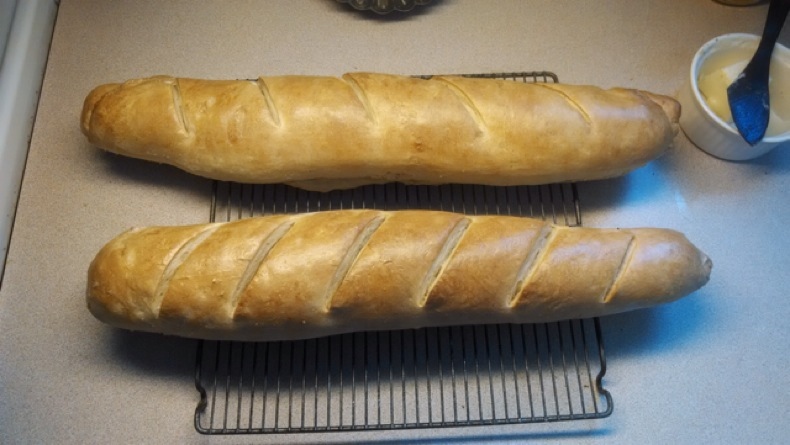
By the way, those beauties at the top of the post were made by our Producer, Steve, right after we recorded; bread is powerful stuff!

Beans-R-Us


You know the rest, right?

😉

Beans are truly a superior food, as most of the world knows; they’re cheap, versatile and really good for you. Beans are high in antioxidants, fiber, protein, B vitamins, iron, magnesium, potassium, copper and zinc. There’s some argument that including beans regularly in your diet may help reduce the risk of diabetes, heart disease, and colorectal cancer. And beyond all that, they’re genuinely filling and delicious.

So is there such a thing as a fartless bean? Well, sorta, yeah. Soaking dry beans overnight definitively works, as does cooking beans in the left over liquor from the last batch you cooked. Lately, there are reports that a couple of probiotics, Lactobacillus casei and Lactobacillus plantarum added to beans will cause them to produce less fartáge, but I’ve not tried that. Soaking them overnight, (8 to 12 hours), actually starts the germination process, breaks down some of the complex bean sugars and thereby causes less hot air.

When it comes to shopping, you’ll get better quality and flavor out of dried beans then canned, as well as more beans for your buck. Now, if you see a killer deal on canned beans, don’t pass them up; I snagged a dozen 15 ounce cans for $6 at my local store the other day.

To get the best out of canned beans, definitely rinse them before you use them. The liquid in canned beans contains a bunch of starch and salt that you just don’t need. Rinsing that out with plenty of nice, cold water will get rid of the crap, improve flavor, and helps remove the metallic taste you sometimes get with a canned bean.

Now for dried beans: Although soaking really isn’t a big deal, if you just don’t have enough time for a proper overnight soak, you can do a speed soak: Rinse your beans thoroughly in cold water, then toss them in a pot and cover with 3+ inches of nice, cold water. Bring ’em almost to a boil, until little bubbles are forming around the edge of the pot like when you scald milk. Pull ’em off the heat and let them sit uncovered for an hour. Drain ’em and then cook ’em. I always like low and slow as possible when cooking beans, they can develop flavor and marry whatever you put in with them.

If you’re using lentils, split peas or little bitty beans of some other variety, you can just toss ’em into a soup or stew with no soaking and let them do the low and slow with the rest of the gang. So long as you’ve got a few hours cooking time, they’ll end up just fine.

And speaking of varieties, stock up folks! We keep the following in our pantry at all times: Kidney, Pinto, Great Northern, Black, Garbanzo, Split, Lentils (red, white and green), Pink, and Cannellini. There are a bunch more out there, especially with the resurgence in heirloom varieties these days; try ’em, you’ll like ’em.

Like baked beans? Make your own, they’ll beat the tail off of anything from a can. Great Northerns are one of my fave legumes. They’re the big, white ones with a nice firm texture and delicate flavor; they are perfectly suited to soaking up all the rich flavors of a great baked bean.

1 Pound Great Northern Beans
1/2 Pound thick cut Pepper Bacon
1 medium Sweet Onion
1-3 Jalapeño Chiles
2 Cups Pork Stock, (Chicken or veggie is fine too)
1 Cup Tomato Purée
1/2 Cup dark brown Sugar
1/4 Cup Blackstrap Molasses
1 teaspoon Sea Salt

Soak your beans overnight in a glass container. Use enough water to cover the beans by a good 3″ to 4″.

Preheat oven to 250° F.

Cut bacon into 1/4″ cubes or pieces. Mince onion, field strip and dice jalapeño.

In a large oven-safe casserole or pot over medium high heat on your stove top, cook the bacon until it starts to get crispy. Remove the bacon and set it on a pepper towels to drain.

Add onion and jalapeño and onion and cook until the onion starts to get translucent.

Add the tomato purée, sugar, molasses, and salt, blend well; reduce heat to low.

Drain the bean liquid into a measuring cup; keep 2 cups of that.

Toss the drained beans into the casserole. Add the 2 cups of bean liquor, the pork stock and the salt. Return to medium high heat and bring everything to a rolling boil.

Slide that baby into the preheated oven and allow to cook for at least 6 hours, and 8 is better.

Hands down, our favorite version is a classic Tex-Mex bean; here’s how we do ours,

Go-To Tex Mex Beans

1 16 ounce can (Or 16 ounces dry) Black Beans
1 Cup stock, (Pork preferred, beef or Veg OK)
1 Tablespoon Shallot, minced
1/4 jalapeño chile, stemmed, seeded, cored and minced.
1/4 Roma Tomato, stemmed, cored, seeded and minced.
1 strip Bacon, diced
1/2 teaspoon ground Coriander
Sea Salt & ground Pepper to taste

If using dry beans, soak overnight per directions, drain and rinse. If you used canned beans, pour them into a sieve and rinse until the water runs clear.

Heat stock to rolling boil over medium-high heat, reduce to low as soon as it gets there.

Throw everybody into the pot and cook low and slow, covered, for at least an hour, and more is better. If things start to get a bit thick, add more stock to desired consistency. We like the jus to coat a spoon, like a thin soup.

Salute!

Cranberries!


Cranberries are wonderful, ya know? Just like turkey, I gotta ask why we only eat these once a year. When the season comes, (and it’s here right NOW, gang), grab a half dozen more bags than the one you need and freeze them.

 photo image-5.jpg

OK, now that you have some, what are y’all gonna make? If it’s just cranberry sauce you crave, bypass that lame recipe on the back of the bag and try my version; folks at our house go nuts for this, and so will yours.

Now, how about a couple things a bit more outside the ‘same old’ box? Here’s a couple of great recipes that explore the savory side of cranberries.


Chutney is a spicy condiment that hails from a bunch of southeast Asian and Indian cuisines. Typical chutney blends the flavors of fruits and vegetables with vinegar, spices, and sugar. It’s a wonderful spin from the ordinary, so give it a try.

Cranberry Chutney

1 bag Cranberries
1 small sweet Onion
1 Apple
1 clove Garlic
1/2 Cup Red Wine
1/4 Cup Agave Nectar or Honey
2 Tablespoons Balsamic Vinegar
1 Tablespoon Oil
1/2 teaspoon ground Black Tellicherry Pepper
1/4 teaspoon Sea Salt

In a stainless steel saucepan over medium flame, heat the oil.

Dice the onion. Peel, core and dice the apple. Peel and mince the garlic.

Toss the onion, apple, and garlic into the oil and sauté until the onion starts to go translucent, about 5 minutes.

Add the wine, balsamic vinegar, agave, salt and pepper; incorporate thoroughly and heat through.

Raise heat to medium high and add the cranberries to the mix, stir to incorporate.

Allow to blend to cook on a low boil, stirring more or less constantly. Continue cooking until most of the cranberries have popped and the sauce is nice and thick, about 10 minutes.

Remove from heat and transfer to a glass bowl. Allow to cool thoroughly in the fridge. Chutney will keep in an air tight glass container for a week or so in the fridge, and for a month or two frozen.


Now here’s a favorite secret weapon that I’ll call Cranberry BBQ Sauce; trust me when I tell you that this absolutely rocks on game, beef, chicken, turkey, and pork, too. It’s also amazing on potatoes, or in stews or stroganoff.

Eben’s Cranberry BBQ Sauce

1 bag Cranberries
1 Cup sweet Onion
1 bottle Porter
1 large Navel Orange
1/2 Cup dry Red Wine
1/2 Cup Balsamic Vinegar
1/2 Cup Dark Brown Sugar
1/3 Cup Worcestershire Sauce
1/3 Cup Soy Sauce
2 cloves Garlic

Peel and dice onion, peel and mince garlic. Zest and juice the orange.

 photo image-6.jpg

 photo image-7.jpg
Use a nice, fresh local Porter, like this beauty from Deschutes Brewing.

Throw everybody into a large stainless steel sauce pan over medium high heat and blend well, dissolving sugar thoroughly.

As soon as the cranberries start to pop, reduce heat to achieve a nice, steady simmer. Allow to simmer for 1 hour, stirring occasionally.

Process sauce with an immersion blender, or carefully transfer to a blender, if that’s what you’ve got. Be very careful if you use a blender; process in batches and watch out for the hot sauce. Process until the sauce is uniform and smooth. If you don’t have an immersion blender, AKA. A motor boat, go buy yourself one for Christmas, they’re indispensable.

If you like your sauce a bit chunkier, as we do, you’re done; if you like it smoother, run the sauce through a steel sieve once.

Transfer to a glass bowl or jar and refrigerate for at least 4 hours prior to use, to allow the flavors to marry and the sauce to finish thickening.

 photo image-8.jpg

Sauce will do fine in the fridge for a couple of weeks, if it lasts that long…

Cream Biscuits


Crappy day?

Time for comfort food, yes? Whether your soup de jour is canned or homemade, these little puppies will make it shine. Now, listen up; do these with what I tell you to use, and make ’em like I tell y’all to make ’em, and they’ll be the lightest, fluffiest things you’ve ever had.

(I just did up a batch of minestrone, as it’s 35, windy, and raining sideways here…)

 photo image-6.jpg


2 Cups Whole Wheat Pastry Flour (Trust me; TRY THIS)
1-1.5 cups Heavy Cream (1/2 & 1/2 is fine, just not as much fun)
2 Tablespoons unsalted Butter
1 Tablespoon Baking Powder
2 teaspoons Agave Nectar or Honey
1 teaspoon Sea Salt


Preheat your oven to 425°F and set a rack right in the middle.

In a large mixing bowl, combine the flour, baking powder and salt. Blend with a fork to fully incorporate.

Combine 1 cup of cream with your agave nectar or honey. Stirring constantly, gradually add that to the dry mix in a thin stream.

As soon as the dough is holding together and feels moist but not too sticky, stop working it. If it feels dry, add more cream.

Transfer the dough to a clean, lightly floured surface and knead gently for one minute, and no mas; the key to light and fluffy is to not overwork the dough.

Form the dough into a square roughly 1/2″ thick. Cut into equal rounds or squares as you please, (this should make around 10).

Place the biscuits on something nice and heavy; stone baking sheet, pizza stone, or cast iron Dutch oven lid is perfect. Leave whatever you use ungreased and allow a couple of inches between each biscuit.

Melt the butter and brush tops and sides of each biscuit.

Bake for about 12 to 15 minutes, until nice and golden brown.

Serve nice and hot.

You’re welcome.