Skip to content

UrbanMonique

Real Food for Real Kitchens©️

Category: Y’all Share!

From CSAs, to community outreach, to great things from other folks…

It’s All About Food Safety


I post this regularly, for very good reasons. In the restaurant biz, either a contracted private outfit, or the local health department, shows up unannounced in my cafe several times a year, and takes a very serious, in depth look at at what we do and how we do it – It’s all about food safety.

That might sound scary, and it sure would be, if you didn’t run a clean restaurant. Me, I welcome it, because frankly, this is Job #1, and I don’t ever want to be anything but stellar in our efforts to assure that folks who eat with us are absolutely safe in doing so.

That said, what about the home front? While it’s a must in the business, it’s all too often lacking at home, so we’d best revisit the ground rules and spell ‘em out in big letters. In this day and age when more and more foods are making folks sick and even killing some, you simply must take matters into your own hands.

You can and should print this one out and stick it to your fridge with one of those goofy magnets.

The Golden Rules

Understand and Respect the Food Temperature Danger Zone.
Bacteria love temperatures between 40º F and 140º F, so naturally, we want to strictly limit food from hanging out in that range. The mantra is ‘Keep cold food cold and hot food hot,’ and yes, it is that simple. Couple temperature with time, and you’re ahead of the curve. Don’t let anything hang in the zone for longer than 60 minutes – and that’s a total running time. Think about this: Between shopping, prep, and finally cooking, how much time has elapsed with food in the temperature danger zone? You buy a steak first thing at the store, and you’re doing a good sized shopping – comparing, saving, all that stuff. By the time you get that steak home and in the fridge, how long has it been in the danger zone? For most of us, I’ll bet you’re real close to an hour, and you haven’t even started prepping and cooking yet. Before we fix that issue, let’s look a bit closer at the spectrum itself.

Cooking, Prep, & Storage Temperature Ranges
165°F+ – Most bacteria die within seconds
141°F to 164°F – Safe range for holding hot foods. Bacteria aren’t killed, but don’t multiply.
40°F to 140°F – Food Temperature Danger Zone: Bacteria can thrive and multiply. Perishable foods spend NO MORE than one hour here, period.
33°F to 39°F – Fridge range. Bacteria aren’t killed, but they multiply relatively slowly. Food is safe here for a limited time.
32°F – Freezer zone. Bacteria aren’t killed but don’t multiply. Note that, gang; freezing does not kill bacteria, it just puts them into suspended animation. If ever there was a reason to follow safe food handling practices at home, this is it, since this is the long-term food storage method the vast majority of us use.

Here are the specific methods you need to adopt.

1. Prep potentially hazardous food like the professionals do, which is ice to ice.
When you pull potentially hazardous foods out to prep, place them in a double pan or bowl, with a thin bed of ice beneath the one holding your food. Do the same with the plate, pot, or bowl you’re prepping into. This simple process will truly help keep you and yours much safer.

2. Cook smarter, not harder.
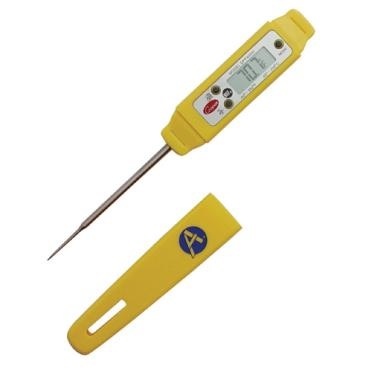
Use a thermometer when you cook, so you’re cooking to temperature, not to time. If you’re not using a thermometer and you’re not a seasoned cooking pro, how do you know what temperature you’re cooking something to? Fact is, you probably don’t, and that’s not good for food safety or quality. The top end of the Food Temperature Danger Zone, 140º F is not the temp at which bacteria die, it’s just the point at which they more or less stop multiplying. You need 165º F to kill most things that can hurt you, like salmonella and e. coli, and that’s 165º F internal temperature for at least 5 minutes. No thermometer equals not sure, and not sure equals not good, so fix that. You’ll want a thermometer that allows recalibration, and you’ll need to read the directions on how to do so. Here’s a link to the model I use at home and at work; it’s the fastest, most accurate, reasonably priced model for home use I’ve found.
3. Get cooked food out of the danger zone ASAP.
Within the food safety danger zone, the temperature range between 125° and 70°F allows for the most rapid growth of microorganisms. As such, you’ve got to get leftovers that have been cooked out of that range as quickly as possible. The 2-stage cooling method is what we use in professional kitchens. That means you want to,
Cool from 140°F to 70°F with two hours, and then
Cool from 70°F to 41°F or below within four hours.

That initial two hour cool is the most critical time period, since that’s when the food is passing through the most dangerous temperature range. Here’s the hard and fast secondary rule you’ve got to strictly abide by:
If food has not reached 70°F within two hours, it must be reheated to an internal temperature of 165°F for 15 seconds and then properly cooled again, or thrown away.

Keep in mind the unassailable fact that food needs help cooling down quickly; it can’t do it on its own. Critical factors that affect how quickly foods will cool down include,

Size of the food item being cooled, (thickness, or distance to its center, plays the biggest part in how fast a food cools).

Density of the food, (the denser the food, the slower it cools).

What the storage container you use is made of. Glass and stainless steel transfer heat from foods faster than plastic. If you’re using plastic wrap, leave it loose at first, to allow cold air to freely circulate around the food; once it’s cooled, tighten up the wrapping to keep air away and avoid drying out and cross-contamination.

Size of the container. Shallow pans, (depth less than two inches), allow heat from food to dissipate faster than deeper ones.

And here is a concept you absolutely must embrace wholeheartedly – Food will not move through the temperature danger zone fast enough if it is still hot when placed in the fridge or freezer. In fact, sticking hot food straight into the fridge can actually raise the temperature of everything in there, putting a whole lot of your food into the temperature danger zone. Sound crazy? Ever put a big pot of soup or stew into the fridge, including the steel pot? I rest my case… Here’s how to properly handle things.
* Reduce the size. Cut large hunks of food into smaller pieces for storage. Take that soup out of the pot and transfer it to smaller containers.
* Use an ice-water bath, (50% each, ice and water), and stir foods that are stirrable for fast, even cooling.
NOTE: The only way to accurately know that time and temperature requirements are being met is by actively monitoring the process. That means that you need to use your thermometer for cooling as well, (Look closely at your favorite cooking show; I’ll bet you’ll see that the real chefs all have pocket thermometers). Get used to regularly check temperatures and monitoring the time.

4. Keep it all clean.
Wash your hands with hot, soapy water, actively, for at least 20 seconds. Do it before and after you work with food that has greater potential for bacteria, like meat, poultry and fish, and do it again before you move on to prepping something else. Wash and sanitize your cutting boards (Use a mild bleach solution on those; they’re semi-porous, so you really need to pay attention to cleaning them), knives, and anything else that touched potentially high risk foods before you prep something else with them. Does your sponge stink? If it’s not dirty and worn out, toss it into your microwave for 30 seconds; it’ll come out smelling much better, because you’ve offed some bacteria. If it is worn out and dirty, toss it and use a fresh one; same goes for kitchen towels.

5. Don’t defrost or marinate at room temperature.
Best practice is to defrost in the fridge. If you must defrost quickly, fill a bowl big enough to hold what you’re working with the coldest water you can get from your tap, immerse the food in the water and let it run as low as you can get it until it’s ready. NOTE: If you cannot get water colder than 70º F, do NOT use this method, period!

6. Use your senses and resources.
When food spoils, is it dangerous? The answer is, not always but quite possibly, so err to the side of caution, (Making cheese is basically controlled spoilage, as is fermentation). Bacteria like the same things we do, from food to comfy conditions, so always keep that in mind. When food spoils, rots, etc, it looks, smells, tastes and feels off; respect your senses and let it go if it ain’t right. I can guarantee you won’t get sick if you don’t eat it. Bacteria need pretty specific conditions to thrive, involving the temperature, moisture and PH level of the things they live on, AKA, our food. Know the attributes of the food you’re cooking and storing and act accordingly. Use the section of your fridge meant for butter, cheese, eggs, veggies and fruit; modern fridges really can help control moisture levels as well as temp, so allow them to do their thing.

7. Reheat properly.
When reheating hot food, get it back up above 165º F internal temperature before you serve it. Sad as it may seem, you only get one shot at it – No second reheats – So plan, portion and cook accordingly.

Follow these rules religiously. Take care when you buy; always look for quality and freshness, get to know your purveyors, buy locally whenever possible. Make it at home whenever possible.

Unknown's avatarAuthor urbanmoniquePosted on May 1, 2021May 2, 2021Categories Basics & Process, Current Issues, Duh! Cooking Thought of the Day, Y'all Share!Tags food safety, food temperature danger zoneLeave a comment on It’s All About Food Safety

It’s High Time for a Genuine Tin Roof Sundae Cookie


Check into who invented the ice cream sundae, and boy oh boy, are you in for a ride. Towns from New England through the Midwest claim ownership, and well, yeah… good luck with that. There is one exception, and that’s the Tin Roof Sundae. Originally called a Black & White, this legendary treat came to life in 1916, at Potter Drug in Potter Nebraska. Harold Dean ‘Pinky’ Thayer, son of the owner and Pharmacist, worked the soda counter and came up with the Tin Roof, named either for the ceiling in the drug store, or the roof on the stable across the street, depending on who’s story you buy.

The building and business are there to this day, (now called Potter Sundry), and they still make the Tin Roof Sundae. The original version was constructed from vanilla ice cream topped with chocolate syrup, chocolate ice cream topped with marshmallow syrup, and the whole thing topped with a healthy dose of Spanish peanuts. That recipe, more or less, got quite popular, and was adopted by ice cream makers all around the country – It’s a combo I happen to love. Every version I’ve tried or researched is vanilla ice cream with chocolate fudge and Spanish peanuts. Fact is, though, it’s not easy to find up here where we live, so if I want it, I make it, which I’m totally OK with. Fresh ice cream, (from Jersey cows), with vanilla bean, good chocolate chunks, and nice crisp peanuts? Hell yes, please.

That got me thinking about a cookie by the same name. I poked around online to see what was out there, and here’s the fact – There were a few recipes – or so it appeared at first glance. But after digging in, it became glaringly obvious that what we really had was one recipe, widely copied and occasionally modified – That was a chocolate based cookie, with peanuts – but blasphemy of blasphemies, these things were made with Chex cereal, covered in chocolate, (actually, cocoa powder), topped with peanuts – FRIGGIN’ CHEX CEREAL, people! Yes, there were pretty pictures, and a bunch of folks claiming to have come up with the recipe, but ya know what? It was all the same thing, made with cereal, cocoa powder, and regular peanuts. To me, that’s simply appalling – a serious wrong that needs righting. 

Again, every version of the ice cream I’ve ever seen or eaten is vanilla, with chocolate or fudge, and Spanish peanuts, and that’s what a namesake cookie needs to be – so that’s what I did. The cookie I ended up with has roughly three times the usual amount of vanilla used for a chocolate chip cookie – that flavor note is dominant, which is exactly what I was after – A vanilla ice cream analog. I used an organic, high end vanilla bean paste, instead of just seeds (or plain extract), and I think that’s critical in the final product – this also impacts the texture a bit, making things notable more tender.

Fresh, skin on, salted Spanish peanuts and good quality chocolate round things out. I’ll say for the record that I’ve done several batches of these now, and they are seriously good stuff. The one twist I went to for my final version requires extra work, but is absolutely worth it if you’re pulling out all the stops for a holiday cookie – I made chocolate covered Spanish peanuts. 

When I decided to do that, I did some thinking about what kind of chocolate to use. In the end run, I just stayed with melted Ghirardelli semi-sweet chips – They’re made to maintain their shape and form when baked, and that’s what I wanted here – Peanuts covered in chocolate that would stay that way when baked into a cookie. I melted the chips in a double boiler, and laid out a baking pan with a silicone sheet, (parchment would work just fine too.) When the chocolate was nice and liquid, I added nuts and mixed them in until there was no obvious excess of chocolate, (as in, I didn’t exactly measure). Just a bag of chips and enough peanuts to make the mix correct – It’s not like any excess is going to survive for very long anyway, right? 

I poured that mix onto the baking sheet, and then smoothed it all down to a single layer of peanuts with a pastry knife. I let the mix cool for about 15 minutes, then transferred it to the fridge so that it could get nice and hard. After an hour or so, I pulled the stuff and broke it up by hand, not being super particular about size – One of the things I didn’t like in earlier batches was seeing chocolate chips in there – I thought it should be more random and chunky, like the chocolate is in the namesake ice cream. I ended up with nice chunks of chocolaty peanuts and a great look. All that aside, you can certainly do this recipe with chip and peanuts if you’re short on time or patience, so go that road if need be.

Urban’s Genuine Tin Roof Sundae Cookies

380 grams All Purpose Flour (3 Cups)

230 grams Unsalted Butter (2 sticks)

200 grams Bakers Sugar (1 Cup)

150 Grams Spanish Peanuts (1 Cup, and probably more like 1.5 Cups if you go for the chocolate covered option)

340 grams semi-sweet Chocolate chunks (12 ounce bag)

2 large Eggs

15 grams fresh Vanilla Bean or paste (1 Tablespoon)

4 grams Baking Soda (1 teaspoon)

4 grams fine Salt (1/2 teaspoon)

Preheat oven to 350° F and set a rack in the lower middle position.

Have your eggs and butter at room temperature before proceeding.

Run flour, baking soda, and salt through a sifter or single mesh strainer, into a large mixing bowl.

For the lions share of the process, a stand mixer is preferred, but if you don’t have one, you can hand whisk – Just be forewarned, it’s going to be a bit of a workout.

In a stand mixer bowl set up with a paddle, add the butter and mix on low until it’s smooth and even – about 2 minutes. 

Stop the mixer, and use a spatula to scrape the butter down from the bowl sides and paddle.

Add the sugar and mix on low until the blend is smooth, about 1-2 minutes.

Again, stop the mixer, and use a spatula to scrape the creamed mixture down from the bowl sides and paddle.

Add an egg and the vanilla paste to the creamed mixture and mix on low until fully incorporated – No more than 30 seconds. Repeat the process with the second egg, and again, 30 seconds tops – You don’t want to over-beat the eggs.

With the mixer on low, gradually add the flour mixture, and mix until fully incorporated – Stop as soon as that’s achieved.

Remove the bowl from the mixer, add chocolate and peanuts, and incorporate with a spatula until evenly mixed.

Scoop heaping soup spoons of batter onto a baking sheet lined with parchment or silicone. Leave a couple of inched between each – You should be able to get a dozen on there, no problem.

Bake for 7 minutes, then rotate the sheet 180° and bake for 7 minutes more.

Pull from oven and carefully slide parchment onto a cooling rack.

Bake single sheets of cookies at a time.

Allow to cool for 5 minutes before attacking, and 20 minutes before putting them into an air tight storage container.

Unknown's avatarAuthor urbanmoniquePosted on December 12, 2018December 13, 2018Categories Baking, sweets, Y'all Share!Tags genuine tin roof sundae cookie, Tin roof sundae cookie1 Comment on It’s High Time for a Genuine Tin Roof Sundae Cookie

Chaos in the Kitchen


Recently, I shared a post on social media I got from my Cuz, Sally Stanton Poutiatine, about a great Chef doing a great deed in post hurricane Puerto Rico. Chef José Andrés went to the devastated island and initially began cooking for doctors and nurses, “because no one was feeding them.” But persistent calls for more help poured in, and Andrés couldn’t ignore them. He ended up coordinating 18 kitchens, serving over 150,000 meals a day. Andrés was named the James Beard Outstanding Chef of the Year, as well as Humanitarian of the Year in 2011 for this stunningly lovely gesture.

That story prompted another friend, Bryan Lee, to mention world famous Chef Massimo Bottura’s reaction to the devastating 2012 earthquakes that ravaged the area around Modena, Italy, home to balsamic vinegar and Parmigiano-Reggiano cheese. The earthquakes damage included 360,000 wheels of the famous cheese – Over $200 million dollars worth, enough to fatally cripple the industry. What could one Chef do that would actually make a dent in such a disaster? Bottura gave it a think, and came up with risotto cacio e pepe, a play on the legendary pasta dish – But Massimo’s version used Parmigiano-Reggiano instead of the traditional pecorino, and rice instead of pasta, (because the affected region also heavily depends on rice production for its economic well-being.) a fundraiser was arranged, and the recipe was shared widely on social media. The result? The dish went ballistic across the culinary world, and “All 360,000 wheels were sold,” Bottura proudly told the TV show A Chef’s Table, “They were sold out. No one lost a job. No cheese maker closed the doors. That was a recipe as a social gesture.”

Alright, you say, very nice, very noble – But what’s this got to do with us home cooks? The simple answer is this – If you want to be a great cook at home, then damn near everything. 

Before we get after the specifics of why, lets dig in a bit more to those Pro’s doing great deeds. In both these instance I cited, Chefs who were running a single restaurant waded into a much more dire situations, natural disasters of epic proportion. If you don’t know how professional kitchens and chefs work, this might seems deeply strange – What the hell would some milquetoast food dude know about dealing with things normally handled by major departments of federal governments, anyway? Turns out, quite a bit, and the reason for that is chaos. It’s not coincidental that cooks know all about chaos, and frankly, that’s everyone from Andrés and Bottura to home chefs – It’s just that chaos in a professional kitchen is exponentially more stunning than it is in ours. 

There’s no chaos like that in a pro kitchen

My little cafe is a good example, even though in the big picture view of professional kitchens, it’s frankly peanuts. Nonetheless, we do north of four million dollars in business annually, and that happens at around fifteen bucks a pop. So, do the math for a busy weekend like this past one – Veteran’s Day weekend down here and a three day weekend for our Canadian pals – That adds up to lunches running up to $2,000 hours, and maybe three or four of those a day for three days. We’ll turn the restaurant a bunch during that service, meaning a new party takes over table X, in a cafe that’ll hold around 190 folks at a pop. Our goal is for you to be fed in under five minutes, from the time you order until food hits your table, and all it takes to screw that up is for one of us to have a hard time for a minute or two – Running out of an ingredient, a complex order, something small like that – When it happens, its called, in polite company, being in the weeds, (albeit the French term is dans le merde). It sucks, and it escalates in a heartbeat, and it can be really hard to get out of in anything resembling short order, but get out if it we must, and get out of it we will, because that’s what we do.

The way you deal with chaos in your kitchen determines how you’ll do when it happens. Handling it is part of the profession, and in the blood of good chefs. If you ever walk into your cafe seriously thinking, ‘I know exactly what’s going to happen today’, you’re either delusional or crazy. Even when the shit hits the fan, the good ones figure out, quickly, what needs to be done and how to do it. And frankly, it doesn’t matter to us whether it’s a kitchen, or a hurricane, or an earthquake – Disaster is disaster, and we know all about that. Andrés answered it perfectly when asked how he’d done what he’d done in Puerto Rico – He said, “Restaurants are chaos and chefs — restaurant people — we manage chaos very well. After a hurricane, you see a lot of chaos, and people go hungry and people go thirsty. But what we are very good at is understanding the problem and adapting. And so a problem becomes an opportunity. That’s why I think … more and more you’re going to be seeing more chefs in these situations. We’re practical. We’re efficient. And we can do it quicker faster and better than anybody.” I spent twenty years as a firefighter and a cop before I returned to food as a profession – I know exactly what he means, and he’s absolutely correct.

Chaos in the home kitchen - Expect it, turn it, because that’s what we do.
Chaos in the home kitchen – Expect it, turn it, because that’s what we do.

And so it comes to us in the home kitchen. Yes, what I described above is epic, but truth be told, a major screw up in the home is no less traumatic for the cook. The burned roast, radically over-salted home canned pickles, over cooked beans turned to mush, or the dreaded fallen soufflé has flattened many a cook – So what to do? 

First and foremost, change your attitude, gang. What’s called for is a healthy dose of chutzpah, like we walk into our kitchens with every day. This is your kitchen, and come hell or high water, it’ll still be yours – Own it, warts and all. This is, frankly, the most important thing you can do towards becoming a better cook. This is your stage – Even if you flub your lines, if you do it with panache, nobody will know. Remember Julia Child throwing some failure over her shoulder and warbling, ‘Oh well – onward!’ That’s what I’m talking about. If it was easy, everybody would do it, and you know as well as I do that they don’t. 

Secondly, embrace failure. If you never fail, you’re not pushing yourself near hard enough, and you’ll never be a better cook than you are now. You have to screw things up sometimes, especially if you’re experimenting. Expect it, accept it, learn from it, and make the next attempt, if not absolutely right, then that much better. If y’all saw how many things we boot before a recipe hits these pages, you’d be shocked – The difference is, I know it’s going to happen from time to time and I’m cool with it, because I always learn from my kitchen mistakes, and a rarely, if ever, repeat them – And that’s just what you’ll do too.

Third, expect chaos. Any time, in any situation, it can and will happen, and probably with the dish you’ve done a hundred times and are now doing for your new in laws. To paraphrase what I wrote above, if you walk into your kitchen thinking you know exactly what’s going to happen next, sorry, but you’re kinda nuts. Expect the unexpected, and don’t be surprised if that includes worst case scenarios. If you’re ready for anything, you won’t panic, you’ll think, do some quick research, and you’ll find a working solution. It may mean going to Plan B or C or D, but you’ll find a solution, because that’s what we cooks do.

So, there’s the drill. And for the record, pull the burned roast out, get rid of the pan, cut any burned stuff off the roast, re-pan it, add some water, and move on. For the pickles, remove about half the brine, replace that with water, and let them have a good soak for a couple of hours until everything tastes right again. Turn the overdone beans into dip, maybe with some toast points or pita bread. And if the soufflé has really fallen, well hell – Serve that sucker up and call it a pudding or a fondue – This is your stage, and none shall be the wiser.

Unknown's avatarAuthor urbanmoniquePosted on November 12, 2018Categories Inspiration, Y'all Share!Tags Cacio e pepe, Kitchen chaosLeave a comment on Chaos in the Kitchen

Live in the U.S? Then Vote like your life depends on it.


This is going to be very short and to the Point. If you’re a visitor here, it’s probably not lost on you that I’m not a fan of the current administration, nor pretty much any of the party in power.

The last two years have been a nightmare. This country has fallen to lows I didn’t know we were capable of sinking to, and I experienced Nixon, Reagan, and Bush II.

They were amateurs compared to this lot. Hatred, intolerance, bleeding the poor and middle class to death, bigotry, misogyny, blatant racist and fascist forces growing by the day. We’re the laughing stock of the world, and still we sink lower.

Vote like your life depends on it

Tomorrow is D Day, as in, take back our Democracy. We all must vote. It’s as simple as that. There are no more excuses. If you don’t vote, you’re part of the problem, and that’s just unacceptable to me.

This isn’t a day for food, or recipes. This is a day for sober reflection on what will happen if good people do not act. Complacency is unacceptable.

Do your part. Vote. Help others vote. Get the word out. Get it done. We’re almost out of time. Vote like your life depends on it, because in fact, it does. If you don’t realize or believe that, then God help you, because no one else can or will.

Unknown's avatarAuthor urbanmoniquePosted on November 5, 2018November 5, 2018Categories Community, Current Issues, Get Involved, Y'all Share!Tags take back our Democracy, VoteLeave a comment on Live in the U.S? Then Vote like your life depends on it.

Quick Plastic Reduction Update


One of the biggest uses we made of plastic was bagging up veggies and fruit that had been partially used and thereafter needed to be refrigerated. We assumed, (erroneously it turns out), that there wouldn’t be a cheap, non-plastic alternative that took proper care of such things – As in, kept them relatively fresh, didn’t let them dry out, rot, mold, etc. We were wrong indeed.

We bought a box of these relatively heavy duty wax paper sheets, which were something like $9 for 500 sheets – Lo and behold, they do a great job with everything we used to trust to plastic – Veggies, fruit, protein leftovers, basically anything that’ll fit the sheet, which naturally leads us to get a roll or two of full sized waxed paper as a backup.

Problem solved, without loss of food quality or safety – A fine win-win.

Unknown's avatarAuthor urbanmoniquePosted on August 7, 2018August 7, 2018Categories Basics & Process, Food Safety, Y'all Share!Tags not plastic, waxed paperLeave a comment on Quick Plastic Reduction Update

We Need To Talk About Recipe Development

Recipe development isn’t easy – Even the best can screw it ip from time to time, which means it’s always caveat emptor for the home cook.


We made a dried apricot tart this weekend, which we tweaked to our liking, (or so we thought). It cam from a recipe M found online. I’ll bet you’re expecting to see that tweaked recipe down at the end of this post too, yeah? Well, truth be told, there will be a recipe at the end, but it won’t be this one -we need to talk about recipe development.

The recipe came from what we shall call a Very Established And Respected Public Source for writing about food. Whether it’s Monica or me that gets an itch to make something and turn it into our own, we both do our due diligence – AKA, research. I work in the food biz, she does not, but the roots of the process are similar regardless of whether it’s her, me, or us doing the work. If it’s me doing the lion’s share, I tend to use resources like The Flavor Bible, Harold McGee’s On Food and Cooking, and various other regional or genre experts for thoughts on ingredients, technique, and the like. Monica tends to go for a mainstream recipe, which she studies and then alters to achieve what she is after.

Fact is, both routes are just fine and work pretty much equally well. Granted, I have more arcane food knowledge in my noggin, and as such, I tend to model on or alter recipes less than she does – But that doesn’t mean my method is better – it may take fewer tries to get where we want to go, but that’s really neither here nor there when it comes to the end result. It would be disingenuous to say I create more recipes than she does because of differences in method – I create more because I do the majority of the cooking and developing – There’s really nothing more operative in that regard.

My point with that last paragraph is this – I hear a lot of folks who seem almost embarrassed to say that they made something their own, when ‘all I did was tweak a recipe.’ Nothing could be further from the truth. Fact is, even great chefs, legendary chefs, do exactly that. That is why, almost every post here includes some variation on the phrase, make it yours – Because when you put your stamp on it, and then repeat it, and it becomes a beloved standard for you, then my friend, that recipe is 100%, no doubt about it, yours.

So, what about this recipe would warrant me stating that it definitely needed further development? Well, frankly, it’s because the finished tart sucked. Bad. Now, that said – the caveats – Yes, it’s possible we screwed it up, (we didn’t), or that our ingredients were sub-par, (they weren’t), but the fact is, that recipe just was not designed or explained well at all. I knew it, truth be told, and so did M – But this was again, from a very reputable source, so we thought, what the hell, we’ll give it a spin – You have to do that sometimes, because there may well be magic where you least expect it, and if you don’t try it, you’ll never know. I gotta say though, in this case, it used some ingredients that are not cheap, so springing for that stuff and ending up with sub par results should not make a consumer happy.

We really tried with this thing. Again, we added a couple twists of our own, but nothing earthshaking – We didn’t have mascarpone in house, so we subbed cream cheese, heavy cream, and sour cream – That’s a certified, A-OK cheat, by the way, (but again? I knew better, and we did it anyway – My bad…) We also added a few dried cranberries, because they go nicely with apricots, and well, why not? And… It sucked. We ate a piece each, and the rest went to the squirrels and jays, (sorry, fellas). So why did that happen?

The answer to that requires digging in a bit deeper. First off, reading all 30+ of the review comments left by folks who made the recipe, (which supposedly received a 4 out of 5 star rating), it became immediately evident that almost no one said outright that this was a great tart recipe. In fact, overwhelmingly, people had trouble interpreting it, and said so – It was too vague, didn’t speak thoroughly to method, ingredient handling, or proper bakeware. Another healthy chunk said, in so many words, that it didn’t taste good – it was dry, had too much crust, the apricots shouldn’t have been left whole as shown, and so on. Several folks complained about the custard.So how did this thing score so highly? Good question.

I noted the following. The ‘custard’ was, in fact, mascarpone, eggs, sugar, and almond extract – Which is not custard. The recipe never stated how thick the crust should end up, and frankly, the mix they used was more of a pie crust than a tart crust, and yes, there’s a difference. It called for bringing 2/3 cup of whiskey and 30 dried apricots ‘to a simmer and then set aside’, which is insufficient to soften dried fruits, or to burn off the alcohol. It listed an egg yolk in ingredients that didn’t make it to procedure, and a couple of tablespoons of water showed up in procedure that were not in the ingredient list.

Do you see booze covering this fruit? No - No you don’t...
Do you see booze covering this fruit? No – No you don’t…

This was not from a home blogger, gang. This was from a major publication with over 100 years of experience – And they screwed it up. I’m not saying that to make them look bad – I’m really not – I’m saying it because it illustrates how tough it can be to create and share a good recipe, what can happen if you don’t, and why there’s a big time caveat emptor consideration for home cooks with damn near any recipe.

So, what did it actually take to fix this thing? A little more work, a few less sort cuts, and a little better narrative. First off, we made a real tart crust, (and for the record, for a 9” to 10” tart, that should be around 1/4” thick, and thinner yet if you’re doing tartlets). Secondly, softening dried fruit in booze is costly, especially if you use the proper amount, which means enough to completely cover and submerge 30 some odd apricots – You can see from our image that the proscribed amount wasn’t even close in that regard. And in any event, doing that is simply not as effective as hot water – If you want the taste of whisky or whatever, a quarter cup in a sauce pan over medium heat, simmered until the raw booze smell dissipates and the liquid thickens slightly, then cooled and added to the custard, will do the trick much better. And finally, custard is custard, gang. That’s milk heated gently and mixed with eggs, which act as a thickener – again, mascarpone doth not a custard make – That stuff is basically cream cheese that is already quite stiff. Adding eggs and sugar and flavoring to that will not make a custard – It’ll make an eggy, sweet cream cheese, which is not, repeat not, what we’re after here. So – All that said, here’s what we did for the one we ate all of.

Real Custard, yeah?
Real Custard, yeah?

Dried Apricot and Cranberry Tart

For the Tart

1 Cup Pastry Flour

1/2 Cup Almond Flour

1/4 Cup Bakers Sugar

1/2 Cup Cold Unsalted Butter

1 Large Egg

Pinch Sea Salt

You can do the tart by hand, which is my preferred method, or you can do it in a food processor, which is M’s preferred method – Either is just fine.

In a large mixing bowl, (or the processor), add flours, sugar, and salt and combine thoroughly.

Cut butter into roughly 1/4” cubes. Add that to the dry mix and combine by hand or process until the mixture looks like coarse corn meal.

Add the egg and incorporate thoroughly, but don’t go overboard – you don’t want the dough forming a ball on its own – You can check for done by squishing a hunk between your thumb and dialing finger – It should stick together, but not feel dry, or fall apart, (it also should not be sticky).

Pull the dough and form it into a roughly 1” disk. Wrap that in waxed paper and refrigerate for an hour, at least, (and longer is fine – Even up to a couple days – You can also freeze it, so long as you refrigerator thaw overnight prior to use).

When you’re ready to go, preheat your oven to 375° F and place a rack in a middle position.

You’ll want either a tart pan or a pie pan to bake in – Either really is fine.

Lightly grease the pan with butter.

Place the dough between sheets of waxed paper or parchment, and roll it out to about 1/4” thickness.

Carefully peel one sheet of paper off the dough and place it onto your chosen pan.

Use a fork and liberally and evenly prick the crust.

Tart, not pie crust - Pretty? No - This is development, gang.
Tart, not pie crust – Pretty? No – This is development, gang.

Cover the tart with a shaped piece of parchment, then use pie weights, beans, or rice to weigh down the tart.

Pie weights - Trust me, you need these
Pie weights – Trust me, you need these

Bake at 375° F for about 20-25 minutes, until the tart looks firm and is beginning to pull away from the edges of the pan.

Remove from heat and allow to cool.

For the Filling/Custard

About 40 dried Apricots

1/4 Cup dried, sweetened Cranberries

1 small Lemon

1 Cup heavy Cream

2 Large Eggs

1 Egg Yolk

1/2 Cup Bakers Sugar

1 teaspoon Vanilla Extract

Set aside about a dozen apricots and 6-8 cranberries.

Place the rest of the dried fruit into a mixing bowl.

Quarter the lemon, squeeze out the juice and add it to the rest of the fruit.

Cover the fruit with boiling water and allow it to steep for 15 minutes.

When the fruit is hydrated, pour off the liquid through a single mesh strainer, reserve the fruit.

Chop the reserved dozen apricots and the cranberries, set aside.

Preheat oven to 350° F and make sure there’s still a rack in the middle position.

In a mixing bowl, combine eggs, egg yolk, vanilla, and sugar. Whisk thoroughly to incorporate – You want to get some air into this mix, so take your time – 2 to 3 minutes or so.

In a sauce pan over medium heat, scald the cream – That is, heat it until small bubbles start to form at the edges of the liquid.

Remove the cream from heat and allow to cool for 5 minutes.

Slowly add the cream to the egg and sugar mixture, whisking steadily but gently – Don’t put too much of the hot cream in at a time – You want to temper the egg mix slowly, so that it doesn’t curdle.

Place whole apricots and cherries evenly across the tart, then carefully pour the custard onto the fruit.

Top tart with the chopped apricots around the rim of the tart, and the cranberries in the middle.

Apricot Cranberry Tart, the right way

Bake at 350° F for 35 to 45 minutes, until custard is firm but still jiggles a bit in the middle, and fruit is slightly browned.

Remove from heat and allow to cool for 30 minutes.

Garnish with mint, if you like. You certainly may add whipped cream or crème fraiche as well.

That’s more like it
That’s more like it

This one will taste good – We promise.

Unknown's avatarAuthor urbanmoniquePosted on June 13, 2018Categories Desserts, Shameless Promotion Department, Y'all Share!Tags apricot cranberry tart, apricot tart, real custard, Recipe development, Tex Mex1 Comment on We Need To Talk About Recipe Development

Posts pagination

Page 1 Page 2 … Page 20 Next page

  • A Paean to my Knifemaker
  • Brown Butter Blondies
  • Pickled Black Eyed Peas – A Paean to Helen Corbitt
  • Great Meatballs at Home
  • Superior Ramen at Home

Top Posts

  • Potato Crusted Quiche
  • Almond Biscotti
  • Perfect Popovers
  • Empanadas
  • Housemade Ginger Ale
  • About Us
  • Blog
  • Chiles? Hell Yes!
  • Herbs, Spices, et al
  • Kitchen Essentials
  • Welcome to UrbanMonique!
UrbanMonique Blog at WordPress.com.
UrbanMonique
Blog at WordPress.com.
  • Subscribe Subscribed
    • UrbanMonique
    • Join 55 other subscribers
    • Already have a WordPress.com account? Log in now.
    • UrbanMonique
    • Subscribe Subscribed
    • Sign up
    • Log in
    • Report this content
    • View site in Reader
    • Manage subscriptions
    • Collapse this bar
 

Loading Comments...