Brine That Turkey!


Truth or dare time – How many of y’all, when it comes to your Thanksgiving turkey, do not show the bird the proper love? Tell the truth, now… Do you simply throw a bird in to the oven? Do you fill it with stuffing? Thought so… truth be told, even if you rub it with something nice, you’re still not giving that poultry it’s holiday due. If you want to serve the best bird, you’ve got to brine that turkey. I’m gonna tell you how, but first, here’s why.

Turkey is an extremely lean protein. If you doubt that, buy some ground turkey, do nothing to it but cook it, and see what you get – unlike good, fresh hamburger, there’ll be no moisture in the pan, and the taste will be, well… less than optimal. Let’s face it, we don’t need fat from our bird, ‘cause we’re gonna get that from all the sides we make. What we do need is a tender, juicy bird, and again, brining is the way to get there. Now, I know there are some of you out there thinking, ‘yeah, but if I cook it right and season the skin nicely before hand, it’ll still be great,’ right? Well, no, no it won’t – it might be good, maybe even really good, but it won’t be great.

Seasoning right before you cook, or even an hour or two before you cook, doesn’t allow the salt you’ve added enough time to do its thing. It won’t penetrate the flesh at all, really, especially with a hunk of meat as thick as a turkey breast. It’ll do a bit of work on the surface, but no more. Truly, the only way to allow seasoning to work is to give it the time it needs – And that means you need to brine that bird.

Traditionally, brining is a wet process. We submerge the bird completely in a brine, and give it anywhere from eight to twelve hours to do its thing. That works great, frankly, and it really isn’t hard. Brined birds weigh more after cooking than a dry bird does – Up to 8% more, and that’s virtually all added moisture, which is very good indeed. The wet brine process also acts chemically to break down some of the tougher proteins within the bird’s muscle fibers, leading to tender flesh – Also good. So, if you’re of a mind to wet brine, here are some basics.

If you buy a frozen bird, you can thaw it while brining, which saves you some time, (if you buy a fresh turkey, you don’t need to worry about that.)

Proper brining is a function of both brine strength, the weight of the bird, and brining time. What you’re doing at home is technically called gradient brining – That is, putting food in a higher salt concentration brine than you really want in the food, because you don’t have the time to do what’s known as equilibrium brining – That’s when you use a lower salt concentration and allow the time needed for the salt content in the brine and the food to equalize. When you see or read about something like pastrami being brined for a week or longer, that’s what they’re doing, and that’s also why the Pro’s make stuff that consistently tastes better than what we do at home. All that said, don’t fret – What we do at home is safe, and it really does make a better bird. So, for reasonable gradient brining, we brine whole turkeys for about an hour per pound, in a 5% to 6% brine concentration.

Basic brine ratio is often shown as ‘1 cup salt to 1 gallon of water’, but not all salt weighs the same – what we really want is about 7 ounces of salt per gallon. When you brine, use kosher salt – The larger crystal size means it dissolves faster in water than fine grained stuff, and there’s nothing in there but pure salt, so it wont taint your brine. If you don’t have a kitchen scale, (And frankly, you should), then Morton Kosher weighs 7.5 ounces per cup, and Diamond 5 per cup. For the record, there’s nothing wrong with adding herbs or spices to a brine – If you like it, do it.

Basic Wet Poultry Brine
For each Gallon of water, add
7 Ounces Kosher Salt
1 Tablespoon crushed Sage
1 Tablespoon Lemon Thyme

For a nice twist,

Cider Brine for Poultry
For each Gallon of Apple Cider, add
7 Ounces Kosher Salt
1 Tablespoon ground Black Pepper
2-3 dashes Tabasco sauce

For a 15 to 18 pound turkey, you will need a couple of gallons of cider or water, and a clean, food grade 5 gallon plastic bucket. You don’t need to heat the water or cider. Just make sure all the salt has completely dissolved before you proceed.

You need to plan ahead for wet brining. You’ll want an additional 6 to 12 hours between the brining and the cooking, so, if you’re thawing and brining, your process needs to begin nice and early on the day before turkey day.

Pay attention to food safety procedures during brining, without fail! Your brine and bird must remain under 40° F at all times, period; if you need to add a little ice, do so. If you need to add a lot, compensate with a bit more salt. When your brining period is done, pour out the brine, (NEVER reuse it.) Gently rinse the bird in clean, cold water, then pat it dry with clean paper towels and then transfer to a roasting pan.

Now comes the secret to gloriously golden, crispy skin. Allow an air rest for your bird, by letting it sit, uncovered in the refrigerator, for 4 to 6 hours after brining. This will help moisture evaporate from the skin, and allow the meat to reabsorb some moisture as well.

Now, if all that makes you paraphrase George H. W. Bush, ‘Not gonna do it, not gonna go there,’ then here’s an even easier option that works just as well. And it’s funny that, right at this point, literally right at this point in today’s narrative, I got this text from my friend John Joyce, a fine guitar maker from the Twin Cities in Minnesota – ‘Hey E what do you think: dry brined or wet brined turkey. I’ve done wet for years but I’ve read a lot of good stuff on dry brining.’ Yep, dry brining is exactly what I was about to type, so, here ya go JJ.

While the term ‘dry brining’ might seem kinda oxymoronic, i assure you it’s not. In restaurants, this has been done for a long, long time. Often called ‘pre-salting,’ it acts on a protein more or less as a wet brine does, albeit without the water, equipment, or hassle. Think of it as a dry rub, like we use on poultry, ribs, and the like, and it’ll come to light for you.

The chemistry here is very cool, too. When we first apply a dry brine, osmosis occurs, meaning the moisture within the bird is drawn toward the higher salt concentration rubbed on the skin. As that moisture reaches the surface, it dissolves the salt and sugar in the brine. In the final stages, the liquified brine is draw back into the bird as things equalize. There, the solution acts as a wet brine does, breaking down those tough muscle proteins and acting as a tenderizer – Pretty cool, huh? And to top it off, all this is done in your fridge, during a simultaneous cold rest, so you get that crispy skin, too – Two birds with one rock, if you will.

Dry brining does require time, and in fact, more time than wet, usually. Since there’s no added water, you’ll need two to three days to let the process do it’s thing, so once again, plan ahead.

It’s also important not to get a bird that’s been pre-seasoned in any way, since that can and will upset the balance of things – Avoid anything that says kosher, re-seasoned, or self-basting. You’ll also want a fresh bird, or at the very least a fully thawed one.

Basic Dry Turkey Brine
5 Ounces Kosher Salt
1 teaspoon crushed sage
1 teaspoon Lemon Thyme
1 teaspoon ground Black Pepper

Sweet Dry Turkey Brine
5 Ounces Kosher Salt
2 Tablespoons Dark Brown Sugar
1 teaspoon Smoked Paprika

Prep your bird by removing any of the extraneous bits, then pat it dry with clean paper towels.

Gently gently separate skin from flesh over the breast area, taking care not to rip the skin. It’ll work much better in direct contact with the meat.

Rub a teaspoon or two of the mix into the bird’s cavity, then do the same all around the drumsticks. Rub 3-4 tablespoons of the mix onto the breast meat, and use the rest evenly across the skin.

Ct a small slit in each side of the bird about half way along the wing tips and then slide the tips into that cut.

Put the bird on a roasting pan or rimmed baking sheet, and into the fridge for at least 2 days, and 3 is better.

When the time’s up, you’re ready to cook. You can roast, deep fry, whatever floats your boat.

Keep your bread stuffing in a casserole dish, and prepare a nice juicy cavity filler for the bird.

1 Apple of your choice
1/2 Sweet Onion
1 stalk Celery
Tablespoon Canola Oil
1/2 teaspoon Sage
1/2 teaspoon Sea Salt
1/2 teaspoon ground Black Pepper

Rough chop the orange, onion, and celery, (and if you have celery leaves, use those!). Throw those in a mixing bowl, then add oil, Sage, salt and pepper, then combine thoroughly. Stuff your bird’s cavity thoroughly. Place the bird on a rack in a roasting pan, and add 2 cups of clean water to the pan. Insert an internal thermometer to the thickest part of the breast.

Preheat your oven to 350° F.

Standard roasting times, stuffed, at 350° F follow; that said, the only real way to know when the bird is done is by internal temperature, and we’re looking for 165 F.

10 to 18 pounds 3-3/4 to 4-1/2 hours

18 to 22 pounds 4-1/2 to 5 hours

22 to 24 pounds. 5 to 5-1/2 hours

Start your roast with the bird uncovered, then cover loosely with foil for the last hour. Basting isn’t necessary, but it sure doesn’t hurt.

When the bird is done, remove it from the oven and let it rest for 15 minutes prior to carving – That rest is vital to allowing juices to equalize throughout the cooked bird, so don’t cheat!

Carve, admire, enjoy, and get ready for leftovers,

Later in that text, JJ wrote, ‘I like those ingredients. I usually do two birds. I’ll do one dry and one wet. Is the cider recipe on your site?’ It’s right here for ya, Buddy! He ended with this – ‘I’m also making your ginger ale recipe. So I guess that means you’ll have a virtual seat at our table. ?’

I told him I was honored and pleased by that to no end, and I truly am.

Brines, Marinades, Rubs, and Glazes


Here in the Great Pacific Northwet, it’s beginning to look like maybe, just maybe, it’ll stop raining one day. As such, it’s time to think about grilling again. When we do that, there’s a veritable cornucopia of cool things to do with the stuff we grill, like brines, marinades, rubs, and glazes.

First things first, though – Time to clean and inspect your grill, before you light the fires – Here’s a pretty good primer for that.

Next question, how are you grilling? In a big way, the answer to that question will determine what to do before your food hits the fire. Grilling is, for most of us, far less controlled than cooking in an oven or on a stove top. As such, knowing how to properly set up a charcoal grill, or use a gas one, makes a big difference to your end results. The back end of this Char Siu post has clear directions for setting up a two zone charcoal grill.

Brines, marinades, rubs and glazes will all contribute to the food we grill, especially proteins and veggies. Some of those contributions will alter proteins by tenderizing, or add moisture to help foods that tend to dry out in high heat stay juicy, and all these potions can add big flavor punch when you want or need it. What’s best depends on what’s cooking.

Brining is, in simplest term, utilizing a salt solution to add internal moisture to foods that have a tendency to dry out when grilled – It’s also a great way to add some subtle flavor notes from herbs and spices. Poultry, pork, and firm fish like cod, salmon, and swordfish do especially well with a brine. This little primer will give you some great base knowledge and ideas.

Marinades combine an acid and a base, just as we do for vinaigrettes. Marinating can take anything from a few minutes to days, depending on what you’re working with. Marinades generally carry bolder flavor profiles than a brine does, although those flavors may or may not get as deep into a protein, veggie, etc, depending on how long they work. Beef works great marinated, as do some of the gamier meats like lamb, game, and field poultry. A general search on the site here will provide a bunch of options from which you can springboard to your own thing.

A rub can be either dry or wet, and is what it sounds like – Where marinades are meant to get deeper into the meat somewhat as a brine does, rubs sit on top and do their work right there. Salt and pepper are most common, and fact is, if you’ve got a really lovely fresh protein or veggie, may be all you need or want. More stuff can certainly be added, and doing so can help a bunch in forming a nice crust on your food, and sealing in moisture on that relatively hot grill. Here’s a bunch of ideas to get you started.

Finally, we’ve got glazes. Generally speaking, glazes employ some sugar or an analog, and maybe some fat, like butter, which are integral to making things stick to your food. They also are quite prone to burning, however, so glazes are generally done last, and watched closely to make sure they do their thing properly. M came home with some incredibly pretty local pork chops, which prompted this whole post. I decided to wing a sweet and sour glaze for those bad boys – Here’s what I came up with.

Sweet and Sour Pork Glaze

1/4 Cup Balsamic Vinegar
1/4 Cup Ketchup
1 Tablespoon Honey
1 teaspoon Yellow Mustard
1 teaspoon Dark Molasses
1 teaspoon Worcestershire Sauce
1 teaspoon granulated Onion
1 teaspoon granulated Garlic
Pinch Lemon Thyme
Pinch Sea Salt

Combine all ingredients in a non-reactive mixing bowl and whisk to incorporate thoroughly. Allow to sit for 15-20 minutes at room temp for flavors to marry.

Bast pork with glaze liberally in the last 3-5 minutes that it’s grilling, and keep a close eye on things so the sugars don’t burn.

Feel free to leave some at table as well.

Super Bowl Chicken


Here in the great northwest, our beloved Seahawks are, miracle of miracles, poised to play their third Super Bowl and first back-to-back appearance therein. I was born and raised in New England, so I'm kinda tied to both contestants. That said, I find Tom Brady insufferable and Belichick a troll, so…


GO!

SEA!

HAWKS!


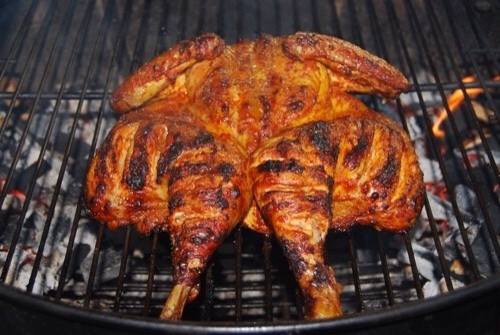
If you've not settled on your fare for Da Big Game, consider this: If a nicely grilled chicken is a thing of beauty, then a brined, butterflied bird wins every pageant. Chicken on the grill is hugely popular for good reason, but it’s also a common victim of overcooking, which results in a stringy, dried out final product. A brined, whole chicken stays plump and juicy, even on outdoor cookers.

The process can easily be done between morning coffee and kick off. Here's how.

Purchase a local, whole, free range chicken; fresh and local beats frozen every time. Read this piece through, check your spice cabinet, and head to the seasoning section of your market for anything you don't have, including pickling or canning salt. This non-iodized version has a very fine grain and dissolves readily, even in cold water. Add to your list a local Pilsner, Chardonnay, or a sparkling cider as an accompaniment. Grab some hearts of romaine, some Champagne vinegar, a few lemons, some sharp Asiago cheese, some butter, fresh sourdough, and a head of garlic as well.


Start your brine with a gallon of fresh, cold water under 40° F.

Weigh and then stir in 10 ounces of salt; stir to thoroughly dissolve. Toss in,

Juice and zest from 1 small lemon

1 Tablespoon whole Pepper corns

1 teaspoon Sage

1 teaspoon Savory

3 Bay Leaves


Pull all the guts out of your chicken, then set the bird in a bowl large enough to handle it and enough brine to cover completely. Weight the bird with a plate to keep it submerged. Brine the bird in the fridge, (or outside if it's cold enough), for 2-3 hours.

Pull the chicken out and discards the brine.

Let the bird rest uncovered in the fridge for 1 hour. Prepare this citrus powered wet rub while your chicken is resting, so the flavors have time to marry.


1 Tablespoon black Pepper

1 teaspoon Smoked Sweet Paprika

1/2 teaspoon granulated Garlic

1/2 teaspoon granulated Onion

1 Tablespoon extra virgin Olive Oil

Juice and zest of 1 small Lemon

Juice and zest of 1 small Lime


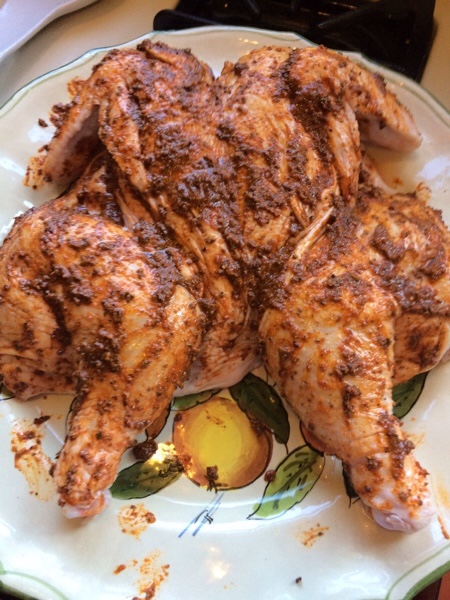
Making a chicken relatively flat is easy as all get out, and if, like Monica, (Sorry, Babe), you have a love-hate relationship with sharp knives, it’s a perfect process for you. A pair of decent kitchen shears is all you need, and here's how you do it.


flip your bird over so it’s breast side down.

Take your shears and line them up just to the right or left of the spine, and cut a straight line all the way through from one end to the other. Repeat on the other side of the spine.

That’s all the cutting you’ve got to do. Grab the spine and pull it free of the bird.

Now, turn the bird Breast side up, arrange it evenly, then give it a firm squish with your palms, as if you're giving it CPR. With a firm push or two, you’ll end up with a beautifully butterflied bird, ready to rub and cook. Tuck the wings in against the body, so they'll cook evenly.

Apply the rub liberally and allow it to rest for 15 minutes.


Preheat your grill.


While that's working, cut your romaine hearts in half, shave a generous pile of Asiago, quarter your lemons, and prepare this simple vinaigrette.

1/3 Cup Extra Virgin Olive Oil

2 Tablespoons Champagne Vinegar

Juice and zest of 1 small lemon

Pinch of Sage, rubbed fine

Pinch of Sea Salt

A few twists of fresh ground black Pepper

Combine all ingredients and whisk briskly. Allow the dressing to sit so the flavors can marry while you cook.


Cut slices of sourdough roughly 1/2″ thick, then cut those into cubes. Mince a couple cloves of garlic. Melt 4 ounces of butter in a sauté pan over medium heat. Toss in the cubed sourdough and sauté until they start to brown. Add the garlic and continue to sauté until croutons are golden brown, taking care not to burn the garlic. Remove croutons to a clean paper towel and set aside.


Start the bird breast side down and grill for 15 minutes. This allows some of the fat to render and the skin to crisp up nicely. Using tongs, carefully flip the whole thing once, and grill for about 20 minutes more.

Check the internal temperature with a quick read thermometer, looking for 155° F.

Remove the bird from the fire and allow a 10 minute rest. The bird will continue to cook during the rest, ending up with an internal temp right around 165° F.


Lightly brush each half romaine heart with Olive oil, then squeeze a lemon quarter or two over them as well. Lightly season with sea salt and fresh ground pepper.

Set hearts sliced side down on a moderately hot grill and tend carefully for 1 minute. Flip and grill for another minute. You're not looking to cook the lettuce so much as you're adding a bit of grilled flavor and smoke, heating the oil and citrus somewhat while keeping the insides relatively cool.

Remove hearts from grill and arrange on a platter. Drizzle with the vinaigrette, and toss on some Asiago shavings. Arrange remaining lemon halves around hearts.


Portion chicken into breasts, wings, drums, and backs and serve with the salad, croutons and the beverage of your choice.


GO HAWKS!


Cider Bird


Regardless of the bird you’re fixin’ to cook, trust me when I say it will benefit from a good brining; this is one of those restaurant secrets that answers the age old question, “Why is what they make always better than mine?”

Brining is easy, so there’s no reason not to do it, but naturally, you still wonder why you should, right? Good question! Brining makes things notably juicier in a couple of ways. First off, the mild salt solution that is a brine allows the flesh to absorb liquid during brining. Since we know for a fact that dang near any flesh we cook looses moisture during that process, anything we can do to counteract that will lead to juicier meat. So, really and truly, when you brine you’re starting out with flesh that is juicier from the get go, so it ends up juicier. Brined meats end up 6% to 8% heavier than they do if we don’t brine them; solid proof that they gained moisture from the process. Secondly, brining dissolves some proteins in muscle fibers, turning them from solid to liquid during the process. Softer equals tender and that’s what we want to eat, right?

Convinced on the science? Cool, lets get cooking!

I’ve taken to thawing our bird by brining, which kills two birds with one rock. If you buy fresh turkey, you don’t need to thaw of course, but the brining process remains the same. Many folks wonder at this point how long is too long for brining. The answer is a function of both brine strength and the weight of the flesh being brined. Standard brine ratio is 1 cup salt to 1 gallon liquid, (See salt note below). Most of us will buy whole turkeys in the range of 10 to 24 pounds; we will want to brine birds in that weight range for between 12 to 24 hours in a standard brine concentration, or roughly an hour per pound of whole turkey. As such, if you’re working with a 16 pound bird, plan on a brining period around 16 hours and you’re good to go. And FYI, A little leeway to either side ain’t gonna hurt a thing, either.

So, your basic brine ratio is 1 cup salt to 1 gallon of water. Trust me when I tell y’all that, weighed out, that’ll be 10 ounces of table salt for each gallon of nice, clean water. If you’re gonna use the kosher salts you’re likely to find at your local store, I’ll save you some weighing time there, too:
Morton Kosher salt = 7 ounces per cup
Diamond Kosher salt = 5 ounces per cup
Anything else you find or use, weigh it out and go from there.
Note: do not use iodized salt for brining; it can add a nasty off flavor you don’t want!

For this bird, we’re going to replace the water with apple cider, so our brine recipe per gallon will look like this:
1 Gallon Apple Cider
5 – 7 Ounces Kosher Salt
1 Tablespoon fresh ground Black Pepper
1-2 dashes Tabasco

I buy birds in the 15 to 18 pound range, and plan on 2 gallons of cider as the base for a bird this size, but of course that depends on what you’re brining in, right? Your best bet is a food grade plastic bucket, which are readily available in this day and age; just make sure you’re getting food grade, so you’re not introducing any plastic nastiness into your food, right? With that as your vessel, you’ll have some cider left over for a bird of anywhere from 12 to 20 pounds. Warm some up to enjoy while your bird cooks!

Plan ahead for this process. If you are going to be brining a whole bird, you will also want an additional 6 to 12 hours between the brining and the cooking; more on this in a bit. In other words, if you’re thawing and brining, your process needs to begin nice and early on the day before turkey day.

Start out by prepping your brine. Combine all brine ingredients and stir thoroughly until all your salt has dissolved.

Next comes unwrapping, unpacking and rinsing your bird. Make sure you find any little packets of giblets, neck, etc, (Don’t be that cook that misses those for somebody to discover deep in the bird on the festive day…)

Slip that bird into the bucket and gently pour in the brine. Make sure you’ve got enough in there to completely cover the bird. If you’re a bit short, make more, no big deal, no pressure! You may need to weigh your bird down to make sure it stays immersed. Just take care that whatever you use is sanitized and OK for being next to food. I use plates inverted and stacked until the bird sinks. Place your brine bucket in a clean, cool, dark corner.

Pay attention to the food safety temperature range during brining, without fail! Your brine and bird must remain under 40 F at all times, period; if you need to add a little ice, do so. If you need to add a lot, compensate with a bit more salt.

When your brining period is done, pour out the brine, (NEVER reuse brine!), gently rinse the bird in clean, cold water, then pat it dry with clean paper towels and then transfer to a roasting pan.

Now, If you want your bird to have a golden, crispy skin, (And you do, right?!), it needs to sit in the refrigerator, uncovered, for 4 to 6 hours after brining. This will allow moisture to evaporate from the skin, and also lets the meat reabsorb some moisture as well.

Preheat your oven to 350 F.

Keep your bread stuffing to a casserole dish and prepare a nice juicy cavity filler for the bird.
1-2 Oranges
1/2 Sweet Onion
1 stalk Celery
Tablespoon Canola Oil
1/2 teaspoon Sage
1/2 teaspoon Sea Salt
1/2 teaspoon ground Black Pepper

Rough chop the orange, onion, and celery, (and if you have celery leaves, use those!). Throw those in a mixing bowl, then add oil, Sage, salt and pepper, then combine thoroughly. Stuff your bird’s cavity thoroughly. Place the bird on a rack in a roasting pan, and add 2 cups of clean water to the pan. Insert an internal thermometer to the thickest part of the breast.

 photo IMG_3345.jpg

Standard roasting times, stuffed, at 350 F follow; that said, the only real way to know when the bird is done is by internal temperature, and we’re looking for 165 F.

10 to 18 pounds 3-3/4 to 4-1/2 hours

18 to 22 pounds 4-1/2 to 5 hours

22 to 24 pounds. 5 to 5-1/2 hours

Start your roast with the bird uncovered, then cover loosely with foil for the last hour. Basting isn’t necessary, but it sure doesn’t hurt.

When the bird is done, remove it from the oven and let it rest for 20 minutes prior to carving; the rest is vital to allowing juices to equalize throughout the cooked bird, so don’t cheat!

Carve, admire, enjoy, and get ready for leftovers,

 photo IMG_0124.jpg

Monica and I wish y’all a peaceful Thanksgiving with those you love.