
Rice is a delightful main, side, or primary ingredient year round, but shines best in the warm months, when cold rice-powered salads enter the fray. And if you’re going to make those, then wild rice should be your grass of choice.
Real deal wild rice is absolutely fabulous – the combination of flavor, texture, scent, and visual appeal is unrivaled – and it pairs wonderfully with many more delicious things. Wild rice, (manoomin (Mah-new-min) in Ojibwe), stems from the genus Zizania – which would be a swell band name, I think… That’s quite different from its kissing cousin Oryza, which gives us domesticated rice varieties.

Wild rice is an aquatic grass native to North America and China – the best known species is Z. palustris, the northern version that grows in lake and stream shallows across the U. S. and Canada, with a sweet spot in the Great Lakes region. There are other variants in Florida and Texas, and one in Asia (Z. latifolia). The stuff we like to eat is pretty much palustris, with some Z. aquatica along the Saint Lawrence river and the Atlantic and Gulf coasts.

While domesticated rices are certainly tasty, and can be extraordinary, (try Carolina Gold if you’ve not), they pale when compared to wild. Couple the richer palette of flavor notes and scents with a slightly al dente outer layer surrounding creamy inner grains, and you’ve got a little slice of culinary heaven.
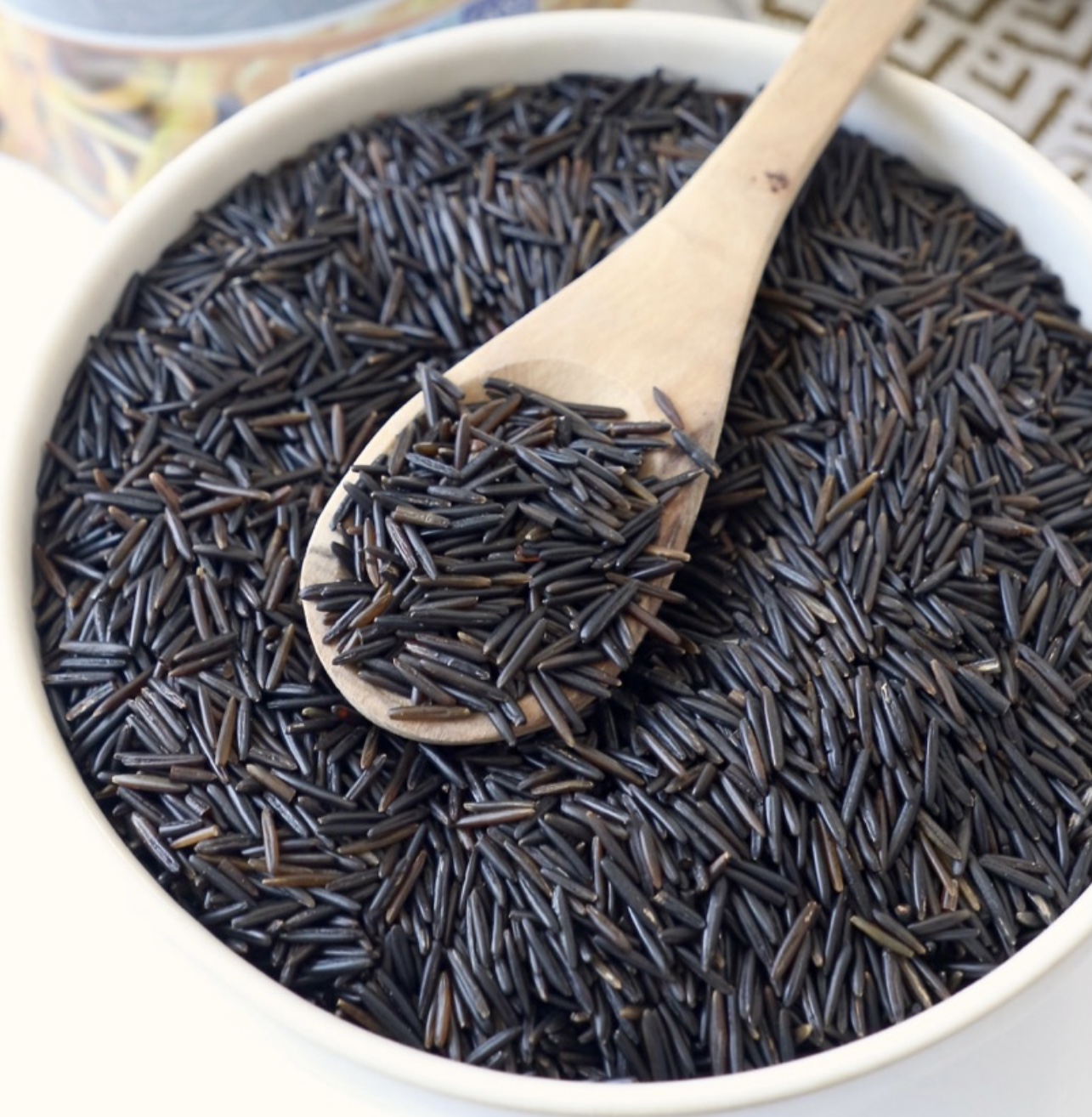
Now, caveat emptor, because there is ‘wild rice’ and real deal wild rice. The former is, in fact, paddy rice – it’s the right species, but grown in manmade fields and mechanically harvested. In Minnesota and Wisconsin, paddy rice has to be labeled as a commercial product, even if it’s called wild rice – and a fair share of this stuff may be GMO as well. If what you get is darn near black and takes 45 minutes to an hour to cook, it’s probably paddy rice. If it’s light brown and cooks up in 15 to 25, it’s the real deal – and yes, without a doubt, it’s worth finding. Paddy rice pales in comparison to real deal. If you don’t know someone to source from, then without fail, get some directly from the Ojibwe people here – Getting genuine wild rice from folks who know how to properly harvest and process is critical to assuring best quality, and to help protect future crops.
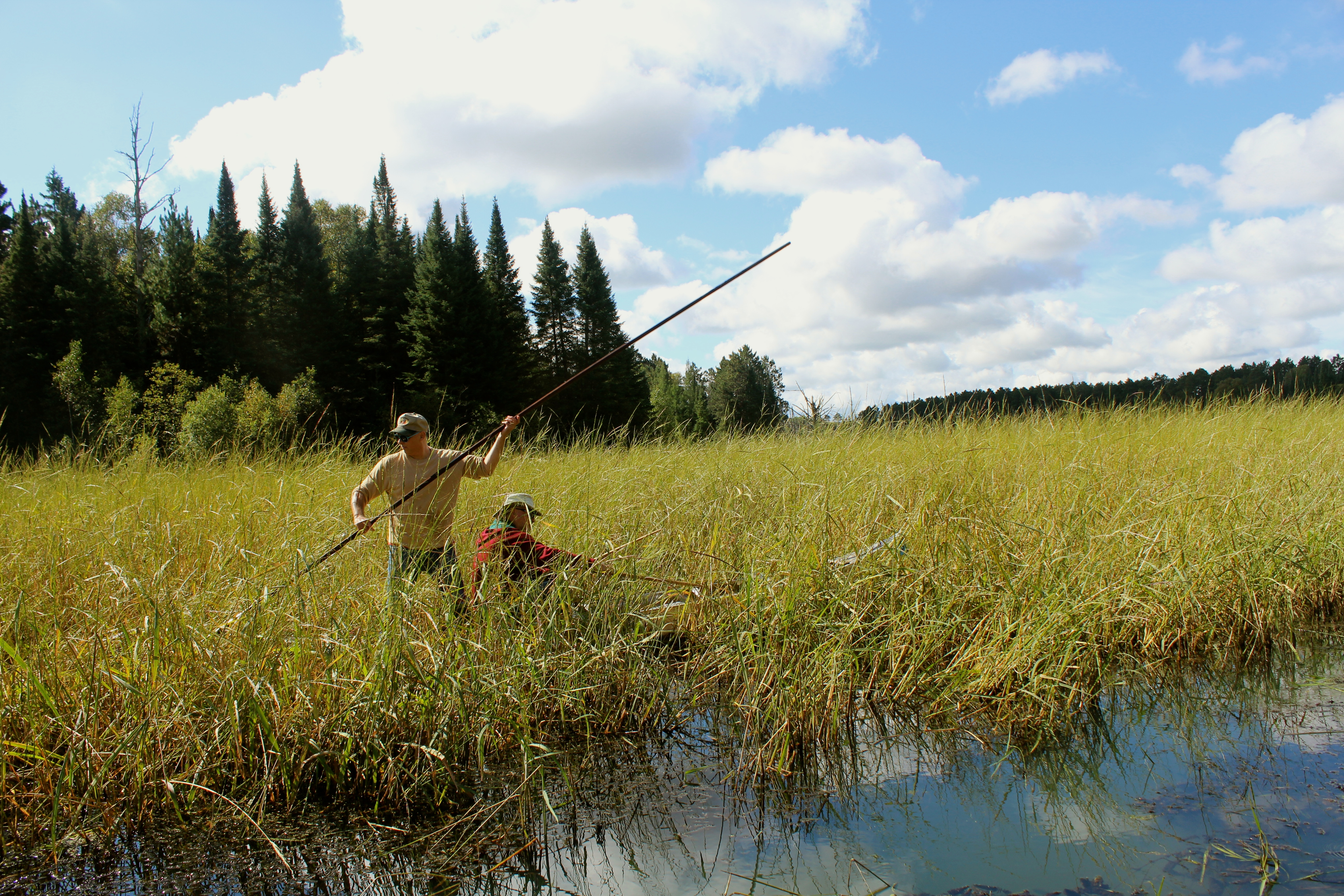
Real deal wild rice grows where it sows and is traditionally harvested by hand, usually in late summer. It’s generally a two person job, with one poling the canoe while the other, (the Ricer), handles the harvesting. Here’s a wonderful video that details the entire process. Proper drying/parching is as critical as harvesting – do this right, and the rice can be stored and enjoyed long term. Manoomin is a sacred, critical food source for the tribes that manage and depend on it, as they have for thousands of years. As David notes in the video, proper respect and reverence for this gift is something we all must give. This video from PBS details the environmental pressures that threaten Manoomin in Minnesota.

So, now that we know, what are we gonna make with this lovely stuff? Your first go needs to be just the rice, in all its glory. Don’t get caught up thinking this is a side dish – wild rice is a complete protein sporting nine essential amino acids. It’s lower in fat and higher in fiber than its cousins, and is a great source of potassium and zinc as well. Cook it in stock or broth and enjoy. Add fresh herbs or spices as you see fit, drizzle it with hazelnut or walnut oil. It’s a meatless meal you won’t regret.

When you do gussy it up, you’ll find affinities for citrus, poultry, scallions, really good vinegar, and cheese – especially feta. Wild rice shines in cold salads with tangy vinaigrettes and pickled vegetables, or crisp apple, crunchy celery and fennel. It makes a superlative stuffing, with shallots and rosemary. Pair it with slivers of prosciutto, or even better, game sausage, frisée or rocket (which I like to call Werewolf Lettuce – you know, Arooooogula?), and a chiffonade of fresh sage leaves. Try Greek oregano, Greek olive oil, and pine nuts. And yeah, if ya wanna do what everybody and their dogs do, you can add dried fruit and/or almonds…
Cooking wild rice can be done stove top, rice cooker or InstaPot – given how rare and precious this stuff is, I always opt for the former method – that lets me keep an eye on things throughout. No matter how you cook, you should rinse your rice first. Put it in a big mixing bowl and add plenty of cold water. Swish things around, and you’ll see the water grow cloudy. Pour that off and repeat a few times until your runoff is fairly clear – this reduces the excess starch that sticks to the outside of the grains.
Better yet, soak your wild rice prior to cooking – that’ll notably reduce cooking time. Soaking also helps remove phytic acid that can hinder nutrient absorption, and helps to break down some of the harder to digest constituents of the rice grains. Use that big mixing bowl, cover the rice with an inch or two of water, cover the bowl and allow it to sit at room temp for 1-3 hours – any longer than that and your grains will burst prior to cooking.

Rice to water ratios for cooking are as follows
Stove Top – 1:4 rice to water
Rice Cooker – 1:2 rice to water
InstaPot – 1:1.25 rice to water
For stove top, bring water or stock to a brisk simmer, then add the rinsed/soaked rice.
Allow to return to a brisk simmer, then reduce to maintain that, uncovered.
Simmer until the outer layer of the grains is nicely al dente and the insides are creamy, and most of the water or stock is absorbed.
Drain rice, return to the cooking vessel and cover.
Allow rice to sit for 10 minutes, then serve hot, or allow to cool to room temp if making cold salads.
Here’s a simple, deceptively delicious cold salad we absolutely love, by it’s lonely or as an accompaniment.
Note: Pineapple vinegar adds a really nice touch to this, and many other things – Here’s how you can make your own.

Urban Wild Rice with Artichoke Hearts and Sun-dried Tomato
Makes 1 main dish or 4 side dishes
2 Cups cooked Wild Rice
1/2 Cup Sun-dried Tomato
1/2 Cup Marinated Artichoke Hearts
1 fresh Scallion
2 Tablespoons Pine Nuts
4 Tablespoons Avocado Oil
2 Tablespoons Pineapple Vinegar (Apple Cider Vinegar is fine)
Sea Salt and fresh ground Pepper to taste
Fresh Parsley to garnish

With a fork, portion tomatoes and artichoke hearts onto paper towels and allow to drain, then pat dry.
Rinse, end trim, and cut scallion into 1/4” rounds.
In a small skillet over medium low heat, add the pine nuts and toss, stirring steadily until fragrant and golden brown, about 3-5 minutes. Don’t ever let ‘em out of your sight – they’ll burn in a heartbeat, and they ain’t cheap.
Combine oil and vinegar, a two finger pinch of salt and 3-5 twists of pepper in a non-reactive bowl, whisk to thoroughly incorporate.
In a salad bowl, add rice, tomatoes, artichoke hearts and scallions.
Add the dressing and toss to throughly coat.
Add pine nuts and parsley and devour.
If there’s quite a bit of time before you’re serving this salad, wait to dress – otherwise the wild rice will absorb the dressing quite greedily.
 UrbanMonique