Canada Day? 4th of July? Here’s your Meal.


Canada Day Dinner, Eh, or fare for the fourth? Either way, here’s one from the archives for ya. Enjoy, and just say NO to fireworks!

Living as close to the border as we do, (you can pretty much throw rocks at it from here), Canada Day is a bit of a big deal. Held each July 1st, what once was known as Dominion Day harkens back to 1867. In that year, the British North America Act came into play, uniting the independent colonies of Canada, Nova Scotia, and New Brunswick into one big, happy Canada. Fifteen years later, the Canada Act made It Canada Day, and the rest is glorious history. Our northern pals pretty much have a holiday three day weekend every month, (which is incredibly sensible, by the way), but this is a biggy – Coming when it does, it means food, and in particular, stuff appropriate for a picnic, barbecue, what have you. We gathered our one available kid, (the eldest, sans grandkids but with dawg), and decided to do up an appropriate meal – And as fate would have it, this wouldn’t suck on the 4th of July, either.

We settled on brisket, because we had a lovely, local grass fed hunk of beef just begging to be honored. Naturally, we just had to do some bbq beans and potato salad to go with it. Might seem heavy, but frankly, it wasn’t at all – It was ethereal – Perfect, in fact.

With the day kind of cloudy and cold, I decided I’d rather do the brisket in the oven, rather than on the grill and smoker. This raises the issue of authenticity – A beautiful hunk of beef like that deserves all glory, laud, and honor, so the prep and cooking absolutely cannot be half assed. Secondly, I decided on beans too late in the day to do traditional slow cooked, so those would have to go in the Instant Pot, and again, be as good as the real deal. M rounded things out with a stunningly good potato salad. While this may sound pretty pedestrian, I assure you, it’s not – Everything came out surprisingly good – Good enough that we had to write it down and share it. While we do the same kind of things a lot, we’re constantly tweaking methods and recipes. When the stars align and a meal is this good, it’s time to stop, think, and write down exactly what you used and what you did, because yeah – It’s so worth recreating again.

Let me say that again – Whenever you make something great, write it down, right then and there. Stop and write it down. I do this daily – Everything from a few scratches on a post it note, (sometimes fast enough that I later can’t read them), to more than a few thousand words. My food notes are vast, and many haven’t yet been revisited since they were recorded – Some have been researched, added to, recipes fleshed out, etc, (which sometimes leads to me saying, ‘Yeah I gotta recipe for that,’ after which I discover that answer to be sorta kinda true at best.) In any case, here is a shining truism – The worst thing we can do when cooking is to think, I’ll remember that, because chances are real good that you won’t. Sure, if it’s a thing you do the same way every time, or a basic, you don’t need to record that, (unless you want to share it, of course.) When I’m after a new idea, more oft than not, I’ll plow into my raw notes, see something that triggers a memory, (or at least piques my interest), and away we go. If it struck you as great food, write it down, don’t lose it – As for remembering what you wrote it down on, and where that is – you’re on your own.

So the first challenge was that brisket. Having lived a dozen years in Texas, I know better than to screw with something so culinarily sacred – You are welcome to try alternatives to the Gold Standard, (even if it might earn you some sideways glances or a mumbled comment), but whatever you produce had damned well be real good, y’all hear? Now, far as I’m concerned, there are three non-negotiables for a finished brisket

It must have a nice, crisp crust formed by a dry rub.

It must have notable smoke to the flavor profile.

It must end up fork tender and juicy as all get out.

This version was good enough that, when M noted that Joe didn’t have a knife, his response was, ‘You don’t need one.’

Obviously the quality of the beef is paramount. We had that covered, but I guess I’m getting wimpy in my old age, because I just really didn’t wanna cook out there on a gray, drizzly day, so I sussed out a viable alternative method. When I do brisket on a grill, it’s charcoal, for sure – Two zone set up. Once it’s mostly done, it goes to the smoker for the last hour or so. My solution was to incorporate smoke into the rub, in the form of smoke powder from Butcher and Packer. Through what they call a “highly refined process,” smoke is turned into powder form and mixed with dextrose so that it won’t clump too much. What you get is true to the wood smoke flavor that will fool damn near anyone into thinking you smoked whatever it is you apply it to – In the immortal words of Jackie Chan, ‘No bullshit.’ They make hickory and mesquite, and they’re sublime stuff, indeed. Next, we plugged in an uncovered dry/covered wet cooking process that approximates grilling to a very acceptable degree.

My big twist here is a North African Berbere spice mix to the rub, which was totally serendipitous – It added a delightful, exotic warmth and heat that really popped. I intended to do my typical brisket rub that calls for chili powder, only to find that I didn’t have any mixed up. As I was searching, I saw the berbere and thought, why the hell not? Here’s the deal with that stuff, (but you could absolutely just sub chile powder if you’re not feeling adventurous.)

Urban’s Indoor Brisket

3-4 Pound Beef Brisket

1 1/2 Cups Beef Stock

2 Tablespoons Berbere Spice Blend

2 Tablespoons Sea Salt

2 Tablespoons Mesquite Smoke Powder

1 Tablespoon Granulated Garlic

1 Tablespoon Granulated Onion

1 Tablespoon ground Tellicherry Pepper

1 Tablespoon Dark Brown Sugar

2 teaspoons Dry Mustard

1/2 teaspoon crushed Sage

Preheat oven to 350° F

Unwrap and trim brisket, leaving a nice fat cap.

Combine all dry ingredients and hand blend thoroughly.

Rub a generous layer of the mix into all surfaces of the brisket – Do it by hand, take your time and really work the rub into the meat.

Place the brisket fat side up on a broiling pan.

Roast for 1 hour, uncovered.

Reduce the heat to 300° F, carefully add the beef stock to the bottom of the broiler pan, then tightly wrap and seal the entire pan with metal foil – Wrap it fairly tight to the meat – Don’t leave a whole bunch of air space around the brisket.

Roast for about another 3 hours, until the brisket is fork tender.

Remove from oven, keep the brisket covered and allow a 15 minute rest.

Carve roughly 1/4” slices across the grain and serve.

You can use pan juices as is, or transfer them to a sauté pan, add a little butter and a little more stock over medium heat, and use that as well.

Next came Beans, which I defaulted to the Instant Pot – I can assure you that they were amazing, and suffered not at all from that cooking method, (and I have witnesses). As you’ll see, it’s a three step cooking process with the IP, but it’s all done onboard, it’s super efficient, and the results are stunningly good.

Here again, quality matters a lot. You’ll recall that not long ago, I wrote a bit of a paean to Rancho Gordo beans – On the social media site for RG Club members, a newer convert recently commented as follows, ‘I love my beans so much, but… RG has ruined other beans for me. I can no longer grab a can of garbanzos or a bag of black beans, because they don’t even compare to the quality of RG beans.’ This is so true. I used a variety called Rio Zape, which RG owner Steve Sando describes as, ‘the classic heirloom bean that inspired the birth of Rancho Gordo. Suggestions of chocolate and coffee make this pinto-family rarity one of our favorite and most requested beans.’ It’s no joke – Those beans, coming out of the initial cook with nothing involved but a little salt, are amazing – Taste them, give them to others to taste, and everyone’s eyebrows go up and they start making little spontaneous yum yum noises – Get the picture? If you love beans, you must try Rancho Gordo – They’re that good.

Urban’s BBQ IP Beans

1 Pound Rancho Gordo Rio Zape Beans

1 small Sweet Onion

1-2 Serrano Chiles

6 slices Bacon

3/4 Cup Blackstrap Molasses

1/2 Cup Chicken Stock

1/2 Cup Ketchup

1/4 Cup Agave Nectar

1 Tablespoon Yellow Mustard

1 Tablespoon Apple Cider Vinegar

3-4 Shakes of Worcestershire Sauce

1 Tablespoon Avocado Oil for sautéing.

Add dry beans and 6 cups of water to the IP.

Set to Beans and 60 minutes and start the cook.

Allow the pressure to reduce by natural release.

Transfer beans to a colander and drain, (save the liquor for soups and stews – It freezes great)

Dice onion and chiles, cut bacon into roughly 1/4” strips across each piece, (the short way, so you end up with strips about 1/4” by 3/4” or thereabouts.

In a non-reactive mixing bowl, combine molasses, ketchup, mustard, agave nectar, vinegar, and Worcestershire – Whisk thoroughly to incorporate.

Set the IP on sauté, add the tablespoon of avocado oil and allow it to heat through.

Add onion, chiles, and bacon – Sauté until onion is soft and bacon lightly browned – about 3 to 4 minutes.

Turn IP off, leaving veggies and bacon therein. Deglaze the bottom of the IP pan with 1/2 cup of chicken stock, scraping up and loosening all the naughty bits.

Add beans and sauce to veggies, bacon, and stock, and gently stir to incorporate thoroughly.

Set for normal pressure run, 30 minutes.

Natural release.

Go wild.

And finally, M’s potato salad incorporates two different pickle flavors that really shine together – Dills in the salad, and bread and butter brine in the dressing. It was stellar.

M’s Two Pickle Potato Salad

4 large Potatoes

3 Eggs

1/2 Cup Sweet Onion, diced

1 stalk Celery, fine diced

1 Cup Olive Oil Mayonnaise

1 Tablespoon Yellow Mustard

1 Tablespoon minced fresh Dill

2 teaspoons minced fresh Parsley

2-3 dill pickles, fine diced

1/3 Cup Bread & Butter Pickle Brine

Sea Salt and fresh ground Pepper to taste.

Prepare an ice bath in a large mixing bowl.

Put eggs in a pan large enough to cover with 2” or so of water.

Bring to a boil, cover, then turn the heat off, and let them sit in the covered pan for 20 minutes.

Pour out the hot water and replace with cold a couple of times, then let the eggs sit in that until you’re ready to deal with them.

Boil potatoes until just fork tender, then plunge into the ice bath to shock, (stops the cooking process).

Prepare veggies as per above.

In a large non-reactive mixing bowl, add potatoes and veggies, including pickles, and eggs. Stir gently with a kitchen spoon to thoroughly combine.

Add mayo, mustard, dill, parsley, pickle brine, and lightly salt and pepper. Stir to combine and thoroughly coat the salad. Taste and adjust brine, salt, and pepper to your liking. Cover and chill for at least 30 minutes prior to serving.

There ya go – Happy Days, whatever they are!
Honor Your Herbs


Do you grow herbs at home? If the answer is no, then quit screwing around and get to it. Fact is, most if not all of what you love is relatively easy to produce, and tastes far superior to anything dried or ‘fresh’ from a grocery store.


Even if you live in a tiny space, you can do up a single pot with three or four things you fancy – and time of year doesn’t matter much for that project. If you’ve got outdoor garden space, then herbs are a must. Let alone fresh flavors, I’m here to tell you that grabbing a paring knife and heading out the door to peruse and choose is a delight for the senses – scent, sight, texture – it’s a lovely zen cooking moment.


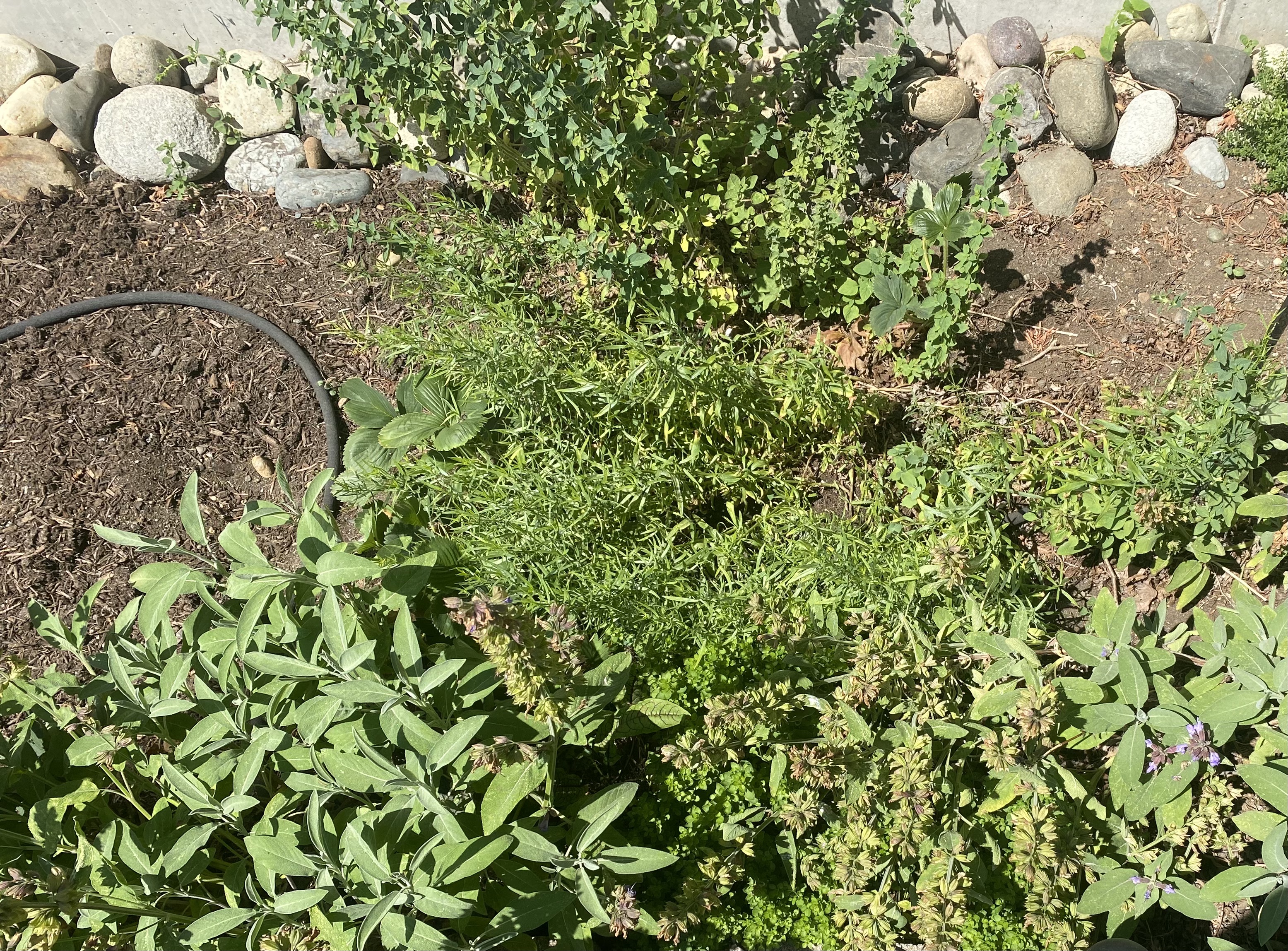
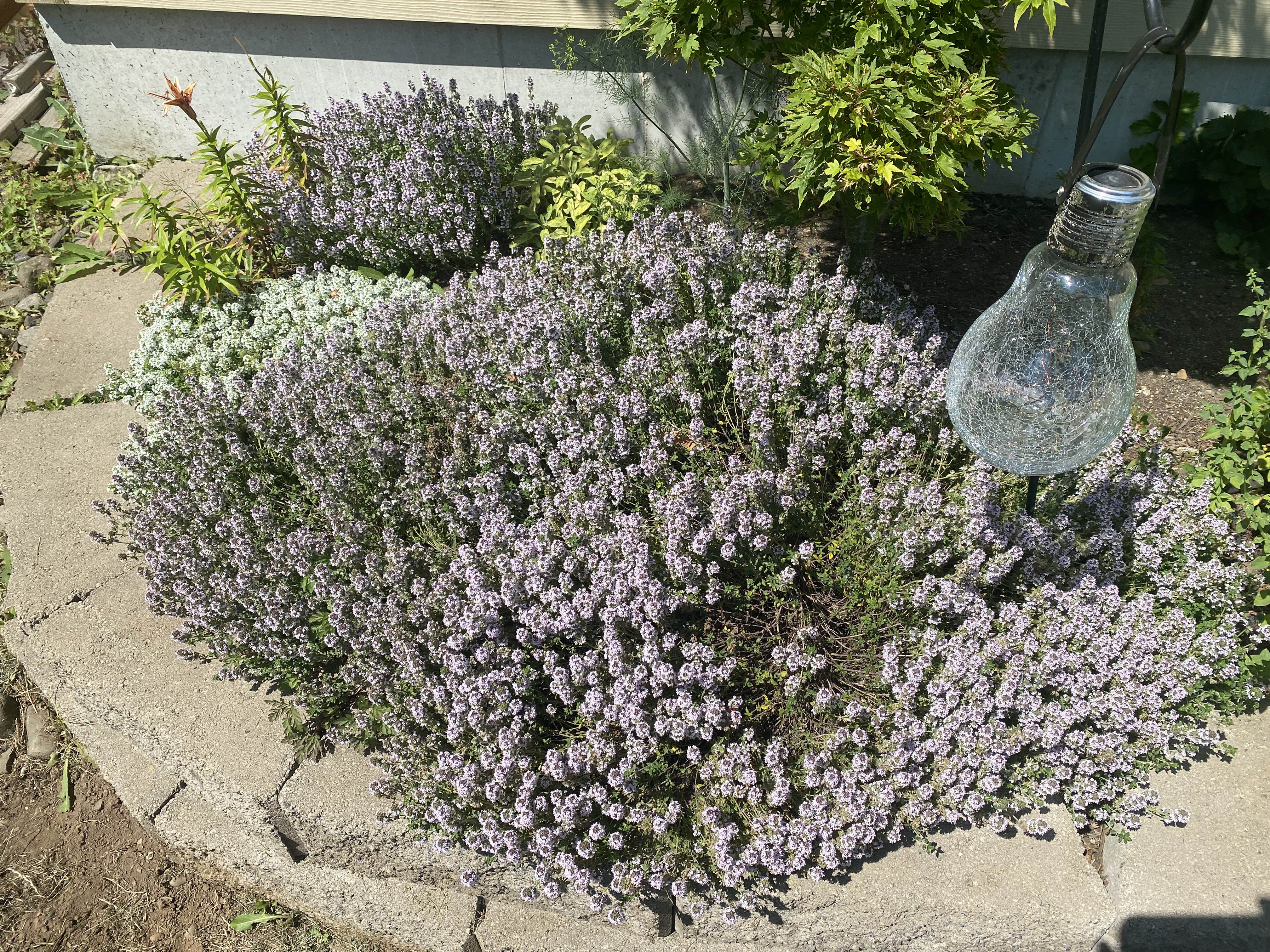
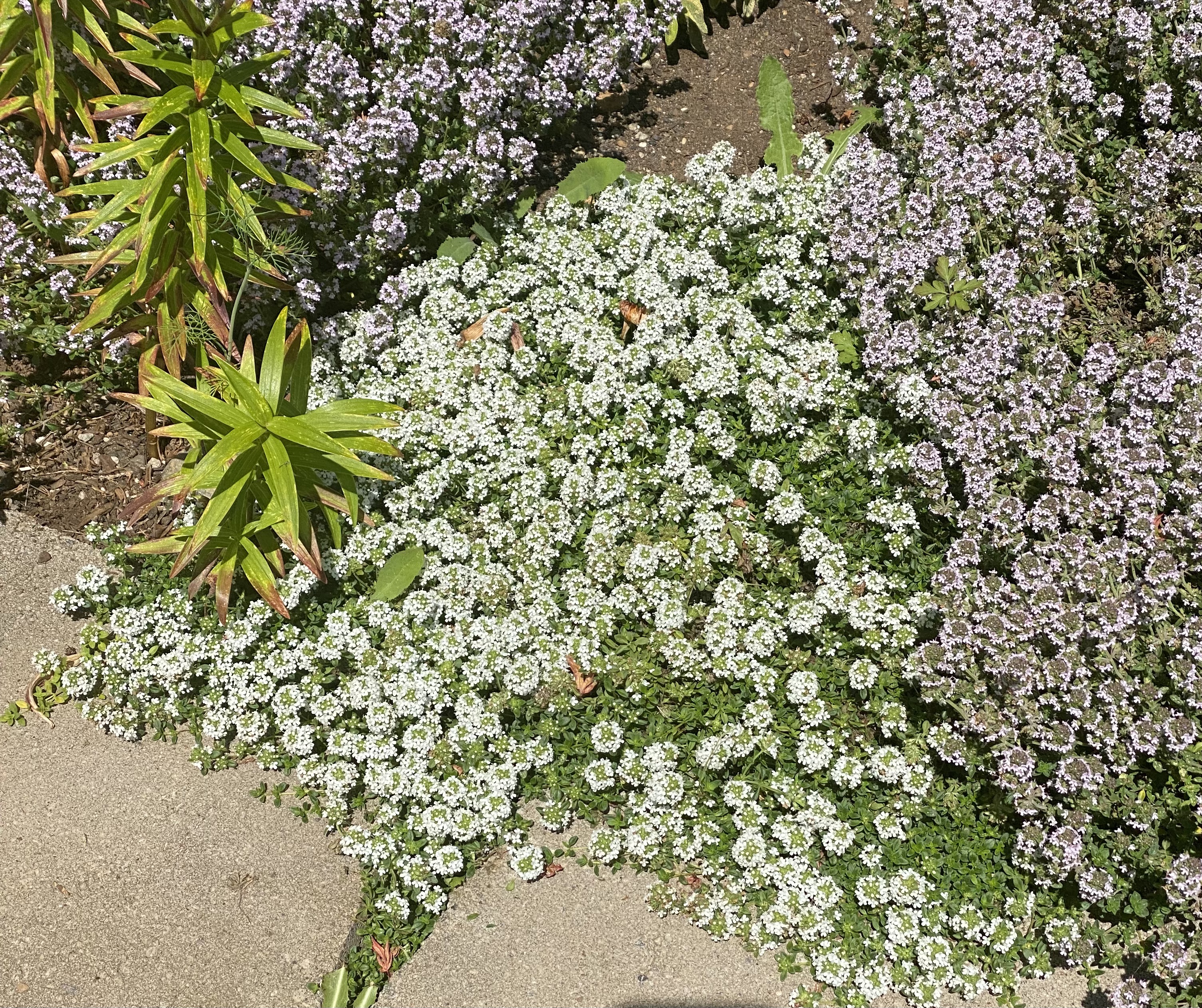
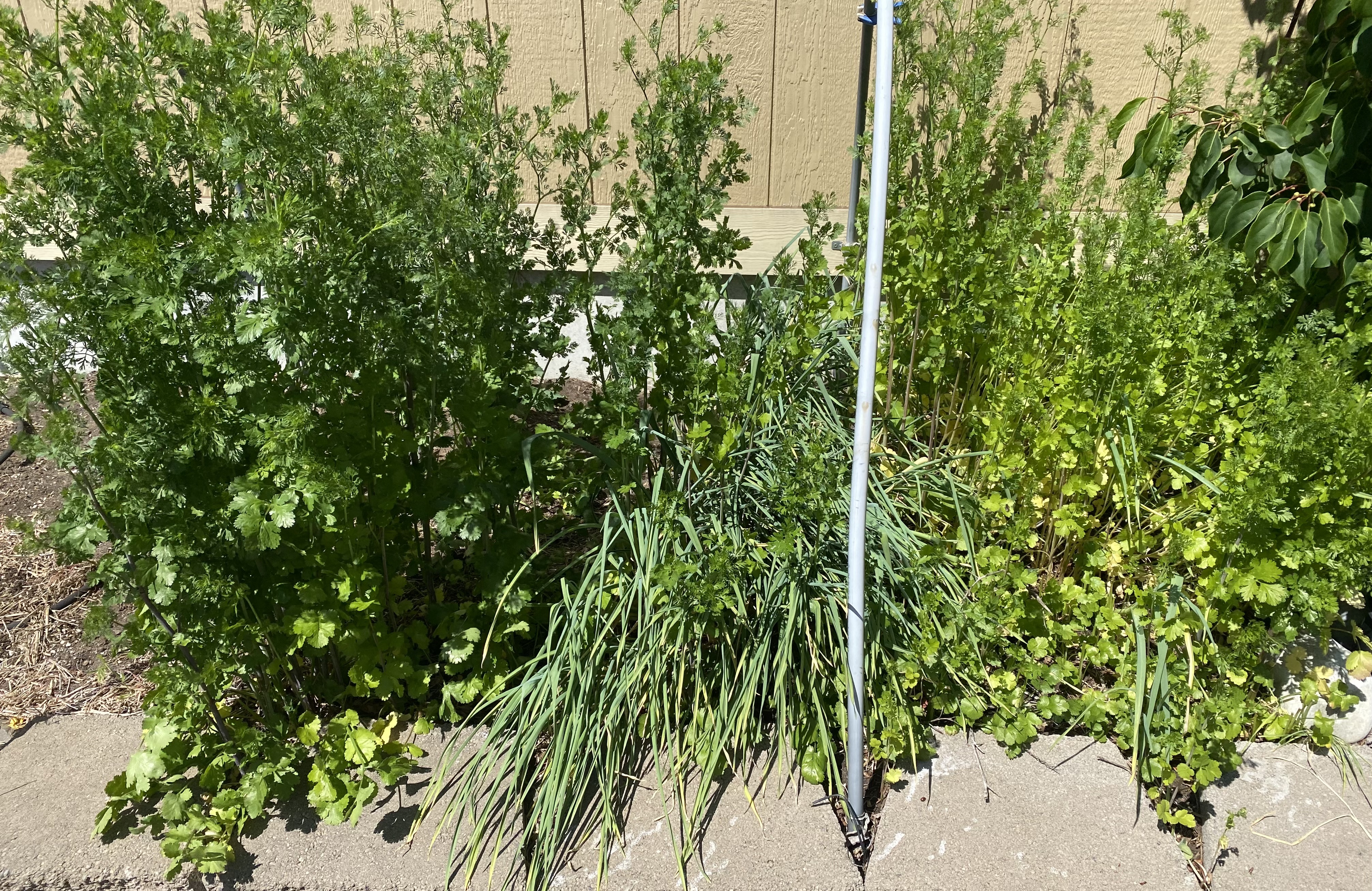
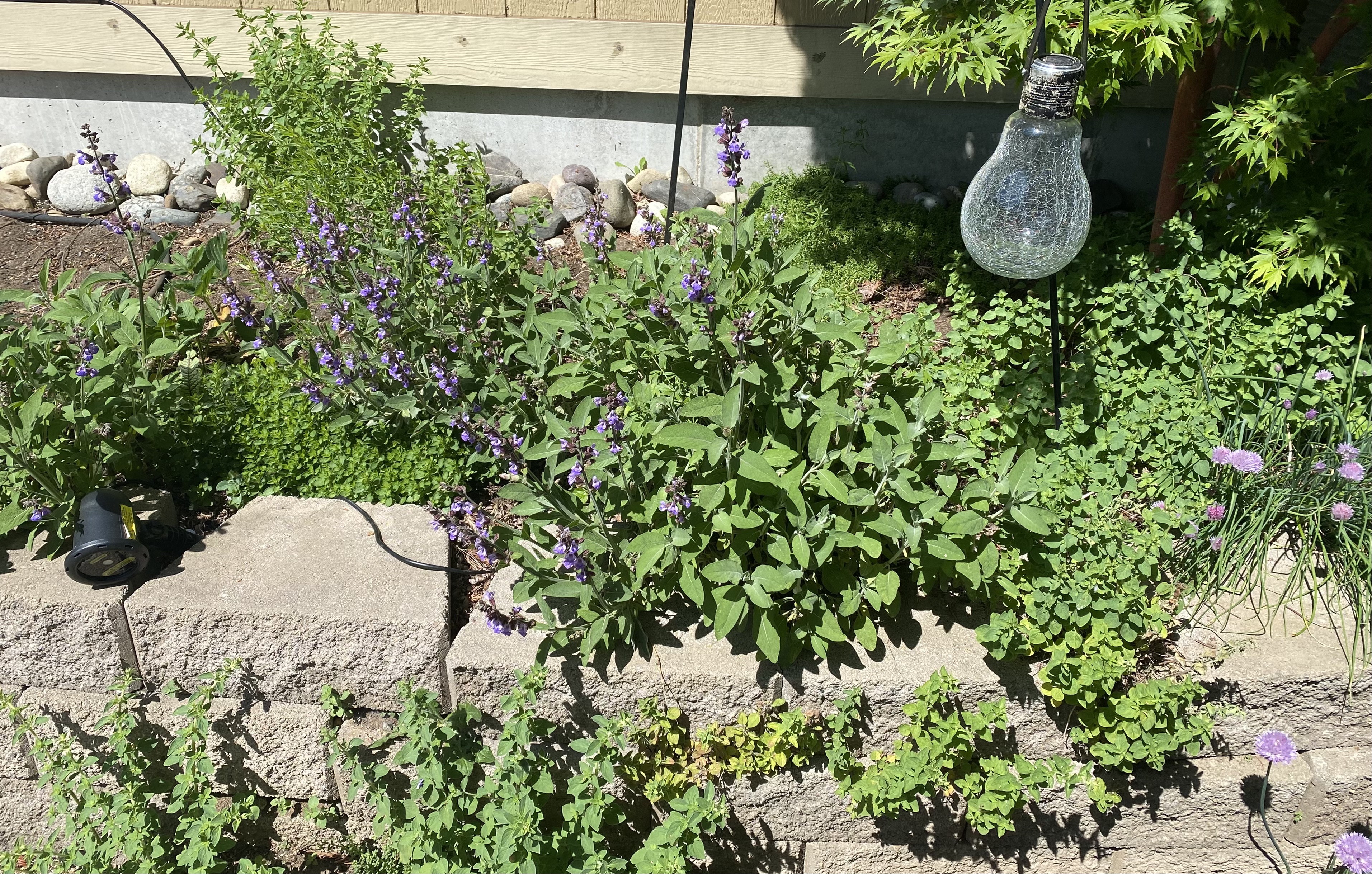
What you grow is absolutely up to you – it’s such an individual journey, I’m not going to suggest a thing. What I will suggest is that you maximize your pleasure once they’re up and growing. As you’ll see from the images here, our herbs are extremely happy, enjoying warm sunny days after cool rainy ones. It would be easy to write something like ‘they’re running late this year,’ but what the hell does that even mean in our world? Now more than ever, we just need to accept and appreciate what we get when we get it.


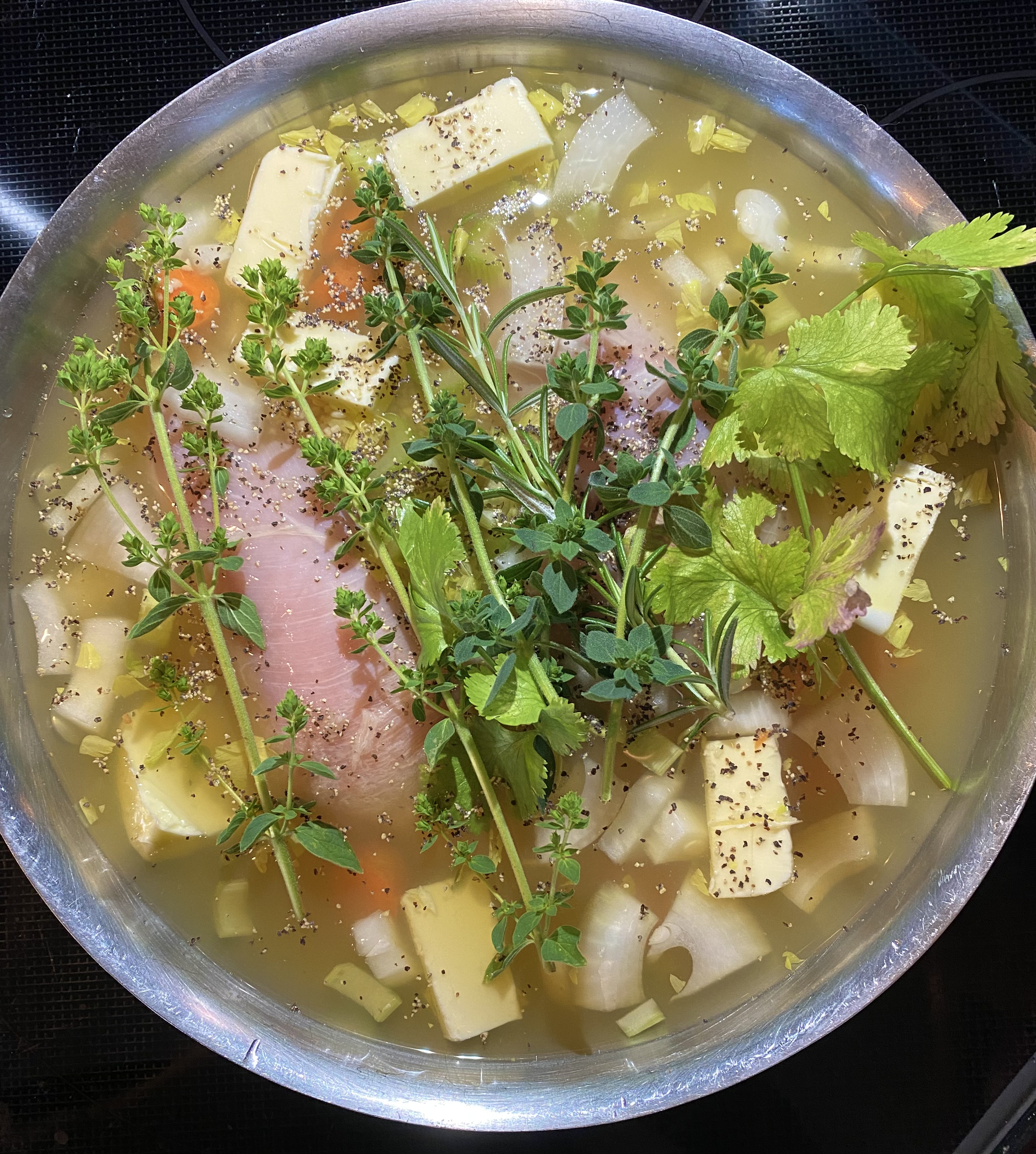
If you’re out picking, cut a couple good sized stems from the ones you realize you’ve not paid enough attention to lately. Bring those in, put them in a little jar with fresh water, and set them right by your primary prep area – let that be your reminder to include whatever it is a bit more often.

Think about using herbs where you generally don’t and expand your horizons – love hen nuts for breakfast? There’s little more delicious than fluffy scrambled eggs with fresh herbs. Add ‘em to a sandwich and make it extraordinary. Put ‘em in your salad mix and not just in dressing – your taste buds will thank you.


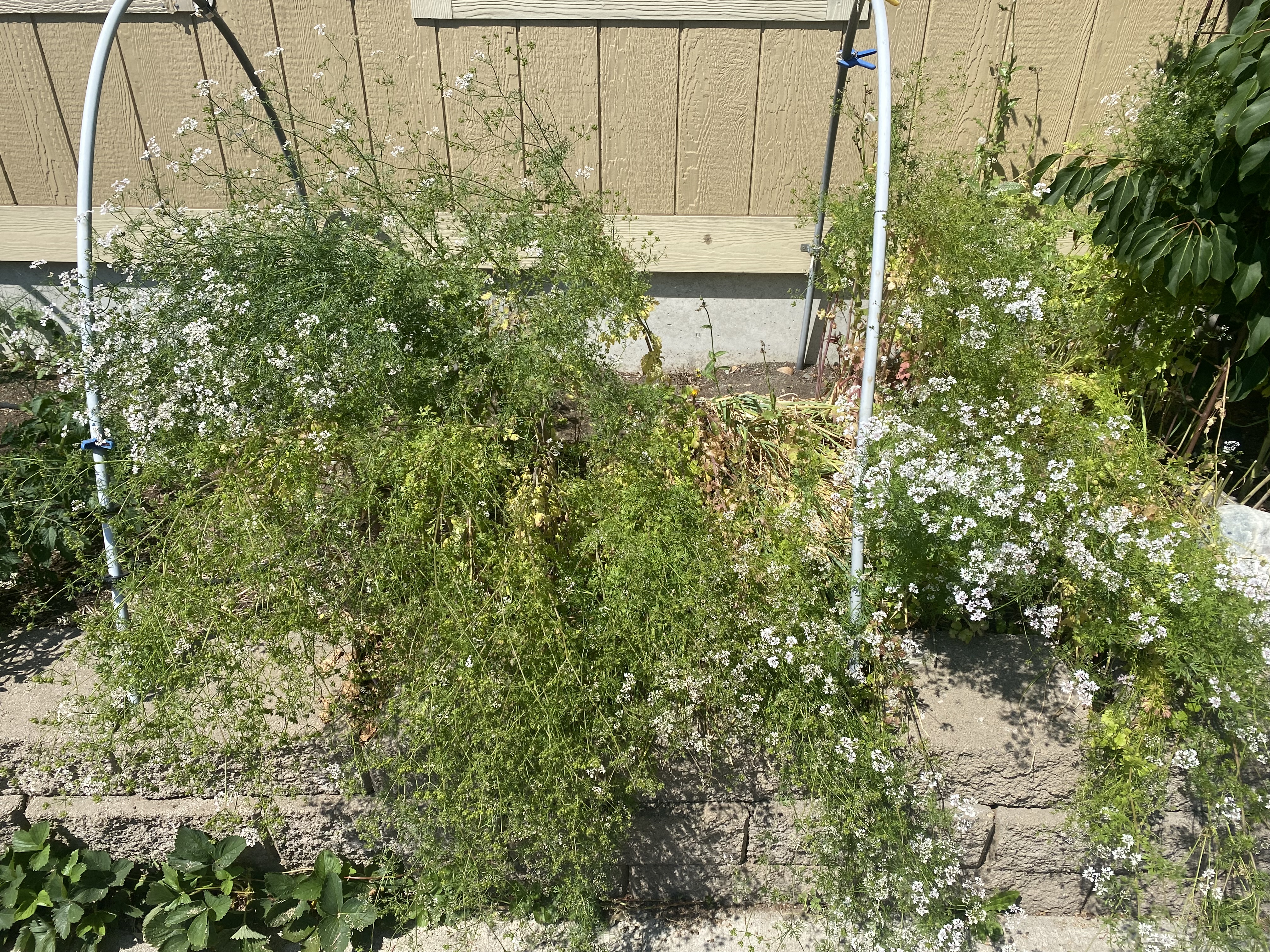
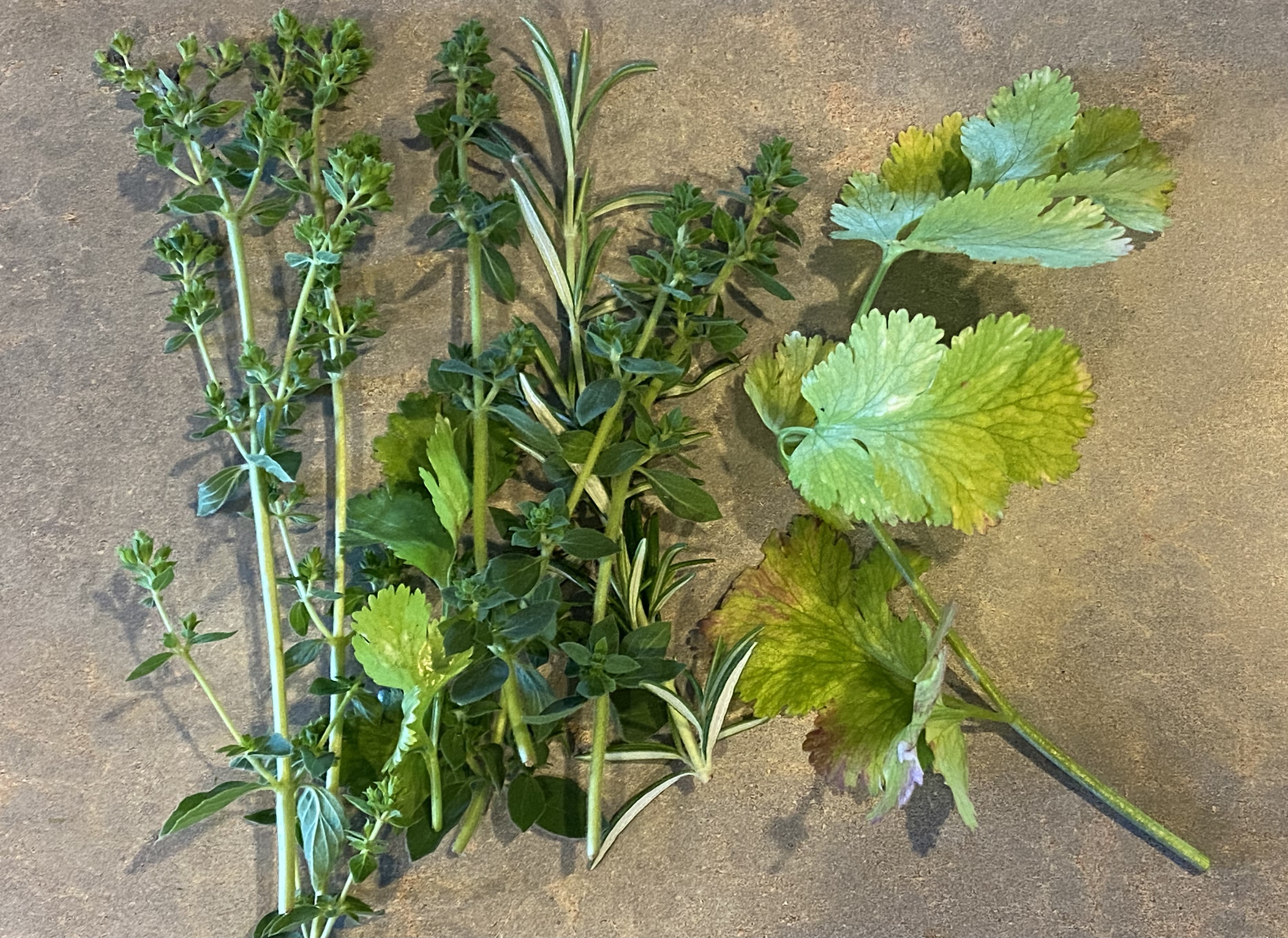
If something starts to bolt so quickly that there’s no way to keep up with it, think preserve or extend – let it go to seed, like this cilantro is doing and later, gather up fresh coriander seed. We enjoy a steady stream of volunteers in our garden beds each year, all of which stem from letting nature do its thing – the results are always a wdelight and keep things nicely diversified as well.


Harvest a bunch of whatever it is that’s going wild right at peak freshness and dry it. You don’t need to strip things down too much – take stems of rosemary, oregano, thyme, what ever you have, and let them air dry on a clean kitchen towel. Once dried, gently strip the leaves, separate out the stems, and freeze in clean, airtight glass jars. Pull out what you need when you need it, and of course keep some in your usually herb storage area as well – that stuff will overwinter just fine with very reasonable potency.


Make your own herb blends. From Herbs de Provence to Italian, Greek, and Mexican, or whatever you happen to love, pre-blended mixes save a time and are a great use during abundant growth years. Always keep in mind that whatever gets called a ‘classic’ mix is nothing more than a guideline – every Nonna and Abuela makes their own version and you should too.


Donate herbs to your local food bank. These folks are thrilled enough when they get salt and pepper, but lay some serious variety on them, and they’ll be turning cartwheels. Blends are especially appreciated here, so once again, if your place is growing like gangbusters, make the best use you can of the bounty and share the love the way it aughta be shared.

Picanha – Brazil’s Best Kept Secret


Picanha – that sounds so much sexier than sirlion cap, rump cap, or rump cover, doesn’t it? And if the Portuguese doesn’t grab you, there’s always the French term, Coulotte. Picanha likely stems from picana, a Spanish word meaning the pointed stick vaqueros used to herd cattle. Whatever you choose to call it, believe me when I tell you that, if you love great beef, you want this.


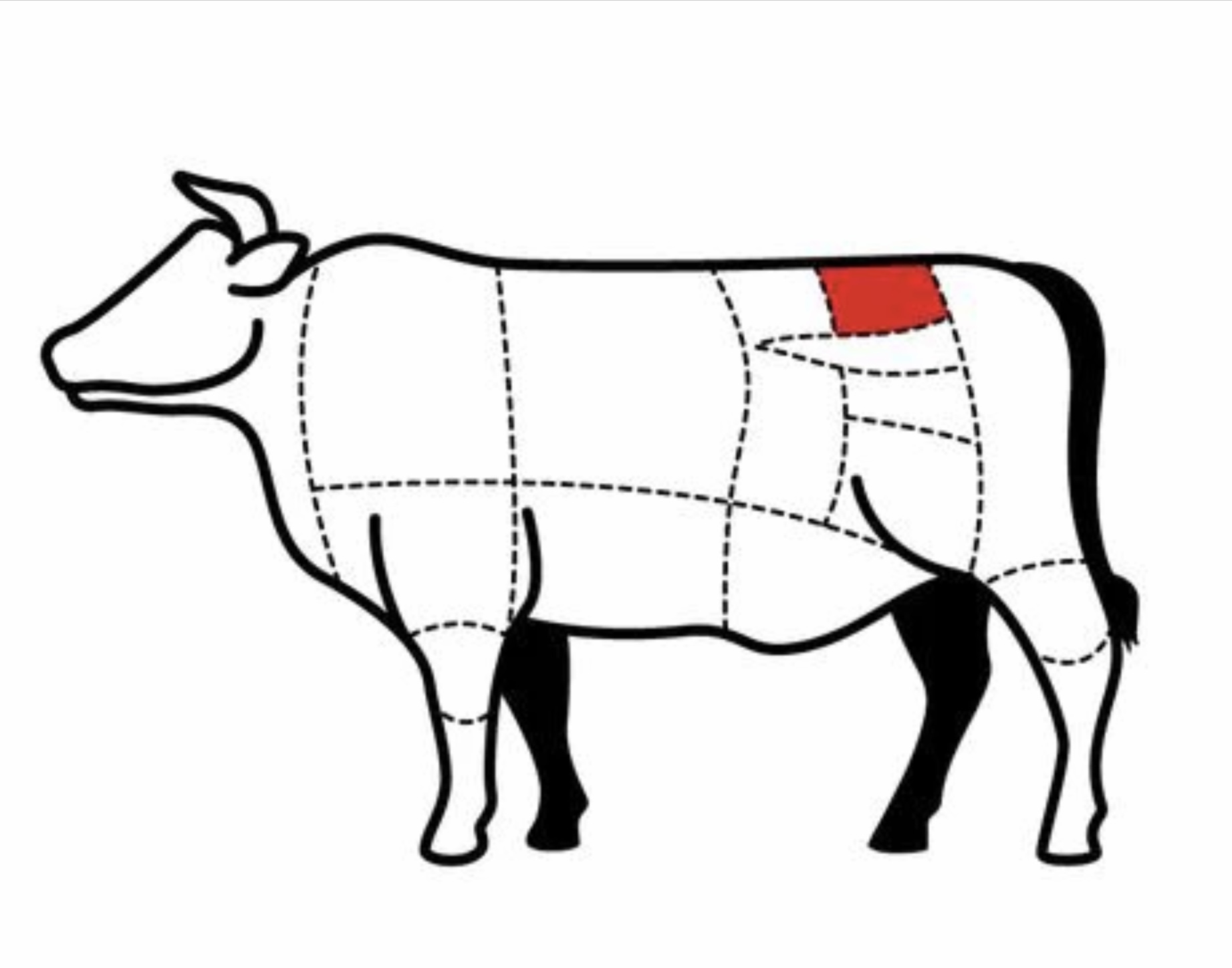
Picanha is a triangular shaped muscle derived from the primal loin cut. It’s not well known here because American butchers usually turn this into rump, round, and loin. But down in Brazil, they know better, and they leave the Picanha whole – just as they do in France, and also in Portugal. Picanha compares favorably to ribeye for tender, juicy, flavorful steaks and roasts, and for far less money. If you’ve got a real butcher shop near you, you should be able to score this cut – and Costco counts in this regard – they call it a sirlion cap, but they cut it right. 


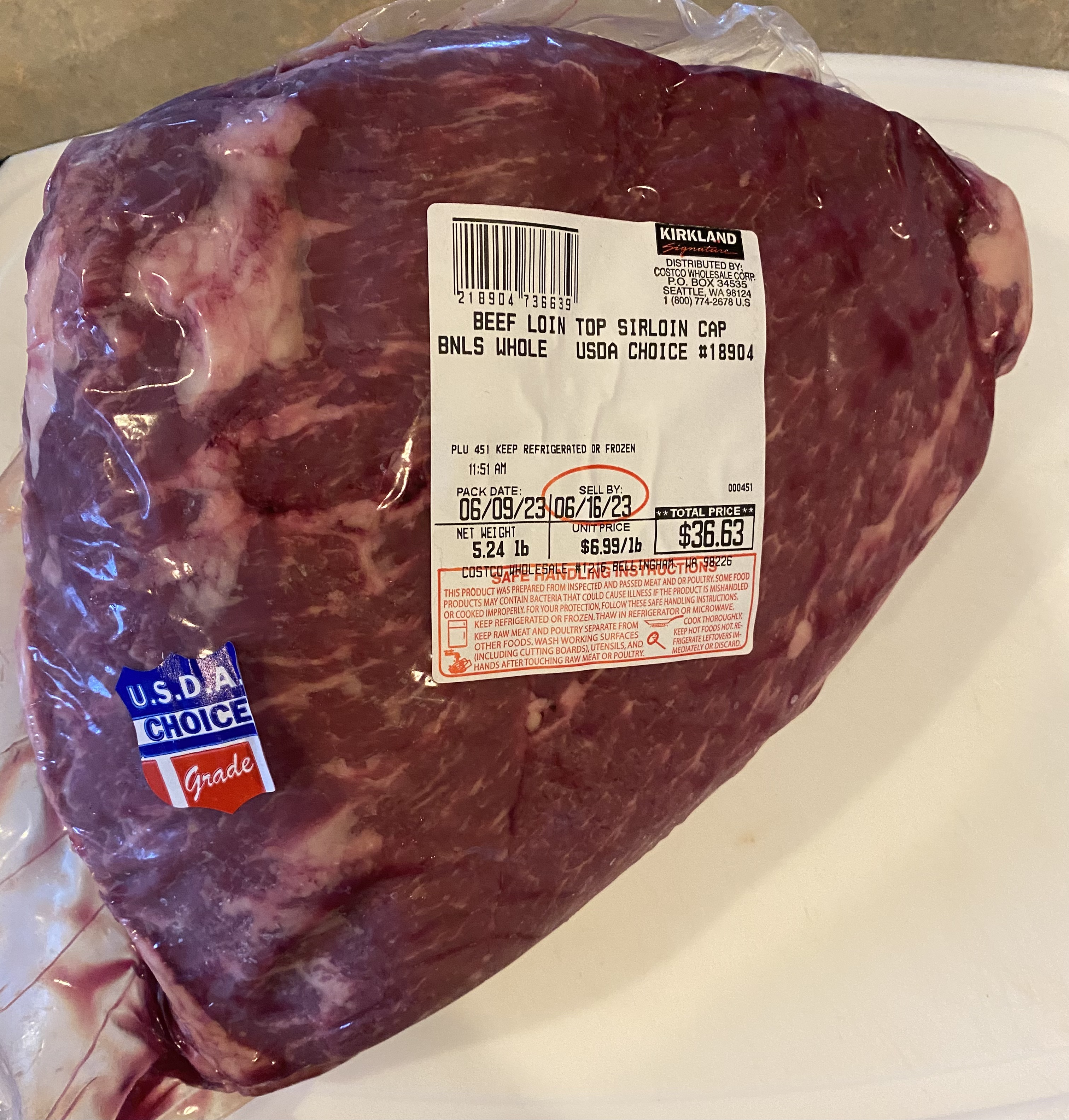
Even better, I got a couple USDA Choice beauties for $6.99 a pound yesterday – compare that to choice ribeye at $12.99 a pound and you get it. Picanha is also pretty close to brisket in price, and much easier to find in the 2-3 pound per cut range.


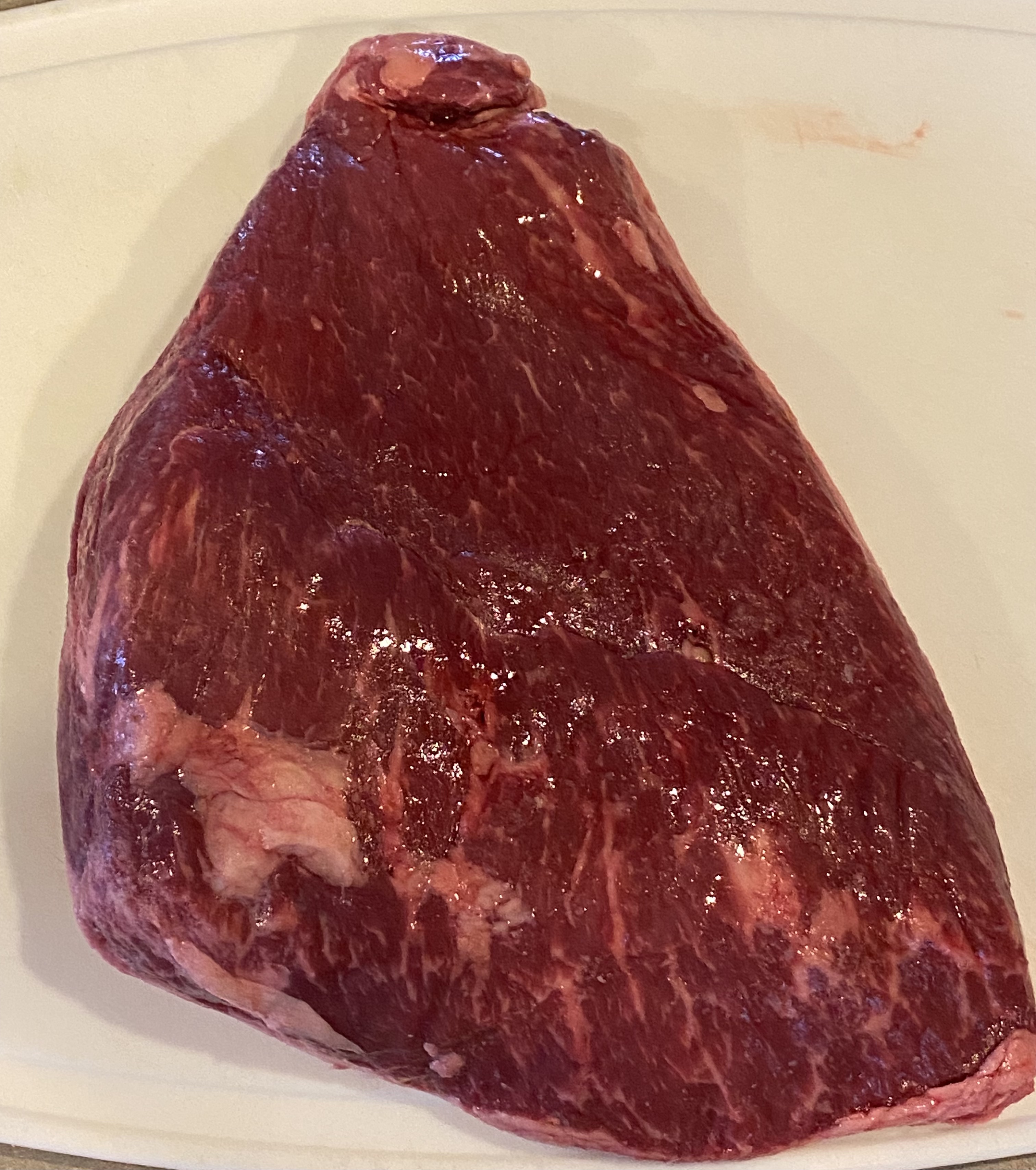
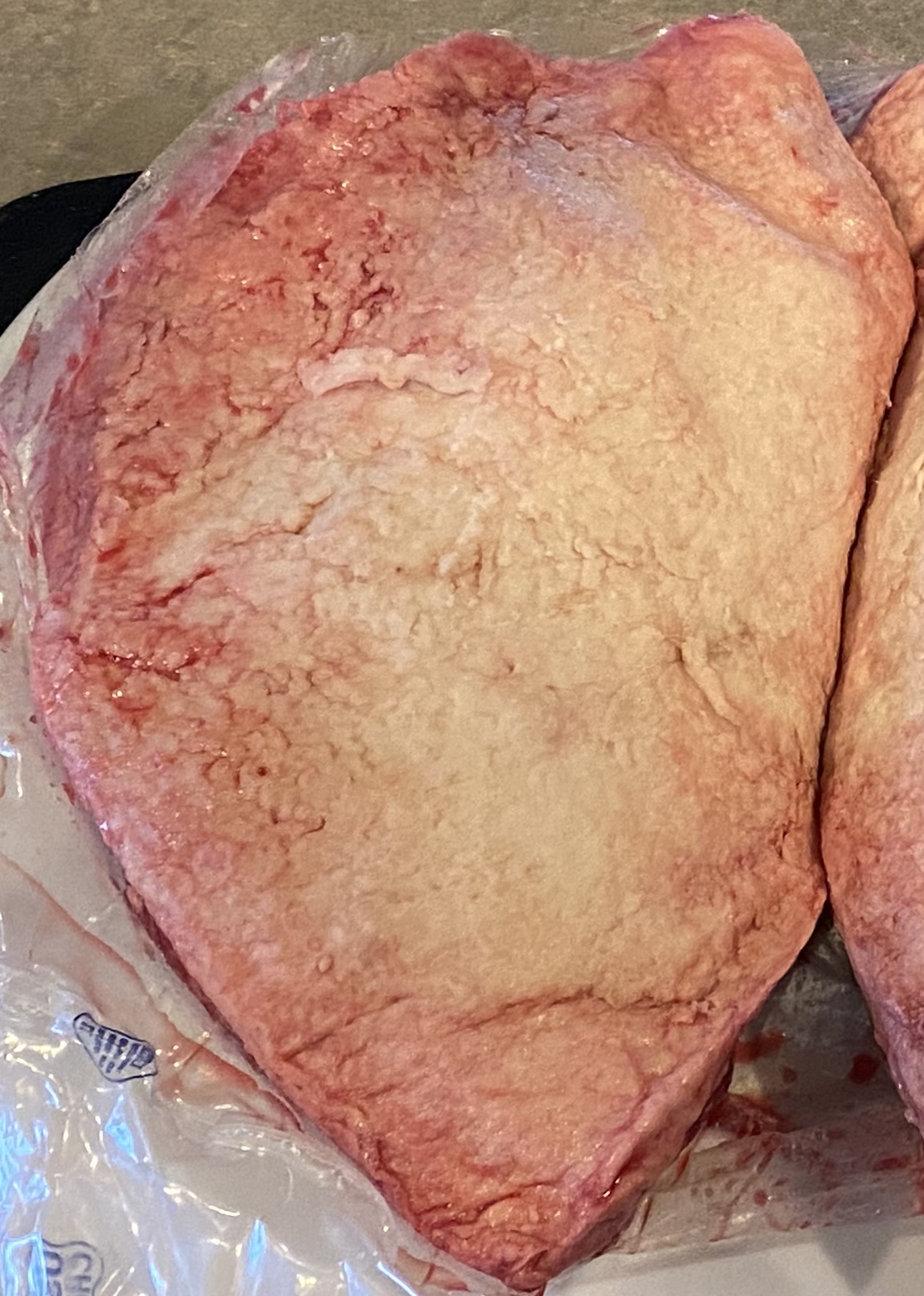
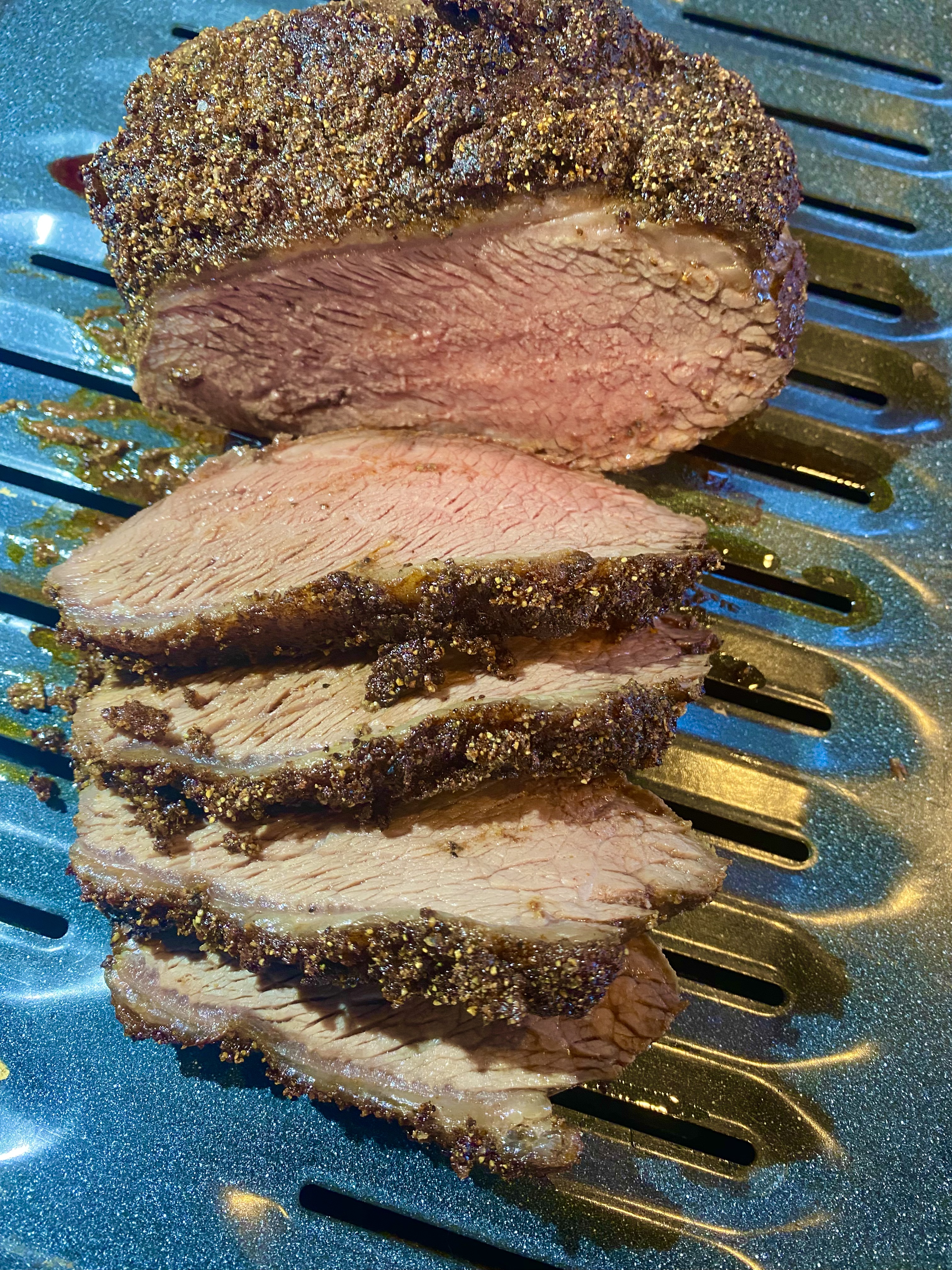
Above and below you see images of a proper picanha. That fat cap is the real secret of this cut’s fantastic properties. Cooked right, that cap melts, basting your steaks or roast and culminating in fork tender meat with incredibly silky mouth feel.


So, once you score a picanha, what to do with it? It’s a relatively thin roast, maybe 3” to 4” thick. In Brazilian Churrascaria, the traditional preparation is to cut the picanha into steaks, skewer them, and cook them quickly over charcoal or wood. You can treat it like tri-tip and grill it whole, or braise, roast, or go low and slow in a grill or smoker like a brisket – picanha will shine through any of those methods. 

Whatever you do, see that you keep that glorious fat onboard until cooking is done, after which you can trim off any remaining if you wish. Some do, and some don’t – it’s a personal preference and either way is fine. Seasoning is up to you as well. Picanha is a bold, flavorful cut, so not much is truly needed. Brazilians tend to use only coarse salt, but there’s nothing wrong with applying your favorite wet or dry rub.


My advice is to leave your picanha whole. Steaks may be easier and faster to cook, but again, this is not a thick cut, and it does not take long, unless you purposefully opt for low and slow. The magic here is a flavorful, not particularly heavily marbled cut that relies on that fat cap to really flourish. While you can lean toward well done if you do it up brisket style, picanha really shines when fairly rare.

If you do prefer steaks, then roast whole first and then cut steaks – that takes full advantage of the fat cap. You can make them as thick as you like, and you can have them relatively rare, or sear them more if you like.

Speaking of searing, my advice is don’t. Let’s let Harold McGee, from On Food and Cooking, explain what searing may do for us, ‘Food scientists who have studied the subjective sensation of juiciness find that it consists of two phases: the initial impression of moisture as you bite into the food, and the continued release of moisture as you chew. Juiciness at first bite comes directly from the meat’s own free water, while continued juiciness comes from the meat’s fat and flavor, both of which stimulate the flow of our own saliva. This is probably why well-seared meat is often credited with greater juiciness despite the fact that searing squeezes more of the meat’s own juice out.’

Note that McGee wrote ‘probably,’ not ‘is’. It probably is true that searing can help in this regard, however with a picanha, I’ll tell you that you don’t need the additional cooking steps – roasting this beast with the fat cap up will give you all you could desire, and then some.


Roasted Whole Picanha

2-3 Pound Picanha Roast

Coarse Kosher Salt or

Dry or Wet Rub of your choice

Bring the roast out to room temperature and pat dry with clean toweling.

Trim the fat cap to roughly 1/2” thickness, and then score through about half of that in a large X pattern.

Rub the roast generously with salt and allow to sit at room temp for an hour prior to cooking.

Preheat oven to 350° F and set a rack in a middle slot.

Add about 1/2” of water to a clean broiling pan and set your roast on that, fat side up.

Use an active oven safe probe to closely monitor meat temperature.

Roast until internal temperature reaches 122° F.

Remove from oven, leave in the broiling pan, cover loosely with foil, and allow to rest for 15 minutes.

Cutting at 90° to the grain, carve slices or steaks and serve.


Brisket Style Grilled or Smoked Picanha 

Note: this is a true low and slow cook that will take a good few hours, so be prepared!

2-3 Pound Picanha Roast

Coarse Kosher Salt or

Dry or Wet Rub of your choice

Bring the roast out to room temperature and pat dry with clean toweling.

Trim the fat cap to roughly 1/2” thickness, and then score through about half of that in a large X pattern.

Rub the roast generously with salt and allow to sit at room temp for an hour prior to cooking.

Use an active oven safe probe to closely monitor meat temperature.

Set up grill or smoker at 250° F – if you’re grilling, set it up two-zoned, and you’ll place the picanha on the cool side.

Add smoking wood if you like that – wet or dry is up to you.

Prepare a mop of 50% water-50% apple cider vinegar.

After 90 minutes of cooking, mop the picanha lightly.

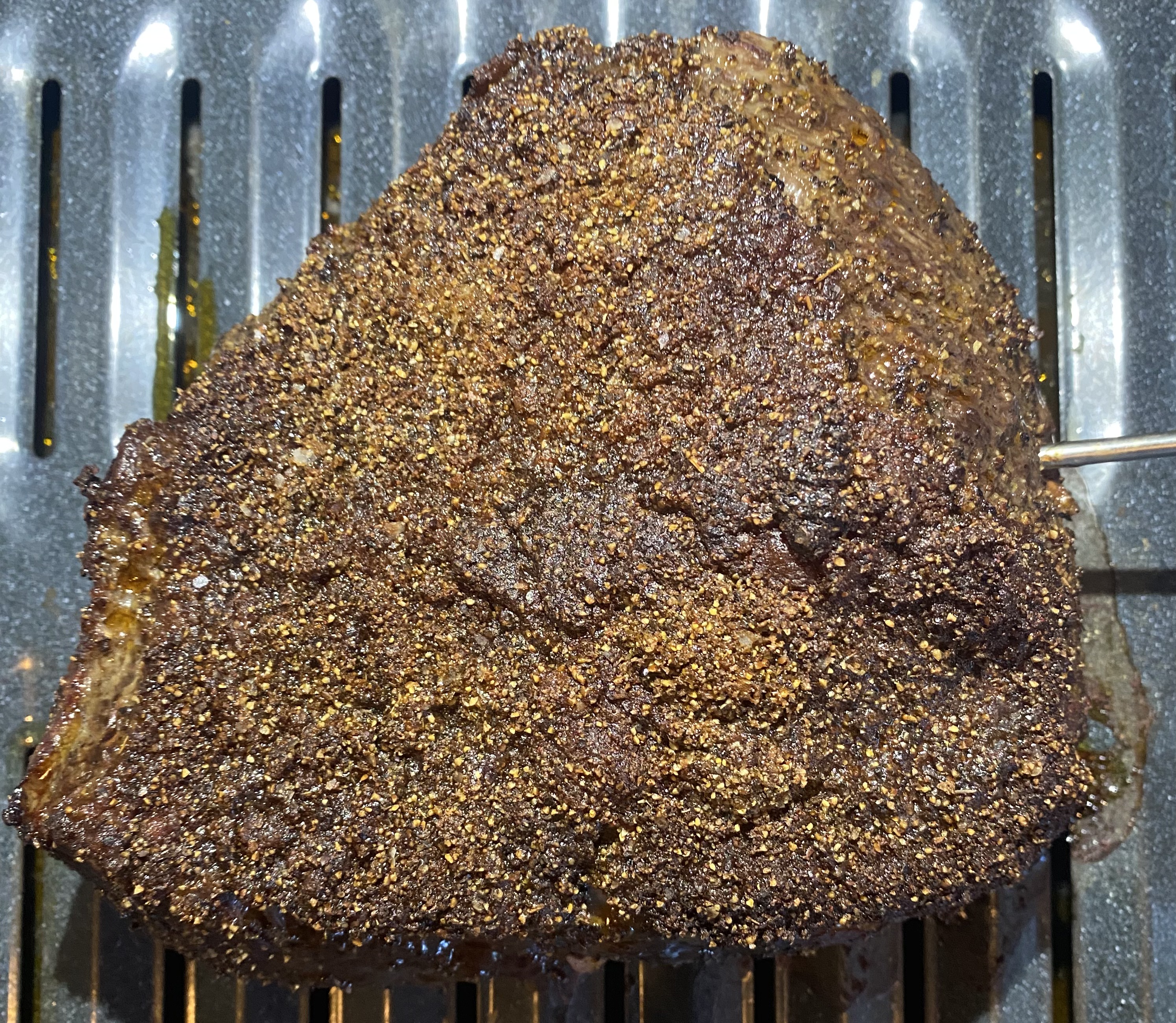
Keep mopping lightly about every hour until your bark has set – it’ll look like this.

Once bark is set, (likely around 3 hours) wrap the picanha snugly in foil and return to the grill or smoker.

Continue cooking until your internal temperature reaches 200° F.

Pull the picanha and let it rest for at least an hour, and two is fine.

Unwrap and slice across the grain to serve.

Carne Adobada, Mexican Marinating Magnificence


It’s impossible to say where exactly adobada, (or sometimes, adovada), comes from. Generally, it’s a safe bet that northern Mexico, past and present, is the source. Adobada in Catalan means marinated, which doesn’t give a whole bunch of clues at to what we’re supposed to marinate with. As it turns out, that’s OK though, because however you make it, carne adobada is 100% delicious.

Adobada is popular all over Mexico. In its simplest form, adobada marinade might just include red chiles (powdered or minced), vinegar, and Mexican oregano, while more involved iterations can approach mole in their complexity. It’s arguably most popular in the coastal states south of Puerta Vallarta – Jalisco, Colima, and Michoacan. There the chile power is likely to be a mix of guajillo, ancho, pasilla, or chipotles. Adobada is also wholly embraced by New Mexican cuisine. There, the chile in question will undoubtedly be New Mexican red, AKA Hatch, (varying in power from fairly mild to nuclear, depending upon one’s proclivities.)

Back in the days before refrigeration, the cut up pork most commonly used for the dish might be tossed into a pot with the lactobacillus acidophilus that generates yoghurt. Doing so would aid in preservation, and impart a subtle sour note to the finished dish – That’s likely why modern iterations call for citrus or vinegar in the mix. Ditto for the reason most cooks prefer their adobada chiles con pellejo (with skins) – the chiles either blistered by roasting or, if using dried, toasted during the cooking process – This adds a subtle bitter note that many folks insist is absolutamente necesario for authentic taste.

Truth be told, a lot of marinating came into play because the meats it was working on were less than stellar in quality or condition, (and that’s still true in much of the world.) Here, where we’re privileged to have amazing proteins available pretty much any time, it’s done to add things to the mix, not hide them. Even if we’re building a complex palette of flavors, we want the true flavor of beef, pork, chicken, tofu, or beans to remain notable – That’s achieved by balance in the marinade, and paying attention to the way we cook.

look up adobada on a search engine and you’ll see myriad ways to cook suggested, or even insisted upon. What I believe is necessary is this – The finished product must have a distinct outer crust, almost burnt, (as you’d generate when making great chili or beef stew), while the inside of each chunk needs to be tender and juicy. While some places offer adobada that’s more like a stew, to me that’s just chile colorado – Another thing altogether, really.

Many cooks think there’s only one way to do this, (theirs), but it ain’t necessarily so – You can get there by stove top, or grill, or baking, as you please. For M2¢W, I think a multi-stage cook is in order. Specifically, a relatively low and slow primary cook, followed by a quick, hot seat just prior to serving. That is, in fact, what a fair share of restaurants that offer adobada as I’ve described do. It works great, and it gives you flexibility when you’re short on time.

You can do adobada with any protein you like, (and you should), but you aught to start with pork – That’s the holy grail of the dish. For that, you’ll want around 3 pounds of fresh, boneless shoulder. And for those of you who don’t eat meat, I’m here to tell you this will rock with fresh, firm tofu, or great beans.

So, what I’ll offer here is an amalgam of some Mexican and New Mexican ingredients and techniques that will deliver the goods, and it’s a gas to make too. With this marinade, you can go as long as overnight, but at the very least, let it bathe for a good 4 hours prior to cooking. If you don’t have a slow cooker, you can certainly do this in a 325° F oven, (but why would you not have a slow cooker?)

The chiles I used were picked to feed the hybrid theme. None of them are particularly hot, because to me, this dish isn’t designed to burn your face off – It’s meant to provide a pleasant chile buzz as a top note of the marinade. You can use more, or sub hotter varieties as you please, (David Berkowitz? I’m talking about you, Pal.) The same goes for garlic, as you can certainly find adobada so laden with ajo that it’ll be your signature scent for days to come, but to me, that’s not the point – Balance is.

Urban’s Carne Adobada

3 – 3 1/2 Pounds Boneless Pork Shoulder

2-3 Cups low sodium Chicken Stock

1 Cup chile soaking water

1-2 dried Ancho Chiles, seeded

2-3 dried Guajillo Chiles, seeded 

1 dried Chipotle Chile, seeded

1-3 dried New Mexican Red (Hatch) Chiles, seeded

3-5 cloves fresh Garlic

1/2 medium Onion (roughly 1 cup)

1/2 Cup fresh Orange Juice

1/2 Cup Raisins

1/4 Cup live Cider Vinegar

3 Tablespoons Avocado Oil

1 teaspoon Agave Nectar

1 teaspoon Mexican Oregano

1 teaspoon Lemon Thyme

1 teaspoon Salt

1/2 teaspoon ground Cumin

2 Bay Leaves

NOTE: in the images here, you’ll see I used some ground, some flake, and some whole chiles – That’s what I had, so that’s what I used. Certainly, the more whole dried you use, the more of that smoky, bitter con pellejo flavor you’ll get into the mix.

Allow a cast iron skillet over high heat to get truly hot.

Remove seeds from chiles, but leave the stems on, (it makes them easier to handle and flip)

Toast chiles, flipping regularly until they start to smoke a bit.

Transfer chiles to a bowl, add bay leaves, and cover well with boiling water. Allow to steep for 30 minutes, until they’re nice and soft.

Put raisins in another small bowl and cover with about 1” of boiling water. Let them steep for the time remaining on the chile soaking clock.

Add unpeeled garlic cloves to the skillet and reduce heat to medium. Toast the garlic, flipping regularly, until the skin is scorched and the cloves are notably soft, about 5-8 minutes. Set aside to cool.

While that’s going on, cut your pork shoulder into roughly 1” steaks and trim excess fat. Shoulder has plenty of interstitial fat, so remove any really big hunks and obvious silver skin, but don’t go overboard – Pork fat is good.

When your chiles are ready, drain them, and reserve the soaking water – Just make sure you check the heat level so you know what you’re dealing with. You can chuck the bay leaves.

Remove the stems from your reconstituted chiles, mince them, then toss them into a blender vessel. 

Peel the garlic and add that, along with 2 cups of the chicken stock, the orange juice, the drained raisins (don’t need to save that soaking liquid), the vinegar, a tablespoon of avocado oil, a pinch of salt, the agave nectar, and the ground cumin.

Cover and pulse all that until you get a nice mix. There will be some chunks of this and that still, which is just fine.

Arrange your pork in a baking dish and pour in all the marinade. Lift each piece of pork to make sure you get marinade on the undersides of each piece.

Cover the pan with metal foil and refrigerate for at least 4 hours and up to overnight.

When you’re ready to cook – 

Peel and trim and dice onion.

Remove pork from baking dish and arrange in slow cooker – Leave the lion’s share of the marinade in the baking dish.

Add the reserved chile soaking water to the marinade, along with a pinch of salt, the oregano, and lemon thyme. Stir all that to incorporate, and then pour it all into the slow cooker. Add the diced onion on top and cover.

You can cook on low, medium, or high as you’ve got time for – Lower and slower is better, but they’ll all do just fine. Cook until the pork is fork tender, which on our pot means anywhere from 4 to 8 hours.

When you’re ready to serve, heat 2 tablespoons of avocado oil in a cast iron skillet over high heat. 

Add as much pork as you want for the meal to the skillet and let it cook, unflipped, until it develops a nice dark crust, about 3-5 minutes. Flip once to get the other side.

Transfer pork to a serving platter.

Serve with fresh, warm tortillas, pico de gallo, pickled onions/chiles/radishes, crema, lime wedges, and maybe some queso fresco or cotija, and cold, cold Mexican beer.

Postscript:

Monica had two quotes after this meal that I’ll share here – 

‘This is better than anything we’ve ever had a Mexican restaurant,’ and

‘You’ve bested me in slow cooker pork.’ 

Coming from her, that’s fairly amazing, so – Just sayin’…

This post is dedicated to the late, great food writer Jonathan Gold. There’s a guy who knew how to write about food. His love, passion, humor, and vast knowledge always shown through, and damn, could he write great last lines. Thanks man, you’re missed, but never forgotten.

Real Deal Wild Rice


Rice is a delightful main, side, or primary ingredient year round, but shines best in the warm months, when cold rice-powered salads enter the fray. And if you’re going to make those, then wild rice should be your grass of choice.

Real deal wild rice is absolutely fabulous – the combination of flavor, texture, scent, and visual appeal is unrivaled – and it pairs wonderfully with many more delicious things. Wild rice, (manoomin (Mah-new-min) in Ojibwe), stems from the genus Zizania – which would be a swell band name, I think… That’s quite different from its kissing cousin Oryza, which gives us domesticated rice varieties.


Wild rice is an aquatic grass native to North America and China – the best known species is Z. palustris, the northern version that grows in lake and stream shallows across the U. S. and Canada, with a sweet spot in the Great Lakes region. There are other variants in Florida and Texas, and one in Asia (Z. latifolia). The stuff we like to eat is pretty much palustris, with some Z. aquatica along the Saint Lawrence river and the Atlantic and Gulf coasts.


While domesticated rices are certainly tasty, and can be extraordinary, (try Carolina Gold if you’ve not), they pale when compared to wild. Couple the richer palette of flavor notes and scents with a slightly al dente outer layer surrounding creamy inner grains, and you’ve got a little slice of culinary heaven. 


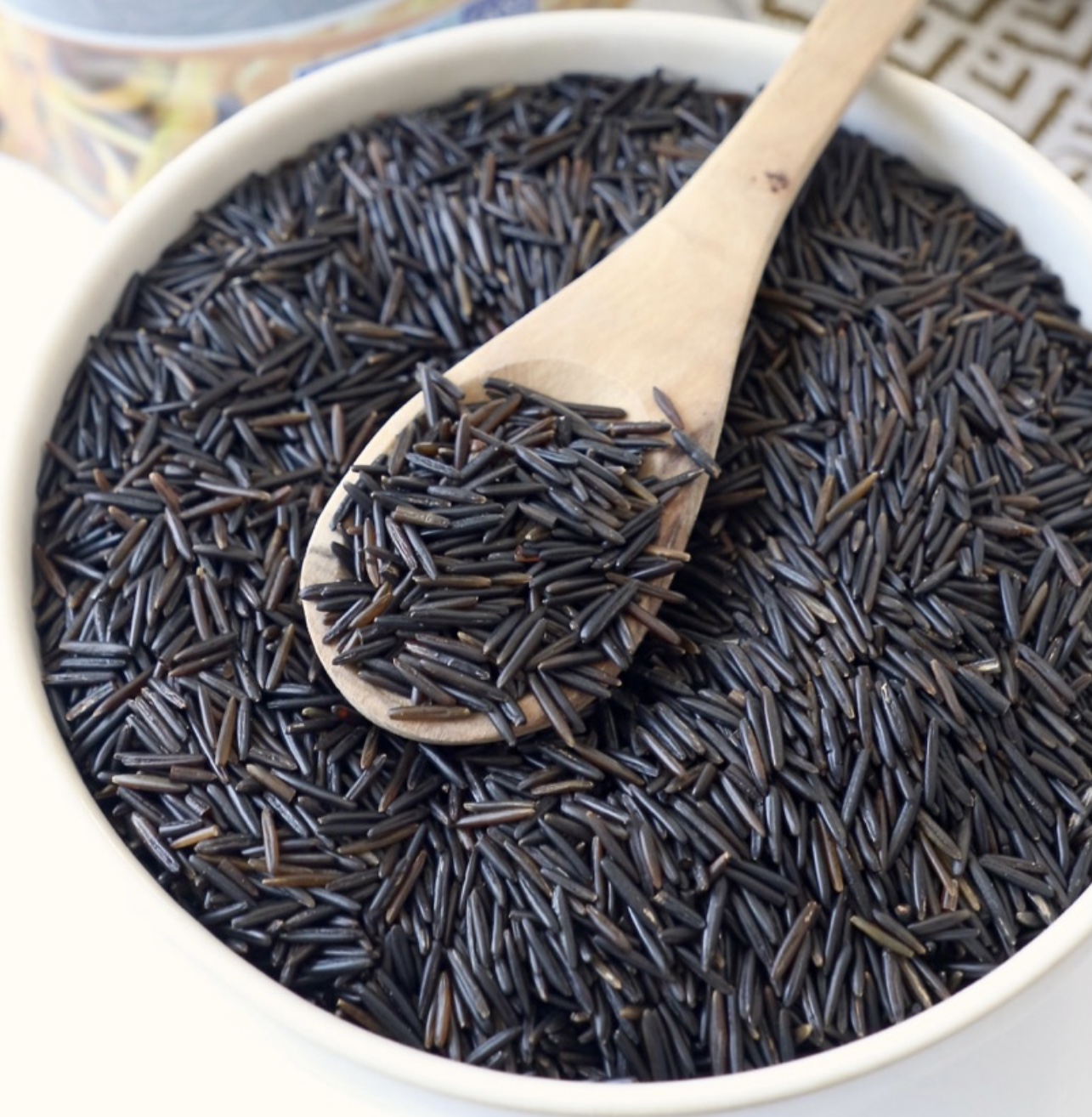
Now, caveat emptor, because there is ‘wild rice’ and real deal wild rice. The former is, in fact, paddy rice – it’s the right species, but grown in manmade fields and mechanically harvested. In Minnesota and Wisconsin, paddy rice has to be labeled as a commercial product, even if it’s called wild rice – and a fair share of this stuff may be GMO as well. If what you get is darn near black and takes 45 minutes to an hour to cook, it’s probably paddy rice. If it’s light brown and cooks up in 15 to 25, it’s the real deal – and yes, without a doubt, it’s worth finding. Paddy rice pales in comparison to real deal. If you don’t know someone to source from, then without fail, get some directly from the Ojibwe people here – Getting genuine wild rice from folks who know how to properly harvest and process is critical to assuring best quality, and to help protect future crops.


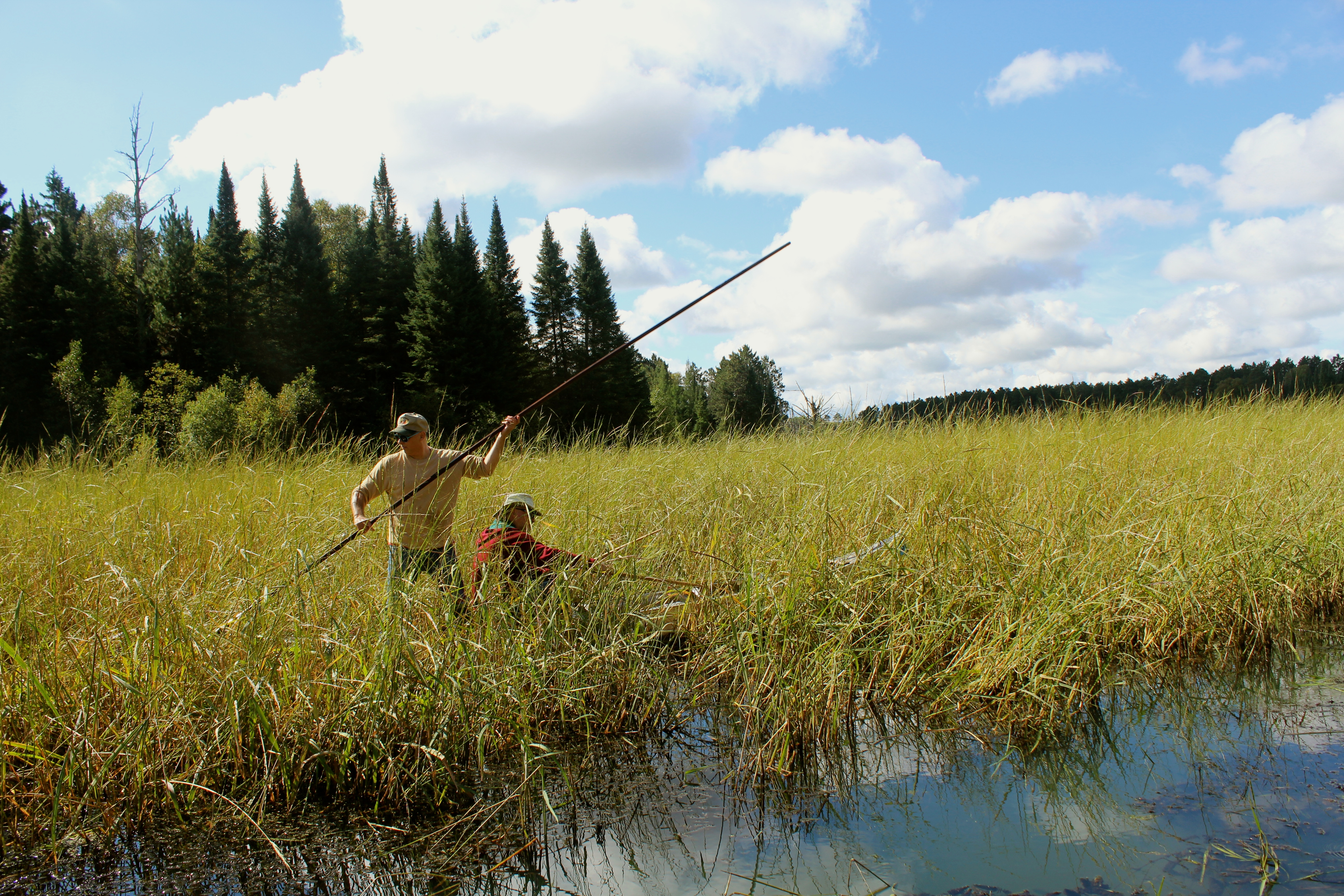
Real deal wild rice grows where it sows and is traditionally harvested by hand, usually in late summer. It’s generally a two person job, with one poling the canoe while the other, (the Ricer), handles the harvesting. Here’s a wonderful video that details the entire process. Proper drying/parching is as critical as harvesting – do this right, and the rice can be stored and enjoyed long term. Manoomin is a sacred, critical food source for the tribes that manage and depend on it, as they have for thousands of years. As David notes in the video, proper respect and reverence for this gift is something we all must give. This video from PBS details the environmental pressures that threaten Manoomin in Minnesota.


So, now that we know, what are we gonna make with this lovely stuff? Your first go needs to be just the rice, in all its glory. Don’t get caught up thinking this is a side dish – wild rice is a complete protein sporting nine essential amino acids. It’s lower in fat and higher in fiber than its cousins, and is a great source of potassium and zinc as well. Cook it in stock or broth and enjoy. Add fresh herbs or spices as you see fit, drizzle it with hazelnut or walnut oil. It’s a meatless meal you won’t regret.


When you do gussy it up, you’ll find affinities for citrus, poultry, scallions, really good vinegar, and cheese – especially feta. Wild rice shines in cold salads with tangy vinaigrettes and pickled vegetables, or crisp apple, crunchy celery and fennel. It makes a superlative stuffing, with shallots and rosemary. Pair it with slivers of prosciutto, or even better, game sausage, frisée or rocket (which I like to call Werewolf Lettuce – you know, Arooooogula?), and a chiffonade of fresh sage leaves. Try Greek oregano, Greek olive oil, and pine nuts. And yeah, if ya wanna do what everybody and their dogs do, you can add dried fruit and/or almonds…

Cooking wild rice can be done stove top, rice cooker or InstaPot – given how rare and precious this stuff is, I always opt for the former method – that lets me keep an eye on things throughout. No matter how you cook, you should rinse your rice first. Put it in a big mixing bowl and add plenty of cold water. Swish things around, and you’ll see the water grow cloudy. Pour that off and repeat a few times until your runoff is fairly clear – this reduces the excess starch that sticks to the outside of the grains.

Better yet, soak your wild rice prior to cooking – that’ll notably reduce cooking time. Soaking also helps remove phytic acid that can hinder nutrient absorption, and helps to break down some of the harder to digest constituents of the rice grains. Use that big mixing bowl, cover the rice with an inch or two of water, cover the bowl and allow it to sit at room temp for 1-3 hours – any longer than that and your grains will burst prior to cooking.


Rice to water ratios for cooking are as follows

Stove Top – 1:4 rice to water

Rice Cooker – 1:2 rice to water

InstaPot – 1:1.25 rice to water 

For stove top, bring water or stock to a brisk simmer, then add the rinsed/soaked rice.

Allow to return to a brisk simmer, then reduce to maintain that, uncovered.

Simmer until the outer layer of the grains is nicely al dente and the insides are creamy, and most of the water or stock is absorbed.

Drain rice, return to the cooking vessel and cover.

Allow rice to sit for 10 minutes, then serve hot, or allow to cool to room temp if making cold salads.

Here’s a simple, deceptively delicious cold salad we absolutely love, by it’s lonely or as an accompaniment.

Note: Pineapple vinegar adds a really nice touch to this, and many other things – Here’s how you can make your own.


Urban Wild Rice with Artichoke Hearts and Sun-dried Tomato

Makes 1 main dish or 4 side dishes

2 Cups cooked Wild Rice

1/2 Cup Sun-dried Tomato

1/2 Cup Marinated Artichoke Hearts

1 fresh Scallion

2 Tablespoons Pine Nuts

4 Tablespoons Avocado Oil

2 Tablespoons Pineapple Vinegar (Apple Cider Vinegar is fine)

Sea Salt and fresh ground Pepper to taste

Fresh Parsley to garnish


With a fork, portion tomatoes and artichoke hearts onto paper towels and allow to drain, then pat dry.

Rinse, end trim, and cut scallion into 1/4” rounds.

In a small skillet over medium low heat, add the pine nuts and toss, stirring steadily until fragrant and golden brown, about 3-5 minutes. Don’t ever let ‘em out of your sight – they’ll burn in a heartbeat, and they ain’t cheap.

Combine oil and vinegar, a two finger pinch of salt and 3-5 twists of pepper in a non-reactive bowl, whisk to thoroughly incorporate.

In a salad bowl, add rice, tomatoes, artichoke hearts and scallions. 

Add the dressing and toss to throughly coat.

Add pine nuts and parsley and devour.

If there’s quite a bit of time before you’re serving this salad, wait to dress – otherwise the wild rice will absorb the dressing quite greedily.

Garden Status Report


Wherever you live, you can grace your place with a garden to some degree if you want to. Our parcel is really small, but we take full advantage of what we have. There’s just about zero grass here – everything is dedicated to gardens and landscaping.


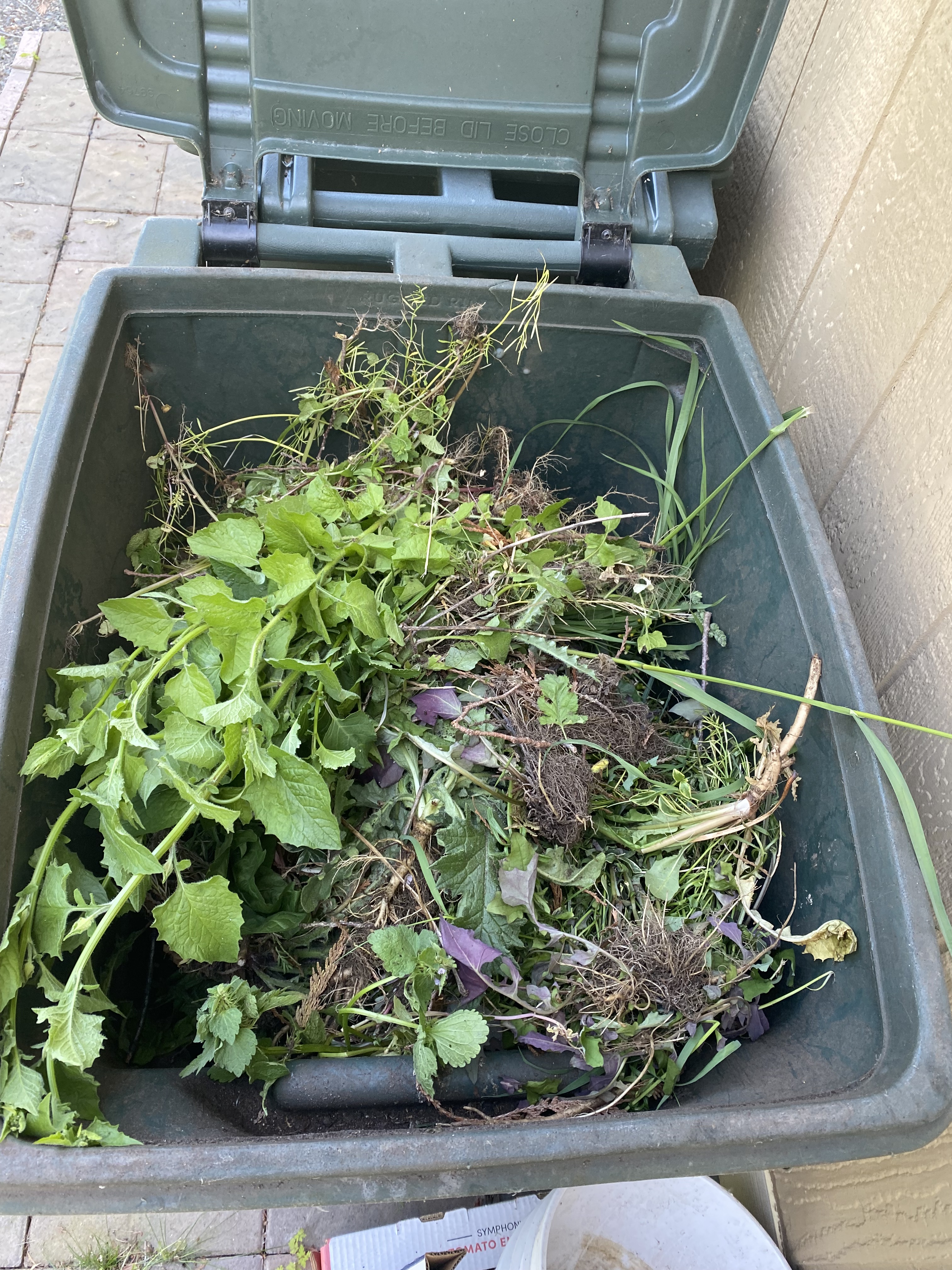
I started out front and did, ah… a little weeding. Our youngest kid recently moved out, leaving us blissful empty nesters – but that kid lions share of garden design, construction, and upkeep – so that’s now fallen to me. Weeding is very zen-like, and I love it, as you can see…


M still handles the veggies and flowers – I don’t think she quite trusts me with that yet. When I was checking things out this weekend, I found those potatoes I planted a couple weeks back looking very good indeed.


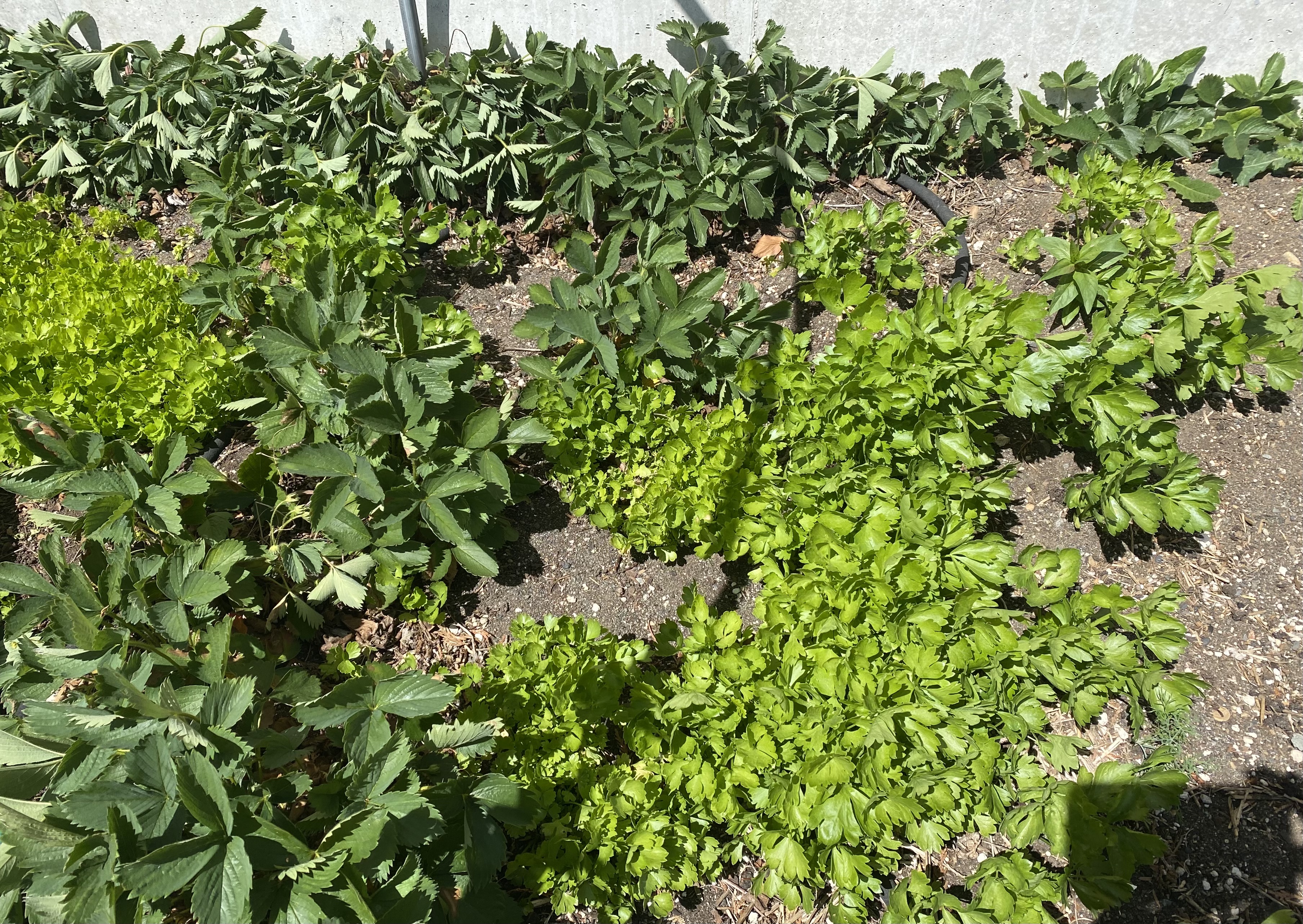
The sheer volume of volunteers we have from years past is an absolute gas as well. The strawberries, celery, cilantro, onions, garlic, and snap peas all showed up again on their own, and I couldn’t be happier.


Herbs are pretty much self regulating, albeit we do keep them trimmed back to a dull roar.


there’s nothing better than stopping your meal prep to step outside and cut what you need as fresh as fresh gets. Whether you go whole hog or just have a little pot or two, you’ll find the same joy in growing your own.