Blog

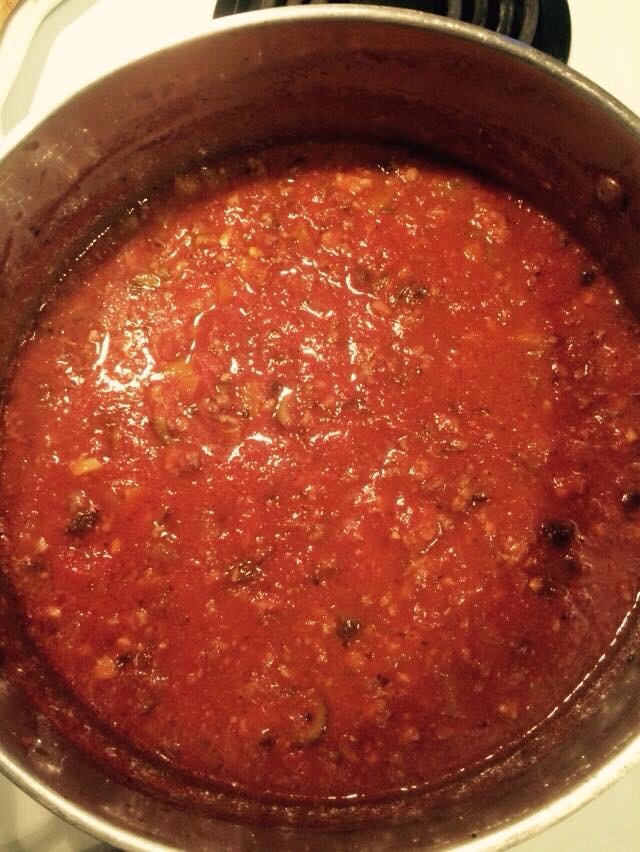
Spaghetti Sauce a la Urban


There’s no doubt that a great batch of homemade spaghetti sauce is serious comfort food. In an ideal world, you want to make something that cooks low and slow, developing serious flavors, but what about when you get a hankering at 4:45 in the afternoon? Here’s how I scratch that itch. This is a simple sauce that tastes much richer than it might sound, and I assure you, it’s incredible the next day. The fresh veggies, citrus, pungent lemon thyme, piney savory, and subtle, herby sweetness of the marjoram is the key – Spaghetti Sauce a la Urban.

For the proteins, keep in mind that you can and should grind your own at home; if you don’t have the capability for that, dice it and you’ll be fine. If you prefer a vegetarian version, I’d substitute firm local tofu, or eggplant. Make sure all your veggies and proteins are as fresh as can be. Do use whole canned tomatoes; they hold more flavor than stewed, crushed, diced, etc, the quality is often better than fresh at this time of year, and they’re certainly less expensive.

8 Ounces Fresh Angel Hair Pasta

2 20 oz cans Whole Tomatoes

1/2 Pound Ground Pork

1/2 Pound Angus Beef

1 Cup Black Olives

1/2 Sweet Onion

1/2 Sweet Pepper

1 Stalk Celery

1 small Lemon

1/2 small Lime

3-4 Cloves Garlic

2-3 Sprigs Parsley

1/2 – 1 teaspoon Lemon Thyme

1/2 – 1 teaspoon Savory

1/2 teaspoon Marjoram

2 whole Bay Leaves

1 Cup Red Wine

Extra Virgin Olive Oil

Dry Sherry

Sea Salt

Black Pepper

Toss the tomatoes into a large pot over medium low heat. Process with an immersion blender until you’ve got the consistency you like. I prefer to leave things a bit rustic, rather than going all the way to smooth sauce.

Rinse, peel, top and seed the onion, sweet pepper, celery, garlic, citrus, and parsley. Fine dice the onion, pepper, olives, and celery; if you have celery leaves, by all means, use them, that’s where the real flavor is. Mince the garlic, chiffonade the parsley. Quarter the citrus.

In a large sauté pan over medium high heat, add the beef and pork, and season lightly with salt and pepper. When the meats are nicely browned, add the cup of red wine and continue cooking until the raw alcohol smell goes away. Add the proteins to the tomato blend

Add a couple tablespoons of olive oil to the sauté pan and allow to heat through. Add onion and pepper and season lightly with salt and pepper. Sauté until the onion begins to turn translucent. Add garlic and continue to sauté until the raw garlic smell is gone. Add all that to the big pot

Add 1/2 Cup of Sherry to the sauté pan and deglaze, thoroughly scraping up all the little bits. Once the raw alcohol smell has burned off, add that to the pot as well.

Squeeze citrus into the big pot, stir to incorporate. Crush by hand and add the lemon lemon thyme, savory, and marjoram. Add parsley and bay leaves, stir to incorporate. Taste and adjust salt and pepper seasoning as/if needed.

Reduce heat to low and simmer for an hour or two, stirring regularly.

Serve Over fresh angel hair pasta, with freshly grated Parmegiano, crusty bread, a nice green salad and a glass or two of Old Vine Zinfandel.

The next day, add a cup of cheese to the blend, and bake for 30 minutes at 350° F. As promised, it’ll be spectacular.

Status Report


as prolific as I try to be, I must of course have a real job in order to pay the bills. I’ve just made a major shift out of restaurant management, into an Area Manager position with Schwan’s, here in my home town.

This move will cancel too many years of 2-3 hour daily commutes to and from work, as well as blessing me with a Monday through Friday work week. I couldn’t be happier about those changes, frankly.

I’ve got to learn a whole lot in a relatively short time period, so during the transition, new posts will be few and far between. Fortunately, there’s something like fifteen years of good stuff here to revisit and revise. I’ll be leaning on those archives while I get up to speed.

That said, what I post may well still be new to you, so stay tuned! By the same token, please do poke around and see what’s here. I’ll be back on track with weekly new posts just as soon as I can.

if there’s something you want and can’t find, or if you’ve got a specific request, drop me an email or message, and I’ll go to work for you.

Thank You for being here, it’s deeply appreciated!

I love Hawaiian pizza – and maybe you should too


Back in June, 2017, Sotirios ‘Sam’ Panopoulos passed away in London, Ontario, Canada. While you’ve likely never heard of Sam, you know him well through his iconic dish, the Hawaiian Pizza – That creation, loved or reviled, came from the mind of a 28 year old Greek immigrant to Canada. I’m here to declare, formally, that I love Hawaiian pizza – and maybe you should too.

Sam Panopoulos, The Man

Sam and a couple of brothers owned the Satellite restaurant in Chatham, Ontario, due east across Lake Saint Clair from Detroit. It was the early 60’s, so a place called the Satellite was very fashion forward, indeed. They served a mishmash of stuff, from burgers to Chinese food made by a Chinese chef. He later noted that it was the Chinese penchant for blending elements of the five major tastes in a dish that got him thinking about inventing a pizza – He’d enjoyed eating that in Italy and the US, and thought he might be able to come up with something original. He was right.

Truth? A lot of chain Hawaiian pizza sucks.

Today’s version of the Hawaiian pizza is not what Sam started with. His shining contribution was the pineapple – Canned Dole pineapple, which begat the Hawaiian thing. He later recalled that, in Canada at that time, “People only put on mushroom, bacon and pepperoni, that’s all. I had pineapple in the restaurant and I put some on, and I shared with some customers and they liked it. And we started serving it that way. For a long time, we were the only ones serving it.”

Sweet, salty, sour, bitter, and umami. Get the mix right, and things can be delightful. What Sam had done was add a tacitly sweet note to what was, as he noted, a pretty heavy mix. Yet pineapple did more than that – It added acid, which cut the fatty mix of cheese and meat, and offered a minor sour note as well. It may seem wrong, but I think it was brilliant, and the explosion of that now legendary combo on the world of pizza would seem to support that.

Now, the Hawaiian is almost always tomato sauce, mozzarella, ham, and pineapple. It is surprising to me that seemingly equal faction either love the combination or loath it. The President of Iceland recently denounced it, (albeit tongue in cheek), prompting Canadian PM Trudeau to quip, “I have a pineapple. I have a pizza. And I stand behind this delicious Southwestern Ontario creation.” Many chefs have vilified the thing, from Gordon Ramsay To Tony Bourdain, sometimes prompting outraged defenses in response from yet other chefs. Somewhere in print, the haters actually invoked Godwin’s Law, and declared that those who like Hawaiian pizza are ‘worse than hitler.’

What is it about pineapple on pizza that’s so polarizing? Purists cite Neapolitan roots and flatly state that pineapple has no place there – I imagine these folks have kittens over quite a few other ingredients as well. Sweet notes in a pizza certainly aren’t taboo – Hell, that’s what tomatoes do, for cryin’ out loud – and pineapple has been eaten in Italy for a long, long time. In the states, it’s a top ten fruit, so it’s not broadly disliked here either. Google the first sentence of this paragraph and you get a whole raft of discussions and levels of intensity – It’s interesting, but all that stuff doesn’t necessarily answer the question.

The whole thing really seems to boil down to two arguments – either that pineapple just doesn’t belong on pizza, or that it just doesn’t taste good – To both, I call bullshit. If you like pineapple, and want to use it, do so. If you’re running a pizzeria that swears eternal fealty to all the arcane rules of the game, then by all means, don’t. If you don’t like the taste, no matter what, then don’t eat it – it’s that simple. But if you’re cooking at home, and you want to, then to paraphrase Alton Brown, by God, have pineapple. 

As for the taste thing, fact is, this is often enough true. A poorly made pizza isn’t likely to taste good at all – but that’s easily remedied. Let’s face it, a notable chunk of commercial pizza from big name chains and the stuff at the grocery store is crap – They’re not generally made with love and care, and you get what you pay for. Change that, and it’s delicious.

Great Hawaiian pizza is all about balance of flavors

Tony Bourdain infamously had nothing good to say about Hawaiian pizza, (most of it highly profane, I might add). Yet he was forced to swallow his smartass comments when, in Rome, he ran into Gabriele Bonci of Pizzarium. Chef Bonci does pizza right – great dough, top notch ingredients, just a few things combined on each slice. Bourdain made the Hawaiian crack, and Bonci immediately said ‘No, is good,’ and made some. They both agreed it was good, but not great. Then Bonci disappeared for a few minutes and came back with a sauté of onion and hot peppers added, and bingo – Even Tony had to admit it rocked.

Homemade sauce makes the pizza

That harkens all the way back to what Sam Panopoulos said about first offering pineapple on pizza – It was added to whatever you liked. It’s all about balance, and what Sam gleaned from Chinese food was a well balanced thing. Love it or hate it, the fact that it flourishes decades after its inception says it’s true.

The secret to great Hawaiian pizza? Chiles!

So, if you’re not from the hater camp, try it done right. Fresh pineapple is always best, but truth? Canned will work fine if you blend and cook it well. You don’t need to use fancy ham, but you sure can if you want, or sub bacon, or whatever porky deliciousness you prefer. Make or buy great dough, sauce, and use as much fresh stuff as you’ve got for toppings. What you see in the images herein was made with fresh dough, tomatoes, onions, garlic, jalapeños, and basil out of our garden, and locally made smoked scamorza cheese. Use different chiles if you like, red onion, maybe a few capers for a bitter note – experiment, have fun, and surrender to Sam.

Great homemade Hawaiian pizza

One interesting side note – Sam died one year to the day before Bourdain took his own life in France.

Spare Ribs with a Citrus Fennel Glaze


We love ribs, especially when M does them up. This time around, we decided to do something we don’t do very often –  a wet treatment, as opposed to a dry rub – Our usual go to. A citrus fennel glaze is what we came up with.

Citrus Fennel Glazed Spare Ribs

The sauce is the star here, and for good reason. It’s a grade A example of the organic way M and I arrive at a dish, based largely on what we’ve got on hand, and often initiated by a single thing – In this case, a left over blood orange was the spark –  a leftover that had given up its zest for an earlier meal.

Initially, we were leaning toward a Chinese style rub, then veered off on a tangent. M found that blood orange and wondered aloud if we couldn’t do something with that. A short brainstorming session yielded what you see herein. This sauce could be used on a lot of things, from chicken or beef, to Brussels sprouts or carrots.

While this might seem like alchemy, I assure you, it’s not. Often, when we’re brainstorming things, I’ll whip out our copy of The Flavor Bible, a book that you aughta have in your kitchen, if you don’t already. You’ll find a wealth of parings and affinities therein that truly can and will spark your imagination and creativity.

And I can’t stress enough to be bold in endeavors like this – If you like stuff, and you think that stuff might go well together, then try it. If you’re at all nervous about committing to a full blown recipe, then cut off a little piece of this and a little piece of that,  pop them your mouth, and see what you think. If it’s good, go with it. If it’s not, search elsewhere.  That, in a nutshell, is how you build your own ideas into culinary reality.

We used a rack of spare ribs, but you can do any cut of rib you like, (Baby Back, St. Louis, Rib Tips, County Style, or beef ribs.)

Preheat oven to 250° F and set a rack in the middle slot.

Season ribs with sea salt and fresh ground pepper, (we use our go to seasoning salt for pretty much everything).

Wrap the ribs tightly in aluminum foil, fat side up and dull side of the foil facing out.

Set the package on a baking sheet, or the bottom of a broiler pan, and cook low and slow for about 2 hours, until the rib meat is very tender.

Citrus Fennel glaze is great for a bunch of dishes

Citrus-Fennel Glaze

Juice from one fat and happy blood orange.
1/4 Cup Orange Marmalade
1/3 Cup chopped fresh Fennel bulb
2 small cloves Garlic
1/4 to 1/2 teaspoon Tabasco chile flake, (Use any chile variety you like here)
1 Tablespoon butter
1 Teaspoon Arrowroot.

Remove ribs from oven, set a rack on a high slot, and increase temperature to 375° F.

In a sauté pan over medium heat, melt butter, then add fennel and sauté for a couple minutes until it has notably softened.

Add garlic and sauté another minute until raw garlic smell dissipates.

Reduce heat to medium low.

Add orange juice, marmalade, and chile flake, stir well to incorporate.

Cook, stirring constantly, for 2-3 minutes, until the sauce is quite liquid, (that’d be the marmalade relaxing a bit.)

Add half the arrow root and stir to incorporate. Allow the sauce to cook for another minute or so. Sauce will thicken slightly – Add the rest of the arrow root if you want things a bit thicker.

Unwrap the ribs, and flip them meat side up onto the pan. Baste or pour sauce liberally onto the ribs in an even layer.

Uncover your ribs and flip them meaty side up for glazing

Return the ribs to the oven on the high rack, and cook for about 10 minutes, until the sauce is bubbling and starting to caramelize.

Beautiful salad!
Beautiful salad!

We served ours with an gratin potatoes, a lovely green salad, and fresh, crusty bread. They were falling off the bone tender, and the sauce was a perfect foil to the richness of the meat.

Building Great Salads


When the garden churns into production mode, I get a serious salad Jones on a regular basis. There’s something about watering becoming an exercise in dinner recon and going outside to prep for dinner that seems very right to me. This seems like a good time to talk about building great salads, and what to dress them with.

Even homegrown greens gotta be cleaned

When fresh veggies are abundant, they deserve some extra care, especially lettuces. If you’ve ever been served a salad that really popped for you, it’s a guarantee that the level of prep and presentation went well beyond what usually happens at home, even if things looked really simple. Recreating that at home is not difficult, and well worth the effort.

Homegrown bounty

The first thing that really needs to get done is a gentle but thorough washing of anything and everything you’ve harvested. We don’t use any chemicals on our garden, but regardless, there’s dirt and maybe a critter or two that needs to be found and removed. This is also the time to inspect and remove any wilted or damaged parts. Have a big bowl of icy cold water ready beside your station, and drop stuff into it as you’re done with it. Even freshly picked greens start to lose water and crispness quite quickly when it’s hot out – The cold water will keep them in top form. After everything has had a good soak, change the water and let them have a second cold bath. These steps should be done right before assembly and service of the salad.

Enfrijoladas Toppings - Whatever ya got.


As you prep additional goodies for the salad, place them into sealable airtight containers, (preferably glass). A lot of us at home make too much, and mix it all together in one big ol’ bowl – Ask yourself how often you have that green salad again, until it’s gone? The jumbled mix invites things to go bad, and other ingredients to get thrown out – Like when your tomatoes or cukes go first, but they’re mixed with everything else, and… With everything prepped, offered, and stored individually, folks can build their own mix, and leftovers lend themselves readily to new dishes.

Specialized lettuce containers are absolutely worth it

Invest in a container or two specifically designed for storage of lettuce and veggies. We have two that both have a drain tile over the bottom, snug fitting kids, and ventilation options. These things genuinely will store lettuce and veggies for longer and better than any other option we’ve tried – It’s actually pretty amazing – Lettuce and cabbage stays crisp and other stuff, from carrots and celery to chiles and green onions, last far longer.

Urb’s Herby Vinaigrette

Make dressings fresh, just as you do your salad. Building even relatively complicated dressings take no time at all, and is a delightful exercise. Dressings in big ass plastic squeeze jars isn’t how we should want things to be – That’s done for the benefit of the seller – not for us. Whip up what you need, plus some extra to go to lunch with you tomorrow. Building in smaller, fresher batches yields far superior results, and furthers exploration of what you really like – Maybe even your own signature thing – And that’s very cool indeed.

Home grown herbs

Fresh herbs rock in salads, within bounds of reason. When they’re fresh, herbs are at the pinnacle of their potency – Keep That in mind, along that with the fact that a whole sage leaf may be enough to season a whole batch of stew, and you get my drift. Use them sparingly – incorporated into dressings may be your best bet for balanced flavors that don’t overwhelm.

A basic lettuce blend is great as a base. If you’re of a mind to add more stuff like cabbage, kale, arugula, frisée, or chicory, keep in mind that not everyone may share the love – Allowing your crew to decide for themselves if they want to add them will often make for happier campers, and again, it gives you greater leftover flexibility.

Emeril Lagasse used to have a shtick on one of his shows, wherein he’d say something to the effect of, ‘I don’t know about where your lettuces come from, but mine don’t come seasoned.’ There’s wisdom there – Good greens certainly have flavor and texture, but a wee sprinkle of salt and a twist of pepper will make those different tastes pop all the more.

Finally, here are three dressings I’m really liking this summer.


Urban Dijon Vinaigrette

1 Cup Extra Virgin Olive Oil

1/3 Cup Aged Sherry Vinegar

1 Tablespoon Dijon Mustard

1 teaspoon Agave Nectar

1 sprig fresh Thyme (or 1 teaspoon dried)

1 clove fresh Garlic

Pinch of Salt

A few twists fresh ground Pepper


Trim, smash, and mince garlic.

Pull leaves from thyme stalk and mince.

Combine all ingredients in a mason jar and cover, then shake vigorously to combine.

Allow to marry for a few minutes, and shake again prior to serving.


Urb’s Herby Vinaigrette 

This is a very vibrant dressing – Makes a great marinade for chicken or pork too. 

Fresh herbs are best when you have them.

1/2 Cup Extra Virgin Olive Oil

1/2 Cup Avocado Oil

1/2 Cup Cider Vinegar

2 Tablespoons fresh Lemon Juice

1 Tablespoon minced fresh Garlic

2 teaspoons minced fresh Sweet Onion

3 teaspoons Oregano

2 teaspoons Tarragon

2 teaspoons Parsley

2 teaspoons ground Black Pepper

2 teaspoons ground Mustard

1 teaspoon Rosemary

1 teaspoon Lemon Thyme

1/2 teaspoon Salt

2 whole Bay Leaves


Combine all ingredients in a mason jar and cover, then shake vigorously to combine.

Allow to marry for a few minutes, and shake again prior to serving.


Urb’s Teriyaki Joint Dressing

If you’ve ever had teriyaki in the Pacific Northwest, you’ve had a variant of this dressing. 

I love the stuff, and I bet you will too. If you go all out and make fresh mayo at home for this, it’s stunningly delicious.

1 Cup Mayonnaise

1/4 Cup Toasted Sesame Oil

1/2 Cup Rice Vinegar

2 Tablespoons Agave Nectar 

2 Tablespoons Dark Soy Sauce

1/2 teaspoon Granulated Garlic 

Combine all ingredients in a non reactive mixing bowl and whisk vigorously to combine.

Refrigerate for at least 30 minutes prior to serving.

With all that to consider, it aughta be a pretty swell salad season, don’t ya think?

Not Your Mom’s Sloppy Joe


What could possibly be more American than the sloppy joe – lots of things, actually. While the iconic loose meat sandwich has origin claims all over the lower 48, the straight skinny is that this messy gem came from Havana, Cuba – And you can rest assured that this is not your mom’s sloppy joe.

Those of us who’re old enough will remember stuff like the Manwich from the 1960s, (and other atrocities). Go back farther though, and hints of the true roots come to light – Names like ’Spanish hamburger’, and ‘minced beef Spanish style’. American origin stories focus on the Midwest, where loose meat sandwiches have been popular since the mid nineteenth century. Sioux City, Iowa and an ephemeral cook named Joe back in the 1930s is about as good as the story gets – Yet there was direct evidence out there – like a 1944 ad from the Coshocton, Ohio Tribune that read, ‘Good Things to Eat’ says ‘Sloppy Joes’ – 10c – Originated in Cuba,’ – and there you have it.

There is, of course, the world famous Sloppy Joe’s Bar in Key West, Florida – That joint sells upward of 50,000 of the iconic sandwiches annually – yet they are not the original. That would be Jose Garcia Rios’ Havana Club, a tiny bar attached to a grocery store in Havana, Cuba, that opened back in 1918. The store sold a lot of seafood, and the floor was eternally covered in ice and packing materials – As such, locals started referring to Jose G. as Sloppy Joe, because Habaneros truly love fond but slightly barbed nicknames – and it stuck. According to Mark Kurlansky in his wonderful book, Havana – A Subtropical Delirium, ‘Sloppy Joe’s specialized in a sandwich of the same name that was a perfect expression of Havana at the time. It was the traditional Cuban dish picadillo, served on an American-style hamburger bun,’ and that is where it all began.

Cuban sofrito

Cuban picadillo is different from what you’re likely familiar with. It’s ground or shredded meat powered by Cuban sofrito, the signature aromatic blend of onion, garlic, and bell pepper, often with other veggies and herbs added as the cook sees fit. If you google ‘Cuban picadillo,’ you’re more likely than not to find a recipe that includes ground beef, potatoes, onions, garlic, cumin, bell peppers, white wine, tomato sauce, raisins, olives and capers. The reason that this iteration is so prolific isn’t necessarily because it’s the most authentic, but because it’s the most copied – often word for word, by different posters. Picadillo is a core Cuban dish, and as such, everybody makes it, and nobody makes it the same way.

Kurlansky included this passage on the subject in his book – ‘Below is the recipe as the bartender (at the Havana Sloppy Joe’s), gave it to me, translated into English. But first you have to make a picadillo, so here is a recipe for picadillo given to me more than thirty years ago at an equally famous Havana bar, La Bodeguita del Medio: Grind meat (beef) and marinate it with salt and lime juice, or vinegar. Make a sofrito with minced garlic and onion sautéd with the ground meat. This should be done slowly. Now the Sloppy Joe: Saute picadillo in oil: add black pepper, onion, garlic, cumin, bay leaf, and tomato sauce, and finish with demi-glace sauce. Add salt to taste and when it is cooked, add (green) olives. Keep on medium heat for 5 minutes to finish. Serve over a hamburger bun.’

That struck me as a much sounder base to work from. It’s safe to say that, if we have stuff we like at hand, any Cuban cook would encourage us to add some – to a point. Cuban cooking is fundamentally simple, not always because of a dearth of ingredients, but because that’s how they do things – When ingredients are good, it’s best to allow them to shine. As for process, I like it a lot – Most folks will want to treat the dish as a slow cooked stew, and that’s fine – but I really dig doing the low and slow with the meat first, adding that carnitas cooking step of lightly frying the beef in oil before final assembly, and then using reduced, fresh beef stock as a stand in for the demi glacé.

The carnitas step to Cuban sloppy joe

Here then is my swing at a Cuban Sloppy Joe. We use a slow cooker here – I think you get brighter, more distinct flavors that way, since the potent ingredients go in at the end of the cooking process. The recipe is bulked up beyond what you’d need for a single meal, because leftovers like these are a thing of beauty. Note that there are no hot chiles this dish. I’ve been told more than once that most Cubans don’t really do a lot of hot food, rarely using hot chiles. They do use onion and garlic generously, which adds plenty of spicy notes. They also don’t salt things nearly as much as we do up here in el Norte – This recipe reflects those predilections. 

Finally, there’s no reason at all not to serve this over rice with a side of beans the first night – That would be more in keeping with Cuban cooking than the hamburger bun – 24 hours later, the mix is much firmer and, frankly, better than it was on day one – That’s the time to bring out the buns.

Urban’s Habanero Sloppy Joe

Urban’s Habanero Sloppy Joe

This is an all day low and slow dish, so plan accordingly.

3 Pounds Beef Roast, (Chuck, Rump, Cross Rib, or Bottom Round will all shred nicely)

1 large yellow Onion

2 mild Anaheim Chiles

1 Green Bell Pepper

2 stalks Celery

2 Carrots

7 fat cloves Garlic

1 bunch fresh Cilantro

2 14 oz cans diced Tomatoes (if it’s tomato season, absolutely use fresh – but you’ll need 8-10 big ones)

1 Cup stuffed Manzanillo Olives

2 Cups Beef Broth

2 Tablespoons Banana Vinegar (Cider vinegar will work fine)

2 fresh Limes

2 Tablespoons Non Pareil Capers with Brine

2 teaspoons Mexican Oregano

1 teaspoon Salt

1/2 teaspoon Cumin

3-4 Turkish Bay Leaves

5-6 twists of ground Black Pepper

4 Tablespoons Avocado Oil for cooking

Low and slow cross rib roast

Peel and trim onion. Smash and skin 2 cloves of garlic. End trim celery and carrots. Rough chop half the onion, the celery, and the carrots.

Place beef roast, onion, garlic, celery, carrots, and a quarter teaspoon of whole cumin in a slow cooker. Add a three fingertip pinch of salt and a couple of bay leaves.

Cover the roast about 3/4 way with water and set the cooker on low – Cooking will require around 8 hours for most devices. 

Keep an eye on the water level and don’t let it drop much – I keep it pretty much where I started at throughout the cooking process.

Check internal temperature of the beef after 7 hours of cooking – You’re after 160° F. When you reach that, pull the roast out of the cooker and let it rest for 15 minutes. Retain the beef broth in the cooker.

While the beef is cooling, prepare your mise en place for everything else – An assortment of small bowls or ramekins is really indispensable in a kitchen – If you don’t have a bunch – get ‘em.

Always get your mise together

Dice remaining onion. Smash, peel, end trim, and mince remaining cloves of garlic. Stem, end trim, and dice Anaheims and bell pepper. Chop 1/2 packed cup of cilantro.

Transfer one can of tomatoes to a mixing bowl and process to a sauce with a stick blender. Leave the other can diced, and retain the liquid.

Measure out and either rough chop or quarter the manzanillo olives, as you prefer.

Measure out 2 tablespoons of capers with brine.

Halve the lime and squeeze out 1/4 cup of juice. Retain any extra, cut into 1/8ths for garnish.

Measure out 2 tablespoons of vinegar.

Measure out 2 teaspoons of oregano. 

Measure and grind 1/4 teaspoon of cumin.

In a large sauté pan or skillet over medium heat, add a tablespoon of oil and heat through. Add the onion, chiles, and bell pepper, and sauté until the onion begins to turn translucent, about 3-5 minutes.

Add the garlic and sauté until the raw garlic smell dissipates, about 1-2 minutes.

Turn off the heat under those veggies and let them sit.

Hand shredded beef for Cuban sloppy joe

Beef shredding time – You can do this by hand, or with two forks, which I find easier – You need pretty stout flat wear, and you should hold them close to the tines. You can cut things to length if you like, then shred with the grain of the roast.

In a large cast iron skillet over medium high heat, add 3 tablespoons of oil and heat through.

The carnitas step to Cuban sloppy joe

When the oil is nice and hot, add the beef and let if fry for a minute or so before flipping it – You want to get a thin coating of oil to char slightly.

Once the beef has been evenly fried, (about 3-4 minutes), add a cup of stock from your slow cooker and deglaze the pan. Scrape all the naughty bits off the bottom. Chances are good most of this cup will boil away, which is OK – add another and let that heat through until it’s simmering.

Add the can of diced tomatoes and the can you sauced, and stir to incorporate. 

Real deal Cuban Sloppy Joe

Once the mix is simmering again, add the sautéd veggies and a three finger pinch of salt, a few twists of ground pepper, and 2 Bay Leaves – stir those in thoroughly. 

Reduce the heat to maintain a bare simmer and allow to cook for about 30 minutes.

Urban’s Habanero Sloppy Joe

Add the cilantro, olives, capers, oregano, lime juice, vinegar, and cumin – stir to incorporate.

Let cook on a bare simmer for another 30 minutes.

Serve hot, and try not to eat it all the first night.

Again, I’ll recommend you do rice and beans as we did the first night, and go for buns on day two – The flavors have thoroughly married and it’s that much better, as well as tighter then.