Blog

Brine on, you crazy diamond


We’re enjoying wonderful salmon runs here in the northwest, which is heartening, to say the least. Goes to show that all the fishing restrictions, dam removals and other environmental mitigation steps do seem to have a positive impact.

Since we do get to catch some, it’s a great time to think about preserving for the cold months ahead.

Friends who like to smoke fish and meat asked for my take on brines, so here goes.

Before we tackle brining, we need to chat about salt a bit. Salts now come in many varieties and from many sources. This reinforces the need for a few basic consideration when using it.

The first and foremost variable is weight. Weighing different salts quickly reveals the fact that they differ widely, so using a spoon or cup as a measure can yield very inconsistent results. weighing is what you really want to do to get an accurate ratio, as that is the key to not only brine, but many other recipes using salt. In other words, while tossing in a pinch is fine for every day cooking, if you want consistent, accurate results in recipes and processes that really matter, you measure by weight, (as bakers well know).

Next comes source; fancy salts are great for finishing, but expensive and unnecessary for salt-intensive processes like curing. You’ll also want to avoid table salt which often has iodine and anti-caking agents in it that can discolor or add off-putting flavor notes.

Then there’s crystal size; larger crystals will dissolve faster in water, but take longer to do so when sprinkled on meats, so choose according to your primary need. And yeah, you are gonna end up with a bunch of salts in your pantry and that’s a good thing. As you’ve read here before, I like plain Kosher salt for brining, and I use flaked salt for pickling and corning.

Alright, on to brine!

Your basic brine ratio is 1 cup salt to 1 gallon of water.

Trust me when I tell y’all that, weighed out, that’ll be 10 ounces of salt for each gallon of nice, clean water. If you’re gonna use the kosher salts you’re likely to find at your local store, I’ll save you some time:
Morton Kosher salt = 7 ounces per cup
Diamond Kosher salt = 5 ounces per cup
Anything else you find or use, weigh it out and go from there.

And that is all you need to brine something for smoking, grilling, or barbecuing. Really, just that. Everything else, the sugar and spice and everything nice, is optional. The best southern barbecue I’ve ever had was treated with that basic brine and nothing else. Good meat, the right heat, maybe some smoke, bingo – perfection. That is a classic example of why to brine; it makes for juicy, tender, and flavorful food. Now lets look at some basics for the process itself.

Brining 101 Rules
1. Whatever you’re brining needs to be completely covered.
2. Brine in a non-reactive vessel; glass is always best.
3. Boil your water, add salt, herbs and spices, and allow the salt to dissolve completely.
4. Cool the brine completely before you use it, (don’t cook in the brine).
5. Always brine cold, in the fridge is best, of course.
6. The general timing rule of thumb is 1 hour per pound of product.
7. You don’t need to rinse brined foods unless you did an exceptionally heavy ratio, (Like corned beef, for instance), or if you see an obvious salt residue on your food. The exception to this rule is poultry; for a perfect bird, quickly rinse after brining, then wrap or place in a sealed container, in the fridge, for at least. 12 hours and as long as a day. You’ll be rewarded with glorious crispy skin and melt in your mouth bird.
8. Finally, water is optional; you can brine in any liquid you like, and you should definitely experiment. Just keep in mind that acidic liquids like vinegars or fruit juices can make for mushy flesh; nobody likes that, so plan and execute accordingly, (like much shorter brining time or appropriate ratios of acids to non, for instance).

Now lets cover some more specific brines.

For all of these recipes, the additional ingredients can be tossed right into the boiling water and salt.

Reduce heat to a simmer and allow everything to incorporate for 10 minutes; remove from heat and cool completely prior to brining.

Beef Brine
To the basic brine, add
1 teaspoon whole Pepper Corns
1/2 teaspoon whole Mustard Seed

Pork Brine
To the basic brine, add
1/4 Cup Brown Sugar
1 teaspoon whole Pepper Corns
1 teaspoon whole Mustard Seed
1/2 teaspoon whole Coriander Seed
1 – 2 cloves Garlic, rough chopped

Poultry Brine
To the basic brine, add
1/2 cup Apple Cider Vinegar
1 teaspoon whole Pepper Corns (Try Tasmanian Pepperberry!)
1/2 teaspoon Mexican Oregano
1/4 teaspoon Sage
1 – 2 cloves Garlic, rough chopped
3 – 4 Juniper berries
1 Bay Leaf, crumbled

Fish Brine
To the basic brine, add
1/4 Cup Brown Sugar
Juice and Zest of 1 Lemon
Juice and Zest of 1 Lime
Juice and Zest of 1 Orange
1/4 Cup fresh Cilantro, rough chopped
1 small Shallot, rough chopped
1 teaspoon whole Pepper Corns (Try Tasmanian Pepperberry!)
3 – 4 Juniper berries
1 Bay Leaf, crushed
Shot of Tabasco

Veggie Brine
To the basic brine, add
2 Tablespoons White Balsamic Vinegar
1 teaspoon whole Pepper corns
Juice and zest of 1/2 Lemon
Shot of Tabasco

So there ya go – Happy brining, and as always, if you’ve got good ones, y’all share!
Gold Medal Pickles


Back in the day, you cold count on fall as canning season, making sure summer bounty got put up for the long winter months to come. Now, not so much and that’s a shame, ’cause there’s no better time than tough ones to take advantage of preserving good food.

Arguably the signature thing to can is the pickle, and why not? Like good mustards, I don’t consider our fridge full unless we’ve got a good selection of pickles onboard, and what better option therein than your own?

Choose your style: the pickles we’ll do here are referred to as Fresh Pack, which means they’re cured for a relatively short time, then covered in hot brine and processed in a hot water bath for canning. You can also do fermented pickles, which are the ‘barrel style’ from those old sepia toned pics you see now and then. There’s also fridge pickles that are super quick and easy, and you can find recipes for those right here.

Of course many things other than cukes can be pickled, from beets to watermelon rinds; once you get the bug, you can dive right on in. The NCHFP is where you wanna go for further research.

I’ve done pickles on my own for over 30 years now. Most have been great, a few have been awful, and I’ve learned from both. I’ve also plucked some juicy thoughts and practices from other good picklers I know to offer y’all a nice, dependable base to start your own explorations from, (Thanks to Dan, Carla, Christy, Annzie and anybody I forgot), so here we go…

Picking your pickles:
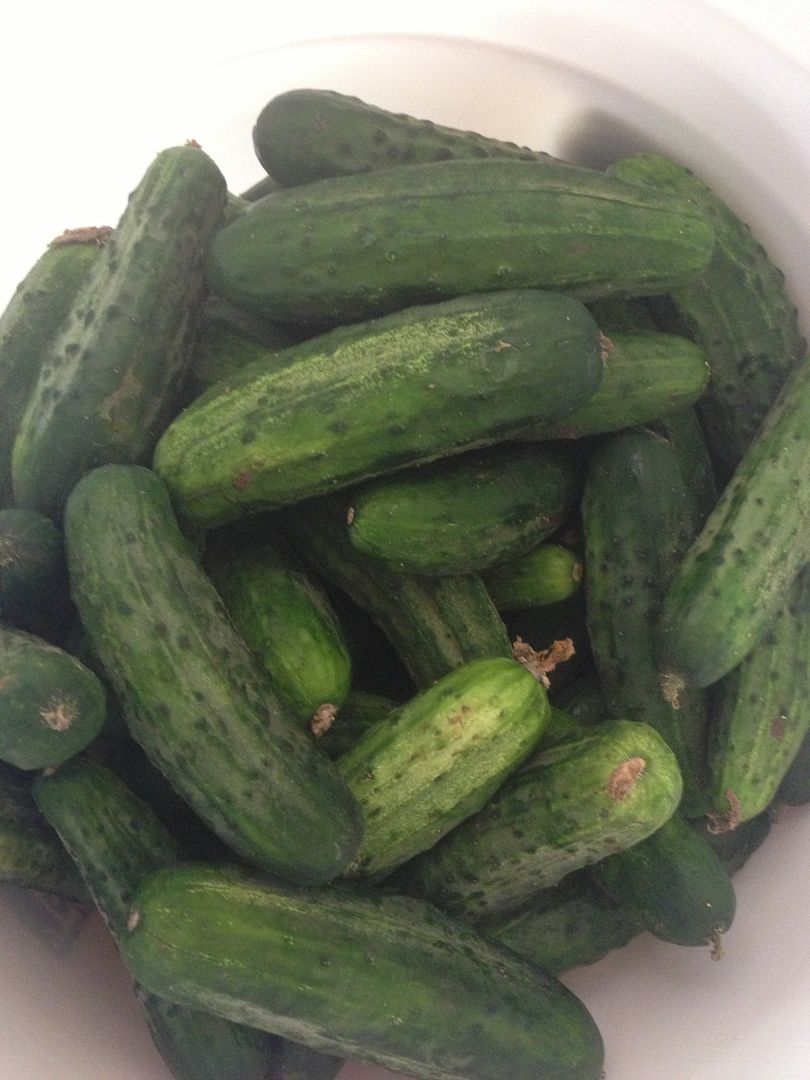
All cukes are not created equally. So chose carefully when your ready to can. Its great if you hit the timing right and can go to a you-pick outfit, or have your local CSA fill your needs. I missed the heart of the season a bit, so I did a little phone and neighbor recon work, then got ours from a grower who not only kept the cukes gently refrigerated, but separated them into basic size groups as well. That said, I still only paid $1.25 a pound, which was fair enough for us.

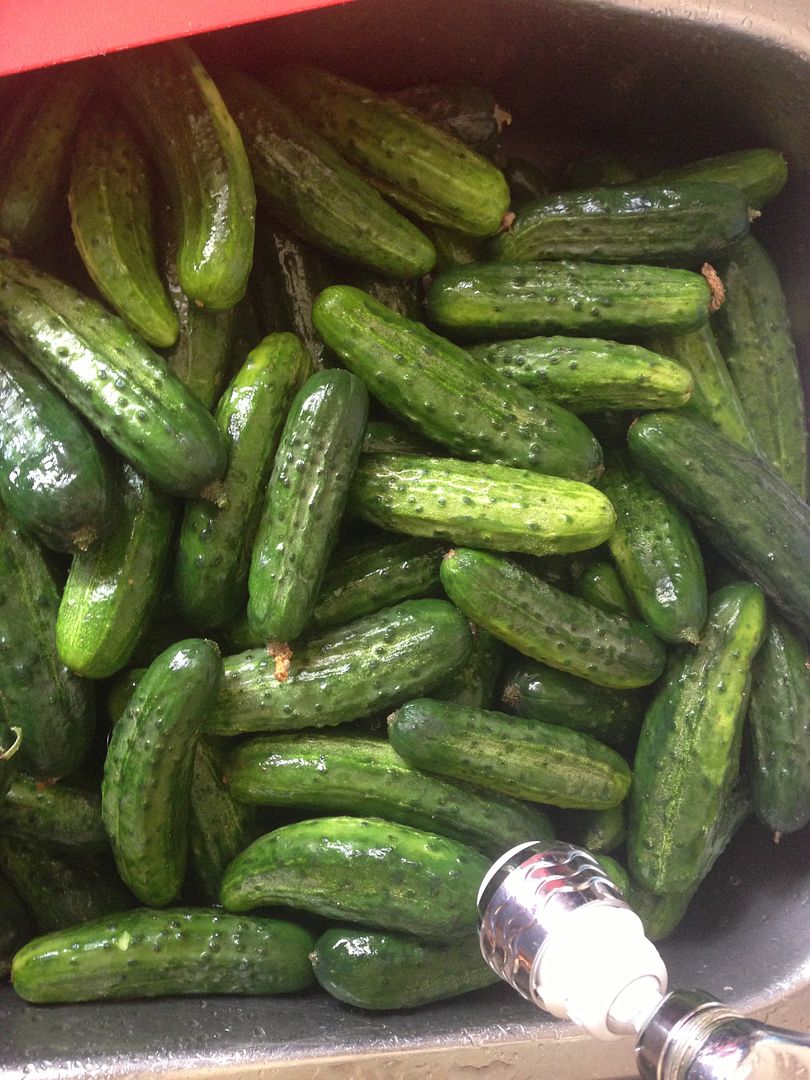
Choose cukes that are glossy and dark green, with distinct and plentiful knobs on ’em, just like you want to see on your finished pickles. Avoid ones that look bloated, as they are likely past their prime and going to seed; of course lesions, dark or soft spots are right out.

Does size matter? Yeah, to some degree; the bigger the cuke, the longer it takes the brine and spices to infuse. Of course, you can cut your cukes into spears or rounds if you like and bypass any size concerns.

As far as amount needed goes, I chose 20 pounds of cukes in the sizes I wanted most, ended up rejecting about a pound of those after initial processing, and ended up with 18 quarts of lovely pickles; you can gauge from there how much you want to do.

Initial prep and brining:
If this is your first time canning, head on over to the NCHFP and read up on Principles of Home Canning and Using Boiling Water Canners before you start.

You’ll want a container big enough to handle your desired crop size; I use a 5 gallon bucket for ours and if you’re doing anything over about 8 quarts, you’ll want to do something similarly sized; avoid aluminum for this process; ideally you’ll want glass or stainless steel.

Make sure you’ve checked on everything you’ll need, from jars, rings and lids to vinegar and spices, so you’re truly ready to rock when your cukes are.

Toss your cukes into the sink and give the, a good rinse, as well as checking for bugs and other detritus…

For the initial brine, thoroughly dissolve 3/4 Cup of salt in 2 Gallons of water. Here, as with all things food, quality matters. If your tap water ain’t good to drink, don’t pickle with it. Use nice, fish water, not distilled. Salt should ideally be canning or pickling salt, which does not contain iodine or anti-caking agents; the iodine can impart a nasty, bitter taste to pickles and the anti-caking agents tend to make things cloudy, so they really are to be avoided. Read your labels carefully at the store, or head on over to Leeners and get the good stuff with no worries. You do not need to heat this brine, (which can also make pickles mushy), just make sure the salt is completely dissolved.

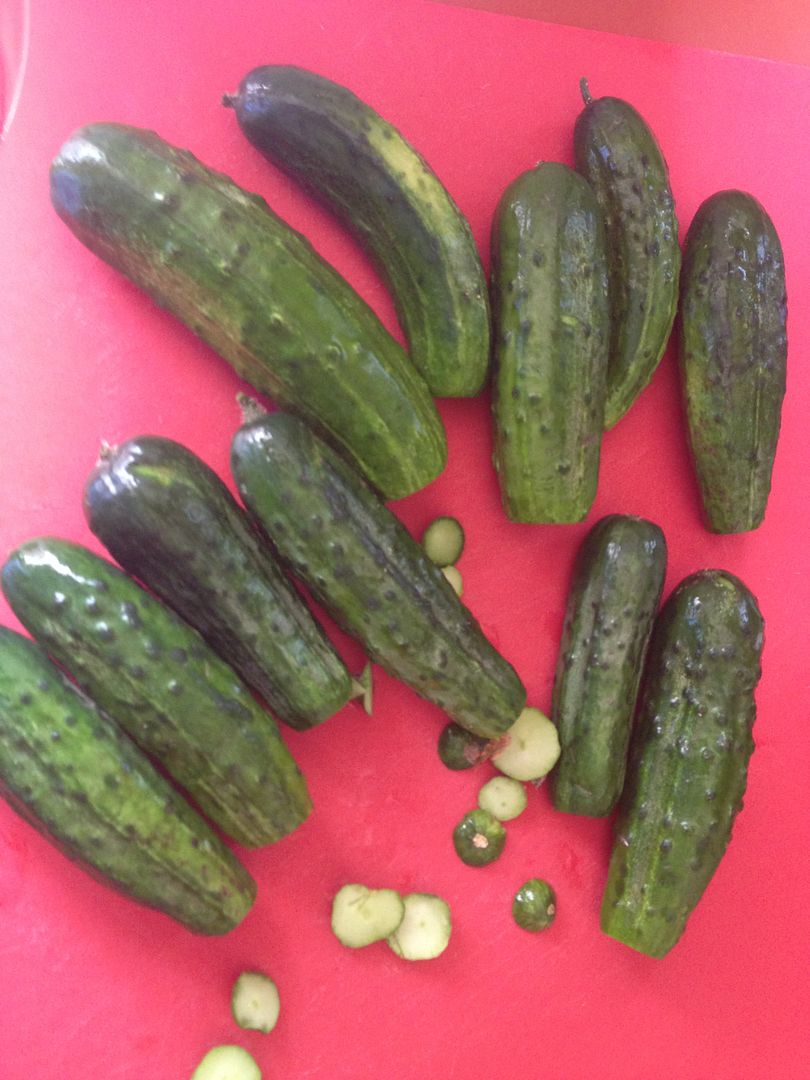
Trim all the blossom ends of your cukes by about 1/8″; the blossoms have an enzyme that can soften cukes, and nobody likes mushy pickles. You can leave the stem ends on so long as they’re not too long, (1/4″ or less).

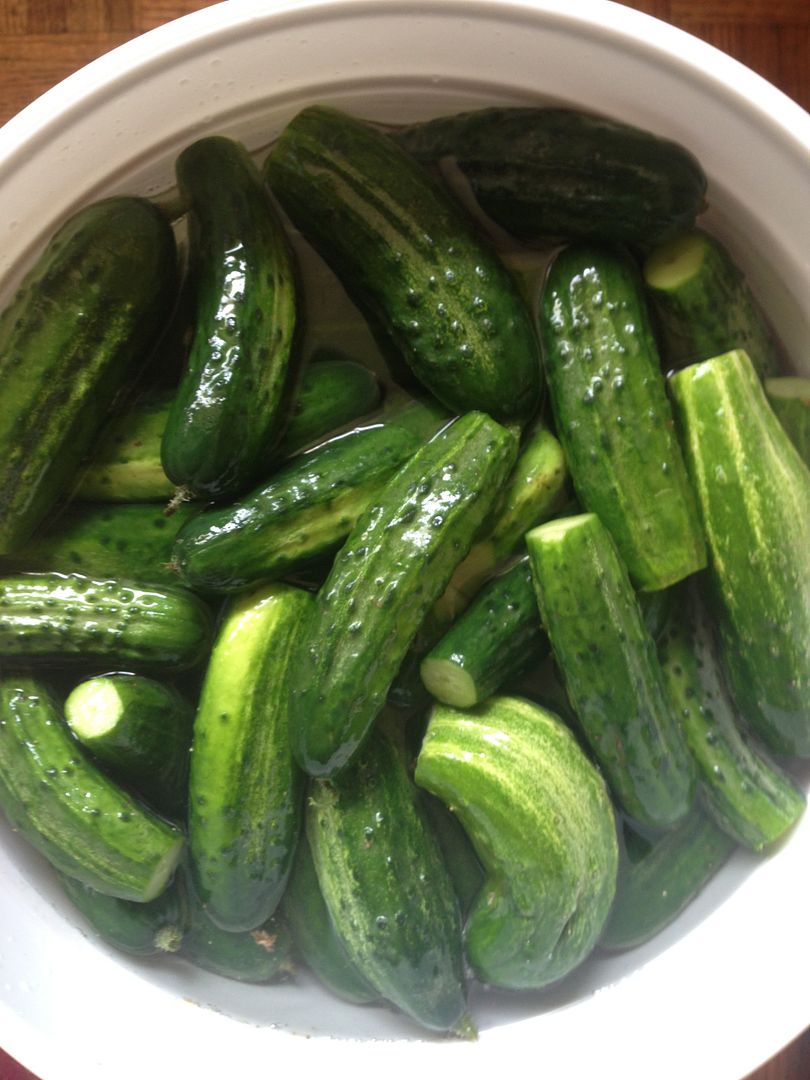
Toss your cukes onto a bucket or non-reactive container, and makes sure your brine covers them completely. Use a plate and weight of some kind to make sure the floaters stay fully submerged. You should brine for at least 12 hours and up to 24 hrs.

When initial brining is complete, drain your cukes, fill your vessel with fresh, cold water and move on the fun stuff.

Pickling:
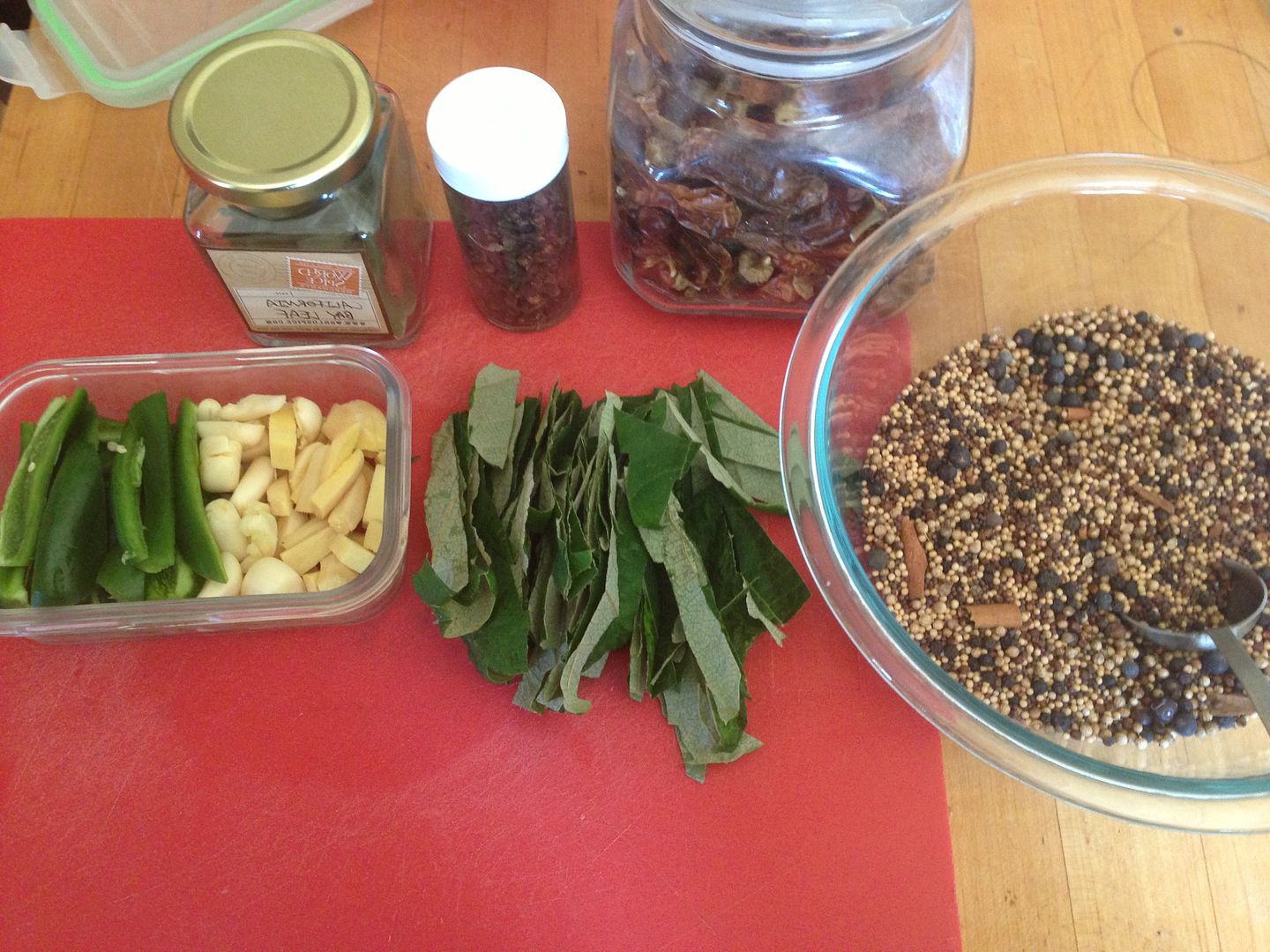
The ratios for pickling brine are somewhat flexible, depending on what you’re pickling. What I’ve got here is pretty uniformly reflected in my cohorts versions as well. Pickling spices are really wide open to interpretation; my fellow picklers choices run the gamut from nothing but salt to quite complex indeed; even dill isn’t a requirement unless you want dill pickles… Our spice blend is is a very nice blend of sweet, spicy and hot. Try this or make your own as you see fit.

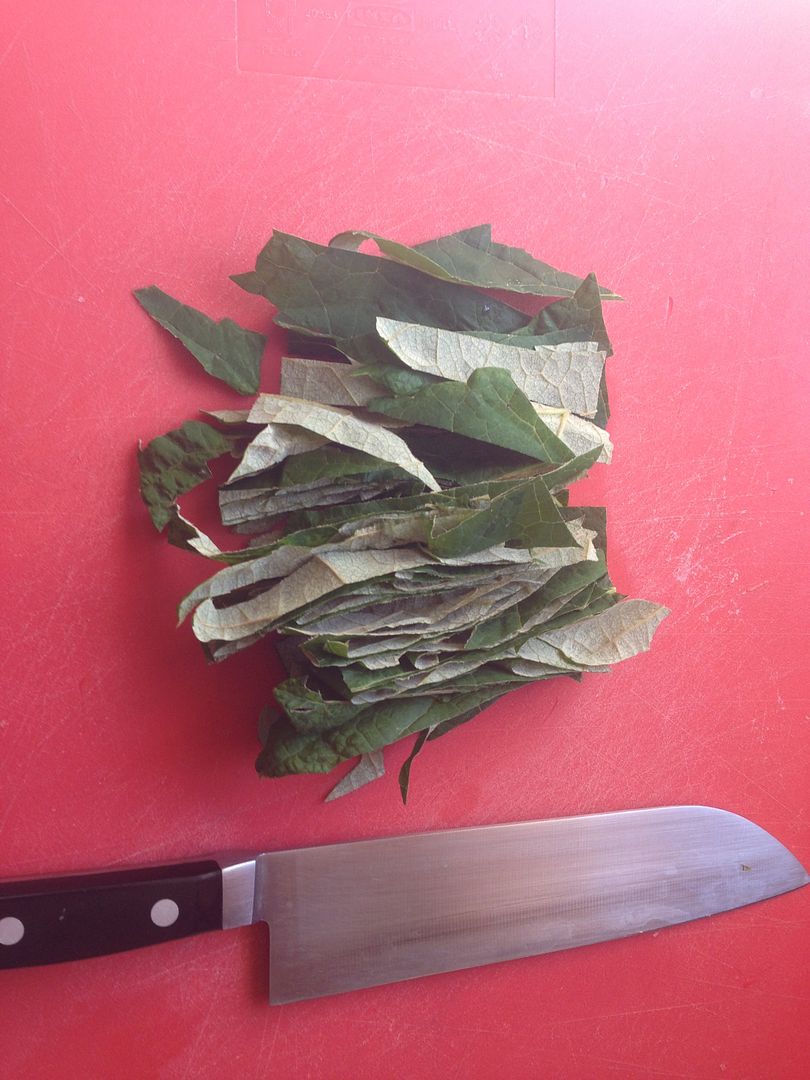
The one secret ingredient I’d advise you to find and use is grape leaves; they contain tannins that can do wonderful work toward keeping your pickles crisp. Rinse leaves well and trim off any browned or curled edges, then set aside.

The same rule applies for water used here. Additionally, I’d strongly advise that you do not buy pickling spices from the grocery. Get your spices as fresh as you can, get them while whenever you can, and blend/grind your own.

Vinegar should be 5%, but it’s up to you what version you use. We like good apple cider vinegar for the light, fruity note it imparts, but you can use white if you like. Avoid heavily flavored versions and create your own signature pickle.

The ratios detailed here are for about 5 – 6 quarts of pickles; scale up or down as you see fit. You’ll end up with a bit too much brine, but better too much than not enough, and you can always fridge pickle something with the extra.

Pickling Brine:
2 Quarts Vinegar
2 Quarts Water
1/2 Cup Pickling Salt
1/4 Cup Sugar, (You can sub Honey, Agave Nectar, etc, but be aware of altered flavor notes)

In a non-reactive stock pot over high heat, combine all ingredients and bring to a rolling boil. Make sure sugar and salt are completely dissolved.

You may add a sachet of 1 Tablespoon of pickling spices to the boil if you like; use fine weave cheesecloth or a tea ball to hold ’em.

Pickling Spices:
1 Tablespoon whole Yellow Mustard seed.
1 Tablespoon whole Brown Mustard seed.
1 teaspoon mixed whole Peppercorns.
1 teaspoon whole Grains of Paradise.
1 teaspoon whole Coriander seed.
1 teaspoon whole Juniper berry.
1 Bay Leaf, crumbled.

Optional, add to each quart as desired:
(We use the garlic, ginger, clove, cinnamon and dill in all ours, and add the Jalapeños and/or dried chiles just for our hot quarts.)
1 clove fresh Garlic, peeled and skinned.
Fresh Ginger root, peeled and chopped.
1 whole Clove berry.
1/2 fresh Jalapeño chile, stemmed, seeded and deveined.
1″ Cinnamon stick.
1-2 small heads fresh Dill

Sanitize your jars in the dishwasher, or in water held above 165 F for at least 5 minutes. Rims and lids get the same hot water treatment; set them aside on a clean towel.

Do a quick chiffonade cut to your rinsed grape leaves, and add about 1/2 a leaf to each quart.

Drain your brined cukes and add equal measures of the pickling spices to each sanitized jar. Carefully pack cukes into your jars. You want them full, but not jammed in there so tight that brine and spices won’t be able to freely do their thing. Leave the cuke level in each jar about 1/4″ below the start of the jar’s neck.

Seal your jars with the sanitized lids and rims, hand tight as you can get ’em.

Canning:
Set your jars on a clean towel right next to your brine on the stove. Carefully ladle brine into each jar, leaving 1/2″ of headroom per jar.

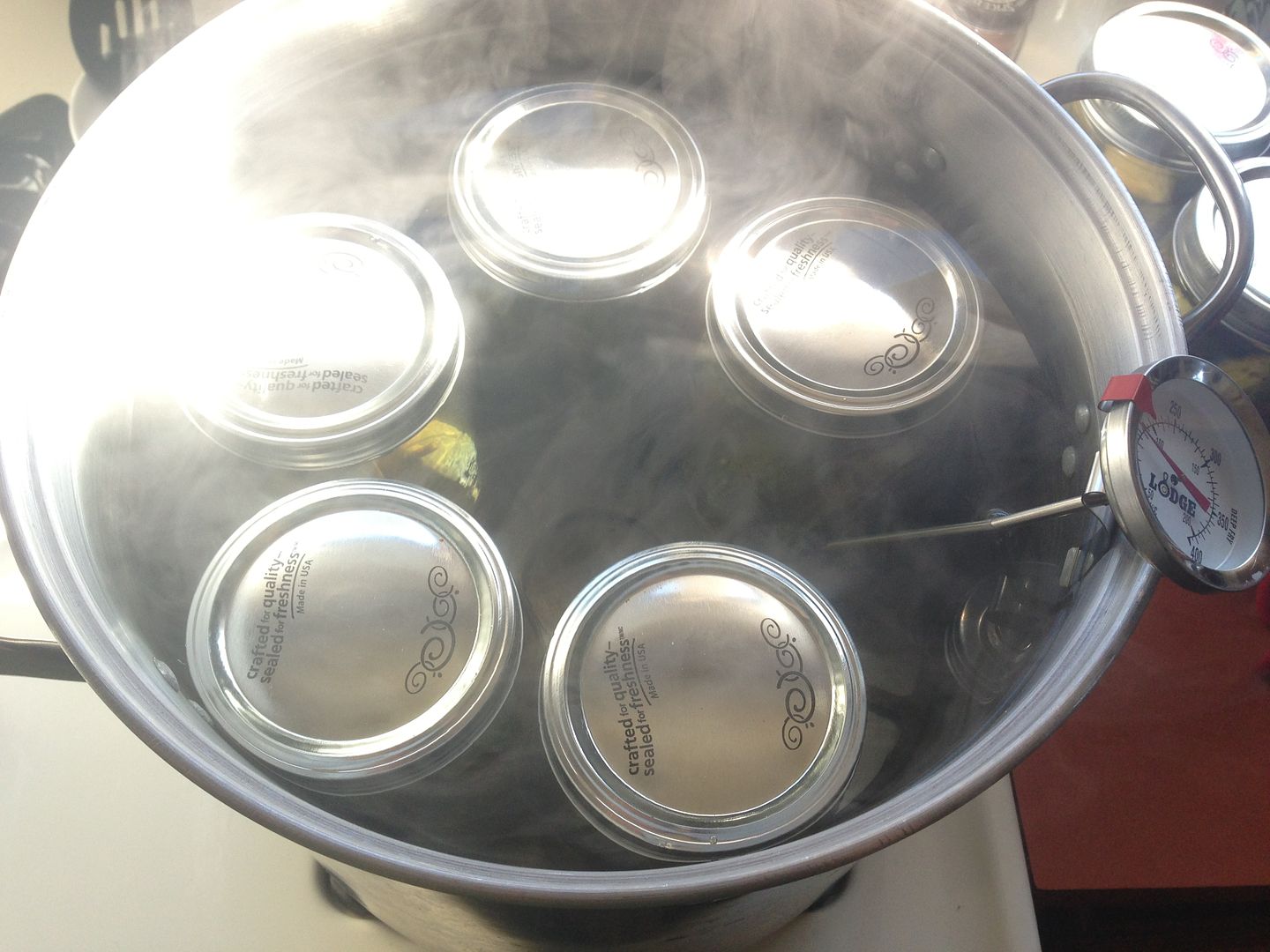
Now it’s water bath processing time. You’ll want canning tongs to safely handle the hot jars; if you don’t have ’em, get ’em!

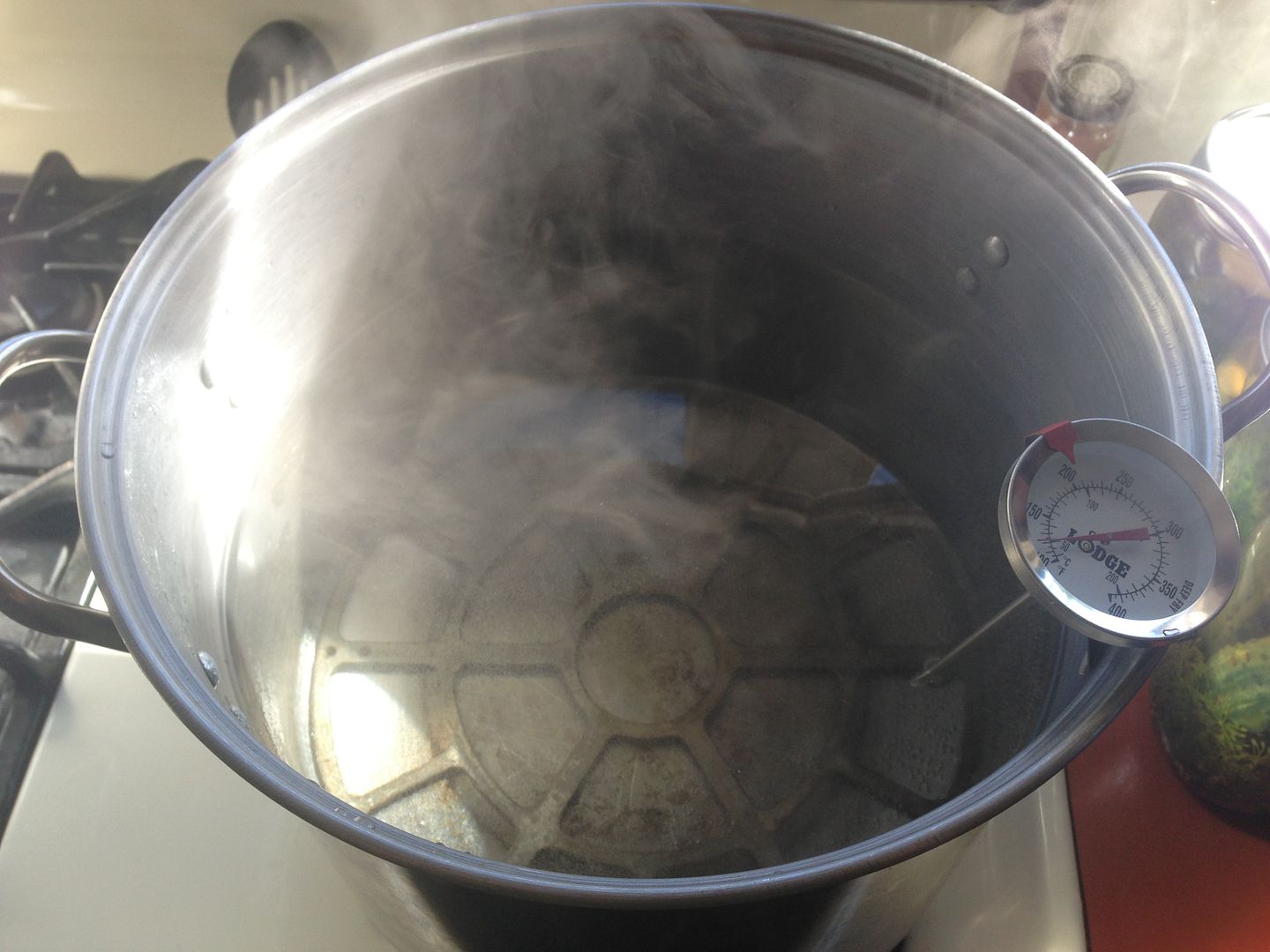
Have your canning pot filled with enough water over high heat such that a cycle of jars being processed will have at least 1″ of water above the lids.

Do not set jars on the base of your pot. Use a canning ring or basket to allow some space between the jar and the pot to minimize the possibility of jars shattering.

The recommended processing time for fresh pack Pickles in a boiling-water canner, per the NCHFP are as follows: water temperature MUST remain above 180 F throughout each processing cycle.
Process Time at 6,000 ft
Pints 10 min 15 20
Quarts 15 min. 20 25

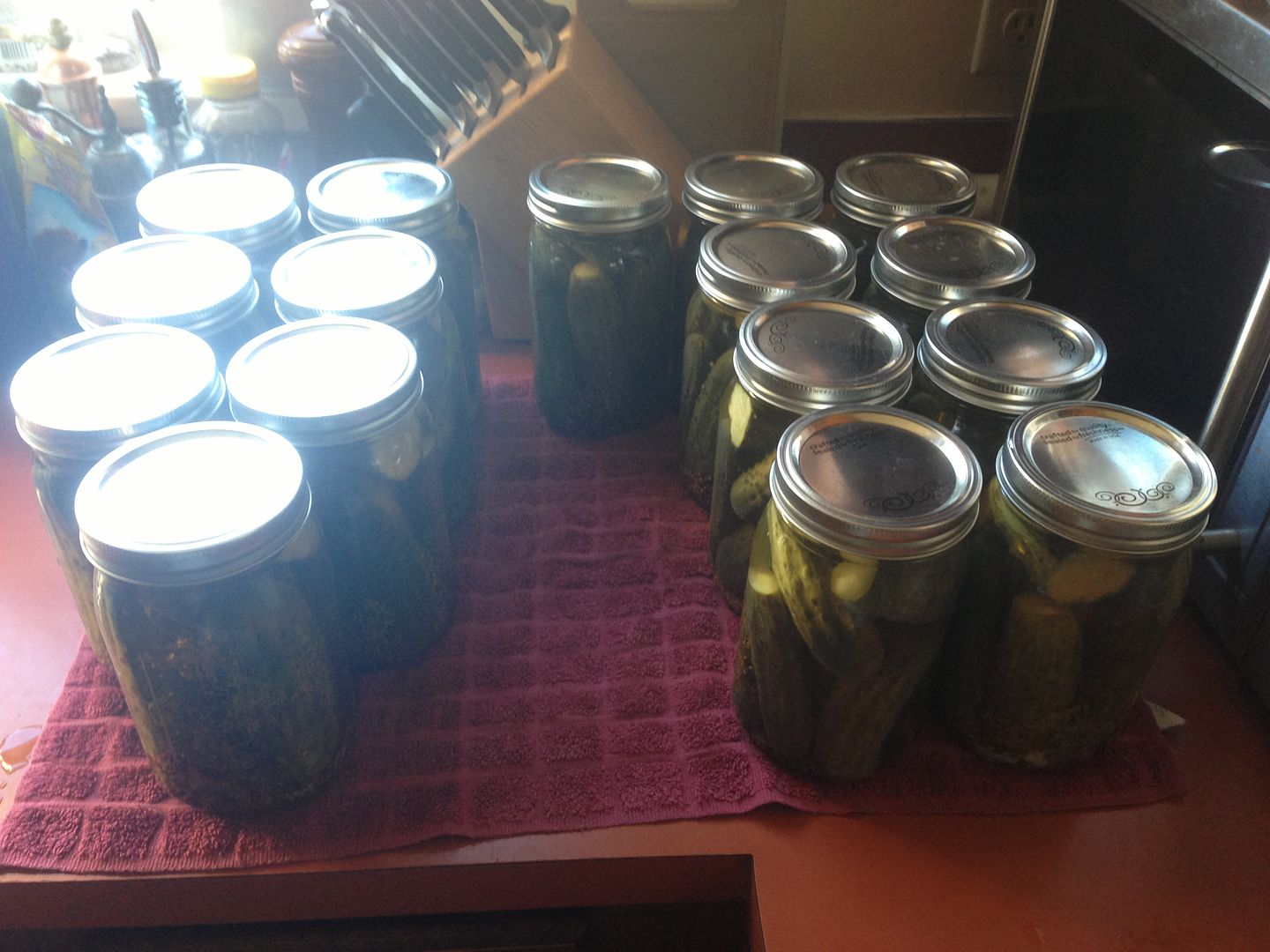
Carefully remove jars back to the clean towel after processing. Listen and watch for the telltale little metallic pop or click that ells you your lids have properly vacuum sealed. You will see a distinct small center ring in each lid when it’s properly sealed. Jars that do not seal properly are not safe for long term non-refrigerated storage!

When your jars have cooled completely, check all lids and rings for tightness, then store your pickles in a relatively cool, dark place and allow the to do their thing for at least 60 days before sampling, (And 90 is better yet). Once they’re opened, they’re fridge only storage, of course.

Enjoy, share and compare!

E & M

Perfect Pickled Beets


I love beets, but admittedly, not so much by themselves. The earthy notes, yes. The root veggie texture, yes. The sometimes muddy overtones, not so much. Hence pickling makes perfect sense, in that the added zing brings a nice snappy note to the flavor profile. I like the deep spice notes of cinnamon and clove in concert with the lighter, sweeter vanilla and lemon in that mix; together, they’re just really, really good.

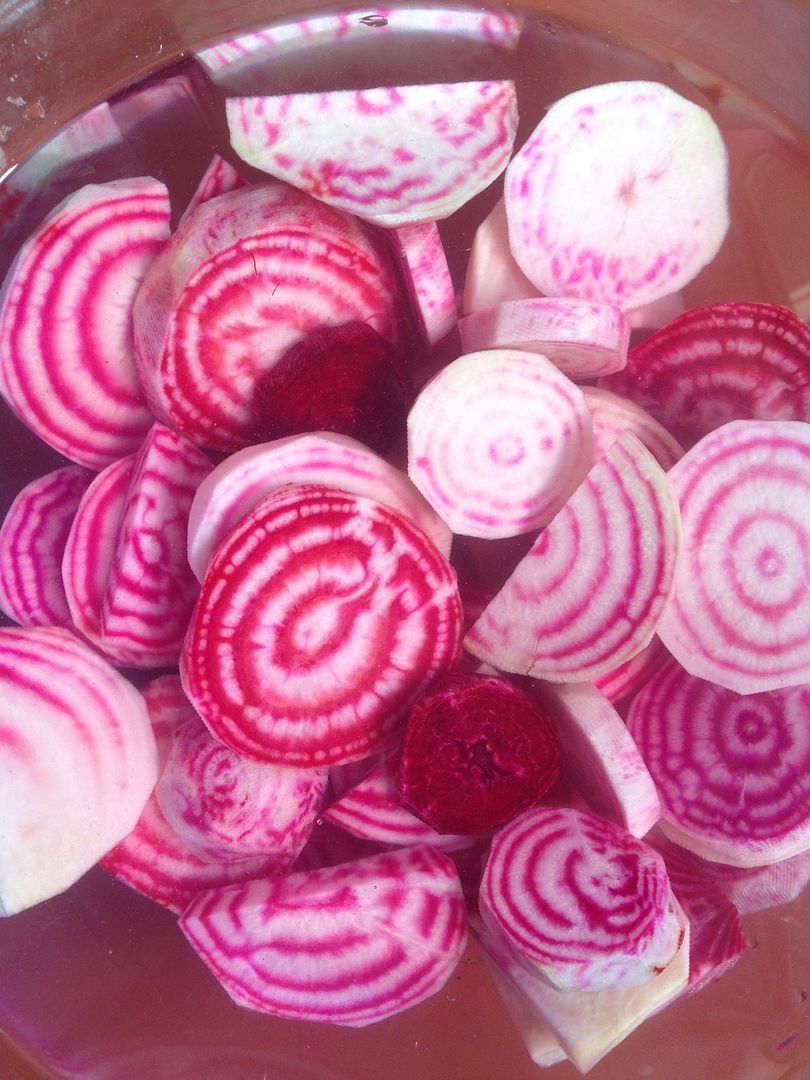
As with all produce, chose your beets carefully; select nice, firm ones with no lesions or soft spots.

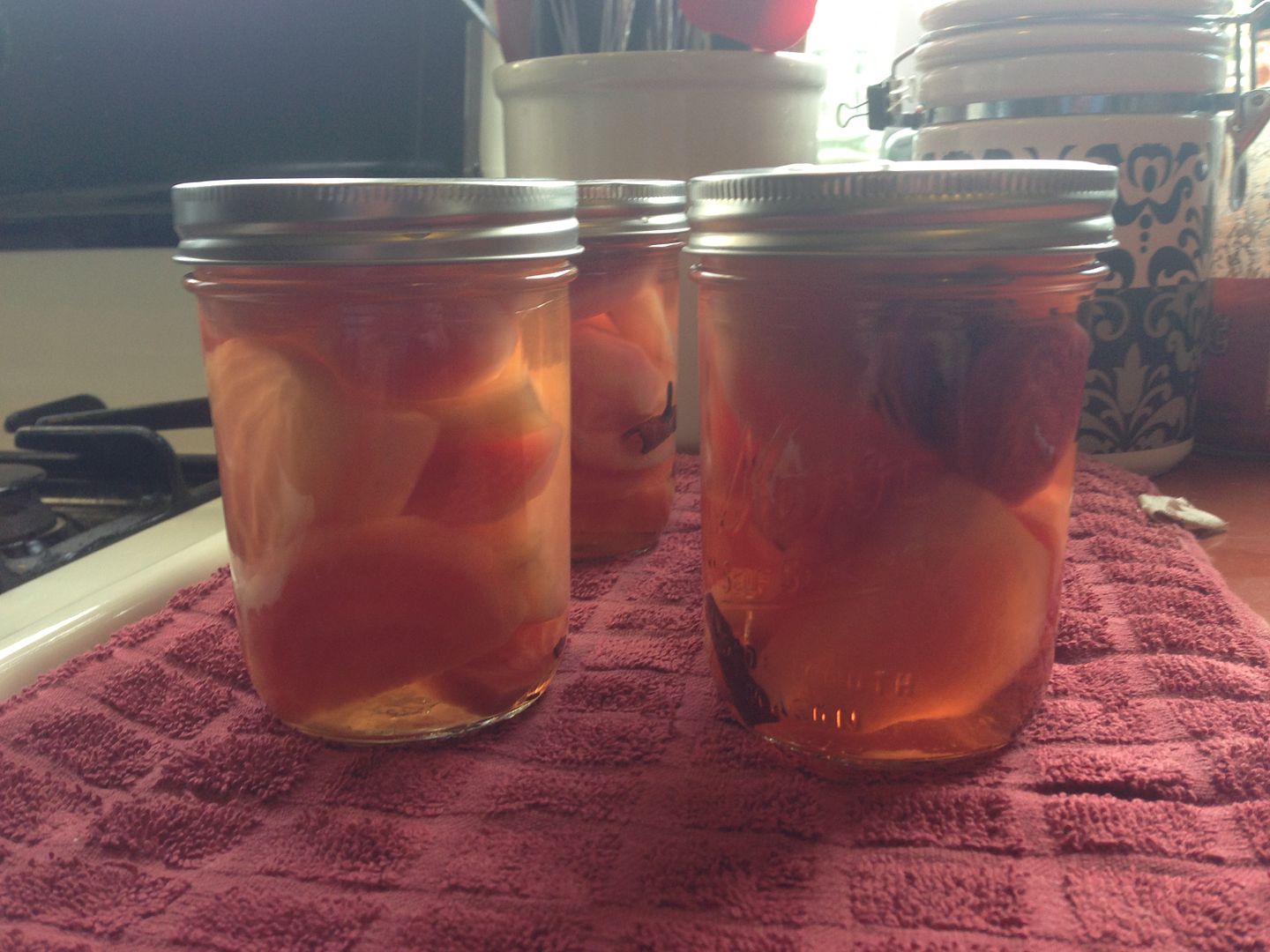
Pickled Beets, (Yield 5 – 6 pints)
5 Pounds fresh Beets
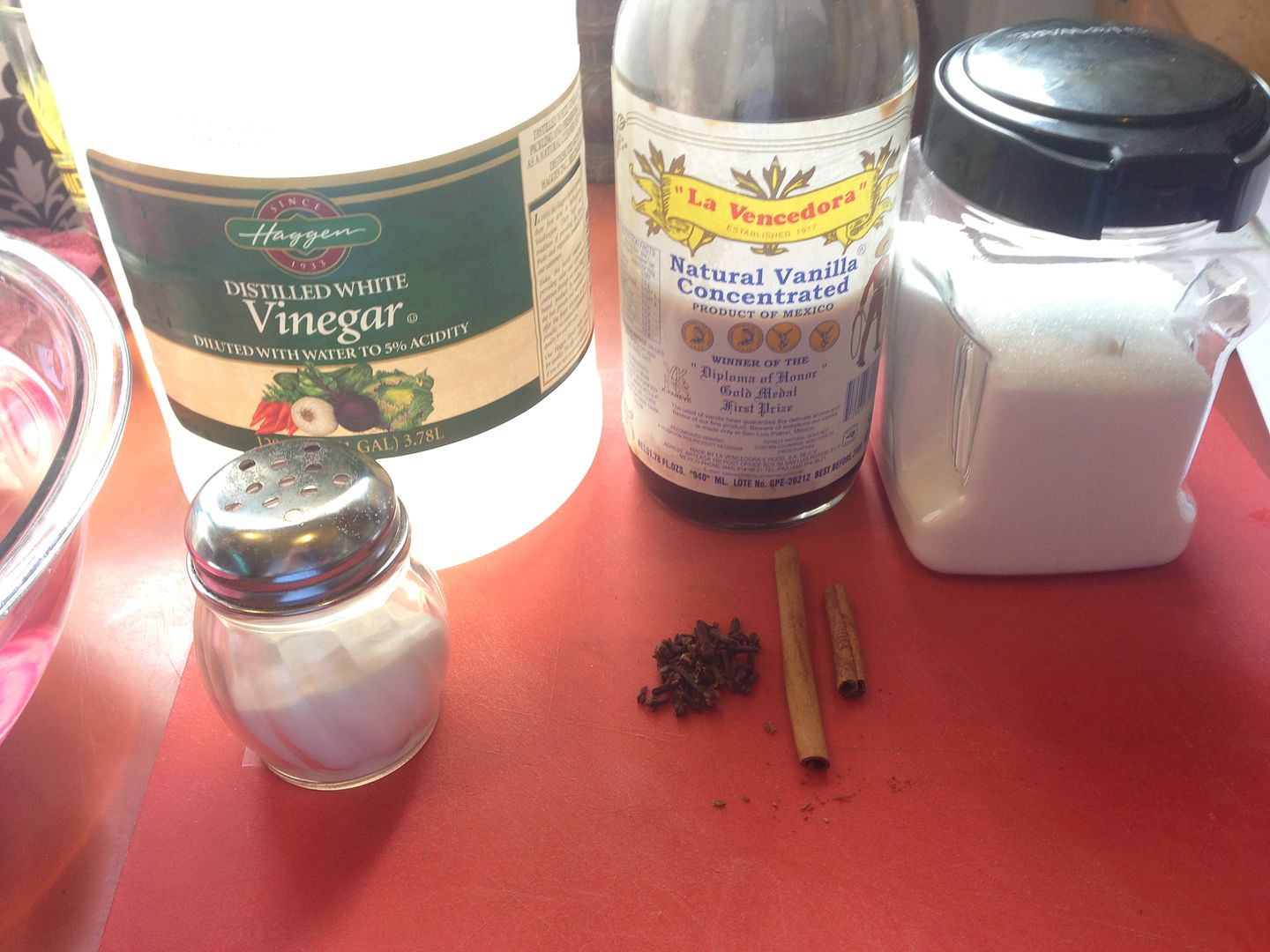
2 cups Granulated Sugar
4 cups White Vinegar, 5%
3 cups Water
1 3″ stick Cinnamon
Juice of 1 medium Lemon
2 teaspoons whole Cloves
1 teaspoon pure Vanilla extract
1 Tablespoon Sea Salt

Sterilize jars, lids and rims in the dishwasher or a pot of water on a rolling boil, minimum of 10 minutes.

Peel beets and cut into 1/2″ thick slices; make sure your sizes will fit your jars, (Which is why I always get wide mouth).

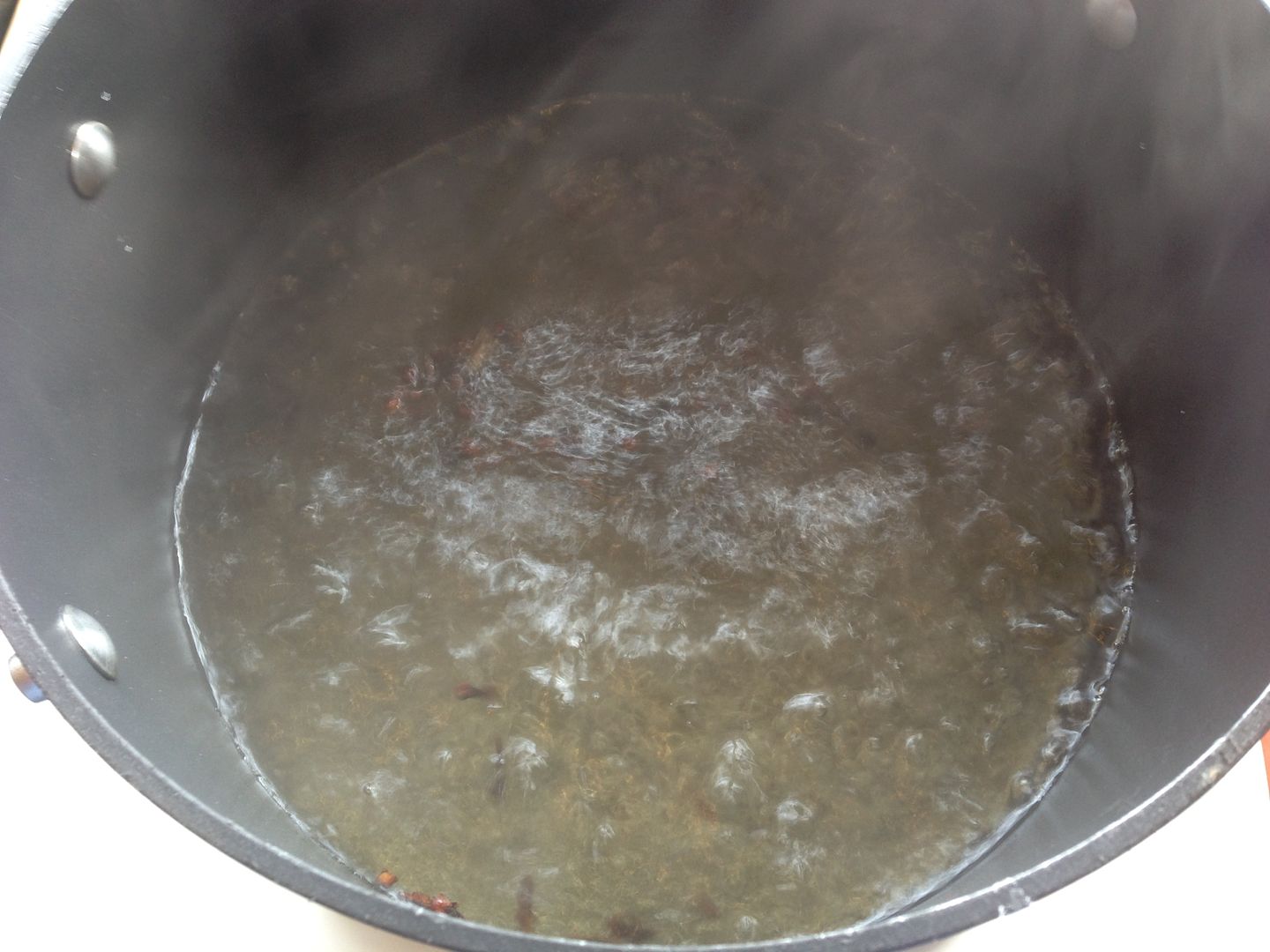
In a stock pot over high heat, combine all ingredients but the beets. Stir steadily until sugar and salt are completely dissolved.

Toss in the beets, reduce heat until you’ve got a nice even simmer, and allow the beets to cook for +/- 15 minutes, until the slices are fork tender.

Carefully transfer the sliced beets into your jars, arranging so they’re filled to within about to where the neck of the jar starts.

Fill the jars with the pickling liquid to within 1/4″ of the top. Place lids and hand tighten each jar.

Process in a hot water bath, making sure your water temp remains above 180 F. throughout. Make sure that you’ve got at least a couple of inches of water above tops of your jars and leave an inch or so between each jar.

Process for 30 minutes if you’re below 1000 feet above sea level. If you live at higher altitude than that, refer to the NCHFP page for processing beets.

Store in a cool, dark spots and allow at least 6 to 8 weeks before sampling, so your beets get full advantage of the pickling.

E & M

Tomato & Caramelized Onion Tart


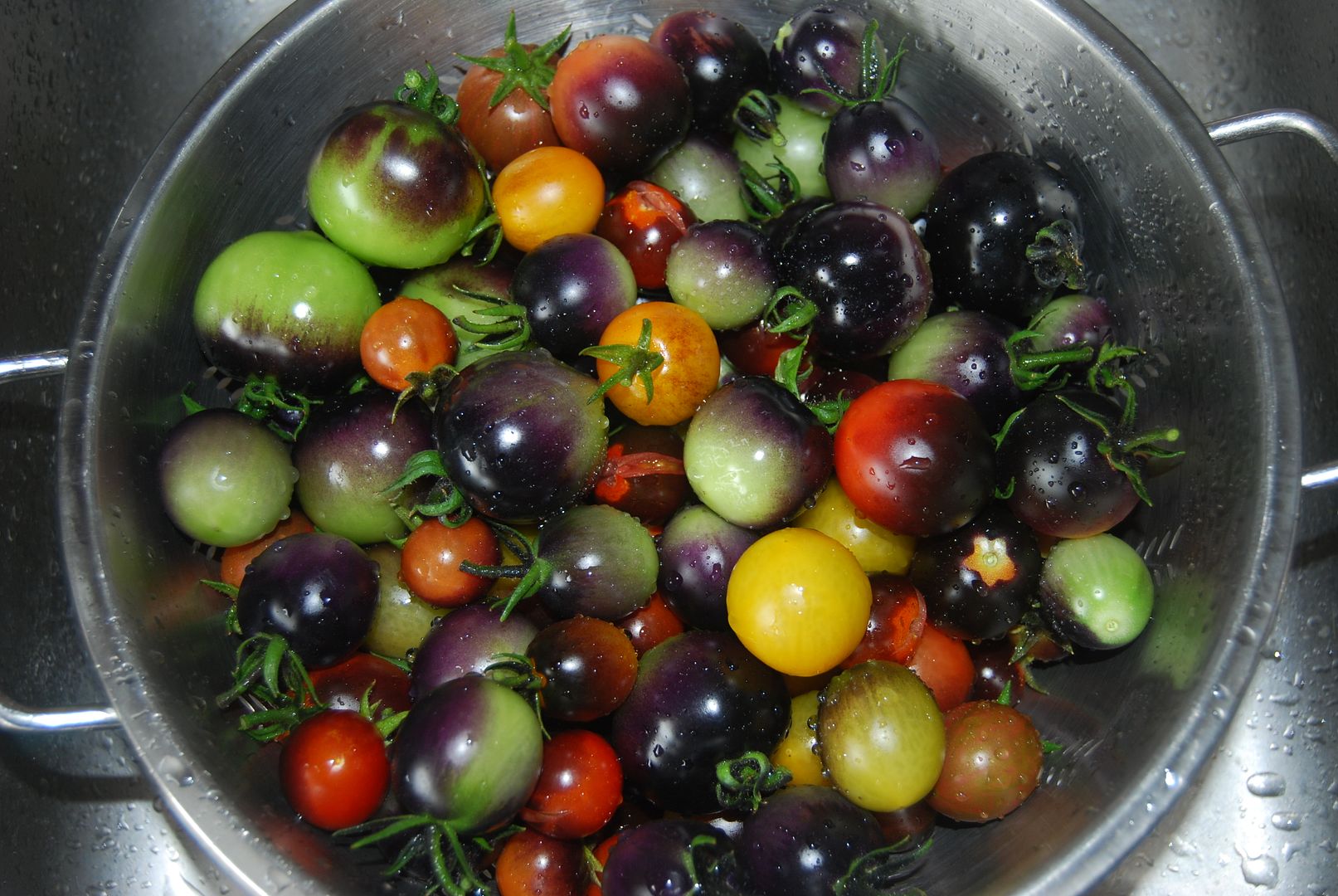
We’ve been graced with some amazing tomatoes through our friend Alice at Log House Plants; these are Might ‘Mato grafted varieties and they are simply stunning in taste, appearance and yield. Trust me when I say get you some!

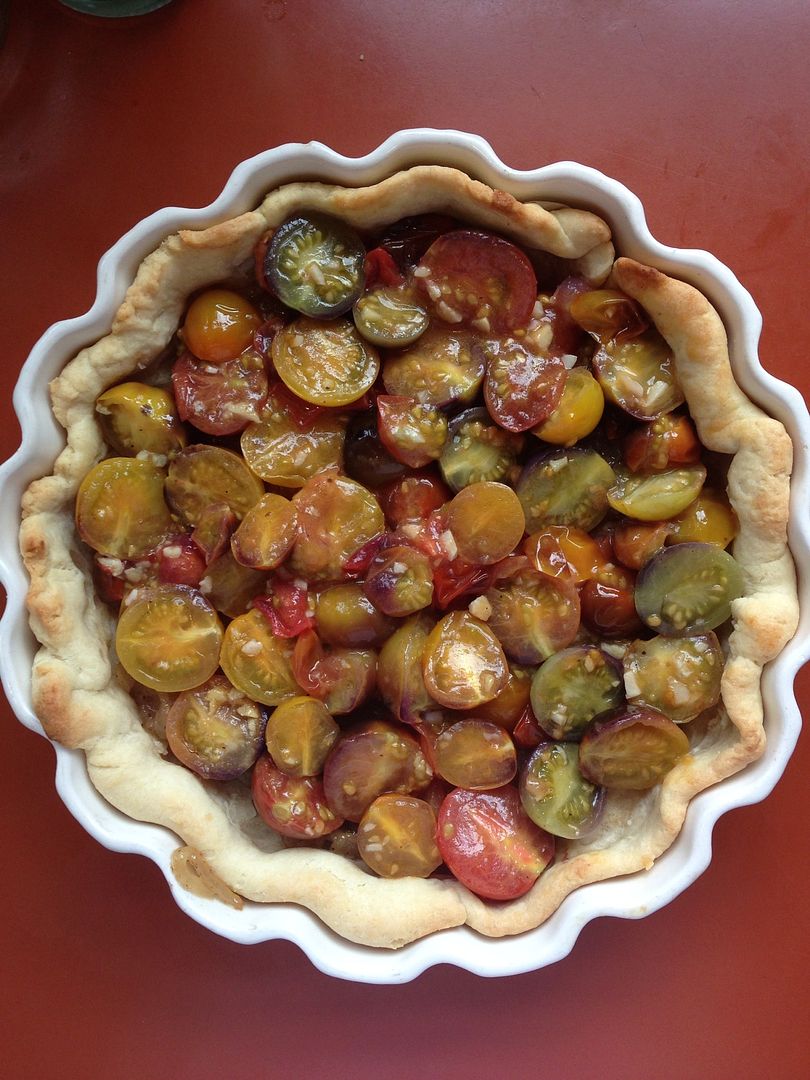
We’refeaturing several recipes that take advantage of these lovely things; here’s a savory, sweet to-die-for tart, if we do say so ourselves!

For the Tart:
2 cups Flour
1/2 tsp. Salt
1/4 tsp. Sugar
12 Tbs. Unsalted Butter, well chilled & cut into 1/2″ cubes
6 to 8 Tbs. Ice Water

Combine flour, salt and sugar thoroughly.

With your fingertips, blend the butter into the flour mix until its has the even consistency of coarse corn meal.

Add water a tablespoon at a time and mix gently with your hands. Continue until the dough is thoroughly blended and moist but not sticky; STOP messing with it as soon as it gets to that stage.

Flatten the dough out into a disk about 6″ round, then cover with plastic wrap and refrigerate for at least 1 hour, (And up to overnight).

Roll the dough out to roughly 16″ round and about 1/8″ thick.

Carefully transfer the dough to a parchment-lined 12″ tart pan. Double back the rim to about 3/4″ high and trim away any excess, (Roll the excess back out, sprinkle with a little sea salt, garlic, pepper and hard cheese for a lovely little amuse bouché)

Stick the pan back into the fridge for at least 30 minutes.

Preheat oven to 425 F.

Remove the crust from fridge, fill with marbles or dry beans and blind bake for 15 minutes. Remove from oven, remove marbles/beans and get ready to fill ‘er up.

For the Caramelized Onions:
Slice a medium sweet onion into 1/4″ rounds.

In a large sauté pan, add 2 tablespoons each of extra virgin olive oil and butter over medium heat. Toss in onions, add salt and pepper to taste, reduce heat to medium low and Caramelized onions until golden brown and soft. Turn heat to high, briefly allow pan to heat through. Add two Tablespoons of Sherry, flame and allow the alcohol to burn off. Set onions aside in a non reactive bowl.

For the Tomatoes:
Add 1 fresh Tablespoon of butter and olive oil to sauté pan over medium low heat.

Slice about 24 small cherry or varietal tomatoes in half.

Mince two cloves of garlic.

Toss garlic and into pan and allow to caramelize slightly. Add tomatoes, blend with garlic for about 2 minutes. As soon as you see the tomatoes showing signs of getting soft, remove from heat, drain excess oil and set aside.

Set oven to 375 F.

Layer onions evenly over tart, then add an even layer of tomatoes.

Set oven racks at lower and upper third positions.

Bake tart for 15 minutes on lower rack, then spin 180 degrees and bake another 15 minutes on top rack.

Remove from heat and allow to rest for 10 minutes before serving.

Garnish with creme freche or Crema and fresh cilantro.

Be sure to pop over to this post for some truly wonderful Green Tomato Chuntney!

Lovely Variation:
Replace the lightly sautéed garlic with oven roasted garlic; gives a sweeter, deeper and more complex garlic note to the dish.

Preheat oven to 400°F.

Peel away the outer layers from a whole bulb of garlic bulb skin, (leave individual cloves skins intact). Do as many as you like this way – 1 large clove is enough for this tart.

Slice about 1/4″ off the top of the cloves.

Set garlic head up in a garlic roaster, (you can use a muffin tin if you don’t have a roaster; just cover each head with aluminum foil before roasting). Drizzle a bit of extra virgin olive oil over the top, then rub it in to the whole head by hand.

Bake at 400°F for 30-35 minutes, or until the cloves tops are caramel colored and feel soft to the touch.

Remove from oven and set to cool on a wire rack. When they’re cool enough to handle, you can grab a clove and squish the roasted garlic right out. Do that into a with as many as you like for your tart.

Spread the roasted garlic onto the tart crust prior to layering on the onions.

E & M