Great Meatballs at Home


Meatballs – they seem so simple, yet let’s be honest – how many times have you tasted or made something that, when you bit into it, just didn’t quite cut it? Me too. No worries though – like all good things, there are keys to consistently exceptional meatballs, and if we know and follow the rules, we’ll churn out delightful little balls of deliciousness every time. 


Meatballs can be made from all kinds of proteins, from tofu to beef, pork, or poultry. Any of those options can and should turn out juicy and delicious. When they don’t, there’s almost always a broken cardinal rule or three to blame. Here, for your edification, are the most common culprits and solutions.

Dry Meatballs – Too little fat is the most common cause. Proper meatball mix fat content should be around an 80%-20% ratio of protein to fat – that’ll give you consistent results. If you’re adding cheese, sour cream, Crema, crème fraîche, chèvre, whole milk yogurt, etc, don’t forget to factor that in. As such, starting with 90%-10% protein will often do the trick. 

Overcooking – this happens most often because we disregard internal temperature when we’re cooking meatballs. You should pull ‘em when they hit 160° to 165° F – They’ll easily hit ten degrees higher than that after you yank ‘em, so don’t go any higher in the oven.

Keep overcooking in mind when you reheat/cook them further in sauce – yes, braising keeps things from drying out, but if you’ve baked to proper temp, the sauce session should be monitored for heat and time – it’s still possible to overcook meatballs in sauce – it happens a lot.

Overworking – this occurs most often due to mechanical interference, AKA mixing with something other than your hands. When meatball mix is ready to form and bake, it has a feel – firm, not too wet or dry, and slightly springy. You can see all your ingredients, and know that they’re well mixed – you can’t get there unless you work it by hand – do that, and you’ll feel, smell, and see when your mix is ready to go.

Wet/Loose Meatballs – Believe it or not, this happens most often due to improper ratio of breadcrumbs/bread to meat. Yes, breadcrumbs hold moisture and are vital to the proper texture of meatballs, but add too much and you overpower your binder and end up with soggy or weak meatballs. If you really go overboard on crumbs, you’ll produce something with the texture of a matzo ball, and that’s not so good. 1/2 cup of crumbs or one slice of bread per pound of protein is the sweet spot.

Egg Problems can also lead to loose meatballs. You may think eggs are adding moisture to the mix, but that’s not their job – they’re there as a binder, and they’re critical to firm, bouncy meatballs that hold their shape. Add too much egg and you get soggy or sloppy – add too little and your balls fall apart. A ratio of one medium egg per pound of protein is the rule of thumb – if you add significant quantities of uncooked veggies to your mix, another egg is warranted.

Boring meatballs – Don’t laugh, it happens a lot. I think that folks get a mindset along the lines of ‘I don’t need to season and add herbs to my meatballs, because I’ll have all that in the sauce.’ Let’s do a quick experiment to test that theory – take a bunch of rubber balls, and cook them in your best pasta sauce… But seriously folks, the insides of a meatball have to be as great or greater than whatever they’re served on or in. Add veggies, cheese, herbs, spices, including salt and pepper in your mix, period, end of story.

Size matters – when you’re ready to form, use a disher or an ice cream scoop if you’ve got one. If not and you’re rolling your own, thoroughly clean and dry your paws, then oil them lightly – that’ll keep the mix from stickin’ to ya. In essence, size should based on what you plan to do with ‘em – if you’re not sure/gonna do different things, a 2 oz. ball should work great. If it’s something like Italian wedding soup, 1 oz. is better. If it’s something where you really want them to stand out, and will serve maybe 2 or 3 per person, a 3 oz. ball is fine. 

Enough about problems – let’s flesh out ratios, so we can build our own recipes with whatever we want.

Cheese – You can use dang near anything you like, but consider properties when you do – A cheese that melts really well will want to leak out of meatballs – harder cheeses, not so much. 1/4 to 1/2 cup per pound of protein is the sweet spot. If you use something really soft like ricotta or chèvre, you may want to deploy that second egg in order to keep everything tight.

Veggies – you can add up to 1 cup per pound of protein with few worries, but there are caveats – if you’re adding something really wet like fresh tomato, consider gutting them prior to deployment. Onions, shallot, garlic, fennel, carrot, and celery will all be fine, just make sure to prep them to a fairly uniform fine dice and watch the ratios – too much of a good thing will overpower your binder and lead to loose or soggy meatballs.

Herbs – fresh or dried is fine. I like to plan on a ratio of about 1 1/2 to 2 tablespoons of herbs per pound of protein – again, boring sucks, so make ‘em speak. I’ll generally go heavier on dominant notes and lighter on minors.

Seasoning – Salt and pepper are musts, period. A teaspoon of salt per pound of protein is about right, but don’t forget to factor in other ingredients – for instance, the feta I used in the recipe below is brined, so it’s definitely gonna add some salt to the mix, and hard cheese like Parmigiano and Pecorino carry a pretty good salt load too, so adjust accordingly. A teaspoon of pepper per pound of protein is about right for most tastes.

Liquids – Keep citrus juice, etc olive oil, to a teaspoon or two each and you’ll be fine. The liquid dairy stuff, if full fat, can be treated like cheese, but again, keep an eye on your binder ratio if you use them.
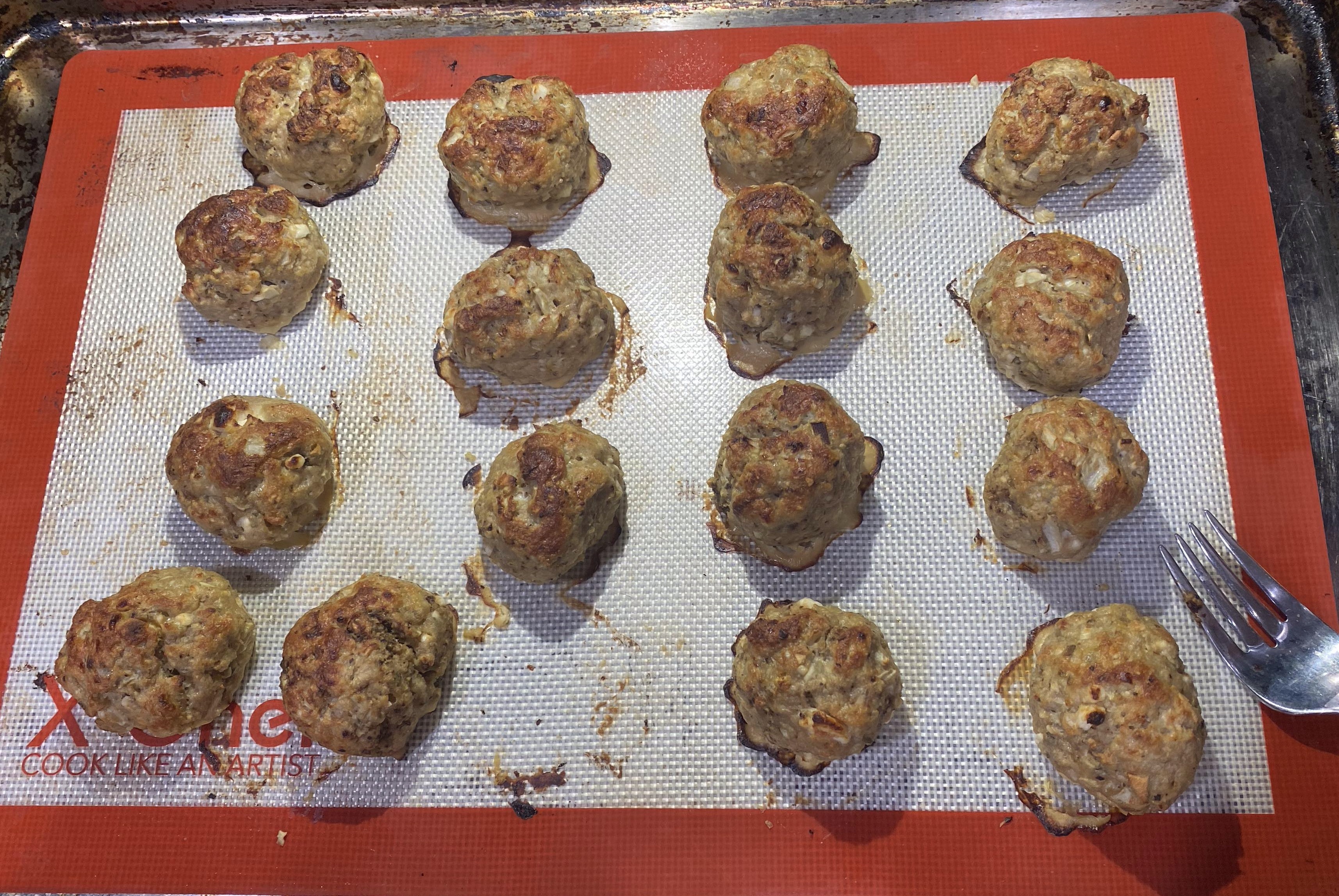

Enough about that, let’s make something. I told M I wanted to make turkey meatballs – her response was perfect – ‘why?!’ Ground turkey is not a fave for a lot of folks – I’ve heard it described as dry, tasteless, and downright gross. That’s exactly the challenge I was looking for to work up a perfect meatball. When I told her I was thinking about feta, fennel, and sage as major notes she allowed, ‘that might not be too bad.’ So off I went. 

Ground Turkey isn’t gross, and done right, it’s neither dry nor tasteless. It can easily be found or ground in the 10% to 15% fat range, and as long as it’s fresh, it’ll have a great texture as well, but it does not pack a whole ton of flavor. As such, I was loosely thinking of Keftedes, the signature Greek meatball – something with some serious zing to it. What I took from that was dominant notes of garlic and lemon, with a robust herb punch. Try these in your kitchen just as I detail below, then make them yours. If you wanted to go further down the Greek theme, you could add curly leaf parsley, mint, cumin, or warm spices like cinnamon and nutmeg.
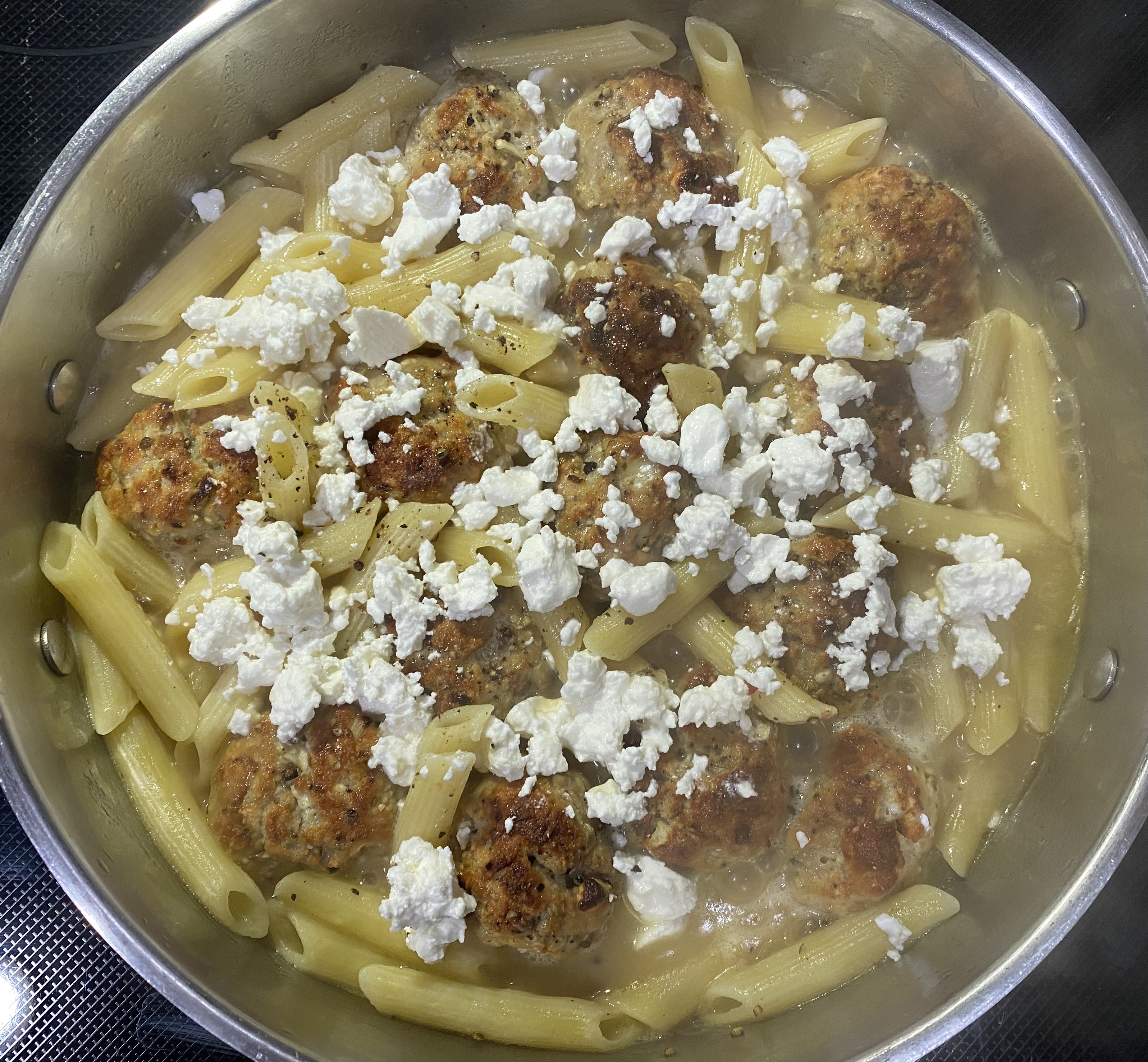

Urban’s Perfect Turkey, Feta & Fennel Meatballs

1 Pound 90%-10% Ground Turkey

1/2 Cup Feta Cheese

1/2 Cup Onion

1/2 Cup Fennel Bulb

1 slice Sourdough Bread

3 fat cloves Garlic

2 medium fresh Eggs

Zest & Juice of 1/2 Lemon

1 Tablespoon Greek Olive Oil

3-4 fresh leaves Sage (or 1 teaspoon dried)

2 teaspoons dried Greek Oregano

1 teaspoon fine Kosher Salt

1 teaspoon ground Black Pepper
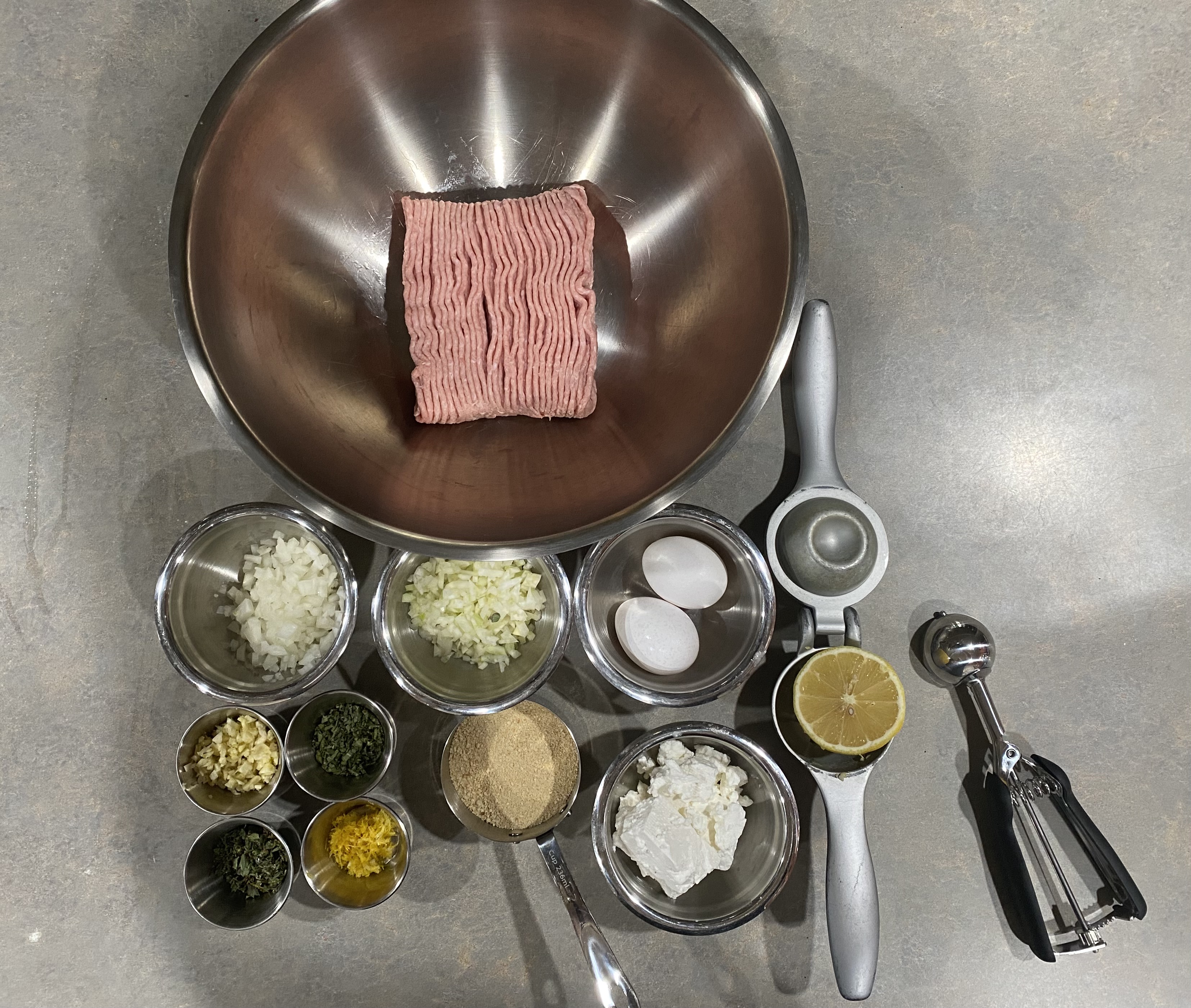

Set an oven rack in your upper middle slot and preheat to 400° F.

End trim, peel and slice onion roughly 1/8” thick – fine dice 1 cup and toss into a large mixing bowl.

End trim, smash and peel the garlic, then mince and add to the onion.

End trim, thinly slice, then mince the fennel.

Chiffenade, then mince the sage leaves, if using.

Zest and juice the 1/2 lemon – reserve both for now.

In a small mixing bowl, vigorously beat the eggs.

Portion feta, and olive oil.

Portion and combine oregano, salt, and pepper.

Toast the bread until lightly browned. Transfer to a shallow bowl and cover with warm water. 

Let soak for about 5 minutes, then pour off the water and squeeze the bread dry. Crumble that into the mixing bowl. NOTE: You can sub 1/2 cup of plain bread crumbs if you prefer.

Add turkey, and all remaining ingredients. Mix well by hand to thoroughly incorporate, but don’t smash and mash – a firm but gentle massage is what you’re after.

Line a rimmed baking sheet with parchment. 

Use a 2 oz. disher, scoop, or 2 tablespoon measuring spoon to portion and form meatballs – place them on the lined baking sheet with a bit of space between each.

Bake at 400° F for about 20 minutes, then check internal temperature – you’re looking for 165° F.

Set oven to broil, move baking sheet to upper rack and broil for 2-3 minutes until lightly browned. You can roll ‘em over and do the other side, or call it good as you see fit.
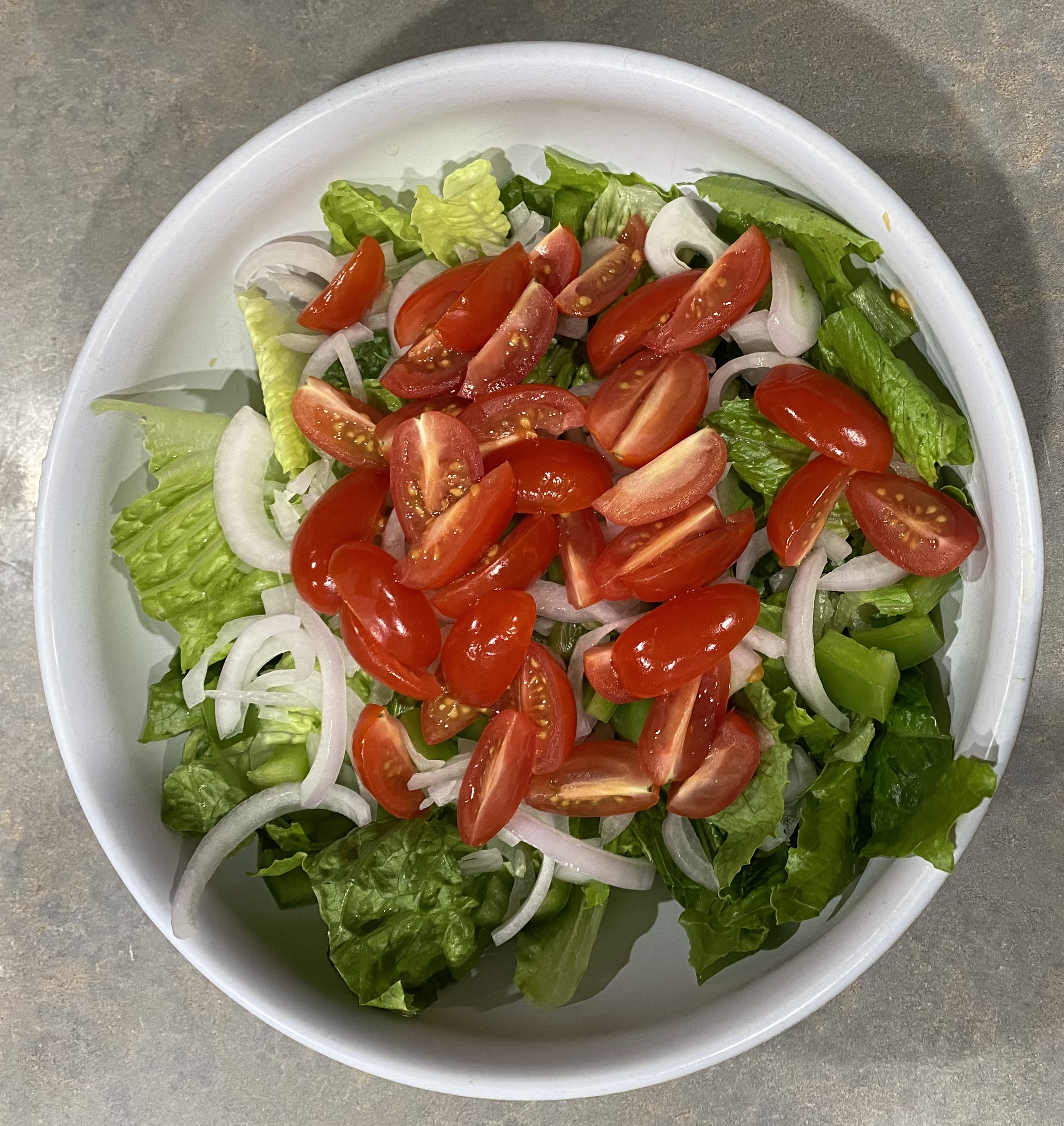

Serve with lemony Greek potatoes, rice, orzo, or other pasta, a salad loaded with tomato, peppers, and onion, and fresh Tzatziki


For the record, the mark of an exceptional meatball – not good, not great, but exceptional – is how good they taste for brunch two days later. For the record, M declared these the best meatballs she’s ever had – and she ain’t easy.

Spring is Here – Time to Clean Freezers & Grills


For 25 points, identify the following protein:

Didn’t think so…

Spring is the perfect time for deep cleaning. Shaking off the dust and cold and mold of winter, letting fresh air in – We do it to our homes, (hopefully), and we need to do it to our freezers as well.

Whether you’ve got a combo fridge/freezer, or a big ol’stand alone unit, it’s time to thoroughly clean that beast, inventory what’s there with a critical eye, toss what needs to be tossed and cook what must be cooked before that too goes to the great beyond.

This line of reasoning naturally brooks the question, “Can food go bad in the freezer?” The answer to which is a definite ‘Yup!’

Keep in mind that freezing does not kill bacteria, yeast, mold, etc –  it just pretty much keeps them from multiplying. If there was something funky present prior to freezing, it could indeed reappear when thawed. Additionally, freezing does not do any favors for food quality or taste – over time, great stuff will become good and good stuff becomes that image up yonder.

When does quality starts to degrade? That depends on what it is, and how well it was packaged, frankly. For answers to this and other freezer questions, hop on over to the USDA’s Food Safety site and read for yourself. You’ll also find the National Center For Home Food Preservation a wealth of good info.

In general terms, anything that looks like the image above – an obvious victims of freezer burn – needs to go. If flesh looks substantially different than it usually does when thawed, (Darker, off color, dried out, etc), then give it the heave ho. Trust me when I say if it looks funky, it’ll taste funky, and it could well be dangerous.

When you package for freezing, head back to the NCHFP site and read up on best practices.

The time to clear out your freezer is also the time to clean; this should be done at least annually. The best time do the deed is when stocks are low – AKA, the end of winter.

Pull everything out and put it into a fridge or cooler(s) while you clean.

Turn off, unplug, and thoroughly defrost your unit.

Once it’s to room temp, clean the insides thoroughly; I like a bleach solution for the job, but dish soap and water works fine too. Remove and clean all the shelves, racks, drawers, etc as well.

Do a rinse wipe with a solution of 2 Tablespoons of baking soda to a quart of warm water, then wipe that down with a clean, dry cloth.

Don’t forget the unseen parts – Pull the freezer from its normal locale and clean underneath. Inspect the back and clean that and the top, and dust the coils if your unit has exposed ones.

Optimal freezer temp for food storage is -15ºF to -5ºF; it should never go above 15ºF for any extended length of time.

Fire ‘er back up, let it get fully cold and then put your bounty back in – and mark your calendar for the same time next year.

Does your grill look something like this after a winters slumber? Time to get after that before you fire up for the first time.

Open up and remove the grill grates. If you’ve got a gas rig, disconnect the fuel from the grill, remove the flame deflectors and burners from the grill body. Remove all old briquettes, burned whatever, and scrape as much grease and char off as you can by hand.

For the deep cleaning, you’ll need a grill brush, a heavy duty sponge, a scrubby pad and steel wool, a bucket of hot, soapy water, another of hot, clean water, some rags, and some degreaser. I recommend Simple Green, it’s effective and environmentally sound.

Have at the entire grill with the degreaser first, allowing it some working time before you scrub. Move onto the soapy water, then the rinse, until your grill looks as close to new as you can get it. FYI, if you’re a heavy user, a mid-season cleaning won’t hurt. Thoroughly clean every component, including the grates. A seasoned grill is a good thing, but excessive grease and char build up can lead to flaring, burning and off-putting flavors in your food. A clean grill will last far longer than a dirty one as well.

Kick the Tires & Light the Fires
Now give your grill a point by point, detailed inspection of every component. Check grill and charcoal grates for rust, rot or missing and chipped porcelain. After they’re clean, dry, and inspected, you’ll re-season them. Check your framework and lid to make sure they’re all sound and there are no nuts, bolts, struts, or wheels missing or damaged.

If you use a gas grill, check your tank, valve, line, regulator, burners and flame deflectors to make sure they’re clean and sound. Don’t screw around with gas parts; if they’re rotted or badly rusted, replace them. At the least, your grill will cook poorly; at worst, you could have a genuine explosion or fire hazard brewing. If you need parts, Home Depot carries quite a few, and of course there’s probably a local supplier not to far from most of us.

When you’re ready to rock, season your grates prior to first use. Soak some paper towels with cooking oil and thoroughly rub all surfaces of the grates. Turn on the gas or light a small charcoal fire and heat the grill to high with the cover open until the oil burns off. Now turn the heat down to low and let the grill work for about fifteen minutes or, (or until your charcoal expires).

Let the grill cool down, then wipe the grates down and reapply a thin coating of fresh oil; those last steps are always a good idea after grilling, to prepare for your next session and extend the life of the grates by making sure rust doesn’t form.

Now your grill is ready to rock and roll but… Got fuel? It’s the first thing we need and the first one we forget on friday night when we step out the back door with a platter of steaks. Inspect any charcoal, smoking or seasoning woods and pellets, and gas tanks left over from last season. If any of your briquettes or woods got soaked, you’re OK if they retained their shape and what soaked them was just water. Set affected fuel out to dry and repackage as needed after they’re ready to go.

While we’re on the subject of charcoal, avoid instant light products and charcoal lighter fluid like the plague. It’s bad enough that the stuff contains things you don’t want to feed your family, and even worse that they absolutely ruin the flavor of good food. Get yourself a lighting chimney that works off scrap paper and use that; it’s just as fast, far cheaper, and makes better food.

Finally, charcoal quality does count. Crappy generic charcoal is the equivalent of mystery meat hot dogs; you’ve got no idea what’s in there and it’s likely none of it is good. High quality lump charcoal heats better, longer and more consistently, and that too means better food.

Are you buying produce correctly? Probably not.


How serious are you about produce? I sure am, and being an opinionated SOB, I think you should be too. I do 99.9% of the shopping for our household, so when M went for the first time a few weeks ago, she was shell shocked by prices and the general lack of good quality produce, as are a lot of folks – as such, I think it’s absolutely time to discuss it – don’t you?

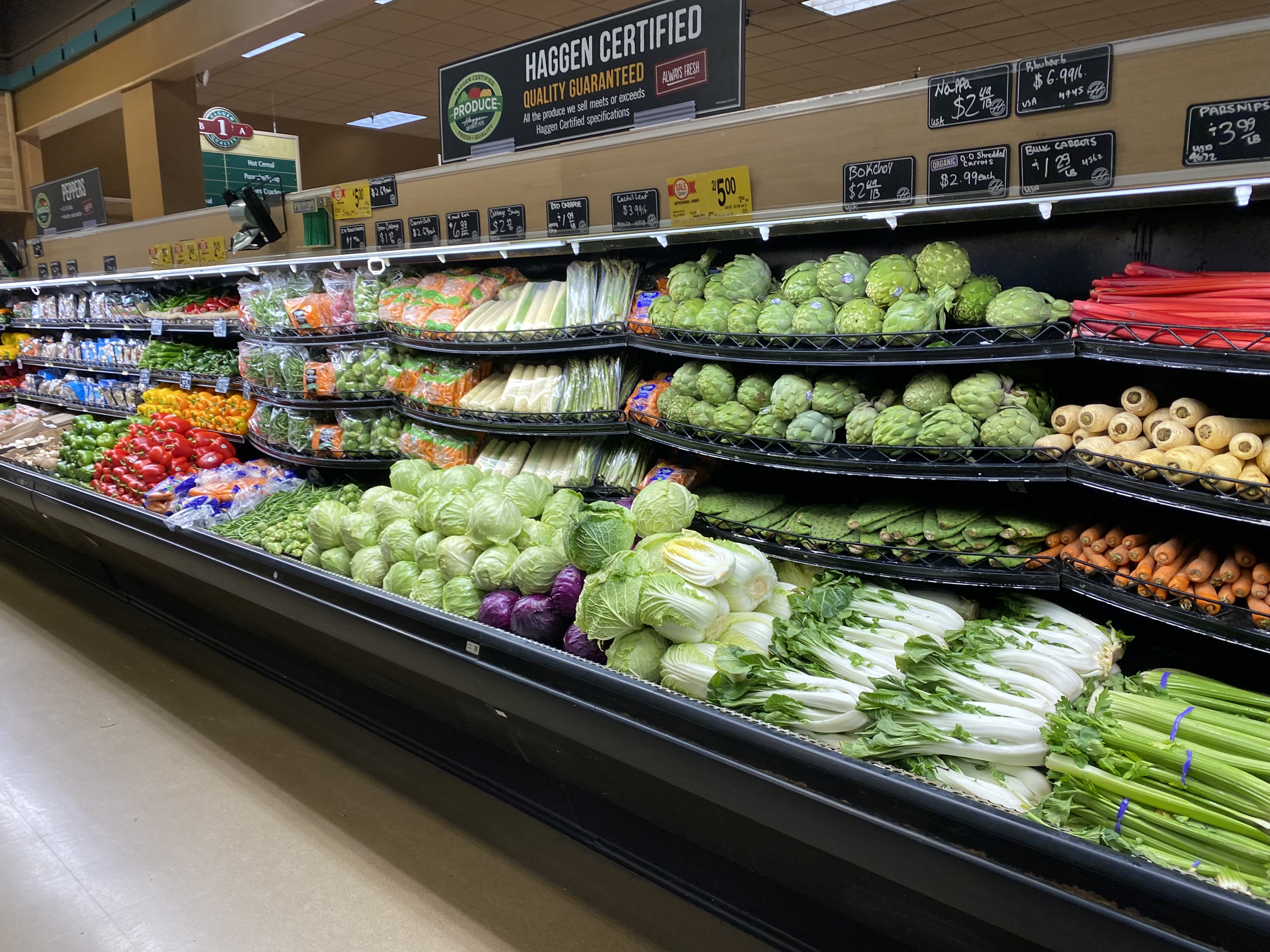
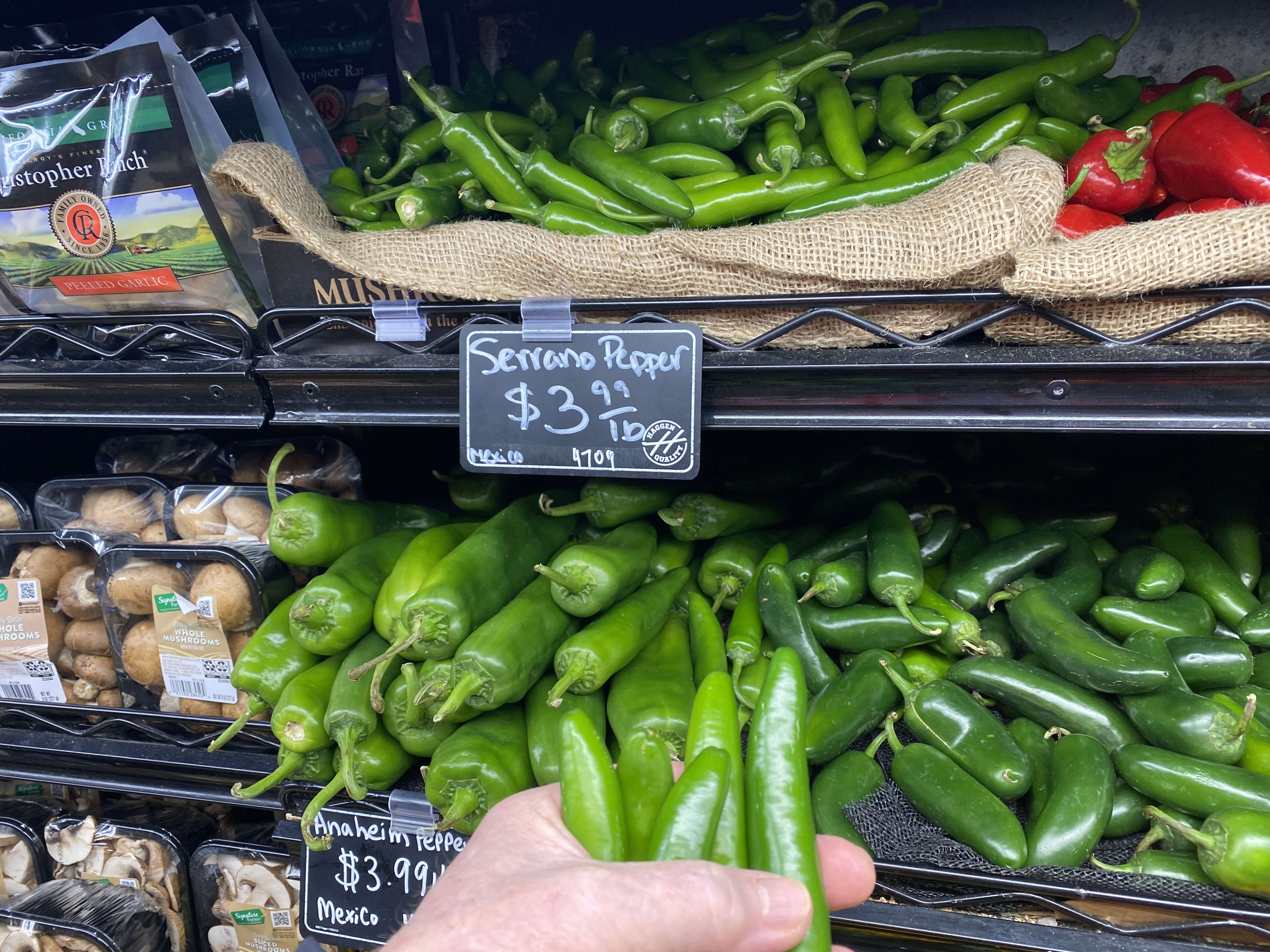
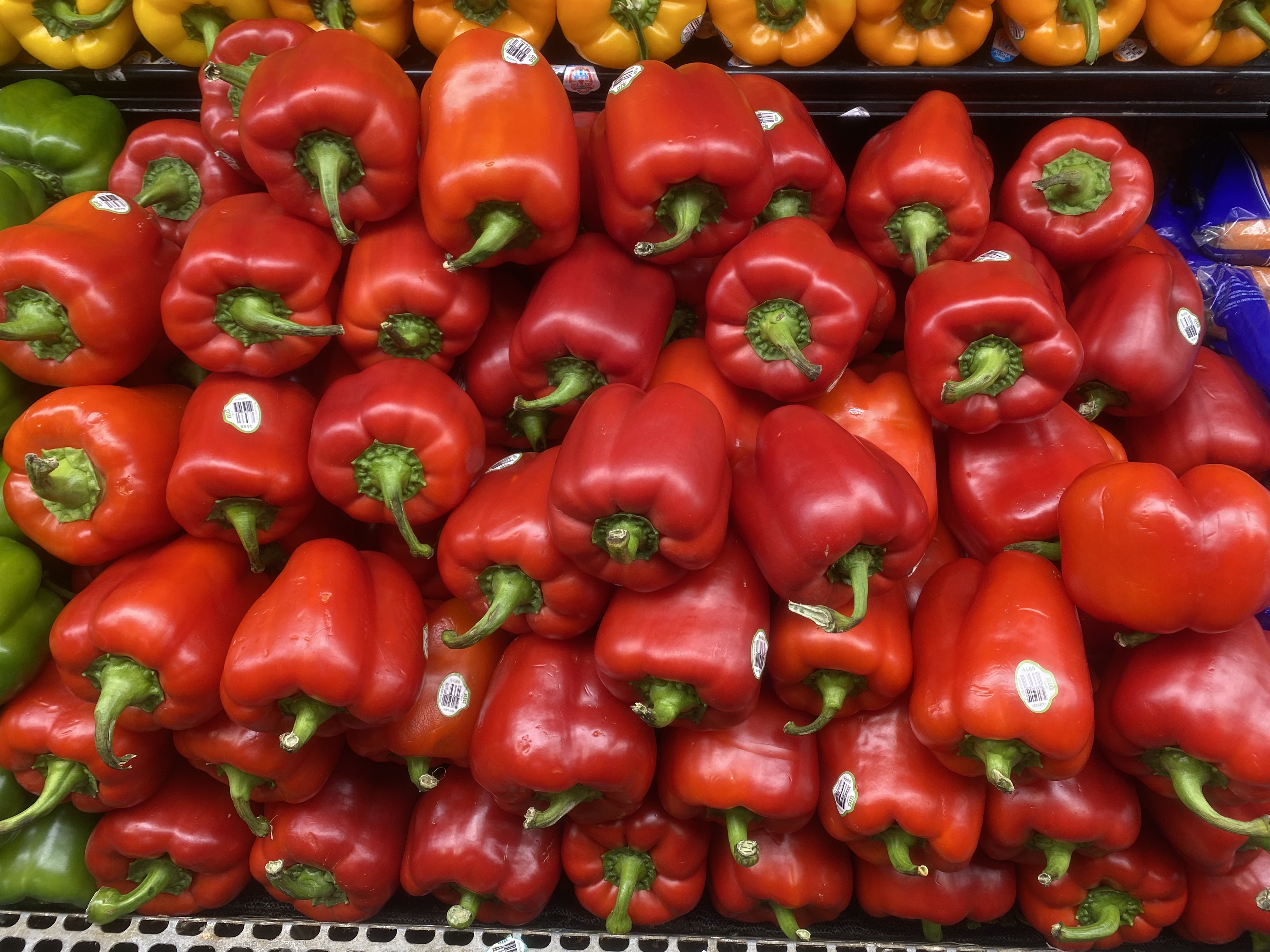
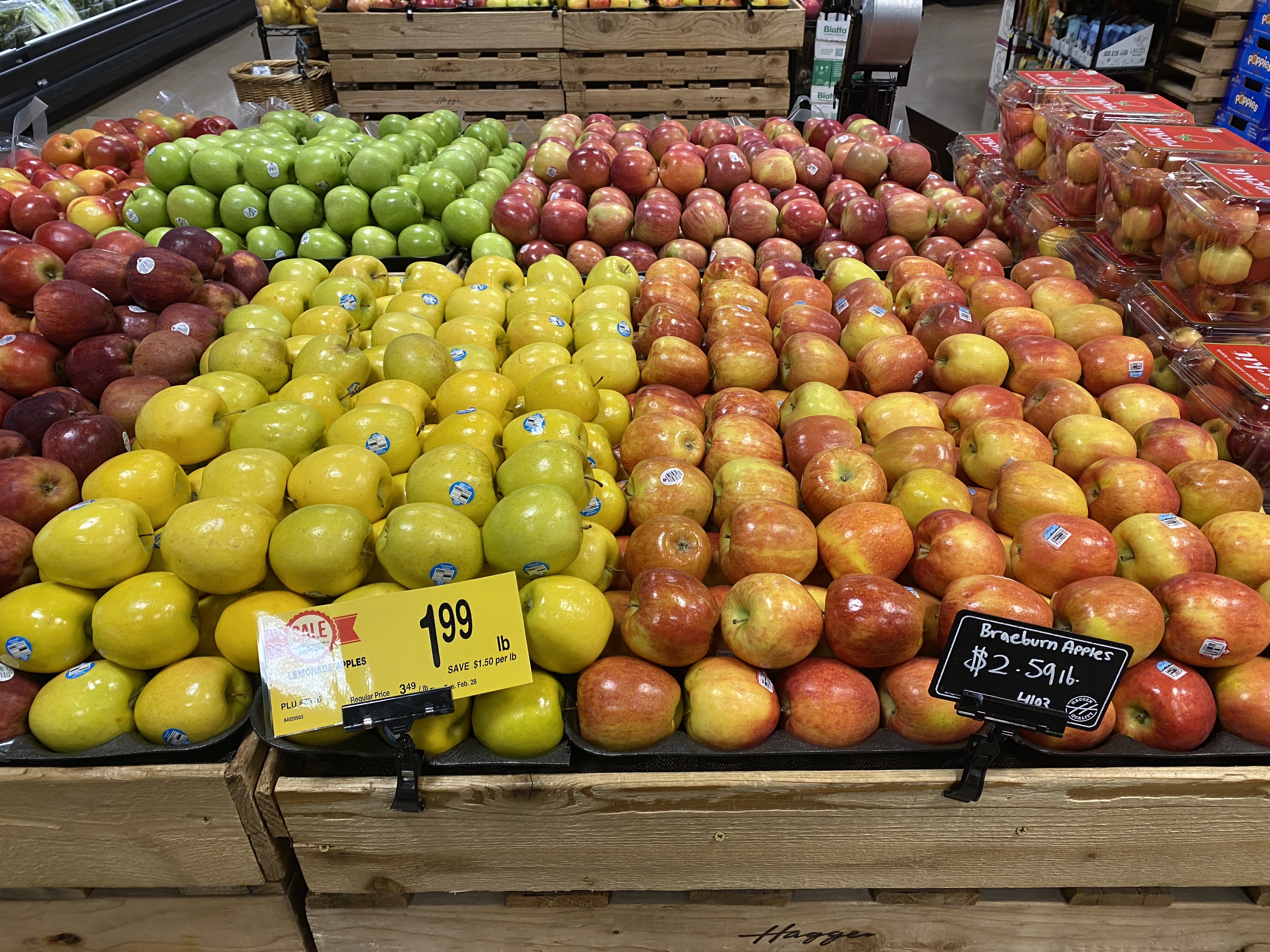
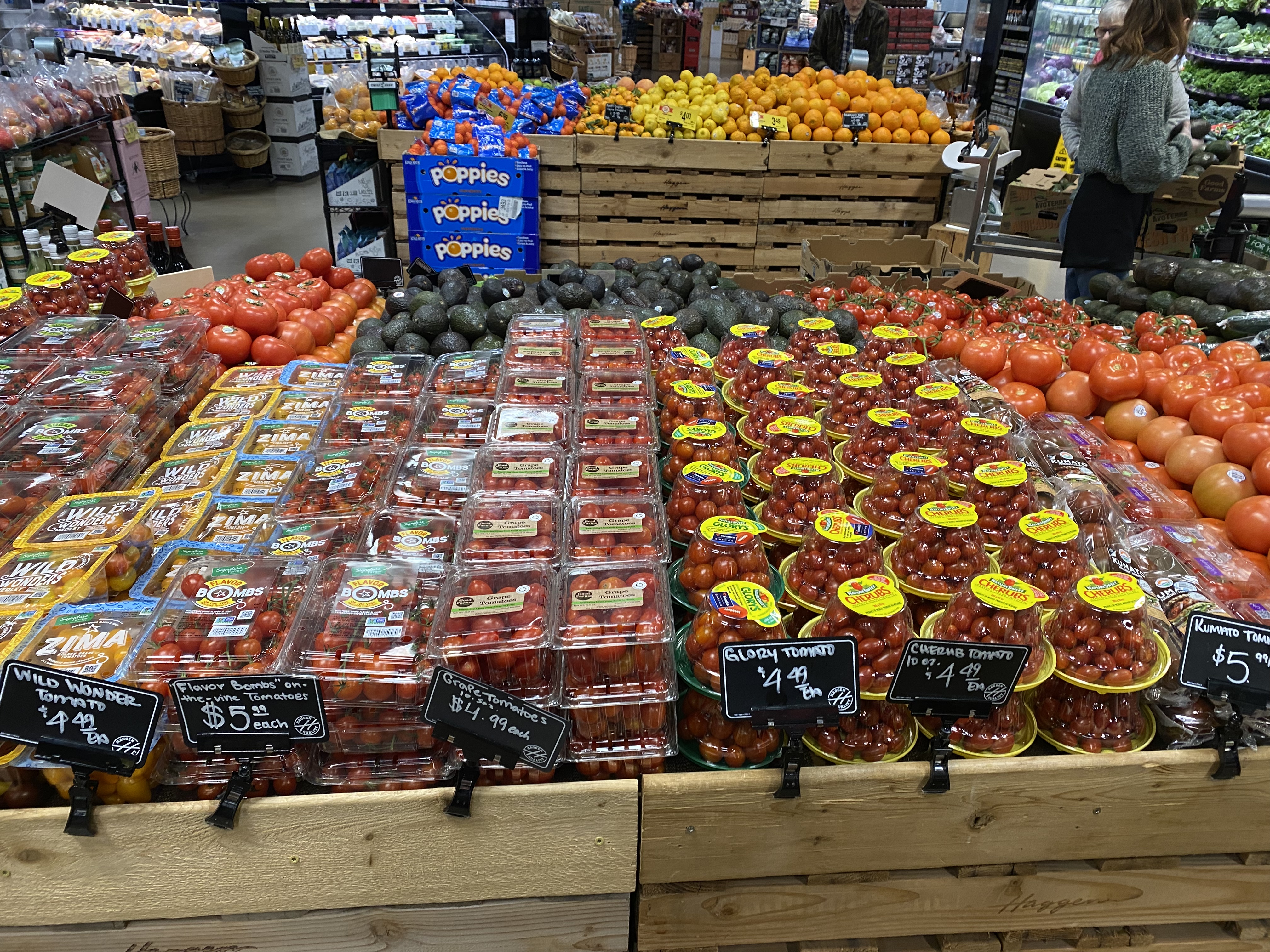
I took the shopping images you see here today – check out the prices. When I see Serrano chiles at $4 a pound, you damn skippy I’m going to be über picky buying them. Bell peppers $2.50 a pop – Same gig. Small limes .89¢ each – uhhh, yeah – picky. If what you do at the store doesn’t more or less mirror my schtick, then you’re not doing enough, and that’s contributing to why what you buy doesn’t taste as good or last as long as it should. Time to up your game, because some necessary adjustments to our typical way of shopping are necessary.

First and foremost, I think that getting produce shopping done right means changing the dominant American paradigm and adopting a more worldly model. North America is about the only place where people expect to go to one place, one time, to get all their food. Think about it – all those images of local markets? The French and Italians, and their routines of visiting specific local purveyors for various things? That’s something we here need more of.

Taking a more holistic approach to shopping means more planning, and taking more time and care when you’re there. The image above shows you the produce I bought on Saturday. I went farther afield than I could have – to a store with better produce, went early to get the best selection, and easily spent ten minutes choosing five chiles, three limes, and one bell pepper – and I enjoyed myself to boot. This means shopping might entail going to the carniceria for fresh tortillas, the Euro market for moghrabieh couscous, or skipping your first choice for produce because what you needed just wasn’t good enough – that’s what we gotta do.

How about shopping frequency? Americans wanna go as little as possible, and expect things they buy to be good for a long time – and that model doesn’t jibe well with quality produce at home. Just as the rest of the world shops several times a week, so should we – buy less, buy fresher, and use it before you get more. If you don’t use it, preserve it to avoid needless waste. Plan meals around what you’ve got and how soon it needs to be used.

Don’t get your produce from your average big name grocery store if you can avoid it. These days, CSAs (Community Supported Agriculture) are far more common than they used to be – they can range from fairly large scale ops in a city to small one-family affairs in towns and rural areas. Patronize them and you’ll get far better, fresher produce – and you’ll be supporting smaller, local businesses too. Often enough, a CSA will bring an order to your door, and you can often choose what and how much you need. If they don’t offer delivery, incorporate that pickup into your shopping routine.

Farmers markets are still largely seasonal, but you should check out your area to see what and when you have available to you – here there are quite a few folks who grow year round in greenhouses. Like CSAs, you’ll be supporting local farm families, and getting produce directly from the growers.

Wherever you buy, you probably need to get a bunch more discerning in your purchases. I really do get approached all the time in stores about my produce buying habits, so obviously I’m doing something markedly different from the average bear. Yesterday, it was a young 20-something guy who appeared at my shoulder and sort of sarcastically noted, ‘that’s the most time and effort I’ve ever seen anybody spend to buy five peppers!’ In all fairness, I think he wanted at them too, and I was in the way – still, it played out differently than he thought it would.

I pointed to the sign that read $3.99 a pound for Serranos and said ‘yeah? Well at that price, I’m gonna be picky as hell, and you should be too!’ Curious now, he asked what I was looking for, and there it was – I showed him the ones I’d chosen – firm, glossy, good ends, no lesions, smells like a chile. Then I grabbed a soft one and handed it to him, along with one with brown spots and one with a soft stem end, and one that smelled a little off – I watched the light bulb turn on. He thanked me, by the way.

The same goes for small limes at .89¢ a pop – I’m after ones that are firm but not hard, glossy, no lesions or soft spots and that smell good, and I’m testing as many as it takes until I find three I’m willing to spend $3 on. $2.50 for a red bell pepper? I’m gonna take all the time I need to find one as close to perfect as I can get. If I’m in the grocery store, I check organic versus not, and peruse varieties I may not think I’m looking for in order to score the best stuff.

Take lettuce – no, really. Stand and watch how people buy that – 9.9 out 10 folks just grab whatever is on top of the pile and throw it in the basket – and that’s way wrong. Pick up several heads -notice some are really light and others notably heavier. Squish them gently – some are firm, some are mushy. Look at the cut ends – lots of brown and soft tissue? Smell it – if anything, you should get a faint earthy scent – if it smells strongly of anything, that’s not good, so move to the next head.

Potatoes and onions? Here again, pick up a few and you’ll notice weight difference. We want firm, clean veggies with no lesions or soft spots that smell good. Carrots and celery? Both of those should be firm, and resist a gentle bend. The ends should be clean and firm, no visible rot or soft spots. Smell ‘em, and they should smell like what they are. Crush a little piece of celery leaf and smell that – smells good, stronger than celery, kinda peppery? Good news – buy that.

Be it fruit or veggies, this detailed physical, visual, and olfactory inspection is critical to determine whether what they’re selling is worth your hard earned money – Don’t skimp on the process and you won’t go home with crap that spoils quickly and tastes lousy.

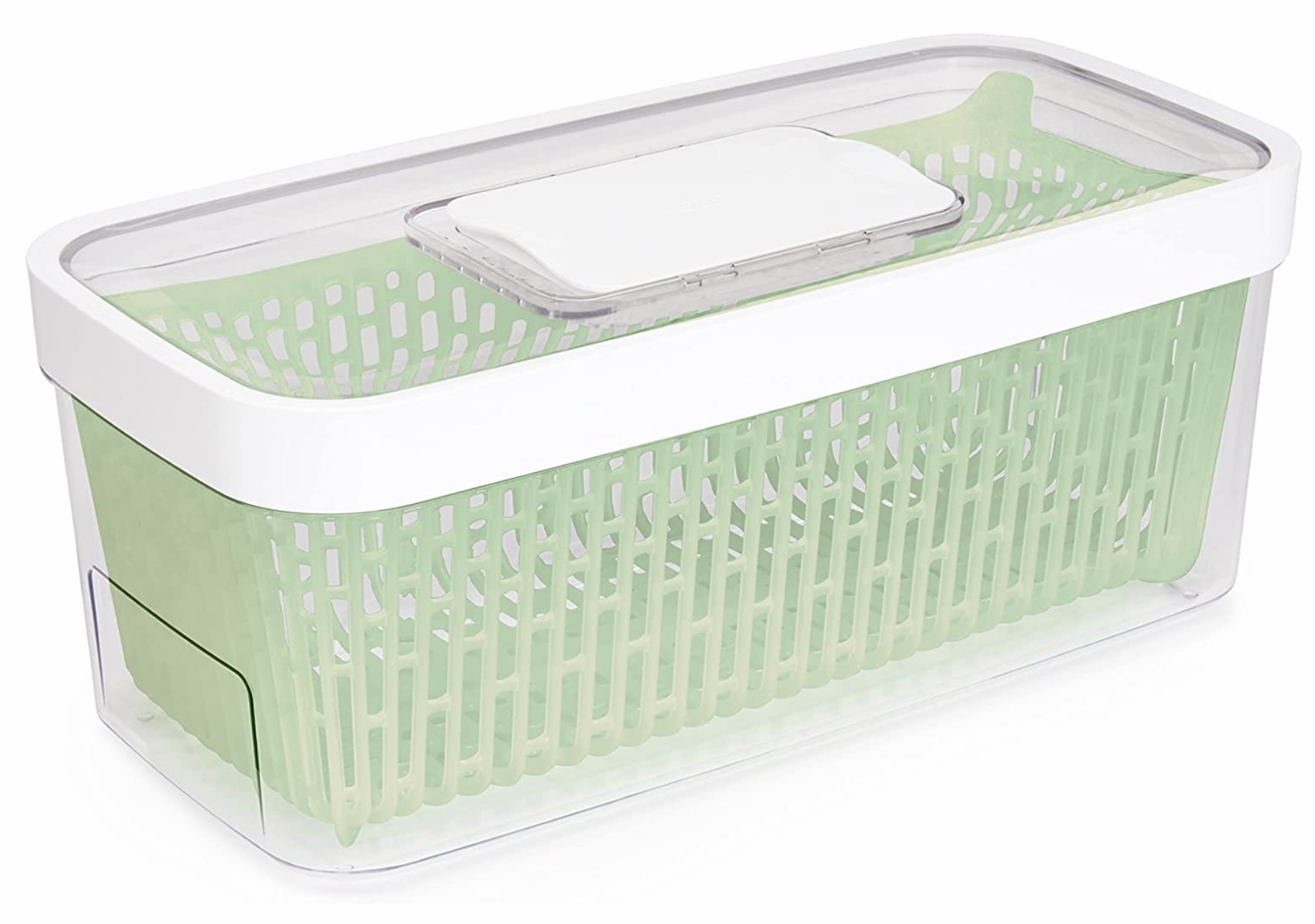
How you store produce at home is equally important. In our kitchen, we have several purpose built produce containers, (ours are made by Oxo). They go in the fridge and act like little crisper drawers – because they’re smaller, with vented sides and bottoms and adjustable ventilation, they work better than anything else we’ve used – Lettuce, cabbage, chiles, root veggies and such all last well in them.

Potatoes like to be around 50° F and dry with good airflow, not in direct sun. Garlic and shallots, ditto. Not always easy to achieve, but if you have a cooler spot in your pantry, that’ll do. Oh, and that old saw about storing potatoes with apples? Don’t do that – together they produce ethylene gas, which’ll make both rot faster.

Heard that tomatoes should always be kept at room temp? Wrong – keep what you’re gonna use in the next day or so there by all means – but leave a weeks worth out at room temp longer than that and they’ll start to rot quickly. Refrigerate them in a crisper drawer or veggie holder, and pull them when you want to use them, letting them get to room temp for optimal taste. Almost all fruit will do best under the same rules.

Again, a big key here is not buying like a ugly Amerikan – don’t shop hungry, don’t get the 6 pack of pretty bell peppers unless you can and will actually use or preserve them in the next five days or so. Buy what you really will use, store it properly, and plan meals to use what you have while it’s still good, to reduce overall waste.

What do you do that I missed or got wrong? Let’s hear it, and see if we can’t all get better at this process, ‘cause we sure need to.

Slow Cookers


The slow food movement took hold in Italy, back in 1989, and it’s been chugging along ever since. The initial focus was, “food that’s good for us, good for our environment and good for the people who grow, pick and prepare it. In other words, food that is good, clean and fair,” all inarguably good stuff. The movement has branched out somewhat in the intervening twenty seven years, and as such, it was inevitable that cookware would also become a part of the deal, and indeed it has – In recent years, what we cook in and how we cook it has garnered every bit as much attention as the food itself.

In the late ’90’s, cookware began one of its greatest evolutions to date. Home cooks found themselves able to buy stuff far superior to the schlock that had ruled the roost previously. One of the very early deal makers in this regard was All Clad‘s Emerilware, a full 11 piece set of which M and It bought in 2002 for less than what a single top of the line All Clad stock pot was going for. Why so cheap? Well, made in China rather than the U.S., frankly, and some minor metallurgical tweaks. That said, they’re still multi-layer steel, aluminum and copper bottoms bonded to stainless bodies – Fourteen years later, they show obvious signs of heavy use, but they’re in perfect working order with years left on them.

Then, as the slow food movement penetrated other parts of the world, this trend toward high-end cookware took an interesting turn as well – a one hundred and eighty degree U turn, to be exact. Suddenly, cast iron was back in vogue, both raw, from venerable makers like Lodge, (who’ve been casting cookware since 1896), and in the considerably pricier enameled iteration, and the most famous version thereof, made by French manufacturer Le Creuset – They’ve been around since 1925, and are still going strong. The fact is, you can’t go wrong with cast iron – The only crime you can commit in this regard is to not have any in your kitchen. For my mind, a cast iron skillet and a Dutch oven are not optional, and that’s sage advice, if I do say so myself.

Straw Box - The original slow cooker.
Straw Box – The original slow cooker.

Then the venerable crock pot got a make over, and the electric slow cooker caught fire as well. While the name brand crock pot is a child of the 1970s, the roots of the cooking method go back way further yet, to what was, and is still called a straw box. As you can see from the picture, this is nothing more than some form of box big enough to fit a slow cooker like a Dutch oven, with room enough to allow a nice, thick layer of straw to be piled all around the cooker. Foods heated in the Dutch oven are stuffed into the straw box and left alone for the day – The latent heat of the food in the well insulated box finishes the cooking in a nice, slow manner – Its great for cassoulets and such.

The Römertopf - Almost too pretty to cook in.
The Römertopf – Almost too pretty to cook in.

And lately, the clay cooker has made a resurgence as well, with venerable makers like Römertopf from Germany offering a wide range of fired clay cookware that’s not only fun to use, but quite lovely, (When I climbed aboard the clay cooker train for the writing of this piece, M noted that “it’s too pretty to cook in,” and it darn near is!) Cooking in clay might just signify the farthest back that we can practically go in pursuit of the good old days – It’s been done for thousands of years, and by cultures from literally all around the globe.

Thus we come to the Big Question at hand – How much, if any of this stuff do you actually need?

Let me answer that with a story. A friend of mine used to own a music store. I was there one day buying an amplifier, and he mentioned that he had some really nice Fender Stratocasters that I, “needed to take a look at.”
As we admired the guitars, I noted, “Well, they’re pretty, but I already got two Strats and a Tele – I don’t really need another one.” He looked at me as if I was the dumbest human he’d ever layer eyes on, sneered slightly and retorted, “What the hell does ‘need’ have to do with another Strat?!” And there you have it, in a nutshell.

How many knives do you really need? Two or three really will do. How many pots and pans? Well, that’s more complicated, and it depends on how much cooking you do and want to do – Realistically, I think anything less than a couple of sauce pans, a couple of sauté pans, and at least one big stock pot just won’t cut the mustard. How many and what kind of slow cooker you need is also complicated. If you have a good, cast iron Dutch oven, truth be told you probably don’t need anything else, but you may want more, and rightly so.

That single Dutch oven is versatile as all get out. From stove top, to oven, to camp fire, it can and will do it all, and a good quality oven will be something that you pass on to your kids and their kids after them – There’s much to be said for those qualities, and that’s why I’ll stand by the assertion above – If you only have one, I’d choose a Lodge cast iron Dutch oven and be most content, indeed.

What then, about enameled cast iron versus plain? My answer will be blasphemous to some, but I’ll stick by it – I’ve owned more than one piece of Le Creuset, and two Lodge Dutch ovens. I don’t own any Le Creuset currently, because all of the pieces we have went through the process of enamel chipping from the bottom, and were eventually retired – With regret, I’ll add, because Le Creuset is beautiful stuff. Now, let me interject that, were you to buy Le Creuset stuff new, you’ll find that it comes with a limited lifetime warranty, and while there are caveats and requirements, I know more than a few folks who have either gotten a brand new replacement for free, or a significant discount on same – In other words, Le Creuset not only makes a kick ass pot, they’re still a most honorable company.

Enameled cast iron with a case of the chips...
Enameled cast iron with a case of the chips…

That said, the enamel is pretty, and will cut down on some preventive maintenance on your part, but you’ll pay for those premiums – Le Creuset is fabulously expensive, just like those top end All Clad stock pots – A lodge Dutch oven like ours will set you back around $40, and their enameled version will run you about $60 – That same size of Le Creuset costs $300 – Get the picture? Me, I’m OK with the maintenance – It’s why I have my knives made with high carbon blades instead of stainless – It’s about feel, and performance, and frankly, I’m OK with maintaining my stuff – That’s how I know how it’s doing in general. Oh, and for the record, I still own my Lodge Dutch oven, and the second one was gifted to my Sis, who was without and therefore in need.

And electric slow cookers, what about ’em? Well, the need factor is kinda like those Strats… Slow cookers are handy as all get out, and they’ve come a long way. Programmability, multiple cooking temps and profiles, and much higher quality cooking vessels and insulating materials have made these toys, errr – tools, a very attractive option. If you’re of a mind to make a soup or stew, cassoulet or roast, and want it to go all day low and slow, you’ll spend less energy doing so, and likely be much safer in using a slow cooker, as opposed to leaving an unattended oven or range in all day. Our Frigidaire Professional series 7 quart cooker cost about $60, and I highly recommend it.

The Frigidaire Professional Slow Cooker

And what about those clay cookers? While most of the world has been cooking in clay for millennia, many people in this country got their introduction back in the ’70s, when a British firm called Habitat introduced The Chicken Brick to America. On sale in Britain since 1964, the brick is a vaguely chicken shaped, unglazed terra-cotta cooker made in England by Weston Mills Pottery. The brick worked, and worked well, but it was kinda gimmicky, so a lot of folks got one as a wedding or Christmas gift, and then never actually used the silly thing. All that aside, the recent resurgence in interest regarding cooking in clay has spurred a revival – While Habitat discontinued sales of the Chicken Brick back in 2008, they’ve recently come to their senses and are again offering this iconic cooker.

The Chicken Brick is made of unglazed terra cotta

While the brick as made of unglazed terra-cotta, the stuff offered by Römertopf and a few other German makers is glazed clay. In either iteration, there are some things you must and must not do when cooking in these vessels, and that frankly is what caused a whole bunch of folks to never even try to use that wedding gift. Clay cookers cook in large part by steam heat, and that means you need to soak the whole cooker in water for 15 to 20 minutes before you load food into it.

Clay cookers must be soaked for 15 to 20 minutes prior to cooking.

Next, it’s best not to load cold foods into a clay cooker, so you’ll also have to get your bird or roast or whatever out of the fridge for long enough to allow it to get fairly close to room temperature. And clay cookers don’t do well in preheated ovens – That can lead to cracks, and cracks are bad – So you need to load that bird into that cooker and into a cold oven. This means that you actually will cook at a higher temperature than you normally roast at – With our Römertopf, we cook chicken at 450° F for about an hour, whereas regular roasting gets done at 350° F or thereabouts. Next caveat – You can’t take a clay cookers out of a hot oven and set it directly on a cold countertop – Doing so risks cracks, and again, they’re bad… Finally, you can’t clean a clay cookers with soap, and for the same reasons, (its porous, yeah?), you don’t really want to cook fish in one unless you’re not going to cook anything but fish in thereafter, because it’s got a memory like an elephant.

The Römertopf cooker - Made from glazed clay
The Römertopf cooker – Made from glazed clay

Right about now, a fair chunk of you are thinking, “OK, Eben – What you’ve just done is convinced me that this clay cookers thing is a major pain in the ass, so why in hell would I put myself through all that just to cook a damn chicken?!

The answer is that the chicken you cook in that pain in the ass clay cooker will be the juiciest, tenderest, moistest chicken you’ve ever cooked. M said so, the very first time I used the Römertopf, and she was right. A clay cooker becomes a small, very efficient, very moist cooking environment, and without any other adjuncts whatsoever, it passes that moisture on to what you’re cooking. Römertopf makes cookers from quite small to large enough for a full sized turkey – we bought a medium size, which has a stated size of slightly over 3 quarts, and cost fifty bucks – Not cheap, but as you can see, this is a well made and truly beautiful thing – Almost too pretty to cook in, as M noted. What it fits is pretty much the fattest local chicken you can find, but not much else – I quickly found that our cooker truly wouldn’t hold anything else, which initially made me nervous, because I come from the mire poix in the bottom of a Dutch oven with some chicken stock school of roasting. What I found out is exactly what all the makers of clay cookers tell you – You don’t need anything in that cooker to make an incredible, notable chicken – The cooker will do the magic – And indeed, it does. I stuffed that bird with apple, fennel, onion, and some fresh herbs. Cooked it at 450° F for an hour, then popped the top off for about 10 minutes to let the bird brown. Pulled it out, put it in a towel on the counter top, gave it a 10 minute rest, and dug in.

Clay cooked chicken - 'nuff said.
Clay cooked chicken – ’nuff said.

It was, as noted, an incredible chicken, but let’s face it – I bought this cooker to write this post, and as good as that chicken was, it could have been a fluke, so I did the scientific thing – I bought another chicken a week later, did all the proper prep, but this time, I did nothing other than to throw that bird into the Römertopf with a tiny bit of olive oil rubbed on the skin, followed by our signature seasoned salt blend and fresh ground pepper – Didn’t stuff it, didn’t tie it, nothin’ – Just cooked the bugger, and…

Look at all the moisture that cooker produces!

It was the best damn chicken I ever made, hands down, bar none, no bullshit.

So, now – What do you need?

PLEASE NOTE!

Have now had quite a few of you ask if I was biased/bought for the purposes of this piece. Those who’ve asked are quite new here, so it’s a fair question. Here’s our answer –

We have never accepted any ingredient or article for free or any kind of reduced price in exchange for a favorable review, and we never will.

We have far more than enough followers and readers to warrant the ability to run ads on this blog, and to receive deals such as I just described – Again, we’ve never done any of that, and never will.

This is a completely independent blog, and everything you see here is bought by us at full retail price from the same places you can get yours. We’re about helping folks discover new things, becoming more food independent, and making from scratch everything that you can, period.

Roasted Pumpkin Seeds


Roasted Pumpkin seeds, AKA Pepitas, are a great treat, and as is the case with many seeds, pretty good for you, too.

My Cousin Sally writes,
OK, Eben – Halloween is upon us, which means it’s time to nom on delicious toasted pumpkin seeds! Yay! But here’s the dilemma… Recipes on the Internet vary from 250 degrees to 400 degrees and 7 minutes to 50 minutes. And some recipes boil the little suckers before toasting! What the heck. Thoughts??
P.S. I used to go with the soy sauce and seasoned salt route, but now I’m a fan of the olive oil and sea salt mix. But I’m perplexed by the temp and time…

Sugar Pumpkins - Many good things inside!
Sugar Pumpkins – Many good things inside!

Great question! Here’s the drill for making great roasted pumpkin seeds every time.

Remove seeds from sugar pumpkins, and by golly, save or use that flesh for wonderful things, like Pumpkin Flan. Roasted seeds make a great garnish for squash bisque, and make a fabulous garnish on Oaxacan style chiles rellenos.

Boiling pumpkin seeds before roasting makes for crunchy skins.

Simmering the seeds in salted water is a must-do – It helps make the seed covers less chewy, more crunchy, and also gets seasoning deeper into the seeds. It also helps remove any residual stringy stuff.

Use 4 Cups of water with 2 teaspoons salt for every Cup of seeds.

Bring salted water to a boil, then add seeds, stir, and reduce temp to maintain a steady simmer.
Cook for 10 minutes, then drain through a single mesh strainer.
Pat dry with paper toweling.

Preheat oven to 400° F – High temp roasting will give the crunchiest, most consistent results.
Note that Avocado oil is especially good for this – it’s got the highest smoke point.

Savory, like sea salt and cracked pepper, works great on pumpkin seeds.

Season each cup of seeds with,
1 Tablespoon Avocado Oil, (Olive or vegetable oil is OK)
1 teaspoon Sea Salt
Optional –
1/2 teaspoon chile flake or powder

Savory seasonings work better than sweet, as the sugars tend to make seeds prone to burning in a high temp roast. Any combo you like is worth trying – Soy-Lime-Garlic, Lemon Thyme & Sea Salt, Smoked Salt and cracked Pepper, etc. Our Go To Seasoned Salt is fantastic here.

If you really want a sweet version, roast seeds with just the oil, then add sweet seasoning after the roast – The oil will help it stick, and you won’t burn your goodies.

Roast, evenly spread on a baking sheet, for 18 to 20 minutes, until nicely toasted.

Pumpkin Seeds roasted with Sea Salt, Avocado Oil, and Chile Flake

Remove from oven and baking sheet, allow to cool before decimating.

And as my Sis, Ann Lovejoy notes over in her wonderful blog, “Store pepitos in a tightly sealed jar out of direct light for up to 2 months or freeze them for longer storage.”

And Happy Halloween!

Garde Manger for the People


Alert blog follower Hannah sent this note from southwestern Oregon – ‘I read about you guys changing up stuff you made earlier, for subsequent meals – The last one was an Instagram of tacos where you did “a complete 180° on the seasoning” but you didn’t explain how or what you did. The same thing happened with the Chinese barbecued pork you converted to Italian, but you didn’t tell how to do that either. We’re not all wizards, so you need to explain this better!’

Hannah, with my sincere apologies, you are absolutely correct. Allow me to rectify that – And if it seems like Hannah’s reading me the riot act, she’s got a right to – I didn’t explain any of that stuff. Now, in my defense, these were both follow up images and short descriptives, secondary to a post, that as she mentioned, were on other social media sites – FB, Instagram, Twitter and the like. I though of them as throw away stuff, home food porn, but no longer – Hannah is 100% right – If I’m gonna crow about our mad skills, I gotta share the goods.

Before we talk about conversion, we gotta back up a few steps. If you’re making a French dish, what should the core seasonings be? What if it’s Italian, Spanish, Indian, North African, Mexican, South American, Caribbean, and so on? There are so many regional variations in all those examples that this kind of thing can be a bit hard to pin down – In northern France, you might find thyme, sage, and coriander, while in the south, it’s likely to be something more Provençal – marjoram, rosemary, thyme, oregano, and lavender, maybe. Same thing in every place I mentioned, frankly. With the very welcome spread of cookbooks and recipes focusing more on regional cuisines than some perceived national pastiche, us home cooks are blessed with many more options than even a decade ago. All that can make things a bit tougher to convert to something wholly different, but frankly, we don’t need to do that to succeed at the game.

Pork rib tacos? Absolutely! Pork rib tacos? Absolutely!

So what is the trick to turning those ribs into tacos? Not as much as you’d think – Hell, you could probably do not a damn thing, call it fusion, and be on your merry way… But seriously, the trick, such as it is, is simply knowing what the major and minor seasoning notes are for the thing you’re working with, and building up or down from there – I say up or down purposefully, because if you want something Chinese to taste reasonable Italian, the task at hand may be to add, but it could also involve subtraction. Let’s use those two examples Hannah cited to dig into this thing.

In both instances we’re talking about proteins. This comes up as a thing we tweak fairly often because of how we cook and plan meals – A big ol’ batch of poultry, pork, or beef is oft what we cook early in the week, and then make a buncha meals thereafter, (and we covered this pretty well in our Meal Planning post btw). First step in swinging the seasoning profile of a protein in another direction is having a pretty good grasp of what’s powering it currently. If you made it, that’s easy enough, but what about a leftover from somewhere else, or taking a step farther out – tasting something and thinking, ‘I could do this at home, and I’d like to’ – How do you parse that? Far and away, the easiest way to suss it out is to ask the Chef – Chances are good they’ll tell you, and then you’re off to the races.

But what about sleuthing things out for yourself, how does that work? There’s no cut and dried formula for doing this that I can think of offhand, other than to state the obvious – The more herbs, spices and other seasoning constituents you own and use with some frequency, the better you’ll be at identifying them in the wild – Consider it a delicious form of behavioral conditioning. Again, not everybody has the same palate, but nonetheless, practice makes perfect, so build a great pantry and familiarize yourself with as much as you can – Getting curious about world cuisine is the way to discover new tastes and combinations.

OK, so Hannah’s Bane – starting with the ribs to tacos. The ribs were a first run experiment by M from something she’d found and tweaked to her liking – Ribs done in the slow cooker, with a nontraditional twist on the marinade and sauce. She did, for two racks of ribs,

For the Rib Marinade

1/2 Cup Water

1/3 Cup Live Apple Cider Vinegar

1/4 Cup Sweet Onion, minced

6 Cloves fresh Garlic, minced

2 Tablespoons Yellow Mustard

2 Tablespoons coarse Sea Salt

2 teaspoons Lemon Thyme

1 teaspoon ground Tellicherry Pepper

For the Glaze

1/2 Cup Balsamic Vinegar

1/4 Cup Agave Nectar

1 teaspoon Arrowroot

1/2 teaspoon Chile flake

Pinch of Sea Salt

They were killer by the way – Try this on nice fresh baby backs and then thank M later. We had a slew of these things, and after 3 days of ribs, ribs, and ribs, we were kinda tired of that, so I decided to strip all the meat off the remainder and turn it into taco fodder. Now, looking at that ingredients list, you can see right off that I took poetic license with the line Hannah quoted, “a complete 180° on the seasoning,” ‘cause yeah – in a word, Eben? Bullshit. That’s already pretty damn close to a bunch of Mexican regional seasoning blends you’ve got on there. What I did was to throw diced chiles and more onion in a sauté pan, sweat them, then added chicken stock, cilantro, lime juice, and tomatoes to the mix, and let that simmer until everything was heated through and married – Boom, taco ribs. Get the picture? No, they won’t taste at all like they did as whole ribs, and yeah, now they are reasonably more Mexican in taste profile.

Char Siu in all its glory Char Siu in all its glory

Now, how about that Chinese barbecued Pork to Italian thing, then? This one admittedly took a bit more work to pull off effectively, but nothing earthshaking, and again – I made the original dish, so I knew exactly what was in there, right? The pork was my latest swing at Char Siu, derived from a Grace Young recipe in Breath of a Wok. I’ve not posted this previously, so here’s first look for y’all, (and John Joyce? This one’s for you, Buddy!)

For each Pound of Pork Shoulder

2 Tablespoons Dark Soy Sauce (I recommend Pearl River)

2 Tablespoons Tamari

2 Tablespoons Hoisin Sauce

2 Tablespoons Pixian Doubanjiang Chile Bean Sauce

2 Tablespoons Shao Hsing Rice Wine

2 Tablespoons Bakers Sugar

2 Tablespoons Agave Nectar

2 teaspoons Sesame Oil

1/2 teaspoon Ground Grains of Paradise

The Pork marinates in this mix for 48 hours, then is seared over an initially hot grill, basted with the remaining sauce and finished on a medium grill until internal temp runs 145°, then rested. If you use charcoal, a two zone grill set up will do this to perfection.

Seriously tender Char Siu Seriously tender Char Siu

This stuff was fork tender and incredibly tasty, but again, after so many meals, I just needed to switch things up, and so I decided to make tomato based pasta sauce with the remainder. Granted, there are some potent Chinese regional tastes involved in that pork, but again, it’s not as discordant as it may seem at first glance. Central and northern Italian tomato pasta sauces can and do have some of those warm, earthy, and spicy notes, albeit not the same ones.

I gave the pork a quick rinse and ground it with the attachment on my Kitchenaid mixer, (you don’t need to do that, a simple rinse and mince would do just fine). As you can see from the plated image, the marinade, even after 48 hours, doesn’t get all that deep into the pork, so doing what you can to expose a bunch of the unseasoned meat gives solid ground for new flavors – The old stuff becomes interesting background that you can’t quite put your finger on, rather than a very forward Chinese.

Italian from Chinese? Yes indeed. Italian from Chinese? Yes indeed.

Next comes the Italian rebranding – A big stew pot over medium heat, with a generous slug of olive oil gets soffritto – the classic Italian aromatic base mix of onion, carrot, celery, parsley, and garlic. Add stock, tomatoes, the pork, bay leaf, oregano, rosemary, lemon thyme, lemon zest and juice, salt and pepper, and basil to finish, and wham, you’ve got a complex, earthy pasta sauce that tastes like you put far more work into it than you did – Never a bad thing.

Now, who caught the trick I used in these examples? Somebody, anybody, Bueller? There was one ya know – A small but potent anchor to all such conversions – It’s the aromatic bases. For the switch to tacos, it was onion and chile. For the Italian, soffritto – See that? Fortunately for you, we wrote a very nice piece on aromatic bases that you can use as a launching pad for further exploration. It really is a key – When you take those deep, fundamental roots of a flavor profile and set them as your new solid base, switching gears becomes a simple matter of preference thereafter.

Now, resources – A thing I’ve mentioned here several times and online a lot – Karen Page and Andrew Dornenburg’s magnum opus, The Flavor Bible. This is a reference work with some serious horsepower – Whole menus can be worked up from the stuff therein, and should be – For my mind, with that book, and Harold McGee’s On Food and Cooking, you’ve got a very solid basic research library to design a world cuisine of your own from.

Garde Manger - The Art of Transformation Garde Manger – The Art of Transformation

Now – One final note – This concept is not mine, and it’s not new. In fact, it’s very old, and it stems from common sense, first and foremost. In French, it’s called Garde Manger, and it loosely translates as ‘Keeper of the Food.’ This is way cooler than you can imagine if you really dig cooking. The first fine dining restaurant I worked in, back in the mid ‘70’s, was French, (and that cuisine is where the term comes from and from where, arguably, the art reached its pinnacle). The second was in Sun Valley, Idaho – Another kitchen run by French Chefs. In those places, the Chef de Garde Manger was the best there was – Old guys with a wealth of experience, tremendous patience, and endless inventiveness. Garde manger is still around, albeit not as prominent, or as likely to display that level of experience. It’s always the cold dish station – Salads, hors d’œuvres (horse doovers as my Sis and I like to quip…), appetizers, canapés, pâtés, terrines, and such. Although it’s less prevalent now, the key role of that Chef was transforming leftovers into something new, something appealing, something that would sell – And it was magical, indeed – That spirit is sparked within me every time I do something like we discussed today. If any of this strikes your fancy, then I’ll recommend another great resource – Frederick Sonnenschmidt and John Nicolas’, The Art of Garde Manger – It’s the real deal, and a delightful read. Dig in.