Ribs R Us


Noticed the other day that ribs are big in the stores, now that summer has officially begun. Seems like a good time to offer a fave take on those bad boys. Now first off, I admit here and now that M does ribs better than I do in terms of process, so I’ll just synthesize her method and my seasoning.

So why are ribs so dang tasty; there’s not much there, so what’s the secret? In a word, bones; bones and some marrow influence, too. Little cuts of meat attached to the stuff that we use to make amazing stocks, soups, stews, and reductions from, that’s the ticket. When cooked low and slow, the influence of the bones and marrow make their presence known in a way nothing else can really emulate.

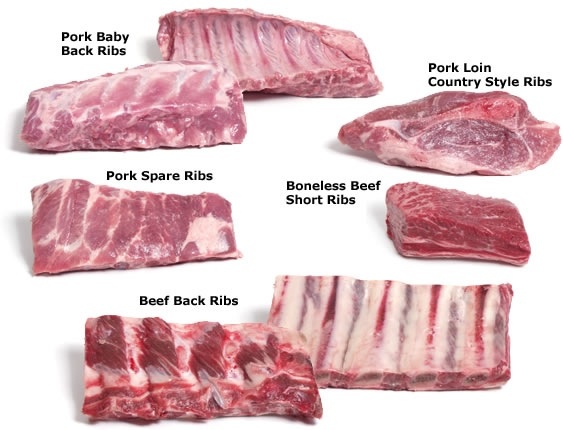
Do you know your ribs? All of ’em? Here’s a quick run down on the variations you’ll find out there.
Spareribs
Or spare ribs, either spelling works, and either way, it always means pork, period. Spareribs are cut from the side or belly. Nowadays, they’re usually sold trimmed and ready to go, but you still may find them offered with the brisket bone attached; if you get them that way, just cut the bone out and save it along with the rest for making stock. Spareribs may or may not have the skirt attached, (a thin flap of meat that runs along the meaty side). If the skirt is there, you’ve got St. Louis style ribs, and if it’s trimmed off, you’ve got Kansas City style. If you ever wondered what those two terms were all about but were afraid to ask, you may now consider yourself enlightened. If you’re serving spareribs as an appetizer, two ribs per person will do the trick; a half rack, (six ribs), is a decent entrée portion.

Baby Back Ribs
Arguably the most popular pork rib variety, baby backs are less meaty than many other styles, but tend to be leaner than their bigger cousins as well. Baby backs are, in fact, cut from the back of the rib cage. They tend to include a high proportion of loin meat, which explains their lean and tender nature. Reasonable portions for baby backs are 3 ribs per as an appetizer, or a half slab entrée.

Country Style Ribs
This cut is a bit of a misnomer. Cut from the sirloin or rib end of the pork loin, this meatiest variant of the rib family doesn’t really include ribs at all. You can often find this cut in single portion packages, as well the equivalent of a half or full slab; they’re perfect for those who want to use a knife and fork instead of getting all handsy with their meal. Country ribs can be pretty fatty and may need some trimming prior to cooking. Portion sizes are one apiece for appetizer, two as an entrée.

Beef Back Ribs
These big ribs come from the back of the loin; they’re the beef version of baby backs. Meatier than pork ribs, they contain five or six bones per slab. That said, while the bones are big, they’re not super meaty. They will, however, be plenty tasty if given a good rub and lightly smoked. Portions are two per as an appetizer and five or six as an entrée.

Beef Short Ribs
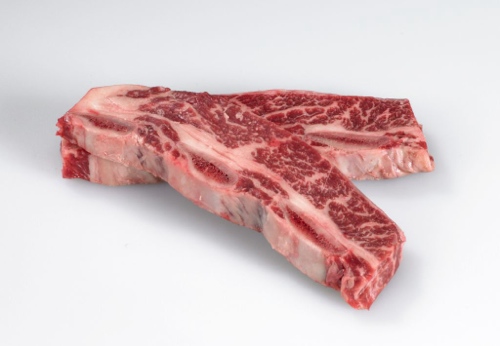
This cut used to be a tremendous bargain, until every chef in the world decided to make them popular. Now, they can often be pricier than they’re worth – If you see other cuts for much less, buy those. Short ribs come from the bottom end of the rib cage, or plate cut. Short ribs are not a tender cut and really shouldn’t be grilled or barbecued; they need low and slow braising or smoking to really shine. The cut can be fatty, so trim as needed before you cook. A quarter pound appetizer and half pound entrée will do the trick.
Lamb Ribs
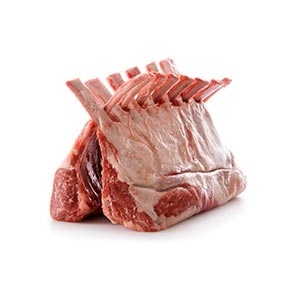
A full rack of lamb contains eight ribs. The ribs themselves are really quite skimpy, so the chop is typically left attached;you’ll find them offered as rib chops or as a whole rack. The racks are a fairly famous cut and make a great roast. Fancy stuff has been done with these for many moons, like cutting the rack into 3-3-2 and tying them tips up as a crown roast, or trimming the meat at the tips of the chops back to the bone, which is the famous French chop or rack. A double French rack is two racks tied tips up back to back. If you’re not familiar working with the lamb rack cut, make sure to ask if the chine, (backbone), between the ribs has been cut, so that the roast is easy to carve. If you’ve not cooked a lot of lamb before, be aware that it’s usually quite a bit gamier than beef and pork. The heart of the gamy flavor is fat, so trim appropriately if you’re not comfortable with that. Soaking lamb in buttermilk for at least 2 hours and as much as overnight will help a lot to tame the game and keep them moist and juicy. While you can certainly cook and serve single rib chops, you’ll get a much juicier result if you leave them as doubles; you can then cut them into singles for an appetizer and leave them doubled as an entrée.
Game Ribs
Then there’s game; I’ve personally had and cooked venison, elk, boar, buffalo, bear and ostrich. The first thing to remember with game ribs is to use them; I don’t know how many hunters and cooks I’ve known who don’t even consider this, but we all should. First off, if you harvest, you’ve got the responsibility not to waste, and that’s a biggy. Seconly, if you love game, ribs can and should be a signature taste of the beastie. As with lamb, game ribs can be gamy, so trim the fat, if any, and marinate. Buttermilk works great here, but wine and herb, or a nice flavorful brine will shine as well. Keeping in mind that fleet-footed game like deer and elk are quite lean to begin with, so marinating will do a lot to keep things tender and juicy.


Here’s a wet rub and BBQ sauce that will go great with any of the above.
This recipe will serve for a couple of racks of ribs.
We’ll do a low and slow cook with a grilled finish for knockout flavor.

2 Tablespoons extra virgin Olive Oil
1/4 Cup Honey or Agave Nectar
2 Tablespoons Smoked Sweet Paprika
1 Tablespoon cracked black Pepper
1 teaspoon Onion powder
1 teaspoon granulated Garlic
1 teaspoon Sea Salt
3-4 Shots Tabasco or dried Chile Powder
Optional: 1 teaspoon Smoke Powder

Preheat oven to 225° F.

Rub ribs generously with the olive oil.

In a mixing bowl, combine the honey, paprika, pepper, onion powder, garlic and Tabasco or chile powder, and the smoke powder if you’re using that. Rub evenly over the ribs, taking time to work it on to all surfaces.

Wrap racks, meaty side down, in a large piece of metal foil (The wide, heavy duty stuff does best; if you’ve got light weight stuff, double it). Seal the edges of foil with a double fold.


Cooking Stage 1, oven low and slow.
Cook smaller, more delicate ribs like baby backs for three and a half hours; the bigger ones can go four hours.

Preheat grill on high, then reduce heat to low with lid open. If you’re just using your oven, leave it at 225° F.

Remove ribs from oven and drain off any excess drippings. Carefully flip ribs over to bone side down, using a big grilling spatula or two smaller ones. Your ribs should be at the pint where they’re starting to fall off the bone, so be gentle.

Trim the foil back to so you’ve got a baking sheet kind of affair, with a 3/4″ inch lip of rolled foil all the way around the ribs, to catch juices and keep the sauce in place for the remainder of the cooking.

Apply an even, thick layer of sauce to the meat side with a basting brush.

Cooking Stage 2, sauced and grilled, (or not)
Transfer ribs to the grill if you’re going that route.
Cook on low heat, with the lid down, for 20 to 30 minutes more.

If you’re using the oven for the whole job, cook uncovered for 20 to 30 minutes more.

Remove from oven and serve promptly with more sauce, house made potato salad, and baked beans.

A nice local Pilsner, Lager or dry white wine is the perfect accompaniment, refreshing your pallet and cutting through the fat for that next juicy rib.


Try this amazing cranberry powered sauce; folks are gonna make yummy noises and ask “what IS that?” in a good way…

Eben’s Cranberry BBQ Sauce

1 bag Cranberries
1 Cup Sweet Onion
1 bottle Porter or Stout
1 large Navel Orange
1/2 Cup dry Red Wine
1/2 Cup Balsamic Vinegar
1/2 Cup Honey or Agave Nectar
1/3 Cup Worcestershire Sauce
1/3 Cup Soy Sauce
2 cloves Garlic

Peel and dice onion, peel and mince garlic. Zest and juice the orange.

Use a nice, fresh local Porter or Stout.

Throw everybody into a large stainless steel sauce pan over medium high heat and blend well.

As soon as the cranberries start to pop, reduce heat to achieve a nice, steady simmer. Allow to simmer for 1 hour, stirring occasionally.

Process sauce with an immersion blender, or carefully transfer to a blender, if that’s what you’ve got. Be very careful if you use a blender; process in batches and watch out for the hot sauce. Process until the sauce is uniform and smooth. If you don’t have an immersion blender, AKA. A motor boat, go buy yourself one for Christmas, they’re indispensable.

If you like your sauce a bit chunkier, as we do, you’re done; if you like it smoother, run the sauce through a strainer once.

Transfer to a glass bowl or jar and refrigerate for at least 4 hours prior to use, to allow the flavors to marry and the sauce to finish thickening.

And remember, save those piles of bones for making pork or beef stock; they’re way too good to toss!

Arroz de Carreteiro – Coachmen’s Rice


My friend Ken Bonfield posted about making humble black beans and rice on a Monday – This Monday – and that prompted this re-do of a big time fave of mine –

Ever since humans have been a thing, we’ve taken steps to make our sustenance portable. Being natural omnivore, it’s a safe bet that we’ve always been grabbing a handful of berries here, a hunk of grain there, maybe a little hunk of meat, and stuffing it all into a leaf so that we could take it with us.

Some of the most iconic snacks and meals that remain to this very day are perfect examples of this – Pemmican comes to mind – a high calorie mix of meat, fat and fruit designed to be portable and supply a serious dose of power on the road. Go farther back and you get the Mongols, who depended on meat and dairy from their animals to power their travels – And from there came yoghurt, and meat for soups and stews.

Virtually anywhere you look, our ancestors were drying, (or salting), and then combining the stuff they liked to eat so that it would be easier to take it out on the road – Doing so significantly reduced the consequences of not being lucky on a forage or hunt far from home, a situation that could be quite dire, indeed. From that legacy comes a world of one pot meals designed to efficiently use what’s available, and make it good. From jambalaya and gumbo, to paella and bouillabaisse, the manifestations are as broad as our appetites.

In the southwestern United States of the 19th Century, that history manifested in chili, a one pot meal of dried meat and chiles reconstituted with water and heated through. It packed calories, spiritual heat, and kept many a cowboy content during cold nights on the range.

Farther south, all the way down to southern Brazil, there’s an analogous food history. There, men driving ox carts across what is now known as the State of Rio Grande do Sul, were known as Carreteiros, or coachmen. They too had a signature, portable staple – Arroz de Carreteiro – Coachmen’s Rice.

Where Tex-Mex chili in its pure form simply blends meat with heat, arroz de carreteiro was initially just jerked beef, rice, and water, heated in an iron pot over an open fire. It was fast, easy, and filling, everything a gaúcho needed. The dried meat was known as Charque, a local specialty from the coastal part of the region.

Today, a Gaúcho is what folks from Rio Grande do Sul are known as, and their signature dish has, like chili, grown to something more than its humble origins. Arroz de Carreteiro is made with other cuts of beef, even leftovers, for which the dish is ideal. It’s still a hearty, savory, delicious meal, even way up here in Los Estados Unidos. This is, in fact, a fabulous dish to make camping, over coals from a real fire – that combination of cast iron and wood-fired heat is pretty unbeatable. If you go that road, you’ll want 75% of your coals under the ditch oven, and 25% on top. Finally, this can also be made with wild rice, and that makes things a whole ‘nuther level of amazing – The complex, smoky nature of really good wild rice makes an unforgettable meal.

Arroz de Carreteiro – Coachmen’s Rice
Serves 4 to 6

8 ounces Beef, (trimmed Chuck is my choice)
8 Ounces Long Grain Rice (or wild rice)
2 Roma Tomatoes
1 each Green, Red, and Yellow Bell Peppers
1 small, sweet Onion
2 Spring Onions
2 cloves Garlic
2 Tablespoons Avocado Oil, (Peanut oil works well, too)
2 Tablespoons fresh chopped Parsley
1 Tablespoon Black Pepper Corns, (fresh ground is fine)
2 teaspoons Sea Salt
1 teaspoon Sweet Smoked Paprika
Optional:
1 teaspoon dried, hot chile flakes or powder

Smash the garlic cloves under the flat side of a chef’s knife. Remove the peels and nibs.
In a molcajete, (or mortar and pestle), grind together the garlic, salt, and pepper, then set aside for flavors to marry.

Garlic, salt, and pepper

Garlic, salt, and pepper

Trim excess fat from the beef, and dice it into larger bite sized pieces, about 1/2″ square.

Rinse all produce. Stem and seed the peppers, peel the onion.
Dice the peppers, onion, and tomatoes, (about 1/3″ pieces).
Peel and trim the spring onions, then cut them into thin wheels.
Chiffonade the parsley.

Veggies

Garnish

In a cast iron Dutch oven, (or sauté pan with a tight fitting lid), over medium high heat, heat the oil until very hot.

Add the onions and sauté for about one to two minutes, until they begin to brown.
Add the seasoned garlic paste and stir to incorporate.

Gorgeous local beef

Add the beef and paprika; continue to sauté over high heat for two to three minutes more, stirring steadily, until the meat is evenly browned.

Add the peppers and tomatoes and stir to incorporate.

Arroz de Carreteiro

Now add the dry rice to the mix, and stir well to incorporate.

Arroz de Carreteiro

Add water until all ingredients are coved by about 1″ of water.

Arroz de Carreteiro

Allow to mixture to come to a boil, stirring sparingly.

Cover the oven or pan and and reduce heat to low, just enough to maintain a simmer.

Simmer for about 20 minutes, or until almost all the water has been absorbed. If the dish seems dry, or the rice a bit too chewy, add more water.

Arroz de Carreteiro

Once the rice is nice and tender, serve piping hot, garnished with parsley and spring onions.

image

Puerco Pibil – Yucatán Magic.


My friend Shane is a fine cook in her own right, especially so since she lives on a moored boat in the Skagit river and has a teeny, tiny little kitchen. The other day, she posted about ‘A splash of tequila for the puerco pibil and one for the chef,’ and a lightbulb went off. It’s been a long, long time since I’d prepared this delightful Yucatecan specialty.

The heartbeat of this recipe is the marinade and the low and slow cooking method – Things as old as the land it springs from – the word Pibil may well stem from the Mayan noun for roast, but it’s come to mean the specific marinade used for this dish. The pinnacle of the art is Cochinita Pibil, a suckling pig wrapped in banana leaves and cooked low and slow in a pit dug in the ground, with hot rocks as the heat source – Very similar to traditions from the Caribbean, and Pacific Islands, among other hot spots.

The rocket fuel here is a highly acidic marinade, Pibil, focused on bitter orange, (AKA Seville orange) – That’s pretty legendary stuff, and for good reason – It originated in Southeast Asia, but has taken root all around the world as cooks have discovered its legendary qualities and transplanted variants across the globe. Bitter orange is the go to source for British marmalade, as it has very high pectin content and sets quite firmly.

If you have a decent Latin grocery near you, there’s a 90%+ chance they sell fresh naranja agria, (and same goes for a Persian or Middle Eastern grocery, where they’ll probably call them Persian oranges). I get plump, juicy Valencias for around 50¢ a pop at La Gloria in Bellingham, WA. Do make sure you confirm they’re agria, (albeit they’ll probably have the little sticker on them telling what variety and place of origin they are). They’ll last like most citrus, good for three to four weeks refrigerated in a drawer designed for holding produce. Four or five is plenty to provide enough juice for most recipes. As with all citrus, look for firm, heavy fruit. More so than sweet oranges, bitters may have some green on their skins and still be ripe.

Now, what to do if you get a sudden hankerin’ to build something that calls for bitter orange when you ain’t got none? Then, it’s definitely time to fake it. As most commercial marinades indicate, the proper substitution is a combination of citrus juices, and maybe even some vinegar. The key here is the taste of orange forward in the mix, with the sourness of lemons, limes, and maybe vinegar – Again, naranja agria is really, really acidic – truly sour, with bitter notes from the oils. What you really need to do, assuming you’re into this, is try fresh squeezed sour orange juice, and then concoct what most closely resembles that to your taste – Everyone’s different, so your mix shall be your own. Here’s mine –


Urban’s Faux Sour Orange

All juices fresh squeezed

1/4 Cup Orange Juice

1/4 Cup Grapefruit Juice

1/4 Cup Lime Juice 

2 Tablespoons Pineapple Vinegar (Good Cider vinegar is just fine)


Again, you’ll have to experiment and tweak things to your liking. Finally, here’s a Cuban inspired chicken dish that’ll take full advantage of naranja agria you can give a try to

Annatto de Achiote
Annatto de Achiote

The other vital leg to pibil is Annatto, the seed of the Achiote tree, also known as the Lipstick tree. Annatto is widely used as a food coloring – It’s what makes cheddar yellow in many iterations, but that’s selling it short. Annatto is subtle, but necessary in a whole bunch of Mexican recipes, and for good reason – I’ve heard it described as smelling like cinnamon or nutmeg, but I’ve never found those notes – What it imparts to me is a base earthiness, with hints of nuts and pepper – It’s hard to describe, but the fact is, if it’s missing from a recipe to which it’s seminal, like pibil, then you know right away, and the recipe just ain’t right.

The other musts for this recipe are a proper marinating phase, and a relatively low and slow cook, both of which are easy to do, either inside or out. Here’s our take on this classic dish. Note that we leave you wide latitude in the heat constituent – As with many things, there are plenty of recipes out there touting hefty amounts of seriously hot chiles for pibil, and frankly, that’s not how it’s typically done down south. If you want to make it nuclear, go for it, but know that the true beauty of pibil is the marriage of all the ingredients, without one swamping the rest – And for the record, I used fresh Fresno chiles and they were lovely.

One final note – Annatto is, as described, a colorant, and a pretty potent one at that – It will color your skin, your sink, your counter tops, and anything else it gets in contact with, so be cognizant and careful.

Puerco Pibil de UrbanMonique

2 Pounds Pork Roast, (Butt, Shoulder, Loin are all fine.)
1 Cup Sour Orange Juice (or Sub)
2 cloves Garlic
2+ whole Chiles (anything from Anaheim to Habañero)
2 Tablespoons Anatto seed
1 teaspoon whole Black Pepper Corns
1/2 teaspoon Cumin seed
2 Whole Cloves
3 Allspice Berries
2 teaspoons Sea Salt

As we always note, it’s best to use whole spices, and I trust that you are – If not, just roll with it.

Zest and juice whatever citrus you’re using.

Combine all dry ingredients in a spice grinder, or mortise, and process/grind to a fine, consistent powder.

Add all dry ingredients to the juice and blend thoroughly.

Pibil - Yucatán rocket fuel
Pibil – Yucatán rocket fuel

Cut pork into roughly 1/2″ chunks, and transfer those to a one gallon ziplock bag.

Cut your pork to roughly 1/2" chunks
Cut your pork to roughly 1/2″ chunks

Pour the marinade into the bag and seal, then shake to thoroughly coat the meat.

Marinate for a minimum of four hours and as long as six – Don’t exceed that, as the degree of acidity in the pibil can and will make mush of your meat if you let if work too long.

Preheat oven to 300° F

Preferably, you want cast iron, or enameled cast iron for the cooking vessel. Choose something that will not let the meat spread out too much. Pour the meat and marinade into the dish/pan and tamp it down lightly. Cover with foil.

Choose a cooking vessel that's not too big.
Choose a cooking vessel that’s not too big.

Bake for 90 minutes and then check temperature and texture. When your meat is 160° F and fork tender, remove from heat and allow to rest for 10 minutes, covered.

Low and slow Puerco Pibil

Serve as tacos, or loose with rice, beans, quick pickled onions, fresh cotija cheese, or whatever else floats your boat.

Gotta have the accoutrement
Tacos de Puerco Pibil

Brines, Marinades, Rubs, and Glazes


Here in the Great Pacific Northwet, it’s beginning to look like maybe, just maybe, it’ll stop raining one day. As such, it’s time to think about grilling again. When we do that, there’s a veritable cornucopia of cool things to do with the stuff we grill, like brines, marinades, rubs, and glazes.

First things first, though – Time to clean and inspect your grill, before you light the fires – Here’s a pretty good primer for that.

Next question, how are you grilling? In a big way, the answer to that question will determine what to do before your food hits the fire. Grilling is, for most of us, far less controlled than cooking in an oven or on a stove top. As such, knowing how to properly set up a charcoal grill, or use a gas one, makes a big difference to your end results. The back end of this Char Siu post has clear directions for setting up a two zone charcoal grill.

Brines, marinades, rubs and glazes will all contribute to the food we grill, especially proteins and veggies. Some of those contributions will alter proteins by tenderizing, or add moisture to help foods that tend to dry out in high heat stay juicy, and all these potions can add big flavor punch when you want or need it. What’s best depends on what’s cooking.

Brining is, in simplest term, utilizing a salt solution to add internal moisture to foods that have a tendency to dry out when grilled – It’s also a great way to add some subtle flavor notes from herbs and spices. Poultry, pork, and firm fish like cod, salmon, and swordfish do especially well with a brine. This little primer will give you some great base knowledge and ideas.

Marinades combine an acid and a base, just as we do for vinaigrettes. Marinating can take anything from a few minutes to days, depending on what you’re working with. Marinades generally carry bolder flavor profiles than a brine does, although those flavors may or may not get as deep into a protein, veggie, etc, depending on how long they work. Beef works great marinated, as do some of the gamier meats like lamb, game, and field poultry. A general search on the site here will provide a bunch of options from which you can springboard to your own thing.

A rub can be either dry or wet, and is what it sounds like – Where marinades are meant to get deeper into the meat somewhat as a brine does, rubs sit on top and do their work right there. Salt and pepper are most common, and fact is, if you’ve got a really lovely fresh protein or veggie, may be all you need or want. More stuff can certainly be added, and doing so can help a bunch in forming a nice crust on your food, and sealing in moisture on that relatively hot grill. Here’s a bunch of ideas to get you started.

Finally, we’ve got glazes. Generally speaking, glazes employ some sugar or an analog, and maybe some fat, like butter, which are integral to making things stick to your food. They also are quite prone to burning, however, so glazes are generally done last, and watched closely to make sure they do their thing properly. M came home with some incredibly pretty local pork chops, which prompted this whole post. I decided to wing a sweet and sour glaze for those bad boys – Here’s what I came up with.

Sweet and Sour Pork Glaze

1/4 Cup Balsamic Vinegar
1/4 Cup Ketchup
1 Tablespoon Honey
1 teaspoon Yellow Mustard
1 teaspoon Dark Molasses
1 teaspoon Worcestershire Sauce
1 teaspoon granulated Onion
1 teaspoon granulated Garlic
Pinch Lemon Thyme
Pinch Sea Salt

Combine all ingredients in a non-reactive mixing bowl and whisk to incorporate thoroughly. Allow to sit for 15-20 minutes at room temp for flavors to marry.

Bast pork with glaze liberally in the last 3-5 minutes that it’s grilling, and keep a close eye on things so the sugars don’t burn.

Feel free to leave some at table as well.

Sourdough


Sourdough. Yes, that. It’s funny that sourdough gets called things like ‘rustic’ or ‘rough’ as often as it does. Rustic is fine – if it’s not used in the pejorative sense – Rustic, as in, of the countryside, and of simple roots. The latter term, rough – Not so much. Great sourdough is anything but rough. And making great sourdough is far, far harder than many other breads. At work, we bake it every day, and it’s good sourdough, but it is, after all, production bread. Production is only half the reason that it’s good and not great sourdough – The other half of the equation is magic – The starter, because the real beauty of sourdough is fact that there’s arguably no food more tied to terroir – What you get is, eventually, exactly where you’re from – And that’s what makes great sourdough as much science as it is art. Interested? If you’ve ever wanted to do sourdough, but never dove in, now’s your time.

There are a lot of myths about sourdough, concerning everything from where and how we get it from, to how to properly make it. What we’ll endeavor to do here is to spell out some truths, deflate some of those myths, and offer a launching pad for future discovery, should you be so inclined. Even if you don’t decide to take the plunge, hopefully, you’ll have a better feel for what sourdough is, and the truly amazing amount of work that goes into making it. Believe that last statement, by the way – While making some form of sourdough is as easy as any other bread, doing it right is quite labor intensive. The parable that comes to mind is making farmhouse cheddar versus making real cheddar – The former is easy and fast – The latter takes literally all day, and requires such to be worth the effort. Sourdough done the traditional way is the cheddar of bread making.

Back in 1989, a pathologist named Ed Wood wrote a book, titled World Sourdoughs From Antiquity. Prior to that, Wood was working in Saudi Arabia. He did some traveling throughout the Middle East, and as a long time fan of sourdough, came upon myriad evidence of the long run sourdough has enjoyed in that part of the world. Wood noted that evidence of sourdough cultures that existed as far back as 10,000 B.C., and he’s right. He began collecting cultures, a thing a pathologist would naturally be quite good at. Eventually, he expanded his discovery and collection into the wider world, and ended up writing the book. He also maintained and cultivated all those various cultures, and to this very day, is more than happy to sell them to you. The book is, more than anything, a vehicle to do just that. This illustrates one of the most popular myths and challenges about sourdough – More on that in a bit.

Symbiosis at work...
Symbiosis at work…

First off, what exactly is it that powers sourdough – How does it really work? The root is indeed wild yeast, and that differs distinctly from the pure cultured yeasts used by the vast majority of bread makers. Back before Louis Pasteur figured out the fermentation process in 1857, bread yeast was largely sourced from yeast leftover from beer and wine making. The big problem with that lies in the fact that these yeasts were really chosen for their ability to make alcohol, not to generate the CO2 that bread makers needed.

Enter Charles Fleischmann eleven years later, in 1868. The Hungarian son of a distiller and yeast maker, when he emigrated to the U.S. and moved to Cincinnati, he was sorely disappointed in the quality of the bread he found there. He and his brothers developed a stable, reliable cake yeast for bakers, and the rest is history – And yes, those little bright yellow and red packages in your fridge are his work. That innovation was a major factor that lead to the mighty monolith that is industrial baking today, (over 75% of the bread sold worldwide is industrially produced). Sourdough plays some role in that, from big makers to small, it’s never died out. Yet real sourdough is very different from that tame, pet yeast the big guys are using.

What makes sourdough work is a critical symbiotic relationship between yeast and a couple of bacteria, namely Lactobacillus and Acetobacillus. Those little dudes work with the wild yeasts, breaking down and fermenting the sugars they find in dough. What’s unique about this arrangement is that, unlike most bread doughs, sourdough is acidic, and it’s that acidity that is largely responsible for the unique taste profile. Often enough, these bacteria are some of the same strains that turn milk into yoghurt and buttermilk. That’s not all – Sourdough bacteria have the distinct ability to resist other microbes that cause bread to go bad, and that’s why sourdough keeps better than most other breads.

Let it breath - Wild yeasts at work
Let it breath – Wild yeasts at work

So, here’s that first myth – That when in the comfort of your own home, you make a fresh sourdough starter, the wild yeast that becomes active is derived from the air around you. For the most part, at least starting out, it turns out that’s not true. The yeasts that’ll fuel your home starter comes predominantly from the flour you use – And if ever there was a fact warranting a wise flour buying choice, I’d say that’d be it. If and when you decide to make a starter of your own, (and you absolutely should), the flour you use should be the freshest, best quality, most local stuff you can find – When I made a batch for the writing of this piece, I spent over eight bucks for five pounds of local, organic, fresh flour from the town just south of ours, and believe me, were you able to stick your nose in my starter jar, you’d instantly know that it was worth every penny.

The other reason for local is this – Since the yeast that’ll power your starter comes off the flour, (and assuming you like the results), there’s a much greater chance that what you start out with is what you’ll get in the long haul, and therein lies the second myth we need to bust.

The Leaven - Sourdough Rocket Fuel.
The Leaven – Sourdough Rocket Fuel.

So, back to our buddy Ed Wood. He’s not a bad guy, and he obviously digs sourdough – He’s turned it into a successful business with a decades long track record. If you buy from a reputable place like Ed’s, you’ll get workable starters from where he says they came from. Yet, there’s one big problem with this whole concept of having your own San Francisco sourdough starter, if you don’t actually live there – and it’s not something that folks who sell this stuff necessarily want to talk about a whole bunch. Here’s the deal – Let’s say you make a starter with one of these legendary cultures, or even flour from some place well away from where you live – While any starter you make will rely on the culture you bought, (or again, from yeast in the flour you use), over time, the native wild yeasts in the air around you will indeed make their presence known. Eventually, your naive yeasts will prevail, and in the end run, that’s what will power your sourdough.

I did a pretty extensive review of foodie sites that had a lot of input and exchange from folks who have bought or been gifted starters from other places, and there’s a glaringly common thread therein – In essence, folks say that over time, all their various starters either started to taste a like, and/or less Iike they did when they first got it – A sure sign of native wild yeasts are stepping in and taking control. You can’t escape your local terroir, no matter how hard you try. I stopped making starters when we lived in Fort Worth, Texas, because to me, they just didn’t taste good. They worked fine, but tasted funky. Here, living right on the shore of the Pacific Ocean in the northwest corner of Washington State, I love what I get in my starter – It has a wonderful, briny nose to it that seems perfectly apropos. You get what you get.

So, you want to dive in – What to do? Well, rather than do my own step by step, I’m simply going to refer you to the best version I’ve seen in the subject anywhere, from the incredibly creative gang over at The Kitchn. You’ll find extensive text and pics for making and maintaining a starter, as well as several varieties of sourdough bread. While there are many ways to make sourdough, I find their primer the best out there – It’s as right as rain. That said, a few more thoughts on the process.

Weighing is always best, for everything you bake.

1. Pay heed to the caveats about how long sourdough takes to make. You really cannot successfully speed up the process. Wild yeasts are slower than their domesticated cousins, and you just have to be patient working with them. With sourdough, those friendly bacteria grow at a much faster rate than their symbiotic yeast partners – That ratio of growth eventually inhibits the yeasts ability to generate CO2, which is what gives us the lift for the rise. Additionally, those protein guzzling bacteria weaken the gluten in the flour, which mean your dough is less elastic – This also impacts the rise, but coincidentally contributes to the denser crumb sourdough is known for.

2. If you bake a lot, keep your starter at room temperature, and refresh them regularly with flour and water. When your starter is well established, you’ll want to toss half of it daily, and then refresh with 4 ounces each of flour and water. You can keep doing that, as long as you’re using it regularly. Whisking your starter a couple of times a day adds the oxygen your yeast needs to grow and multiply. Keep them relatively cool – under 74° F is ideal.

3. If you’re not going to use the starter for longer than 5 days or so, refrigerate it in an airtight glass jar. Once a week, pull your starter out before you go to bed, let it get up to room temperature overnight, and then feed it before refrigerating again.

4. If you’re taking a long break from baking, thicken your starter by adding 6 ounces of flour instead of 4 – Thick, doughy starters retard bacterial growth, which means less fussing with it for you. If you’re really gonna not be baking for a month or more, consider drying your starter out by spreading it thinly on parchment, waxed paper, or silicone baking sheets. When it’s fully dry, break up the starter into flakes and seal it in a clean, airtight glass jar. Dried, your cultures will last for months, just like Ed’s. 1/4 Cup of the flaked starter with 4 ounces each of water and flour will kick things back into gear for you.

Real deal sourdough
Real deal sourdough

So dive into those Kitchn posts and give them a spin – Your bread loving self and loved ones will thank you for it.

Restaurant Style Rice & Beans


M and I don’t eat out much, predominantly because we cook better than most restaurants. That said, there are times when you just get a serious hankering for the real thing, and when that happens to us, more times than not, it’s for good Mexican or Tex Mex. The bug hit us Saturday night, and we went to our small town, truly fabulous joint – Chihuahua’s in Ferndale, Washington. Chihuahua’s is a gas for several reasons – First off, they have an eclectic menu of genuine regional Mexican gems, interspersed with more typical Tex Mex offerings, (Which I unabashedly dig, by the way.) Secondly, they own the whole block, and the sprawling interior seats 300 folks – A quirky, kitschy, great place to eat, people watch, and enjoy a seriously good house made margarita, (Order the Denver). Third, the Hernandez family and staff are seriously dialed in for making a great dining experience happen – they’re connected with radios and discrete ear pieces, so within seconds of sitting down, warm chips and fabulous house made salsa appears like magic, somebody comes for your drink order, and food is always delivered hot and fresh. Hit up your server for mas serviettas y salsa, and they appear almost before you’re done asking. If you’re ever in the area, go there, and order the slow cooked pork shanks with the green sauce – To die for!

All that said, what I truly love are the retried beans and rice. You can get charro beans, as M always does, but I love the refrieds – Silky, perfectly seasoned, and the rice – Slighly dry, with great flavor and bite. Salsa may be the first judge of a good joint, but truly great restaurant style beans and rice seal the deal. Here’s how to make your own at home that’ll rival your fave spots, even Chihuahua’s.

For real deal restaurant style refrieds, there are some critical caveats. First off, you’ve got to use fresh, dried beans. Pintos are far and away the go-to restaurant bean, but you certainly can use black, red, or even white if you like – and of course, what you have on hand certainly has bearing on what you use when the spirit moves you. Secondly, texture is as important as seasoning – You need that silky, smooth consistency. To get it, you need an immersion blender, period. Yes, you can use a blender, but the mess, additional time required, and over all hassle factor. Thirdly, you need a little bit of lard, the pièce de résistance of a great refried recipe. Finally, we don’t always have time, energy, or materials to make beans from scratch, so I’ll include cheat recipes for canned refrieds as well, and trust me, they’ll come out great.

Speaking of lard, leaf lard is king in the world of pork fat; if you’ve not tried it, you need to. Leaf lard comes from the super soft fat around the kidneys and loins of the pig, and it maintains that softness when rendered – It spreads readily at room temp, and has a subtle hint of porkiness that adds that certain je nais se quois to your refrieds, (and anything else your heart desires). It’s not overtly piggy tasting at all, which is why bakers also dig it for making super flaky pie crusts. Leaf lard used to be hard to find, but is now readily available – Ask a local butcher, or find it online through many sources, (And plain old lard will certainly do, as that’s what’s usually used, anyway.)

For rice, any decent long grain white will do – The Magic is in the cooking method, although having good quality, fresh stuff is a must.

Cooking is all about options, and you need them with something as apparently simple as retried beans. Ideally, we’d soak beans overnight, and then slow cook them for hours before transformation to refried. Barring that, a good slow cooker allows you to combine those steps, and let it work for 8 or 9 hours while you’re at work. The low and slow is what most good restaurants do, and you’ll want to give that a whirl. What we’ll do here is explore some cheats that’ll get you stellar results with less of a time commitment. Just as we’ve shown you for soups and stews, proper ingredients, seasoning, and layering of flavors can make almost anything taste like you’ve slaved for hours, and refried beans are no exception. If you go the low and slow stove top, oven, or slow cooker route, everything goes in the pot and then let ‘er rip. The primary cheat version will reduce everything down to three or four hours, tops.

This recipe will make way more than enough beans for a single meal, and that’s a good thing – When you make great stuff, make extra. You can and should freeze some, either in a vacuum sealed bag or ziplock with the air sucked out – They’ll be good for 90 days, easy.

Mise en place for the beans

Restaurant Style Refried Beans

3 Cups dried Beans, Pintos preferred (others just fine)
4 Cups Chicken Broth
2 Cups water
1 Cup diced Yellow Onion
1/2 Cup diced Red Bell Pepper
1/2 Cup Crema (Sour cream is fine)
2 cloves minced fresh Garlic
1 Tablespoon Lard
2 teaspoons ground Cumin
1 teaspoon Franks Hot Sauce
1 teaspoon Smoked Paprika
1 teaspoon Sea Salt
1 teaspoon ground Black Pepper

Rinse beans and remove any floaters. Check them for little rocks too – Not uncommon in dried beans.

Cover beans with at least 3″ of water, in a large sauce pan over high heat, and bring to a boil.

Boil beans for one minute, then cover and remove from heat. Allow beans to steep in hot water for one hour.

After a one minute boil and an hour soak - Just look at that liquor!
After a one minute boil and an hour soak – Just look at that liquor!

Add beans and liquor to a stock pot over medium high heat.

Add all other ingredients, except crema, and stir to incorporate. Bring beans to a boil, then cover and reduce heat to low. Simmer beans for 1-2 hours, until they’re fork tender. Be prepared, the aroma will make your stomach growl…

They take less than half the time of low and slow, but nobody will know

You’ll have enough beans for several meals. See above for freezing.

Transfer two cups of cooked beans to a large mixing bowl. Process the beans with a stick blender until they’re smooth and creamy.

In a large cast iron skillet over medium heat, add a tablespoon of lard and allow to melt and heat through.

Add the processed beans and stir to incorporate. When the beans start to bubble, turn off the heat, add crema or sour cream and whisk to incorporate and heat through.

Real deal refrieds, rich and creamy

Serve piping hot, garnished with shredded cheddar or jack cheese.
No time for all that? No problem – Here’s the super fast cheat that’ll yield surprisingly good results.

Big Time Cheat Refried Beans

1 16 ounce can Refried Beans
1/4 Cup Crema or Sour Cream
1/2 teaspoon granulated Garlic
1/2 teaspoon granulated Onion
1-3 teaspoons of Franks Hot Sauce
Pinch of Sea Salt
Couple twists of ground Black Pepper

In a cast iron skillet over medium high heat, melt 2 teaspoons of lard. Add beans, garlic, onion. Hot sauce, salt and pepper. Whisk with a fork to incorporate,and allow to heat through until bubbling.

Turn off the heat, add crema or sour cream, whisk to incorporate

Serve piping hot, garnished with shredded cheddar or jack cheese.
Great Mexican restaurant rice is never heavy or soggy – It’s light, fluffy, and nicely seasoned, and that’s what you’ve got here. Slightly on the dry side, and with a notable, nutty taste, the secret lies in the cooking method as much as it does the ingredients. Here’s the drill.

Real Deal Mexican Restaurant Rice

1 Cup long grained White Rice
1 1/2 Cups Chicken Broth
1/2 Cup Tomato Sauce
1 small cloves fresh Garlic, minced
1/2 teaspoon ground Coriander seed
1/2 teaspoon Sea Salt
4-5 twists fresh ground Black Pepper
2 Tablespoons Lard

In a large sauce pan over medium heat, add the lard and allow to melt and heat through.

Add the rice to the hot pan and sauté the rice, stirring gently and steadily, until the rice turns light brown.

Add ground coriander, garlic, salt and pepper – continue sautéing until the rice is golden brown.

When the rice is golden brown, it's time to add stock and tomato sauce
When the rice is golden brown, it’s time to add stock and tomato sauce

Add chicken broth and tomato sauce and stir to incorporate.

Bring the heat up to medium high and allow the mixture to boil.

Reduce heat to low, cover the pan and cook for 20 to 25 minutes.

Restaurant style rice, savory and nutty

Remove from heat and fluff with a fork.

Serve piping hot.

T Bone Tacos with rice and beans