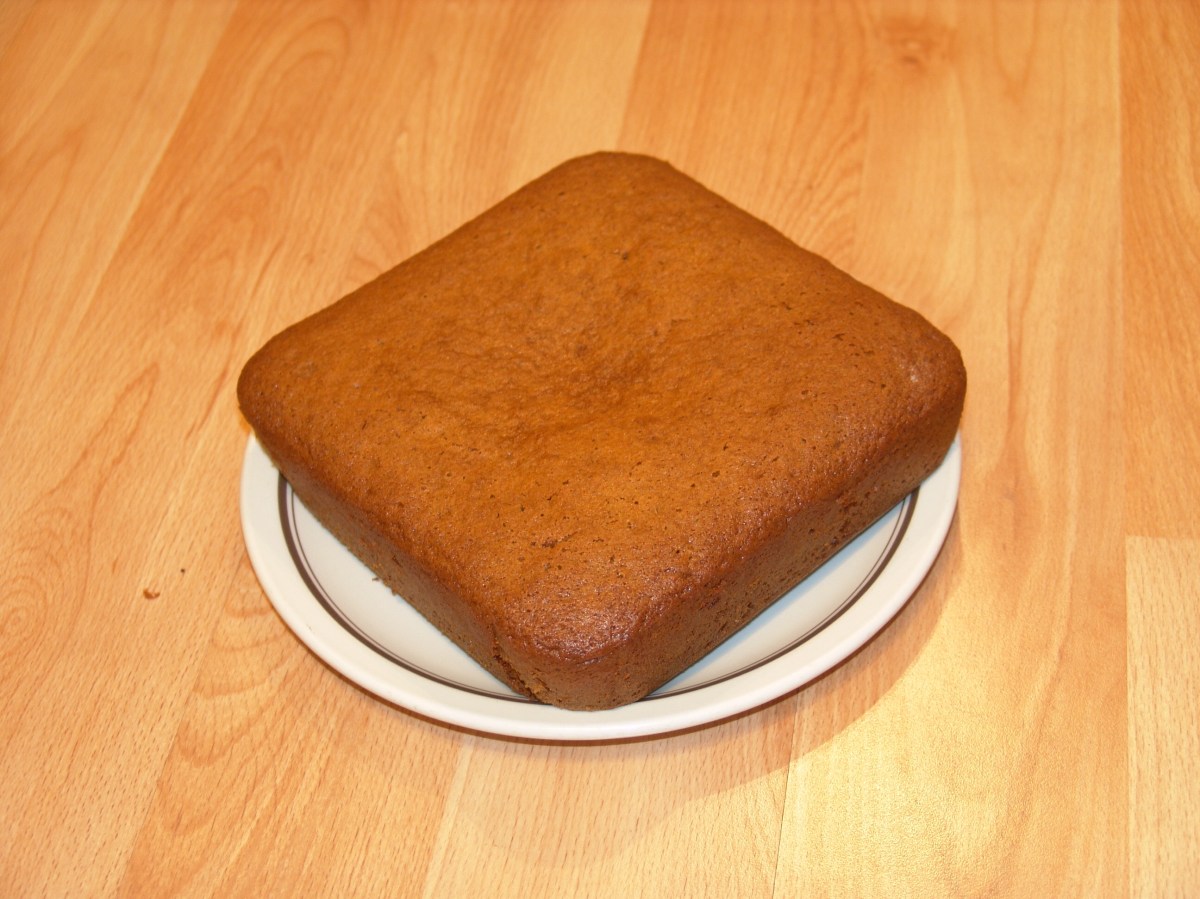
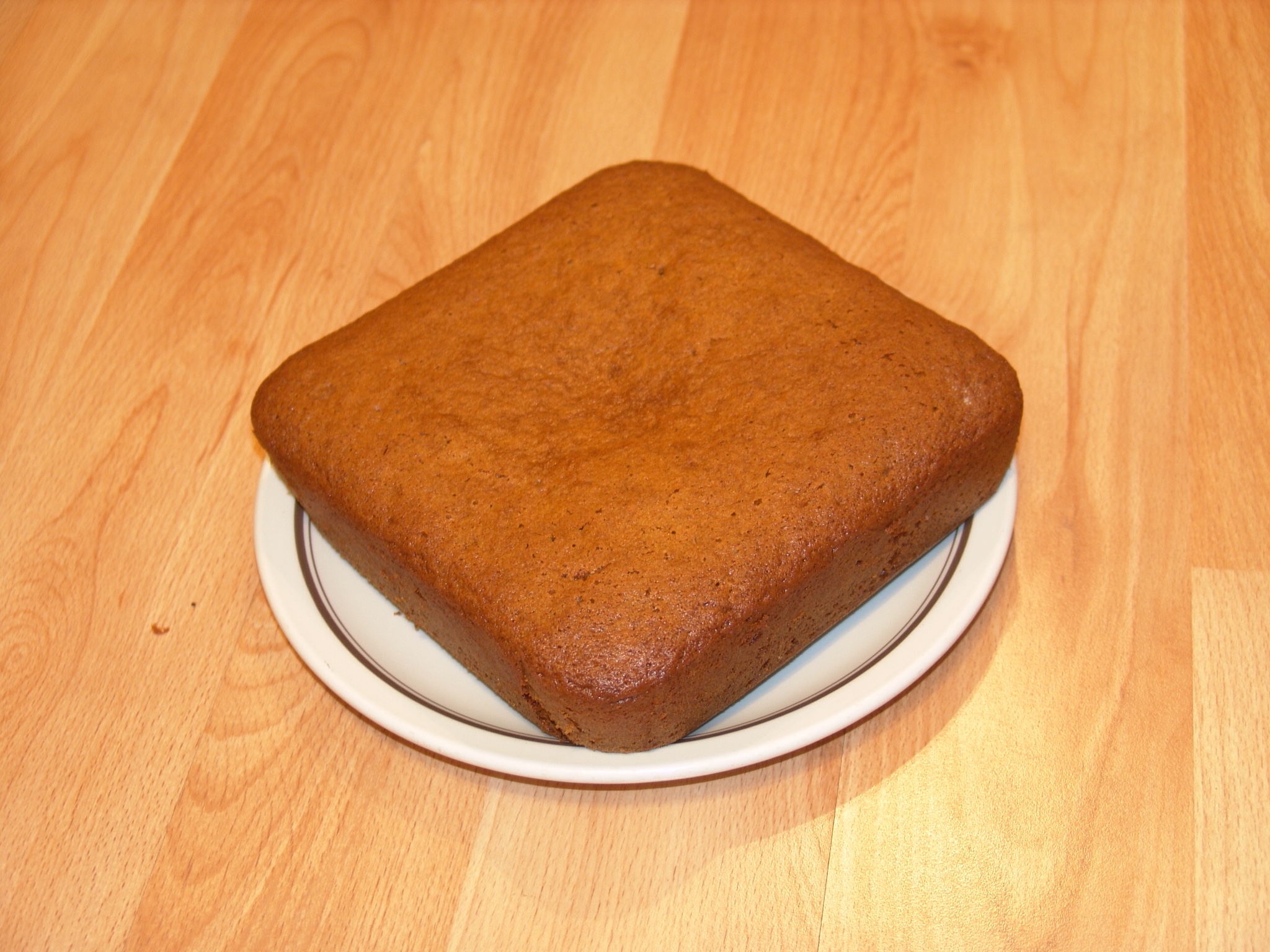
Real Gingerbread


My friend Jenn had a disappointing experience with gingerbread, so we need to address that before another day goes by. Here Ya go, Pal, this'll fix it!


Real Gingerbread is a far cry from store bought or box mix versions. The timeless, heady mix of spices just can't be beat. Use fresh, high quality ingredients; whenever possible, fresh, whole spices, ground as you build, are well worth the time and effort.


Real Homemade Gingerbread

2 1/2 Cups Whole Wheat Pastry Flour

1/2 Cup local Honey

1/2 Cup Unsalted Butter

1 Cup Blackstrap Molasses

1 Large Egg

1 1/2 teaspoons Baking Soda

1 teaspoon True Cinnamon, (About 1″)

1-2 teaspoons fresh Ginger (Good quality, freshly dried is fine too)

1/2 teaspoon Cloves

1/2 teaspoon Sea Salt

1 cup hot Water


Pull all ingredients and allow to come to room temperature.

Preheat oven to 350° F and place a rack in the middle position.

Lightly butter and flour with Wondra a 9″ square, glass baking pan.

In a medium mixing bowl, cream the butter and honey with a whisk until throughly combined.

Add the egg and whisk thoroughly.

Add the molasses and whisk thoroughly.

Peel and mince ginger.

In a spice grinder, combine cinnamon and cloves; process until evenly powdered. Add the ginger and pulse a few times to break it down further and incorporate all the spices.

In a large, glass mixing bowl, combine flour, baking soda, salt, and the spice mixture and blend thoroughly.

Add the wet mix to the dry and combine thoroughly with a whisk. Add the hot water and continue whisking; you want to beat some air into the blend so that it looks and feels a bit lighter than when you started.

Pour the batter into the prepared baking dish.

Bake for about 50 to 60 minutes, until the top of the bread has browned slightly and a toothpick inserted into the middle of the pan comes out clean.

Allow the bread to cool in the pan for about 15 minutes, then release the edge gently with a knife, and turn the bread over onto a wire rack to cool for another 15 minutes.

Serve with fresh whipped cream.


Nanaimo Bars, Eh?


We live at the muzzle of the Georgia Straight, that formidable body of water that separates Vancouver Island from the British Columbian mainland, and funnels equally formidable weather down to us from Alaska and northern B. C.

North of us, up the straight about 70 miles as the gull flies and due west of Vancouver on Vancouver Island, lies the city of Nanaimo. With sweeping views of ocean, mountains, and the Vancouver skyline, it’s a truly lovely place to visit. And more notably still, it’s the tacit birth place of that heavenly, legendary confection, the Nanaimo Bar. Here’s the official line on those little gems, courtesy of the City of Nanaimo website.

“This creamy, chocolatey treat’s origin is elusive, shrouded in mystery, and claimed by many as their own. Of course, we know that Nanaimo Bars originated in Nanaimo, or they would be called New York Bars, or New Brunswick Bars.” Now that’s logic hard to argue with, eh?

While the precise origin of the Nanaimo bar is unknown, the first recipes using ingredients that mirror the Official Version appeared in the 1952 Women’s Auxiliary to the Nanaimo Hospital Cookbook; they were named the Chocolate Square and the Chocolate Slice. Nanaimo Bars formally showed up a year later, in the 14th Edition of the Edith Adams’ Prize Cookbook. A copy is on display at the Nanaimo museum.

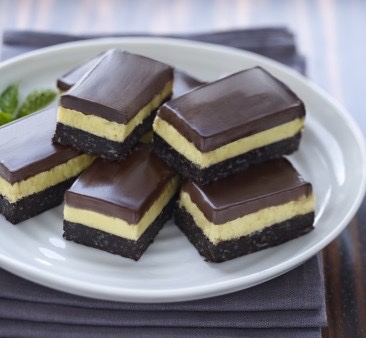
Technically, this is a no-bake dessert bar constructed in three layers, a graham cracker/almond/coconut base, a vanilla custard middle, and a chocolate top. Variants are as broad as the land that spawned them, with everything from different crumb bases and nuts, to mint, peanut butter, coconut, or mocha replacing the vanilla custard, and of course, a myriad of different chocolates

The Nanaimo Bar is incredibly rich, truly delightful treat. If you’ve never made them you simply must. They sound fussy to build, but in fact they’re quite easy and will store well refrigerated, so are an excellent make-ahead dessert. Use the best, local ingredients you can get your hands on. The recipe shown here is our take on this classic.

Serve with a high quality Muscat, Canadian Ice Wine, or a Tawny Port to cut the richness of the bar.


The Not Official UrbanMonique Nanaimo Bar Recipe

Bottom Layer

½ Cup Unsalted Butter

¼ Dark Brown Sugar

5 Tablespoons Cocoa Powder

1 large Egg

1 ¼ Cups Graham Cracker Crumbs

½ Cup Almonds

1 Cup flaked Coconut


In a dry pan over medium heat, lightly toast the almonds. Allow to cool and finely chop.

In a double boiler over hot, but not simmering water, melt and combine the butter, sugar, and cocoa powder.

Add the egg and stir gently but continuously, until the egg is heated through and the blend begins to thicken. Stay right with this part, as this will set up quite quickly.

Remove from heat add the graham crumbs, coconut, and almonds and combine thoroughly.

Press the mixture by hand into an ungreased 8″ x 8″ pan; your base layer should be roughly 1/2″ thick.

Refrigerate this layer while you work on the next.


Second Layer

½ cup Unsalted Butter

3 Tablespoons Sour Cream

2 Tablespoons Corn Starch

1 1/2 teaspoons pure Vanilla Extract

2 cups Powdered Sugar


In a large mixing bowl, combine all ingredients and whisk briskly to a creamy consistency. You want to incorporate enough air to notably lighten the overall consistency. Spread evenly over the bottom layer.

Return the doubled layers to the fridge.


Third Layer

8 ounces semi-sweet chocolate

4 Tablespoons unsalted Butter

2 Tablespoons Sour Cream


In a double boiler over medium low heat, combine and thoroughly blend chocolate and butter. Add the sour cream and blend thoroughly

Remove from heat and allow to cool for a moment until the blend starts to thicken.

While the blend is still liquid, pour and spread evenly over the second layer.

Chill the bars in the fridge for at least 4 hours before cutting into roughly 2″ x 4″ bars.

Bars will be good for at least a week refrigerated, but there’s no way on God’s green earth they’ll last that long.


Strawberry Short Cake


If you’ve had strawberry shortcake while out and about, chances are good that it wasn’t, and you weren’t impressed. More often than not, what you’re served is kinda like a little sponge cake thing with some whipped cream and strawberries. If you’re lucky, the whipped cream is fresh and so are the strawberries, but luck is rare in this regard. You’re almost certain to be outa luck with the shortcake.

Lucky for us, Gen-U-Wine strawberry shortcake is easy to make; easier, in fact, than all that faux crap. I’ve been known to say that, “In the kitchen simple is always best, but not always easy”; here’s a case where it’s both.

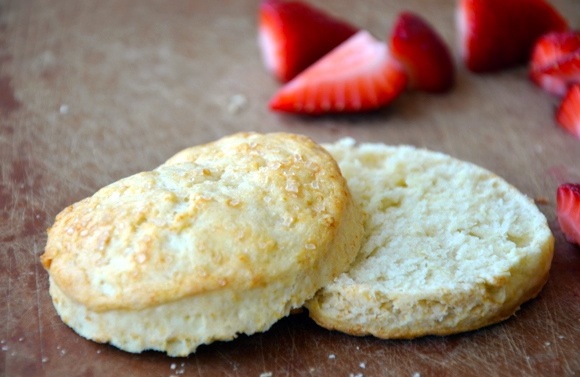
Traditional shortcake, done right, is far more like a biscuit than a cake. This is precisely what you want, because it has the density to stand up to strawberries, juice and whipped cream without becoming a gloppy, saturated sponge. ‘Short’, in baking term FYI, means a higher ratio of fat to flour, resulting in a tender, crumbly cake. Flour variety matters as well, and pastry flour is what you want. Its relatively low protein content, (about 8% to 10%), makes it perfect for stuff that demands a light and flaky consistency, like biscuits, tart crusts, pastries, and cakes. All purpose or bread flour is right out for this recipe; they’ll make things hard and chewy.

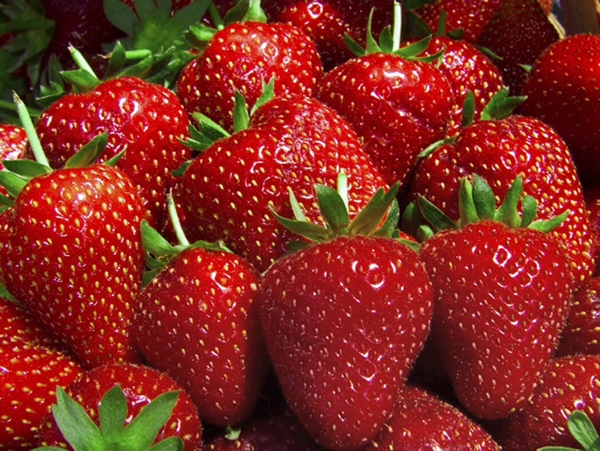
Good strawberries mean ripe, local berries at the prime of their season. Yes, you can make strawberry shortcake at other times, but this is when it’s meant to be made, so that’s kinda what you need to do.

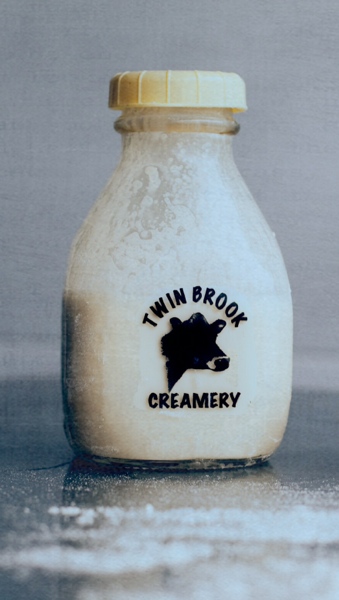
Good cream means real cream; local, heavy or whipping cream, not that ultra-pasteurized, mass produced crap that you see most often. My local version comes in a glass pint, and the real cream absolutely plugs the top of the bottle – That’s cream.

Here’s how ya do it.

For the cake.
2 cups Whole Wheat Pastry Flour
1 Cup Whole Cream (1/2 & 1/2 or Buttermilk are also fine)
1/2 Cup Honey or Agave Nectar
4 teaspoons Baking Powder
4 tablespoons unsalted Butter
Sea Salt

Preheat oven to 450° F.

Butter needs to be cold for this recipe; quickly cut it into 1/4″ cubes, then place in freezer until you need it.

In a large mixing bowl, combine flour, a pinch of sea salt, and baking powder; blend thoroughly.

Add the butter and work it Into the flour blend by hand, until the butter is uniformly the size of small peas

Add the cream slowly to the mix, mixing constantly.

Add the honey or agave and blend thoroughly.
The dough should be sticky; you can add a little more cream or flour at this point if you need to adjust.

Grab some dough and form a cake about hockey puck size, 3/4″ thick and roughly 4″ in diameter. Place the cakes on an ungreased baking sheet with a couple of inches between each one.

Bake for 8-10 minutes, until the biscuits are golden brown.
Don’t wander too far from the oven, they darken up pretty quickly.

Remove from oven and place on a wire rack to cool.

For the Berries.
4 Cups Strawberries
1/2 Cup Honey or Agave Nectar

Rinse, top and cut berries into quarters.
In a mixing bowl, combine berries and sweetener and blend thoroughly.
Place in an airtight container and refrigerate until ready to use.

For the Whipped Cream
1 Pint real Cream
1 Tablespoon Honey or Agave Nectar
2″ Vanilla Bean, scraped, or 1/2 teaspoon Vanilla Extract

Combine cream, sweetener and vanilla in a non-reactive mixing bowl.
Whip cream by hand or with a stick blender.
When the cream is holding stiff peaks, stop whisking, cover tightly and refrigerate until ready to use.

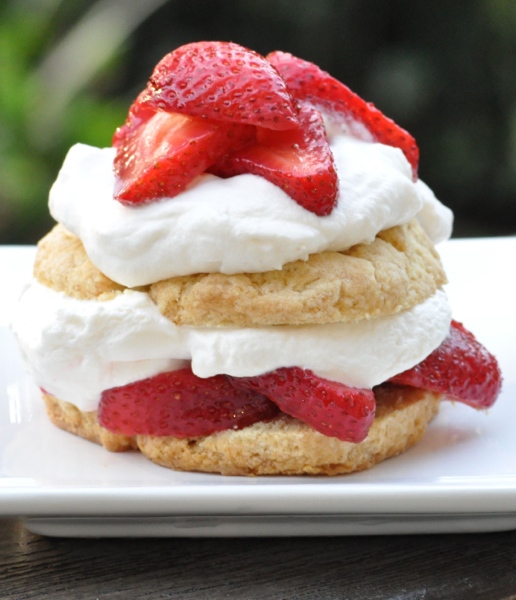
To serve, slice one biscuit in half. Place a half biscuit on a desert plate, add berries to cover evenly, then a soup spoon of cream. Repeat the layering with the other biscuit half, berries, and cream.
A mint leaf is a nice garnish, and the scent blends beautifully with the other ingredients.


Champagne Mangoes Three Ways


You might have been perusing the produce aisle recently and seen a fruit called a Champagne Mango. They’re somewhat new to many parts of the US, but they ain’t new in the Big Picture view. The Champagne, also known as an Ataúlfo, (and young, baby, yellow, honey, or adolpho), is a well established Mexican cultivar. Champagnes are gorgeous; big, heavy, golden-yellow beauties that are somewhat pear shaped. They’re thin skinned, with deep yellow, rich flesh and a very skinny pit. They’re quite high in sugar, with a tangy-sweet flavor, rich in vitamin C and dietary fiber.

Down in the Mexican state of Chiapas, when Ataúlfo Morales bought Some land back in 1950, there were already bearing mango trees on the property. Around eight years later, a researcher from the Mexican Commission of Pomology heard of Señor Morales’ mangoes and came to have a look. He went off with samples and stock which he named Ataúlfo, in honor of the property owner, and the rest is history.

If you like mangoes, (and even if you don’t), you owe it yourself to try these beauties. While they’re a real treat to peel and eat straight away, here are three of our favorite things to do with them.

Fruit Curds go back quite a ways in history. Technically, since they include eggs, butter, and require preparation like an emulsion, they’re probably more of a custard than a preserve, I guess. The 1844 edition of The Lady’s Own Cookery Book included a primitive version of a lemon curd;, using lemons to acidify cream, then separating the lemony curds from the whey. Further back yet you’ll find recipes for ‘lemon cheese’, used to make what was called a lemon cheese cake, but reads like what we’d call a lemon tart these days. Our version of Mango Curd is stunningly good, if we do say so ourselves…

2 ripe Mangoes
3 large Eggs
6 Tablespoons unsalted Butter
1/2 Cup Agave Nectar or Honey
1 fresh small Lemon
1 fresh small Lime
Pinch of Sea Salt

Rinse, Peel and roughly chop the mangoes; you’ll want to kind of shave the meat away from the skinny pit.

Purée the mango chunks with a stick blender or food processor. You want to end up with about 1 cup of purée.
Set that aside.

Rinse, zest and juice the lemon and lime, then set juice and zest aside.

Cut very cold butter into about 1/2″ cubes.

Crack eggs into a mixing bowl and whisk lightly.

For cooking the blend, a double boiler is best. If you don’t have one, work with a bowl or pan that will fit comfortably inside a larger one. Fill your double boiler bottom or pan about 2/3 full of water and heat over medium flame. You want the water steaming, but not simmering when you’re ready to cook.

Combine the eggs, lemon and lime zest, citrus juice, the agave nectar or honey, and a pinch of salt. Whisk the mixture until fully incorporated and evenly colored, about 2 to 3 minutes.

Add the mango purée to the blend and whisk for about a minute to fully incorporate.

Put your bowl with the blended ingredients over your pan filled with hot water, (Or double boiler). Allow the mixture to heat, stirring gently but continuously, for about 3 minutes. Start adding the butter in small batches of 6 to 8 cubes, whisking steadily and allowing each batch to melt and incorporate before adding the next.

Again, a curd is an emulsion, so the butter, (fat), needs time and gentle whisking to properly marry with the egg and fruit blend.

When all the butter is melted, continue whisking gently and steadily until the curd begins to thicken noticeably, about another 2 to 3 minutes.

Remove the curd from the heat. Transfer the curd to a fine mesh strainer over a glass or steel bowl and use a spatula to gently strain the curd through the strainer. You’ll end up with some zest and fiber that doesn’t make it through.
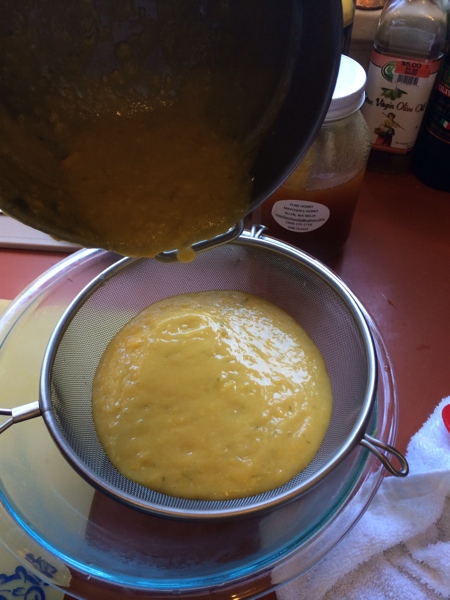
Refrigerate in a glass jar or airtight container for at least four hours. The curd will keep for about a week refrigerated, but I’ll bet it won’t last anything close to that long…

A small dish of this lovely stuff is a remarkably delicious desert, or an excellent palate cleanser after a heavy course in a fancy meal. Try it on freshly made shortbread with strawberries for a real treat.

NOTE: You may substitute coconut oil for butter for a dairy free variation.


Granitas are the pure essence of fruit and natural sweeteners. With no diary on board, they’re actually not at all bad for you either. This version was the best we’ve made, of any fruit.

2 ripe Champagne Mangoes
2 Cups Water
1 fresh small Lemon
1 fresh small Lime
3/4 cup Agave Nectar or Honey

Rinse, peel and rough chop the mango flesh.

Rinse, zest, and juice the lemon and lime.

In a food processor or blender, purée the mango until smooth and uniform, about 1 to 2 minutes, stopping to scrape down the sides with a rubber spatula as needed.

Add the water and honey or agave to a sauce pan over medium heat. Thoroughly melt the sweetener, then add the purée, zest, lemon and lime juice, and stir to incorporate.

Add the puréed mango and stir steadily and gently until the blend starts to simmer. When the whole blend is evenly mango colored and starts to thicken slightly, remove it from the heat; the whole heating process will take around 3 to 5 minutes.
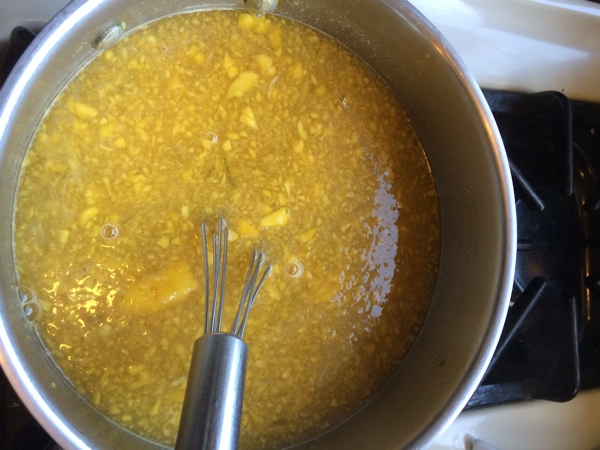
 

Remove the mixture from heat and pour the blend through a single layer strainer into a 9-inch-square shallow baking pan. This pan size works best ­because it provides a large surface area, a key point in speeding up the freezing process. To further hasten freezing, use a heavy steel or glass pan.
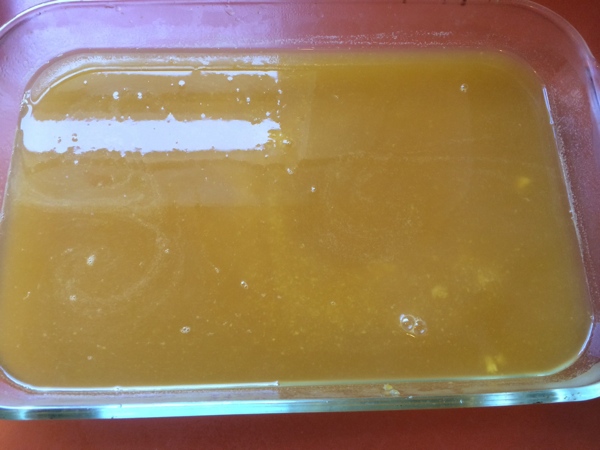
Put the pan in the freezer and stir about every hour with a large fork, times down like you’re raking the granita. Depending on your freezer temp, it will take around 3 to 5 hours for the granita to freeze completely.

You can eat the granita as soon as it’s frozen through, but the flavor will genuinely develop appreciably if you transfer it to an airtight container and freeze it over­night.

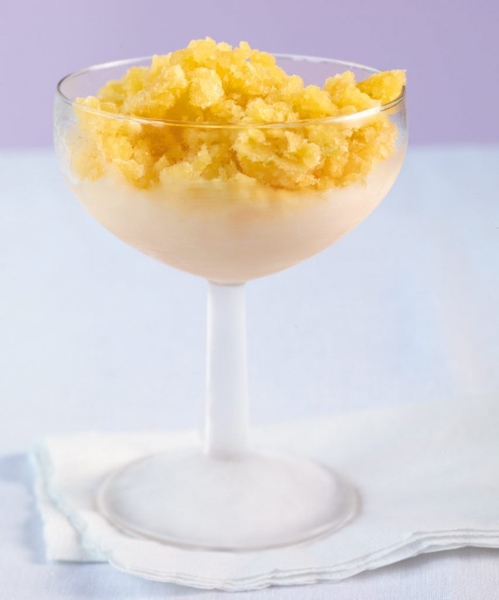
When you’re ready to serve the granita, just scape up the shaved ice and fill a chilled margarita glass, band top with a mint sprig.


Mango salsa is a real treat; the counterpoint of sweet and heat is great with fish, poultry, and pork. Try it on freshly scrambled eggs too.

1 Champagne Mango
2 ripe Roma Tomatoes
1/2 Red Onion
1-3 Jalapeño Chiles
2-4 sprigs fresh Cilantro
1 small Lemon
1 small Lime
Pinch of Sea Salt

Rinse all fruits and veggies. Peel and dice mango. Core, seed and dice the tomatoes. Dice the onion. Chiffonade the cilantro. Juice the citrus.

Combined all ingredients in a non-reactive bowl. Cover and chill for at least 30 minutes, (and as long as overnight – The flavors just get better.)