It’s the Sunday after The Big Eat, aka Thanksgiving, and our fridges are probably still pretty full of leftovers. Yet, it’s Sunday, so what’s left might be things nobody likes all that much, or stuff we made way too much of – like mashed potatoes – by T Minus three days, there’s a good chance they’re out of favor. Fortunately, we have a delicious option for those – mashed potato pancakes.
Potatoes are a new world crop, and like tomatoes, took some time to catch on over the pond – once they did, they flourished, especially for breakfast. The mashed potato cake was and is quite popular in England, Ireland, and Scotland, and appeared in a late 19th century Lancashire newspaper recipe as the first known version of Bubble and Squeak to include potatoes. Wherever they stem from, mashed potato pancakes belong in your repertoire.
While the beauty of this dish lies in judicious use of leftovers, they’re unquestionably delicious. You can lean savory or sweet as you wish. If you prefer the former, diced veggies, herbs, and cheese are called for. If it’s the latter, the simple addition of eggs and sour cream topped with applesauce might be just the thing. It’s a simple, fast dish to prep and cook.
This recipe has no liquid dairy in it, deploying sour cream instead. Mexican Crema, crème fraîche, or chèvre will all work nicely. If you prefer milk, use whole and do so sparingly – this isn’t a batter that you want runny.
Fresh onion, pepper, and garlic want to be cooked through, so take the time to prep a nice, even mince cut on those veggies. A mince is, practically speaking, about as small as you can get, between 1/16” and 1/8” cubes. It doesn’t need to be perfect or pretty, just reasonably uniform – there ain’t no Michelin stars at risk at our places.
Urban’s Mashed Potato Pancakes
Makes about 6 large cakes, and 10-12 small ones
2 Cups cooked Mashed Potatoes
2 medium Eggs
1/2 Cup Sour Cream
1/4 Cup Cake Flour
1/4 Cup fine grated Extra Sharp Cheddar
2 Tablespoons Minced Sweet Onion
2 Tablespoons Minced Red Bell Pepper
1-2 Cloves Minced Garlic
5-6 twists Ground Pepper
2 Finger Pinch Salt
Avocado Oil for cooking
Peel, end trim and mince onion, pepper, and garlic.
Add a teaspoon of oil to a heavy skillet over medium-low heat.
In a mixing bowl, combine all ingredients and whisk with a large spoon.
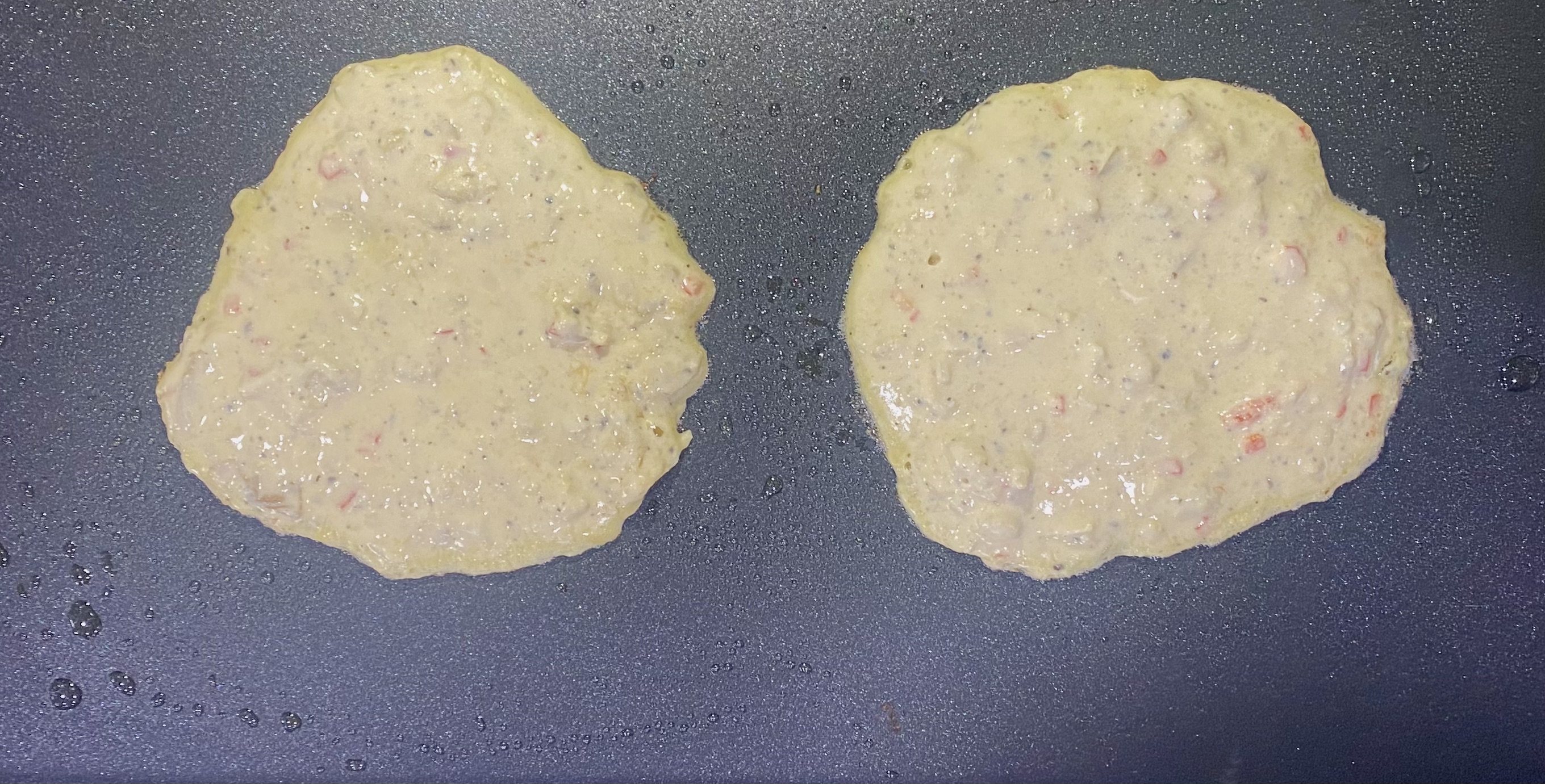
When the skillet is hot and the oil heated through, add a quarter cup of batter per cake and spread to roughly 1/2” thickness. If you like smaller cakes, use a couple of tablespoons per.
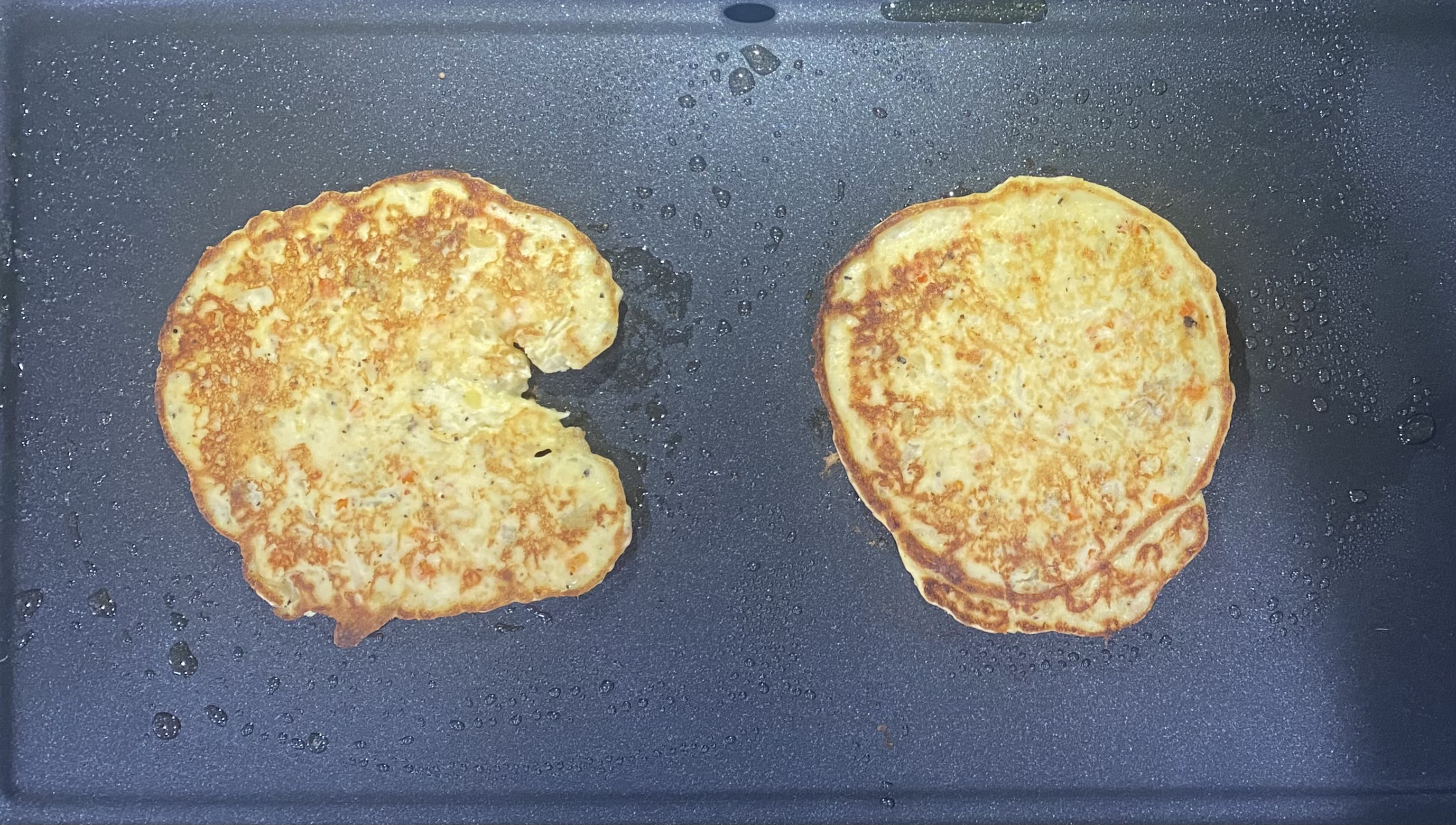
Fry for about 3-4 minutes, until cooked side is crisp edged and golden brown.
Flip cakes and fry the second side crisp edged and golden brown.
Hot hold in a warm oven, or serve immediately.
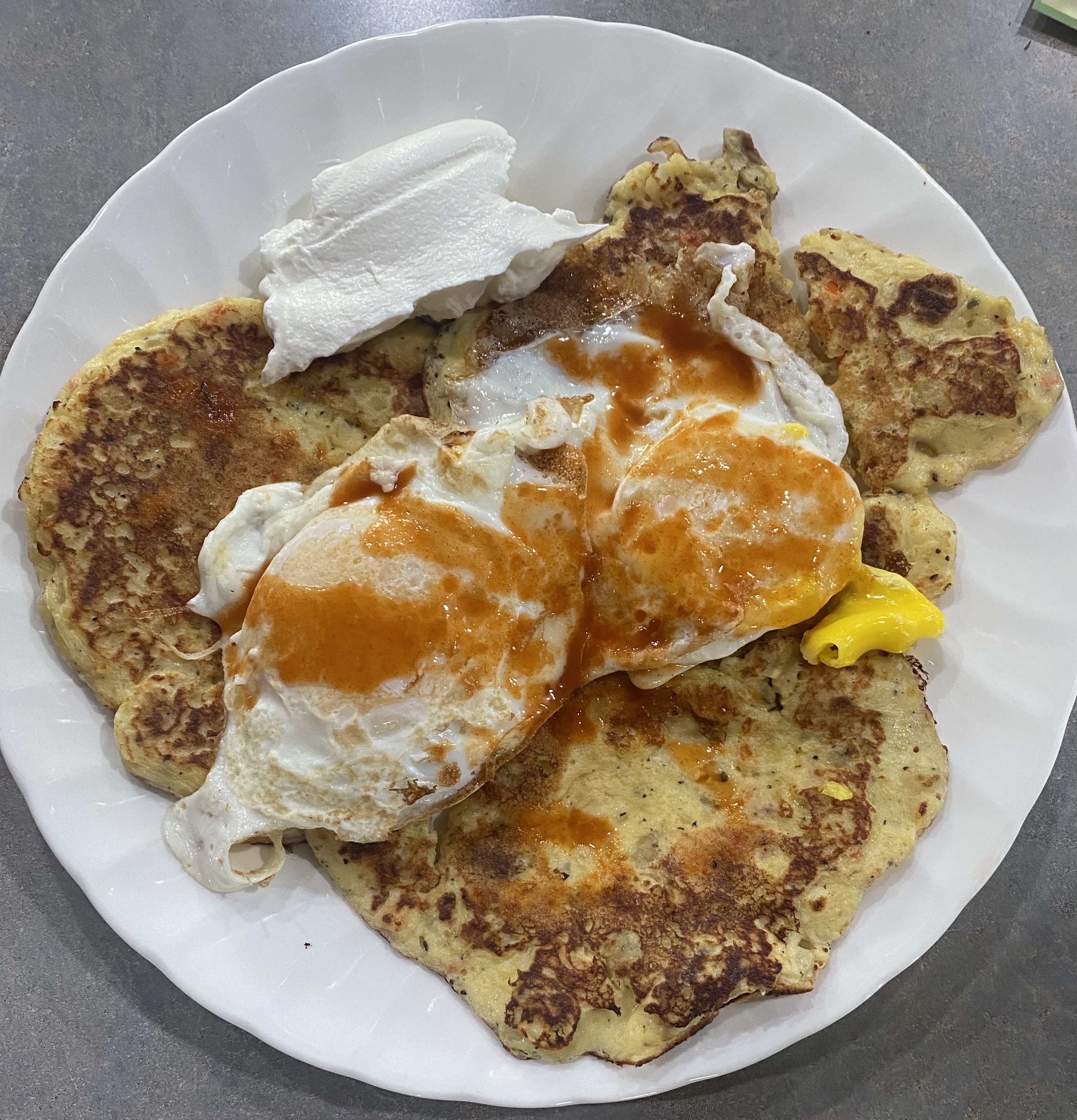
Top with eggs, cheese, or sour cream for savory.
Try sour cream, crème fraîche, crema, applesauce, or chutney for a sweeter option.
Derived from a native New England dish, Maque Choux is a simple, hearty and delicious side dish.
I came across an FB post by Diane Whatley Nix, a friend on a cooking group called Wok Wednesdays, shared an image of Maque Choux made in a wok. Instantly, I was shown a flash of brilliance for the cooking method, and reminded of a delicious dish I hadn’t made since leaving Texas six years ago. Note: If you’re into wok cooking, then you need to check out the group – It’s dedicated to cooking your way through Grace Young’s The Breath of a Wok, and it’s a serious gas!
Maque Choux (AKA mack shoe, muck shoe, muck show, and so on), is the Cajun version of that venerable side dish, succotash. The name may sound French, but it’s probably a Creole derivation of a native term. This is a great side dish at any time of the year, but especially in late summer, when all of the veggie constituents are right outside in the garden.
Many folks know of succotash and assume it to be southern, but that would be incorrect – Succotash came from some of the original occupants of New England – The name derives from a native term, possibly the Wampanoag word msíckquatash, (boiled corn kernels), or the Narragansett sohquttahhash, (broken corn kernels).
Succotash was, and is, a base of fresh corn, some kind of shell bean, and a little protein – nowadays, most commonly bacon, but back then in New England, fish or game. Any number of additional veggies and herbs might be added, like tomatoes, sweet peppers, chiles, fresh herbs and other seasonings – all of which are New World foods and therefore likely as authentic as anything else. There are a dizzying number of ‘authentic’ succotash and maque choux recipes out there, but the truth is that damn near anything you feel like doing will be authentic enough – These are dishes designed to use what was ready at the time, and later down the line, to clean out a fridge, maybe.
Succotash was popular because it was filling and nutritious. That base mix of corn and beans is rich in protein, carbohydrates, essential amino acids, vitamins and minerals. It’s still a popular side dish at many a New England Thanksgiving dinner, and was likely a main course at that original dinner hosted by the locals, to which a ragtag band of Puritans and Strangers were invited. Those settlers quickly learned that the key base ingredients lent themselves readily to drying, which meant a lifesaving, year round food supply for a struggling population.
As us white usurpers spread across the new land, (including my direct ancestor, who arrived in 1636), succotash came along for the ride, morphed by local crops as it travelled. In the south, dang near any corn and bean combo that’s fried up in lard or butter is called succotash, albeit the vast majority of the time, the bean in question will be a lima, and there will almost always be okra.
Those migrants included the Acadiens, French people exiled to the Canadian Maritimes by the Seven Years war between Britain and France in the middle of the eighteenth century. While many Acadiens remain in the Maritimes, a sizable group made their way south to warmer climes, specifically, Louisiana, which was a French colonial holding since about the time the Puritans hit the beach at Plymouth. And of course, Cajuns are in Louisiana to this day, and from that many good things have come, including maque choux.
Study up some on maque choux, and you’ll see one glaring difference from traditional succotash – It don’t have no beans on board. That’s not to say you couldn’t, or that beans aren’t popular in that neck of the woods, because you could and they are -But, when you see how the dish morphed, you’ll understand right away – It’s because of the only aromatic base that we here in the colonies can lay claim to – The Holy Trinity.
We have the Cajun folk to thank for our only original combo – onion, celery, and green pepper, and really, nothing else, (albeit when used in soups and stews and whatnot, some folk do like to whip a little roux right in with it as it cooks, to kind of get a leg up on things). Now, the key to aromatic bases is the ratio, and in that regard, there are a couple of camps for the Trinity – those who do equal measures of each, and those who portion like mirepoix, 50% onion, 25% each pepper and celery. For my mind, it kinda depends on when you’re making it. If we’re talking the non-growing season, I’d go for the heavy onion version, but if you’re in the sweet spot, where those things are right out there in your garden, I’d absolutely opt for equal shares.
As for the protein, again, you can do what you like with no shame. I like local, smoky pepper bacon myself, but down south, a lot of folks are partial to andouille sausage, and you’d be hard pressed to go wrong there. Honestly, anything you’ve got that needs using would be lovely, from pulled pork to shredded chicken, (or even beans.)
Finally, the wok as a cooking method/vessel is simply brilliant. As Diane noted, making maque choux in one adds a perfect crispy crunch to the dish that you’d be hard pressed to get anywhere else. It’s also fast, and fun, and very pretty, so give that a go. This recipe will make enough for four, and maybe some leftovers
Maque Choux a la Urban
3 ears fresh Sweet Corn
4 strips Pepper Bacon
1/2 small sweet Onion
1-2 stalks fresh Celery, including leaves
2 Anaheim Chiles
1 fresh Tomato
2 cloves fresh Garlic
4-5 fresh Chives
1 sprig fresh Thyme
1 Tablespoon Avocado Oil
A few shakes Go To Seasoned Salt, (I prefer our smoky version)
A few twists fresh ground Pepper
Mise en place for maque choux
Cut kernels off the corn in two passes – Take the first to roughly cut the kernels in half,then the second to get what’s left – This gets all the corn milk in play and adds a bit more moisture to the mix – Cut the corn into a plate or shallow bowl. If you’re shy getting to the base of the kernels, flip your knife around and use the spine to scrape out those last, sweet bits – And don’t friggin’ cut yourself.
Stack your bacon slices, cut them down the middle lengthwise, then into roughly 1/2” squares.
Dice the onion, celery, and chiles into roughly equal piles.
Slice the tomato – You can gut it if you like, (M is always offended when I leave the guts in…), or not as you please.
Mince the garlic, thyme, and chives.
Set the wok over a medium high flame and heat through –A drop of water should vaporize pretty much instantaneously when it hits the wok, then you’re ready to go.
Stir fry bacon first – Your wok will thank you
Stir fry the bacon, stirring steadily with a wooden spoon.
When the bacon is about 3/4 of the way you like it, turn the heat up to high and add the avocado oil.
When the oil is shimmering, (not smoking – That’s too hot), add the onion, celery and chiles.
adding the Holy Trinity to maque choux
Stir fry, steadily working the mix to incorporate. When the onions start to turn translucent, add the garlic and stir fry for a minute or so until the raw garlic smell dissipates.
Final ingredients
Add the corn and stir fry steadily to heat through and incorporate – If things are getting a bit hot, turn heat down somewhat – I change heat constantly as I cook on a wok, and so can/should you.
Stir fry the mix until the corn starts to get a little crust and the smells are driving you nuts.
Add the tomato, chive and thyme, a few shakes of seasoned salt and a grew twists of pepper, and stir fry to incorporate all the seasonings.
Controlling food waste is critical to restaurants, and it’s no less so to home cooks.
One of the greatest challenges we face in the world is food waste. Yeah, we hear about it most when it’s colossal, like from countries, or major grocery and restaurant chains, but fact is, it’s every bit as pervasive and problematic right here at home, in our own kitchens. It’s time to talk about kitchen food waste, and act on that.
Dive into food waste numbers just for the USA, and prepare to be seriously bummed out. Overall percentage of what’s produced – 40%. 20% of what goes into landfills. According to a NRDC study in 2015, American households tossed $165 billion worth – That’s billion with a B – or roughly $2,200 per household. Worldwide, the figure is around 1.3 billions tons and $990 billion annually. Sobering figures to say the least. When you hear that the biggest problem with feeding the world isn’t the ability to grow it, it’s pretty much true.
What’s to be done then? Obviously those figures are completely unsustainable. While it might seem like little ol’ us are such a drop in the bucket that we couldn’t possibly alter those numbers, I beg to differ – Understanding the nature and magnitude of the problem is the first step. Every little bit helps, and frankly, we can fairly easily do more than just a little bit at home – That’s important not just to help stop wasting food, but to buoy our pocket books and consciences too.
Battling food waste is huge in the restaurant business, (is if you want to stay in business in any event). We track it closely, in order to construct a viable and effective plan to keep the numbers down. Recording waste lets us study things a bit and decide where the problem lies – That might be how much we order or prep, or a mistaken assumption about how much of what we’ll sell. Waste can also stem from over-portioning, or improper storage – There’s a lot to think about, but once you get a good system in place, it becomes a lot easier to manage.
Considering those figures on average waste are in tons and thousands of dollars per American household, I don’t think there’s any question about the importance of having a plan and system in place at home, is there? Same answer comes to mind for the question of whether or not the additional effort is worthwhile – If you didn’t cook at home a lot and care about that, you wouldn’t be here. What then is a viable and effective plan to help reduce food waste for the home cook?
First thing that comes to mind is how much perishable food we buy, and how often. For the former, we really need to plan our shopping, and not do any significant part of that willy nilly. Having a realistic shopping list, one based on what your household will actually in all likelihood eat in the period you’re shopping for, is key. Secondly, sticking to that list, (and never shopping when you’re hungry), is equally important – Impulse buying does no one any good.
A shopping list is a living thing, usually composed over several days. When it comes time to head to the store, a review is in order, to determine not just if you missed something, but also if there are things there you don’t really need – Especially when the items in question are perishable. If you love to cook and are always looking for new things to try, it’s easy to think you’ll make that crying tiger beef this weekend and then buy a bunch of stuff to do just that – If life then intrudes, you may well be left with things that end up getting tossed.
When you shop, you absolutely must pay attention and be picky, picky, picky. When I go, I see maybe a couple people other than me who are really and truly checking things out – Squeezing, inspecting, sniffing, and rejecting anything that doesn’t look spot on – checking packaging and expirations dates, (and that pickiness includes not buying something you wanted if there just aren’t any good ones that day.) Fact is, very few shoppers do that – Most folks grab whatever and take it home, and frankly, whatever usually goes bad really quickly. You get what you pay for, and if you’re assuming all produce, proteins, dairy, and other perishables are on equal footing, you’re being a pretty clueless shopper.
Same goes for meal planning. Avoiding waste means not buying for, or cooking far too much, for your household to reasonably use before it spoils. Yes, leftovers can and should be refrigerated or frozen whenever possible, but far too many fridges and freezers are filled with things that sit there until they are eventually thrown out – Be realistic about what you can, like to, and really will eat. As we advocate around here, plan meals around judicious and inspired use of leftovers – A single chicken used wisely is two or three great meals for a small family.
The concepts from that last paragraph are especially important for us empty nesters – We had kids and grandkids over for dinner last night, and prepared what was easily two to three times the normal amount of food we’d do up for a Sunday night as a result – That’s fine if it’s going to get eaten and/or sent home with the kids – but not so much if it’s happening several nights a week because we’ve forgotten that, these days, it’s just the two of us. Always keep in mind who you’re cooking for on a day to day basis.
How we store perishables, especially fruits, veggies, and proteins, is potentially a huge contributor to excessive food waste. Bags, plastic or natural, and most crisper drawers, do a fairly shitty job of maintaining fruits and veggies. Of course the first line of defense is knowing what should be in a fridge and what shouldn’t, (potatoes, tomatoes, onions, garlic, shallot, bananas and most citrus fruit don’t go in the fridge.)
We’ve researched a bunch of storage options, especially for veggies since they tend to go bad so quickly, and found that glass or rigid plastic containers with tight fitting lids do a great job for most things, while specialized containers for lettuce, cabbage and the like do an amazing job – We’ve extended the shelf life of a lot of things from 2 or 3 days to 10+ just by using the right container, as you can see from some of the images here in. Yes, they’re plastic in some cases, but they’re not even close to single use.
Realistic consideration of what you will cook in the next few days should dictate what gets refrigerated and what gets frozen. A lot of food gets wasted because we violate that rule. Expensive proteins, from beef to firm tofu, need to be scheduled for cooking, and that schedule stuck to – If you can’t or don’t, wrap them properly and freeze them well before they go bad, (and mark the packages for date and content.)
Yes, clearly marking what something is and when it got stored is critical. Everything in a restaurant gets FIFOd, (First In, First Out rotation), and our home fridges and freezers shouldn’t be any different. As for marking what they are, if you’re seriously thinking about trying to tell me that you don’t have, right now, containers in both appliances that you have no clear idea of the contents or age of, I’ll call bullshit on y’all. freezers need to be emptied, inventoried, and thoroughly cleaned at least twice a year, too – See our post on that.
Look this essay over and you’ll realize there’s really not that much here, and certainly not much that’s genuinely revelatory – Tackling a food waste reduction program at home is no more difficult than reading about it, frankly. That said, common sense goes a long way in the kitchen, just as it does in life, right?
Just like adjusting your clocks every spring and fall, you should get in there and clean your fridge and freezer.
This coming weekend, we leap out of Daylight Whatever Time. Smart folks recommend that we use that marker to change the batteries on all the smoke alarms in our houses, which is brilliant. Annually, I piggy back on that stacked logic to remind y’all of another somewhat onerous but necessary task – So here we go again – it’s spring cleaning time.
Question – Got a freezer? Of course you do. And even if it’s part of a fridge/freezer combo, wanna bet it has a tendency to act kinda like a junk drawer? S’truth. Next question – How often do you clean and organize that fridge and freezer? Typical answer – ummmmmmmm…. Thought so. In that case, my friends, it’s time to seriously clean your freezers.
Look familiar? Time to clean that freezer!
Just as we spring forward and fall back, it’s a great time to throw in a genuine cleaning of your primary cold food storage vessels.
Overloaded, nasty freezer – Spring cleaning time!
Grab a cooler or two, pull everything out of said freezer and fridge, and get crackin’. If you’ve got ice build up in your freezer, unplug it. Don’t use any kind of sharp tool to break ice loose – That’s a busted appliance waiting to happen, or a hand injury. Very hot water, drizzled over the build up will loosen the ice and let you remove it by hand. Then move on to hot, soapy water, and give everything a good scrub. Use a clean kitchen towel to remove any detritus and toss that into the trash. In the fridge, remove the shelves, baskets, etc and clean everything thoroughly. Next comes more hot water with a capful of bleach – give every surface a good wipe down with that, then dry everything off with another clean towel. Let the appliances air dry for about 10 minutes. If you’ve unplugged to clean, plug it back in.
While your appliances are air drying, go through the stuff in the freezer. Take a look at this handy guide from the FDA – fresh meat and poultry, properly wrapped and sealed, can be safely stored for up to a year, while raw ground meat and sausage is more in the 3 to 4 months max range. Lean or cooked fish, properly packaged can last for 6 months, fatty fish more like 3 months. Cooked meat, soups and stews are 3 months or less. Frozen veggies and fruit will depend on how well their packaged and sealed, but 4 to 6 months is about the longest they’re still gonna taste good. Pretty much of anything that’s over a year old should probably be tossed – Remember that freezing radically slows bacterial growth, but does not stop it, so better to be safe than sorry. And yes, it does need to be said – If you can’t identify it, chuck it.
Once you’re ready to reload, it’s time to think about FIFO – That’s First In First Out, and it’s what we do every day in the cafe. It’s how you organize your stuff so that things don’t go to waste. Now, you’re probably thinking, ‘OK, but I’m not a restaurant, so why would I need this?’ Lemme answer it with a few questions of my own.
Do you throw out what could and should be good leftovers out ’cause they didn’t get used in time?
When you did that cleaning of your your fridge and freezer, did you have to chuck a bunch of stuff that didn’t get used in time?
Can you afford all that waste?
If you answered too yup, yeah, and no, then it’s FIFO time in your house. A little discipline will go a long way toward correcting those problems.
In restaurants, every time we prep, open, use or otherwise handle food, we slap a label on them that says what it is, when we opened or made it, and how long it’s good for. If you have a food waste problem, here’s a big part of the solution. This simple manifestation of FIFO at home is so often not done, it’s scary; how often have you looked at a leftover and asked ‘When did we make that; is it three days or seven?’ Sound familiar?
The easy fix is to label it every time and it’s problem solved. Use a non-permanent marker on storage containers in the fridge. Use a permanent marker in the freezer and in your shelves. Get some little stick on labels for anything else. Do it with spices, herbs, and stuff from your dry storage that tend so last a long time.
A well organized freezer is a happy freezer
The next manifestation is to physically FIFO your fridge, freezer and cabinets; oldest stuff goes to the top or the front and gets used first, before it goes bad and before anything newer is opened or bought. You spend a bunch of money, time and effort on food and cooking; spend a little more an incorporate FIFO practices in to your menu planning. If you don’t menu plan, start. There’s simple, easy, smart food management. Get your family involved so the effort isn’t wasted.
Do you buy stuff in bulk like we do? Do you sometimes cook a bunch more of something than you need for than next meal, to save time and energy? Does it always get used in time when you do that? If not, think about it and start FIFOing your leftovers. If you did a bunch of chicken and it needs to be used in three days or so, stack that container front and center where it can’t be missed. If you don’t want to eat chicken for three days straight, portion and freeze what won’t get used right away. Food and money not wasted = good practice.
Again, we do this in the cafe every day without fail; it’s how we keep you well fed and safe. Do the same at home and you’ll save money and eat better.
As much as we love Thanksgiving, there’s a problem there, one that we’ve tried to address as an enduring theme here – managing and avoiding food waste. Huge amounts of it, and frankly, it’s not just the holidays. It’s every day, in our home kitchens. Massive waste. It’s time to address that.
Consider this shocker, courtesy of the Natural Resources Defense Council, “Over this Thanksgiving week, Americans will throw out almost 200 million pounds of turkey alone.” That’s one weekend, gang. They go on to state that, “The average household of four is wasting about $1,800 annually on food that they buy and then never wind up eating.” And there’s more – “A recent survey in three U.S. cities found that the average American tosses out 2.5 pounds of perfectly edible food each week. At the top of the list: produce and leftovers.” And the coup de grace, “Households are actually the biggest contributor to the amount of food going to waste across the country — more than grocery stores or restaurants or any other sector.” All that food is the primary thing sent to dumps and landfills in this county, and that leads directly to the production of a hell of a lot of methane as all that stuff decomposes. Methane is a serious greenhouse gas – Not good in a world that’s rapidly heating up.
Now if you doubt those household waste figures, let me share something with you – As the General Manager of a cafe that does well north of 4 million bucks in sales annually, I have a few real concerns to deal with – I need to keep my folks happy, my guests safe and happy, and make money for my company. That’s it, in a nutshell. Do those things, and everything else will fall in place. Now, we certainly have waste, but let me put it into perspective for you – Our waste, our total waste, from a full time bakery and a kitchen putting out those kind of numbers, is around 3%. That’s roughly 1.5% from both sides, café and bakery. Now, compare that to the figures from the NRDC above and tell me – Do y’all think you’re anywhere near that efficient? The answer is a resounding NO – Not even close. That’s what we need to fix, because friends and neighbors? Your concerns are not any different than mine are, truth be told – You have to keep your crew happy, safe, and fed, and you cannot afford to waste the kind of money those figures up there reflect – None of us can.
There’s your post holiday bummer for you. So, as I always like to ask when somebody brings me gratuitous doom and gloom – What are we gonna do about it? Well, again, what we’re going to do is go back to talking about planning, and about thorough use of the food we buy. Why? Because we must, without fail.
That concept I mentioned, thorough use of what we buy, starts with shopping. So let me ask – When you shop, you make a list, right? If not, (and I know there are some of you who just wing it, so stop fibbing), you’ve got to start planning, carefully, if you’re going to avoid the kind of food waste we’re guilty of here. That means going through your pantry, cupboards, freezer, and fridge, and seeing what you’ve got and what you might need.
The idea here is to change a critical aspect of the way most of us shop – Instead of thinking about what might be fun or nice to buy, we need to look at what’s already in your kitchen with a couple of perspectives – First, what do I already got that’d be great to cook with, and secondly, what do I got that needs to be dealt with right now – before it turns to waste?
When you do that, you find the things that are maybe on the verge of going bad, and you use them, convert them, make them into something you’ll cook with, rather than let them go to waste. Got tomatoes about to become long in the tooth? Put them in an airtight container and freeze them. You can make sauce, soup, or stew later, when you’re ready. In fact, any and every vegetable or fruit you’ve got that is ‘getting there’ should be treated this way – You don’t really think folks buy bananas intending to make banana bread, do you?
Case in point – M and I invented a Chicago Dog Pizza the other night, because, one – we wanted pizza, and two – We didn’t have any of the proteins we’d normally put on pizza, (No ham, pepperoni, mozzarella, etc) – What we did have was two very good locally made hot dogs that needed to get eaten, some sport peppers, and a couple tomatoes that needed to get used as well. I made some dough, and a sauce tinged with a little zing of yellow mustard and celery salt. We used cheddar cheese, and a little sweet onion, and it was actually fantastic – I’d go back to a place that makes that and order it again.
When I say ‘go through your freezer and fridge,’ I mean it! Touch everything there – EVERYTHING! We do this daily in restaurant work, and you should do it at least weekly at home – That’s the number one way to find stuff that needs to get used and get it in play before its too far gone, (And conversely, not doing so is the number one reason we waste so much food). I’ve seen a lot of fridges and freezers in my day, and many are downright terrifying. Don’t let yours get there – Police it regularly, and practice FIFO at home, (First In, First Out), combined with dating things in there, and you’ll be well on your way to running a tighter ship.
When you do make that list, think in much broader terms than one meal at a time. A chicken, one nice, fat fresh chicken, can easily make three meals – Roasted chicken, chicken tacos, chicken noodle soup. Turns that $15 bird into a much more efficient protein, doesn’t it? We talked pretty extensively about this in a couple of posts, one on Meal Planning, and one on Planning for Leftovers – Check those out.
And then, when you’re ready to go to the store, do yourselves a favor – Abide by the old adage, ‘Don’t shop hungry.’ Seriously – It’s why we shop on Sundays, our mutual day off, and go out to eat beforehand. Hungry shopping leads to binge shopping, and that’s bad for the wallet and the waste log. Stick to your list, and you’re good to go.
That’s not to say that you can’t or shouldn’t snag something that looks great when you’re there – Just be judicious in that vein. The reason we waste so much produce is because its pretty, and stores do a great job of presenting it. That’s fine, and it’s stuff you should eat, but if you go getting all crazy in that department, thinking you’re going to use all this stuff before it spoils, nine times out of ten, you’re dead wrong – Pick a thing or two at most, and make sure you use it. If it floats your boat, add it to your list downstream. If it doesn’t, then move on.
A lot, and I mean a lot of folks snag stuff because they’ve heard of it, seen it on Iron Chef, or something along that line – The question is, do you know what Jicama tastes like? (It’s great, by the way – Sorry…) This being the 21st century, whip out the ol’ smart phone and do a quick research on what it is that’s got your attention. You may or may not like turnips, Chinese long beans, or star fruit, and a quick check can give you enough of a clue to make a more informed decision than, ‘it’s so pretty.’
Finally, when you get your booty home, think about waste when you start to cook. What we throw away day in and day out isn’t always waste – A lot of it is food we didn’t use. Those NRDC quotes came from a piece NPR did with Massimo Bottura, a Michelin starred Chef who shows us how to think differently about what we throw away. He even got some friends together, like Mario Batali, Alain Ducasse, and Ferran Adrià, to name just a few, and wrote a cookbook aimed at reducing household food waste. It’s a spiral-bound gem titled, Bread is Gold, and you want it in your culinary library. Check out the NPR piece here.
To get you started, here’s the best potato stock you’ll ever make. It’s a great thing to make, divide into portions, and whip out to make amazing sauce, soup, or stews with.
Potato Peel Stock
5 Cups Water
Peels only from 6-8 Potatoes
1 medium Sweet Onion
2 Carrots
1 stalk Celery
1 Bay Leaf
1 teaspoon Sea Salt
1/2 teaspoon Fresh Ground Pepper
Rinse and rough chop onion, carrots, and celery.
Throw everything into a stock pot over high heat until it begins to boil.
Reduce heat to maintain a simmer, and cook for 2 hours.
Remove from heat, run the stock through a colander and discard the veggies
Allow to cool to room temperature, then portion and freeze, or use right away.
Where the last of your turkey needs to be
And finally, for the record, Kevin Rosinbum, a talented photographer and cook I know wrote this yesterday afternoon, above a picture of a glorious pot of homemade soup. “If you toss out your holiday carcass, you’ve already lost.” Truer words were never written.
We had that turkey dinner of course, followed by two rounds of stunningly delicious sandwiches, (I think I like them best of all). After that, what was left of the meat got pared off the carcass, and that got thrown into the oven to roast, and then into the slow cooker – Just the carcass and the aromatics it had cooked in – covered with water and left to do its thing for 8 hours. The result, strained once, is the most unctuous, fragrant, amazing stock you could ever hope for. With carrots, celery, garlic, leftover potatoes, and the rest of the meat, it’s now a pot of our own glorious soup, simmering away as I type.
Well, if you’re a regular here, you know we have a real passion for leftovers. It is damn near criminal to waste good food and it happens way too often. To some degree, this is our fault, ‘our’ being foodies and bloggers who exhort others to cook. I say that because a lot of what I find in out there are recipes offered in quantities that demand leftovers. And it goes without saying that restaurants in the US routinely offer ridiculously huge portions, the lions share which is thrown out as well.
So something needs to be done about it, right?
Right.
You can do your part by learning to scale recipes when they’re designed for more folks than you’re going to reasonably feed. Scaling is especially useful if a recipe is complex or involves expensive ingredients; in any case, most of the time, you just don’t need or want to cook at larger volumes. While it sounds easy, it isn’t always such, (I found this out taking a homebrew recipe to barrel volume…) Scaling definitely involves a bit of art in addition to straight math.
Take, for instance, a recipe that catches your eye, but is shown for 10 when you need it for 4.
Knocking it down mathematically is straightforward: You take the quoted measure of each ingredient and divide it down to where you want to be. So in this case, we’d divide 4 by 10, yielding 0.4; each of the stated measurements would then be multiplied by 0.4 to reach your goal.
Lets say the recipe calls for 4 cups of all purpose flour. Take the 4 cups, multiply by 0.4.
4 cups × 0.4 = 1.6 cups of flour for your 4 person conversion, and so on down the line of ingredients.
As a guitar maker, I can tell you that I spend a fair amount of time converting fractions to decimals, so don’t feel even a little bit bad for squinting at 1.6 cups for a second or two. Truth be told, for the vast majority of home cooking, eyeballing 1.6 cups is going to work out just fine. Yes, things like a teaspoon are gonna end up 0.4 but again, almost a half, more than a third; you’ll get the idea.
One of the things we do here is to test conversions for you. As I mentioned, scaling recipes isn’t always as simple as the math. Sometimes things have to be tweaked to come out just right. That said, this is often a case of personal taste; it’s nothing to worry about on the big picture view, but if you’re wanting to impress your new date with a great home cooked meal, you might wanna test that conversion first, right?
A lot of the secret of cooking well has to do with ratios; it could be reasonably argued that, next to good ingredients, nothing is more important. Author and Chef Michael Ruhlman has put out a few tools and books about this stuff. I own both his Bread Baking and ratio apps for iPhone and iPad, and I use them both. They’re good common sense stuff and a handy reference when you’re experimenting.
Now, all that said, there are times when you’re going to build food at larger volumes. You’ll notice that a lot of what we do here starts out fairly basic; consideration of multiple meals is a primary reason for that. We, like most of y’all, are not exactly wading in spare time, so prepping one primary meal that can become two or three saves work and is much more efficient.
When you’re doing that, you may well build dishes that are sized for much more than your one-meal needs. Of course quite a few things like soup, stew, chili, roasted or broiled meats, potato dishes and many veggies, really do taste better the next day. It makes sense if you think about it; good ingredients, well married, seasoned and cooked – It should taste better, right?
To close this post, we’ll give you a lightning round example of what we’re talking about.
Day 1; we’re both off, so we bought a big ol’ pork roast and paired it with gnocchi, seedless red grapes and a nice salad.
Day 2: Sky’s the limit; we could do cold sandwiches, Mex, what’ll it be? It was a bit nippy, so digging into the fridge, we found some great veggies, soaked and added some beans and made a wonderful soup. The prep for this took maybe 15 minutes, then we just stuck it in the pot to get happy. Paired with sourdough garlic bread and some more grapes, life is good.
Day 3: We sure could have soup again, but why not throw 30 minutes prep time into the mix and make a pot pie, right? Kitchenaid pie crust recipe, 15 minute rest, blind baked in a baking dish, thicken the soup with a little roux, and off you go…
There’s three distinct, easy meals from one pork roast. Efficient, fun, and delicious.




 UrbanMonique