At’sa Pasta!


M told me Sunday morning I was cooking with chicken again. She liked the fried just fine, but wanted something more delicate and complex, so naturally we opted for fresh pasta, in this case, fettuccine, which is so good tn sucking up and holding flavor.

The difference between any store bought pasta and making your own is like Little League versus MLB – They’re both a lot of fun, but…

First, a couple of nice, chemical-free chicken breasts get trimmed and dropped in a non-reactive container and covered with whole, organic milk. Remember that chicken breasts trimmed and skinned have very little fat. Easily the worst crime I see and taste on a regular basis is dry chicken. Soaking yours in milk for 2 to 6 hours will yield juicy, flavorful bird.

Next, the pasta.

This is an all-purpose flour only recipe that we got from Mario Battali’s book. Truth be told, we prefer 50% semolina, 50% all purpose blends for pasta, but we know not everybody has semolina on hand, so this one’s for y’all. This recipe will yield 4 generous servings; we make it all and freeze half for later.

3 1/2 cups unbleached all-purpose flour
4 extra-large eggs (5 large)

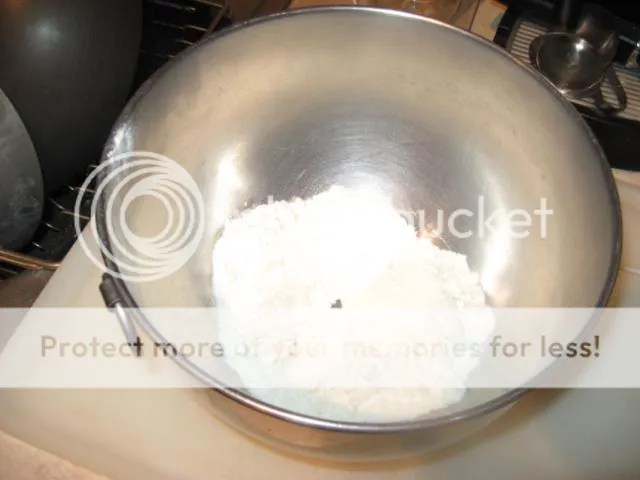
Here’s classic pasta prep. Make a big ol’ volcano of your flour, with a nice big Saint Helen’s gap in the middle for the eggs.

In a bowl, lightly beat the eggs until they’re evenly blended.

Pour the eggs into the flour and with a fork, combine the edges of the flour into the eggs. Keep nudging the flour up the edge so you’ve got an even stream being fed into the blend.

When it feels and looks like you’ve done all you can do with the fork, get your hands into the game.
knead by pressing your palms into the dough, give it a little flip and knead again.

You can dd more flour if things are too sticky, and a little ice cold water if it’s too dry, but go easy on the agua.

Knead for 3 or 4 minutes until the dough feels elastic and slightly sticky.

Knead another 3 minutes and flour your board lightly if your dough start to stick to it.

Now, it’s rest time; note that both the knead and the rest are critical for great pasta, so don’t skimp! Wrap your dough in plastic wrap and let it sit for 20 minutes at room temperature. Now, you’re ready to make noodles

There are lots of ways to make noodles. If you don’t have a pasta maker, get a rolling pin and more flour, and roll the dough to your desired thickness. You can cut your noodles with a paring knife and who cares if they don’t look perfect? I’ll guarantee you they’ll eat perfect…

If you pasta at home on a regular basis, you’ll want a machine of some kind to do it with. We have the classic Marcato hand machine with a slew of attachments, so we can do everything from angel hair to lasagna. They last for ever, they’re a joy to use and they make killer pasta. We use a simple pasta drying rack to hang the goods between steps.

Note that M keep the machine and the dough lightly floured throughout – Don’t miss that step!

Onto the chicken et al!

My mind’s eye went straight to citrus and fresh herbs, so off we go to the garden for oregano, as well as garlic chives and cilantro for the salad, of course.

Here’s what I used for the chicken

2 Chicken breasts, skinned, trimmed and soaked in milk
2 lemons, halved
1/2 bulb Shallot
2 – 3 cloves Garlic
1/4 cup Capers
3/4 Cup chopped Tomato
Sprig fresh Oregano
3/4 Cup dry White Wine
Salt and Pepper to taste, (In this case, Alderwood Smoked Salt and Grains of Paradise)
Extra virgin Olive Oil

Cut chicken into medallion size, roughly 1.5″.

Fine dice garlic, dice shallot, rough chop tomatoes, and chiffenade the oregano.

Heat a tablespoon of olive oil to a saute pan over medium high heat. When the oils hot, add shallot and tomato and saute for a minute or two.

Add oregano and garlic and saute for a minute longer.

Remove veggies into a bowl, reheat pan and add chicken. Brown over medium heat until cooked through.

Deglaze pan with the white wine, add back veggies, add capers, and squeeze lemons over all.

Saute over medium low heat until reduced by roughly 25%.

Meanwhile, M handles salad, a must-do with this dish; we used straight oil and vinegar for dressing.

Prep pasta water with generous salt and a little olive oil, (You want pasta water to be a bit lighter than sea water, but not much)

Fresh pasta goes very quickly; we’re talking two minutes here, so stay close and test and get it off the heat!

Bring your pasta pan, undrained, to your saute pan as soon as the pasta is done. Carefully ladle past into the saute pan and make sure you get a little pasta water in there too!

Give everything a good blend and allow the pasta to soak up the sauce for a couple minutes, then serve directly.

If you like cheese, go for it; we used a little Romano and Asiago for ours…

M feels plating is important, even at home. She didn’t like my one plate job, she went for the bowl for pasta and plate for salad and bread. Here’s hers versus mine:
The winner?
Why, both of us, of course!

Let me tell you,
It
Was
Incredible!

Even better than it looks!

Best Fried Chicken Ever…


The other day on The Big Wild, the boys and I were talking chicken. I said then and I’ll say now, it’s one of my favorite things to cook and eat, hands down. Y’all missed the pre-show banter, where I told them about the episode of Portlandia where the restaurant patrons wanted to know the gender of the chicken and if he had any friends…

Anyway, if you’re gonna do chicken, there are plenty of ways to do them, but the pinnacle, the top o’ th’ heap, that which must be done is fried; and if you’re gonna do fried, you gotta do it right, and this, friends and neighbors, is the right way to do it…

SPOILER ALERT!! If you want to make the best fried chicken ever, it does not happen in an hour, or even overnight; in fact, if you back-to-backed the process as best you could, it takes 24 hours to make it happen.

Is it worth it, you ask?

Yes.

Fact is, if you’ve been to any one of a number of legendary chicken joints, especially tradition-laden ones, I will dang near guarantee you that they go to this level of prep to make what drives you crazy, preys on your mind and sends you back again and again for more – Trust me…

That said, it’s not hard, it just takes time, so here we go.

Step One:
The bird.
You’ll want a whole frier, and if you can get one that doesn’t have all sorts of artificial crap in it, you should.

Step 2:
Brine that bird. What, and why, you ask? Brining creates a delicious, juicy chicken, plain and simple. It’s scientific fact and not fiction that it works to do exactly that; trust me… You can add stuff to the brine if you want some additional flavor notes; Bay leaf, sage, basil, pepper, citrus, garlic, whatever you like is cool – The brining process will help carry flavors into your bird beautifully.
Put 1 cup of kosher non-iodized salt and 1 cup of granulated white sugar into 1 gallon of water over medium high heat and stir completely until all is dissolved; don’t allow the mixture to boil. Cool your brine completely by dropping the pan into an ice bath. Place the bird into a non-reactive vessel that will allow the brine to completely cover and refrigerate, covered, for 8 to 12 hours.

Step 3:
Butcher that sucker. If you’ve never done this, you should, in fact, you need to. You want, naturally, 2 drumsticks, 2 wings, 2 backs, and 2 breasts: I like to quarter the breasts into strips, because they cook better and are more reasonably portioned than the big kahuna, capiche? Do not freak out if where you cut what doesn’t come to you right off the bat; it will with time and it is an excellent skill to exercise.

Step 4:
Buttermilk up! nothing brings richness and fights off funky notes like buttermilk – This is the finest use I know of for that noble beverage. Rinse the bird thoroughly, by pouring out the brine, refilling the vessel and letting the bird sit for 15 minutes; repeat twice more. Then cover that baby in buttermilk and let it rest, refrigerated and covered, for 8 hours more.

Side note: THOROUGHLY clean everything that had the chicken in it or on it – We scrub and use Clorox cleanup for this.

Step 5:
Put on your coat. You gotta have a dredge of some kind and this is my fave, hands down. Mix well in a bag
1 cup all purpose flour
2 tablespoons corn starch
1 teaspoon kosher salt
1/2 teaspoon pepper
NOTE: in keeping with our blatant spice snobbishness, we used alderwood smoked salt and grains of paradise…
Insert chicken and shake until well coated.

Step 6:
Time to fry, baby. We use a very nice self contained indoor frier, but you can use whatever you have and are comfy with. The folks I got my routine from fried in lard, and I love that, but I love my arteries too… We use Tri-Fry, which is a blend of Canola, Grapeseed and Safflower oils that’s cholesterol and sodium free, high in Omega 6 and Linoleic Acid and a bunch healthier than a lot of alternatives; try it, you’ll like it.

Make sure your oil is at 375 degrees F and keep it there; that means introducing a couple of pieces of chicken and giving things enough time for your heater to recover the desired temp before you add more: Doing so assures you of light taste and minimal sogginess, which is, of course, highly desirable.

We paired our chicken with mashed spuds, pepper gravy and handmade coleslaw and dressing – It works really well…

Enjoy!

Be True To Yer Stew


It’s a heinous but true story that when we first got together, Monica pretended she couldn’t cook. She claims, (Then and now), that coming upon a man who loved to cook and did so “Better than I ever could,” (Total BS, BTW), led to her fib. She got away with it for the better part of a year, the little rat…

One of the many things she does far better than I do is genuine stew, the real article, the full meal deal. That said, I wish to formally protest her statement that what I make is “Real good soup;” it’s stew dangit, just made kinda differently than hers!

Hmmmph…

Anyway, since last week we cleaned out the freezer, I promised that I’d share her killer stew recipe, so here it is.

She made this with beef that needed to be used, but as mentioned on The Big Wild the other day, this makes a great Game Bag Stew – Use venison, pork pheasant, goose, duck, whatever ya got, or a combination thereof – Yes it does work, so try it, whenever you want people to eat it and then give you that look and make helpless yummy noises until they get up for seconds. Equal portions of the proteins are fine, or place heavier emphasis on one or two if that’s what you got and that’s what you like.

M’s True Stew
This is a gorgeous peasant stew, rich and flavorful!

Cube up your proteins to reasonable bite size pieces

Mix 1/2 cup flour, a teaspoon of salt, 1/2 teaspoon pepper and a shake of cayenne in a zip lock bag. Dump in your flesh and shake thoroughly to coat. Heat a nice big pan to medium high with 2 tablespoons of vegetable oil until almost smoking hot, then toss in your flesh and brown thoroughly.

NOTE: Real observant readers will have noted that M used Grains of Paradise; also known as melegueta pepper, alligator pepper, Guinea grains or Guinea pepper, this pungent spice is to regular pepper as table salt is to Sal de Mer, so check it out…

Remove your flesh, place it in a skillet and into a 225º F oven. Allow the meat to cook low and slow for at least 2 hours. When fork tender, remove from the heat and set aside. Put 1 teaspoon of salt, 1/2 teaspoon pepper, a shake of cayenne and a shot of oil into a bag and throw in your spuds. Shake until thoroughly coated and throw them into the oven next to the meat for 45 minutes.

Returning to your nice big pot, turn the heat back up to medium high and once heated, deglaze with 1 cup of red wine.

Turn heat down to low, scrape all the naughty bits together with the wine, and simmer until reduced by half.

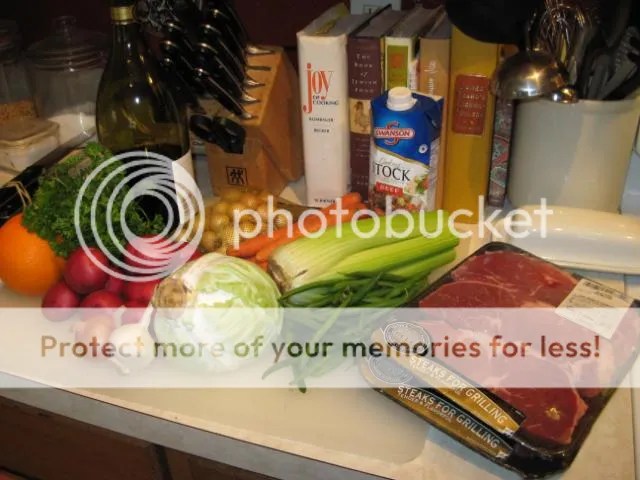
While that’s working, clean and size as desired pearl onions, carrots, green beans, celery, green cabbage, parsley and one nice fat orange.

Transfer your wine and nasty bits reduction to a stock pot and add 2 cups of stock, (Really up to you; we use dark chicken stock the most, but beef, veggie or chicken is fine too!) and two cups of water, and bring up to just below a rolling boil. Throw everybody into the pool, reduce the heat to a simmer and let it work its magic for at least 4 hours and longer as you can stand.

We added this killer cheesy cornbread to our feast.

1 1/2 Cups White Corn Meal
1/2 Cup All purpose flour
1 Cup Whole Milk
1 Egg
4 Tablespoons Shortening
Pinch of Salt
1/2 Cup grated Sharp Cheddar Cheese

Pour cornmeal into a bowl and add the milk; mix well and allow to sit for 15 minutes.

Mix remaining dry ingredients, (Including the cheese), in a large bowl.

Melt shortening, then combine all ingredients and mix by hand to a nice, even batter consistency.

Place the pan(s) you’ll do the bread in into a 400 oven, with a small dot of shortening in each pan, or tablespoon full if using a single pan. When the shortening is melted and sizzling, remove the pan , pour in the batter and return to the oven.

Bake at 450 for 20 to 25 minutes, or until golden brown. Serve hot!

Enjoy!

E & M

Al Carbon y Verde


For anyone familiar with Tex Mex, Tacos Al Carbon will prolly induce a serious bout of mouth watering. Al Carbon literally means ‘the coal,’ the obvious implication being that the meat for this dish should rightfully be done over charcoal, and it should. Aficionados will also argue that the only correct cut for the dish is skirt steak; that can and should be argued, however. The dominant notes of lime, cumin and garlic used for this wonderful marinade lend themselves equally well to chicken, pork, lamb, goat, venison, buffalo, and even shrimp or snapper. In other words, just as fajitas have transmogrified from a particular cut of beef to a ubiquitous Tex Mex dish, it’s not entirely unreasonable to assign the term Al Carbon to the seasoning/marinating blend used on this wonderful dish. That’s my excuse and I’m sticking to it. Oh, and you can easily do a great job on this cooking it inside in a pan if you’re unable or unwilling to fire up the grill, so we’re gonna do that too.

Al Carbon Marinade

3 Limes for juicing
2 – 4 cloves of garlic, peeled
1 – 3 fresh Chiles, (Jalapeno is wonderful, but Serranos work great too)
Handful of fresh Cilantro, (About a 1/4 cup, chopped)
1 teaspoon Cumin
1 teaspoon Sea Salt
1 teaspoon Black Pepper

Juice your limes, of course, keeping the pesky seeds out.

I use whole Cumin seed and Pepper berries, so zap them up if you do too

Throw everybody into the blender and zap ’em until evenly blended and liquified

Cut your flesh into appropriately sized strips and arrange it in a glass pan. Note: If you are using skirt steak, DON’T slice it up first! It’ll need to marinate and cook and rest whole before being sliced or it will come out like shoe leather. I used cheap sirloin, because we had it and needed to use it, so I sliced it to allow the marinade to penetrate better…

Slather on your marinade and leave refrigerated for at least 2 hours and as long as overnight; as far as we’re concerned, the longer the better!

Pour off the majority of your marinade and saute in a hot pan until done to your liking.

Now, you simply must make a fresh salsa for something this good, so do so! When I was at the store I saw that the Tomatillos looked pretty good and managed to pick out about a pound that were indeed as you want ’em; that is, with skins intact and the flesh firm with no blemishes or soft spots. So Tomatillo Salsa it is!

If you’re not familiar with Tomatillos, then as a lover of Mexican and Tex Mex cuisine, you’ll want to be. Contrary to all too common belief, Tomatillos are not related to the Tomato very closely at all: They come from the Nightshade family and are closer to a Cape Gooseberry than they are to tomatoes.
You’re most likely to find green tomatillos in the market, but when ripe they can be yellow, red, green, or even purple. The ripened red and purple guys find their way into jams and jellies down south; like a Cape Gooseberry, they have a ton of pectin and therefore lend themselves well to such condiments.
If you choose carefully and don’t intend to cook with ’em right away, tomatillos wil keep refrigerated for a week at least; remove the papery husks, wash the sticky sap off the outsides and store them in a sealed container in your veggy drawer. You can also freeze them, either whole or processed and they’ll hold up for a few months.

Roasted Tomatillo Salsa

1 Pound of fresh Tomatillos
1 – 2 Fresh red tomatoes of your choice
2 – 5 small cloves of Garlic
2 – 4 fresh Chiles, (Again, Jalapeno or Serrano are our go-to choices)
1/4 of a medium sweet Onion
1/4 to 1/2 cup chopped Cilantro
1/2 teaspoon of Salt
2 cups water

Wash and prep tomatillos by removing husks, stems and sticky sap. If you don’t want a hot salsa, field strip the seeds and membranes from your chiles, (And as always, follow our common sense rules for chile handling, please!)
Arrange tomatillos, tomatoes, chiles, garlic and onions on a pan suitable for broiling.

Roast or broil the gang until skins on tomatillos are browned to charred and tomatoes are soft.

Throw everybody into a pot with the water and bring to a low boil; allow to simmer for about 10 minutes, until veggies are starting to come apart and the mixture has reduced a bit. If you like a thicker salsa, allow it to go a few minutes more.

Throw everybody into the blender and let ‘er rip until you reach your desired consistency, kinda like this here…

Et viola! Keep in a sealed glass container in your fridge, and the salsa will be good for about a week, (And it gets even better the day after you make it…)

We used local flour tortillas for our feast, since I was too lazy to make fresh. We garnished with fresh tomato, onion, coleslaw and aged pepper jack from WSU. And yeah, in fact, they tasted even better than they look!

Oh, Stuff It…


The local grocery gets some decent stuff in from time to time – Even Albertsons has to have chicken with no weird shit injected into it if they want to sell things these days… Often enough, they’ll offer decent beef, pork and chicken at buy one, get two free, and if you’re not taking advantage of such a thing, you’re wealthier than we are, (Which isn’t that hard, by the by). So we buy these and use them for what they should be used for, AKA, marinating, braising, or otherwise converting decent flavor to spectacular, and once again, so should you!

Of course, the obvious caveat is, that if you buy them, you should use them before they get nasty in your freezer. We keep track of what we have and when we bought it, and use them before the 90 day mark, which is a good rule of thumb to avoid old taste and/or freezer burn.

So tonight, I had chicken to work with, and thought to myself that something other than pedestrian was in order. Grant and Christie from Neighborhood Gardens had just sent us a care package, and I eyed the dried cherry tomatoes, (‘Cause I know theirs are always spectacular!), and the wild rice. This is, by the way, real wild rice from northern Minnesota, a whole ‘nuther animal from anything you find at the store – This stuff is hand harvested and processed and is to store bought what Little Feat live was to their studio albums, AKA a whole different animal of a higher order, indeed! We also are graced with cheese from the Washington State University Creamery, and this too is not your store bought stuff – Their Pepper Jack is sublime, creamy, with deep and complex flavor and just the right cast of jalapeno fueled heat. naturally, with this core in mind, my inner child kicked me upside the head and said “Sausage, you dope!” So that’s what we did.

Now, a note to you folks who might just have a kitchen in your home; is this you? If so, I’d bet dimes to dollars that you got all kinds of stuff in there you never use – Am I right or am I right? Is one of them a Kitchenaid mixer? Is it? Fess up, now… If so, do you have a food grinder and sausage stuffer attachment? ¿Sí o No? If so, but you don’t use that either, and if not, why the hell not? Both those kits will run you maybe $45, and once you have them, you can say adios to buying expensive, artisanal sausage and hello to making your own, capiche? Good! That’s what we use here; it is easy, fast and very, very fun to do, and funner yet to eat, trust us…

First, some caveats on making sausage.

1. Keep everything you’re using for the project very cold, always.
You must do this to ensure that your components blend well and remain so; heat melts fat and softens proteins and those things remaining cold are the glue for just about any forcemeat.
2. Clean everything thoroughly before and after you use them.
Ground meat gets gross fast and leads to sick people even faster; nuff said.
3. Pull out everything you’ll need and have it clean, staged and ready; it’ll keep the process fun and moving right along.
4. For stuffed sausage, you gotta have cases.
You can use a variety of natural casings, semi-natural, or artificial; it kinda depends on your preferences. Most folks still opt for natural casings. The up side is that they’re natural. The down side is that they require prep to use, most be refrigerated, and can get nasty if you don’t handle them correctly. We prefer natural, edible collagen casings. They are also an animal product, hence the natural moniker, require no prep to speak of, don’t need to be refrigerated, last at least a year, and don’t get funky easily. They’re also cheap – Check them out here at our fave supplier, Butcher & Packer.

Chicken Sausage with hickory smoked bacon, WSU Pepper Jack, sun-dried tomatoes and fresh oregano.

2 Chicken breasts, skinned, fat left on, and frozen.
4 strips quality smoked Bacon; (We use Wrights hickory smoked, which is simply fantastic)
4 oz. Pepper jack cheese
1/2 cup sun dried tomatoes
Tablespoon fresh Oregano, (1/2 Tablespoon if dried)
Salt
Whole Black Pepper

Hydrate your dried tomatoes in plenty of cold, clean water until full softened.

Pull out your grinding and stuffing equipment, sanitize it, and ice your bowls.

Cut chicken, bacon, and cheese into strip suitable for feeding into your grinder. Add tomatoes and oregano.

Add salt and Pepper:Salt and Pepper are not just salt and pepper; if you’ve learned anything here, I hope its that! My friend and fellow Foodie Shannon Shipp toured our spice cabinet the other day, and was blown away just by the huge taste spectrum evident in the many salts we use and keep in house. For this project, we used Himalayan Pink Salt and fresh Lampong black pepper from Viet Nam – The flavors of those tow alone rival spice blends of much greater complexity, believe me – It’s not how much you use, but how good the ingredient is and how well you use it that counts! Those last two might sound tony and expensive, but the fact is that lovely, fresh stuff from World Spice runs between a buck and a buck seventy five an ounce, which is chicken feed for stuff of this quality, (Pun intended…).

Throw all that wonderful stuff into the grinder and get it on!

The freshly ground sausage goes right back into the freezer as we clean up and get ready to stuff.

Now, clean and sanitize everything you used! We wash boards and bowls down, spray then with Clorox Cleanup, and allow that to do it’s thing for a good 10 minutes…

OK, stuffin’ time – First set up the toy, errrrr, tool.

Next, cue up some appropriate sausage stuffing music; you want this process to move right along, so choose wisely; I went with Steely Dan’s Can’t Buy A Thrill, (When I posted a song on Facebook as Music to Stuff Sausages By, my old Buddy Doug quipped, “Literally, or is this some kind of code?” I meant it, Doog!).

Pull out your casing, measure off about 2 feet of it, tie off the bitter end with kitchen string. Grease your stuffer with a little cold shortening and ease the casing right on there, bitter end out, of course.

Now you’re ready to get it on!

You really can’t stuff with one of these rigs solo, so get your best kitchen buddy and divvy up the work. One of y’all feeds forcemeat into the stuffer while the other manages the sausage itself. The process is not turbo charged, so don’t get worried; you’ve got all the time you need to make sure you’re getting a nice, even fill. You do not want to pack a sausage tightly – you must leave room for expansion when cooking, so let it fill loose and easy.

For these guys, we think of them as a brat more or less in size. The casings are 3/4″ so that’ll be the thickness of your sausage; length should be about 4 1/2 to 5″ or so. When you reach that length, throw a few twists in the casings and start in on the next one. This recipe will make about 6 snausages that size, more or less. When you’re done, tie each one off with kitchen twine and shove ’em back into the fridge.

Now, we moved on to some left over wild rice from a feast we built the other night. M whipped that into a wild rice salad, with celery, shallot, onion, red pepper, fresh mint, dried cranberries, toasted hazelnuts, white balsamic vinegar and olive oil – No big deal, right? (Yes, she whips stuff like this off the cuff all the time; now you know whay I’m nuts about her!)

Finally, some nice, fresh green beans, ’cause we should and we can!

We browned the sausages, and then let them braise in chicken stock, just to make sure they understood the program, ya see…

Et viola, with a generous shot of King’s Gardens Kraut, because we could and should!

And if that don’t float your boat, well, it just ain’t our fault…

😉

Ho Ho Ho pour Deux


OK, so this year, Christmas is one day off for me, a couple for M. That said, it happens to be one day off together with a fantastic built in excuse to make great food!

For my family, the traditional Christmas dinner is a set piece: Eye of the Round, Yorkshire Pudding, Brussels Sprouts, and mashed spuds. Call it decadent, call it over the top, but definitely call it!

We’ll just lightly go over the easy stuff and focus where folks seem to have the hardest time, and that’s with Yorkshire Pudding. If you’re one of those who’s had a less than stellar try at this wonderful dish, don’t feel bad; for something so simple, it can be a real bear to make! OK, onward…

A nice eye of the round is a lovely, relatively cheap cut of roast. You can find this for around $3 a pound and it’ll be well worth your while. There’s a temptation to add fat to this cut because it’s so lean, but I caution you not to. Find one with a decent little fat cap and call yourself lucky. I season with salt, pepper and olice oil and nothing else. You can sear it off in a hot pan if you wish to and plunk that bad boy into a 350 F oven with a thermometer on board, (Note this little 2+ pounder had a nice fat cap, so I did not sear, just rubbed oil, salt and pepper into it and sent it to the oven…) We take this up to 145 F internal temp and then pull it, cover it and leave it alone for a good 10 to 15 minutes; it’ll come up to a perfect medium rare and keep all its juices that way.

The smell of that beast cooking all by its lonesome is pretty spectacular, indeed!

M preps the sprouts, which get steamed with butter, salt, pepper and lemon juice – Nothing more need apply, (The little bowl of pepperoncini and Nicoise olives were cook munchies only!)

Spuds got steamed, mashed and done up with butter, cream, salt and pepper – No, I am not screwing around…

M made crazy good gravy with pan drippings, beef stock and not much else –
It was un-be-lievable!

OK, so Yorkshire Pudding here we come!
Here’s the drill. Use exactly what I’m showing you here and do the procedure exactly as outlined – No shortcuts!

Have everything at room temp before you start; no BS, honest room temp, all around!

All you need is:

1 Cup Flour
1/2 Teaspoon Salt
1 Cup Whole Milk
1 Cup Water
2 Eggs.

That’s it! Combine the flour and salt well, then make a well in the middle and pour in the water and milk. With a whisk, combine everything until smooth and uniform.

Add the eggs, switch to a hand blender or mixer and start a mixin’! You want to mix for a good 5 minutes on a low setting, until you get roughly 1/2″ bubbles forming in the mix. Once you do, stop, cover the bowl and refrigerate for at least an hour, and 90 minutes is better yet.

Keep in mind, it’s all about temperature and incorporation; anything less than complete attention to details
will
not
work!

After you’ve chilled your batter, bring it out and back up to room temp, (Honestly, no cheatin’ in method or temp – It takes time, so plan accordingly!)

Toss 2 or 3 ounces of unsalted butter into a straight sided dish: A souffle pan is perfect, of course, and you want one sized such that your batter will be about 3/4″ thick in the bottom when first poured in.

Put the dish into a 400 oven until the butter and dish are sizzling hot. Pour your batter right in and throw the whole thing back into the hot oven.

Bake for 20 minutes at 400 F, and 15 more at 350 F – As with Popovers, souffles, etc, DO NOT OPEN THE OVEN DOOR, period, end of story, (Yes, it really matters!).

And if you do all that faithfully, why then, viola, you got Yorkshire!

Have everything set so that you can plate and serve immediately, ’cause the pudding don’t wait well for others…

And there ya go, Bon Appetite and Feliz Navidad!

Oh, gosh, where are my manners?

Desert, you ask? Of course! We cheated and bought a nice little, locally made cheesecake, for which M whipped up a compote with blueberries, Agave nectar, butter and Cointreau – Outta this world good, if you still have room!

We wish you all happy, healthy, safe holidays and a joyous New Year!