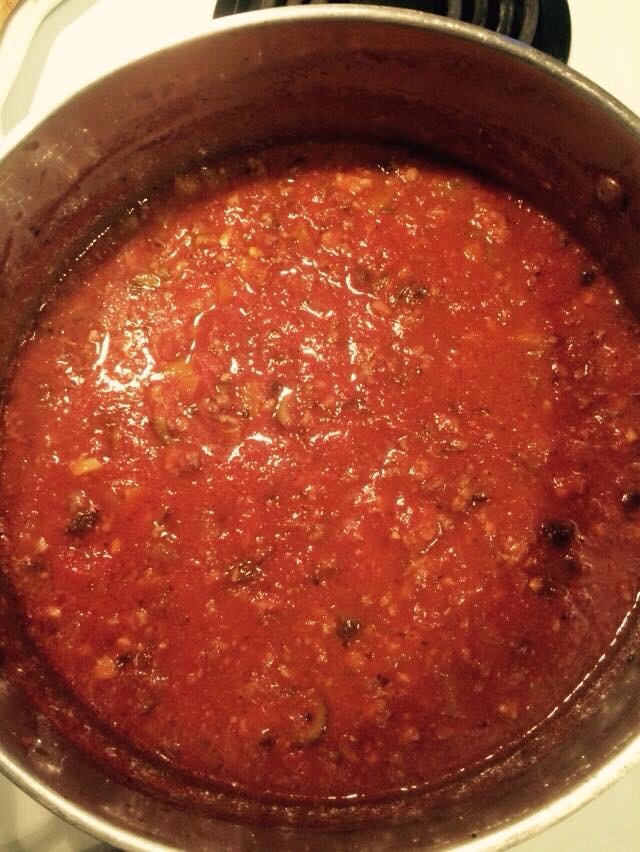
Spaghetti Sauce a la Urban


There’s no doubt that a great batch of homemade spaghetti sauce is serious comfort food. In an ideal world, you want to make something that cooks low and slow, developing serious flavors, but what about when you get a hankering at 4:45 in the afternoon? Here’s how I scratch that itch. This is a simple sauce that tastes much richer than it might sound, and I assure you, it’s incredible the next day. The fresh veggies, citrus, pungent lemon thyme, piney savory, and subtle, herby sweetness of the marjoram is the key – Spaghetti Sauce a la Urban.

For the proteins, keep in mind that you can and should grind your own at home; if you don’t have the capability for that, dice it and you’ll be fine. If you prefer a vegetarian version, I’d substitute firm local tofu, or eggplant. Make sure all your veggies and proteins are as fresh as can be. Do use whole canned tomatoes; they hold more flavor than stewed, crushed, diced, etc, the quality is often better than fresh at this time of year, and they’re certainly less expensive.

8 Ounces Fresh Angel Hair Pasta

2 20 oz cans Whole Tomatoes

1/2 Pound Ground Pork

1/2 Pound Angus Beef

1 Cup Black Olives

1/2 Sweet Onion

1/2 Sweet Pepper

1 Stalk Celery

1 small Lemon

1/2 small Lime

3-4 Cloves Garlic

2-3 Sprigs Parsley

1/2 – 1 teaspoon Lemon Thyme

1/2 – 1 teaspoon Savory

1/2 teaspoon Marjoram

2 whole Bay Leaves

1 Cup Red Wine

Extra Virgin Olive Oil

Dry Sherry

Sea Salt

Black Pepper

Toss the tomatoes into a large pot over medium low heat. Process with an immersion blender until you’ve got the consistency you like. I prefer to leave things a bit rustic, rather than going all the way to smooth sauce.

Rinse, peel, top and seed the onion, sweet pepper, celery, garlic, citrus, and parsley. Fine dice the onion, pepper, olives, and celery; if you have celery leaves, by all means, use them, that’s where the real flavor is. Mince the garlic, chiffonade the parsley. Quarter the citrus.

In a large sauté pan over medium high heat, add the beef and pork, and season lightly with salt and pepper. When the meats are nicely browned, add the cup of red wine and continue cooking until the raw alcohol smell goes away. Add the proteins to the tomato blend

Add a couple tablespoons of olive oil to the sauté pan and allow to heat through. Add onion and pepper and season lightly with salt and pepper. Sauté until the onion begins to turn translucent. Add garlic and continue to sauté until the raw garlic smell is gone. Add all that to the big pot

Add 1/2 Cup of Sherry to the sauté pan and deglaze, thoroughly scraping up all the little bits. Once the raw alcohol smell has burned off, add that to the pot as well.

Squeeze citrus into the big pot, stir to incorporate. Crush by hand and add the lemon lemon thyme, savory, and marjoram. Add parsley and bay leaves, stir to incorporate. Taste and adjust salt and pepper seasoning as/if needed.

Reduce heat to low and simmer for an hour or two, stirring regularly.

Serve Over fresh angel hair pasta, with freshly grated Parmegiano, crusty bread, a nice green salad and a glass or two of Old Vine Zinfandel.

The next day, add a cup of cheese to the blend, and bake for 30 minutes at 350° F. As promised, it’ll be spectacular.

Spare Ribs with a Citrus Fennel Glaze


We love ribs, especially when M does them up. This time around, we decided to do something we don’t do very often –  a wet treatment, as opposed to a dry rub – Our usual go to. A citrus fennel glaze is what we came up with.

Citrus Fennel Glazed Spare Ribs

The sauce is the star here, and for good reason. It’s a grade A example of the organic way M and I arrive at a dish, based largely on what we’ve got on hand, and often initiated by a single thing – In this case, a left over blood orange was the spark –  a leftover that had given up its zest for an earlier meal.

Initially, we were leaning toward a Chinese style rub, then veered off on a tangent. M found that blood orange and wondered aloud if we couldn’t do something with that. A short brainstorming session yielded what you see herein. This sauce could be used on a lot of things, from chicken or beef, to Brussels sprouts or carrots.

While this might seem like alchemy, I assure you, it’s not. Often, when we’re brainstorming things, I’ll whip out our copy of The Flavor Bible, a book that you aughta have in your kitchen, if you don’t already. You’ll find a wealth of parings and affinities therein that truly can and will spark your imagination and creativity.

And I can’t stress enough to be bold in endeavors like this – If you like stuff, and you think that stuff might go well together, then try it. If you’re at all nervous about committing to a full blown recipe, then cut off a little piece of this and a little piece of that,  pop them your mouth, and see what you think. If it’s good, go with it. If it’s not, search elsewhere.  That, in a nutshell, is how you build your own ideas into culinary reality.

We used a rack of spare ribs, but you can do any cut of rib you like, (Baby Back, St. Louis, Rib Tips, County Style, or beef ribs.)

Preheat oven to 250° F and set a rack in the middle slot.

Season ribs with sea salt and fresh ground pepper, (we use our go to seasoning salt for pretty much everything).

Wrap the ribs tightly in aluminum foil, fat side up and dull side of the foil facing out.

Set the package on a baking sheet, or the bottom of a broiler pan, and cook low and slow for about 2 hours, until the rib meat is very tender.

Citrus Fennel glaze is great for a bunch of dishes

Citrus-Fennel Glaze

Juice from one fat and happy blood orange.
1/4 Cup Orange Marmalade
1/3 Cup chopped fresh Fennel bulb
2 small cloves Garlic
1/4 to 1/2 teaspoon Tabasco chile flake, (Use any chile variety you like here)
1 Tablespoon butter
1 Teaspoon Arrowroot.

Remove ribs from oven, set a rack on a high slot, and increase temperature to 375° F.

In a sauté pan over medium heat, melt butter, then add fennel and sauté for a couple minutes until it has notably softened.

Add garlic and sauté another minute until raw garlic smell dissipates.

Reduce heat to medium low.

Add orange juice, marmalade, and chile flake, stir well to incorporate.

Cook, stirring constantly, for 2-3 minutes, until the sauce is quite liquid, (that’d be the marmalade relaxing a bit.)

Add half the arrow root and stir to incorporate. Allow the sauce to cook for another minute or so. Sauce will thicken slightly – Add the rest of the arrow root if you want things a bit thicker.

Unwrap the ribs, and flip them meat side up onto the pan. Baste or pour sauce liberally onto the ribs in an even layer.

Uncover your ribs and flip them meaty side up for glazing

Return the ribs to the oven on the high rack, and cook for about 10 minutes, until the sauce is bubbling and starting to caramelize.

Beautiful salad!
Beautiful salad!

We served ours with an gratin potatoes, a lovely green salad, and fresh, crusty bread. They were falling off the bone tender, and the sauce was a perfect foil to the richness of the meat.

Chicken ala Dianne


My Friend Dianne Strother Boyd was in need of a ‘low fat, yummy chicken recipe,’ so I put this together. When you’re cutting down on fat and/or going low on salt, what you want is something that has some zing to it, that’ll not only have a nice, bold flavor profile, but will also deliver mouth feel – I give you Chicken ala Dianne.

The combination of flavorful dark chicken meat, leaving the skins and bones on, and a sweet, vinegary marinade will do the trick. It’s an easy dish, doesn’t take a lot of prep time other than marinating, and tastes like you worked harder than you did.

When you lose the richness of fat, or the flavor enhancement salt brings, it’s important to compensate with broad brush strokes. With this dish, you get a really nice balance of major taste bases – Sweet, sour, bitter, with lighter touches of umami and salty. You might want to take a look at our Salt Free Seasoning Blends post, too.

So here ya, go, Dianne – Hope you like it, (and Bill, too!)

Chicken ala Dianne - Low on fat, high on flavor

Chicken ala Dianne

4 bone in, skin on Chicken Thighs (roughly 1 1/2 pounds)

2 Cups fresh Grape Tomatoes (you can rough chop big ones if that’s what you’ve got)

1/4 small sweet Onion

1/4 Cup Apple Cider Vinegar

3/4 Cup Low Sodium Chicken Stock

1 small fresh Lemon

2 Tablespoons Agave Nectar (Honey is fine too)

1 5” to 6” sprig fresh Rosemary

2-3 cloves fresh Garlic

2 Tablespoons Nonpareil Capers, drained

2 Tablespoons Olive Oil

Freshly ground Pepper.


Zest lemon and cut in quarters.

Trim, peel, and mince garlic.

Trim, peel and dice 1/4 cup of onion.

In a large, non-reactive mixing bowl, combine vinegar, oil, stock, juice from 1/4 of the lemon, the lemon zest, garlic, onion, and honey. Whisk to incorporate. 

Add chicken to the mixing bowl and allow to marinate, refrigerated, for 30 minutes, then flip the pieces and marinate for another 30 minutes.

Preheat oven to 350° F.

Arrange chicken in a baking pan or casserole dish, and pour marinade over the chicken.

Add the tomatoes to the dish and spread them evenly throughout – Ditto with the capers.

Break the rosemary into two or three pieces and toss that on the chicken.

Season with a few twists of pepper – With capers in there, you really don’t need any more added salt.

Bake on a middle rack until you reach an internal temperature of 160° F, then remove dish from oven and allow a 10 minute rest.

Serve with rice, a green salad, and the remaining lemon slices.

Brine That Turkey!


Truth or dare time – How many of y’all, when it comes to your Thanksgiving turkey, do not show the bird the proper love? Tell the truth, now… Do you simply throw a bird in to the oven? Do you fill it with stuffing? Thought so… truth be told, even if you rub it with something nice, you’re still not giving that poultry it’s holiday due. If you want to serve the best bird, you’ve got to brine that turkey. I’m gonna tell you how, but first, here’s why.

Turkey is an extremely lean protein. If you doubt that, buy some ground turkey, do nothing to it but cook it, and see what you get – unlike good, fresh hamburger, there’ll be no moisture in the pan, and the taste will be, well… less than optimal. Let’s face it, we don’t need fat from our bird, ‘cause we’re gonna get that from all the sides we make. What we do need is a tender, juicy bird, and again, brining is the way to get there. Now, I know there are some of you out there thinking, ‘yeah, but if I cook it right and season the skin nicely before hand, it’ll still be great,’ right? Well, no, no it won’t – it might be good, maybe even really good, but it won’t be great.

Seasoning right before you cook, or even an hour or two before you cook, doesn’t allow the salt you’ve added enough time to do its thing. It won’t penetrate the flesh at all, really, especially with a hunk of meat as thick as a turkey breast. It’ll do a bit of work on the surface, but no more. Truly, the only way to allow seasoning to work is to give it the time it needs – And that means you need to brine that bird.

Traditionally, brining is a wet process. We submerge the bird completely in a brine, and give it anywhere from eight to twelve hours to do its thing. That works great, frankly, and it really isn’t hard. Brined birds weigh more after cooking than a dry bird does – Up to 8% more, and that’s virtually all added moisture, which is very good indeed. The wet brine process also acts chemically to break down some of the tougher proteins within the bird’s muscle fibers, leading to tender flesh – Also good. So, if you’re of a mind to wet brine, here are some basics.

If you buy a frozen bird, you can thaw it while brining, which saves you some time, (if you buy a fresh turkey, you don’t need to worry about that.)

Proper brining is a function of both brine strength, the weight of the bird, and brining time. What you’re doing at home is technically called gradient brining – That is, putting food in a higher salt concentration brine than you really want in the food, because you don’t have the time to do what’s known as equilibrium brining – That’s when you use a lower salt concentration and allow the time needed for the salt content in the brine and the food to equalize. When you see or read about something like pastrami being brined for a week or longer, that’s what they’re doing, and that’s also why the Pro’s make stuff that consistently tastes better than what we do at home. All that said, don’t fret – What we do at home is safe, and it really does make a better bird. So, for reasonable gradient brining, we brine whole turkeys for about an hour per pound, in a 5% to 6% brine concentration.

Basic brine ratio is often shown as ‘1 cup salt to 1 gallon of water’, but not all salt weighs the same – what we really want is about 7 ounces of salt per gallon. When you brine, use kosher salt – The larger crystal size means it dissolves faster in water than fine grained stuff, and there’s nothing in there but pure salt, so it wont taint your brine. If you don’t have a kitchen scale, (And frankly, you should), then Morton Kosher weighs 7.5 ounces per cup, and Diamond 5 per cup. For the record, there’s nothing wrong with adding herbs or spices to a brine – If you like it, do it.

Basic Wet Poultry Brine
For each Gallon of water, add
7 Ounces Kosher Salt
1 Tablespoon crushed Sage
1 Tablespoon Lemon Thyme

For a nice twist,

Cider Brine for Poultry
For each Gallon of Apple Cider, add
7 Ounces Kosher Salt
1 Tablespoon ground Black Pepper
2-3 dashes Tabasco sauce

For a 15 to 18 pound turkey, you will need a couple of gallons of cider or water, and a clean, food grade 5 gallon plastic bucket. You don’t need to heat the water or cider. Just make sure all the salt has completely dissolved before you proceed.

You need to plan ahead for wet brining. You’ll want an additional 6 to 12 hours between the brining and the cooking, so, if you’re thawing and brining, your process needs to begin nice and early on the day before turkey day.

Pay attention to food safety procedures during brining, without fail! Your brine and bird must remain under 40° F at all times, period; if you need to add a little ice, do so. If you need to add a lot, compensate with a bit more salt. When your brining period is done, pour out the brine, (NEVER reuse it.) Gently rinse the bird in clean, cold water, then pat it dry with clean paper towels and then transfer to a roasting pan.

Now comes the secret to gloriously golden, crispy skin. Allow an air rest for your bird, by letting it sit, uncovered in the refrigerator, for 4 to 6 hours after brining. This will help moisture evaporate from the skin, and allow the meat to reabsorb some moisture as well.

Now, if all that makes you paraphrase George H. W. Bush, ‘Not gonna do it, not gonna go there,’ then here’s an even easier option that works just as well. And it’s funny that, right at this point, literally right at this point in today’s narrative, I got this text from my friend John Joyce, a fine guitar maker from the Twin Cities in Minnesota – ‘Hey E what do you think: dry brined or wet brined turkey. I’ve done wet for years but I’ve read a lot of good stuff on dry brining.’ Yep, dry brining is exactly what I was about to type, so, here ya go JJ.

While the term ‘dry brining’ might seem kinda oxymoronic, i assure you it’s not. In restaurants, this has been done for a long, long time. Often called ‘pre-salting,’ it acts on a protein more or less as a wet brine does, albeit without the water, equipment, or hassle. Think of it as a dry rub, like we use on poultry, ribs, and the like, and it’ll come to light for you.

The chemistry here is very cool, too. When we first apply a dry brine, osmosis occurs, meaning the moisture within the bird is drawn toward the higher salt concentration rubbed on the skin. As that moisture reaches the surface, it dissolves the salt and sugar in the brine. In the final stages, the liquified brine is draw back into the bird as things equalize. There, the solution acts as a wet brine does, breaking down those tough muscle proteins and acting as a tenderizer – Pretty cool, huh? And to top it off, all this is done in your fridge, during a simultaneous cold rest, so you get that crispy skin, too – Two birds with one rock, if you will.

Dry brining does require time, and in fact, more time than wet, usually. Since there’s no added water, you’ll need two to three days to let the process do it’s thing, so once again, plan ahead.

It’s also important not to get a bird that’s been pre-seasoned in any way, since that can and will upset the balance of things – Avoid anything that says kosher, re-seasoned, or self-basting. You’ll also want a fresh bird, or at the very least a fully thawed one.

Basic Dry Turkey Brine
5 Ounces Kosher Salt
1 teaspoon crushed sage
1 teaspoon Lemon Thyme
1 teaspoon ground Black Pepper

Sweet Dry Turkey Brine
5 Ounces Kosher Salt
2 Tablespoons Dark Brown Sugar
1 teaspoon Smoked Paprika

Prep your bird by removing any of the extraneous bits, then pat it dry with clean paper towels.

Gently gently separate skin from flesh over the breast area, taking care not to rip the skin. It’ll work much better in direct contact with the meat.

Rub a teaspoon or two of the mix into the bird’s cavity, then do the same all around the drumsticks. Rub 3-4 tablespoons of the mix onto the breast meat, and use the rest evenly across the skin.

Ct a small slit in each side of the bird about half way along the wing tips and then slide the tips into that cut.

Put the bird on a roasting pan or rimmed baking sheet, and into the fridge for at least 2 days, and 3 is better.

When the time’s up, you’re ready to cook. You can roast, deep fry, whatever floats your boat.

Keep your bread stuffing in a casserole dish, and prepare a nice juicy cavity filler for the bird.

1 Apple of your choice
1/2 Sweet Onion
1 stalk Celery
Tablespoon Canola Oil
1/2 teaspoon Sage
1/2 teaspoon Sea Salt
1/2 teaspoon ground Black Pepper

Rough chop the orange, onion, and celery, (and if you have celery leaves, use those!). Throw those in a mixing bowl, then add oil, Sage, salt and pepper, then combine thoroughly. Stuff your bird’s cavity thoroughly. Place the bird on a rack in a roasting pan, and add 2 cups of clean water to the pan. Insert an internal thermometer to the thickest part of the breast.

Preheat your oven to 350° F.

Standard roasting times, stuffed, at 350° F follow; that said, the only real way to know when the bird is done is by internal temperature, and we’re looking for 165 F.

10 to 18 pounds 3-3/4 to 4-1/2 hours

18 to 22 pounds 4-1/2 to 5 hours

22 to 24 pounds. 5 to 5-1/2 hours

Start your roast with the bird uncovered, then cover loosely with foil for the last hour. Basting isn’t necessary, but it sure doesn’t hurt.

When the bird is done, remove it from the oven and let it rest for 15 minutes prior to carving – That rest is vital to allowing juices to equalize throughout the cooked bird, so don’t cheat!

Carve, admire, enjoy, and get ready for leftovers,

Later in that text, JJ wrote, ‘I like those ingredients. I usually do two birds. I’ll do one dry and one wet. Is the cider recipe on your site?’ It’s right here for ya, Buddy! He ended with this – ‘I’m also making your ginger ale recipe. So I guess that means you’ll have a virtual seat at our table. ?’

I told him I was honored and pleased by that to no end, and I truly am.

Banh Mi


Asked for reflective advice shortly before he died, the venerable rocker Warren Zevon thought for a moment, and then replied, “enjoy every sandwich.” There’s sage advice in that simple thought. Few things tell more about a chef than what kind of sandwich they offer, and the same goes for the choice a diner makes. Given the incredible depth and breadth of options out there, I’ll just come straight out and say that you’d be absolutely hard pressed to do better than an authentic, house made Banh Mi sandwich.

When we dive into sandwich history, invariably we come to the old saw regarding John Montagu, the Fourth Earl of Sandwich, who lived in the seventeen hundreds, and reportedly ‘invented’ his namesake treat. Montagu, during an epic poker game in the winter of 1762, called for cold meat in between two slices of bread so that he wouldn’t have to break away from the game to eat. His culinary trick caught on, and subsequently, the thing began to be referred to as a sandwich – Now, all that said, there’s no doubt the dish has roots far deeper and broader than one game of five card draw.

Whether it’s a Reuben in Omaha, a torta in Mexico, smoked meat in Canada, vada pav in India, katsu sando in Japan, medianoche in Cuba, chacarero in Chile, or doner kebabs in Turkey, they’re all variations on the sandwich theme, and they’re all delicious – And none more so than a perfectly constructed banh mi.

Banh Mi is, of course, Vietnamese, with some foreign influence integral to the sandwich. The foreign would be French, who, like so many other empire builders, (Us Merkans, for instance), were eventually drummed out of Vietnam, but if they left some good behind, their influence on Vietnamese cuisine was undoubtedly it. Bread was non-existent in Vietnam before the French – Now baguette shops are ubiquitous throughout the country, (In Vietnam, baguettes are made from rice flour, by the way, so a real Vietnamese baguette has a delightfully light taste and crumb). Onions, potatoes, asparagus, and meat broth were adopted heartily, the latter leading to arguable the most famous Vietnamese culinary export, the joy that is Pho.

That said, don’t by any means assume that Vietnam was a culinary backwater prior to colonization – Nothing could be farther from the truth. The Vietnamese have always excelled at not only surviving, but thriving in good times and bad – A key part of that adaptability is the willingness to try and adopt new things – especially true when it comes to food. Vietnam and their largest neighbor, China, have cross pollinated culinarily for thousands of years. Everything from noodles and won tons, to chiles and corn made their way south from China and were adopted heartily by the Vietnamese.

That said, there are key aspects of Vietnamese culinary philosophy that color everything there, including the banh mi. At the core of this cooking is the balance of distinct, strong flavor profiles – spicy, sour, bitter, salty, and sweet. Per the Vietnamese culinary tradition, each flavor corresponds with an organ in our bodies – gall bladder, small intestines, large intestines, stomach, and bladder, accordingly. The mantra of five continues further – Vietnamese cooks strive to include five essential nutrients in each meal – Powder (spice), water, minerals, protein, and fat. The visual element of cooking is also carefully considered; white, green, yellow, red, and black are presented in a well balanced Vietnamese dish. Finally, a balance between what is thought of as the heating or cooling properties of various ingredients is considered – The juxtaposition of jalapeño and mayonnaise in a classic banh mi, for example.

That classic banh mi is far simpler than what you probably have tasted. Banh mi thit nguoi, sometimes called the special, (Dac biet), is a baguette, sliced in two and given a hearty schmear of house made liver pate – That’s how it was for many decades and still is, in many Vietnamese deli’s. Banh mi has evolved, however, to our great fortune. Nowadays, you’ll find subtly complex sauces, pickled and fresh vegetables, and proteins from tofu, to char siu pork, roast chicken, or grilled pork, and of course, beef here in the states. Almost any protein you dig will work, which makes banh mi the perfect vehicle for leftovers. The veggies vary as well, but almost always include chiles, cilantro, cucumber, and a tart-sweet pickled daikon, carrot, or onion. That fancier, loaded version became popular in south Vietnam, especially in Saigon, and it’s that version that has spread around the globe more than any other.

Two of the things needed for a classic banh mi are things that you probably don’t have laying around your kitchens – One you’ll have to make, and the other buy, or sub for. They are the daikon or radish pickle, and Maggi seasoning. The pickle is easy as all get out to make, and we’ve got a recipe for you below. That’ll need at least an hour before you use them, and a couple to a few are even better, so consider making that ahead of meal time. The Maggi seasoning is, frankly, pretty much pure MSG and sodium, although the recipe varies depending on where it’s made, (Maggi is ubiquitous in Asian cooking, but it actually originated in Switzerland back in the 1800s). If you have an Asian grocery, you’ll find it there, and of course it can be bought from Amazon as well. It comes in various sizes, from around 5 ounces on up to 28 and 32 ounce bottles – If you decide to try it, get a small bottle – A little goes a long way. I’m going to assume you don’t have Maggi, and as such, I’ll offer a sub that’ll work just fine and taste delicious to boot. Finally, we like a light cabbage slaw on our banh mi, so I’ll shoot you a recipe for that as well.

Pickled daikon or radish is key to Banh mi

For the Pickled Daikon.
You may sub regular radishes if your grocery doesn’t have decent daikon, as ours did not when I wrote this post.
5-6 Radishes
1/2 Cup White Vinegar
1/2 Cup cold Water
1/2 teaspoon Bakers Sugar
1 teaspoon Sea Salt
1/4 teaspoon Lemon Thyme

Rinse and stem radishes, then slice into 1/8″ thick rounds. If you use daikon, slice those into matchstick size, and the same goes for carrots if you decide to go that route – Use the same brine on all three options.

Combine all remaining ingredients and stir briskly to dissolve salt and sugar.

Place radishes in a non-reactive container, cover with the brine and allow to sit for 1 to 4 hours prior to use.

For the Slaw
2-3 1/4″ thick slices Green and Red Cabbage
1 small Carrot
1-2 slices Sweet Onion
2 Tablespoons Rice Vinegar
Pinch of Sea Salt

Slice the carrot and onion – Onion into thin slivers, and carrot into match stick size.

Rough chop the Cabbage slices.

Transfer all to a mixing bowl, add the vinegar and salt and toss to coat.

For the Sauce
1 Cup Mayonnaise
2 teaspoons Dark Soy Sauce
1 teaspoon Cider Vinegar
3-5 drops Fish Sauce
1-2 drops Worcestershire

Combine and thoroughly whisk all ingredients together in a small bowl.

Cover and refrigerate for at least 20 minutes prior to use.

For the Banh Mi
1/2 Pound Protein of choice
Fresh Baguette
3-4 Jalapeño chiles
1 Cuccumber
5-6 sprig Cilantro
Banh Mi Sauce
slaw
Pickled Radishes

Banh mi - a study of balance and flavor
Banh mi – a study of balance and flavor

For whatever protein you decide on, (we used beef for ours), slice very thin.

Cut baguette into roughly 6-8″ long chunks, then slice in half. It’s customary to take the soft gut of the bread out, leaving more room for goodies.

Stem and seed Jalapeños, then slice into very thin rings.

Slice cucumber into very thin rings.

Rough chop cilantro.

Arrange all the goodies so that each person can load their own banh mi.

Put a generous amount of the sauce on both sides of the baguette, then layer up, starting with your protein and ending with the slaw.

Banh mi, final assembly

Now, you’ve got your balance of flavors and colors, (The Soy in your Sauce handles the black, btw), and you’ll make all your organs happy!

Banh mi
Banh mi

Fold ’em up and dig in.

Goes great with a local lager or pilsner.

Practical Meal Planning

Practical meal planning – 1 good protein makes the base for a weeks worth of tasty, nutritious meals.


My friend Mark Conley is a follower here, (and also a purty durn good guitar maker and educator, too!) After our last post on slow cookers, he asked this million dollar question about practical meal planning,

‘It is just me and my wife most dinners. Is this practical for us? I don’t like making massive amounts of food!’

Thank you, Buddy, for asking, because we seriously need to cover this stuff. The answer is yes, it’s not only practical, but it makes more sense than most other plans. Here’s why

M and I live with just our two critters, so all our cooking is for two. We cook throughout the week, of course, but what we make is often determined on short notice – By what looks good, sounds good, or comes in a flash or inspiration. We typically have one day off together, Sunday. Our ritual is coffee in bed, then breakfast in town, followed by shopping.

Generally, the center piece of that trip to the grocery store is one thing around which we’ll generate several meals. As y’all know, we’re omnivores, so that’s often chicken, pork, or beef – We buy a whole bird, or a large roast, and cook that on Sunday, and then enjoy several meals thereafter.

If you’re not doing something similar, you really should be – It’s far more efficient than coming up with something out of the blue every night, and it makes cooking much easier, which is imperative when you both work long hours as we do. Having a main course protein already cooked or ready to go is key. And it needn’t be meat, for that matter – tofu, cheese, and beans will all provide what you need and are just as delicious as fleshy stuff.

Fresh roasted veggies

Of course, to do this right, you need a lot of good stuff, staples like fresh veggies and fruit, potatoes, pasta, tortillas, beans, oils and vinegars, and the like – And especially as we roll into the cold months, there’s nothing at all wrong with having a decent stable of canned and frozen goodies. We keep decent, organic cheese pizzas on hand, as well as frozen pasta, veggies, and fruit – A combination of bought and stuff we put up during the growing months. Add a decent rack of spices, herbs, and seasonings, and you’re good to go – Inspiration can strike at will.

Here’s a basic rundown in what we did with two of those primary proteins throughout the week, including alternate meals to break up the pattern and keep things interesting.

Clay cooker roast chicken

Whole organic, free range Chicken.

Sunday – Roast chicken and veggies, green salad.

Monday – Pizza with chicken, tomato, jalapeño, and fennel.

Chicken pizza with tomato, jalapeño, and fennel

Remaining chicken pulled from bones. Carcass into a stock pot with remaining roasted veggies, and fresh mire poix, for stock – Refrigerated overnight.

Tuesday – Mac and Cheese, green salad.
Stock clarified, refrigerated.

House made Mac & Cheese

Weds – leftover Mac & Cheese, (’cause it’s even better the next day!)

Thursday – Chicken soup, made with a 3 bean medley, tomatoes, onion, sweet peppers, green beans, peas and corn.

House made chicken veggie soup

Friday – Chicken tacos with red mole, (frozen in an ice cube tray, so super fast to prepare), fresh lettuce and pico de gallo.

Chicken and red mole tacos

Saturday – Free for all leftovers.
Second Run – Local, choice sirloin roast.

Sunday – Roast beef and root veggies, fresh green salad and local sour dough.

Monday – Roast beef hash for brunch.

Tuesday – Beef nachos with onion, tomato, jalapeño, sharp cheddar, fresh salsa and sour cream.

Wednesday – Big ol’ garden salads and sour dough.

Thursday – Beef Chimichangas with fresh pico de gallo and sour cream.

Friday – Open faced cheese sandwiches with fresh veggies.

Saturday – Free for all leftovers.

Now granted, this isn’t anything magical, but it’s incredible tasty fare that’s good for you, and none of these meals take more than 30 minutes to prepare. When we get that Sunday plan done, it’s just a matter of what sounds good through the week, and sometimes meals are chosen predominantly for ease of prep.

If any of these particularly float your boat and you want a detailed recipe, just pipe up, and we’ll make it happen.