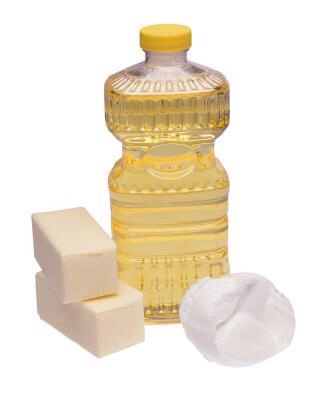
Alt Fats for Baking


Alert reader Christy, (always wanted to use that…), writes, “What kinds of fats can be substituted for each other when baking and how do you do it? You used lard for the piecrust, which does make the best crust. Leaf lard is hard to find around here, though. I made a pie crust the other day using butter instead, but it turned out pretty tough. And then there are liquid fats such as olive oil and canola oil, etc.?”

Great question, so let’s wade in. For the record, I bake with butter, lard, and coconut oil pretty exclusively. I believe firmly that neither butter or lard are bad for you, eaten in moderation, and in fact, are healthier than most highly manufactured fats. I’ve covered this in other posts, so I’ll leave my position at that. Christy is a wonderful, agile cook, and if she or any of the rest of you want to know stuff like this, or need to for health reasons, then I’ll honor it and answer as best I can.

The primary issue when substituting oil for butter in a cake, cookie, or pie recipe is to fully understand the chemistry the fat facilitates within such things. In the broadest sense, fat contributes tenderness, moistness, and mouth feel to baked goods. There is also a flavor aspect involved, the rich nuttiness of butter and the salty tang of lard. Fats also contribute significant textural qualities to baked goods. Consider a recipe that has you creaming butter with a sweetener, like the gingerbread or the Nanaimo bar recipes we just posted. In both recipes, I wrote about whisking the sweet and fat ingredients together until a notable lightening of the texture is achieved; this is possible because the semi-solid fat traps tiny air bubbles in the matrix and physically lightens it, something that liquid fats don’t do very well at all. Similarly, consider something that depends on a loose matrix of fat and flour to derive a light, flaky texture, like a pie crust; again the property imparted by the semi-solid fat is an absolute necessity. The second consideration involves proportions, as virtually no alternative fat is a straight 1:1 substitution for butter or lard. Take muffins or pan breads as an example in this regard; reducing the amount of fat will will allow gluten to develop more freely, resulting in a notable tougher product.

A closer examination of the most commonly used baking fats will help to better understand what we need to emulate with a substitute. Fat content is the key in this regard. Butter is 80% + fat, with the rest made up of water and milk solids. True lard is virtually all fat; when I say true lard, I’m speaking of lard you yourself have rendered from pork, or lard you’ve bought that was kept in a dairy case, the leaf lard Christy referenced above. I know excellent chefs who swear by duck fat and schmaltz for baking as well, which is certainly food for thought.

If you’re buying the lard that sits out next to the shortening, stop doing that and don’t do it again. Those are vegetable or animal fats heated under pressure, with hydrogen gas introduced into it, usually with some form of nasty, toxic catalyst used to make it all happen faster. This process forces hydrogen atoms to latch on to carbon bonds in the fat in a crossways configuration, generating what’s commonly known as a trans fat. This is done not for our wellbeing, but so that said products can remain in solid form on an unrefrigerated store shelf and not go bad. That, for my mind, is reason enough to ban them from your kitchen.

In any case, the good news here is that the overall fat content of most of the healthy cooking oils and a few interesting non-oil alternative are comparable to butter, so successful substitution is certainly viable.


The first rule of subbing for butter or lard is that there is no hard and fast rule; it varies by recipe, and you need to experiment a bit to land on the winning formula. Here are some general guidelines to get you started.

Subbing liquid oil for butter works best in recipes that call for melted butter.

Subbing coconut oil, with its more solid form, works best in recipes that call for chilled butter. Keep in mind that coconut oil will go to liquid faster than butter will due to its lower melting point, so keeping it well chilled will serve you best when working with it in a recipe that calls for creaming, or in pie and tart crusts.

Start by subbing half the butter with your chosen alternative in a cake, muffin or cookie recipe; stick with butter or lard for pie crusts until you get a good, solid feel for how your alt choice behaves, then brave onward.

When you’re ready to 86 all the butter,

For olive, avocado, peanut, macadamia, walnut, or coconut oil, use .75:1 for the amount of butter called for.

For canola, grape seed, or hemp seed oil, use .625:1 for butter.


Consider these non-oil alternatives as well.

Applesauce, especially fresh, homemade, makes a fine butter alternative; it works best in cakes, muffins, and quick breads. Here again you can opt for the 50% butter, 50% applesauce route, or simple replace all the butter; doing so will yield a denser, moister product, but that’s rarely a bad thing.

Avocado is great in the same category of recipes. Avocado lowers the calorie content and yields a softer, chewier baked good.

Full fat Greek yogurt also makes a fine replacement. Use it in a 1.5:1 ratio for butter and again, you’ll lower the calories and saturated fat count of your recipe.

Closing thoughts on that tough pie crust made with butter, Christy. My first questions are; how old was the butter and the flour, what kind of flour did you use, and how cold was the butter and water? Next would be was this made by hand or machine assisted?

I like whole wheat pastry or whole wheat white flour for pie crust. Much better results than AP in my experience.

I make crust by hand, exclusively. Flaky crust requires pretty big chunks of fat and a relatively loose dough; I get the best feel for that by hand.

Machines can and will heat up your ingredients, and cold is kind when it comes to flaky crust.

Finally, keep in mind that butter has a lower melting point than lard, so it will break down to smaller sizes faster. Cut your butter into 1/4″ cubes and stick it in the freezer for about 15 minutes before you combine flour and fat.

Anthony Bourdain hates your garlic press.


In his epic tell all, Kitchen Confidential, my favorite kitchen kermudgeon, Anthony Bourdain, had this to say about garlic.

“Garlic is divine. Few food items can taste so many distinct ways, handled correctly. Misuse of garlic is a crime. Old garlic, burnt garlic, garlic cut too long ago and garlic that has been tragically smashed through one of those abominations, the garlic press, are all disgusting. Please treat your garlic with respect. Sliver it for pasta, like you saw in Goodfellas; don’t burn it. Smash it, with the flat of your knife blade if you like, but don’t put it through a press. I don’t know what that junk is that squeezes out the end of those things, but it ain’t garlic. And try roasting garlic. It gets mellower and sweeter if you roast it whole, still on the clove, to be squeezed out later when it’s soft and brown. Nothing will permeate your food more irrevocably and irreparably than burnt or rancid garlic. Avoid at all costs that vile spew you see rotting in oil in screw-top jars. Too lazy to peel fresh? You don’t deserve to eat garlic.”

Ah Tony Bourdain, never at a loss for words…
Is he over the top?
Absolutely.
Is he correct?
I’d say 90% yes, but let’s just break down his specific contentions to be sure, shall we?

First off, we have the implied divinity of garlic: Is he right?
In a word, yup.


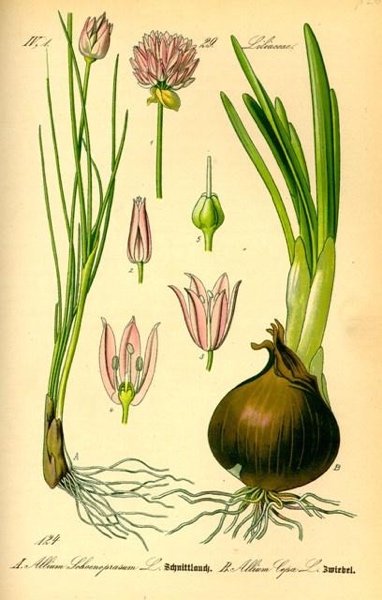
Allium Sativum, of the Family Rosacea, (why it’s sometimes called ‘the stinking rose), is indeed magic, and its broad, utilitarian beauty is admirable. No other veggie has that ethereal combination of bite, heat, and sweet that garlic packs. What the author doesn’t note is that all garlic is not created equal. There are hundreds of cultivated garlic varieties worldwide, which is great if you’re a gardener or know a generous one. If you have a green thumb and your cultivation zone can handle it, by all means grow it. Just Google ‘Heirloom garlic starts’ and you’ll find a veritable cornucopia of options. Otherwise, hit up your local farmers market or CSA and load up when the magic is in season.

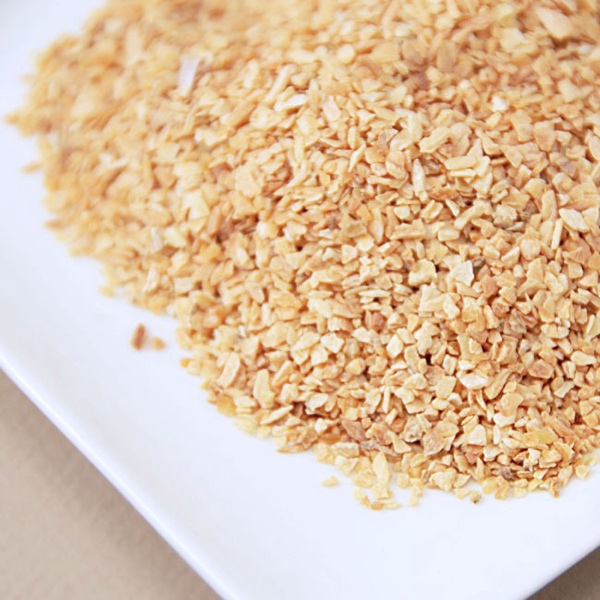
Great garlic is usually not available year round to the vast majority of us. As such, some plan for preservation is in order. Drying is your best bet; while there is a certain loss of flavor, it’s a given that great garlic dried will be better than OK garlic fresh, so it’s worth the effort. You should peel the cloves, and at the least, cut ’em in half, though you can chop or mince if you like; process in a dehydrator or warm oven until they’re light and dry to the feel.

Please know that garlic in oil is not a safe methodology; garlic is a low acid food, and you’re begging for botulism here. Making garlic oil in small batches and freezing it is A-OK. Puree your garlic, mix it with good olive oil, strain it through cheese cloth or a fine, double sieve. This is another perfect ice cube tray application – freeze it that way and pop a cube out for use.

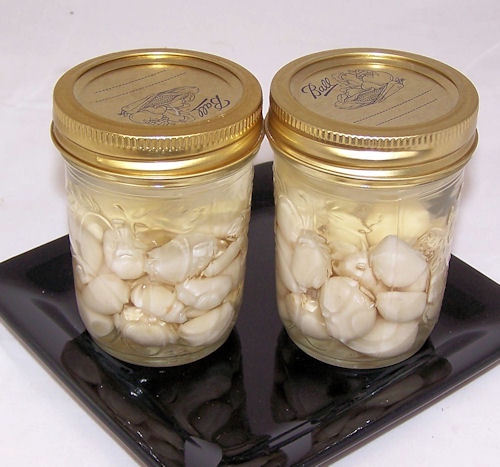
You can and should pickle garlic, it’s delightful and has a complexity like no other. Finally, garlic salt or pepper are nice options as well. Kosher or sea salt both work fine, though the uniform grain of kosher probably works best; for garlic pepper, use whole black tellicherry berries. 1/4 cup of garlic for each cup of salt or pepper will do the trick. Preheat your oven to warm, or 180° F, and line a baking sheet with parchment paper. Peel the garlic cloves, then add them straight away with the salt or pepper to a food processor. Process for about 30 seconds, until you’ve got a uniform texture. Spread the results into an even, thin layer on your baking sheet. Bake for about an hour, until the results are crisp and dry. You do not want them to brown, so keep an eye on things. Transfer the salt or pepper back to the processor using the parchment. Pulse a few times to break things up to an even consistency. Stored in airtight glass jars, your housemade lovelies are good to go for 3 or 4 months.

If the grocery is your only option, then what you’re likely to find will break down into three varieties; Softneck, Hardneck, and Elephant. 

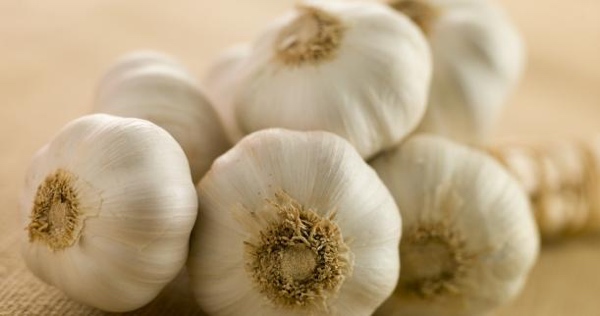
Softneck Garlic is the most common variety you’ll find; this is the fat, white head of multiple cloves with several layers of papery, thin skin surrounding that you can score for roughly .50¢ a pop. It’s also the easiest variety to grow in a backyard garden. Softneck garlic has a fairly strong garlic bite and a sweet, pungent odor. Most garlic heads that have been braided together are softneck varieties. Common Softneck varieties include California Early, California Late and Creole.

Hardneck Garlic is a bit less common, but still can be found in grocery stores. Hardneck features lovely shades of purple through brown, with thin skins and larger and fewer cloves than the softneck stuff. These varieties are generally somewhat stronger in flavor and scent than the soft stuff, and they generally don’t store as well, so it’s prudent to use them quickly after you buy. Commonly found Hardneck varieties include German Extra Hearty and Roja.

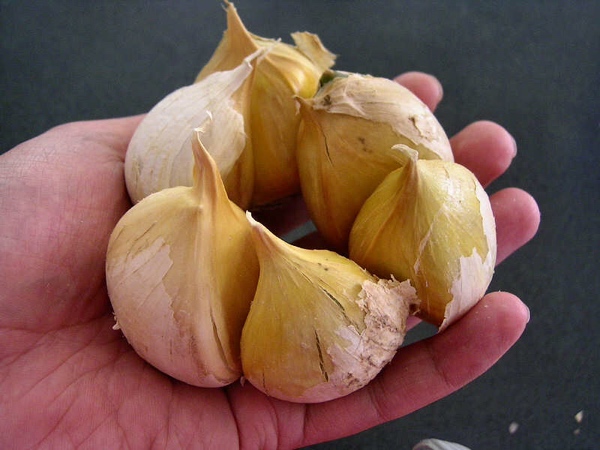
Elephant Garlic is the third variant you’re likely to find. It features a big ol’ head of very large cloves that can approach shallots in size. Prized for its subtle, mild flavor and scent, elephant garlic is great for folks who don’t like their garlic too assertive.

Onward! Bourdain’s next claim is that garlic “can taste so many distinct ways, handled correctly,” and that “misuse of garlic is a crime;” he is spot on here, though there are a couple of critical points left unstated.
First off, what the artist formerly known as Chef doesn’t say is this; more than how you prep it, the most important caveat for “correct” is how much garlic to use. Garlic is by nature potent, and this is why so many cooks over-season with it. Too much can bring out the negative aspects of its character every bit as much as improper cooking can. My simple rule is this: If the dish you’re making has garlic in the title, then you should use enough to bring it to the forefront of the flavor profile. When this is the case, do consider what form you’re going to use the garlic in. Let’s say you’re making garlic lamb or chicken; whole, peeled cloves added to a brine or marinade, or braised or roasted with the protein will deliver a lot of garlic flavor without blowing your socks off. Fewer cloves minced, diced, or crushed can be every bit as potent or more so than whole peeled cloves.
If garlic is not in a lead role, err to the side of caution and use less than you think you should. Let’s take chili for example – Garlic belongs here, but not as a dominant note. You’re after the subtle, sweet mouth feel a little garlic adds to a dish like this, so a moderate sized clove, one clove, will do for a whole pot of chili. That’s what I mean by subtle use; folks won’t even necessarily know garlic is there, but it will add that certain je ne sais quoi nonetheless. Consider adding peeled, whole cloves to soups, stews, and low and slow braised or roasted dishes; that’ll impart a nice, subtle background flavor, and some lucky diner gets to find a treat as well.

Next comes old garlic, and that is indeed a crime of epic proportion. Add to this, sub-par garlic. Since in large part we’re talking about gathering here, (AKA, shopping), then with whichever variety you’re hunting, do your due diligence. Choose firm, uniform heads with no soft spots, off colors, or smells. You should squeeze and scrutinize garlic as you would any other veggie you pay good money for.
Then there’s the storage thing. I’ll just tell ya straight up that garlic does not belong in the fridge, ’cause that will encourage sprouting, which leads pretty quickly to off flavors. Keep your garlic in a well ventilated, dry container, out of strong, direct sunlight. Garlic will last a month or two so stored, but as cheap as it is, you’re best served to buy a small head at a time and use it promptly.
When you’re ready to use the stuff, fresh garlic cloves should be firm and creamy white in color; if they’re yellowish, have brown spots, and/or are starting to sprout, toss it. That stuff will have a hot, bitter taste that is quite off-putting.

Burnt garlic comes next, and should we even have to say no to that? Actually, we do, because it happens far too often. Burnt garlic brings out the worst in this heavenly stuff, turning complex, sweet and pungent to bitter, sour, and overpowering. It will overwhelm everything else in a dish in a New York minute. Understanding how and why garlic burns is the key to avoiding this mess. Throwing garlic into a dish too soon often leads to burning: In a little oil in a saucepan over medium high heat, any form of processed garlic can and will burn within a minute or two at most; that’s why it should always be the last thing you add. Longer cooking under any kind of high heat will make garlic taste bitter, even if you don’t burn it. Smashing, pressing, mincing, dicing, and slicing garlic releases more flavor than cooking with whole cloves, but it also makes for a bunch more surface area that can potentially burn.
This ties into Anthony’s next assertion, castigating “garlic cut too long ago and garlic that has been tragically smashed through one of those abominations, the garlic press.”


For the former, he’s right on the money. The longer garlic sits after being cut, the more the essential oils and compounds that make it great begin to break down into other, much less desirable constituents. Ideally, it should be prepped 5 to 10 minutes prior to cooking with it; this little rest helps stabilizes the garlic, making it more resistant to heat.
As to the latter, I respectfully disagree. Pressed garlic is no more a crime than puréed, smashed, or minced.
Furthermore, there not only is a place for all these variants in cooking, they may actually be good for us.

Garlic contains a sulfoxide derivative of the amino acid cysteine, called Alliin, as well as a catalyzing enzyme, Alliinase. In a whole clove, these constituents remain separated within the cell structure. Slicing, chopping, mincing or pressing garlic ruptures the cells, releasing these elements to combine and form a new compound, Alliicin, the primary biologically active compound within garlic. Alliisin is garlic’s defense mechanism, released to ward of pests in the natural world. It is responsible for the pungent aroma, as well as the bite/heat/power of the stuff. Alliicin has known anti-fungal and anti-bacterial properties, and may aid in the reduction of atherosclerosis, decrease blood pressure, and provide anti-inflammatory properties as well.
In short, sorry Tony, but chopping, mashing and yes, even pressing garlic finely, produces more Alliisin, and coincidentally, provides the strongest garlic bang for the buck.
He goes on to vilify any form of processed garlic sold in a jar, and for the most part, he’s right. That stuff is far from fresh, and whatever methods are used to shelf stabilize it aren’t anything you should be hankering for.

Next, Bourdain encourages us all to enjoy roast garlic, and upon this there can be nothing negative said.
Roast garlic is indeed food of the gods, and here’s how you do it.

Preheat your oven to 400° F and place a rack dead in the middle.

Prep whole heads of garlic by removing the thicker outer papery layers.
Leave the skins on the individual cloves and carefully remove about the top 1/4″ of each, exposing the cloves.

Drizzle a little extra virgin olive oil in each clove, then loosely cover them with aluminum foil.

Roast for about 30 minutes until the tops of each clove is golden brown and they’re soft to the touch.

Allow the cloves to cool until handleable. Use a small fork or knife to extract the soft garlic and spread it onto fresh, crusty bread. Welcome to Heaven.

If roasted garlic is heaven, confit garlic is Valhalla.

Peel a few heads of garlic down to whole cloves.

In a small sauce pan over medium low heat, heat extra virgin olive oil through, then add the garlic, making sure all the cloves are fully submerged. Heat slowly but thoroughly for about an hour, until the cloves are soft. Keep the heat low so that the garlic doesn’t brown. Serve spread onto fresh, crusty bread with a nice glass of red.

Lastly, Le Tony notes, “Too lazy to peel fresh? You don’t deserve to eat garlic.”
And on that final note, we disagree completely. 

As I mentioned before, great garlic dried is really good garlic, especially if you made it at home.


That ain’t how we play…


I tweak and republish this post annually; I think you’ll see why when you read it.

See, I’m not out to be tragically hip, in fact quite the contrary. Or maybe Matthew Selman said it best; “I wish there was another word than foodie; how about ‘super food asshole’, or ‘pretentious food jerk’?” I just don’t wanna go there.

Granted, there are a lot of great food blogs out there, but right now, many are judged ‘Great’ because somebody took a really, really nice pic of some food, or is on the fast track to be the next Food Channel Super Food Asshole. Frankly, when the ‘best’ food blog sites reject people because they don’t meet criterion such as that, I’m more than not interested, I’m actively turned off. 

I write about food from some pretty simple perspectives. I’m interested in sharing recipes, methods, processes and such. I’m interested in sourcing, using wisely, and preserving food that is good for you, in a world where much of what we are offered to eat is not very good. I’m interested in the science behind cooking, because I’ve never liked simply being told to ‘do it this way.’ I trust that if you’re reading this, you’re interested in these things as well. To be honest, if no one read this blog, I’d write it anyway, because I do it for me first and foremost; I gotta share what I love. That’s just how I’m wired.

So, when I look at ‘real’ food blogs, I see the stuff that, fairly often, folks ask me about here, or more to the point, ask me why I don’t do these things. There are three oft repeated comments, and they are,
Why don’t you list nutritionals and calories,
Why don’t you post prep and cooking times, and
Why do you post exotic ingredients that I’m not likely to have?

So, in a nutshell, here’s why;

Frankly, listing nutritionals means, more than anything, that I am determining what kind of portion size you and yours eat, and frankly, I don’t have any idea about that. If I list a casserole recipe and you make it, how much do you eat? How about your partner? Do you have seconds, are there leftovers, and on and on. This ain’t a restaurant, and I’d bet your house isn’t either; neither of us needs everyone to eat the same portion. For the record, I predominantly do recipes for two, with planned leftovers, the idea being general efficiency, and the fact that anything good will be great the next day. Other than that, you’re kinda on your own. I mean I can give you a great biscuit recipe, but how big you make ’em, and how many y’all wolf down is kinda your gig, right?
Don’t get me wrong, nutrition IS important and should be monitored in some way, shape, or form. The best way to this is to buy carefully and thoughtfully. Buy locally whenever you can. Read the labels on food and avoid the stuff that’s truly bad for you. Grow anything and everything you can. Preserve what you buy or grow so that you can notably extend the time it is available to you. Make everything you can, from scratch, at home. That may sound more intensive than what you do now, but if you really care about nutrition, you’ll do it. And as far as we go, whenever you need or want detailed nutritionals on our recipes, just click on our link for Calorie Count and go to town. There’s a mobile version out for your Apple or Android smart phone as well now.

Next comes prep and cooking time.


Weeeeeellllll, how do I say this? Listing prep time is, in my not even remotely close to humble opinion, one of the dumbest things I’ve ever read. The problem is actually pretty obvious. Listing prep time says we all prep at the same level, and nothing could be further from the truth. Heck, I have three preppers in my cafe and they all perform differently… So really, the question is who’s prep time are we talking about? Mine? Yours? Emeril’s? I’ve been cutting things for decades and have pretty damn good knife skills; do you? I can stem, seed and core a tomato blindfolded, without cutting myself, in about 15 seconds; can you? I don’t even think about process and procedure any more, it just comes naturally; does it for you? And if your answers are ‘No’, does that make you slow? If I can prep Dish A in 10 minutes and you take 20, should you not make that dish? Of course not! And really, that’s just the tip of the iceberg. How about what ingredients you have right on hand when you start your prep, how well equipped your kitchen is, how your day went, how many rug rats are flying around your feet, or how many critters need to go out right NOW?! Get the picture? My bottom line is simple – Who gives a rats ass how long it takes if you have the time and want to make it? If you’re cooking regularly, you either already have a decent sense of what you can and will accomplish in a given time, or you will develop one in time. If you really do like cooking and want to do it, you’ll do it.

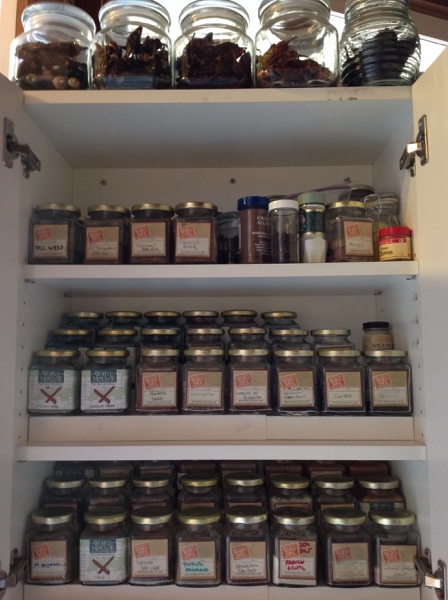
Finally, there’s the exotic ingredient thing. Yes, I have a whacky spice cabinet. You may or may not have a pantry like ours, but I really don’t think that matters. We have all this stuff because we dedicated lot of time and energy into developing and perfecting recipes to share with y’all. Whether or not you need that much stuff is up to you. Does a couple avocado leaves and a little annatto really make or break good chili? If you’re asking me, I think the question is rhetorical. And frankly, I don’t buy the ‘why do you use ingredients I’m not likely to have’ complaint for a second; in this day and age, almost anyone in this country, and many others, can get anything they want. I recently shared a bacon recipe with a pal from South Africa. He ended up having to go all over creation to find several ingredients, but he did it, ’cause he really wants to try my recipe. Kinda like that last discussion on prep and cooking, huh? Ive mailed corn meal to Australia and mustard seed to Israel; if you can’t get something you wanna try, hit me up, I’ll help. I’ve also gotta point out that we constantly encourage and desire experimentation, so if you’re making it, put what you like in it: Give us credit the first time, and then it’s yours…
I say that if you love cooking and great food, maybe you should check out Tasmanian Pepperberry, or Urfa Bebir; who knows what you’ll do with them?

We do this because dear friends who love to grow, cook, preserve and explore as much as we do asked us to. We do this because we have a love for good food and cooking shared. We do this because we hope to inspire such in y’all. If that ain’t good enough, so be it.

MSG, by any other name

Is MSG really bad for you?


So, hopefully you’ve read our artificial ingredients primer, Ranch Revolution. It covered most of the fairly nefarious artificial ingredients and additives you find in processed food pretty well.

I’ve said before and will again that most of the health and dietary issues folks are saddled with come from these ingredients, way more so than gluten. If one did actually become gluten intolerant, I’d think of these as the gateway ingredients that make it possible. So many of these things negatively impact the GI tract, it’s no surprise that such maladies abound.

One of the most pervasive additives out there is MSG, MonoSodium Glutamate. In that referenced article, I noted the following:

“Onward; next we get ‘natural flavor (Soy)’. Sounds pretty harmless, right? No such luck. Manufacturers these days are acutely aware that a whole bunch of us don’t want Monosodium Glutamate, (MSG), in our food. Even if they say ‘No MSG’ on the label, they well may be lying to us flat out. Why? Because MSG is cheap, and very effective at adding umami taste, that mysterious savory note. Unfortunately, MSG just ain’t good for ya. Side effects can include burning sensations, weakness of the limbs, headaches, upset stomach, and hives or other allergic reactions. Ingredients labeled like the one we found here, as well as ‘yeast extract,’ or ‘hydrolyzed soy protein,’ are nothing more than MSG in disguise. And there’s another example of things the FDA lets manufacturers get away with that they maybe shouldn’t.”

My revisit comes as a result of my encountering yet another pseudonym for MSG recently, AKA the ubiquitous ‘Soy Protein’ moniker. I found this at a restaurant that offers a very comprehensive ingredient and additive list to customers. What caught my eye is that this list had a line for MSG, (and none of their stuff had that box checked), yet many did have Soy Protein as an ingredient; so, why is that an issue? Because Soy Protein is one of the many potential pseudonyms for MSG. Take a look at this chart from truth in labeling. It’s interesting to note that this page states that “everyone knows that some people react to the food ingredient Monosodium glutamate;” frankly, I don’t think that’s true, but read on…

All this prompted me to dive a bit deeper into MSG. As I noted above, MSG is famous for adding the Umami taste, the je ne sais quoi savory flavor that us humans dig big time, (I admit, however, I am not one of them; I can taste it and I don’t like it – it has a cloying metallic quality I find most unsavory indeed.) It was and is used in many Americanized versions of Far Eastern cuisines. On the other hand, it’s also accused of contributing to many maladies, so that’s where I started delving deeper.

Probably the best synopsis came from the Mayo Clinic. Their info regarding the deleterious effects of MSG pretty much mirrored those I wrote of, but their article included one vital word I did not; anecdotal. Meaning, of course, that MSG was accused but not proven to have caused or contributed to these ills. The article went on to note that research had been unable to definitely tie additive to malady.

Then I found this piece by Rachel Feltman in the Washington Post. Feltman, for the record, has a B.S. In environmental science and an MA in science reporting from NYU, and has also written for Popular Mechanics, Quartz and Scientific American, (AKA, she ain’t no hack journalist.) Feltman notes the natural root of MSG, (first derived from seaweed in Japan decades ago), and that its many glutamate cousins are predominantly naturally derived as well.

Back to that Soy Protein I found; look up this ingredient and you’ll find a broad school that touts its health benefits, including the Journal of the American Heart Asociation, which noted, “increasing evidence that consumption of soy protein in place of animal protein lowers blood cholesterol levels and may provide other cardiovascular benefits.”

Conversely, there are plenty of sites who label this stuff dangerous, but in all fairness, they generally tend to be poorly researched and lacking definitive sources for their claims. Fact is, when it comes to the science of food, proof matters more than the claim.

So there you have it. Rather than adding anything definitive to the debate, my further research generated more uncertainty.

I maintain, however, that my overarching premise regarding artificial ingredients and food additives remains sound. The fact is, there are far too many processed foods with far too much of this stuff in it. In all likelihood, MSG in moderation is probably fine. The key word, of course, is moderation; if a significant percentage of what you eat is processed food, I’ll bet you dimes to dollars that you’re getting way too much of a bunch of things that are not good for you in such volumes.

You always have been and always will be much better off using fresh, local, basic ingredients without additives of any kind, and making as much of your food as you can from scratch, at home. From granola to mustard, and mayo to tomato sauce, you’ll eat better and feel better. There’s really no debate about that.

welcome, new visitors!

Sign up with email and never miss a post.


Welcome! 

I see a bunch of new visitors, and we like that indeed: Thank you for checking us out.

If you poke around the archives a bit, you’ll get the gist of what we do here. UrbanMonique is designed to bring a bit of the professional Chef’s craft to your home kitchen. Whether it’s tried and true recipes, a little food science and history, or tips and tricks behind the operation of a professional kitchen, I believe you’ll find something to be inspired by. We strive to make sourcing, cooking, growing and preserving food fun, and maybe even interesting. 

Please consider signing up via email to get notified when a new post comes out; we put up new threads weekly, and often enough more frequently than that.

And finally, we’d love to do something special up for y’all. If you need a custom recipe, are stumped by a food or process, or bored with the same old thing, leave a message and we’ll get right back to you. Just this week we’ve worked up puréed broccoli, a custom bacon cure, and a house made piña colada. What can we do for you?

Cheers, and happy cooking!


E & M