Urban Chili


Ask the question, “What is Chili,” and you might has well have asked, “Is Tex-Mex a real cuisine?” You’re in for an earful either way.

Chili con carne is essentially a stew containing chili peppers and meat, usually beef. The Spanish word chile stems from the Nahuatl language and refers to those glorious fruits of the genus Capsicum, family Solanaceae. Carne is Spanish for meat, of course, and there you have it. The original recipe was basically Tex Mex pemmican, a blend of dried beef, suet, dried chili peppers and salt, pounded together, formed into bricks and left to dry; out on the trail, you’d just add water and boil up a pot of the real deal.

In 1893, at the Columbian Exposition in Chicago, The San Antonio Chili Stand gave a bunch of Americans their first taste of chili. The passion spread like wildfire and Texas-style chili subsequently conquered the Southwest. In 1977, Concurrent Resolution Number 18 of the 65th Texas Legislature made Chili con carne the official Texas state dish.
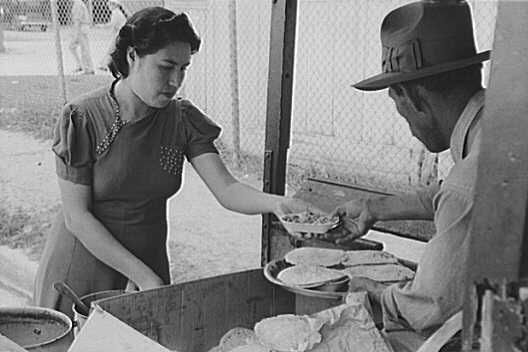
Chili has migrated in every direction since and changed according to whim and region. Even in Texas there are folks who add, (Gasp! Blasphemer!), tomatoes and even beans to their recipe. Other common seasonings include garlic, onions, and cumin. The variations are endless and it’s a guarantee that any and all of them provoke heated debate among aficionados as to what, if anything other than their tried and true variant, is actually chili. If you want to really see culinary sparks fly, go to a chili cook off, anywhere, and just taste and watch…

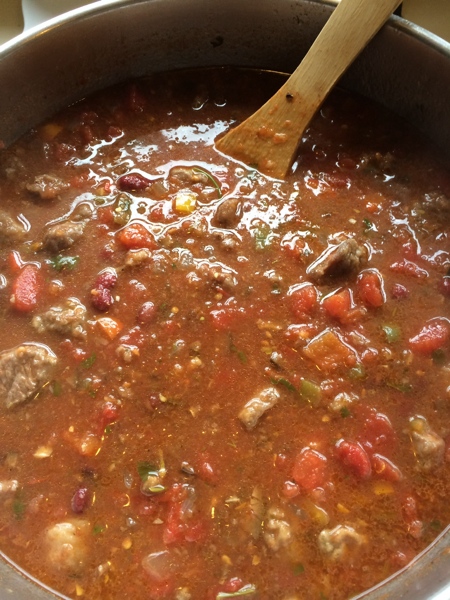
All that venerable history aside, I am a damn Yankee. My first taste of chili was fairly true to its roots, courtesy of the Mountain Pass Canning Company, who bought and greatly expanded the Old El Paso brand, the first company to offer a full line of Mexican cuisine in the US. That was the gateway; fifty years later, here’s where I’ve taken it. This is a bean and vegetable chili, because that’s how I like it. You can omit any veggie or bean in it that offends your righteous sense of chiliist tendency, and it’ll still be good; not as good as mine, but good.

The key to chili seasoning is, of course, chili powder. Store bought, even if it’s ‘gourmet’ is more often than not crap, in my not even close to humble opinion. The key to great chili powder is to use only freshly blended, house made chili powder from top notch ingredients. Below you’ll find my preferred formulation. I suggest you try this first in a small batch and see how you like it; then tweak it as you prefer, put your name on it, and share it with your pals. The first and most important decision to make here is what chiles to use; the heat factor and major flavor note of your chili powder will be determined by that. I use our home grown and preserved chipotles for our powder; this gives a nice fruity, smoky flavor that I like a lot. Changing just this aspect of your homemade powder will make major differences in your final product. Chiles and Cumin are an absolute necessity, as is some amount of Mexican Oregano, the rest is up to your imagination; have fun with it.
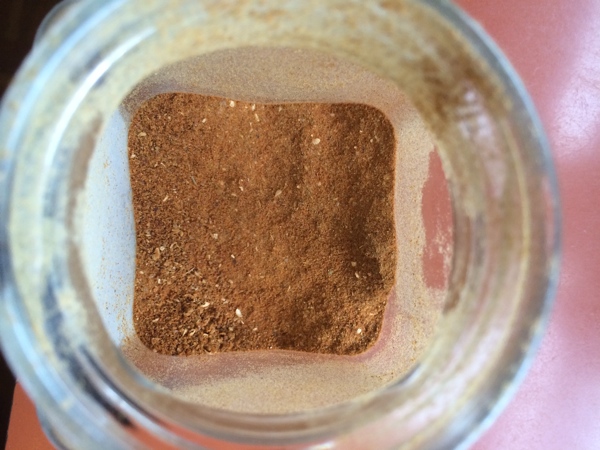
Urb’s House Made Chili Powder
3 Tablespoons ground Chiles of your choice
1 teaspoon ground Cumin
1 teaspoon Smoked Sweet Paprika
½ teaspoon ground Mexican Oregano
½ teaspoon ground Garlic

Combine all ingredients in a spice grinder and process until you’ve achieved a uniform, smooth powdered texture. Store in an air tight container for up to 2 or 3 months.

Alright, on to the chili; what I hope you’ll find is some steps that maybe are new to you, overall or for this recipe. It may seem a bit labor intensive, but i think you’ll find it pays off in terms of the surprising depth of flavor you’ll achieve.

1 to 1.5 Pounds Beef, (I like Sirloin for mine)
2 28 Ounce cans RoTel Diced Tomatoes & Green Chiles
1 15 Ounce can Black Beans
1 15 Ounce can Dark Red Kidney Beans
1 12 Ounce bottle Dark Ale, (Porter or Stout)
2-5 Jalapeño Chiles
4-5 miniature Sweet Peppers, (Vary the colors, because it looks nice and that matters)
1 small Sweet Onion
12-16 large Black Olives
6-10 sprigs fresh Cilantro
1 fresh Lemon
1-2 Tablespoons House Made Chili Powder, (See above)
1/2 Cup Wondra Flour for coating
Vegetable Oil for sautéing
1.5 Ounces Dry Sherry
2 Bay Leaves
Sea Salt
Fresh Ground Pepper

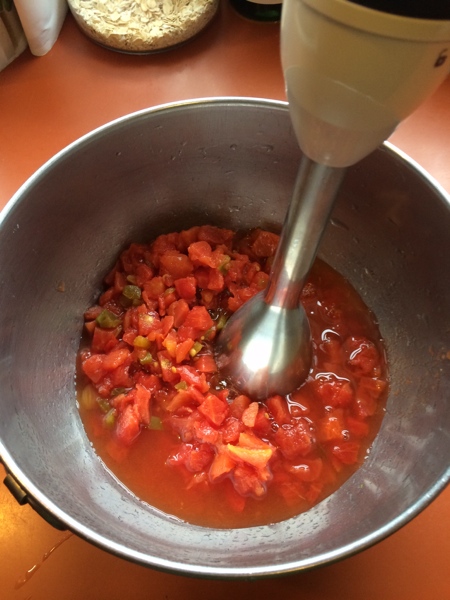
Empty the tomato and chile blend into a large mixing bowl and process to a smooth consistency.
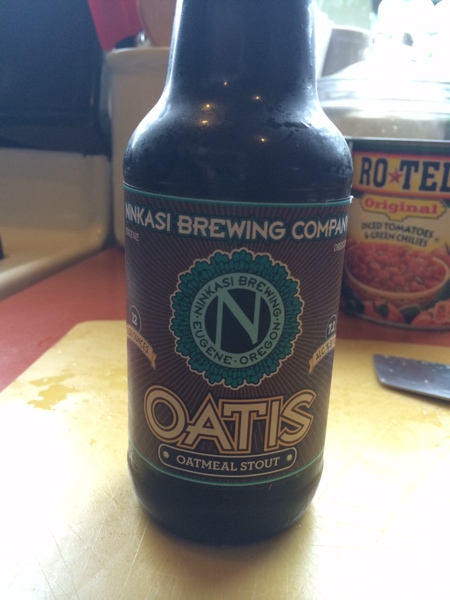
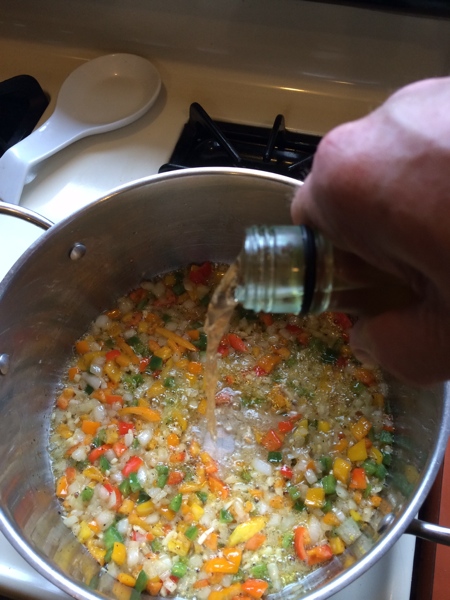
Pour the stout or Porter into the pot. Let it simmer and foam until the raw alcohol smell has burned off.
Reduce the heat to medium low, then toss the tomato chile sauce in with the beer.

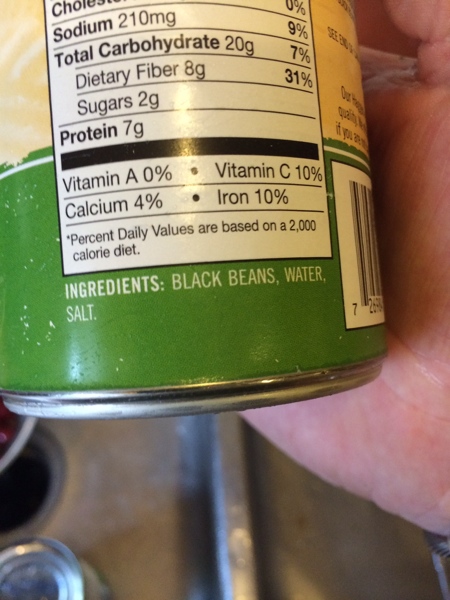
Empty the beans into a single mesh strainer and rinse thoroughly, then add them to the pot. And by the way, do you read the ingredients on the cans you buy? Do so. As you can see here, there’s nothing weird in here, but it’s nice to be sure, and nicer yet to rinse and just deal with the ingredient in question, yes?
Rinse all veggies. Skin and top onion; top and deseed and vein the chiles and peppers, (If you really like your chili hot, leave the seeds and membranes on the jalapeños). Cut all those veggies into a uniform fine dice, as well as the olives.

Skin, tip, and mince garlic. Chiffonade the cilantro. Zest the lemon, cut it in half, juice both halves and set the juice aside.

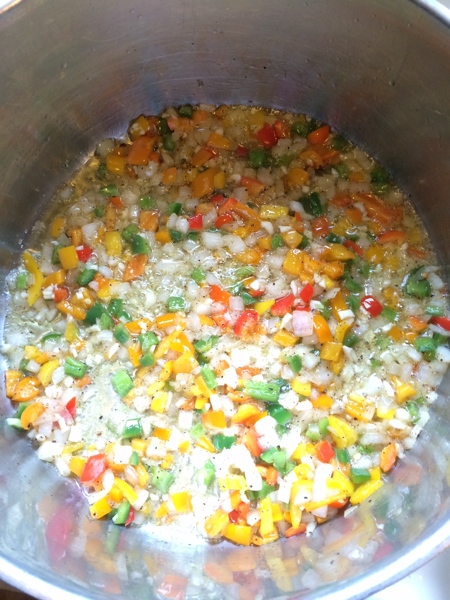
Place a large skillet over medium high heat with a tablespoon of oil therein and allow the oil to heat until it shimmers. We’re going to build a variant of a sofrito. Not to be confused with the Italian Soffritto, this South American/Mexican/Caribbean aromatic base consists of, in this case, the onion, jalapeño, sweet peppers, garlic, and bay leaves.

Toss the onion, jalapeños, and sweet peppers into the heated skillet and sauté until the onions begin to look translucent. Add the garlic and continue to sauté. When the garlic has lost its raw smell, add the sherry and stir steadily. The sherry will deglaze the pan, and combine with the oil and notably thicken; once that happens, toss the sauteéd veggie blend into the pot.
Cut the beef into roughly 1/2″ cubes. Place Wondra into a large ziplock bag. Add the beef and shake until all the flour evenly coats the beef.

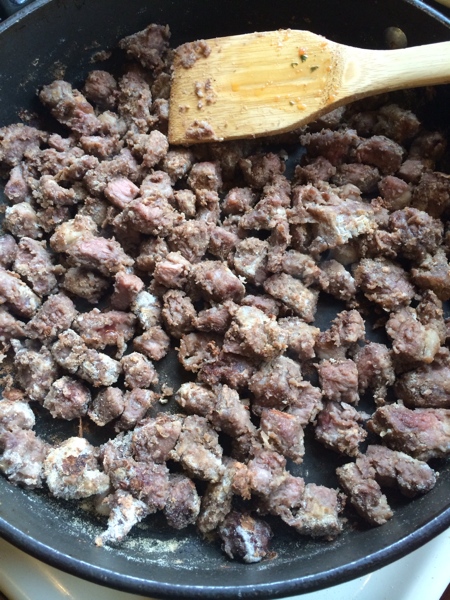
Place the beef into the skillet, evenly spaced so all your chunks have direct contact with the heated surface. What you’re going to do now is critical to the flavor and thickness of great chili. You’re going to sear that beef, and that means truly sear, not just brown. If this goes as it should, almost no fat or juice will render out of the beef; all that flavor is retained and gets transferred to your chili. You need to allow at least 5 minutes for each side, and maybe even up to 7 or 8. Let it cook for as long as it takes for a truly dark brown, crisp crust to form, then turn all the pieces and start work on a new side. Work the beef until each and every side has developed a nice, deep brown crust, then toss it into the pot.

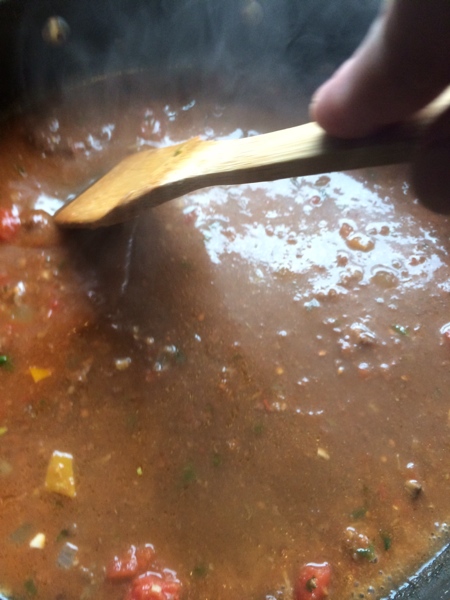
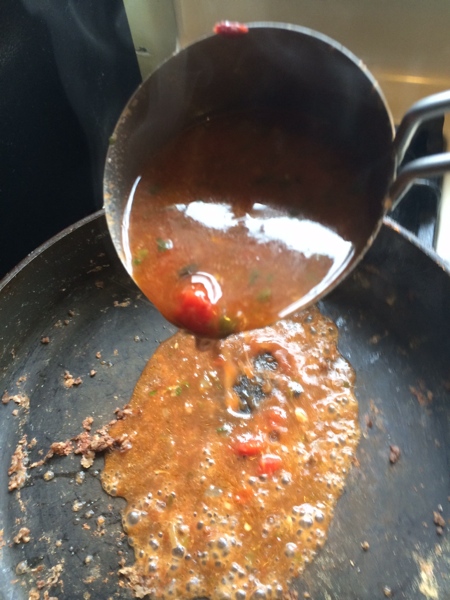
Now grab a ladle full of the tomato/chile/beer blend and toss that into the hot pan the beef was cooked in. It’s gonna sputter and his a bit, so keep on your toes. Deglaze the pan with the mix, scraping up all that good stuff left behind by the beef cooking. Once it’s all incorporated, pour it into the chili pot.

And finally, it’s top off the seasonings time; start with the cilantro, lemon rind and juice. After stirring that well into the chili, it’s time for chili powder. Use 1 tablespoon first, let that blend for about 30 minutes, and see how that strikes you; add more if you like. Adjust salt and pepper as desired.

And then it’s time to simmer. Turn the heat down to low and let ‘er go. I like to leave the pot uncovered, but that’s me. You can cover or not as you see fit. Take a look and have a taste, and give a stir every hour or so. I call 4 hours the absolute minimum, and 6 to 8 far better. Built like this, the depth, breadth, and intensity of flavors is truly spectacular.

Serve it with house made cornbread, extra cheese, jalapeños, onions, cilantro, and sour cream. Ice cold beer goes great too, especially the lighter stuff like a nice pilsner or lager.

Then just wait until tomorrow, because it gets even better.


Hot Dogs


I love hotdogs, I surely do, buuuuuuuut… My Sis worked in a hotdog factory once; I don’t think she’s eaten one since. If you think pink slime is bad… And anyway, have you checked the prices on these pies lately? Nasty ones are going $4 to $5, and quality almost double that. Time to get busy then; you make ’em, you know what’s in ’em, and they’re way better than anything you can buy.

This is a take on the snappy, lightly smoked, garlic and paprika-flavored all-beef dogs served at Gray’s Papaya and Papaya King in New York City. Made with good local beef, these hot dogs are just about the juiciest, most flavorful you’ll ever enjoy. My version was adapted from Ryan Farr’s original recipe. Mine has some changes for flavor and to save you some time and effort; I’ve converted original weights to measures for almost all the ingredients, tweaked the process a bit for home cooks, and altered the spices; I also used powdered smoke from Butcher & Packer, which saves you a bunch of work smoking the dogs, (If you own a smoker and enjoy that process, by all means do that; the smoking/internal temps and times are the same, either way.) Here’s how you make them.

Preparing the Casings.

Casings can be found as both natural and collagen style; I really have not had very good luck with fake casings. They taste fine, but are much less forgiving than natural when it comes to stuffing. For hot dogs and franks, you need a roughly 24mm or 1″ casing. They generally are sold in pretty large volumes that are more than a casual user will need. This offer through Amazon is the best priced, moderately sized I’ve found.

Snip off about five feet of casing. (Better too much than too little; any extra can be repacked in salt and used later.) 

Rinse the casing under cool running water to remove any salt clinging to it. Place it in a bowl of cool water and let it soak for about half an hour. 

After soaking, rinse the casing under cool running water, (Under 70° F). Slip one end of the casing over the faucet nozzle. Hold the casing firmly on the nozzle, and then turn on the cold water, gently at first, and then more forcefully. This procedure will flush out any salt in the casing and pinpoint any breaks. Should you find a break, just snip out a small section of the casing with kitchen shears.

Place the casing in a bowl of enough water to thoroughly cover the casings. Add 1 tablespoon of vinegar per cup of water; this will soften the casing a bit, which makes it a bit more forgiving for us amateur stuffers. Leave the casing in the water/vinegar solution until you are ready to use it. 

Rinse casings thoroughly before stuffing. 


NOTE ON MEAT: If you can’t find the neck, plate, or shank cuts, you can substitute chuck for all of the meat and fat called for; they’ll still be spectacular dogs.  

2 Pounds boneless lean Beef, (Such as neck, plate, or shank), cut into 1-inch cubes

5 Ounces Beef Fat, cut into 1-inch cubes

2 teaspoons Murray River Flaked Salt

1 teaspoon Sweet Smoked Paprika

1/2 teaspoon Granulated Garlic

1 teaspoon coarsely ground Smoked Pepper

1/2 teaspoon Onion Powder

1/4 teaspoon Celery Seed

1 Gram Pink Curing Salt, (Weigh this, don’t try to convert to a volume!)

1/2 teaspoon Hickory or Mesquite Smoke Powder

8 Ounces crushed Ice

10 feet of rinsed sheep Casings


NOTE: 

The ice above if for the actual recipe, not for bowl chilling. Just want to be sure we’re all on the same page with that… 

Place the meat and fat on a rimmed baking sheet, transfer to the freezer, and chill until crunchy on the exterior but not frozen solid. 

In a small bowl, add the salt, paprika, garlic, pepper, onion powder, and pink salt; stir to combine. 

Nest a large mixing bowl in a bowl filled with ice.  

Grind the meat and fat through the small die of the grinder into the bowl set in ice. 

Add the spice mixture to the meat and stir with your hands until well incorporated; the mixture will look homogenous and will begin sticking to the bowl. 

Transfer the meat to the bowl of a food processor, add half the crushed ice and process until all of the ice has dissolved, 1 to 2 minutes. 

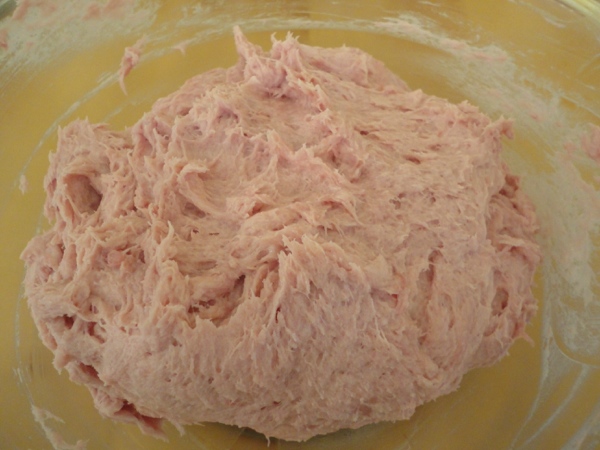
Add the remaining crushed ice and continue processing until the mixture is completely smooth, 4 to 5 minutes more. Note: The temperature of your meat during this mixing step is critically important. Temperature must never rise about 40°F. Work efficiently during this step of the process. This is as important for food safety as it is for a homogeneous blend. And yes, it looks kinda nasty raw; welcome to force meat…


Spoon 2 tablespoons of the meat mixture into a nonstick frying pan and spread into a thin patty. Cook the test patty over low heat until cooked through but not browned. Taste the sausage for seasoning and adjust as necessary.

Press a sheet of parchment paper or plastic wrap directly on the surface of the meat to prevent oxidation, then cover the bowl tightly with plastic wrap and refrigerate overnight, (If you own a vacuum sealer, use that instead.)

Stuff the sausage into the sheep casings and twist into links about 5″ to 7″ long.


Preheat your oven to 175° F. Spread the links out on a baking sheet and slow cook them until the internal temperature of the sausages reaches 145°F, about 45 to 60 minutes. 

Remove the sausages from the oven, and transfer them to a bowl of ice water; shock for about 30 seconds, then set to cool on a wire rack for about 10 minutes. Refrigerate uncovered, overnight. Your dogs are now fully cooked and ready to be vacuum sealed, refrigerated or frozen. To prepare for eating just heat through on a grill or in a steamer.

Since you went to all the trouble, don’t you think homemade buns are in order too?


Ribs R Us


Noticed the other day that ribs are big in the stores, now that summer has officially begun. Seems like a good time to offer a fave take on those bad boys. Now first off, I admit here and now that M does ribs better than I do in terms of process, so I’ll just synthesize her method and my seasoning.

So why are ribs so dang tasty; there’s not much there, so what’s the secret? In a word, bones; bones and some marrow influence, too. Little cuts of meat attached to the stuff that we use to make amazing stocks, soups, stews, and reductions from, that’s the ticket. When cooked low and slow, the influence of the bones and marrow make their presence known in a way nothing else can really emulate.

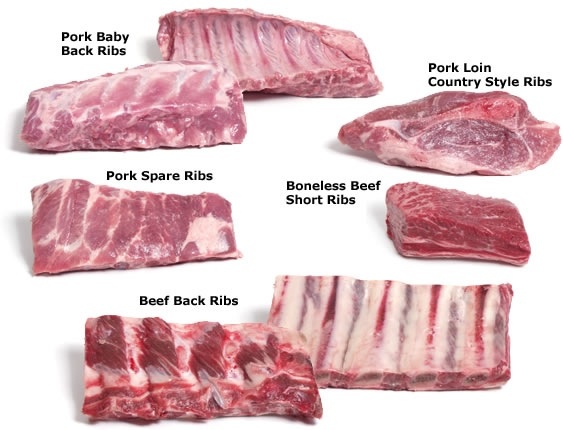
Do you know your ribs? All of ’em? Here’s a quick run down on the variations you’ll find out there.

Spareribs
Or spare ribs, either spelling works, and either way, it always means pork, period. Spareribs are cut from the side or belly. Nowadays, they’re usually sold trimmed and ready to go, but you still may find them offered with the brisket bone attached; if you get them that way, just cut the bone out and save it along with the rest for making stock. Spareribs may or may not have the skirt attached, (a thin flap of meat that runs along the meaty side). If the skirt is there, you’ve got St. Louis style ribs, and if it’s trimmed off, you’ve got Kansas City style. If you ever wondered what those two terms were all about but were afraid to ask, you may now consider yourself enlightened. If you’re serving spareribs as an appetizer, two ribs per person will do the trick; a half rack, (six ribs), is a decent entrée portion.

Baby Back Ribs
Arguably the most popular pork rib variety, baby backs are less meaty than many other styles, but tend to be leaner than their bigger cousins as well. Baby backs are, in fact, cut from the back of the rib cage. They tend to include a high proportion of loin meat, which explains their lean and tender nature. Reasonable portions for baby backs are 3 ribs per as an appetizer, or a half slab entrée.

Country Style Ribs
This cut is a bit of a misnomer. Cut from the sirloin or rib end of the pork loin, this meatiest variant of the rib family doesn’t really include ribs at all. You can often find this cut in single portion packages, as well the equivalent of a half or full slab; they’re perfect for those who want to use a knife and fork instead of getting all handsy with their meal. Country ribs can be pretty fatty and may need some trimming prior to cooking. Portion sizes are one apiece for appetizer, two as an entrée.

Beef Back Ribs
These big ribs come from the back of the loin; they’re the beef version of baby backs. Meatier than pork ribs, they contain five or six bones per slab. That said, while the bones are big, they’re not super meaty. They will, however, be plenty tasty if given a good rub and lightly smoked. Portions are two per as an appetizer and five or six as an entrée.

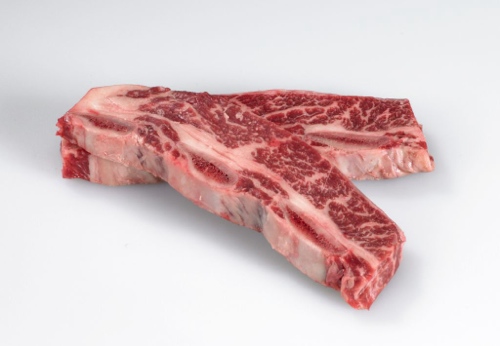
Beef Short Ribs
This cut used to be a tremendous bargain, until every chef in the world decided to make them popular. Now, they can often be pricier than they’re worth – If you see other cuts for much less, buy those. Short ribs come from the bottom end of the rib cage, or plate cut. Short ribs are not a tender cut and really shouldn’t be grilled or barbecued; they need low and slow braising or smoking to really shine. The cut can be fatty, so trim as needed before you cook. A quarter pound appetizer and half pound entrée will do the trick.

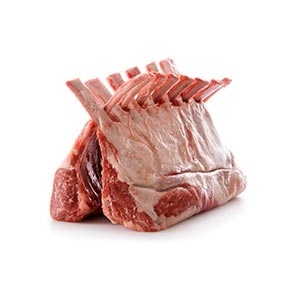
Lamb Ribs
A full rack of lamb contains eight ribs. The ribs themselves are really quite skimpy, so the chop is typically left attached;you’ll find them offered as rib chops or as a whole rack. The racks are a fairly famous cut and make a great roast. Fancy stuff has been done with these for many moons, like cutting the rack into 3-3-2 and tying them tips up as a crown roast, or trimming the meat at the tips of the chops back to the bone, which is the famous French chop or rack. A double French rack is two racks tied tips up back to back. If you’re not familiar working with the lamb rack cut, make sure to ask if the chine, (backbone), between the ribs has been cut, so that the roast is easy to carve. If you’ve not cooked a lot of lamb before, be aware that it’s usually quite a bit gamier than beef and pork. The heart of the gamy flavor is fat, so trim appropriately if you’re not comfortable with that. Soaking lamb in buttermilk for at least 2 hours and as much as overnight will help a lot to tame the game and keep them moist and juicy. While you can certainly cook and serve single rib chops, you’ll get a much juicier result if you leave them as doubles; you can then cut them into singles for an appetizer and leave them doubled as an entrée.

Game Ribs
Then there’s game; I’ve personally had and cooked venison, elk, boar, buffalo, bear and ostrich. The first thing to remember with game ribs is to use them; I don’t know how many hunters and cooks I’ve known who don’t even consider this, but we all should. First off, if you harvest, you’ve got the responsibility not to waste, and that’s a biggy. Seconly, if you love game, ribs can and should be a signature taste of the beastie. As with lamb, game ribs can be gamy, so trim the fat, if any, and marinate. Buttermilk works great here, but wine and herb, or a nice flavorful brine will shine as well. Keeping in mind that fleet-footed game like deer and elk are quite lean to begin with, so marinating will do a lot to keep things tender and juicy.


Here’s a wet rub and BBQ sauce that will go great with any of the above.
This recipe will serve for a couple of racks of ribs.
We’ll do a low and slow cook with a grilled finish for knockout flavor.

2 Tablespoons extra virgin Olive Oil
1/4 Cup Honey or Agave Nectar
2 Tablespoons Smoked Sweet Paprika
1 Tablespoon cracked black Pepper
1 teaspoon Onion powder
1 teaspoon granulated Garlic
1 teaspoon Sea Salt
3-4 Shots Tabasco or dried Chile Powder
Optional: 1 teaspoon Smoke Powder

Preheat oven to 225° F.

Rub ribs generously with the olive oil.

In a mixing bowl, combine the honey, paprika, pepper, onion powder, garlic and Tabasco or chile powder, and the smoke powder if you’re using that. Rub evenly over the ribs, taking time to work it on to all surfaces.

Wrap racks, meaty side down, in a large piece of metal foil (The wide, heavy duty stuff does best; if you’ve got light weight stuff, double it). Seal the edges of foil with a double fold.


Cooking Stage 1, oven low and slow.
Cook smaller, more delicate ribs like baby backs for three and a half hours; the bigger ones can go four hours.

Preheat grill on high, then reduce heat to low with lid open. If you’re just using your oven, leave it at 225° F.

Remove ribs from oven and drain off any excess drippings. Carefully flip ribs over to bone side down, using a big grilling spatula or two smaller ones. Your ribs should be at the pint where they’re starting to fall off the bone, so be gentle.

Trim the foil back to so you’ve got a baking sheet kind of affair, with a 3/4″ inch lip of rolled foil all the way around the ribs, to catch juices and keep the sauce in place for the remainder of the cooking.

Apply an even, thick layer of sauce to the meat side with a basting brush.

Cooking Stage 2, sauced and grilled, (or not)
Transfer ribs to the grill if you’re going that route.
Cook on low heat, with the lid down, for 20 to 30 minutes more.

If you’re using the oven for the whole job, cook uncovered for 20 to 30 minutes more.

Remove from oven and serve promptly with more sauce, house made potato salad, and baked beans.

A nice local Pilsner, Lager or dry white wine is the perfect accompaniment, refreshing your pallet and cutting through the fat for that next juicy rib.


Try this amazing cranberry powered sauce; folks are gonna make yummy noises and ask “what IS that?” in a good way…

Eben’s Cranberry BBQ Sauce

1 bag Cranberries
1 Cup Sweet Onion
1 bottle Porter or Stout
1 large Navel Orange
1/2 Cup dry Red Wine
1/2 Cup Balsamic Vinegar
1/2 Cup Honey or Agave Nectar
1/3 Cup Worcestershire Sauce
1/3 Cup Soy Sauce
2 cloves Garlic

Peel and dice onion, peel and mince garlic. Zest and juice the orange.

Use a nice, fresh local Porter or Stout.

Throw everybody into a large stainless steel sauce pan over medium high heat and blend well.

As soon as the cranberries start to pop, reduce heat to achieve a nice, steady simmer. Allow to simmer for 1 hour, stirring occasionally.

Process sauce with an immersion blender, or carefully transfer to a blender, if that’s what you’ve got. Be very careful if you use a blender; process in batches and watch out for the hot sauce. Process until the sauce is uniform and smooth. If you don’t have an immersion blender, AKA. A motor boat, go buy yourself one for Christmas, they’re indispensable.

If you like your sauce a bit chunkier, as we do, you’re done; if you like it smoother, run the sauce through a strainer once.

Transfer to a glass bowl or jar and refrigerate for at least 4 hours prior to use, to allow the flavors to marry and the sauce to finish thickening.

And remember, save those piles of bones for making pork or beef stock; they’re way too good to toss!

Smoked Chicken Stew


So, from last nights butterflied, grilled chicken, I saved the carcass and made stock and stew therefrom. If you’re not doing this kind of thing on a regular basis, you really need to be reading this blog more often.
Here’s how.

For the stock,
1/2 sweet Onion
1 Carrot
1 stalk Celery
2 Bay leaves

Rinse, trim and then chop veggies to uniform rough dice. Note: Can’t tell you how often I see home cooks throw out celery tops with leaves on them, or how wrong that is. Especially when using celery for mirepoix, making stock, etc, you want those leaves; they pack beautiful, delicate celery flavor, and impart it to other foods better than the stalks do.

Glean any appreciable meat from the chicken and reserve for lunch, (we didn’t have any left, frankly, and we’ll be using breast meat for the making of this stew anyway…)

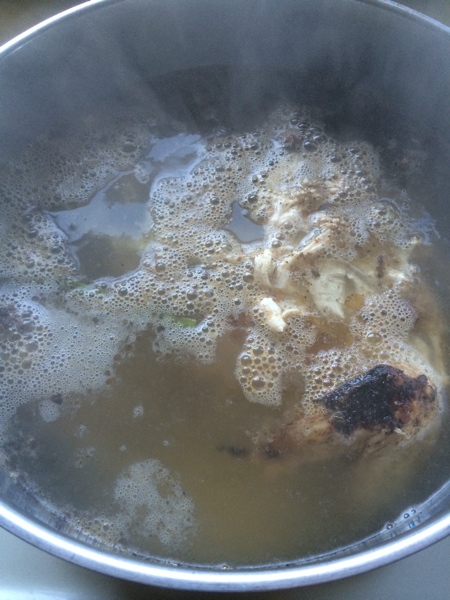
Everything goes into a stock pot over high heat with enough water to cover well, about 3/4 gallon. As soon as things start to simmer, reduce heat to just maintain that, and let it go for at least 2 hours and up to 4. As you lose water to cooking, gradually add more. Ideally, you want to end up with about 8-10 cups of lightly colored and flavored stock. That is rather light as stock goes, but we’re making a robust stew that will pack its own flavors; this is just the canvas…

Remove from heat, discard all the big chunks by straining through a colander. Chill the rough stock in a large bowl in the freezer until most of the fat has risen to the top. Skim that off, then clarify the stock once or twice by running it through a chinoise or strainer.

Return stock to a stock pot over medium heat.

For the stew,
2 Carrots
2 stalks Celery
3 Red Potatoes
1 Tomato
1 Lemon
2 cloves Garlic
1/4 sweet Onion
2 sprigs Cilantro
Extra virgin Olive Oil
White Wine
Black Pepper
Smoked Salt

Rinse and trim all veggies. Cut carrots, celery, potatoes, tomato, onion and cilantro to a fairly uniform rough dice, about 1/2″ pieces. Mince the garlic and cilantro and toss everybody but those into the stew pot.

Heat a tablespoon of extra virgin olive oil in a sauté pan over medium high heat. Toss in onion and sauté until it starts to go translucent. Add garlic and sauté about another minute. Add a splash of white wine and continue sautéing until the raw alcohol is burned off. Toss all that into the stew pot. This step, done with strong aromatic veggies like onion and garlic, adds a nice richness to a soup or stew, and helps tame the raw heat they can pack.

For the chicken, you can smoke it over your grill, barbecue or smoker with a bit of smoking wood, pellets, what have you, or you can cheat like I did. If you’re a regular here, you know how much I love Butcher & Packers hickory smoke powder. As advertised, it gives a pure taste of hickory smoke and nothing else. I’ve fooled Texas BBQ snobs with this stuff. Saves a bunch of time and sacrifices nada in the process; try it. They also make chipotle powder, and powdered mesquite, which are equally fabulous. 

Dirty Rotten Cheater’s Smoked Chicken,

2 Cups Chicken Breast
1/2 Cup Whole Grain White Flour
1-2 teaspoons Smoke Powder
1/2 teaspoon Smoked Salt
1/2 Teaspoon ground black Pepper
2 Tablespoons vegetable oil

Cut chicken into roughly 3/4″ dice.

Add 2 tablespoons of oil to a large sauté pan over medium high heat.

Combine flour, smoke powder, salt and pepper in a paper bag, (amount of smoke is up to you). Add the chicken and shake until all the chicken is thoroughly coated. Remove the chicken and tap/shake off excess dredge.

Add chicken to pan and allow it to cook long enough to sear well on all sides. You want to develop a genuine, caramelized crust, so don’t play with it too much or turn it too often. Keep a close eye on it so it doesn’t burn.

Once the chicken is well seared, transfer it to the stew pot and stir it in well. Turn heat down until you’re at a nice low and slow temperature, with no signs of simmering.

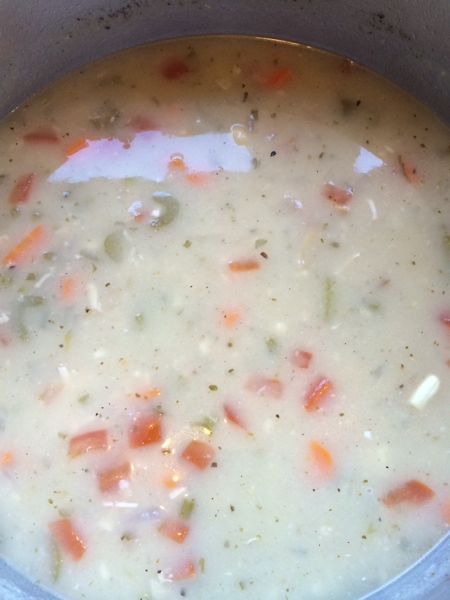
Let the stew cook for at least two hours. Slice the lemon into quarters. Add the juice from half to the stew, reserve the others for service. Adjust seasoning with smoked salt and pepper. Stir regularly, taking care to make sure stuff isn’t sticking to the bottom. The regular stir helps release the dredge from the chicken and combine it with fats, which is what is going to thicken your stew. If you like things thicker yet, microwave an extra Yukon potato, mash it with a tablespoon of butter, and stir that into the stew as well.

Serve with crema, sliced lemon, our jalapeño-cheddar cornbread, and a nice, cold Negro Modelo.

Butterflied Chicken


Gotta thank our friend Holly O’Reilly for sparking the creative flame on this one, so first off, go over to her blog and check out what she did.

I saw her post, then, as age would have it, promptly forgot I wanted to do it, until a text from Monica the next morning which read ‘Do you know how to butterfly a whole chicken?’

I responded with a ‘Yup, and it’s super easy!’ That made me wonder why it’s been so long since I’ve done it. I honestly don’t recall having prepped a bird this way in at least 20 years, which is truly a shame, because as Holly noted, it makes for a seriously juicy, crispy treat.

So, why is that? Why would this method lead to a better bird? The answer lies in volume. Chicken on the grill, barbeque, or smoker is hugely popular for good reason, but it’s also likely the top candidate for being dried out and overcooked. That, as much as any other factor, is a function of portion size. The smaller the chunk, the easier it is to over do it. Conversely, a whole chicken makes a fine vehicle for staying plump and juicy on outdoor cookers. I’ll usually advocate brining chicken before grilling, but if you’re in a hurry or planning dinner last minute, get a whole bird, butterfly it, and you’ve no need of brine.

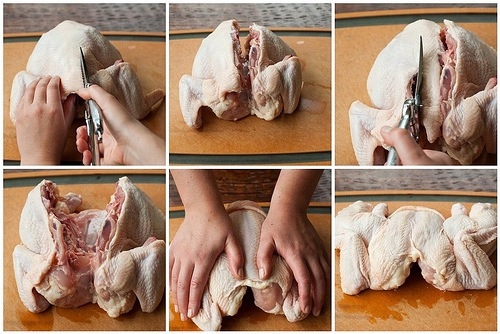
Making a chicken relatively flat is easy as all get out, and if, like Monica, (Sorry, Babe), you have a love-hate relationship with sharp knives, it’s a perfect process for you. A pair of decent kitchen shears is all you need.

After checking your birds for giblets, neck, etc, flip it over so it’s breast side down. Take your shears and line them up just to the right or left of the spine, and cut a straight line from cavity to pope’s nose. Repeat on the other side of the spine. That’s all the cutting you’ve got to do, (told y’all it was easy). Grab the spine and pull it away from the bird; there won’t be much left holding it on. Set that aside for stock making later.

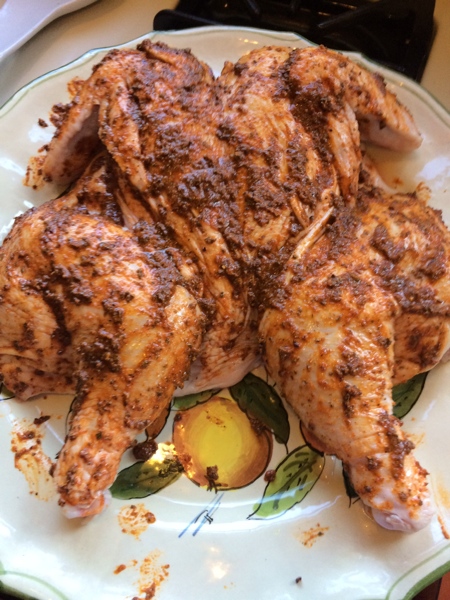
Flip the bird over, and arrange it evenly, then give it a squish with your palms. You’ll end up with a beautifully butterflied bird, ready to rub and cook. I tuck the wings in against the body, so they cook without burning before the rest is ready.

We wanted something bright and smoky for the rub; here’s what we used.

1 teaspoon black Pepper
1/2 teaspoon Grains of Paradise
1 teaspoon Alderwood Smoked Salt
1 teaspoon Smoked Sweet Paprika
1/2 teaspoon granulated Garlic
1 Tablespoon extra virgin Olive Oil
Juice of 1 Meyer Lemon

Combine all the dry ingredients in a spice grinder and give them a whirl. Add oil and lemon to dry in a small mixing bowl. Allow rub to rest for about 15 minutes, so flavors can marry. Rub evenly over the bird and allow to rest for another 15 minutes while the grill heats up.

I did this one over gas with one flip, starting breast side up, at about 325° F, for an internal temperature of 155° F. Remove it from the fire for a 10 minute rest, and your internal temp ends up right at 165° F.

We served the bird with grilled, marinated asparagus, and a lightly grilled Romaine salad, both with a Dijon vinaigrette made with Champagne vinegar, and a nice, cold Hefeweizen.

As Holly noted, there’re was very little left over, but there was went into the pot to make stock, as it should be.