Greetings, all! I’m home, after driving 3,400 miles to and from Minnesota, for the first real vacation I’ve had in a long time – too long, in fact.
What I do for work isn’t important for several reasons. Yes, it’s in the food industry, but no, it’s not very creative. I’m a manager, and suffice it to say that more and more has been demanded of me, and I blithely soldiered on for months and months.
When I finally took vacation earlier this month, I was mentally, physically, and spiritually exhausted, riding the razors edge to serious burn out. So with M’s blessing, I went to see our tribe in Minnesota – our brothers and sisters from different mothers.
There I rested, cooked, played music, and soaked up the love and support from these wonderful souls. I’m back, and much better, but not healed by any sense of the word. I have a different perspective on work now – one that puts my health and happiness first – and that’s gonna be that.
All that said, I want y’all to know that here is where a large chunk of my creative heart lived and shall live going forward. And so I wish to thank you all, deeply, for stopping in and seeing what I’m up to, trying things, asking questions, letting me know what you dig and what ya don’t. It means a great deal to me.
Thanks for understanding my lack of posts for the last couple weeks. I’m back, and on we go!
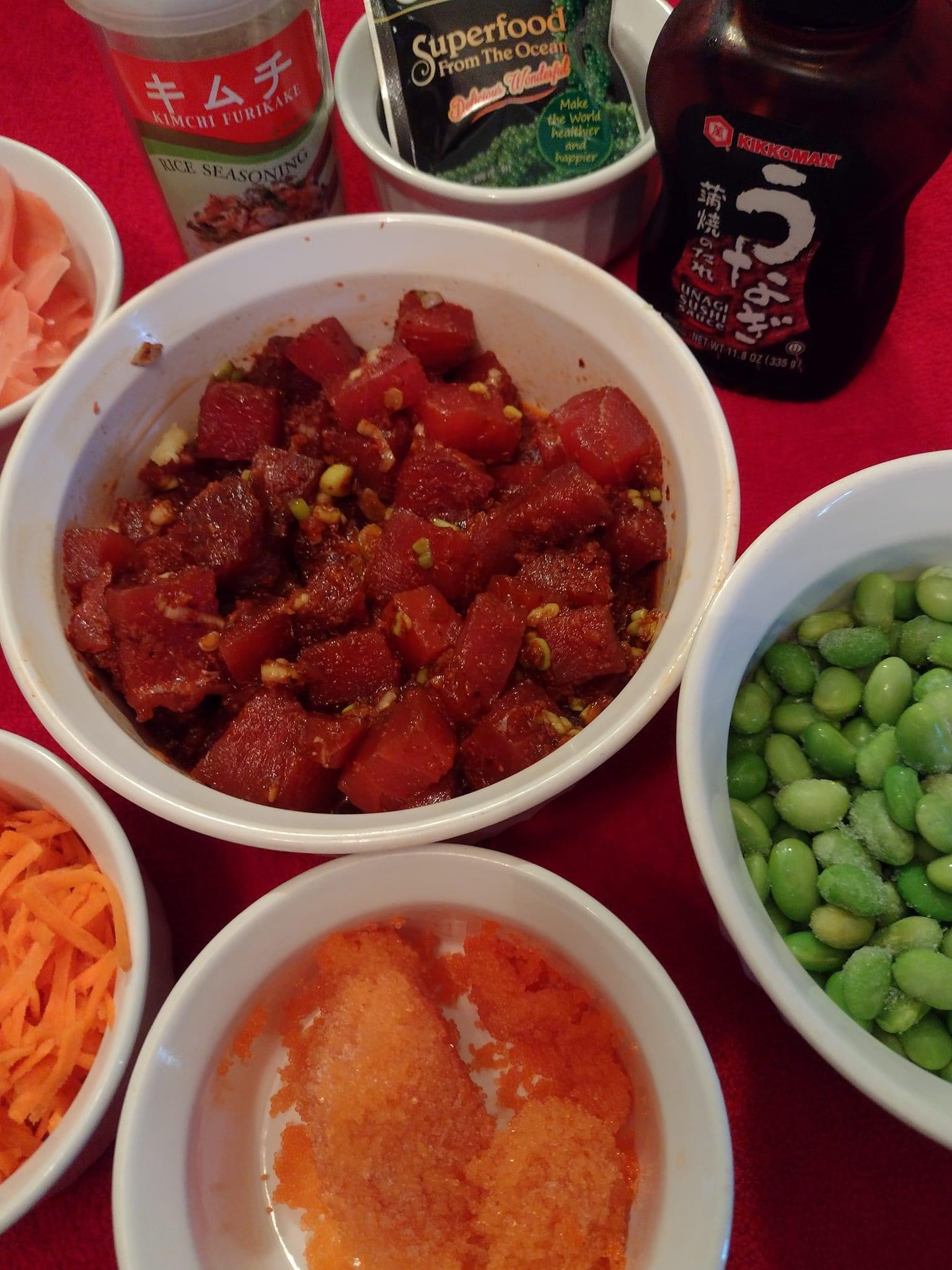
I’ve got a social media pal who wishes to remain anonymous, but happily allowed me to post up this marvelous fusion poke recipe. And when you feast your eyes on the image below and read the recipe, you’ll know why I was excited to share it.
Poke is of Hawaiian origin. There are various stories of how it came about, but the one that rings truest to me goes something like this – sometime in the 1970s fisherman trimming their catch realized that some very tasty bits of fish were being wasted. OG Poke was made from great tuna, Hawaiian salt, seaweed, and candlenut meat – and that venerable version is very popular to this day.
All that said, poke is a dish that begs for innovation, and what you find below is innovative in the most delicious sense of the word. Take a swing at it, enjoy, and as always, share your work.
My fusion poke tuna recipe (Indonesian, Korean, Hawai’ian, Japanese)
2 sushi grade tuna steaks, about 8oz total, large dice
1/4 cup light soy sauce (Japanese)
1 tablespoon toasted sesame oil
2 teaspoons freshly grated young ginger
1 teaspoon gochugaru (Korean hot pepper flakes)
1/2 teaspoon chili garlic sauce (Indonesian)
1/2 teaspoon sambal oeleck (Indonesian — adds umami, substitute a dash of fish sauce)
1/4 cup sliced green onion tops
Tuna is most easily diced while still partially frozen.
Combine marinade, add tuna, refrigerate an hour (use within a short period of time, never more than 24 hours)
Adjust seasoning to your taste.
Serve with sushi rice and your favorite veggies and toppings
The New York Times cooking app is a wealth of inspiration – great ideas from one of the greatest food towns in the world can’t be anything but good. Last week, Sam Sifton spoke to something that I’ve preached over and over here – When you find a recipe you love and make it a few times, you’re bound to make changes by preference or expedience. Either way, what you land on becomes yours, and that’s as it should be.
Sam offered Eric Kim’s Gochujang Buttered Noodles, and then wrote of the variations he’s done with it – He subbed ssamjang for gochujang and frozen dumpling for the noodles, and another version with lap cheong Chinese sausage over Korean rice cakes.
He finished the piece with this exhortation – ‘So this weekend, I put the challenge to you. Make Eric’s dish as he intended, or take it in whatever direction your pantry allows and your taste desires. Cook in confidence. It’s just butter, garlic, spice, sweetness, umami and starch. Perfection every time.’ So I did.
What I used was a lovely exercise in utilitarianism – I mentioned what I had in mind to the family, and suggestions for this and that came back to me. As Sam points out, this is a can’t lose dish, and whatever you do to it is gonna rock – so I’m passing the challenge off to y’all. Dive in and let me know what you come up with – for the record, I sent a thank you to Sam, along with a pic of the finished dish.
Notes –
As Sam noted in his piece, make sure you find Gochujang paste, not sauce – you want the purest essence of those lovely sun dried chiles you can find – the sauce version tends to add a bunch of stuff you don’t want or need. Note that gochujang can be downright nuclear, so read the label and ask your grocer how hot the stuff you’re contemplating is. I buy what’s labeled as Medium Hot, and it’s still got plenty of kick – when it’s combined with great vinegar and honey, it’s stunningly good.
Use the best vinegar you’ve got – Erik Kim recommends sherry or rice for the dish. For the former, find a genuine Spanish Jerez, one that carries the D.O.C. symbol. It’s far cheaper than balsamic, and is truly delightful stuff. If you opt for the latter, make sure it doesn’t say Seasoned on the label – that’s got added sugar you don’t want. I went with the best thing I have – a smoky, subtle 10 year old handmade Baoning Chinese vinegar.
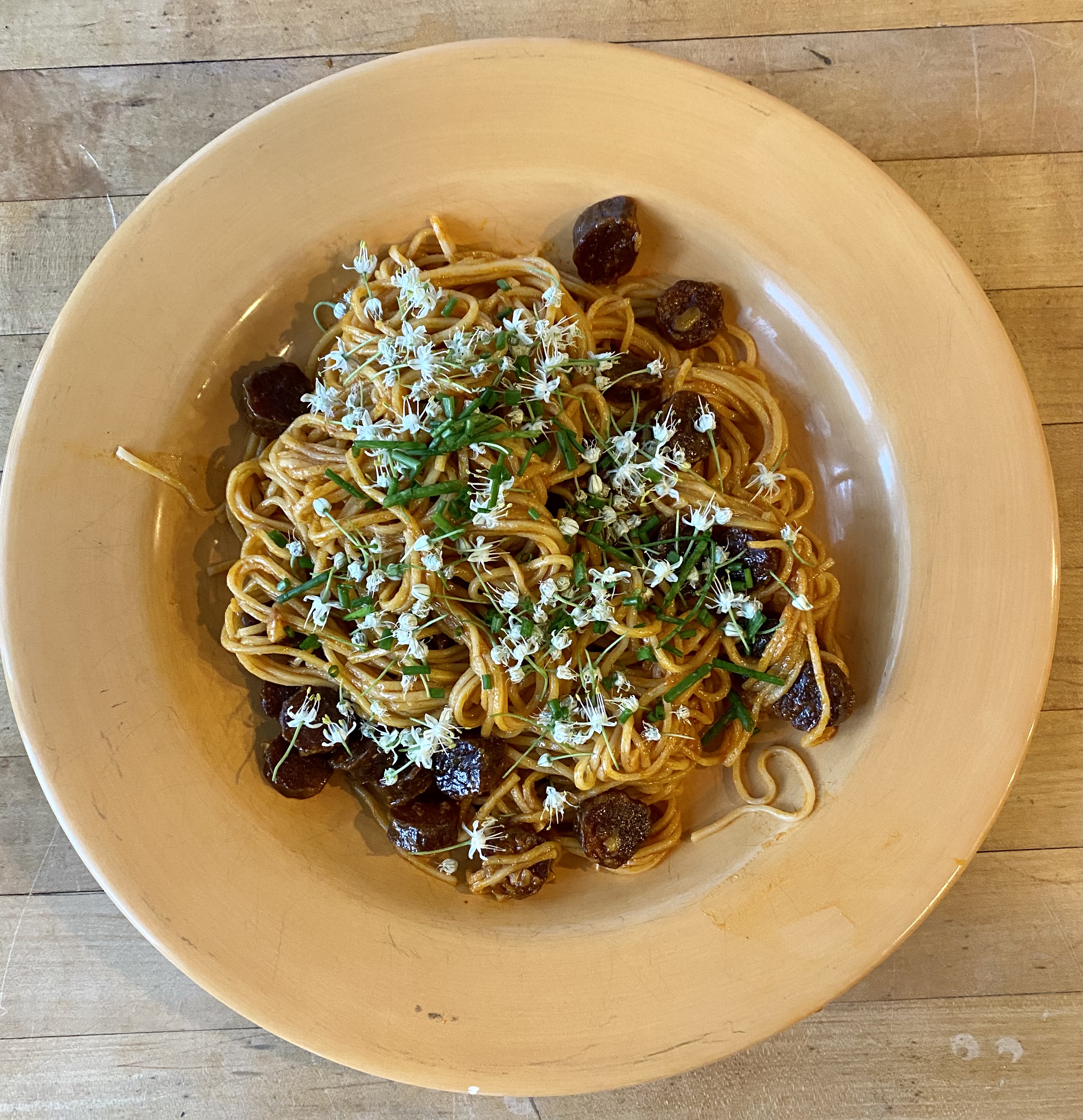
I garnished with sweet onion flowers and chives fresh from the garden – Use what you have and love, it’ll be perfect! Eric recommends thinly sliced scallion or finely chopped cilantro on his dish.
If you opt for lap cheong sausage, it should be fully cooked when you buy it – but make sure that’s the case!
A Riff on Eric Kim’s Gochujang Buttered Noodles
12 Ounces dried Ramen Noodles
8-12 cloves fresh Garlic
6 Ounces Unsalted Butter
1/4 Cup Gochujang Paste
1/4 Cup Honey
1/4 Cup Rice Vinegar
Salt and ground Pepper to taste
Optional: 8 Ounces Chinese Lap Cheong Sausage
Garnishes as you please
Peel, end trim, and mince garlic.
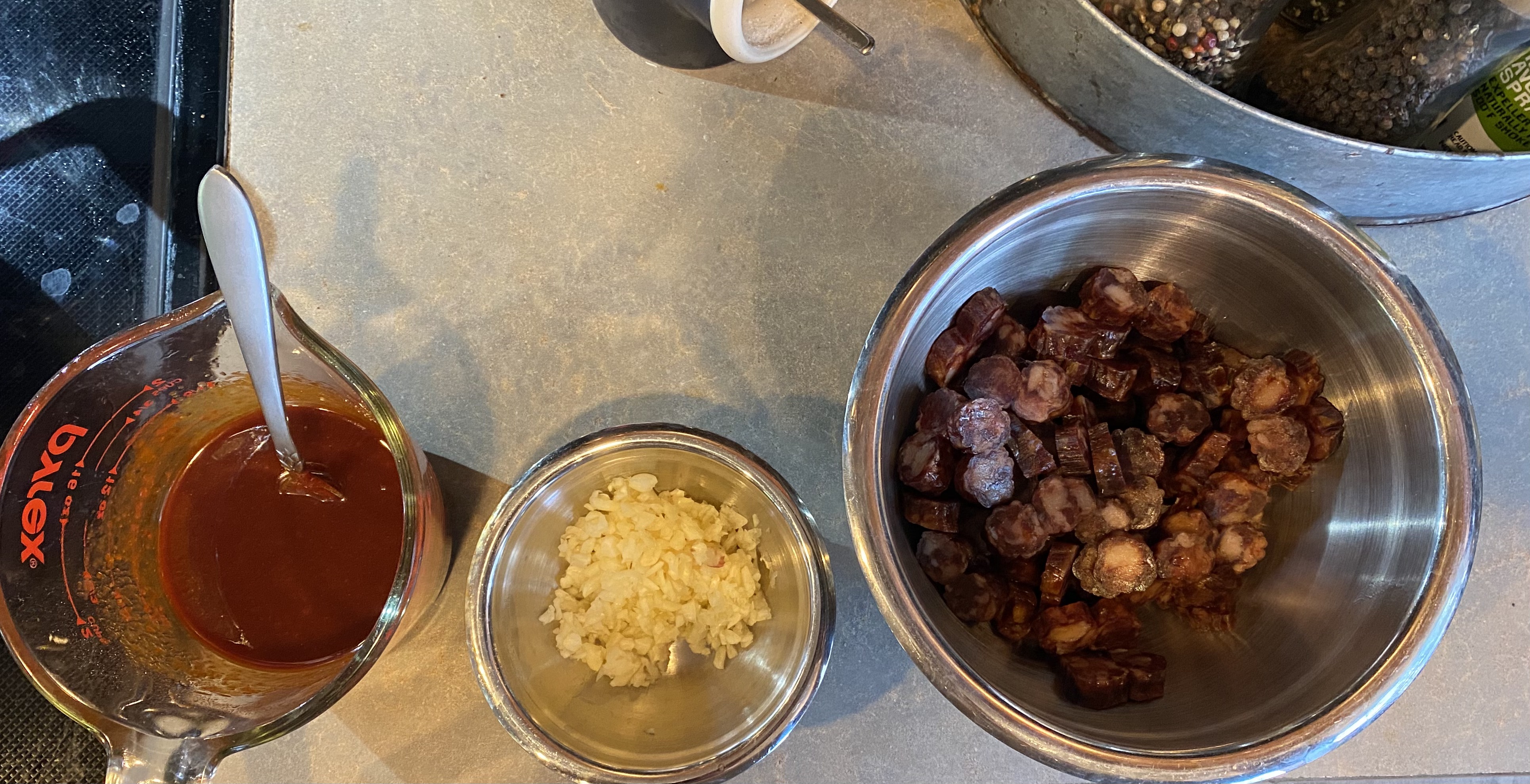
In a glass measuring cup, combine gochujang, honey and vinegar – whisk with a fork to thoroughly incorporate.
If adding sausage, slice into roughly 1/4” thick rounds and place in a bowl for service.
Prep garnish and place in a small bowl for service.
In a stock pot over high heat, boil noodles in salted water, per directions for whatever you’re using.
In a heavy sauté pan over medium low heat, add 4 ounces of butter and heat until melted.
Check noodles – turn off burner, transfer to a colander to drain, reserving 1 cup of pasta water.
Put drained noodles back into the pot, and place pot on the still hot burner (don’t turn it back on – residual heat is all we need here).
Add the garlic and sauté until soft, about 2-3 minutes.
Add gochujang/honey/vinegar and whisk to thoroughly incorporate.
Cook sauce for 3-5 minutes until it’s notably reduced and thickened.
Add sauce and remaining 2 ounces of butter to the hot noodles and stir to thoroughly coat and incorporate everything. Add splashes of pasta water until you get the consistency you like.
Season lightly with salt and pepper to taste.
Serve it up with your garnishes, devour, and make yum yum noises.
Up here in the Great Pacific Northwet, we’re a major source of berries – rasp, cran, blue, black, straw, you name it – the land between Bellingham and the Canadian border is heavy with fields just starting to release their bounty. In the weirdness that is modern agriculture, most of our berries get shipped out of state, but you can sure find them here when they’re ready to rock – and farm stands, markets, and CSAs beat the pants off the grocery store any time.
You can and should plan to enjoy those for all the standard berry fare – snacking, cobblers and crumbles, pies, smoothies, and so on – but it’s also time to consider a few uses that might not be as mainstream, but certainly are delicious.
Berry infused vinegars are easy to make, and the results are delightful. This is a great project to consider some less than obvious parings for what you infuse, to whit, berries and herbs. Got blueberries? Consider cinnamon basil or lemon thyme, or just good old navel orange. For raspberries, pair with lemon verbena or mint. Strawberries go great with rosemary or oregano. Blackberries shine when paired with lemon thyme or lemon basil.
Take fruit and vinegar a step farther and make your own from all this glorious harvest. Straight up berry vinegars are incredible, and very doable at home. Here too pairings can be employed – vanilla with strawberry, nutmeg with raspberry, blueberry and a little cacao – use your pantry and your imagination, and next winter, you’ll be a happy camper.
Let us not forget gastriques – if there’s a sauce made for berries to strut their stuff, this is it – this lovely sweet and sour stuff pairs well with almost any protein, to salads and grilled veggies. They’re easy to make, infinitely variable, and perfect for summer fare.
And with many thanks to Christy – don’t forget that berries of all kinds make fabulous shrubs, too! From single to mixed berry formulations, you’re sure to come up with a winner to call your own.
Wherever you live, you can grace your place with a garden to some degree if you want to. Our parcel is really small, but we take full advantage of what we have. There’s just about zero grass here – everything is dedicated to gardens and landscaping.
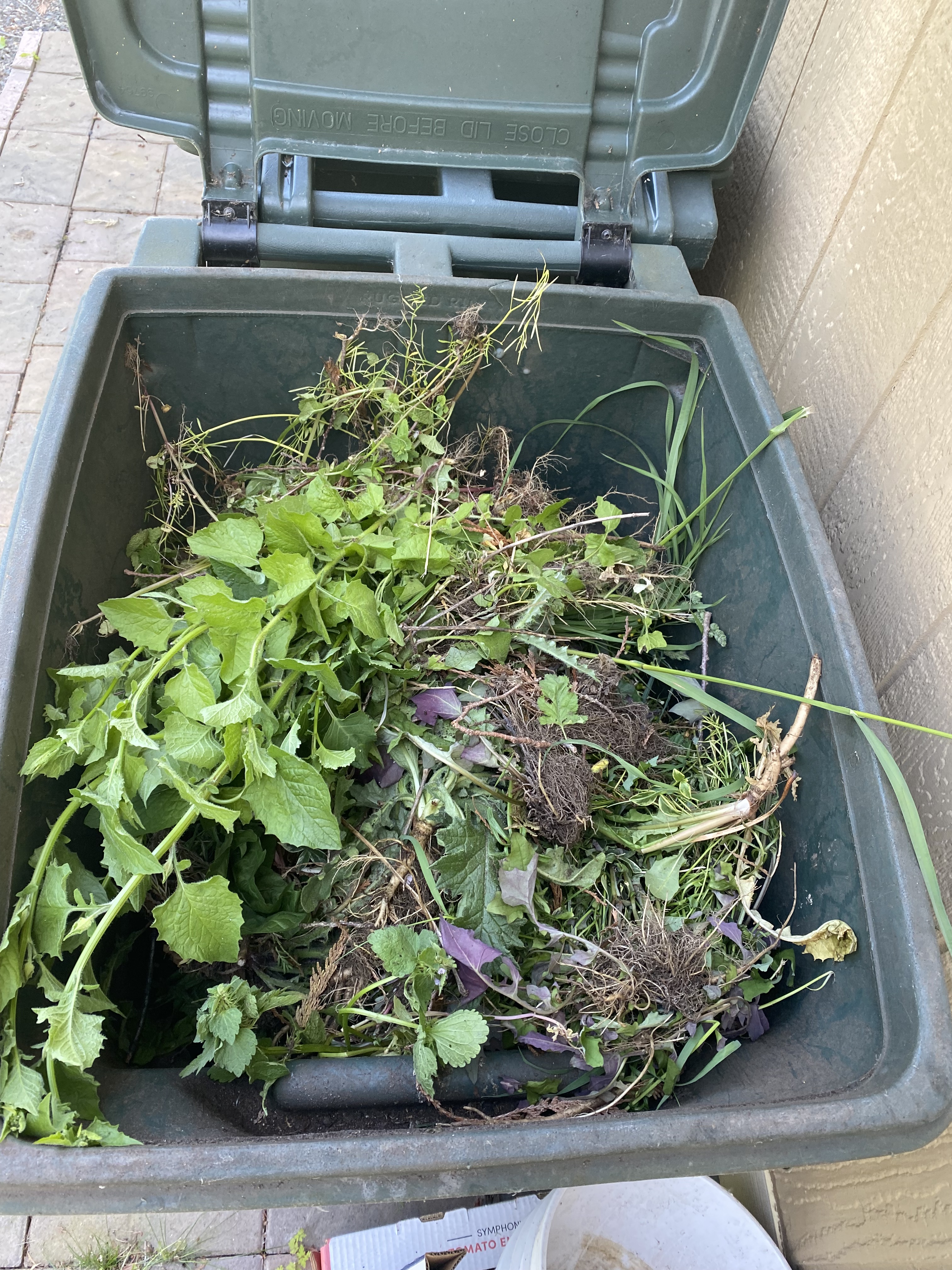
I started out front and did, ah… a little weeding. Our youngest kid recently moved out, leaving us blissful empty nesters – but that kid lions share of garden design, construction, and upkeep – so that’s now fallen to me. Weeding is very zen-like, and I love it, as you can see…
M still handles the veggies and flowers – I don’t think she quite trusts me with that yet. When I was checking things out this weekend, I found those potatoes I planted a couple weeks back looking very good indeed.
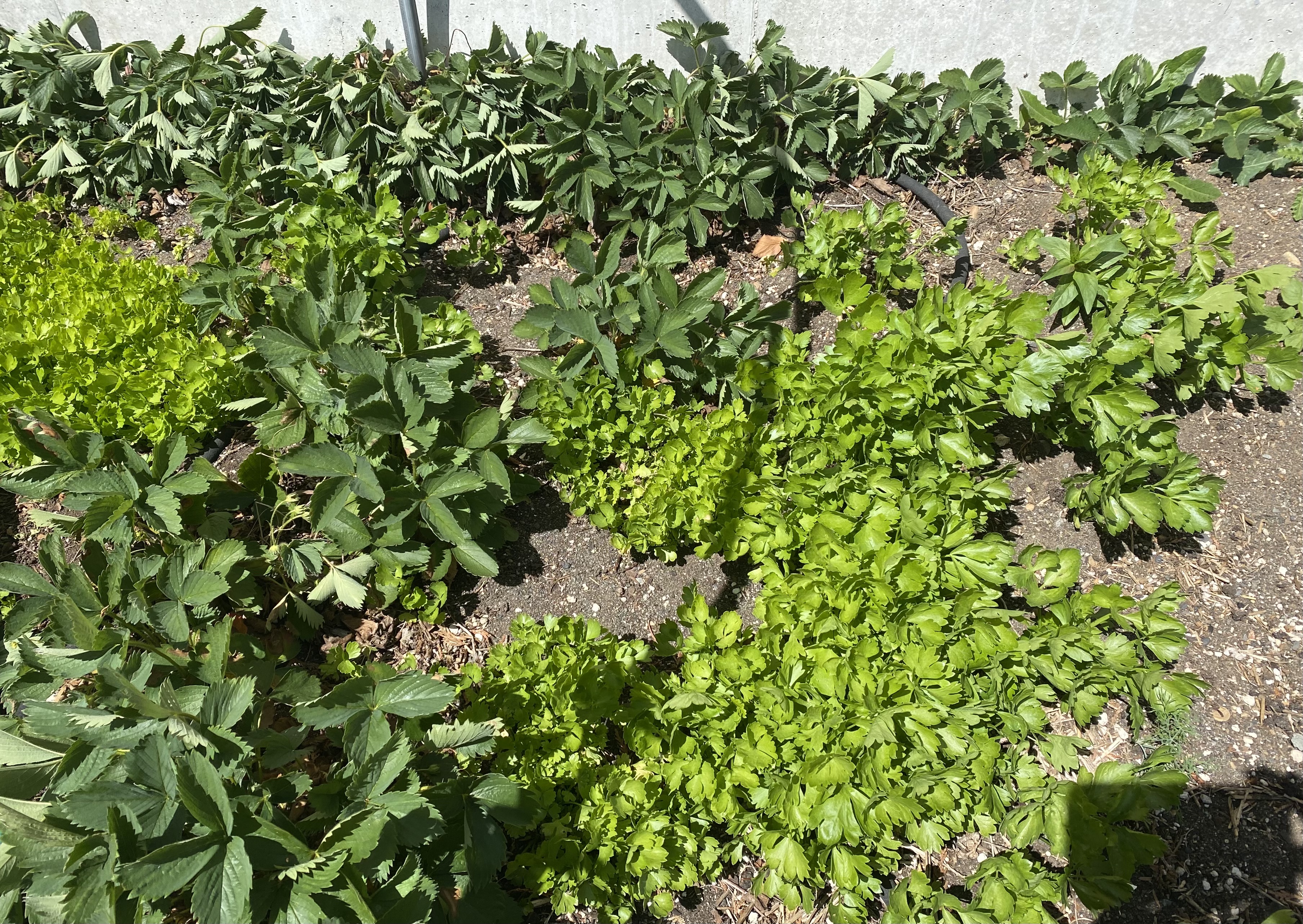
The sheer volume of volunteers we have from years past is an absolute gas as well. The strawberries, celery, cilantro, onions, garlic, and snap peas all showed up again on their own, and I couldn’t be happier.
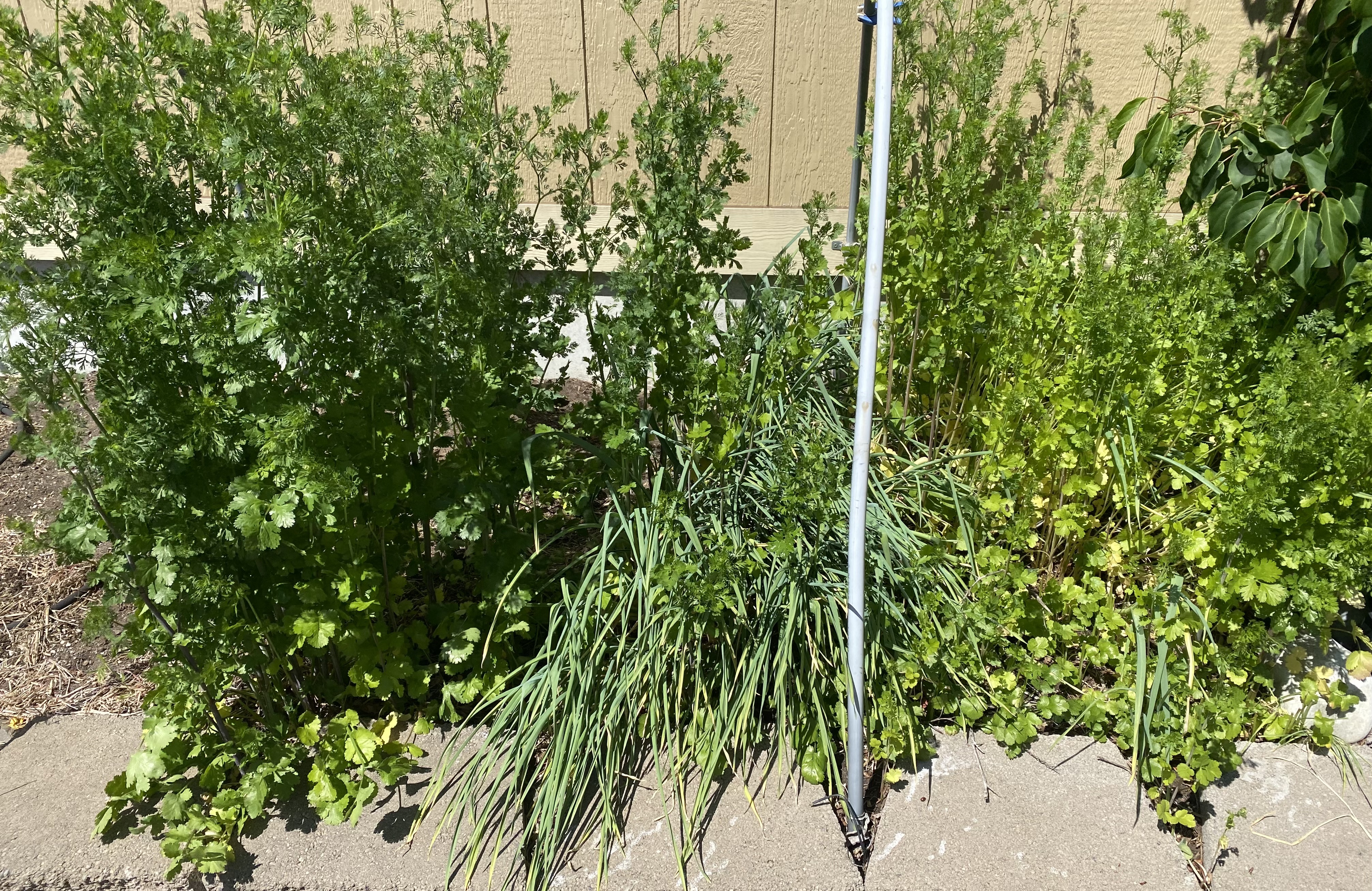
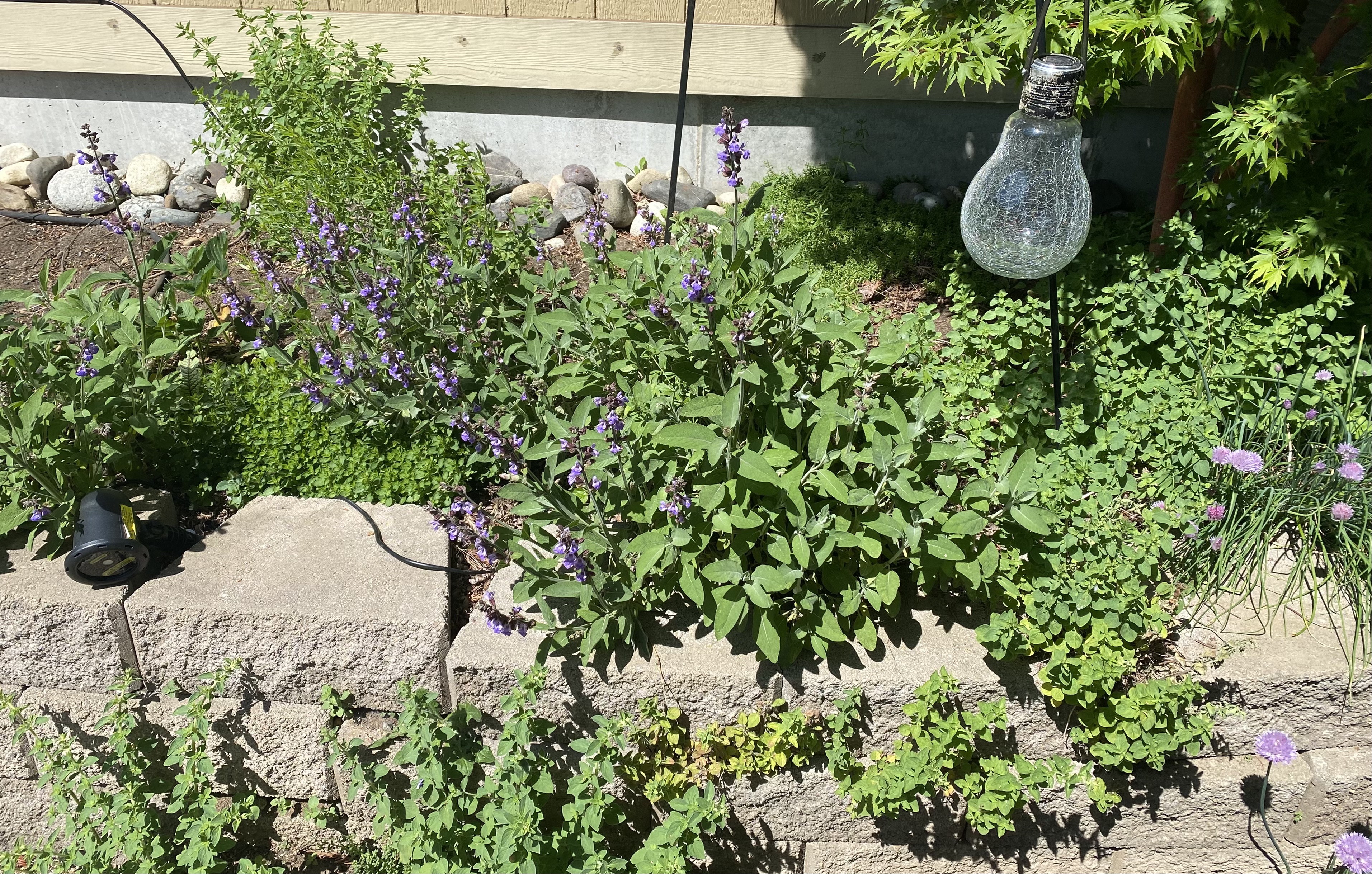
Herbs are pretty much self regulating, albeit we do keep them trimmed back to a dull roar.
there’s nothing better than stopping your meal prep to step outside and cut what you need as fresh as fresh gets. Whether you go whole hog or just have a little pot or two, you’ll find the same joy in growing your own.
Are you a raw oyster fan? If so, chances are good you’ve tried sauce mignonette. This brilliantly simple concoction adds a perfect tangy, bright note to shellfish. Look this stuff up, and you quickly find that the buck literally stops right there – Google alternate uses for mignonette, and you get next to nothing. I have no idea why that’s the case, because mignonette is fantastic on a bunch of other stuff as well.
A classic mignonette is a paean to simplicity. Just three ingredients – red wine vinegar, shallot, and black peppercorns are all it takes to make the magic happen. With three fairly potent constituents, proper ingredient ratio is critical to preparing great sauce – for every quarter cup of wine vinegar, you add a tablespoon of shallot and a two to three twists of pepper, about a quarter teaspoon. Combine, let them sit for a bit to marry, and you’re there.
Tweak things a bit, and you have a whole bunch more options. Change the vinegar to white wine, champagne, cider, sherry, or balsamic – or mix vinegar 50%-50% with wine or fresh fruit juices. Change shallot to sweet onion, or red, or white, or go wild and sub jalapeño or serrano chiles. Change black peppercorns to a fragrant 4 pepper blend, or Tasmanian pepperberry, grains of paradise, or Szechuan. Each variant reveals entirely new flavor notes and combinations – find yours, name it, and share it.
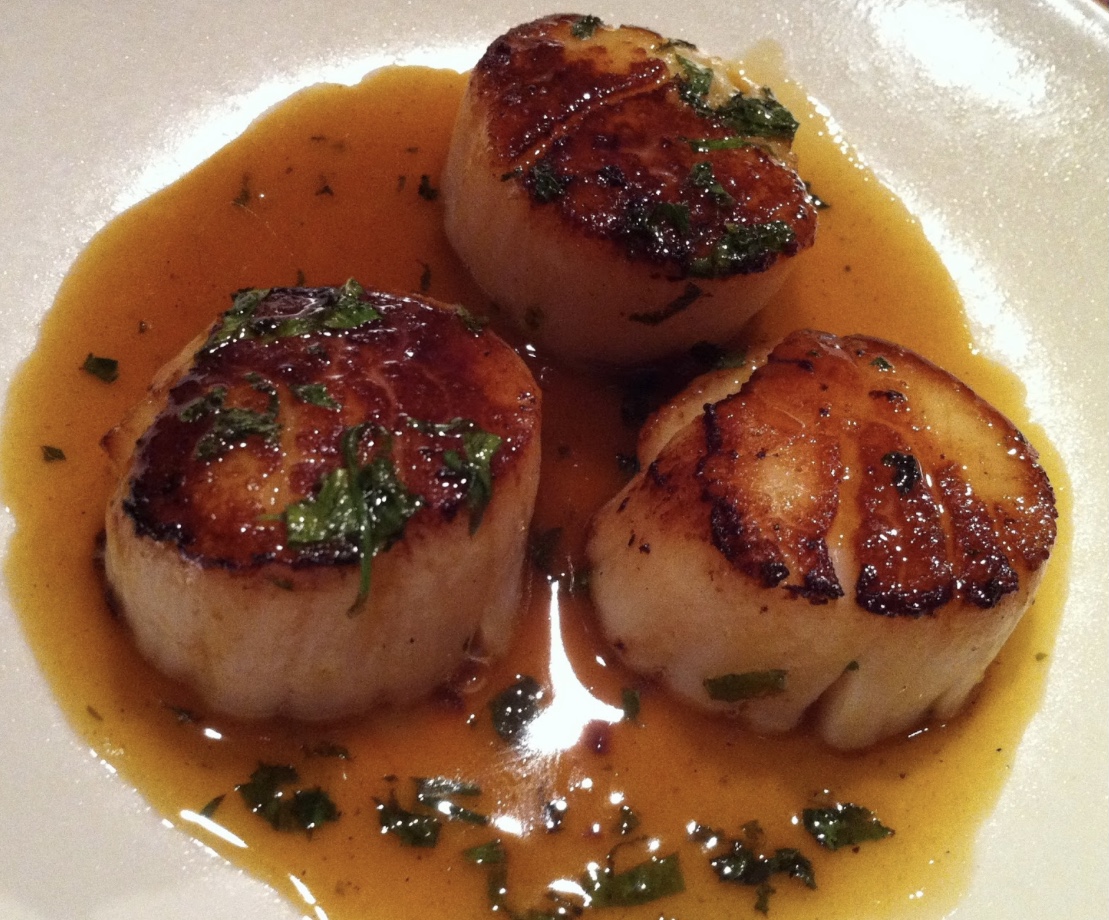
Damn near any simply prepared fresh fish will pair nicely with mignonette, as will chicken, pork, extra firm tofu, and sautéed veggies. Below you’ll find a solid basic recipe to start playing with as well as a great twist for hot summer months, a mignonette granita – freezing and shaving the mix intensifies the sauce, (at least to my palate) – Allow a generous spoonful of that to melt on top of freshly grilled fish or poultry at table side, and you’ve got a truly lovely treat.
Classic Mignonette
1/4 Cup Red Wine Vinegar
1 packed Tablespoon minced Shallot
2-3 twists Telicherry Pepper (about 1/4 teaspoon)
Combine all ingredients in a small, non-reactive bowl and whisk to thoroughly incorporate.
Allow to marry at room temp for at least 15 minutes before serving. The longer you allow for marriage time, the better your overall incorporation – you can’t really go overboard in that regard.
Lemon Mignonette Granita
NOTE – Works great with lime, blood orange, tangerine, grapefruit, or pineapple too.
1/4 Cup Red Wine Vinegar
1/4 Cup fresh Lemon Juice
2 packed Tablespoons Minced Shallot
5-6 Telicherry Peppercorns, crushed or ground
1/4 teaspoon sugar
In a small saucepan over medium heat, combine all ingredients and bring to a vigorous simmer for about 30 seconds.
Remove from heat, pour sauce into a non-reactive bowl and allow to cool to room temp.
Pour cooled sauce through a single mesh strainer into a freezer safe pan or dish with a flat bottom.
Place in freezer for 2-3 hours until well frozen, scraping the sauce down with a fork every hour to to keep it shaved.
















 UrbanMonique