Rowan Jacobsen Interview


Rowan Jacobsen is truly one of the best food writers out there. A two time James Beard award winner, Jacobsen writes with great passion and insight, with a perfect touch of humor. His style and focus reminds me of John McPhee’s work, and that’s no faint praise.

This week, Rowan joins me on The Big Wild, to talk about his work, and share some thoughts on the terroir of the American Midwest.

Rowan’s website includes all of his books, as well as links to many of his magazine pieces.

Smoked Chicken Stew


So, from last nights butterflied, grilled chicken, I saved the carcass and made stock and stew therefrom. If you’re not doing this kind of thing on a regular basis, you really need to be reading this blog more often.
Here’s how.

For the stock,
1/2 sweet Onion
1 Carrot
1 stalk Celery
2 Bay leaves

Rinse, trim and then chop veggies to uniform rough dice. Note: Can’t tell you how often I see home cooks throw out celery tops with leaves on them, or how wrong that is. Especially when using celery for mirepoix, making stock, etc, you want those leaves; they pack beautiful, delicate celery flavor, and impart it to other foods better than the stalks do.

Glean any appreciable meat from the chicken and reserve for lunch, (we didn’t have any left, frankly, and we’ll be using breast meat for the making of this stew anyway…)

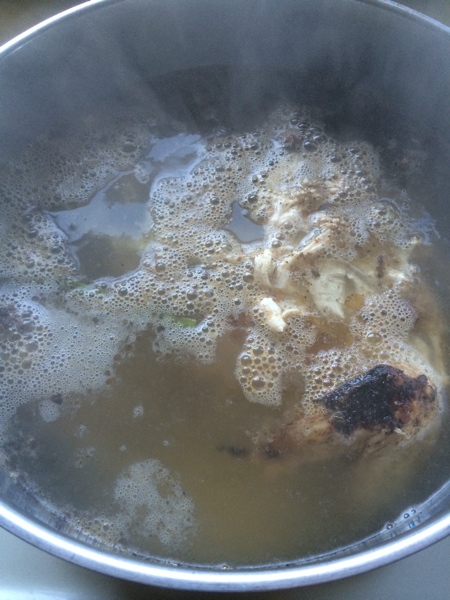
Everything goes into a stock pot over high heat with enough water to cover well, about 3/4 gallon. As soon as things start to simmer, reduce heat to just maintain that, and let it go for at least 2 hours and up to 4. As you lose water to cooking, gradually add more. Ideally, you want to end up with about 8-10 cups of lightly colored and flavored stock. That is rather light as stock goes, but we’re making a robust stew that will pack its own flavors; this is just the canvas…

Remove from heat, discard all the big chunks by straining through a colander. Chill the rough stock in a large bowl in the freezer until most of the fat has risen to the top. Skim that off, then clarify the stock once or twice by running it through a chinoise or strainer.

Return stock to a stock pot over medium heat.

For the stew,
2 Carrots
2 stalks Celery
3 Red Potatoes
1 Tomato
1 Lemon
2 cloves Garlic
1/4 sweet Onion
2 sprigs Cilantro
Extra virgin Olive Oil
White Wine
Black Pepper
Smoked Salt

Rinse and trim all veggies. Cut carrots, celery, potatoes, tomato, onion and cilantro to a fairly uniform rough dice, about 1/2″ pieces. Mince the garlic and cilantro and toss everybody but those into the stew pot.

Heat a tablespoon of extra virgin olive oil in a sauté pan over medium high heat. Toss in onion and sauté until it starts to go translucent. Add garlic and sauté about another minute. Add a splash of white wine and continue sautéing until the raw alcohol is burned off. Toss all that into the stew pot. This step, done with strong aromatic veggies like onion and garlic, adds a nice richness to a soup or stew, and helps tame the raw heat they can pack.

For the chicken, you can smoke it over your grill, barbecue or smoker with a bit of smoking wood, pellets, what have you, or you can cheat like I did. If you’re a regular here, you know how much I love Butcher & Packers hickory smoke powder. As advertised, it gives a pure taste of hickory smoke and nothing else. I’ve fooled Texas BBQ snobs with this stuff. Saves a bunch of time and sacrifices nada in the process; try it. They also make chipotle powder, and powdered mesquite, which are equally fabulous. 

Dirty Rotten Cheater’s Smoked Chicken,

2 Cups Chicken Breast
1/2 Cup Whole Grain White Flour
1-2 teaspoons Smoke Powder
1/2 teaspoon Smoked Salt
1/2 Teaspoon ground black Pepper
2 Tablespoons vegetable oil

Cut chicken into roughly 3/4″ dice.

Add 2 tablespoons of oil to a large sauté pan over medium high heat.

Combine flour, smoke powder, salt and pepper in a paper bag, (amount of smoke is up to you). Add the chicken and shake until all the chicken is thoroughly coated. Remove the chicken and tap/shake off excess dredge.

Add chicken to pan and allow it to cook long enough to sear well on all sides. You want to develop a genuine, caramelized crust, so don’t play with it too much or turn it too often. Keep a close eye on it so it doesn’t burn.

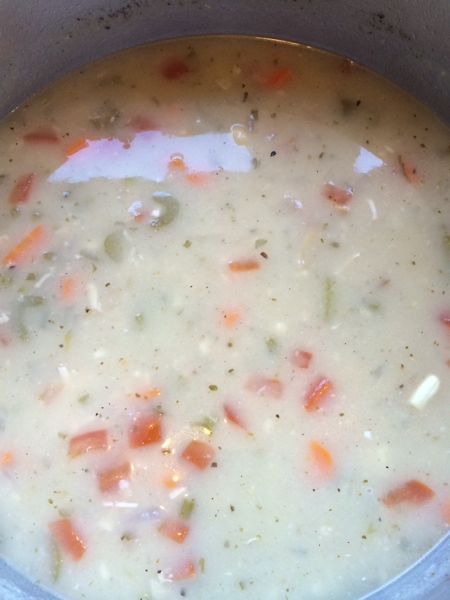
Once the chicken is well seared, transfer it to the stew pot and stir it in well. Turn heat down until you’re at a nice low and slow temperature, with no signs of simmering.

Let the stew cook for at least two hours. Slice the lemon into quarters. Add the juice from half to the stew, reserve the others for service. Adjust seasoning with smoked salt and pepper. Stir regularly, taking care to make sure stuff isn’t sticking to the bottom. The regular stir helps release the dredge from the chicken and combine it with fats, which is what is going to thicken your stew. If you like things thicker yet, microwave an extra Yukon potato, mash it with a tablespoon of butter, and stir that into the stew as well.

Serve with crema, sliced lemon, our jalapeño-cheddar cornbread, and a nice, cold Negro Modelo.

Butterflied Chicken


Gotta thank our friend Holly O’Reilly for sparking the creative flame on this one, so first off, go over to her blog and check out what she did.

I saw her post, then, as age would have it, promptly forgot I wanted to do it, until a text from Monica the next morning which read ‘Do you know how to butterfly a whole chicken?’

I responded with a ‘Yup, and it’s super easy!’ That made me wonder why it’s been so long since I’ve done it. I honestly don’t recall having prepped a bird this way in at least 20 years, which is truly a shame, because as Holly noted, it makes for a seriously juicy, crispy treat.

So, why is that? Why would this method lead to a better bird? The answer lies in volume. Chicken on the grill, barbeque, or smoker is hugely popular for good reason, but it’s also likely the top candidate for being dried out and overcooked. That, as much as any other factor, is a function of portion size. The smaller the chunk, the easier it is to over do it. Conversely, a whole chicken makes a fine vehicle for staying plump and juicy on outdoor cookers. I’ll usually advocate brining chicken before grilling, but if you’re in a hurry or planning dinner last minute, get a whole bird, butterfly it, and you’ve no need of brine.

Making a chicken relatively flat is easy as all get out, and if, like Monica, (Sorry, Babe), you have a love-hate relationship with sharp knives, it’s a perfect process for you. A pair of decent kitchen shears is all you need.

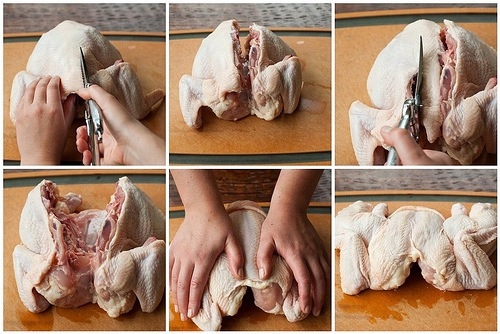
After checking your birds for giblets, neck, etc, flip it over so it’s breast side down. Take your shears and line them up just to the right or left of the spine, and cut a straight line from cavity to pope’s nose. Repeat on the other side of the spine. That’s all the cutting you’ve got to do, (told y’all it was easy). Grab the spine and pull it away from the bird; there won’t be much left holding it on. Set that aside for stock making later.

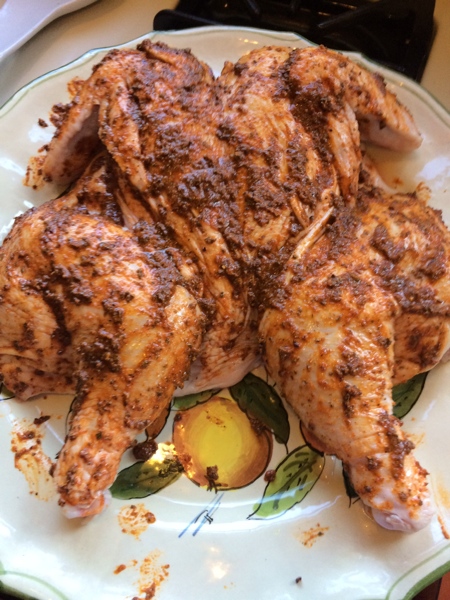
Flip the bird over, and arrange it evenly, then give it a squish with your palms. You’ll end up with a beautifully butterflied bird, ready to rub and cook. I tuck the wings in against the body, so they cook without burning before the rest is ready.

We wanted something bright and smoky for the rub; here’s what we used.

1 teaspoon black Pepper
1/2 teaspoon Grains of Paradise
1 teaspoon Alderwood Smoked Salt
1 teaspoon Smoked Sweet Paprika
1/2 teaspoon granulated Garlic
1 Tablespoon extra virgin Olive Oil
Juice of 1 Meyer Lemon

Combine all the dry ingredients in a spice grinder and give them a whirl. Add oil and lemon to dry in a small mixing bowl. Allow rub to rest for about 15 minutes, so flavors can marry. Rub evenly over the bird and allow to rest for another 15 minutes while the grill heats up.

I did this one over gas with one flip, starting breast side up, at about 325° F, for an internal temperature of 155° F. Remove it from the fire for a 10 minute rest, and your internal temp ends up right at 165° F.

We served the bird with grilled, marinated asparagus, and a lightly grilled Romaine salad, both with a Dijon vinaigrette made with Champagne vinegar, and a nice, cold Hefeweizen.

As Holly noted, there’re was very little left over, but there was went into the pot to make stock, as it should be.


Pickled Chiles


I love pickled peppers, from Peter Piper or anybody else with good ones to spare…

When chile season hits, you can easily get overwhelmed with the bounty. You should always share, but don’t forget to put up as many as you can; they’re perfect for drying, freezing, and canning, though peppers require pressure canning to do them safely. If you’re interested in that, head on over to the National Center for Home Food Preservation, (NCHFP), and learn how.

On the other hand, pickling those peppers means you can use a simple water bath canning method, and that puts things in the do-able realm for just about all of us. Again, here’s the how to from the NCHFP.

Easier yet is a quick pickle or fridge pickle; this method is ready to eat in a day or two, and will last a month safely when refrigerated. Here’s our go-to recipe that works great for any hot chile.

NOTE: You can use any vinegar you like for this recipe. Plain white will give a tangier, more sour chile, while apple cider or red wine will give a sweeter one. Rice vinegar is the mildest option. Herb infused vinegars are just fine if you like the flavors.

Pickled Chiles
4 Cups fresh Chiles
1 1/2 Cups Vinegar, (See note above)
1 1/2 Cups fresh Water
2-3 Cloves Garlic
2 Tablespoons whole Peppercorns, (The 4 color blend is great here)
2 Tablespoons Pickling Salt
2 Tablespoons Agave Nectar or Honey
1 Tablespoon whole Coriander Seed
1 Tablespoon whole Mustard seed (Brown, yellow, or both)
2 whole Bay Leaves
1 teaspoon whole Juniper berries

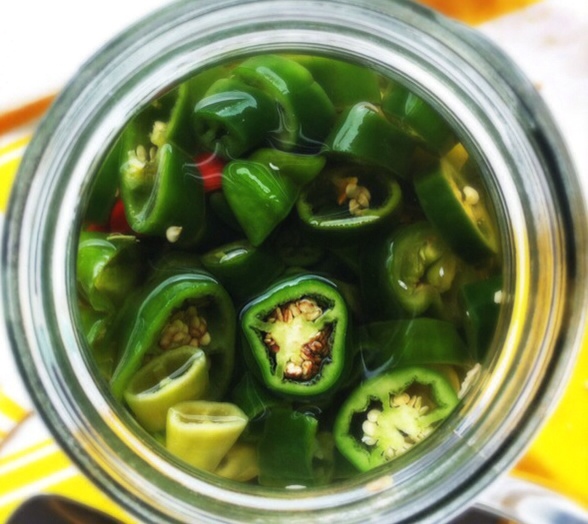
You can leave chiles while or cut them into rings. Pickling will cool the heat of really hot chiles somewhat, but if you prefer yours more tamed still, cut chiles into halves, quarters, or rings and remove the seeds and membranes.
You can leave chiles whole, remove the tops and just the end of the bottoms, and field strip them if you like, but it is a bit more labor intensive.

Pack chiles into a sanitized 1 quart canning jar. Boiling water, or a dishwasher cycle will do the trick; include the ring and lid top as well.

In a large pot over high heat, combine all remaining ingredients and bring to a boil.
Reduce heat and allow to simmer for about 5 minutes.

Carefully pour hot brine over peppers; a canning funnel is super helpful, cheap and easy to find.

Seal the jar and allow the chiles to cool to room temperature.

Refrigerate for at least 24 hours, (48 is better yet), before chowing down.