Roasted Brussels Sprouts To Die For


M and I have transitioned from hosting major holidays to a supporting role. I can’t say as we’re particularly bummed about that either…  Anywho, we do bring dishes with us of course, so when M said she needed ‘about 50 Brussels sprouts’ for Thanksgiving, I raised an eyebrow and did as I was told. Sure as shootin’ we ended up with a bunch we didn’t bring to the big shindig – And there you have it, another leftover that could use a little help. What I came up with to make proper use of them sprouts was absolutely delicious – in the immortal words of Jackie Chan, ‘no bullshit.’


Brussels sprouts are a cabbage family member, Brassica oleracae. Native to the Mediterranean, they hit Europe in the 5th century and became wildly popular in Belgium, specifically around Brussels, (and they still are). They’re a slow growing crop that likes cooler, moister weather – planted in spring, they get harvested in late fall. Just south of us in the Skagit river valley, farmers grow thousands of acres of these little gems. You’ll see them on the west side of I-5 when you motor along down there.


Sprouts get a bad rap as boring or down right gross – and that’s wildly unfair. If you like the cabbage family, you should love Brussels sprouts. If you don’t it’s probably for one of two reasons – either you got fed less-than-fresh sprouts, or the recipe really was boring. 
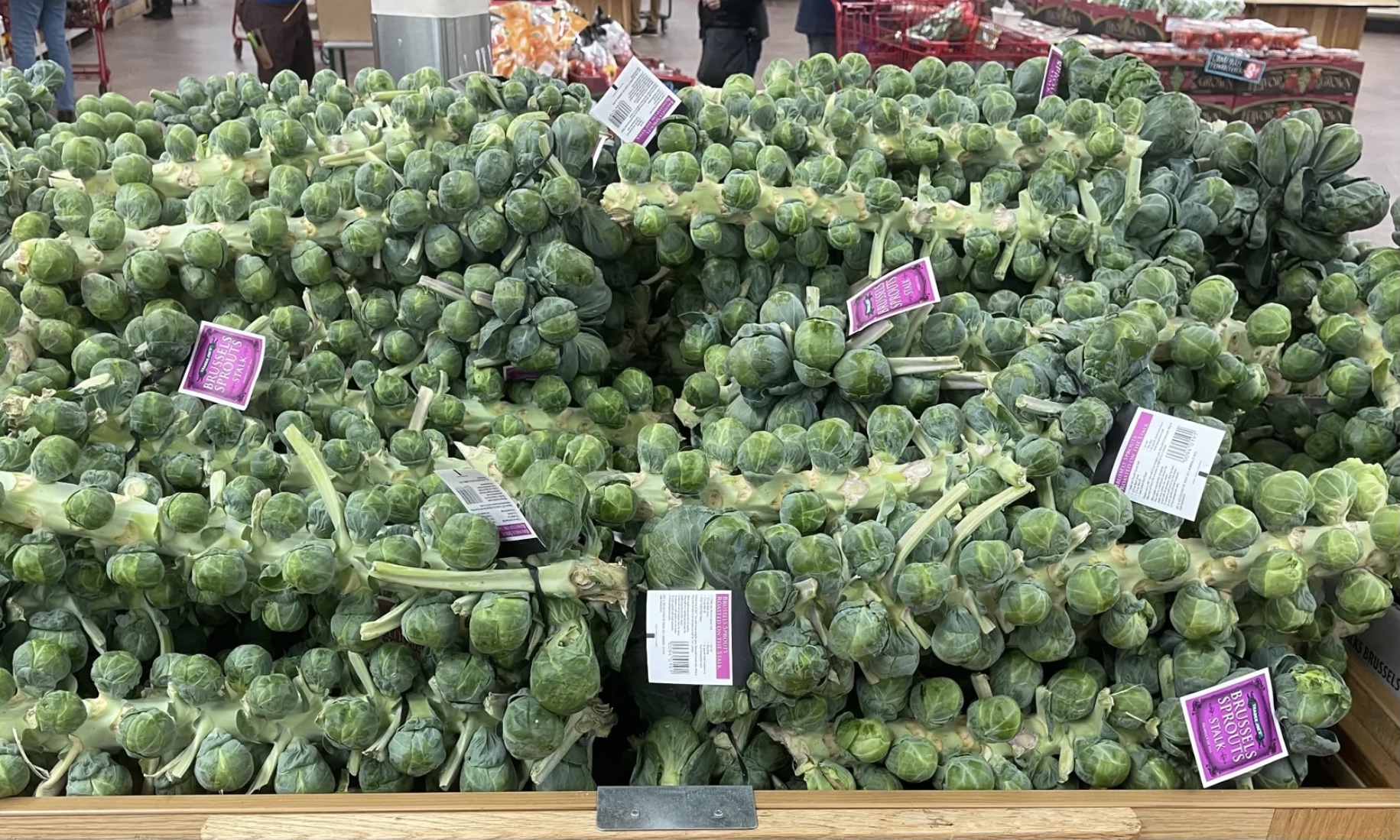

Besides being delicious, sprouts are packed with vitamins and minerals, and low in calories and carbs to boot. How do we pick nice fresh ones? Opt for ‘em on the stalk if they’re offered. Look for nice, tightly packed, bright green ones, and avoid stuff with yellowed or browned leaves. Fresh sprouts should feel heavier than you’d expect them to be, and size-wise, smaller means sweeter.

There’s a bunch of great options for enjoying these little apprentice cabbages, but I won’t recommend boiling them. More often than not, that’s gonna yield soggy, mushy sprouts. While you might not relish chawing on a whole raw sprout, they’re wonderful thinly sliced in salads. They’re great in soups or stews. If you dig sauerkraut, pickled sprouts are gonna float your boat for sure. Thinly sliced quick-pickled raw sprouts are fabulous on tacos. 

After a simple, quick presentation? Gently steam sprouts for 5 to 7 minutes, and test with a fork – they should be firm, not overly soft. They’ll continue to cook a bit after you remove them from the heat – add herbs, oil, etc as you like at that point. You can also sauté halved sprouts with great results – again, test with a fork to make sure you don’t overdo it.

For M2¢W, roasting the little buggers is the way to go. That’s what I did last night, paired with chicken cordon bleu and Yukon gold spuds. Many roasted recipes you’ll find add a lot of other stuff  – cranberries, nuts, sweet potatoes, and such. All of that is yummy, but for my mind, we should honor sprouts, not hide them. My recipe keeps it super simple, with ingredients picked solely to make the sprouts the star of the show. M declared them ‘the best ever’ and I agree – we’ll be keeping this one in our quiver for sure.


Urban’s Roasted Brussels sprouts

This recipe was for two folks – you can scale up or down as needed

16 small, fresh Brussels Sprouts 

2 Tablespoons Avocado Oil (Olive is fine too)

1 fat clove fresh Garlic

1/2 small fresh Lemon

1 teaspoon Pineapple Vinegar (apple cider is fine)

1 teaspoon Greek Oregano

4-5 twists fresh Pepper

2 finger pinch Kosher Salt
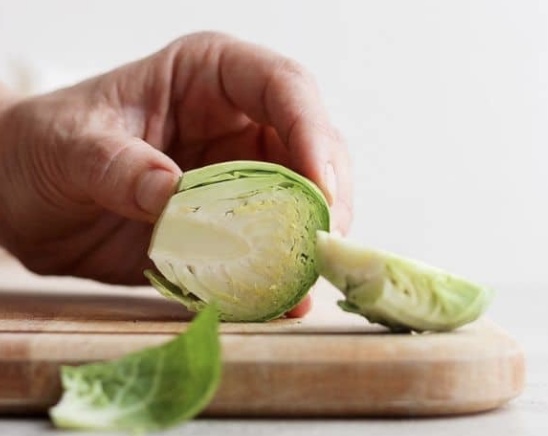

Rinse and end trim sprouts, then cut in half lengthwise, (from top through base). Usually, you’d remove the exterior leaves at this point, but leave ‘em on here – they’re gonna make delightfully little crunchy wrappers for you.

End trim, smash, peel and mince garlic.

Zest and juice the half lemon.

In a small non-reactive mixing bowl, combine all ingredients and toss with a soup spoon to incorporate and coat the sprouts.

Let everything sit and marry for about 15 minutes. If you pair these with potatoes, now’s the time to pop the spuds in the oven – they’ll need about 15 minutes more than the sprouts.

Preheat oven to Roast 375° F – If your oven doesn’t have a roast setting, crank it up to 400° F and position a rack one slot above center.

In a small cast iron or heavy skillet, add all ingredients and give a couple more stirs with the spoon to re-coat everything. 

Roast for 25-30 minutes. At 25 minutes, check your sprouts, they should be firm but tender, and look fantastic as you see here.
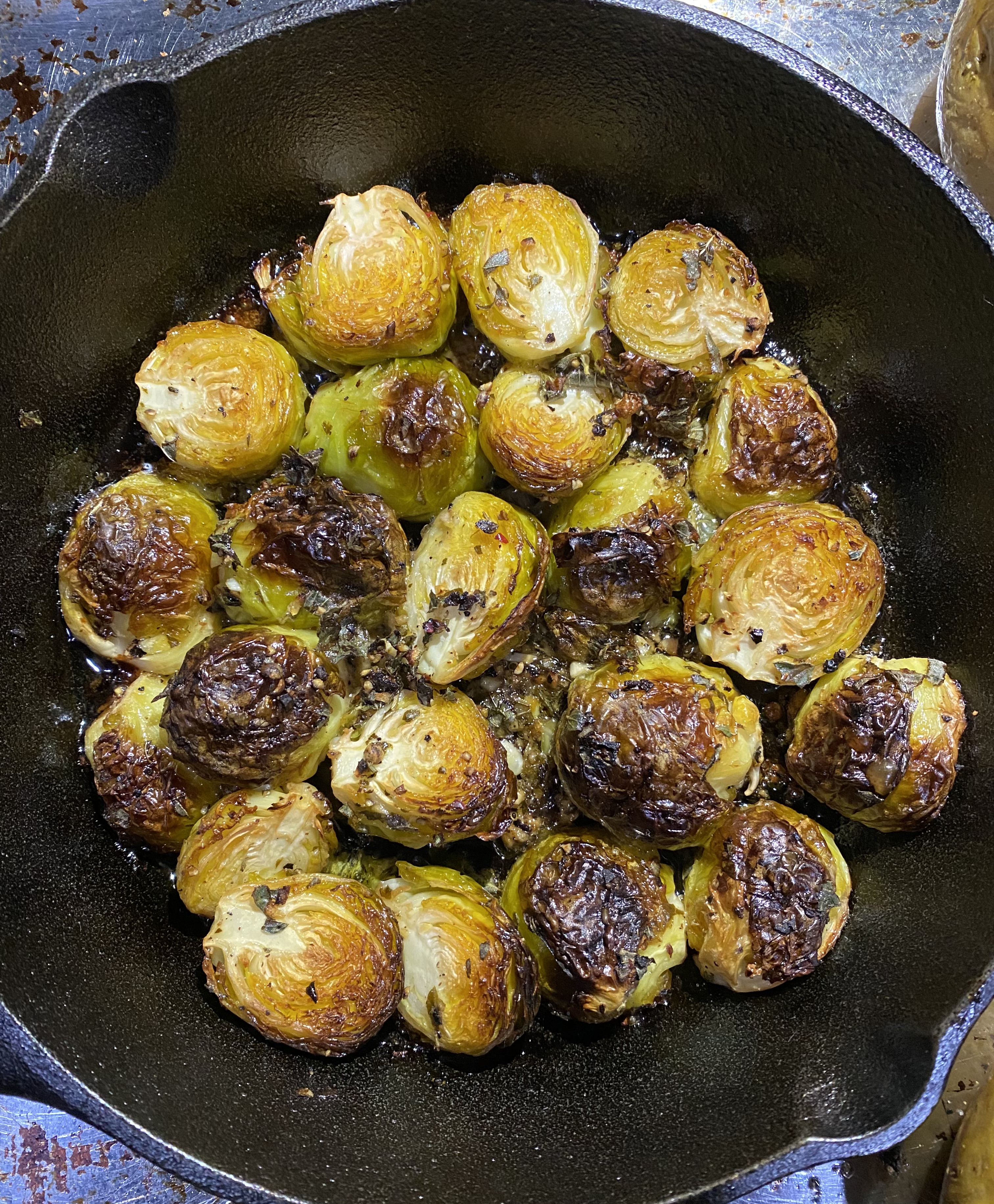

Remove from oven and serve right away – just put a kitchen towel around the grip of that skillet, a hot pad beneath, and dig right in.
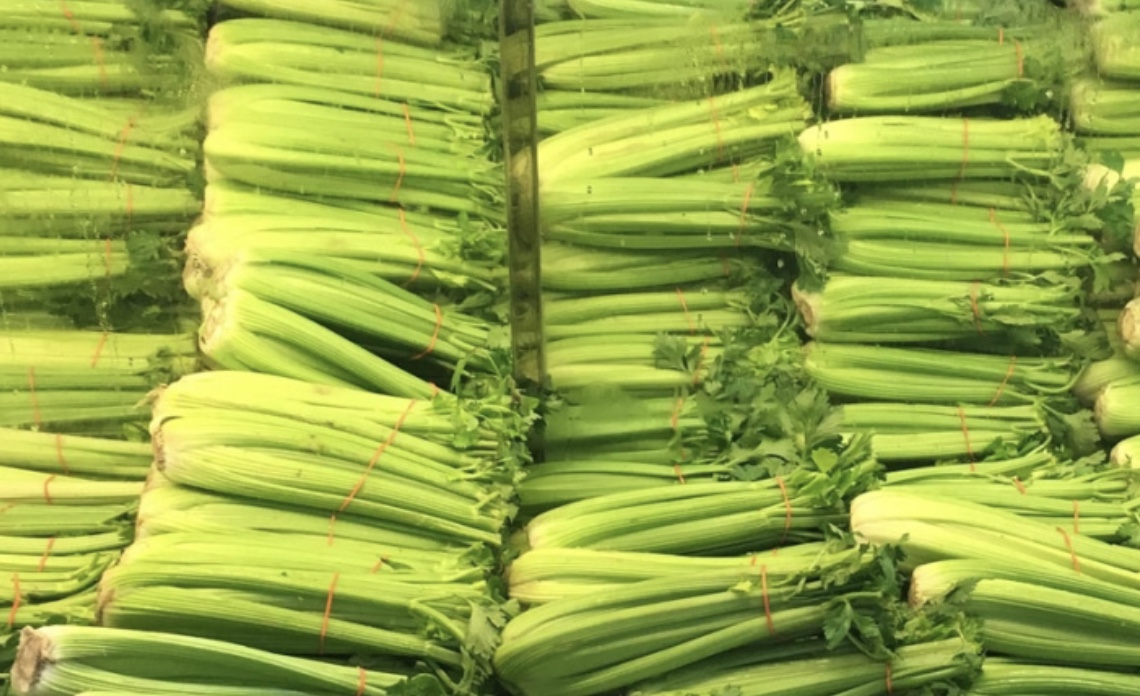
In Praise of Celery


Yeah, I said celery – you got a problem with that? If so, you’re just wrong, wrong, wrong, but in all fairness, it might not be all your fault. Answer me this – is the celery you’re familiar with what you get from the supermarket? Do you actually check out what you buy before you buy it? Ever grown your own or got celery from good local CSA or framers market? If you answered YES, NO, NO, NO, then you gotta up your game. Let’s run down that list.


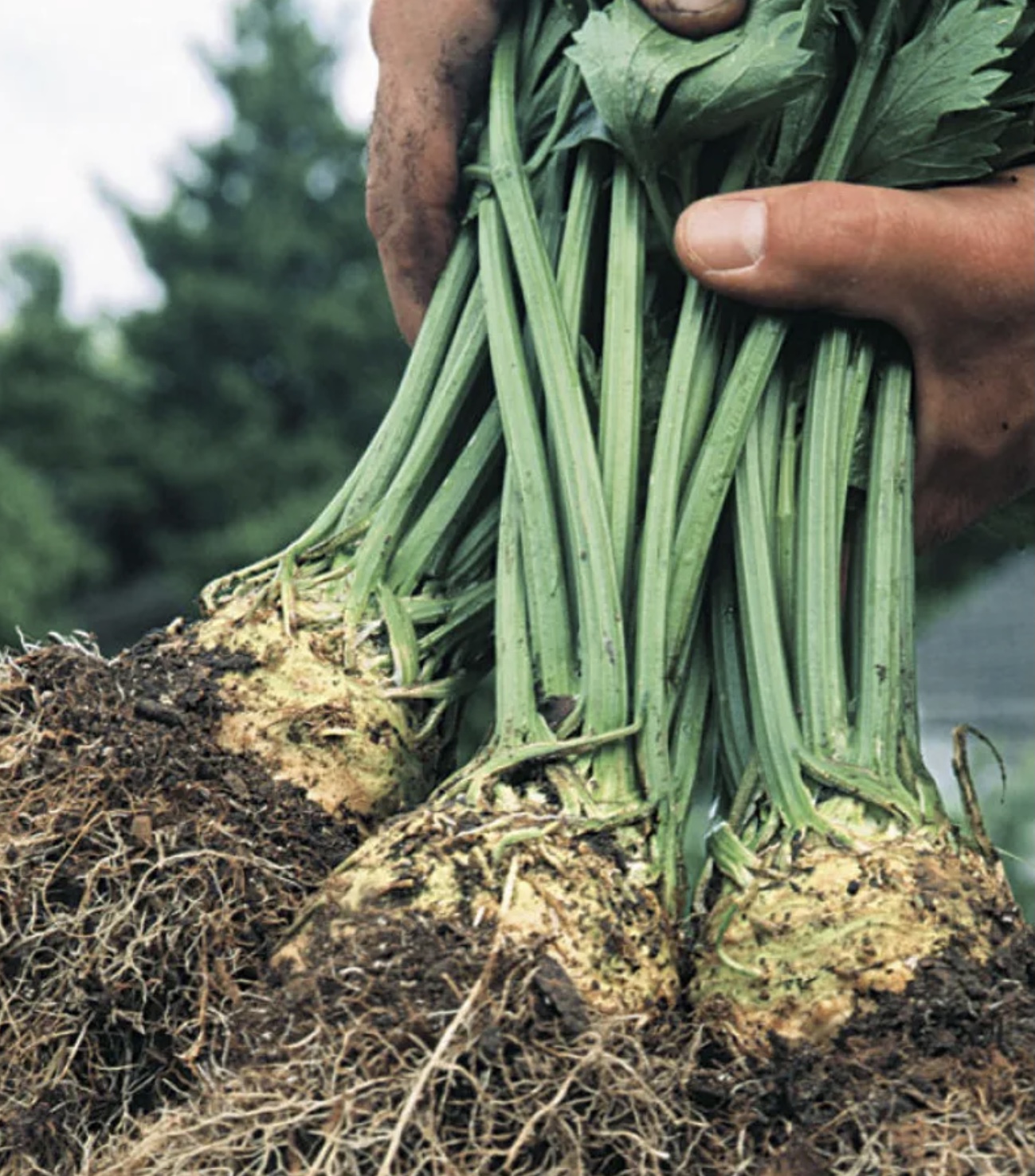
Just look at that stuff in the image above – it’s kind of a shitty picture, but even so, does that look good to you? Look fresh, appealing? No, it doesn’t, and again, if this is what you’re buying, no wonder you dis celery.

If you do buy supermarket celery, do you check it out first? I can’t tell you how many times somebody sees me choosing produce and asks, ‘what are you doing?’ Bloody hell – I’m making sure that what I buy is worth my money! Grab a leaf off that celery stalk, crush it and smell it – does it smell good? Greenish, sharp, a bit peppery? Bend a stalk or three- are they like rubber, or are they firm and resist being bent? If you answer NO and NO, don’t buy it.

Finally, if you’ve never grown your own or bought fresh local celery, then frankly, you got no idea what good celery is – and good celery is well worth your time and energy.


Why is celery worth your while? It’s healthy as all get out for starters – high in fiber, loaded with antioxidants, and high in phthalides which can help regulate blood pressure, and its even got extracts onboard that help cognition and memory.


Yes, good, fresh celery tastes excellent as well – it’s related to carrots and turnips, and has a light but very present flavor profile, a peppery, earthy tang with nods to onion or garlic chive. To me, the flavor is most pronounced in the leaves, which is why I use them a lot – added to hot or cold salad, soup, stew, stir fries, vegetable medleys, pan sauces and salsas, they’re delightful.


We grow celery annually, and it’s always the last to succumb to freezing weather – Our go to is Tall Utah, (what you see in the image above), a hearty and stringless variety with great taste and big leaves that lend themselves beautifully to fresh use and drying.


Giant Red is a cold hearty and gorgeous variety with arguably the strongest flavor profile you’re likely to find – it’s a fave in England, and should be here too – it’s delightful stuff.


Nan Long is a leafy, Chinese variety that produces delicate, thin stalks and pairs wonderfully with Asian cuisines. It’s a quick maturing variety that thrives in climates with a short summer growing season.


Finally there’s celeriac, a variety grown for its hypocotyl -a big, robust rootlike growth. Celeriac is far more popular in Europe than the U.S., which is a shame, because it’s delicious, hearty, and easier to grow than stalk celery. Celeriac is sewn after the last frost and harvested in fall to winter – it stores well, and can be frozen or dried as well. Celeriac tastes like, well… like celery, but with a distinctly nuttier note, stronger presence, and a fantastic crunchy texture.

Whatever you decide to grow or hunt and gather, once you’ve tasted real, fresh celery, you’ll never willingly go back to store bought tubular cardboard – You’ll find celery taking its rightful place alongside all the other veggies you love and eat regularly. As for what to make, I’ll just say this – You’ll find a myriad of things to do with it, and don’t be at all surprised if fresh, braised, sautéed, or roasted celery finds its way into your routine – it’s that good – no, honest!

It’s fall – time to make great Coleslaw


If you don’t like coleslaw, it’s probably not your fault. When what you’re offered is the same old tired side dish, what reason have you to be excited? Yet there’s hope, folks – because good coleslaw rocks, is easy to make, and is a perfect vehicle for showcasing late season goodies from your garden.

Slaw has a venerable past, reaching all the way back to the Roman Empire. The version we know best today has its roots in Dutch immigrants who settled in New York State – they grew a lot of cabbage, to take advantage of the wealth of vitamin C that can provide during the long winter months. They made sauerkraut, as well as an unfermented, shredded cabbage salad – Koosla.

Mayo-based dressing that adorns most slaw these days is quite a bit younger than vinegar versions. Invented by the French in in the mid 1700s, it took mayonnaise a while to arrive in the colonies – it showed up in American cuisine in the 1830s.

All that historical jive aside, if you’re not that hot on slaw, it’s likely that some combination of four factors are in play – either heavy, mayo-based dressings don’t float your boat, the sauce to veggie ratios you’ve tried were way off, what you were given wasn’t fresh, or you just don’t dig cabbage all that much. Fortunately, all these are easy fixes.

Mayo-based slaw dressing is great, especially when it’s made with fresh mayonnaise. Great creamy slaw dressings can also be made with sour cream, crema Mexicana, crème fraîche, Greek yogurt, or buttermilk. Still shaking your head? Then there’s a world of zippy oil and vinegar dressings out there for you.

As for super saucy slaw, a word – don’t. Always keep in mind that this is a dish that celebrates lovely fresh veggies – the dressing is a note, not the whole damn symphony.

Coleslaw is all about fresh veggies. In fall, cabbages are at their best – and I mean cabbages plural – there’s the classic round in red, white and green, the wrinkly Savoy, delicate Napa, choy sum, and deep green Tuscan. There’re also carrots, onions, garlic, celery, Brussels sprouts, kale, bok choy, mushrooms, and kohlrabi. That’ll make a slaw that celebrates late harvest bounty.

Mizuna

If you don’t dig cabbage, there’s arugula, cress, mustard greens, mizuna (Japanese mustard), mibuna (Chinese cabbage), and tatsoi, (non-heading Asian mustard). Never heard of them? Do some poking around in your local co-op or CSA and you’ll likely find most if not all available. Chewy flavorful, these greens will make a great base for a non-cabbage slaw.

Mibuna

Whatever you do, portion accordingly, so that what you make gets eaten right away. With the exception of ingredients you might want to quick pickle or marinate for a bit before assembly and service, slaw must be fresh – that means don’t dump dressing on slaw hours before you’re going to eat. Dressings need decent marriage times, but the marriage of veggies and dressing shouldn’t happen until quite close to service.

Long gone are the days of slaw featuring naught but cabbage and carrot. Onion, celery, garlic, sweet peppers, cilantro, fresh chiles, radish, shallot, tomato, cukes or green beans – if you love ‘em, add ‘em. Fall fruits and nuts? Absolutely. Perhaps a quick pickle of onion, garlic, shallot, carrot, or beans to contribute another layer of zing? Without a doubt. What about cheese in coleslaw? Well, yeah – a touch of Parmigiano Regiano, feta, aged cheddar, or creamy Swiss? Hell yeah.

Slaw should never be boring – it’s a celebration of color, taste, texture and scent. Fresh herbs? Definitely – basil, thyme, rosemary, parsley, cilantro, sage, lemon thyme, or savory can all find a place in the veggie mix and/or dressing. Add touches of flavored vinegars, soy sauce, fish sauce, hot sauce, dried chiles, sesame seeds, cardamom, anise, Thai basil, or favorite spice blends from curries to furikake, and you’ll create stunning homages to many a cuisine.

Tailor your slaws to what you’re after – Something New Englandish? How about apples, chestnuts, roasted pumpkin seeds, and a dressing with a maple syrup note. Thai? Maybe glass noodles, bean sprouts, Thai basil, mint, and a dressing with notes of chile and fish sauce. Chinese? Maybe crunchy lotus root, Chinese long beans, choy sum, and a dressing laced with Pixian Sichuan Bean Paste – You get the idea, right?

Here to get you started are four dressing options, my go-to, a Japanese inspired Furikake, a Caribbean jerk powered one, and an Arab inspired version with besar.

For the Mayo and yogurt dressings, you can mix everything together and whisk until you’re fully incorporated. For the oil and vinegar versions, mix everything except the oil, then add that slowly in a thin stream, whisking steadily, to allow the emulsion to properly form and bind. All these should have a good 20-30 minutes of marriage time prior to dressing your slaw. These are proportioned to do just about right for a bowl of slaw that’ll feed 3-5.

Urban’s Go To Slaw Dressing

3/4 Cup Mayonnaise

2 Tablespoons Pineapple Vinegar

1 Tablespoon Dijon Mustard

1 Tablespoon Agave Nectar

5-6 Shakes Hot Sauce

1/2 teaspoon Sea Salt

7-8 Twists freshly ground Black Pepper

Urban’s Ginger-Furikake Slaw Dressing

1/4 Cup unseasoned Rice Vinegar

1/2 Cup Avocado Oil

1 Tablespoon Agave Nectar

2 teaspoons fresh grated Ginger Root

1 teaspoon Yasai Fumi Furikake

1/2 teaspoon Roasted Sesame Oil

1/2 teaspoon freshly minced Garlic

1/4 teaspoon Sea Salt

Urban’s Citrus Jerk Slaw Dressing

2 Fresh Limes – 1/4 Cup fresh squeezed Lime Juice

1 Fresh Orange – 1/4 Cup fresh squeezed Orange Juice

1/2 Cup Avocado Oil

1 Tablespoon Agave Nectar

1 Teaspoon Jerk Spice Blend

1/4 teaspoon Sea Salt

Urban’s Emirati Besar Slaw Dressing

3/4 Cup plain Greek yogurt

1/4 Cup Avocado Oil

1 Tablespoon fresh Lemon juice

Zest from small fresh Lemon

2 Tablespoons Apple Cider Vinegar

2 Tablespoons Agave Nectar

2 teaspoons Emirati Besar

Pinch of Sea Salt

5-6 twists Black Pepper

Asian Chicken Lettuce Wraps


It’s finally warmed up around here, and the garden has wasted no time in playing catch up. When M and I went out for a look and saw a bunch of gorgeous lettuce, she said ‘lettuce wraps,’ and I got busy.

Are you one who sneers at lettuce? If you’re of the opinion that lettuce, like celery, is a tasteless veggie, you’re not all that wrong – far too much of what we find in grocery stores is a pale shadow of the real deal. Like commercial apples not so long ago, what you find in stores is iceberg, romaine, and one or two varieties of leaf – they’re usually not local, and they’re not grown for taste – they’re made to travel and store well, and that’s why they generally suck. The image below underlines this trend. That’s a field of iceberg lettuce – Study that and ask yourself, when was the last time the iceberg you saw in the store looked like this?

A field of iceberg lettuce

Lettuce is a member of the daisy family – Asteraceae. It was first cultivated in Egypt around 3,500 years ago, grown for seeds that produce cooking oil, (and in some places still is). It was initially a plant 2 to 3 feet tall that looked like a mutant head of Romaine. Lettuce spread quickly, courtesy of the Greeks and Romans, and by the first century AD, had taken root across the known world. China leads world cultivation these days, by leaps and bounds in fact – And yes, it’s still grown in Egypt. There are six major cultivars – Leaf, Cos (Romaine), Crisphead (Iceberg), Butterhead (Boston or Bibb), Celtuce (Stem), and Oilseed. From those big branches stem hundreds of varieties, many of which are imbued with marvelous taste and texture – And you can grow many of them, so do – Make a salad from lettuces out your own garden, and you’ll know it’s wonderful stuff.

Common Lettuce Varieties

Lettuce, (and plenty of other leaves), have played a part in cooking and eating pretty much since us apes went bipedal – Food has been cooked in, plated on, served with, and wrapped in them – and still is. Little bites of meat, fish, poultry, or starchy vegetables wrapped in leaves, especially lettuce, is ubiquitous throughout Asian cuisines. I love such things, because you get a purer taste of what you’re eating than you would with something starchy, like bread, tortillas, pancakes, masa, or any of the other myriad sandwich wrappers employed – it’s also generally pretty darn healthy and remarkably tasty.

Celtuse, or Stem Lettuce

The challenge comes in finding lettuce strong and tasty enough to do the job. Romaine will work, but it usually tastes like cardboard. What you want is something from the Butterhead cultivar – a lovely head of Butter, Boston, or Bibb lettuce. These are robust enough to handle being stuffed, are far prettier than most other varieties, and taste great. They can be a bit pricier than simpler stuff, but if you get 12+ wrappable leaves out of a head, it costs about the same as dozen tortillas.

Butterhead Lettuce, AKA Butter, Boston, or Bibb

Chicken is a great protein for doing up an Asian inspired wrap dish, but so would fresh, firm tofu, fish, pork, or beef. If you use meat, it doesn’t have to be fancy – there’s a marinating step in this recipe, so even tougher cuts will get some time and help toward breaking down tougher tissues. A lot of the chicken lettuce wrap recipes out there advocate breast, but I do not – that is about the most expensive piece you can find, and the standard American white meat chicken breast hasn’t much flavor – yes, a marinade will help fix that, but why not use something that has some? Skin on, bone in thighs are the trick – Lots of flavor, cheap, and easy to prep – and a lot more authentic to boot.

As for that marinade – Rather than go for something point specific, I built a reasonably faithful mashup that holds true to regional cuisines and is a bit exotic to us Americans. Thai, Vietnamese, Japanese, Chinese, and Korean cuisines all use soy sauce, albeit they have specific variations they prefer – those are worth checking out, as they’re quite distinct. Hoisin sauce also crosses several borders, it’s often thought of as a generic Asian barbecue sauce. Rice wine and sesame oil are ubiquitous as well.

Notes –

1. Since this is a marinating recipe, you’ll need to allow time for that.

2. I pickled or dressed some of the veggie filling options, because we like that sort of thing- you don’t have to if it doesn’t float your boat – I included recipes just in case, as well as for peanut sauce.

Urban’s Asian Inspired Chicken Thighs

Chicken and Marinade:

1 1/2 to 2 Pound Chicken Thighs (Bone in, skin on – if you go boneless/skinless, a pound is plenty)

1/2 Cup Light Soy Sauce, (as in, light versus dark, not ‘lite’ as in abomination)

1/4 Cup Hoisin Sauce

2 Tablespoons Rice Vinegar

1 Tablespoon Sesame Oil

1 Tablespoon Agave Nectar

1-3 fresh Serrano Chiles

1” chunk fresh Ginger Root

2 fat cloves fresh Garlic

1/2 teaspoon Fish Sauce

Rinse, stem and dice chiles – you can field strip the membranes if you’re a heat weenie.

Peel and mince the garlic and ginger.

Combine everything but the chicken in a non-reactive mixing bowl, whisk to incorporate, and allow to marry at room temp while you prep the chicken.

Bone in, skin on chicken thighs – where the flavor is.

Remove skin and extra fat from thighs, then debone – the skin will pull off easily from one side, and the bones are mostly loose – a little careful paring will free them.

Field stripped chicken thighs

Toss your bones and skin into 6 cups of water with a little onion, celery, and carrot and you can simmer up some stock to have on hand for whatever – Most of the fat in chicken skin is unsaturated, BTW.

Cut the chicken into roughly 1/2” slices across the short side of each thigh.

Pack the sliced chicken into a bowl or storage container and pour the marinade over it – work it in so that everything is well coated. Marinate refrigerated for at least 2 hours, and 4 to 6 is even better.

Lettuce and Fillings –

10-12 leaves Butter Lettuce

1 Cup Mung Bean Sprouts

1 packed Cup Savoy or Napa Cabbage

1/2 Cup Carrot

1/2 Cup Sweet Onion

1 Cup cooked Thai cellophane noodles

1/2 Cup Roasted Peanuts, rough chopped

1/2 Cup Cilantro, rough chopped

Rinse and pat dry sprouts.

Slice cabbage into roughly 1/2” shreds. If you like this dressed, add 1 tablespoon of roasted sesame oil, and 2 teaspoons of rice vinegar, and toss to coat.

Slice carrot into roughly 2” matchsticks, and onion into 2” pieces

Pour boiling water over noodles in a mixing bowl and steep for a minute or so, until they’re al dente. Pour out hot water and rinse noodles with cold water, then drain. Place in a bowl with a teaspoon of avocado oil and mix by hand to coat the noodles.

Put the onions and carrots in a small non-reactive bowl, and add

1 Cup White vinegar

1/2 teaspoon Celery Seed

1/2 teaspoon Coriander

1/2 teaspoon Turmeric

Whisk with a fork to incorporate and let the mix marinate at room temperature

If you like peanut sauce, here’s my fave version –

1/2 Cup smooth natural, unsweetened Peanut Butter

2 Tablespoons Light Soy Sauce, (See above, not ‘lite’)

1 Tablespoon Rice Vinegar

1 Tablespoon Agave Nectar

1 Tablespoon fresh Lime Juice

1-2 teaspoons Sriracha Sauce

2-3 Cloves fresh Garlic

1 Tablespoon fresh lime juice

1/2” fresh Ginger Root

1-3 Tablespoons Warm Water

Peel, trim, and fine grate ginger and garlic.

Combine everything but the water and whisk with a fork to incorporate.

Add water, about a tablespoon at a shot, until you each the sauce consistency you like.

Allow to marry for 30 minutes prior to serving.

Sautéing Asian marinated chicken thighs

When you’re ready to eat, set all the fillings out in bowls so folks can load up at the table.

Separate lettuce leaves, then gently wash in cold water and pat dry with a clean towel. Arrange on a platter.

Pour out most of the marinade, but leave the chicken well coated, and some of the goodies too.

In a large skillet over medium high heat, sauté the chicken until fully cooked, stirring and flipping steadily, about 4-6 minutes. This is also a great thing to stir fry in a wok, if you’re of a mind.

Urban’s Asian Chicken Lettuce Wraps

Transfer chicken to a serving platter, top with a few chopped nuts and some cilantro, and dig in.

Giardiniera – The King of Pickled Veggies

Giardiniera – The King of Pickled Veggies. Easy to make, and a great use for those late season veggies from the garden or farmers market.


This year’s garden has been hit and miss. Some things have done nicely, others not, even with staggered plantings. That struck home when we had a look at the cucumbers and realized we wouldn’t get enough to make a winters worth of pickles and relish – That’s when inspiration struck – Why not go for a big batch of Giardiniera, the King of pickled veggies, instead?

Giardiniera, (Jar-dhi-nare-uh), is a delightful pickled vegetable mix, either done up as bite sized pieces or a relish. Redolent of fresh veggies and good olive oil, wrapped around lip smacking brininess that rivals a great cornichon – This is something we all need to be making at home.

Pickling foods to preserve them hardens back thousands of years and crosses numerous boundaries – almost every society does and has employed it. Everything from veggies, to meat, fish, fruit, nuts, and even eggs can end up in the pickle jar, much to our advantage. Pickling not only helps preserve things through the dark months, it adds a vital zip to what can otherwise be a rather bland time of year.

Giardiniera hails from Italy, and means literally, ‘from the garden, (also called sottacetto, or ‘under vinegar.’) While variants come from all over the boot, the versions we’re most familiar with has southern roots, down where the mild Mediterranean climate fosters a wide variety of veggies, the best olive oil, and great sea salt. That’s where those colorful jars filled with cauliflower, carrot, olives, onions, peppers, and chiles hailed from.

image

You’ll likely find jars of the bite sized version of giardiniera in your local grocery, with the fancy olives and other pickled goodies. While some of the commercial stuff is pretty good, none of it can match what you can make at home, and to top things off, it’s remarkably easy to do, (And frankly, the relish version of giardiniera is much more versatile, and rarely found in stores).

Seasoned with fresh herbs, maybe even touched with a little hot chile flake, giardiniera is fabulous on sandwiches, (including burgers and dogs), pizza, salads, and as a table condiment with more dishes than you can shake a stick at. Now is the time to be doing up a few batches of your own – it’s fairly traditional for giardiniera to be made in the fall, as a catch all for all those late season veggies we don’t want to lose to the first frost.

The American home of giardiniera is Chicago, where that famous Italian beef sandwich hails from. Slow roasted beef, cooked over its own jus, sliced thin and slapped onto a nice, dense roll, ladled with a generous spoon of giardiniera, a little jus, and eaten in the classic sloppy sandwich hunch – a little slice of heaven.

Italian Beef Sandwich, fueled by Giardiniera

Making giardiniera is a real treat. Your first and foremost issue, naturally, is what to put into the mix. The blend I outlined earlier is generally recognized as the classic base mix, but pretty much anything goes, (I should note that peppers and chiles were not in the original Italian versions of the dish, as they didn’t show up in European cultivation until the 1700s.) firm veggies, like carrots, celeriac root, turnips, cauliflower, broccoli, and asparagus do well. Peppers and chiles will do well too, though really soft stuff like tomatoes tend to break down quickly.

Making giardiniera couldn’t be easier. While some recipes call for cooking or fermenting, (both processes are perfectly fine), the simplest version is, for my mind, best – Just brine your veggie mix for a day or two, until you reach the degrees of zip and bite that you like, and that’s it. You’ll find recipes that call for the mix to be stored in brine, oil, vinegar, and a simple vinaigrette – My money is in the latter option – that will provide a nice stable medium, and a great taste as well.

There are typically mild and spicy (AKA Hot) versions, and extensive regional variety, like the Chicago style that includes sport peppers and an accompanying degree of heat. Down south, the version that goes with a muffuletta sandwich is mild and heavier on the olives. Those are great, and worth your time to build, but really, look upon giardiniera as a launching pad for creativity – You really can’t go wrong if it’s made with stuff you love – For instance, I didn’t have celery when I made up the relish version, but I did have fresh celeriac root, and it turned out to be a wonderful substitution.

You can use any oil and vinegar you like for the base vinaigrette. Seasoning can be as easy as good salt, olive oil, and vinegar. When you feel like adding additional spices, be conservative in both number and ratio – The rule of three is a good thing here.

Unless you process your giardiniera in a hot water bath, keep in mind that this is basically a fridge pickle. If made carefully, and packed into sterilized glass jars, it will last a month or two refrigerated. Just keep in mind that they’re not shelf stable unless you go through the canning process. Accordingly, what we offer below are small batches that will make a couple of quart jars of finished product. There are cooked and fermented versions out there, and we’ll leave those for you to explore.

Giardiniera Relish

A quart of fresh Giardiniera will last a couple months in your fridge

For the base mix

1 Green Bell Pepper
1 Red Pepper
1 small Sweet Onion
2-4 Jalapeño Chiles
1 medium Carrot
1 Stalk Celery
1/2 Cup Cauliflower florets
1/4 Cup Pickling Salt

For the final mix

1 Cup White Vinegar
1 Cup Extra Virgin Olive Oil
6-8 large Green Olives
1 Clove Garlic
1/2 teaspoon Chile Flake
1/2 teaspoon Lemon Thyme
1/4 teaspoon ground Black Pepper

Rinse all produce thoroughly.

Stem, seed, and devein the peppers and chiles, (leave the veins in the jalapeños if you want more heat).

Cut all veggies for the base mix into a uniform fine dice, about 1/4″ pieces. It’s not important to be exact, just get everything about the same size and you’ll be fine.

Transfer the mix to a glass or stainless steel mixing bowl. Cover the mix with fresh, cold water with an inch or so to spare.

Add the pickling salt and mix with a slotted spoon until the salt is thoroughly dissolved.

Cover with a tight fitting lid and refrigerate for 24 hours.

After 24 hours, take a spoon of the mix out, gently rinse it under cold water for a minute or so.

Test the degree of pickle and softness of the veggies. If you like what you’ve got, move on – If not, give it another day.
When you’re ready to prep the final mix –

Remove the base mix from the fridge and transfer to a single mesh strainer. Run cold water over and through the mix, using your hand to make sure that the salt solution is rinsed off.

fine dice the olives, peel, trim and mince the garlic.

Add all ingredients to a glass or stainless mixing bowl and stir with a slotted spoon to thoroughly incorporate.

Sanitize two quart mason jars either by boiling the jars, rings, and lids for 3-5 minutes in clean, fresh water, or running them through a cycle in your dishwasher.

Transfer the mix to the jars, and seal. Refrigerate for two days prior to use.

Giardiniera, bite size

For the bite sized version, cut everything into roughly 1″ pieces, )or larger, depending on jar size and predilection), and process as per above. A bay leaf or two is a nice addition.

Calling All Vegans & Vegetarians!


Check out this absolutely delicious post on vegan/veggie sushi by my über talented Sister, Ann Lovejoy. I may be an avowed omnivore, but these dishes are genuinely mouth watering.

If you’ve not done so, subscribe to Annie’s blog while you’re reading her latest post.