Al Carbon y Verde


For anyone familiar with Tex Mex, Tacos Al Carbon will prolly induce a serious bout of mouth watering. Al Carbon literally means ‘the coal,’ the obvious implication being that the meat for this dish should rightfully be done over charcoal, and it should. Aficionados will also argue that the only correct cut for the dish is skirt steak; that can and should be argued, however. The dominant notes of lime, cumin and garlic used for this wonderful marinade lend themselves equally well to chicken, pork, lamb, goat, venison, buffalo, and even shrimp or snapper. In other words, just as fajitas have transmogrified from a particular cut of beef to a ubiquitous Tex Mex dish, it’s not entirely unreasonable to assign the term Al Carbon to the seasoning/marinating blend used on this wonderful dish. That’s my excuse and I’m sticking to it. Oh, and you can easily do a great job on this cooking it inside in a pan if you’re unable or unwilling to fire up the grill, so we’re gonna do that too.

Al Carbon Marinade

3 Limes for juicing
2 – 4 cloves of garlic, peeled
1 – 3 fresh Chiles, (Jalapeno is wonderful, but Serranos work great too)
Handful of fresh Cilantro, (About a 1/4 cup, chopped)
1 teaspoon Cumin
1 teaspoon Sea Salt
1 teaspoon Black Pepper

Juice your limes, of course, keeping the pesky seeds out.

I use whole Cumin seed and Pepper berries, so zap them up if you do too

Throw everybody into the blender and zap ’em until evenly blended and liquified

Cut your flesh into appropriately sized strips and arrange it in a glass pan. Note: If you are using skirt steak, DON’T slice it up first! It’ll need to marinate and cook and rest whole before being sliced or it will come out like shoe leather. I used cheap sirloin, because we had it and needed to use it, so I sliced it to allow the marinade to penetrate better…

Slather on your marinade and leave refrigerated for at least 2 hours and as long as overnight; as far as we’re concerned, the longer the better!

Pour off the majority of your marinade and saute in a hot pan until done to your liking.

Now, you simply must make a fresh salsa for something this good, so do so! When I was at the store I saw that the Tomatillos looked pretty good and managed to pick out about a pound that were indeed as you want ’em; that is, with skins intact and the flesh firm with no blemishes or soft spots. So Tomatillo Salsa it is!

If you’re not familiar with Tomatillos, then as a lover of Mexican and Tex Mex cuisine, you’ll want to be. Contrary to all too common belief, Tomatillos are not related to the Tomato very closely at all: They come from the Nightshade family and are closer to a Cape Gooseberry than they are to tomatoes.
You’re most likely to find green tomatillos in the market, but when ripe they can be yellow, red, green, or even purple. The ripened red and purple guys find their way into jams and jellies down south; like a Cape Gooseberry, they have a ton of pectin and therefore lend themselves well to such condiments.
If you choose carefully and don’t intend to cook with ’em right away, tomatillos wil keep refrigerated for a week at least; remove the papery husks, wash the sticky sap off the outsides and store them in a sealed container in your veggy drawer. You can also freeze them, either whole or processed and they’ll hold up for a few months.

Roasted Tomatillo Salsa

1 Pound of fresh Tomatillos
1 – 2 Fresh red tomatoes of your choice
2 – 5 small cloves of Garlic
2 – 4 fresh Chiles, (Again, Jalapeno or Serrano are our go-to choices)
1/4 of a medium sweet Onion
1/4 to 1/2 cup chopped Cilantro
1/2 teaspoon of Salt
2 cups water

Wash and prep tomatillos by removing husks, stems and sticky sap. If you don’t want a hot salsa, field strip the seeds and membranes from your chiles, (And as always, follow our common sense rules for chile handling, please!)
Arrange tomatillos, tomatoes, chiles, garlic and onions on a pan suitable for broiling.

Roast or broil the gang until skins on tomatillos are browned to charred and tomatoes are soft.

Throw everybody into a pot with the water and bring to a low boil; allow to simmer for about 10 minutes, until veggies are starting to come apart and the mixture has reduced a bit. If you like a thicker salsa, allow it to go a few minutes more.

Throw everybody into the blender and let ‘er rip until you reach your desired consistency, kinda like this here…

Et viola! Keep in a sealed glass container in your fridge, and the salsa will be good for about a week, (And it gets even better the day after you make it…)

We used local flour tortillas for our feast, since I was too lazy to make fresh. We garnished with fresh tomato, onion, coleslaw and aged pepper jack from WSU. And yeah, in fact, they tasted even better than they look!

Time & Tide Fishline Benefit


Please join Time & Tide (Simon ffitch, Becky ffitch, and my wonderful Sis, Ann Lovejoy), for a benefit lunch on Saturday, January 28 from 11:30 – 2:30 at Gateway Church in Poulsbo.

This delicious special event benefits
Poulsbo’s Fishline programs (see below).

Time & Tide will play their usual
selection of gospel, folk, old timey music and songs of the sea from
12-2 while folks enjoy warm bread and T&C’s homemade soups in
handpainted bowls you get to keep.

Such a deal! The suggested donation
is $15, which goes to support all of FIshline’s good works. Hope to
see you there!

Please pass this along to anybody you know who might be interested,
and thanks for supporting a good cause.

Here’s how to get there:

Read more about Fishline and the Empty Bowls benefit here:

Oh, Stuff It…


The local grocery gets some decent stuff in from time to time – Even Albertsons has to have chicken with no weird shit injected into it if they want to sell things these days… Often enough, they’ll offer decent beef, pork and chicken at buy one, get two free, and if you’re not taking advantage of such a thing, you’re wealthier than we are, (Which isn’t that hard, by the by). So we buy these and use them for what they should be used for, AKA, marinating, braising, or otherwise converting decent flavor to spectacular, and once again, so should you!

Of course, the obvious caveat is, that if you buy them, you should use them before they get nasty in your freezer. We keep track of what we have and when we bought it, and use them before the 90 day mark, which is a good rule of thumb to avoid old taste and/or freezer burn.

So tonight, I had chicken to work with, and thought to myself that something other than pedestrian was in order. Grant and Christie from Neighborhood Gardens had just sent us a care package, and I eyed the dried cherry tomatoes, (‘Cause I know theirs are always spectacular!), and the wild rice. This is, by the way, real wild rice from northern Minnesota, a whole ‘nuther animal from anything you find at the store – This stuff is hand harvested and processed and is to store bought what Little Feat live was to their studio albums, AKA a whole different animal of a higher order, indeed! We also are graced with cheese from the Washington State University Creamery, and this too is not your store bought stuff – Their Pepper Jack is sublime, creamy, with deep and complex flavor and just the right cast of jalapeno fueled heat. naturally, with this core in mind, my inner child kicked me upside the head and said “Sausage, you dope!” So that’s what we did.

Now, a note to you folks who might just have a kitchen in your home; is this you? If so, I’d bet dimes to dollars that you got all kinds of stuff in there you never use – Am I right or am I right? Is one of them a Kitchenaid mixer? Is it? Fess up, now… If so, do you have a food grinder and sausage stuffer attachment? ¿Sí o No? If so, but you don’t use that either, and if not, why the hell not? Both those kits will run you maybe $45, and once you have them, you can say adios to buying expensive, artisanal sausage and hello to making your own, capiche? Good! That’s what we use here; it is easy, fast and very, very fun to do, and funner yet to eat, trust us…

First, some caveats on making sausage.

1. Keep everything you’re using for the project very cold, always.
You must do this to ensure that your components blend well and remain so; heat melts fat and softens proteins and those things remaining cold are the glue for just about any forcemeat.
2. Clean everything thoroughly before and after you use them.
Ground meat gets gross fast and leads to sick people even faster; nuff said.
3. Pull out everything you’ll need and have it clean, staged and ready; it’ll keep the process fun and moving right along.
4. For stuffed sausage, you gotta have cases.
You can use a variety of natural casings, semi-natural, or artificial; it kinda depends on your preferences. Most folks still opt for natural casings. The up side is that they’re natural. The down side is that they require prep to use, most be refrigerated, and can get nasty if you don’t handle them correctly. We prefer natural, edible collagen casings. They are also an animal product, hence the natural moniker, require no prep to speak of, don’t need to be refrigerated, last at least a year, and don’t get funky easily. They’re also cheap – Check them out here at our fave supplier, Butcher & Packer.

Chicken Sausage with hickory smoked bacon, WSU Pepper Jack, sun-dried tomatoes and fresh oregano.

2 Chicken breasts, skinned, fat left on, and frozen.
4 strips quality smoked Bacon; (We use Wrights hickory smoked, which is simply fantastic)
4 oz. Pepper jack cheese
1/2 cup sun dried tomatoes
Tablespoon fresh Oregano, (1/2 Tablespoon if dried)
Salt
Whole Black Pepper

Hydrate your dried tomatoes in plenty of cold, clean water until full softened.

Pull out your grinding and stuffing equipment, sanitize it, and ice your bowls.

Cut chicken, bacon, and cheese into strip suitable for feeding into your grinder. Add tomatoes and oregano.

Add salt and Pepper:Salt and Pepper are not just salt and pepper; if you’ve learned anything here, I hope its that! My friend and fellow Foodie Shannon Shipp toured our spice cabinet the other day, and was blown away just by the huge taste spectrum evident in the many salts we use and keep in house. For this project, we used Himalayan Pink Salt and fresh Lampong black pepper from Viet Nam – The flavors of those tow alone rival spice blends of much greater complexity, believe me – It’s not how much you use, but how good the ingredient is and how well you use it that counts! Those last two might sound tony and expensive, but the fact is that lovely, fresh stuff from World Spice runs between a buck and a buck seventy five an ounce, which is chicken feed for stuff of this quality, (Pun intended…).

Throw all that wonderful stuff into the grinder and get it on!

The freshly ground sausage goes right back into the freezer as we clean up and get ready to stuff.

Now, clean and sanitize everything you used! We wash boards and bowls down, spray then with Clorox Cleanup, and allow that to do it’s thing for a good 10 minutes…

OK, stuffin’ time – First set up the toy, errrrr, tool.

Next, cue up some appropriate sausage stuffing music; you want this process to move right along, so choose wisely; I went with Steely Dan’s Can’t Buy A Thrill, (When I posted a song on Facebook as Music to Stuff Sausages By, my old Buddy Doug quipped, “Literally, or is this some kind of code?” I meant it, Doog!).

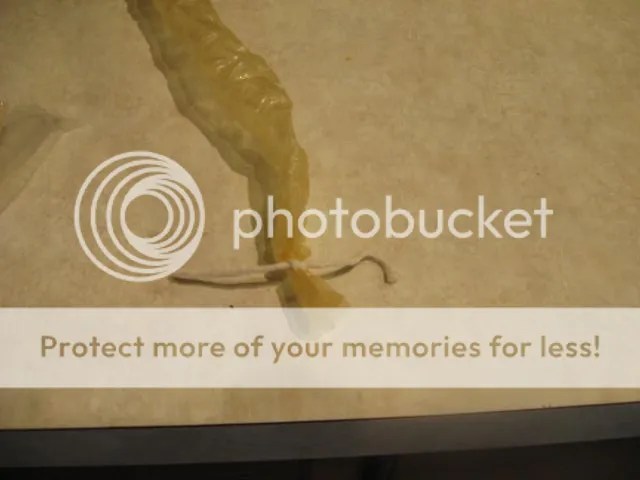
Pull out your casing, measure off about 2 feet of it, tie off the bitter end with kitchen string. Grease your stuffer with a little cold shortening and ease the casing right on there, bitter end out, of course.

Now you’re ready to get it on!

You really can’t stuff with one of these rigs solo, so get your best kitchen buddy and divvy up the work. One of y’all feeds forcemeat into the stuffer while the other manages the sausage itself. The process is not turbo charged, so don’t get worried; you’ve got all the time you need to make sure you’re getting a nice, even fill. You do not want to pack a sausage tightly – you must leave room for expansion when cooking, so let it fill loose and easy.

For these guys, we think of them as a brat more or less in size. The casings are 3/4″ so that’ll be the thickness of your sausage; length should be about 4 1/2 to 5″ or so. When you reach that length, throw a few twists in the casings and start in on the next one. This recipe will make about 6 snausages that size, more or less. When you’re done, tie each one off with kitchen twine and shove ’em back into the fridge.

Now, we moved on to some left over wild rice from a feast we built the other night. M whipped that into a wild rice salad, with celery, shallot, onion, red pepper, fresh mint, dried cranberries, toasted hazelnuts, white balsamic vinegar and olive oil – No big deal, right? (Yes, she whips stuff like this off the cuff all the time; now you know whay I’m nuts about her!)

Finally, some nice, fresh green beans, ’cause we should and we can!

We browned the sausages, and then let them braise in chicken stock, just to make sure they understood the program, ya see…

Et viola, with a generous shot of King’s Gardens Kraut, because we could and should!

And if that don’t float your boat, well, it just ain’t our fault…

😉