Meyer Lemon Curd


Lemon curd is often thought of as a British affectation, but that’s selling short an amazing treat everyone should enjoy. Lemon curd is amazing on a scone, or Scottish shortbread, blended with plain yoghurt and granola, or a fresh fruit cup. Its lovely, light appearance is a bit deceiving; it is a dense, rich treat, bright with flavor.

Using Meyer lemons creates a whole new level of lemon curd. Meyers have gotten more popular lately but remain untried by many folks. Sweeter and less tangy than regular lemons, they’re thought to be a cross made long ago between a lemon and a mandarin orange. They’re high in vitamin C, vitamin B, and phosphorous. Our version also uses agave nectar or honey instead of refined sugar.

Meyer Lemon Curd – About 2 Cups

3 medium Eggs
2-3 Meyer Lemons
1/3 Cup Agave Nectar or Honey
1 tablespoon Meyer Lemon Zest
1/2 cup freshly squeezed Meyer Lemon Juice
6 Tablespoons Butter

Rinse your lemons well. If they have been waxed or treated, put them whole in a bowl containing 2 tablespoons of white vinegar mixed with 4 cups cold water. Allow the lemons to soak for about 15 minutes, then drain the water and rinse the citrus in fresh water and dry with a clean towel.

Place a saucepan large enough to hold your mixing bowl over medium heat with about 3″ of water in it and allow the water to heat through, (If you own a double boiler, set up the bottom as described and build the curd in the upper).

Zest two of the lemons and set aside the zest.

Juice the lemons to yield 1/2 cup of fresh lemon juice. The third may be needed or may be a spare, depending in how juicy they are.

Cut the butter into roughly 1/4″ cubes and set aside.

In a stainless or glass mixing bowl, combine the eggs, 1 packed Tablespoon of zest, and the agave nectar or honey. Whisk the mixture until fully incorporated and evenly colored, about 2 to 3 minutes.

Add the 1/2 Cup lemon juice to the blend and whisk for about a minute to fully incorporate.
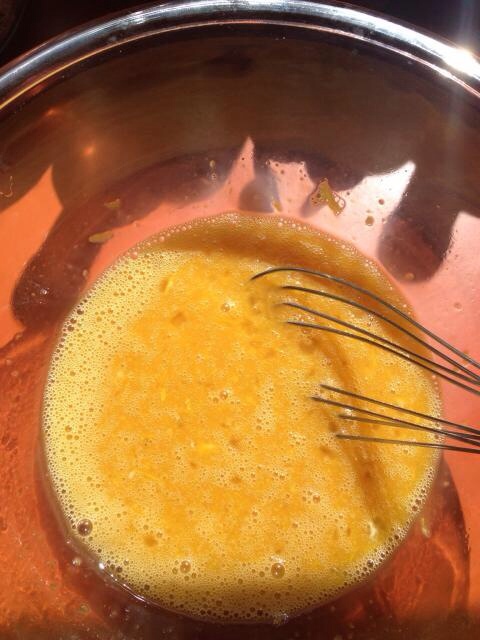
Put your bowl over the pan with hot water or double boiler bottom. Add the butter in small batches of 6 to 8 cubes, whisking steadily and allowing each batch to melt and incorporate before adding more. This curd is an emulsion, and so the butter, (fat), needs time and whisking to properly blend. When all the butter is melted, continue whisking until the mixture begins to thicken noticeably, about another 2 to 3 minutes.

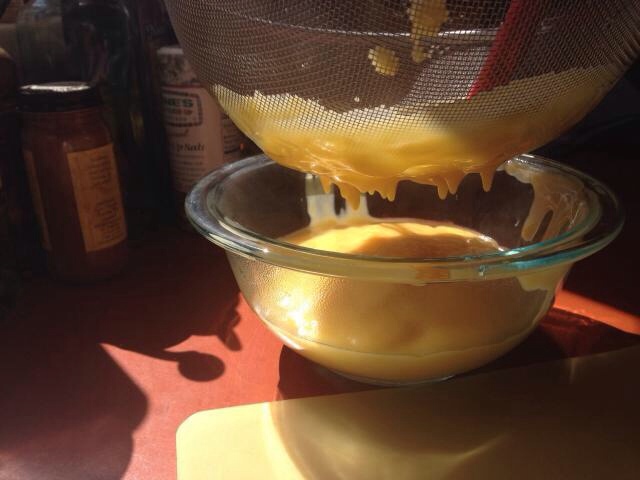
Remove the curd from the heat. Transfer the curd to a fine mesh strainer over a glass or steel bowl and use a spatula to gently strain the curd through the strainer. You’ll end up with some zest that doesn’t make it through the strainer.
 

Refrigerated a glass jar or airtight glass container for at least four hours. The curd will keep for about a week refrigerated, but I’ll bet it won’t last anything close to that long…
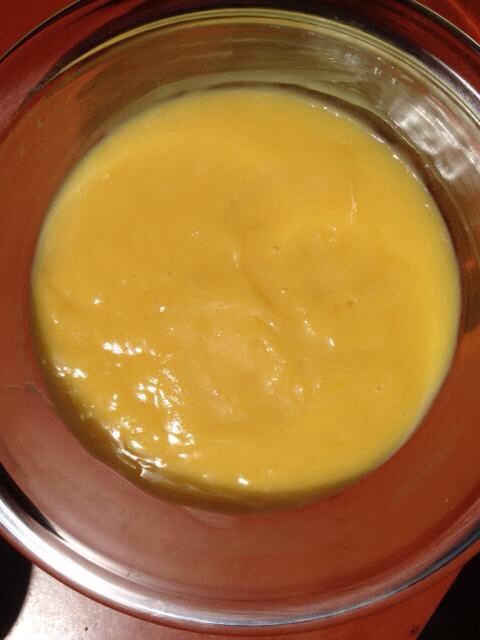
A small dish of this lovely stuff is a remarkably delicious desert, or an excellent palate cleanser after a heavy course in a fancy meal.

NOTE: You may substitute coconut oil for butter for a dairy free variation.

Perfect Rhubarb Pie


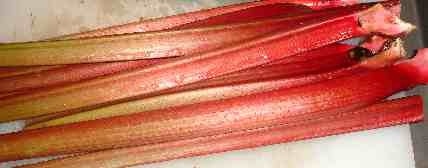
I love fruit pies. My personal fave is cherry, followed closely by rhubarb. I lean toward the rhubarb if I’m in a hurry, because it’s ridiculously easy to make. Pretty soon the season will be upon us when those big, prehistoric leaves and beautiful red-green stalks make their presence known.

If you grow rhubarb, extend the season for enjoying it by preserving some; it’s super easy to freeze.

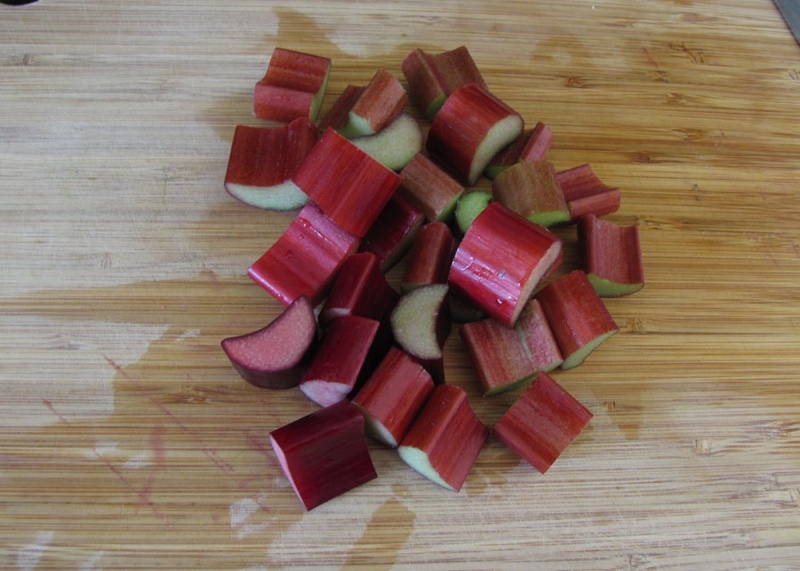
For pie or preserving, the prep process is the same. Choose firm, healthy red-green stalks, wash them thoroughly, and if they’re a variety that has a tough outer skin, peel that off. Chop about 2″ off the top and bottom of each stock, then cut the stocks into roughly 1″ chunks.

For preserving, if you’re just looking to save some for 3 or 4 months, you can simply dry freeze it as you’ve prepped it, tossed into ziplock bags with as much air sucked out as you can, or vacuum sealed. For longer term storage, prepare a light syrup by bringing 6 cups of water to a boil and dissolving two cups of white sugar in it. Let the syrup cool to room temp, then place the prepped rhubarb in canning jars or airtight plastic containers, and completely submerge them in the syrup. Those will stay good for up to 9 months in the freezer.

For the pie, The Kitchenaid crust recipe is my go-to, (If you don’t have a mixer, use your fingers or two butter knives to cut and mix ingredients and, as with the mixer version, stop playing with the crust as soon as it holds together).

Crust
1¼ Cups all purpose Flour
1 Cup Whole Wheat Pastry Flour
¾ Cup Shortening, chilled
2 teaspoons Butter, chilled
4–6 tablespoons Ice Water
Pinch of Sea Salt

Sift flour and salt, and pour into mixing bowl. Cut shortening and butter into roughly ½” cubes and add to flour. Using the flat beater, mix on low speed for about 30 seconds until shortening chunks are roughly pea sized. Slowly add water a tablespoon at a time until and only until the dough forms a ball.

Stop mixing, divide dough into two equal balls, wrap in plastic and refrigerate for at least 15 minutes.

Roll each of the dough balls out to roughly 1/8” thickness. Place one into a 9″ pie pan and roll, pinch, or fork the edge as you prefer.

For wet filling pies like this one, you need to blind bake the crust prior to filling. Place a layer of pie weights or beans over the crust and slip it into a preheated 425º F oven for 6 to 8 minutes until the edge browns lightly. Remove from the oven and allow the crust to cool for a few minutes before filling and baking.

The other crust is your top, so you can do what floats your boat with that; just use it plain if you’re in to hurry, or get fancy and weave or stamp a pattern out if you like.

Like I said, the pie is so easy, it’s scary. There are plenty of variations on the theme, but I like this for it’s simple ingredients and honest rhubarb flavor. You’ll need,

4 Cups chopped Rhubarb
1 – 1 1/2 Cups granulated Sugar
6 Tablespoons all-purpose Flour
2 Tablespoons Butter
Pinch of Sea Salt

Preheat oven to 425° F degrees, position a rack on the lower quarter of the stove, and place a cookie sheet in the middle of that.

Sift to combine the sugar, flour, and salt. Sprinkle 1/4 of that blend evenly over the bottom of the pie crust.

Evenly place the rhubarb over the dusted lower crust; you’ll have a pretty good pile of it, but no worries, it’ll cook down.

Now sprinkle the rhubarb with the remaining sugar and flour.

Cut the well chilled butter into roughly 1/4″ cubes and toss those evenly over the rhubarb as well.

Cover the pie with your top crust.

Slide the pie onto the cookie sheet in your preheated oven; that sheet is there to keep hot rhubarb from getting all over the bottom of your oven.

Bake for 15 minutes at 425° F, then rotate the pie 180 degrees and drop the oven temperature to 350° F.

Bake for another 40 to 45 minutes until the top crust is browned, the rhubarb has reduced and is bubbling nicely.

Pull the pie out and slip it onto a rack to cool.

Go wild.

P.S. If you prefer a nice strawberry rhubarb pie, don’t fret, just head over here for another great recipe.

It’s Grill Cleaning Time!


Little Darlin’s, it’s been a long, cold lonely winter; fact is, here in the middle of April, I’m still seeing snow pics from friends in the Midwest and Canada. Well, have faith, gang, the sun is coming and with it, grilling, barbecuing and smoking season, so let’s get ready for it. Whether you use a simple pot grill like a Webber or a thousand dollar, high end gas rig, they all need TLC before the season commences.

Deep Cleaning
Chances are your equipment’s been more or less inactive all winter; you didn’t clean any of it before you put it into hibernation, right? Then it’s cleaning time, first and foremost. Here’s what you need to do.

Remove the grill grates and, if you’ve got a gas rig, disconnect the fuel from the grill, remove the flame deflectors and burners from the grill body.

First thing, remove all old briquettes, burned whatever, and scrape as much grease and char off as you can by hand.

For the deep cleaning, you’ll need a grill brush, a heavy duty sponge, a scrubby pad and steel wool, a bucket of hot, soapy water, another of hot, clean water, some rags, and some degreaser. I recommend Simple Green, it’s effective and environmentally sound, which is an attribute we should all be concerned with. Have at the entire grill with the degreaser first, allowing it some working time before you scrub. Move onto the soapy water, then the rinse, until your grill looks as close to new as you can get it. FYI, if you’re a heavy user, a mid-season cleaning won’t hurt. Thoroughly clean every component, including the grates. A seasoned grill is a good thing, but excessive grease and char build up can lead to flaring, burning and off-putting flavors in your food. A clean grill will last far longer than a dirty one as well.

Kick the Tires & Light the Fires
Now give your grill a point by point, detailed inspection of every component. Check grill and charcoal grates for rust, rot or missing and chipped porcelain. After they’re clean, dry, and inspected, you’ll re-season them. Check your framework and lid to make sure they’re all sound and there are no nuts, blots, struts, wheels missing or damaged. If you use a gas grill, check your tank, valve, line, regulator, burners and flame deflectors to make sure they’re clean and sound. Don’t screw around with gas parts; if they’re rotted or badly rusted, replace them. At the least, your grill will cook poorly; at worst, you could have a genuine explosion or fire hazard brewing. If you need parts, Home Depot carries quite a few, and of course there’s probably a local supplier not to far from most of us.

When you’re ready to rock, season your grates prior to first use. Soak some paper towels with cooking oil and thoroughly rub all surfaces of the grates. Turn on the gas or light a small charcoal fire and heat the grill to high with the cover open until the oil burns off, the. Turn the heat down to low and let the grill work for about fifteen minutes or, (or until your charcoal expires). Let the grill cool down, then wipe the grates down and reapply a thin coating of fresh oil; those last steps are always a good idea after grilling, to prepare for your next session and extend the life of the grates by making sure rust doesn’t form.

Flame On!
So now grill is ready to rock and roll but… Got fuel? It’s the first thing we need and the first one we forget on. Friday night when you step out the back door with a platter of steaks. Start by inspecting any charcoal, smoking or seasoning woods and pellets, and gas tanks left over from last season. If any of your briquettes or woods got soaked, you’re OK if they retained their shape and what soaked them was just water. Set affected fuel out to dry and repackage as needed after they’re ready to go. If the soaking is due to inadequate storage, now is the time to correct that issue; establish nice, secure dry storage and maintain it; a nice airtight plastic bin is perfect for the job. If you use gas, make sure you’ve got fresh stuff handy; consider acquiring a second tank so you never run out when the cooking counts.
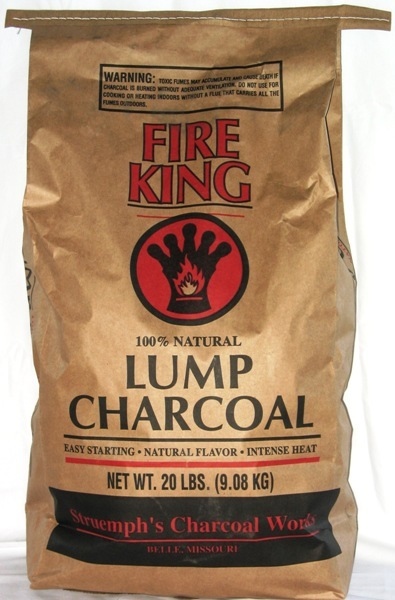
While we’re on the subject of charcoal, it’s my advice that you avoid instant light products and charcoal lighter fluid like the plague. It’s bad enough that the stuff contains things you don’t want to feed your family, and even worse that they absolutely ruin the flavor of good food. Get yourself a lighting chimney that works off scrap paper and use that; it’s just as fast, far cheaper, and makes better food. And by the way, charcoal quality does count. Crappy generic charcoal is the equivalent of mystery meat hot dogs; you’ve got no idea what’s in there and it’s likely none of it is good. High quality lump charcoal heats better, longer and more consistently, and that too means better food.

Think Grilling:
When you go shopping and buy stuff in bulk, take the time to break it down to typical meal sizes for your family, and freeze or store some in that form; this’ll make things that much faster when you feel like grilling or make spontaneous meal plans.
The basics are great, but think about stuff you haven’t tried when you’re ready to grill; veggies, even romaine lettuce is great with a light grill to it, as are fruit like pineapple, peaches or pears for a desert, lemons to accent a grilled protein, or limes for guacamole. Try a savory note like olive oil or Rosemary for a great savory counterpoint to the fruit.
And speaking of that, give this smoked guacamole recipe a try.

Easter Ham & Potatoes Gratiné


Easter dinner is one of those Gotta Cook a Ham Days, if ever there was one.  

Technically, ham refers to a back leg or shoulder cut of pork, which is then salt-cured, smoked or dry aged. Hams are found both bone-in and boneless. It may be a bit harder to find bone-in hams from any of the big national butchers, and frankly, that’s just fine with me; like everything else, the closer to you the ham is produced, the fresher and better it is. We have a couple local butchers that do beautiful bone in hams; that’s what we opt for and what I’ll recommend to you: That beautiful bone just has more flavor, for my mind, and that big juicy bone will make fantastic stock for soup. When choosing your ham, figure about a quarter pound per person for a boneless jam and a half pound for a bone in.

 Now, that said, there are a bunch more variations on the ham theme out there, so us cooks have to pay attention to what we buy in order to provide optimal cooking, because techniques vary widely. Fresh hams take longer to cook than canned ones, cold-smoked hams are typically simmered, not baked. 

The BIG ham FYI is that most store-bought hams come fully cooked and only need to be heated through to 140° F internal temperature. 

With all that variety, it’s best to carefully follow the instructions from your butcher, (or on the package), for preparation and cooking methods and times. After cooking, rest hams for 10 minutes before carving.

Now for any of those varieties up there, here’s our take on the famous glaze that so many go nuts for, the Honey Glazed Ham; whip this up for your brood without the big price tag. This recipe will be just right for a 5 to 6 pound pre-cooked ham.

2 Cups Honey or Agave Nectar

3/4 Cup Unsalted Butter

1/4 Cup Dark Corn Syrup

1/4 Cup whole Cloves

Juice of 1/2 fresh Orange

Pinch of Sea Salt

Preheat oven to 300° F.

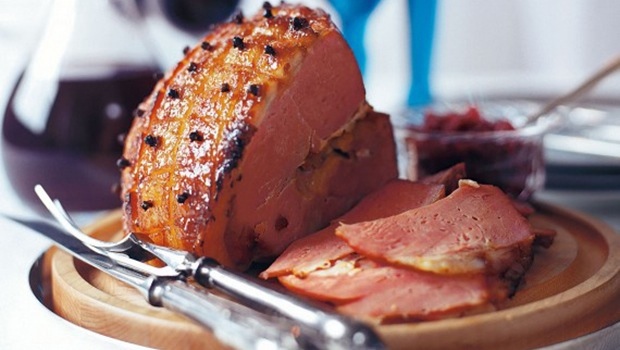
With a very sharp paring knife, score a diamond pattern into the ham roughly 1/4″ deep; make the diamonds about 1 1/2″ or so.

Put the ham into a foil lined baking pan; pin a whole clove into the center of each diamond. 

In a heavy saucepan over medium heat, add the honey, corn syrup, butter and orange juice. Stir constantly to fully incorporate. Once the glaze is blended and heated through, add a tiny pinch of sea salt to taste; the salt should just brighten up the flavor a bit, not make it salty. Reduce heat to warm and stir occasionally.

Brush glaze evenly over ham, set ham onto rack in middle of your oven and bake for 1 hour and 15 minutes, re-basting ham every 15 minutes. 

For the last 5 minutes of baking, turn on broiler to caramelize the glaze; watch carefully during this phase so the glaze doesn’t burn!

Remove ham from oven and rest for 10 minutes before carving.


Scalloped Potatoes

House made scalloped potatoes not only beat the pants off anything store bought or in a package, they’re easy to make, too. Don’t just save these babies for ham; they go great with chicken or beef as well, and dressed up with bacon, sour cream and green onions, make a decent main dish. 

‘Scalloped’ Potatoes is a bit of a misnomer, actually. Scallop derives from ‘escalloped’, from the French, meaning  to bake food, usually cut into pieces, in a sauce or other liquid, often with crumbs on top. Technically, that dish refers to fish, and sort of got adopted informally for spuds as well; gratiné is actually the more accurate title for this recipe, frankly.

A few general thoughts on making perfect Spuds Gratiné. Potato variety is critical to great spuds, and Yukon Gold is the go-to for these. Next comes the prep, and slicing them thinly and uniformly is the key there; about 1/8″ will do the trick. For the sauce, 50% – 50% heavy cream and whole milk will give you the perfect balance of texture and creaminess; while you can use lighter dairy, doing so will not yield great results, frankly. Also, avoid ultra-pasteurized dairy

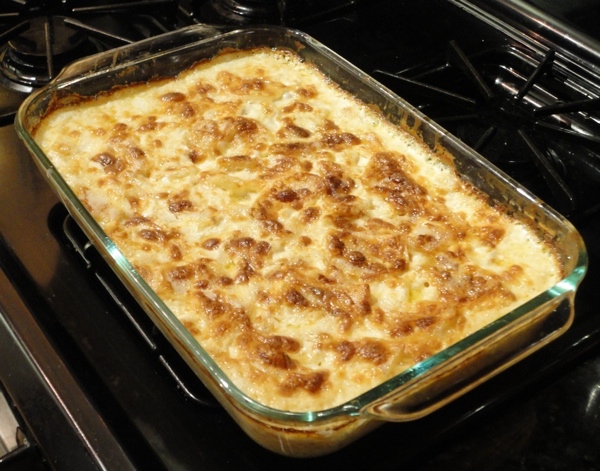
Potatoes Gratiné

6 – 8 Yukon Gold Potatoes

1 1/2 Cups Heavy Cream

1 1/2 Cups Whole Milk

1 Cup Extra Sharp White Cheddar

2 Tablespoons Whole Wheat Pastry Flour

2 Tablespoons unsalted Butter

1/2 teaspoon Marjoram

1-3 cloves Garlic

1-2 shots Tabasco sauce. 

Sea Salt 

Freshly ground Grains of Paradise (Black pepper is fine too)

Preheat oven to 375° F

Lightly oil a 3 quart baking dish.

Cut potatoes evenly into 1/8″ slices. You can peel them if you need to, but best to leave them on for the nutrition. Submerge in ice cold water until ready to incorporate.

Smash garlic cloves under the side of a chefs knife, peel and mince.

Grate cheddar.

In a heavy saucepan over medium heat, melt the butter thoroughly. Add the flour, stir into the butter to form a roux. Gradually add the milk, stirring constantly. Add the cream next, slowly and evenly. Add the garlic, marjoram, 2-1/2 teaspoons salt and 1 teaspoon grains of paradise, stirring steadily. When everything is fully incorporated and heated through, remove from heat and set aside.

Drain the potatoes and pat dry with a paper towel. Arrange a slightly overlapping single layer of potatoes in the baking dish, then ladle a generous layer the cream sauce the potatoes. Repeat with the remaining potatoes and cream mixture. Three to four layers of potatoes and sauce is just about right; make sure you end up with a sauce layer. 

Spread the last of the cheese evenly over the top of the dish.

Bake until the potatoes are fork tender, about 45 to 50 minutes.

Let the potatoes rest for 5 to 10 minutes before serving.


Indigo Grafted Tomatoes


Ah, spring, the time when all garden fancier’s thoughts turn to planting. Here in the Great Northwet, the snows are receding, rains are nourishing the soil, and it’s time. Our planting beds, resting under straw all winter, are begging to be turned and filled.

If you’re a lover of great tomatoes, then fact is, you simply must be a grower of great tomatoes. Whether you occupy acres or square feet, there’s always room for your favorites and if, as for many of us space is an issue, tomatoes that bear well in a compact space are best yet. Which brings us back to the love of those little globes of wonder. Enter the Indigo grafted tomato.

First and foremost, one wonders, why grafted? The simple answer is, because it works. Grafting is neither new nor done as a novelty; it’s sound practice with a long history of success. The technique, as applied to these Indigo tomatoes, involves mating the root stock of one variety with the leafy stem of another.

My hands down favorite college horticulture course focused on grafting. That was back in the late ’70s and I hate to admit it, but even though our back yard apple tree is a grafted wonder offering four distinct varieties, I’d not thought much of the technique in terms of tomato plants until these Indigos came along. My Professor at the University of Washington, fondly referred to as Master Nishitani, explained that the Japanese had been successfully experimenting with grafting herbaceous edibles since the early 1900s. Still, grafted veggies been slow to catch on in this country, due predominantly to the supposed greater advantages offered by green revolution dependence on chemistry and standard hybridization techniques. Thankfully, a general return to sound environmental practices has lead naturally back to grafting as well

What grafting provides, in a sustainable and eco-sensitive manner, is the marriage of hearty rootstock to a bearing variety chosen for flavor and high yield. The rootstock variety offers a larger, more vigorous root system bred with greater resistance to fungi, bacteria and parasites; truly a godsend, given many tomato varieties susceptibility to such ills. Customized rootstock furthermore yields plants that can and will thrive in a myriad of environmental conditions, a gift any gardener can appreciate.

Indeed, and so it is with these wonderful little Indigos. Monica and I were blessed with several plants from our dear friends at Log House Plants. We picked them up and admired healthy, happy starts, but apparently nothing out of the ordinary, yet… It was after planting and those tenuous weeks of waiting for things to happen that we first noticed a difference; not just blossoms, but lots and lots of blossoms! As fruit began to form, these compact plants, topping out at about 2 1/2′ here in our little USDA Zone 7b garden, were absolutely loaded. I place purposeful emphasis on the word compact; regardless of the space you dedicate to tomatoes in your garden, these Indigos will provide enviable bounty and variety.

And such fruit! The Indigo varieties are named for that hue, naturally occurring in tomatoes, fully expressed in these little guys. Right away the colors just floored us; perfect little globes of deep purple-black, yellow-gold and seriously rich reds. Any honest lover of tomatoes will admit that color and shape have darn near as much to do with desirability as taste. These things were like candy as they matured, the colors becoming deeper and glossier as the days progressed. Photographing them wasn’t a chore, it was a treat.

Our favorite thus far is the Indigo Rose, a stunning blend that starts out purple-almost-black with brilliant green highlights, and matures into a deep purple-red with stunning crimson flesh. This first true purple tomato also contains anthocyanins, a potent antioxidant found in blueberries, raspberries and cranberries.

The real treat, of course, is the taste. These Indigo varieties are simply amazing. Plucked off the vine and popped into your mouth on a cool, quiet morning, this is the kind of rich, complex taste that forms lasting memories. cooking, preserving and eating these beauties is a joy, and therein lies the only other impetus you should require for growing your own Indigos. Variety is indeed the spice of life; these hardy, high-yield varieties offer the perfect home grown, home cooked solution.

Do yourselves a favor, and look these little guys up by name. Chances are a nursery near you will have them, and if not, you can find an online source to hook you up. If you have any problem finding them let us know and we’ll get you squared away.

So, type in the search terms ‘tomato’ and ‘green tomato’ up there on the little search box to the right; you’ll find lovely recipes featuring these wonderful Indigos, including a tomato and onion tart, chutney, relish, and some ideas on preserving your bounty as well.

Happy planting, harvesting, and cooking!