Scaling, Converting, and More Leftover Tech


Well, if you’re a regular here, you know we have a real passion for leftovers. It is damn near criminal to waste good food and it happens way too often. To some degree, this is our fault, ‘our’ being foodies and bloggers who exhort others to cook. I say that because a lot of what I find in out there are recipes offered in quantities that demand leftovers. And it goes without saying that restaurants in the US routinely offer ridiculously huge portions, the lions share which is thrown out as well.

So something needs to be done about it, right?

Right.

You can do your part by learning to scale recipes when they’re designed for more folks than you’re going to reasonably feed. Scaling is especially useful if a recipe is complex or involves expensive ingredients; in any case, most of the time, you just don’t need or want to cook at larger volumes. While it sounds easy, it isn’t always such, (I found this out taking a homebrew recipe to barrel volume…) Scaling definitely involves a bit of art in addition to straight math.

Take, for instance, a recipe that catches your eye, but is shown for 10 when you need it for 4.

Knocking it down mathematically is straightforward: You take the quoted measure of each ingredient and divide it down to where you want to be. So in this case, we’d divide 4 by 10, yielding 0.4; each of the stated measurements would then be multiplied by 0.4 to reach your goal.

Lets say the recipe calls for 4 cups of all purpose flour. Take the 4 cups, multiply by 0.4.

4 cups × 0.4 = 1.6 cups of flour for your 4 person conversion, and so on down the line of ingredients.

As a guitar maker, I can tell you that I spend a fair amount of time converting fractions to decimals, so don’t feel even a little bit bad for squinting at 1.6 cups for a second or two. Truth be told, for the vast majority of home cooking, eyeballing 1.6 cups is going to work out just fine. Yes, things like a teaspoon are gonna end up 0.4 but again, almost a half, more than a third; you’ll get the idea.

For any and all of this that seems to funky to do, drop over here to this handy Cooking Conversion Tool at About.com. For those of you who actually use your smart phone or tablet for cooking as I do, there’s a very decent app called Kitchen Calculator Pro that works great.

One of the things we do here is to test conversions for you. As I mentioned, scaling recipes isn’t always as simple as the math. Sometimes things have to be tweaked to come out just right. That said, this is often a case of personal taste; it’s nothing to worry about on the big picture view, but if you’re wanting to impress your new date with a great home cooked meal, you might wanna test that conversion first, right?

A lot of the secret of cooking well has to do with ratios; it could be reasonably argued that, next to good ingredients, nothing is more important. Author and Chef Michael Ruhlman has put out a few tools and books about this stuff. I own both his Bread Baking and ratio apps for iPhone and iPad, and I use them both. They’re good common sense stuff and a handy reference when you’re experimenting.

Now, all that said, there are times when you’re going to build food at larger volumes. You’ll notice that a lot of what we do here starts out fairly basic; consideration of multiple meals is a primary reason for that. We, like most of y’all, are not exactly wading in spare time, so prepping one primary meal that can become two or three saves work and is much more efficient.

When you’re doing that, you may well build dishes that are sized for much more than your one-meal needs. Of course quite a few things like soup, stew, chili, roasted or broiled meats, potato dishes and many veggies, really do taste better the next day. It makes sense if you think about it; good ingredients, well married, seasoned and cooked – It should taste better, right?

To close this post, we’ll give you a lightning round example of what we’re talking about.

Day 1; we’re both off, so we bought a big ol’ pork roast and paired it with gnocchi, seedless red grapes and a nice salad.

Day 2: Sky’s the limit; we could do cold sandwiches, Mex, what’ll it be? It was a bit nippy, so digging into the fridge, we found some great veggies, soaked and added some beans and made a wonderful soup. The prep for this took maybe 15 minutes, then we just stuck it in the pot to get happy. Paired with sourdough garlic bread and some more grapes, life is good.

Day 3: We sure could have soup again, but why not throw 30 minutes prep time into the mix and make a pot pie, right? Kitchenaid pie crust recipe, 15 minute rest, blind baked in a baking dish, thicken the soup with a little roux, and off you go…

There’s three distinct, easy meals from one pork roast. Efficient, fun, and delicious.

What are you gonna make tonight?

E & M

Kool Kamp Kookin’


So, folks do ask quite often, “Do you guys really cook like this all the time?”

The answer is, for the most part, yup!

Probably the easiest way to see if its true would be to follow us on a recent camping trip – For the record, yeah, we do bring knives and significant utensils, and 2 cooking surfaces, in this case, a 2 burner Coleman and a Weber Q series grill. That plus a good selection of non-stick pans and our trusty Lodge dutch oven gives the flexibility we need.

Our herbs and spices are pared down to what we really use; sea salt, ground pepper blend, granulated garlic, Mexican oregano, dill, and sage.
We bring all staples with us, anything special that we’ve planned, and then fill in with a last minute shop at the local store.

We focus on breakfast and dinners, and a picture’s worth a thousand words, so Let’s have a look at what we built!

First night dinner is salmon, grilled asparagus, homemade pasta salad and sourdough rolls…

Breakfast key word is Hearty

Night 2, beef stew!

And as Ivy can attest, you do not have to rough out out there!

Chile Time, Y’all!


OK, this one is not a gratuitous repeat, hear? It is the time of year when we need to look for chiles and do what needs to be done to preserve them.

So go here and get acquainted with the real deal chiles, first and foremost, ‘K?

Now, for some of the best and brightest basic things you really must do with chiles, go here and make them all, hear?

Be of good chile!

E & M

This just in from the It’s About Time Department!


Check out the newly published Fresh Herbs Page! It’s about time I got off my duff and did something there…

Our ample spice rack is predominantly fueled by the great folks at World Spice down below the Pike Street Market in Seattle. They ship anywhere, and never send anything but the freshest and best and no, I do not get a deal for so saying; check ’em out here.

The entries you’ll find there and on the pages to come are not meant to be all inclusive; they are derived, quite frankly, from my sitting in front of the spice rack and noting what we actually have there and use. It’s certainly not a static list, so as we add stuff, you’ll find more entries on the corresponding pages. Of course, if you don’t see something you use and love, please do let us know!

Note also that we’ve finally added a number of categories for the many posts herein; we trust this’ll make things much easier for you to browse and find just exactly what you’re after!

Dried Herb and Spices, and Spice Blends pages are soon to follow, so stay tuned!

Chili Bonus for Tailgate Rubbin’


This week launched our inaugural article as the resident Chef for American Boomer magazine. Check that out if you haven’t, and not only for our stuff, but for the gorgeous fall pics and great articles.

We threw a bonus chili recipe in at the last minute for that piece, so I thought we’d one up that with some pics, since we didn’t have time to shoot for the mag. This variant is slightly different than the one published, as this is what we had on hand and what i felt like using; recipes should always be flexible…

E’s Classic Chili
1 lb each pork and beef, cut into strips and cubed or ground as you prefer.
1/2 sweet Onion
2 – 6 sweet Bell Peppers
1 – 4 Jalapeno Chiles, (Ours came from our pals at Neighborhood Gardens and had some definite fangs on ’em!
1 14.5 oz can each of black, kidney, and great northern beans, (Use dried if you have time, they’re worth it)
28 oz. can crushed and peeled tomatoes, (Fresh are fine, but you’ll get less juice)
Tablespoon Chili Powder
1-2 cloves fresh Garlic
1 bottle of beer, (Your choice, I like to use lighter stuff like Pilsner)
2 Tablespoons Oil

So, we start with the flesh, of course, and I prefer roughly 50%-50% beef to pork, and a fairly fatty cut of both. With the trust Kitchenaid set up for a chili grind, (Read bigger of the two discs supplied), we’re good to go. I like to season the meat as it’s being ground, so a healthy dusting of the house made chili powder gets applied, (And more on this shortly)

Note that one member of the family pays rapt attention to this process…

Add beans and tomatoes to a tablespoon of oil in a pot big enough to hold your whole creation.

Chop onion and fine dice garlic. Put onion into a medium hot pan until they’re starting to turn translucent, then add garlic and saute both for a few minutes more, then add to the big pot.

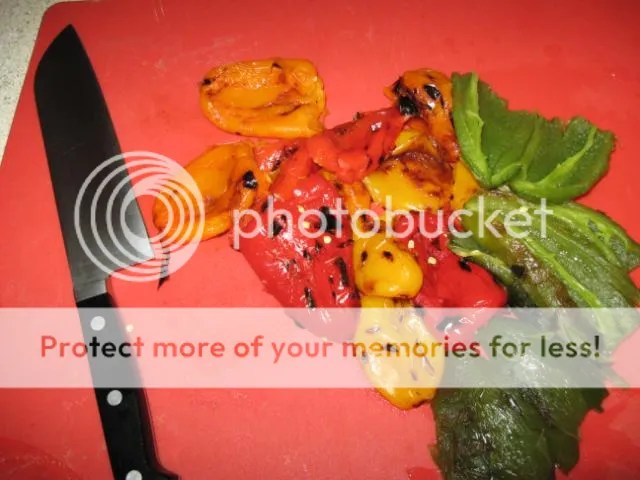
Toss peppers and chiles onto a very hot grill or place under a broiler and blister all sides. Set aside to cool enough to handle. Stem and field strip all, then chop and add to the pot.

Heat the the other tablespoon of oil in a hot pan and then toss in your flesh. Brown thoroughly and then with pan still hot, add bottle of beer. Reduce heat, allow to simmer until meat is cooked through, then add it to the party.

Allow the chili to simmer on low and adjust seasoning as needed. I think at least 2 hours is called for and as many as 8 – Low and slow is the key to building and blending great chili flavor.

You see spelling variants of chile versus chili everywhere these days. I’m not gonna claim to be the point at which the buck stops in this debate, but I’ll happily outline our take on the vernacular. Chiles as we refer to ’em means the peppers themselves, the capsicum fruit, pods, etc, whilst chili means the savory dish flavored with the former, and ne’er the tween shall meet. That said, here’re some notes on house made chili powder for y’all.

Classic chile powder has claims on it from Mexico to Texas to everywhere else in the southwest. Classic chili powder is not simply ground chiles and nothing else; it is in fact a blend and the other stuff is every bit as important. Try this as a starting point and then vary further as you see fit.

House Made Chili Powder

2-4 Tablespoons dried chiles of your choice, (I used Jalapeno, Tabasco, and Red Hatch)
1 teaspoon Cumin seed
1 teaspoon Mexican Oregano
½ teaspoon Sweet Smoked Paprika
½ teaspoon granulated Garlic

Put everybody into a spice grinder or molcajete and grind fine. Pour through a fine mesh sieve into a glass bowl; don’t push stuff through – If it doesn’t fit, let it be. We use a lighter chile load and variety for a mild powder, and more and heftier for hot. Place into a shaker top spice jar and enjoy; try this blend on soup, eggs, grilled cheese, roast chicken, baked potatoes, etc, etc…

We made some cheddar cornbread for our batch tonight; it was given rave reviews by all!

And it was maybe just a bit on the hot side…