Blog

Followers, Romans, Countrymen – Lend Me Your RRS…


So, we’ve had more than our share of technical bullshit lately, but I truly think we’re getting things ironed out this time…

The latest BS is getting new post notices to email to y’all as they should, with the post and/or link active therein. It’s been a bit of a battle, but we ARE making progress.

You just received an email with nothing but a logo and some boilerplate, that should not have gone out to everyone, but did, of course. Sorry about that!

Anyway, I’m told that, as of next Monday, April 1st, (no, I’m not fooling), at 8pm Eastern, 5 pm Pacific, the now weekly email with a genuine new post attached shall go out – We shall see, but I gotta believe.

Again, my apologies for all the hassles, but we’re getting it fixed and it soon will be on properly operating auto pilot.

Thanks for subscribing, and thanks for your patience and understanding!

The Magic of Pot Beans


‘Wait,’ you think, ‘is he writing about beans again? This cat has a serious case of OCD.’ For the record, I do not – I have CDO, as I prefer my maladies in alphabetical order – and yes, I am writing about beans again. Why? Because alert follower Mia, who hails from Charlotte, North Carolina wrote, ‘Love the blog, and especially the bean posts, as I’m trying to eat less meat and go easier on the planet a little. But I’m not finding a post that really explains the basic cooking process you use.’ I waded through 10 posts with beans in the title and discovered that she’s absolutely correct. Time to fix that, and delve into the magic of pot beans.

Mia’s also right about the fact that we here in America need to dilute our animal flesh eating habits to some degree. I’ve said it before and will again – great beans are every bit as good as meat, when they’re prepared with love and imagination. Of course doing any of that requires the goods to be available fairly quickly, if we want to compete with a chub of kick ass local ground beef. That’s where Frijoles de la Olla, Mexico’s version of pot beans come in to play.

flageolets might be French, but they’ll swing whatever you want to do

Fact is, great beans aren’t gonna come from a can. The reason canned beans get used far more than dried beans is obvious – The former is ready to eat far faster than the latter – But it needn’t be that way. If you’ve poked around here, you know we advocate cooking major proteins in large batches at the start of the week, so that you can enjoy good meals quickly throughout your busy week. Pot beans are just the ticket for many days worth of delicious stuff.

I chose the Mexican iteration of pot beans because they’re simple, tasty, and can easily be morphed into a myriad of other cuisines at your whim. That said, every bean eating country has a version and they’re all, more or less, designed to do the same thing – provide a big batch of cooked beans to work with for the next few days. In France, they might be flageolates with herbs de Provence. In Italy, it’s a white bean with garlic, olive oil, and maybe a little chile. In Spain, it might be fabada beans with tomato, cumin, and onion. Truth be told, any of those deserve further exploration.

How you cook them really is up to you, (although diehards of the various options will naturally insist that their way is best.) Take all that with a grain of salt and do what you like, but again, save some future time for exploration too. Stove top is relatively quick, does a great job, and is easy to keep an eye on – You can always do low and slow in the oven for other stuff down the line.

Boston baked beans made with flageolets? Yup.

Which beans to use? I say try them all, and don’t be shy. Our last two excursion were Mexican enfrijoladas and a glorious clay pot of Boston baked, both of which were made with French beans – Mogette de Vendée and flageolates, respectively. Both were spectacular, my point being that you needn’t be too tied up with using the ‘proper’ variety – Explore and enjoy, because there are a bunch of heirloom bean varieties out there, and you really, truly owe it to yourself to go find them.

There’s a world of bean varieties to choose from out there

Then there’s the question of what to cook them in. A decent stock or soup pot will work just fine and give excellent results. I will say that it’s probably best to steer clear of pressure cookers and instant pots with beans, unless you really know the cooking characteristics of what you’re working with, and the vagaries of the appliance.

Depending on the bean, the cooking time can vary from an hour and change, to several hours. While the lion’s share of the process is pretty hands off, you do need to keep an eye on things, to make sure you don’t turn a pound of heirloom loveliness to mush, (And if you do, no sweat – that just means that you’ll be making bean dip, purée, or enfrijoladas instead of whatever you had in mind initially – and they’ll be delicious.)

Finally, to soak or not to soak? I very rarely do so, but if that’s what you’ve always done and are comfy with, then do it. Soaking will shorten the cooking time somewhat, and some folks believe it helps beans cook more evenly – In any event, it sure won’t hurt. Plan on soaking for at least an hour and up to 4 – Any more than that is likely too much for good quality, freshly dried beans.

Frijoles de la Olla – Basic Pot Beans

1 Pound of good quality dried Beans

1/2 medium Yellow Onion

2 cloves fresh Garlic

Pinch of Salt

A few twists of ground Pepper

Optional:

A few sprigs fresh Epazote or Cilantro

A couple of Bay Leaves, (I like Turkish)

Stem and peel onion and garlic. Both can just be quartered, (as in, quarter the half, so you’ve got a bunch of 1”+ pieces of onion, and quartered cloves of garlic.)

Spread your beans out on a clean baking sheet and check for rocks and other debris, (I’ve never found anything foreign in Rancho Gordo beans, but even they recommend you do this, so…)

Pour beans into a colander and rinse in cold water.

Add the beans to a cooking vessel big enough to allow for significant expansion as they absorb water – A 3 qt. sauce pan does great for a pound of beans.

Add the onion, garlic, three finger pinch of salt, and a few twists of pepper. If you’re using any or all the optional, they can go in now too, except epazote, which is a finishing herb added at the very end of the process.

Add enough clean, fresh water to cover the beans by about 3 inches.

Turn the burner on high and let ‘er rip.

Keep an eye on things, and when you get a vigorous boil, reduce the heat enough to maintain a boil but not get crazy, and set a timer for 15 minutes.

When your timer goes off, drop the heat to just maintain a bare simmer, and cover the pot.

Continue cooking until you’ve got the doneness you’re after. You will want to keep an eye on water level, and maintain 2” to 3” above the beans – Add hot water from a kettle when you top things off – Again, they’ll usually absorb more water as they cook.

What is done? Personally, I want mine fairly al dente, so that I’ve got room for further cooking in whatever dishes I’m going to make without getting mushy beans – Other folks want theirs soft at this initial cook – You do what you like.

Beans are a potential food safety hazard just like other proteins. They need to cool down from cooking temp to under 41° F in 4 hours or less. Employing an ice bath around your cooking pot is the quickest and easiest way to get there.

Bean broth is great stuff and shouldn’t be wasted. Use it in soups, stews, sauces and whatever bean dishes you’re making.

Beans can be stored in the fridge for 3 to 5 days safely, and can be frozen for up to 4 months with little degradation of flavor.

friEither way, put them in clean, airtight containers with most or all of the broth. We use glass storage containers with snap lids for both jobs – That lets you portion for about what you want for a meal easily, and allows for quick thawing and cooking when you need them. 

Happy Day to… Me!


So this writing day falls on my birthday – number 59 in fact.

It’s been an incredibly weird and stressful week at work, not in a bad way, but because of just mind blowing circumstances. That topped off today with a long visit from my boss and his boss – Which turned out to be a ‘Great visit’ according to both of them, and therefore, according to me too.

That said, I was the only manager in café until after well after 3 pm, and it took about that long to find somebody else to shut ‘er down tonight – Like I said, very weird circumstances indeed.

In any event, I just got home at around 5, finally got a shower, and am now sitting on the couch with a dog, a cat, and a very nice glass of red wine.

I’m gonna ask M to bring us some dinner home from in town, and watch some baseball on the tube with my family.

I’ve had happy birthday wishes from literally hundreds of folks, and I need to get down to saying thank you for those.

Therefore, in so many words, this is all y’all get from me this week! Cook well, love one another, and I’ll be back next week.

Are Home Cooks an Endangered Species?


Steve Sando runs Rancho Gordo, our go to bean purveyor. He also speaks his mind in a way I particularly enjoy.

His most recent newsletter included a ‘rant’ which resonated with me – he wrote,

‘You may not realize it but as time marches on, we home cooks are becoming rarer and rarer. The fact that we get excited about a new bean, a cooking pot, or even a new wooden spoon, puts us in the minority. Most of us think of cooking as fun and a great way to bring people we care about together. We see a pound of beans and we imagine how we’ll be cooking them, how we’ll be serving them, and maybe the smiling faces that will be eating them. I have a constant vision of leaving the kitchen and walking towards the dining room table with a huge pot of something good between my hands as I ask for help finding a trivet. This is possibly my favorite moment of the day. I try and do it most nights. 

A meal kit is fine. A frozen dinner is an emergency. A dinner out is fun and sometimes inspirational. But a refrigerator full of cooked beans, roasted vegetables, stocks and broths, pickles and condiments, is like a palette waiting to be put to use to create something new.’

Notice that the title of the newsletter was, You Are Not Normal – So I gotta ask, do you think that’s true? Does Steve’s rant resonate with you, too? The thought that struck me most was his first line, ‘You may not realize it but as time marches on, we home cooks are becoming rarer and rarer.’ Do you think this is true? If so, it’s a very sad state of affairs.

It was also not lost on me that this mornings check of social media found an unusual volume of politics, doom and gloom news, and general negativity. When that’s the case, finding something positive, something genuinely wholesome and good to focus your energy around is a critical process – If we don’t, we drown. As far as I’m concerned, that really aughta be cooking great food at home for those we love – If not doing that is ‘normal,’ I want nothing to do with normalcy.

If that last thought seems shallow to you, I respectfully disagree. When I do orientation for new hires in the café, I tell them a story about how they’re going to be at work one day, and they’ll come back to the line and exclaim, ‘man, I don’t see how somebody can get that worked up about a sandwich.’ Then I tell them why it happens – it’s because people deal with overwhelming waves of crap all day, and they think, ‘I’m gonna go to the café and get my favorite thing to eat, and for a time, all will be right with the world,’ – And if we screw that up, it cuts deep. Food is closer to the heart for humans than dang near anything else.

get your hands in there and squish those roasted ‘matoes!

Secondly, what we eat has a huge impact on our health and wellbeing, spiritually, mentally and physically. We must eat well to thrive, and that’s especially so when times suck. Highly processed food, fast food, junk food – All that is poison when you’re feeling down. What’s called for is healthy, fresh stuff, made with love, at home.

A friend posted this on FB, ‘When you notice your mental health declining, do one small thing that brings you peace. Take a shower, text a loved one, step outside. One little step is all you need to remind yourself that this is not permanent.’ And that’s key – Sure, grilled cheese is just a simple sandwich – But when you’re feeling vulnerable and overwhelmed, the process of making and sharing a delightfully crunchy, melty creation with family or friends, in the warmth and comfort of your own home, is exactly what’s needed to reestablish balance.

Teaching love for cooking

And what are we teaching our kids and grandkids, if we don’t cook at home, regularly and with love? That sustenance is just a thing to be shoveled down, and nothing more? What a sad thought. Food is life, sharing great food is love, and without that, we perish, literally and figuratively. When schools no longer teach Home Ec, who will if we don’t? Who will pass on family favorites, comfort food, and the will and desire to explore exotic culinary worlds? If we don’t do it at home, Steve’s right, and a critical skill and joy in life is extinguished. It’s already happening in this country, more so than most others, and that trend absolutely must be reversed.

I don’t think it matters what you make, or how often you make it. It certainly doesn’t matter if it’s simple or complex. It probably won’t be ‘restaurant quality,’ and that’s likely a very good thing. What matters is that you come home, decompress for a bit, maybe have a glass of wine – And then you go see what’s what in your fridge and pantry. I hope that, when you check out that palette, you find stuff that makes you think, ‘I dunno if that’ll really work or not, but… what the heck, let’s take a swing at it.’ 

Do that with love. Repeat same the next night, and the next, and so on for most nights. Find some peace, share a meal, teach your kids and grandkids those passions. That’ll do much to bring the balance back.

Beautiful Barbecue Beans


Wait, more on beans? Yeah, and here’s why. They’re genuinely good for you – They’re a nutrient dense food with antioxidant properties, and eating them regularly can help reduce your risk of a raft of nasty things like cancer, heart troubles, and such – Research it for yourself and see if I’m shooting you straight. 

Better yet, great beans are incredibly tasty and lend themselves to a wide variety of flavors and textures. Last night, when M announced pork ribs for dinner, I whipped up a batch of barbecue beans, (I winged it big time, but they were so dang good I just had to share them here.)

BBQ beans demand a great sauce, and that means made from scratch. The sauce not only provides rich counterpoint to a firm, creamy bean, it also helps make the low and slow cooking process as effective as it is.

First decision is what bean in what form should we use? Dried is my answer, and specifically, Rancho Gordo beans. These are superior beans to dang near anything else you’ve ever tried. If you think you don’t really like beans, try them, and they’ll change your mind – They’re that good. Next question, what variety to use? A lot of folks swear by Great Northern or Navy, and they’re not wrong, but my go to is an RG pinto – These are not the usual nondescript whatever bean most pintos are – These are rich, creamy, firm beans that soak up flavor while maintaining firmness and texture.

You’ll notice a couple other unique ingredients from Rancho Gordo in this recipe. I strongly encourage you to take the plunge and try them, they’re well worth it. They’ll add unique and subtle flavor notes to the finished dish you simply won’t get elsewhere, (but fear not – I’ll offer common subs as well.)

This recipe is scaled for a full pound of beans. While you might not need all that in one sitting, they’ll be fine in the fridge for 3 to 5 days, and if properly packaged, will freeze well for several months, (glass, airtight, minimal air space, will do the deed.) 

I’m calling for a Dutch oven to do the baking in, because a fair amount of y’all have one, (and you don’t, you aughta), but a heavy baking dish will also do fine. If you’re blessed with a clay cooking vessel, then that’s your go to for this dish.

Yes, there’s a lot of stuff in this recipe, but it’s not as complex or time consuming as it might appear, and the rewards are great. While there is always more than one way of building a dish, do try this one as noted. Note that I’m not calling for a pre-cooking soak of the beans – It’s not necessary for a long, low and slow cook like this, and it may well rob them of flavor. You’ll see that I call for salting the water the beans do their initial cooking in – Fact is the ‘never salt beans until they’re done or they’ll be tough,’ mantra is an old wives tale – High quality, fresh beans will come out tasty and tender every time with a little salt in the cooking water.

Granted, this isn’t a super low calorie dish – In fact, with some freshly baked cornbread, a dollop of sour cream and a good IPA, it’s a very hearty meal in and of itself.

Scratch made barbecue beans

Urban’s Barbecue Beans

1 Pound Rancho Gordo Pinto Beans, (and if you’re winging it, good quality Great Northern or Navy beans will do)

2 Cups House Made Chicken Stock, (good store bought will work fine)

8 ounces thick cut Smoked Bacon

1 large yellow Onion, (about a cup and a half or so)

1-2 fresh Chiles, (I like Serrano, but Jalapeños are great too)

1/4 fresh Red Bell Pepper

2 cloves fresh Garlic

1 large fresh Tomato

1 Cup Ketchup

1/2 Cup dark brown Sugar

1/4 Cup Black Strap Molasses

2 Tablespoons Agave Nectar

2 Tablespoons Rancho Gordo stone Ground Chocolate, (other good Mexican disc chocolate is fine)

2 Tablespoons Rancho Gordo Pineapple Vinegar, (Live Cider Vinegar will do as a sub)

2 Tablespoons Yellow Mustard

2 teaspoons fine ground Black Pepper

2 teaspoons ground New Mexican Red Chile powder, (not chili powder, just powdered red chile)

2 teaspoons ground Celery Leaf, (1 teaspoon of seed or celery salt will do fine, if that what you’ve got, for the latter, omit the kosher salt below)

1 teaspoon Hot Sauce, (I prefer Tabasco, but use what you like best)

1 teaspoon fine kosher Salt

Bean Broth

Fresh Water

In a stock pot over high heat, add 6 cups of water, a tablespoon of salt, and whisk to dissolve. Add the beans and adjust water level to maintain at least 2” over the beans, (and more is totally cool).

Bring to a boil, then reduce heat to maintain a brisk simmer for 15 minutes.

cover the stock pot and turn the heat to the lowest setting you’ve got. 

Adjust water level if needed to maintain at least a couple inches above bean level. 

Cover, and leave beans to cook in the barely bubbling bean broth.

Check your beans every 30 minutes for doneness and water level – You want them not done, but very al dente, aka still kinda hard in the middles – and maintain that 2” of water above them. When you’re there, turn off the heat and slide the pot off the burner – This will typically take anywhere from 60 to 90 of cooking time minutes.

Drain the beans, reserving 2 cups of bean broth.

Now it’s time to assemble your mise en place – Use small bowls or dishes for your prepped ingredients.

Cut bacon into roughly 1/2” strips width-wise across each piece.

Peel and fine dice onion. 

Stem chiles (devein if you don’t want full heat), and fine dice.

Stem, trim, and fine dice red pepper.

Smash garlic with the side of a chef knife, peel, end trim, and then mince.

Cut tomato into roughly 1/4” slices, then dice.

You can combine onion, chiles, and red pepper in one bowl. Keep garlic and tomato separate.

Fine grate 2 tablespoons of chocolate.

In a non-reactive mixing bowl, combine ketchup, diced tomatoes, brown sugar, molasses, agave nectar, chocolate, vinegar, mustard, pepper, chile powder, celery leaf, hot sauce, and salt. Whisk to incorporate and set aside to allow flavors to marry.

Preheat oven to 300° F, and place a rack in a middle slot.

In a Dutch oven over medium high heat, add bacon and cook until the lardons are nice and crisp and most of the fat has rendered out. Carefully transfer bacon with a slotted spoon to a plate or bowl covered with clean paper towel – Let as much fat as possible drip back into the Dutch oven as you do so.

Add onion, chiles and red pepper to the Dutch oven and sauté until the onion begins to brown lightly, about 5 minutes. 

Add garlic and sauté until the raw garlic smell dissipates, about 1 minute.

Add chicken stock and deglaze any naughty bits from the bottom of the pan.

Add beans, bacon, and the sauce, and stir to incorporate thoroughly.

Add bean broth and stir until you get a consistency like a stew – Notably wetter than you want the finished beans, with about 1/2” of liquid above bean level.

Let the whole mix reach a simmer, stirring occasionally.

When you’ve got a simmer, cover the Dutch oven and slide that bad boy into the oven, (and don’t forget to turn your burner off.)

After 2 hours, uncover and check moisture level and bean doneness. 

If things get too thick, stir in a little more bean broth.

Total bake will typically take 3 – 4 hours – When beans are done to your liking, pull from the oven and let rest for 15 minutes before digging in.

Cilantro Pesto III


Some of you know that I make guitars. Among luthiers, there are factions referred to as right and left brainers. The left brainers tend toward strict mathematical method, while right brainers work more organically from intuition. Truth is, few builders are purely one or the other. The same thing can be said of chefs. In both pursuits, I tend toward right brain creativity, informed by formal training, experience, and the hard and fast science behind cooking. Add to that the fact that I really don’t care for being told what to do without some information behind the direction, and you’ve pretty much got the heart of what drives UrbanMonique.

When a recipe shows up here, trust that it’s been researched and made more than once before you see it, the same thing that’s done in professional kitchens around the world. Even if a dish is a daily special, offered only once, there will be a process of discussion and some refinement done prior to it being chalked onto the board. Fact is, the daily specials are often driven by product that needs to be used right now. Chefs will discuss what to do, maybe coming up with something genuinely new, but more often arriving at that new special after someone says, “Remember that Provençal fish thing we did? We could do a take on that here..”

I’m blessed with a very talented, honest, and passionate muse in the kitchen; she goes by the name of Monica. Not a day goes by that we don’t discuss what we did last and how we might improve it, what we’re doing next, how we’ll do it, what we expect to attain. For my mind, that process is critical to success. If you love to cook, and you don’t practice some like form, start. If you don’t have a human partner, then write down what you do, and go from there. Even better, email or tweet me, and we’ll tweak it together. Passion and love of cooking is at the core of creativity and exploration. We were discussing our next opus last night, when I blurted out “God, I love food!” M laughed, nodded and said, “That’s funny coming from you, but yeah!”

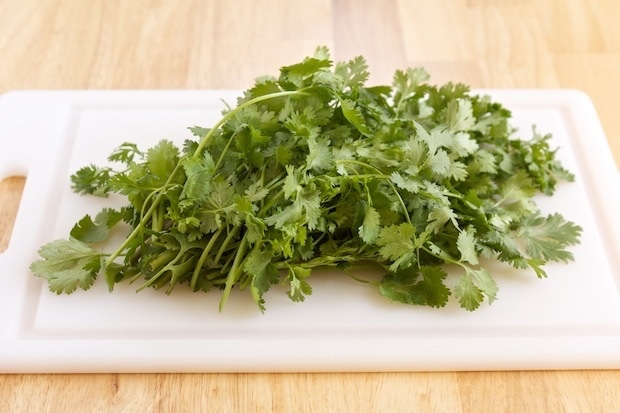
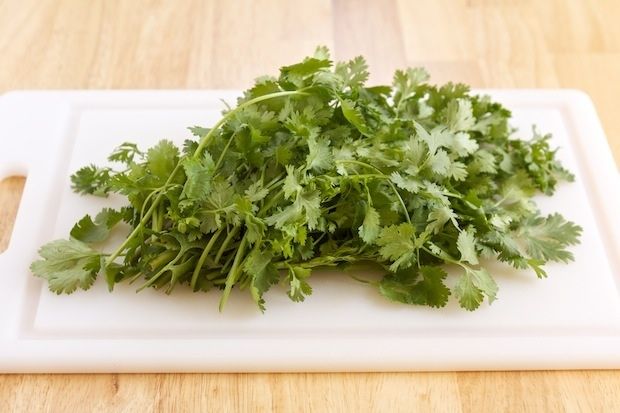
Now about that cilantro. I love the stuff, so it’s always in our kitchen, fresh and/or dried. Recently, plans that included a lot of cilantro fell through, so we had too much on hand. This herb has a short shelf life, so something needed to be done right away to preserve rather than waste. We decided on pesto, and that we’d use whatever else was on hand, building a variant we’d not done before. This is what we came up with, and it’s stellar, frankly. The rich, buttery flavor of the avocado oil and feta balances perfectly with the tang of the lemon and herbaceous base of cilantro. Here’s what we did.

P.S. Yes, I know some of you don’t like cilantro. Tough luck, that… We are working on a piece that speaks to the science behind your malady, so stay tuned.

 photo image-17.jpg

1 well packed Cup Cilantro
1/4 Cup Avocado Oil
1/4 Cup Feta Cheese
Juice & Zest of 1/2 fresh Lemon
2 small cloves fresh Garlic
Salt and a few twists of ground Pepper

Zest and juice lemon.

Process everything but the oil, salt, and pepper in a food processor or blender until thoroughly incorporated.

With the processor or blender running, (Low speed if you’ve got one), add the oil in a slow, steady stream.

Stop when you hit the consistency you like.

Taste and season to taste with salt and pepper, and adjust lemon if needed.

Freeze leftovers as needed. Pesto works great in an ice cube tray, frozen. Just pop out a cube when you need one.

Here are Cilantro Pesto I and Cilantro Pesto II if you’ve not tried them already.