Blog

Alt Fats for Baking


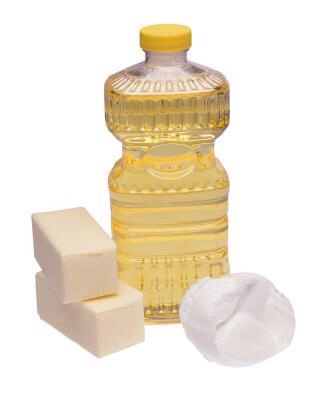
Alert reader Christy, (always wanted to use that…), writes, “What kinds of fats can be substituted for each other when baking and how do you do it? You used lard for the piecrust, which does make the best crust. Leaf lard is hard to find around here, though. I made a pie crust the other day using butter instead, but it turned out pretty tough. And then there are liquid fats such as olive oil and canola oil, etc.?”

Great question, so let’s wade in. For the record, I bake with butter, lard, and coconut oil pretty exclusively. I believe firmly that neither butter or lard are bad for you, eaten in moderation, and in fact, are healthier than most highly manufactured fats. I’ve covered this in other posts, so I’ll leave my position at that. Christy is a wonderful, agile cook, and if she or any of the rest of you want to know stuff like this, or need to for health reasons, then I’ll honor it and answer as best I can.

The primary issue when substituting oil for butter in a cake, cookie, or pie recipe is to fully understand the chemistry the fat facilitates within such things. In the broadest sense, fat contributes tenderness, moistness, and mouth feel to baked goods. There is also a flavor aspect involved, the rich nuttiness of butter and the salty tang of lard. Fats also contribute significant textural qualities to baked goods. Consider a recipe that has you creaming butter with a sweetener, like the gingerbread or the Nanaimo bar recipes we just posted. In both recipes, I wrote about whisking the sweet and fat ingredients together until a notable lightening of the texture is achieved; this is possible because the semi-solid fat traps tiny air bubbles in the matrix and physically lightens it, something that liquid fats don’t do very well at all. Similarly, consider something that depends on a loose matrix of fat and flour to derive a light, flaky texture, like a pie crust; again the property imparted by the semi-solid fat is an absolute necessity. The second consideration involves proportions, as virtually no alternative fat is a straight 1:1 substitution for butter or lard. Take muffins or pan breads as an example in this regard; reducing the amount of fat will will allow gluten to develop more freely, resulting in a notable tougher product.

A closer examination of the most commonly used baking fats will help to better understand what we need to emulate with a substitute. Fat content is the key in this regard. Butter is 80% + fat, with the rest made up of water and milk solids. True lard is virtually all fat; when I say true lard, I’m speaking of lard you yourself have rendered from pork, or lard you’ve bought that was kept in a dairy case, the leaf lard Christy referenced above. I know excellent chefs who swear by duck fat and schmaltz for baking as well, which is certainly food for thought.

If you’re buying the lard that sits out next to the shortening, stop doing that and don’t do it again. Those are vegetable or animal fats heated under pressure, with hydrogen gas introduced into it, usually with some form of nasty, toxic catalyst used to make it all happen faster. This process forces hydrogen atoms to latch on to carbon bonds in the fat in a crossways configuration, generating what’s commonly known as a trans fat. This is done not for our wellbeing, but so that said products can remain in solid form on an unrefrigerated store shelf and not go bad. That, for my mind, is reason enough to ban them from your kitchen.

In any case, the good news here is that the overall fat content of most of the healthy cooking oils and a few interesting non-oil alternative are comparable to butter, so successful substitution is certainly viable.


The first rule of subbing for butter or lard is that there is no hard and fast rule; it varies by recipe, and you need to experiment a bit to land on the winning formula. Here are some general guidelines to get you started.

Subbing liquid oil for butter works best in recipes that call for melted butter.

Subbing coconut oil, with its more solid form, works best in recipes that call for chilled butter. Keep in mind that coconut oil will go to liquid faster than butter will due to its lower melting point, so keeping it well chilled will serve you best when working with it in a recipe that calls for creaming, or in pie and tart crusts.

Start by subbing half the butter with your chosen alternative in a cake, muffin or cookie recipe; stick with butter or lard for pie crusts until you get a good, solid feel for how your alt choice behaves, then brave onward.

When you’re ready to 86 all the butter,

For olive, avocado, peanut, macadamia, walnut, or coconut oil, use .75:1 for the amount of butter called for.

For canola, grape seed, or hemp seed oil, use .625:1 for butter.


Consider these non-oil alternatives as well.

Applesauce, especially fresh, homemade, makes a fine butter alternative; it works best in cakes, muffins, and quick breads. Here again you can opt for the 50% butter, 50% applesauce route, or simple replace all the butter; doing so will yield a denser, moister product, but that’s rarely a bad thing.

Avocado is great in the same category of recipes. Avocado lowers the calorie content and yields a softer, chewier baked good.

Full fat Greek yogurt also makes a fine replacement. Use it in a 1.5:1 ratio for butter and again, you’ll lower the calories and saturated fat count of your recipe.

Closing thoughts on that tough pie crust made with butter, Christy. My first questions are; how old was the butter and the flour, what kind of flour did you use, and how cold was the butter and water? Next would be was this made by hand or machine assisted?

I like whole wheat pastry or whole wheat white flour for pie crust. Much better results than AP in my experience.

I make crust by hand, exclusively. Flaky crust requires pretty big chunks of fat and a relatively loose dough; I get the best feel for that by hand.

Machines can and will heat up your ingredients, and cold is kind when it comes to flaky crust.

Finally, keep in mind that butter has a lower melting point than lard, so it will break down to smaller sizes faster. Cut your butter into 1/4″ cubes and stick it in the freezer for about 15 minutes before you combine flour and fat.

Real Gingerbread


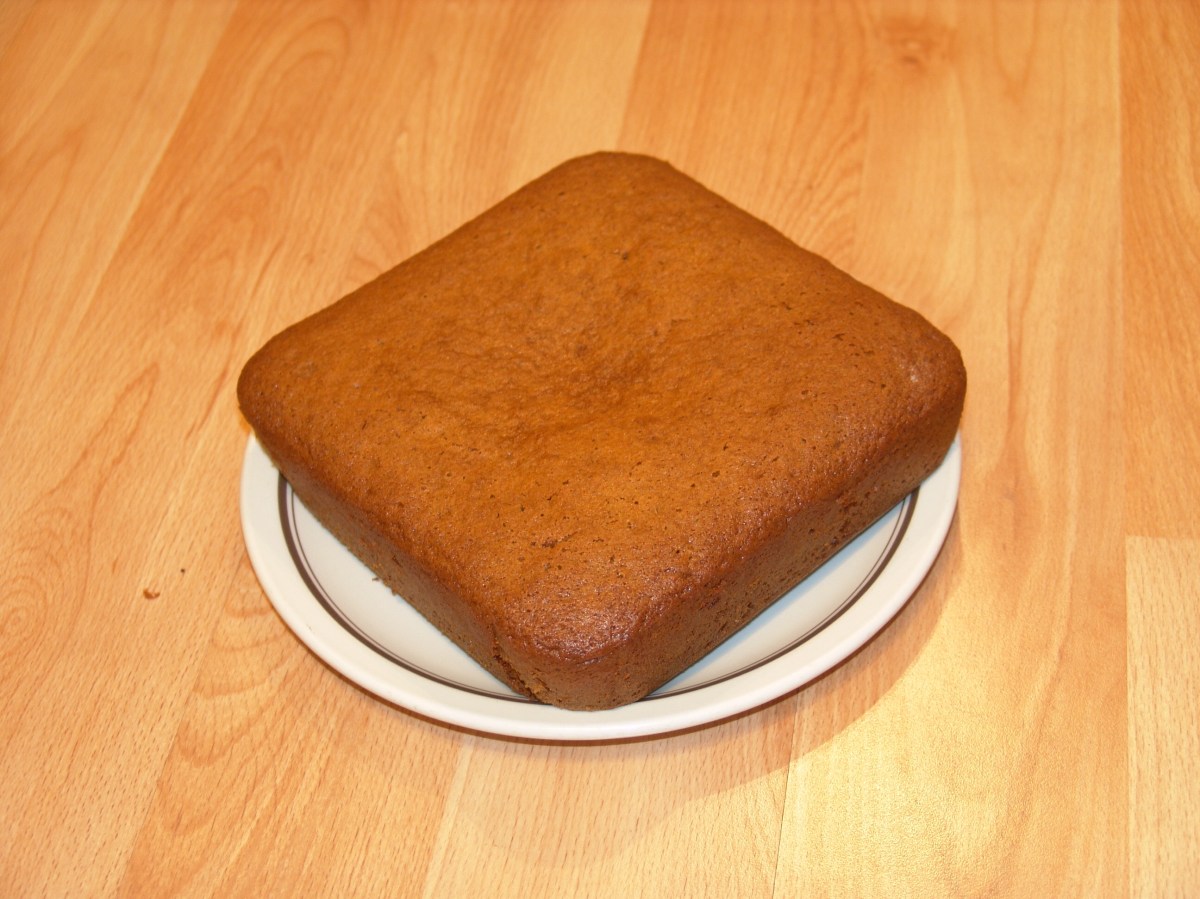
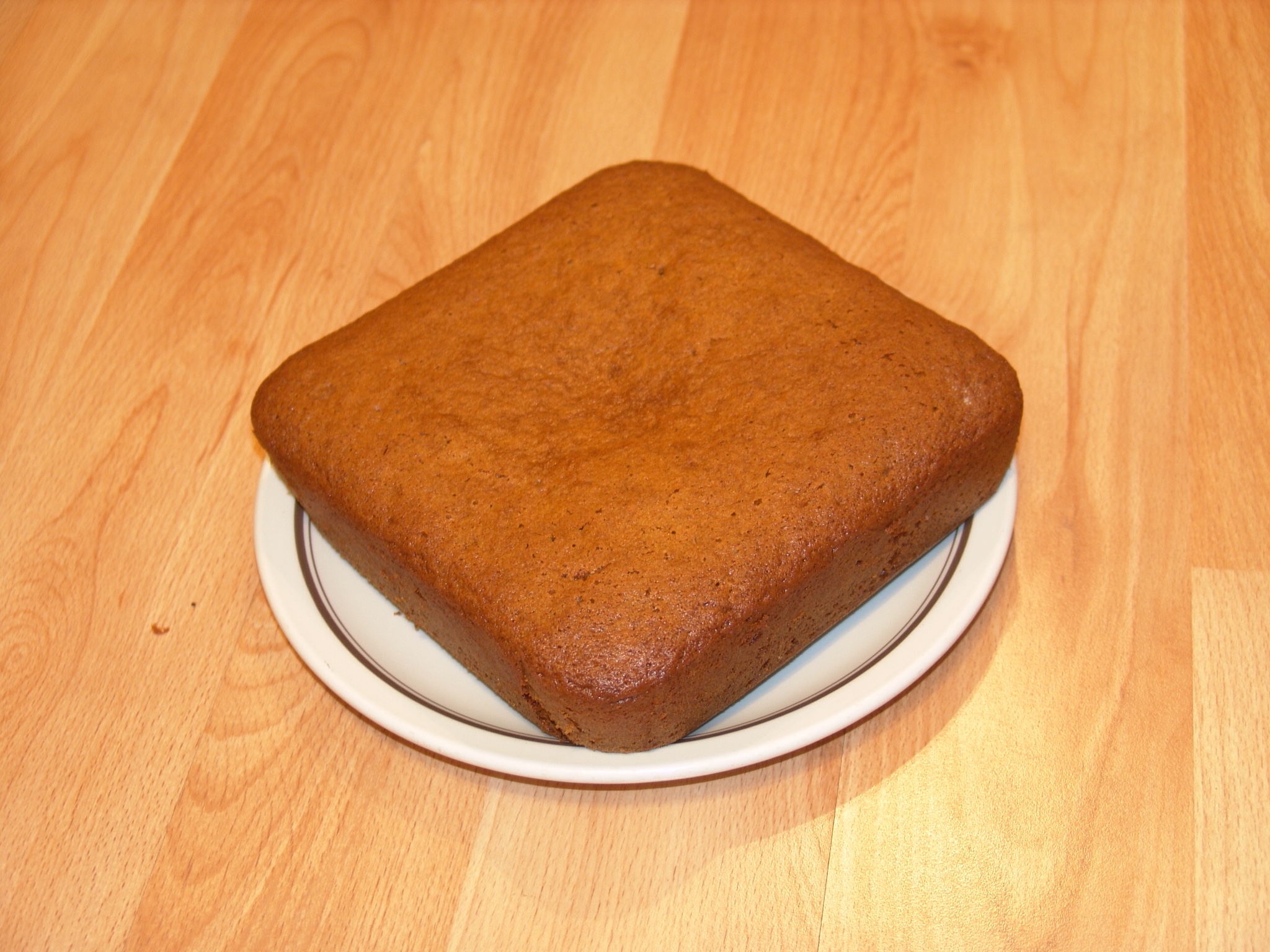
My friend Jenn had a disappointing experience with gingerbread, so we need to address that before another day goes by. Here Ya go, Pal, this'll fix it!


Real Gingerbread is a far cry from store bought or box mix versions. The timeless, heady mix of spices just can't be beat. Use fresh, high quality ingredients; whenever possible, fresh, whole spices, ground as you build, are well worth the time and effort.


Real Homemade Gingerbread

2 1/2 Cups Whole Wheat Pastry Flour

1/2 Cup local Honey

1/2 Cup Unsalted Butter

1 Cup Blackstrap Molasses

1 Large Egg

1 1/2 teaspoons Baking Soda

1 teaspoon True Cinnamon, (About 1″)

1-2 teaspoons fresh Ginger (Good quality, freshly dried is fine too)

1/2 teaspoon Cloves

1/2 teaspoon Sea Salt

1 cup hot Water


Pull all ingredients and allow to come to room temperature.

Preheat oven to 350° F and place a rack in the middle position.

Lightly butter and flour with Wondra a 9″ square, glass baking pan.

In a medium mixing bowl, cream the butter and honey with a whisk until throughly combined.

Add the egg and whisk thoroughly.

Add the molasses and whisk thoroughly.

Peel and mince ginger.

In a spice grinder, combine cinnamon and cloves; process until evenly powdered. Add the ginger and pulse a few times to break it down further and incorporate all the spices.

In a large, glass mixing bowl, combine flour, baking soda, salt, and the spice mixture and blend thoroughly.

Add the wet mix to the dry and combine thoroughly with a whisk. Add the hot water and continue whisking; you want to beat some air into the blend so that it looks and feels a bit lighter than when you started.

Pour the batter into the prepared baking dish.

Bake for about 50 to 60 minutes, until the top of the bread has browned slightly and a toothpick inserted into the middle of the pan comes out clean.

Allow the bread to cool in the pan for about 15 minutes, then release the edge gently with a knife, and turn the bread over onto a wire rack to cool for another 15 minutes.

Serve with fresh whipped cream.


Thanksgiving a la UrbanMonique


It's that time again, that paean to comfort food indulgence that is Thanksgiving. We have some favorites that make their way to the groaning board every year, and here the are. Try them all, or just one or two, but try them. Trust me when I say there are years of love woven into these recipes.

First comes turkey, of course. It's such a lovely protein, you simply can't pass up the opportunity to cook one. Chose a fresh, local bird, organic if you can find it. The differences between that and the mass produced stuff are notable and with the price. Take the time to brine your turkey and you'll be rewarded with intense flavor and a tender, juicy bird. Brined meats end up 6% to 8% heavier, proof positive that they do indeed gain moisture from the process. Brining also dissolves some proteins in muscle fibers, turning them from solid to liquid, yielding a tenderer bird.

Determining brining time is a function of both brine strength and the weight of the flesh being brined. The mnemonic is one hour per pound of whole turkey; most of us will therefore brine for somewhere between 12 and 18 hours.

The ratio of salt to water in brine is critical to the success of the process. As such, you should weigh the salt you use to assure accuracy. A standard brine ratio is 10 ounces of salt to 1 gallon of liquid. Keep in mind that different brands and types of salts have different weights. If you don't have a kitchen scales, you may safely assume that Morton Kosher salt weighs in at 7 ounces per cup, and Diamond Kosher salt is 5 ounces per cup. Pickling salt or plain sea salt is also fine for brining, albeit somewhat more expensive than kosher. Make sure your salt is not iodized, as that will generate undesirable colors and flavors to your brine.

For this bird, we replace water with apple cider, which contributes a delightful sweet, tart background note. The brine recipe per gallon is as follows:

1 Gallon Apple Cider

10 Ounces Kosher Salt

1 Tablespoon fresh ground Black Pepper

3-5 dashes Tabasco


For a 15 to 18 pound turkey, plan on 2 gallons of brining cider. The process is best done in a stainless steel stock pot, but a food grade, plastic bucket will work fine as well.

Plan ahead for brining. You will need brining time, plus an additional 6 hours or so before cooking to air dry the turkey; more on this in a bit.

Start out by prepping your brine. Combine all brine ingredients and stir thoroughly until all your salt has dissolved. You may heat the cider to facilitate the integration of the salt; make sure your brine is thorough cooled to room temperature if you do.

Unwrap, unpack, and rinse your bird. Make sure you find any little packets of giblets, neck, etc, (Don't be the cook that misses those for some unlucky soul to discover on the festive day…)

Slide your turkey into the pot or bucket and gently pour in the brine. Make sure that the bird is fully submerged; weigh it down with a plate or two if needed, (Take care that whatever you use is sanitized first). Place your brine bucket in a clean, cool, dark corner.

Pay attention to the food safety temperature range during brining, without fail. Your brine and bird must remain under 40° F at all times; if you need to add a little ice, do so. If you need to add a lot, compensate with a bit more salt.

When your brining period is done, pour out the brine, (NEVER reuse brine.), gently rinse the bird in clean, cold water, then pat dry with clean paper towels and transfer to a roasting pan.

Let the bird sit in the refrigerator, uncovered, for 4 to 6 hours after brining. Air drying allows moisture to evaporate from the skin, and lets the meat reabsorb some moisture as well. The results are a crisp, golden brown skin, the hallmark of a perfectly cooked turkey.

Preheat your oven to 350° F.

Cook your bread stuffing in a casserole dish, and stuff the turkey with a nice juicy cavity filler; this helps regulate internal temperatures as the bird cooks.

1-2 Oranges

1/2 Sweet Onion

1 stalk Celery

Tablespoon Canola Oil

1/2 teaspoon Sage

1/2 teaspoon Sea Salt

1/2 teaspoon ground Black Pepper


Rough chop the orange, onion, and celery, (if you have celery leaves, use those). Toss those ingredients in a large mixing bowl, then add oil, sage, salt and pepper, then combine and stuff the bird's cavities thoroughly.

Place the bird on a rack in a roasting pan, and add 2 cups of water to the pan. Insert an internal reading thermometer to the thickest part of the breast.


 photo IMG_3345.jpg

Roasting time for a stuffed turkey, at 350° F, is 20 minutes per pound; again, the best and safest method to determine when the bird is done is to measure internal temperature; for poultry, we want 165° F; the bird will continue to cook during a post-roast rest, with the internal temperature peaking at between 170° and 175° F.

Begin roasting with the bird uncovered, then cover loosely with foil for the last hour. Basting isn't necessary, but it certainly doesn't hurt.

When the bird is done, remove it from the oven and let it rest for 20 minutes prior to carving; resist the temptation to cut into it prematurely.

Carve, admire, enjoy, and get ready for the crown prince of leftovers, a lovely roast turkey sandwich.


 photo IMG_0124.jpg


If you love cranberries, or even if you don't, try this citrus infused version for a refreshing change. I've been making it for decades, and it's still requested.

1 12-ounce bag fresh Cranberries

3/4 Cup Water

1/2 Cup Agave Nectar (You may sub Honey, Maple Syrup, or light brown Sugar)

1 large Navel Orange

1 Lemon

1 lime

1/4 teaspoon cinnamon

1/4 teaspoon Nutmeg

Shake of Sea Salt


Grate zest from all citrus; get all the nice bright orange, yellow and green, (Stop before you get to the bitter white part.)

 photo DSC_0001.jpg

Juice lemon and lime. Peel orange thoroughly and rough chop the meat from that; set aside.

Bring water to a boil in a saucepan over medium high heat.

When water is boiling, add cranberries and return to a boil.

Reduce heat to medium and add citrus zest, orange, and juice.

Allow sauce to continue to boil, stirring occasionally until about 3/4 of the cranberries have popped.


 photo DSC_0005.jpg

Add cinnamon, nut get and salt, stir in thoroughly.

Remove from heat and transfer to a glass or ceramic bowl.

Allow to cool completely at room temperature.

 photo DSC_0006.jpg

Cover and refrigerate until serving time. Will last in the fridge for about a week.


Since this is a meal designed for pulling out all the stops, try these twice baked potatoes instead of mashed. They're easier to portion, which can help cut down on excess leftovers.


Russet Potatoes, 1/2 to 1 each depending on size and appetites; the rest of these ingredient amounts are based on a 4 large potato bake, so scale accordingly.

1 Cup heavy Cream

1/2 Cup Sour Cream

1 Cup Extra Sharp Cheddar Cheese

4 ounces unsalted Butter

2 strips thick cut Bacon

4 Green Onions

Sea Salt

Fresh ground White Pepper

Extra Virgin Olive Oil

Dash of Tabasco


Preheat oven to 325° F

Rinse your spuds and pat dry with a clean towel.

Coat whole spuds with olive oil by hand, place in a glass baking dish. Season the skins evenly with salt and pepper.

Slide the spuds into the oven and bake for about an hour, until the spuds are fork tender.

Fry bacon, dry on paper towels and fine dice.

Rinse, strip roots from green onions, and fine dice.

Grate cheddar cheese.

When the spuds are ready, pull them out of the oven and let them cool just long enough to handle with a clean towel, (in other words, still quite hot).

Reduce oven heat to 250° F.

Cut the spuds into lengthwise halves, then carefully scoop the guts into a mixing bowl, keeping the skins intact.

Add cream, sour cream, half the cheese, bacon, onions and butter to spuds and blend thoroughly. Add salt and pepper to taste.

Refill the skins with the spud mixture, top with the remaining cheese, then slide them back into the oven; bake for an additional 15 to 20 minutes.


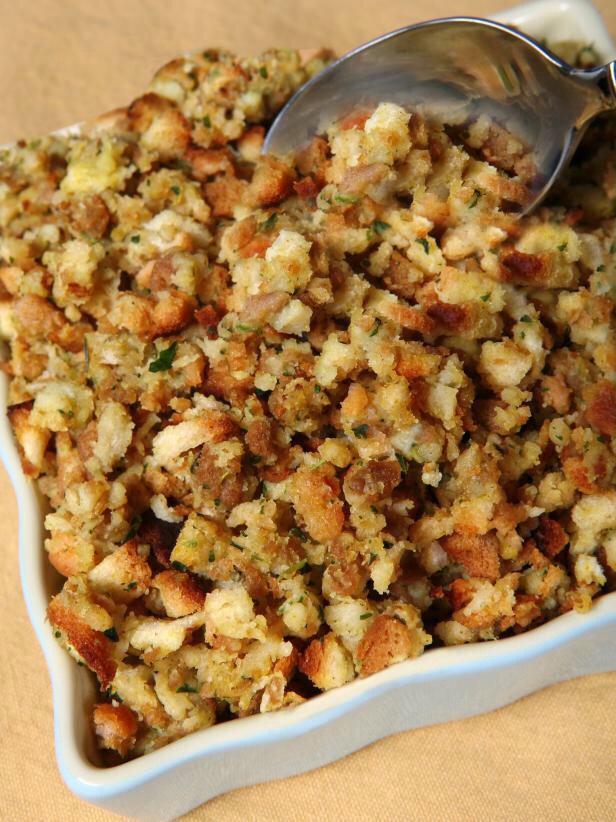
Stuffing is a must; try this recipe, redolent of herbs and citrus.

It's actually desirable to use bread that's a couple days old, so buy ahead. Stuffing can be prepared a day ahead of service and chilled, covered. Bring the stuffing back up to room temperature before you bake.


1 large Sourdough loaf

1 large Sweet Onion

1 stalk Celery, with leaves

3 slices thick cut Pepper Bacon

2 large Eggs

1 Cup Unsalted Butter

1 1/2 Cups low-sodium Chicken Stock

1 small Lemon

2 Tablespoons Lemon Thyme

2 teaspoons Savory

1 teaspoon Sea Salt

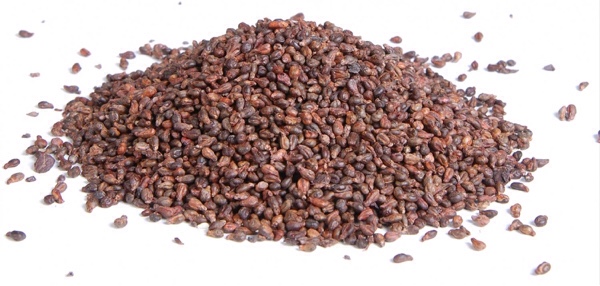
1/2 teaspoon Grains of Paradise


Preheat oven to 325° F

Cut bread into roughly 1/2″ cubes. Spread cubes on 2 baking sheets and bake until dry, about 15 minutes. Allow bread to cool on pans, then transfer to a large bowl. Crumble by hand and add the lemon thyme, savory, salt, and grains of paradise.

Rinse and dice onion and celery. Zest and juice lemon. Lightly beat eggs.

In a large saucepan over medium high heat, fry the bacon until crisp. Set that aside on paper towels to drain, and reduce heat to medium low. Add the butter to the bacon fat and melt thoroughly. Add onions and sauté, stirring steadily, until onions start to turn translucent, about 5 minutes. Add celery and continue to sauté, stirring occasionally, for another 5 minutes. Transfer all to the mixing bowl.

Crumble the bacon, then add it plus the eggs, stock, lemon juice and zest to the bowl and combine thoroughly.

Transfer stuffing to a lightly buttered, shallow baking dish, cover the dish with metal foil.

Bake, on a middle rack for 30 minutes; remove foil and continue baking until browned, about another 30 minutes.

Allow to rest for 10 minutes prior to serving.


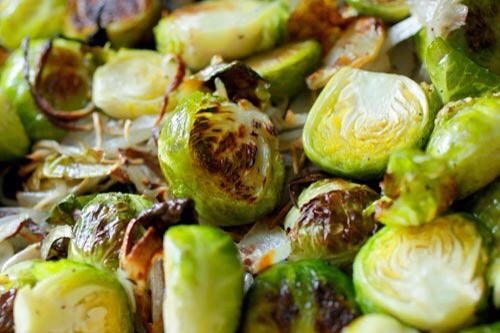
Brussels sprouts, the red headed first cousin of cabbage, get bad press far more often than they should. They're truly a lovely vegetable and a perfect side for the big feast. It's a safe bet that overcooking and poor seasoning have far more to do with negative reviews than the veggie itself. Brussels sprouts contain glucosinolates, compounds that offer abundant health benefits, but have the unfortunate tendency to release sulfurous byproducts when they're overcooked. Avoiding the all too common boiling of sprouts is your first line of defense against bad taste. Here's a preparation with bright and earthy notes guaranteed to please.


Roasted Brussels Sprouts with Almonds & Apple Cider Reduction


Brussels Sprouts, about 6 per person; the ingredient measures here are scaled for 35 to 40 sprouts.

1 1/2 Cups Honeycrisp Apple Cider

1/2 Cup slivered Almonds

Extra Virgin Olive Oil

2 small cloves Garlic

Unsalted Butter

Sea Salt

Black Pepper


Preheat oven to 375° F.

Remove sprouts from stem and soak in cold water for 10 minutes.

Inspect and trim any browned or yellowed leaves, and trim stems to about 1/4″. If your sprouts are large, you may halve them if you wish.

Mince garlic.

Place trimmed sprouts in a mixing bowl, and coat generously with olive oil. Add garlic and toss to incorporate. Add enough salt and pepper to lightly coat.

Roast sprouts in a middle rack for 35 to 40 minutes, turning once, until they've begun to brown.

While the sprouts are roasting, prepare the almonds and cider reduction.

In a sauté pan over medium heat, add the almonds and a tablespoon of unsalted butter. Sauté, stirring regularly, until the nuts and butter start to brown, about 5 minutes. Remove from heat and set aside.

In a sauté pan over medium heat, add the cider and bring to a simmer. Whisking steadily, simmer until the cider has reduced by roughly 50%. Add a tablespoon of butter and a very small pinch of sea salt. Whisk to incorporate, then remove from heat and set aside.

Combine all ingredients in a small bowl and whisk briskly to incorporate. Allow the dressing to sit while the sprouts roast.

When the sprouts are done, allow them to cool for about 5 minutes. Combine sprouts, almonds, and reduction; toss to thoroughly coat the sprouts, serve warm.


For drinks, definitely try the rest of the Honeycrisp Cider you used for the sprouts. It's fabulous heated up with a cinnamon stick and a clove or two. Prosecco is an excellent sparkler if you prefer those with your meal. If not, try a nice, light white like Pinot Grigio or Fumé Blanc; both of those will cut rich food admirably. A hard cider is also a nice choice, lighter than beer and pairs well with thanksgiving fare. If you do prefer beer, keep it light here as well; a local Pilsner or lager will do the trick nicely.


To finish, eschew pumpkin and make a lovely pecan pie. It's our nod to 12 years in Texas, where truly great pecans come from. I've tried nuts from all over and the Texas nuts are best; sweet, rich and meaty. This recipe really does make a perfect pie; the nuts are front and center, it's not too sweet, and it has great depth of flavor, with heady hints of vanilla and Whisky.

For the Crust:

2 cups all-purpose Flour

1/2 cup cold Lard

1/4 teaspoon Sea Salt

6 – 8 Tablespoons Ice Cold Water


Filling:

2 1/2 Cups Pecan halves

3 Eggs

1 Cup Agave Nectar

3/4 Cup Light Corn Syrup

3 tablespoons Butter

2 Tablespoons Sour Mash Whiskey

2 teaspoons pure Vanilla extract

1/2 teaspoon Sea Salt


Crust Prep:

Keep in mind that great pie dough is simple and minimally handled. Make your dough by hand; machines get between you and flaky crust.

In a mixing bowl, combine the flour and salt.

Add the lard and work it into the dry ingredients by hand until it resembles rough corn meal in texture.

Add the water a tablespoon at a time and stir the dough with a fork.

When the dough holds together as a ball, but isn't wet or sticky, stop working it, cover it in plastic wrap and refrigerate for 1/2 hour.


 photo IMG_0936.jpg


Form the dough into a disk about 3/4″ thick, then roll it out on a lightly floured surface, into 12-inch circle about 1/8″ thick. Lift an edge and carefully peel the dough free, then drape it onto a dry 9″ pie pan.

Trim the dough with a paring knife, leaving it about 1″ over the edge, then tuck the overhanging dough underneath itself to form a thick edge on the pan, and treat it as you see fit, (I like the classic thumb print myself).

Preheat your oven to 400° F, and position racks in the center and lower third of oven.

Put a piece of parchment paper or foil over the pie shell and fill with dried beans or pie weights.

Spread the pecan halves out on a baking sheet.

Blind bake the crust on the center rack for 15 minutes, and start on the filling.

In a sauce pan over medium-high heat, melt the butter, then add the sugar and corn syrup. Stir constantly with a whisk until completely combined.

Slip the pecans into the hot oven on the lower rack; let both nuts and crust bake for another 5 minutes.

Lightly beat the eggs and set aside.

Remove crust and nuts from oven and reduce heat to 350 F.

Remove filling mixture from heat. Add hot nuts to the hot mixture. Add Vanilla and Whisky carefully and slowly; the hot sugar can bubble up explosively if it's too hot and it will scald and stick to skin!

Add eggs to hot nut mixture and incorporate thoroughly with a whisk.

Remove weight or beans from crust, then pour hot filling carefully to fill crust.

Place pie on center rack of oven with a baking sheet on the lower rack, centered under the pie.

Bake for 40 minutes and then take a peek; pie should look firm and nicely set at this point. If the edges are notably darker, line them with an edge guard or foil and bake another 5 minutes.

Remove pie from oven, set on a wire rack to cool.


 photo IMG_0937.jpg


 photo e6ab7993-89e9-4186-9bb2-5dc4777a89db.jpg


M and I wish you a holiday of peace and comfort.


Herbs R Fresh


If you like herbs like we like herbs, then you plow through more than the average American. There are also likely fresh favorites you keep around pretty much all the time. For us, that would include cilantro and parsley. Both have subtle, lovely flavor profiles that go great with many dishes.

That said, both can get long in the tooth quite quickly. They're highly perishable, and can be hard to keep fresh after even a couple of days in your fridge. Considering the handling such foods receive as a part of modern distribution and sales, it's no wonder, really. A little handling and preserving work can go a long way toward having these indispensable always at hand.

When you get delicate perishables home, inspect them first and foremost. Get them out of the plastic produce bags, and better yet, don't put them in those things in the first place and reduce your plastic throughput. Remove any off colored or bruised stuff and toss it in your compost.

Give your goods a gentle rinse in cold, running water. Shake them dry, gently but thoroughly; excess water is not a friend to successful storage.

Remove any rubber bands or twist ties; all they do is bruise the goods and promote rot.

Place the washed produce on a clean paper towel and let them air dry a bit. Wrap the goods in the paper towel and store them in your crisper drawer just like that. If you use what you buy steadily, and pay attention to FIFO, (First In, First Out), in your fridge, your cilantro, parsley, green onions, radishes, etc will stay fresher, longer.

Consider drying some of those staple fresh herbs. It's a given that fresh is better than dry, but house dried herbs from a good fresh source are far better than store bought or none. Those faves of ours will dry thoroughly in a dehydrator in less than 30 minutes. I've tested both cilantro and parsley and found that our home dried stuff retains reasonably potent flavor for up to a month when stored in glass, in a cool, dark, dry spice cabinet.

Finally, and especially as the winter months are upon us, plant a fresh herb window box. An 18″ x 6″ x 6″ box will allow you to grow a full raft of your faves, and reasonable tending will sustain them through the season. There's nothing cheerier in the dark months than fresh, bright herbs growing in your kitchen.


Grapeseed Oil, Yea or Nay?


If you've hung around here much, you'll know we're all about investigating the food world. We like to think that by so doing, we can save you some pitfalls and missteps. Today's topic, grape seed oil, might just qualify as such.

Any kitchen worth its salt needs a decent selection of oils, taking advantage of their specific taste profiles, cooking uses, and health benefits. M and I are no longer spring chickens, so we pay more attention to the health thing than we might have when we were younger; naturally, oils deserve significant scrutiny.

Ask the question, “What are the healthiest oils you can use in your kitchen,” and the answers might be more complex than you anticipated. We lean toward proven winners like olive, canola, coconut, peanut, and clarified butter. If the peanut oil and clarified butter surprise you, they shouldn't, by the way; used in moderation, they're quite healthy, and no oil in that list has higher heat tolerance than clarified butter. Olive oil, with generous amounts of monounsaturated fats and vitamin E, is the hands down health winner, but what to use when you want something with a lighter taste?

Onto the stage strides a relative newcomer, grape seed oil. Purveyors claim a host of pluses, from the subtle, nutty taste and a relatively high smoke point, to a raft of health benefits, including abundant vitamin E, zero cholesterol, low levels of saturated fat, and the highest concentration of heart-healthy omega-6 polyunsaturated fat, (AKA PUFAs), of any cooking oil. And the fun doesn't stop there. Google grape seed oil and you find claims for everything from anti-aging to curbing hair loss. Can all this be true? As far as the constituent claims, the answer is yes, but a qualified yes. As for the other stuff, remember what P. T. Barnum said about suckers?

Grape Seed oil is indeed pressed from grape seeds, predominantly wine grape seeds. This sits well with wine makers, naturally, as it provides the opportunity to convert a waste product into a significant profit source. The first potential downside for this stuff lies with the fact that it's not cheap. Peruse your favorite grocery shelf and you'll find that the per ounce cost of grape seed oil rivals that of high quality olive oils. Why is that? The answer is twofold; one, all those sexy claims allow makers to charge premium prices, and two, grape seeds are relatively small and do not yield their oil easily. As such, makers must employ fairly expensive pressing processes to extract the oil.


Or not: If you come upon surprisingly inexpensive grape seed oil, it's likely to have been chemically extracted. If the label doesn't reveal the extraction method, peruse the product: If the oil is crystal clear and light in color, chances are good it's chemically extracted. Mechanical extraction tends to produce slightly hazy oils, as small quantities of proteins and other plant matter remain in the oil. The solvents used for extraction are toxic; the most common is hexane, a known carcinogen. As with so many food products, manufacturers are not required to tell you how they extract the oil. If the oil doesn't specifically state that it was pressed, chances are it wasn't.

If the oil is pressed, you want to know if the process used was expeller or cold. Expeller pressing can heat the oil it is generating, especially when the seeds are stubborn, as grape seeds are. Doing so can change the quality of the oil and reduce the health benefits as well. Cold pressing avoids this by adding temperature control to the process; as such, it's the most expensive method of production, but produces the best quality oil.

So, what's the potential downside of this stuff? The answer lies in that very high level of omega-6 polyunsaturated fat. Grape Seed oil averages 70% omega-6 PUFA, with some brands claiming levels as high as 77%. Compare that to the 19.0% found in canola oil or the 10% in olive oil, and you get an idea of how high too high is.

The problem is that human bodies just don't tolerate sustained high levels of PUFA intake without incurring health problems. We're just not built for the stuff; throughout almost all of human history, we consumed only a very small amount of polyunsaturated fat, whatever was naturally present in the foods we ate. The industrialization of our food supplies changed all that. Read our post on ranch dressing if you've not already, and you get a broader view of what this means. As a result, we've been consuming more and more polyunsaturated fats, concentrated in processed foods and modern cooking oils. According to WebMD, we consume over a thousand times more more PUFAs today than we did 100 years ago. That’s a lot, by the way…

The problems exacerbated by this trend include a myriad of ills brought about by free-radical damage. If you're unfamiliar with that issue, allow Jeffrey Blumberg, Professor of Nutrition at Tufts University, to explain: “Free radical is a term often used to describe compounds that are missing a critical molecule, which sends them on a rampage to pair with another molecule. These molecules will rob any molecule to quench that need. If free radicals simply killed a cell, it wouldn't be so bad, the body could just regenerate another one. The problem is, free radicals often injure the cell, damaging the DNA, which creates the seed for disease. When a cell's DNA changes, the cell becomes mutated. It grows abnormally and reproduces abnormally, and quickly.”

In terms of our cooking oils, free radicals form when PUFAs are oxidized by heat, light, and pressure. PUFAs are extremely fragile and heat-sensitive, their carbon bonds break easily. Industrial oils that are heated and pressurized by processing are especially likely to contribute free radicals into our systems, but even cold-pressed PUFA oils will oxidize when heated for cooking.

So, what is a healthy strategy for dealing with the potential health hazards? All things in moderation. We recently wrote about arsenic in rice; here's another situation where intelligently limiting your intake will go far. No more than 4% of total caloric intake from a 1:1 ratio of omega-6 and omega-3 will do the trick. That level and ratio closely emulates what occurs naturally in grass-fed meats, dairy, eggs, and plant foods.

We do have a nice little jar of high end, cold pressed grape seed oil in the pantry by the way. We stick to Olive and canola oils as our every day go-to's, and use the grape seed for what it is best at; really nice salad dressings. The nutty flavor and light mouth feel is truly delightful. Again, all things in moderation, they say, and educated moderation is best.

One final note; the high heat claims for this oil are sort of true. It stacks up very closely to Olive oil, but lower than peanut or clarified butter. We prefer those two for frying, frankly; they're far cheaper and probably healthier.


4 Ounces Grape Seed Oil

1 Ounce Rice Vinegar

1 small Lemon

2 teaspoons Chervil

Sea Salt

Black Peppe

Rinse, zest and juice the lemon.

Combine oil, vinegar, half the lemon juice, chervil, a pinch of salt and a twist of pepper and whisk thoroughly to incorporate. Taste and adjust lemon, salt, and pepper as desired. Allow to rest for 15-30 minutes before use.


3 Ounces Grape Seed Oil

1-2 Ounces Apple Cider Vinegar

1 teaspoon Savory

Sea Salt

Tasmanian Pepper Berry

Combine oil, vinegar, and savory with a pinch of salt and a twist of pepper. Whisk thoroughly to incorporate, adjust vinegar, salt and pepper as desired. Allow to rest for 15-30 minutes before use.


4 Ounces Grape Seed Oil

2 Ounces Champagne Vinegar

1 small lime

Shallot

1 teaspoon Cilantro

Sea Salt

Grains of Paradise

Rinse, zest, and juice the lime. Mince 1 tablespoon of shallot.

Combine oil, vinegar, half the lime juice, zest, cilantro, a pinch of salt and couple twists of grains of paradise. Whisk thoroughly to incorporate. Adjust lime, salt, and grains as desired. Allow to rest for 15-30 minutes before use.


Nanaimo Bars, Eh?


We live at the muzzle of the Georgia Straight, that formidable body of water that separates Vancouver Island from the British Columbian mainland, and funnels equally formidable weather down to us from Alaska and northern B. C.

North of us, up the straight about 70 miles as the gull flies and due west of Vancouver on Vancouver Island, lies the city of Nanaimo. With sweeping views of ocean, mountains, and the Vancouver skyline, it’s a truly lovely place to visit. And more notably still, it’s the tacit birth place of that heavenly, legendary confection, the Nanaimo Bar. Here’s the official line on those little gems, courtesy of the City of Nanaimo website.

“This creamy, chocolatey treat’s origin is elusive, shrouded in mystery, and claimed by many as their own. Of course, we know that Nanaimo Bars originated in Nanaimo, or they would be called New York Bars, or New Brunswick Bars.” Now that’s logic hard to argue with, eh?

While the precise origin of the Nanaimo bar is unknown, the first recipes using ingredients that mirror the Official Version appeared in the 1952 Women’s Auxiliary to the Nanaimo Hospital Cookbook; they were named the Chocolate Square and the Chocolate Slice. Nanaimo Bars formally showed up a year later, in the 14th Edition of the Edith Adams’ Prize Cookbook. A copy is on display at the Nanaimo museum.

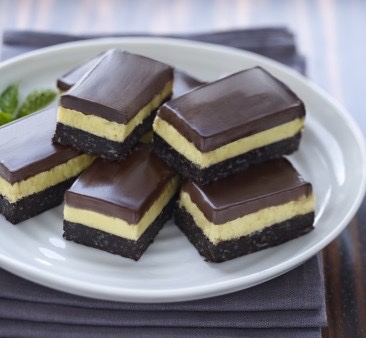
Technically, this is a no-bake dessert bar constructed in three layers, a graham cracker/almond/coconut base, a vanilla custard middle, and a chocolate top. Variants are as broad as the land that spawned them, with everything from different crumb bases and nuts, to mint, peanut butter, coconut, or mocha replacing the vanilla custard, and of course, a myriad of different chocolates

The Nanaimo Bar is incredibly rich, truly delightful treat. If you’ve never made them you simply must. They sound fussy to build, but in fact they’re quite easy and will store well refrigerated, so are an excellent make-ahead dessert. Use the best, local ingredients you can get your hands on. The recipe shown here is our take on this classic.

Serve with a high quality Muscat, Canadian Ice Wine, or a Tawny Port to cut the richness of the bar.


The Not Official UrbanMonique Nanaimo Bar Recipe

Bottom Layer

½ Cup Unsalted Butter

¼ Dark Brown Sugar

5 Tablespoons Cocoa Powder

1 large Egg

1 ¼ Cups Graham Cracker Crumbs

½ Cup Almonds

1 Cup flaked Coconut


In a dry pan over medium heat, lightly toast the almonds. Allow to cool and finely chop.

In a double boiler over hot, but not simmering water, melt and combine the butter, sugar, and cocoa powder.

Add the egg and stir gently but continuously, until the egg is heated through and the blend begins to thicken. Stay right with this part, as this will set up quite quickly.

Remove from heat add the graham crumbs, coconut, and almonds and combine thoroughly.

Press the mixture by hand into an ungreased 8″ x 8″ pan; your base layer should be roughly 1/2″ thick.

Refrigerate this layer while you work on the next.


Second Layer

½ cup Unsalted Butter

3 Tablespoons Sour Cream

2 Tablespoons Corn Starch

1 1/2 teaspoons pure Vanilla Extract

2 cups Powdered Sugar


In a large mixing bowl, combine all ingredients and whisk briskly to a creamy consistency. You want to incorporate enough air to notably lighten the overall consistency. Spread evenly over the bottom layer.

Return the doubled layers to the fridge.


Third Layer

8 ounces semi-sweet chocolate

4 Tablespoons unsalted Butter

2 Tablespoons Sour Cream


In a double boiler over medium low heat, combine and thoroughly blend chocolate and butter. Add the sour cream and blend thoroughly

Remove from heat and allow to cool for a moment until the blend starts to thicken.

While the blend is still liquid, pour and spread evenly over the second layer.

Chill the bars in the fridge for at least 4 hours before cutting into roughly 2″ x 4″ bars.

Bars will be good for at least a week refrigerated, but there’s no way on God’s green earth they’ll last that long.