Waffles 101


Along with stand mixers and fondue sets, waffle irons are more than likely collecting dust in a corner of many of our pantries. Waffles get a bad rap as 'food that's not good for you,' and 'a pain to make'; nothing could be further from the truth. Sure, a store bought, frozen waffle is an abomination, along with generic table syrup, and both are to be avoided like the plague. A homemade waffle, on the other hand, topped with delicious things is a delight in every way.


Batter or dough has been cooked between two hot plates for hundreds of years. The earliest recipe written in English that I'm aware of appeared in the 1600s, and paid proper homage to the Dutch 'wafel', that from the Frankish 'wafla', which harken back as far as the 1100s and meant honeycomb or cake. Waffles started out life as derivations of the communion wafer, thin, crisp cakes not unlike the modern pizzelle, still quite popular in Italy. These earliest versions were almost always round and made of grain flour and water, just as communion wafers were and are. As such, they weren't particularly big on taste, so flavorings like honey or florally infused water were introduced, such as rose and orange blossom. It wasn't until the 1300s that a recipe included eggs, wine, flour, and salt, but did not contain leavening of any note. Another hundred years would pass before irons notably different in pattern from the communion wafer, or oublie, would appear. These new versions, the French fer à oublie and the Belgian wafelijzer, were square or rectangular, and set with an even grid pattern; the space between these early irons was still rather thin, leading to a finished product likely akin to the modern Brussels waffle. Another couple of centuries would pass before recipes routinely included yeast, sweeteners, and spices added directly to the batter. Leavening was the innovation that allowed waffles to become the thicker, more appealing treat we enjoy to this day.

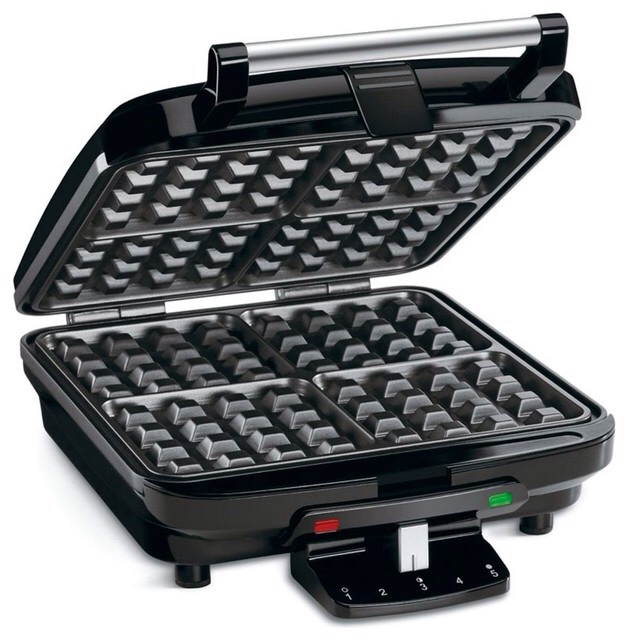
Waffle makers have advanced leaps and bounds from the versions we had as kids. There are makers that'll do anywhere from 2 to 8 at a pop; some are deeper and rotate, to specialize in the thicker Belgian version. There are timers and dark-to-light controls as well. I opted for a simple maker with a light to indicate ready status, and no other bells and whistles. If you keep an eye on your maker while it's working, it's a safe bet that somewhere around 6 to 8 minutes in, when the steam output has diminished and you're smelling nice, toasty cereal notes, your waffle will be done. After you're used to yours for a while, it'll be second nature that requires little conscious thought. Non stick is nice, and can now be found in non-toxic, environmentally friendly versions; it's great to have, but does not mean you don't still need a little something sprayed or wiped on before you cook.

Waffle recipes are pretty straightforward; once you've got your ratios down, they lend themselves well to experimentation. A few points, illustrated with the recipes below.

Thicker, lighter styles, like Belgian, want the eggs separated and the whites beaten and folded in to achieve that end.

The same process will help heavier, gluten poor flours generate a lighter, less leaden final product.

Vital wheat gluten is a fantastic tool to help those heavier flours end up as fluffy waffles.

Leavening can usually be achieved adequately with just baking powder, but judicious use of both powder and soda works just fine as well, especially with heavier batters. Yeast raised waffles take longer, but reward with a complex, tangy note that faster leaveners just can't duplicate.

Here are a few variants to spark your creative juices. Any of these recipes can be made savory if you wish. Thinly sliced green onions, chive, or other herbs can be added to the batter, or incorporated into toppings made with sour cream, cremé fraîche, crema, or Greek yoghurt. Chutney, salsa, mostarda, or sauteéd vegetables are equally delicious, as is a waffle topped with an over easy egg, crumbled bacon, and melted cheese. If you add veggies or fruit directly to a batter, consider sweating them in a sauté pan first, to reduce the amount of moisture and keep your waffles from getting soggy or falling apart.
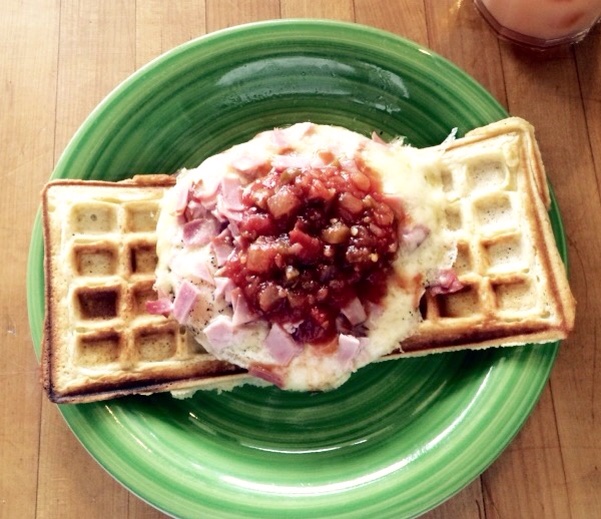
 

For topping sweet waffles, it's awfully hard to beat real maple syrup and butter.

You can substitute whole wheat pastry, or whole grain white flour, one to one for any recipe calling for all purpose. Subbing 2% milk for whole works, and almond or soy milks make fine alternatives as well. Coconut oil makes a great sub for butter, as will olive, avocado, or grapeseed oils for savory waffle recipes. Honey, agave nectar, or less refined sugars are also fine alternatives. Fresh fruit is always a delightful topping for any variant.
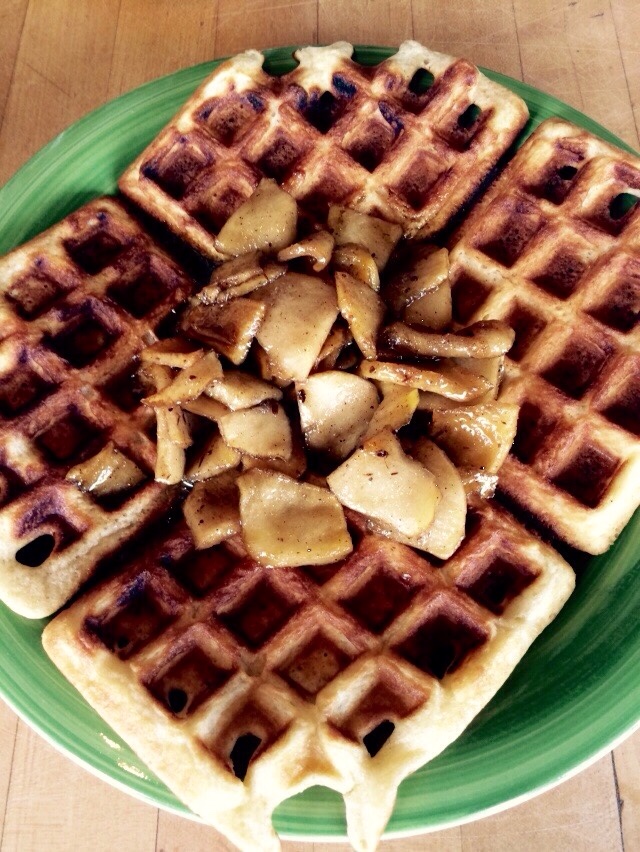
 

With modern waffle makers, it's best to pour a ladle or two of batter into the middle of the iron, enough spread to within a couple inches so of the edge; gently closing the lid will finish the job.

Each recipe will make 6-8 waffles. They will store well short term, and are delicious toasted the next day.

Yeast Raised Waffles
2 Cups all purpose Flour
3/4 Cup Whole Wheat Pastry Flour
2 Cups whole Milk
2 large Eggs
1/2 Cup Unsalted Butter
1 Tablespoon Sugar
1 package active dry Yeast, (2 1/4 teaspoons)
1 teaspoon Sea Salt
1/4 teaspoon Baking Soda
 
In a small pot over medium heat, combine milk and butter; stir until melted and bubbles start to form on the edge of the pan. Add sugar and salt and stir steadily until melted and hot but not simmering. Remove from heat and let stand until lukewarm.
In a warmed mixing bowl, combine 1/2 cup warm water and yeast. Let stand until it foams, about 5 minutes.
Add warm milk mixture to yeast and stir.
Whisk in flours, then cover tightly with plastic wrap and let stand until doubled in volume, at least two to three hours at room temp, or overnight in the fridge.
Preheat waffle iron.
Whisk eggs and baking soda into the batter.
Cook according to manufacturer's directions until golden brown.


Belgian Waffles

2 Cups all purpose Flour

2 large Eggs

2 Cups Whole Milk

1/2 Cup unsalted Butter

1/2 Cup Sugar

3-1/2 teaspoons Baking Powder

1 teaspoon Vanilla Extract

1 Cup fresh Strawberries


Preheat waffle iron.

Rinse and slice strawberries.

Separate eggs into two small dishes.

Melt butter.

In a large mixing bowl, combine flour, sugar and baking powder.

In a second mixing bowl, lightly beat egg yolks until frothy. Add milk, melted butter, and vanilla, and whisk thoroughly to incorporate.

Add wet to dry mix and whisk gently until just combined.

Whisk egg whites until stiff peaks form; fold gently into the batter.

Cook in a preheated waffle iron according to manufacturer's directions until golden brown.

Serve topped with strawberries.


Buttermilk Waffles

2 cups all purpose Flour

2 Cups Buttermilk

2 large Eggs

1/3 Cup unsalted Butter

2 Tablespoons Sugar

2 teaspoons Baking Powder

1 teaspoon Baking Soda

1 teaspoon Vanilla Extract

Pinch Sea Salt


Preheat waffle iron.

Melt butter.

In a large mixing bowl, combine flour, sugar, baking powder, baking soda, and salt, and whisk to incorporate. In a separate bowl, whisk and combine thoroughly buttermilk and butter; add the eggs and vanilla, and whisk again.

Add wet mix to dry and whisk gently until just combined; batter will be slightly lumpy.

Cook until golden brown, according to manufacturer's instructions.


Buckwheat Waffles

2 Cups Buckwheat Flour

2 Large Eggs

1 1/2 Cups whole Milk

1/2 Cup Greek Yoghurt

1/2 Cup unsalted Butter

2 Tablespoons Bob's Vital Wheat Gluten

2 Tablespoons Honey

2 teaspoons Baking Powder

1 teaspoon Baking Soda

Pinch of Cinnamon

Pinch of Sea Salt


Preheat waffle iron.

Melt butter.

In a large bowl, add buckwheat flour, vital wheat gluten, baking powder, baking soda, salt, and cinnamon, and combine.

Separate eggs into two small dishes.

Add yolks to a second mixing bowl, and whisk until frothy. Add the sugar, butter, milk, and yogurt and combine thoroughly.

Whisk egg whites until they raise to soft peaks.

Add wet mix to dry and whisk gently until just combined.

Add one half of the egg white and fold them gently into the batter; do the same with the second half.

Cook until golden brown, according to manufacturer's instructions.


Whole Grain Waffles

2 Cups Whole Wheat Pastry Flour

2 large Eggs

1 1/2 Cups whole Milk

1/2 Cup Sour Cream

1/4 Cup Butter

2 tablespoons Honey or Agave Nectar

2 teaspoons BakingPowder

1 teaspoon Baking Soda

1 teaspoon Vanilla extract

Pinch Sea Salt


Preheat waffle iron.

Melt butter.

In a large mixing bowl, combine flour, sugar, baking powder, baking soda, and salt, and whisk to incorporate.

In a separate bowl, whisk and combine thoroughly buttermilk and butter; add the eggs and vanilla, and whisk again.

Add wet mix to dry and whisk gently until just combined; batter will be slightly lumpy.

Cook until golden brown, according to manufacturer's instructions.


Potato Crusted Quiche


Breakfast is the meal we love best here, and that’s where I do some of my best work.

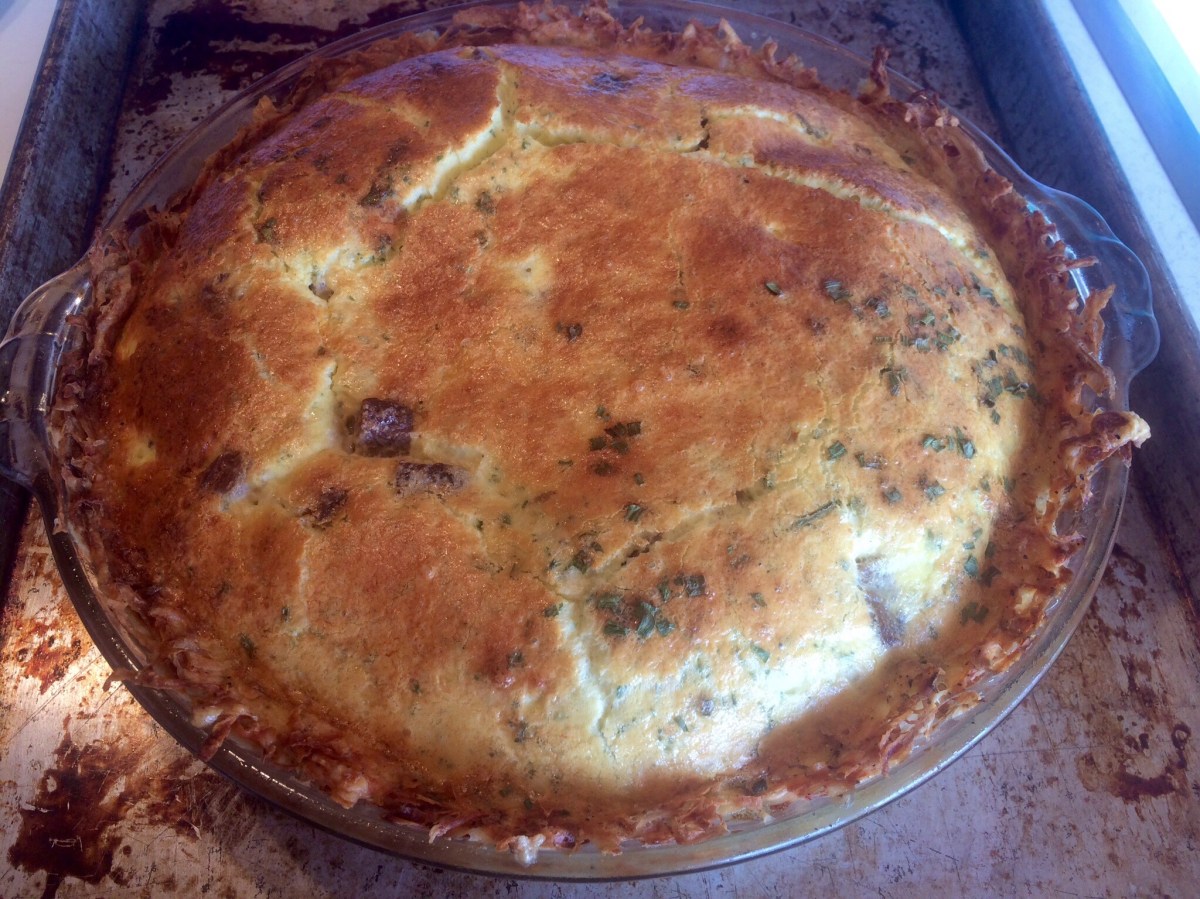
Here's a recipe for a signature dish that I literally worked on for years before offering here. It is incredibly good, fun to make, very impressive visually and unbelievably delicious. Ladies and gents, I give you the potato crusted quiche.

Quiche is a member of the custard family, of course, which encompasses everything from crème brûlée to the savory breakfast variants, like frittatas and tortas and quiche. Eggs are a perfect food, and quiche is the best possible savory application utilizing them that I can think of.

As with all things custard, there are a few little touches that will make the difference between good and great;

1. Bring your eggs and cheese out with enough lead time to have them pretty close to room temperature before you mix and cook.

2. Scald your milk before you mix – In a sauce pan over medium high heat, until tiny bubbles form right around the very edges of the milk, then take it off the heat and let it cool a bit; this helps things made with it to cook quicker and more evenly in the oven.

3. Blend your egg-milk mixture well. the more it is blended, the smoother your custard will be – Use an immersion blender if you’ve got one, a stand mixer or blender if you don’t.


For the crust

1-2 potatoes

1/2 Cup shredded Swiss Cheese

2 Eggs

Sea Salt and fresh ground Pepper


Preheat oven to 400° F.

Grate about 2 cups of your favorite hash brown potato; Russets are most traditional, but any high-starch potato will do fine. Transfer the grated potato to a mixing bowl, and cover the potatoes completely with ice cold water. Let them stand for about 5 minutes, then strain out the water, and refill the bowl with ice water again, and allow a second 5 minute soak.

Drain the potatoes into a single mesh strainer, then grab handfuls of the shredded spud and wring the water out of them. Transfer the potatoes to a dry bowl.

Add the grated Swiss and crack the eggs into the mix as well, then season lightly with salt and pepper. Combine everything thoroughly by hand or with a wooden spoon.

Lightly coat a pie pan with olive oil, then spread the crust into the pan by hand and form a nice, even layer on bottom and sides. Form the sides of the crust over the height of the pie pan, as they'll shrink a bit during blind baking.

Bake the crust for 15 minutes at 400° F, until the eggs have set and the cheese has melted slightly; this is important, as it forms an impermeable layer for the egg mixture to come.

Remove from heat and reduce baking temp to 350° F.


For the Filling:

3 large Eggs

1/2 Cup Swiss Cheese

1 Cup Whole Milk

1/2 Cup Sour Cream

1 Tablespoon fresh Chives

1/4 teaspoon granulated Garlic

1/4 teaspoon granulated Onion

Sea Salt and fresh ground Pepper


Scald the milk and set aside to cool a bit.

Cut the cheese into roughly 1/2″ cubes. Chiffenade the chives.

Whisk eggs briskly, then add sour cream. Add the milk slowly, to temper the mixture and avoid cooking the eggs prematurely. Blend all very well with an immersion blender.

Add seasoning and mix well.

A classic quiche is simply eggs, cheese, and some seasoning, but you can certainly add more as you desire. Avoid ingredients that hold a lot of water, like tomatoes, as they'll tend to make your final product runny. If you wish to add things like ham or onion, it's best to lightly sauté them first, which will concentrate flavors and drive off excess moisture prior to baking.

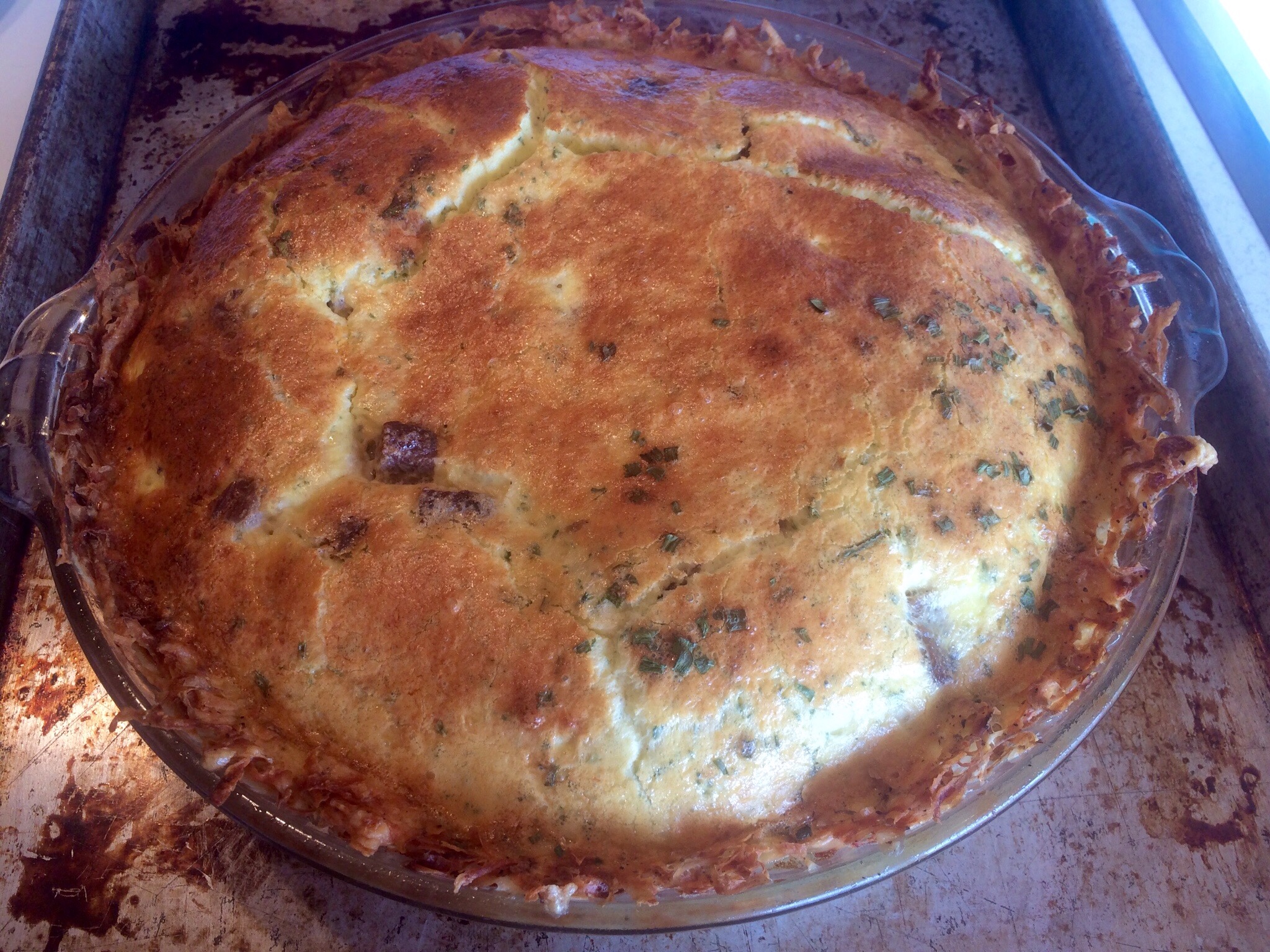
Bake for 45 minutes at 350° F, until the quiche has risen nicely and is golden brown on top.


Remove from heat and allow a 10 minute rest, then cut, serve and enjoy.


Camp Breakfast a la Dutch Oven


It might not surprise y’all to know that Monica and I pull out all the stops when it comes to camp cooking. Rather than see camping as a need to pare down and go simple, we take it as a chance to eat well in some of the prettiest places you’ll ever visit. If you’re car camping, or talking hunting or fishing camp, you not only can bring what you want, you should. You’ll want some form of flat top of course; a big old cast iron skillet is perfect. And make sure you include your Dutch oven, it’s a must for great camp cooking.

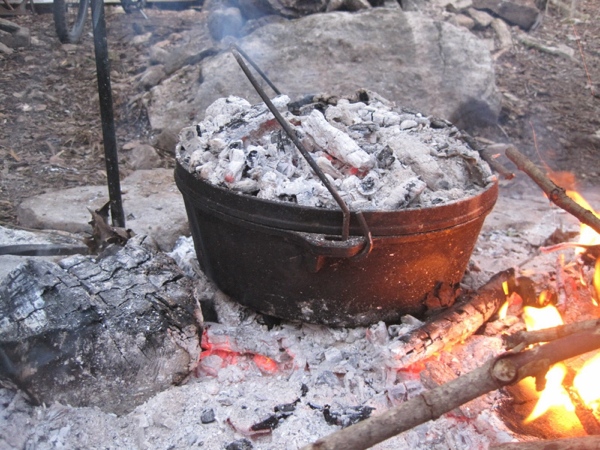
A Dutch oven is a must for great camp cooking.

 Without a doubt, the most important meal of the day out there is breakfast; that’s where your fuel comes from for the fun to come later in the day. With the Dutch oven, baked eggs, quiche, frittatas, biscuits, cinnamon rolls, Dutch babies, and dang near anything else you like for breakfast is absolutely doable. Just do a bit of pre-prep at home, measuring and combining ingredients so that it’s a quick and easy job at the camp end of things. Here are a few tips to help you have a great outing.

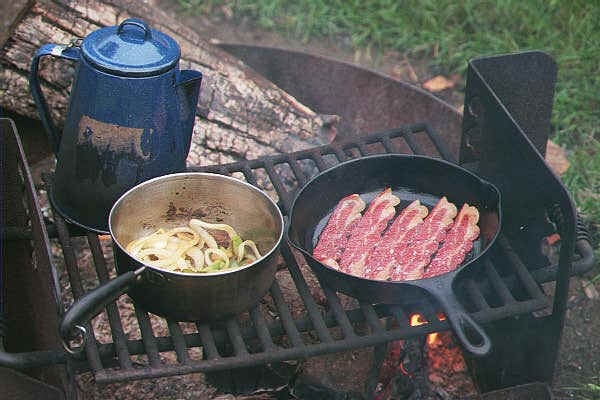
There’s nothing finer than campfire cooking. 

 Make some genuine camp coffee. Pull the guts out of a percolator, or just use a pan if you like. Do it up right, on the fire or in the coals if you’ve ’em; a Coleman or camp stove will work just fine if you’re camping in a no fire area. Here’s the scoop.

10 tablespoons coffee
10 cups cold water
5 empty eggshells
Tiny pinch of salt

Use a nice, dark roast, medium ground, (a bit rougher than you’d use for a drip at home.) Crush your eggs shells and throw everything into the perc or pot and cover it. Bring to a full boil, then move the pot to lower flame or coals and simmer, covered, for about 6 minutes. Remove pot from heat and Let stand, covered, until the grounds settle, about 2 minutes. Carefully pour off coffee, leaving the grounds and shells in the pot. Even Fannie Farmer herself used this method; try it, you’ll like it!

Knowing and regulating the cooking temperature for a Dutch oven is the real trick. First things first, decide whether you’re going to use charcoal or wood. Charcoal will give you the most consistent heat and control, so that’s what I prefer.

Use high quality hardwood briquettes and avoid the self lighting crap; it burns much hotter and doesn’t last as long as the good stuff. Good charcoal will provide at least an hour of cooking: For recipes that take longer than that, pull expended briquettes and replace them with fresh ones. Keep in mind that the Dutch oven is already hot, so you only need to replace a few briquettes at a time.

Here’s the general rule of thumb for heat regulation with a Lodge or GSI Dutch oven. Note that briquettes are applied to both the bottom and top. To achieve 325° F, take the size of the oven, then use that number of briquettes less three for the bottom and that number plus three for the top. So, with a 12″ oven, you place 9 briquettes on the bottom (12-3) and 15 briquettes on the top (12+3). Adding one set of briquettes (one on top and one on bottom) will raise the temperature of the Dutch Oven approximately 25 degrees, (Conversely, removing one set of briquettes will lower the temperature by 25 degrees). Here’s a handy little chart that’ll help a bunch.

That said, you do want to vary the ratio of briquette placement on the top and bottom of your oven, depending on what you’re cooking. Here are some guidelines.

* For simmering food, place 1/3 of the total briquettes on the lid and 2/3 under the oven.

* For baking bread, rolls, biscuits, cakes, pies, and rising cobblers, place 2/3 of the total briquettes on the lid and 1/3 underneath the oven.

* For roasting meats, poultry, casseroles, quiche, vegetables, and non-rising cobblers, use an even 50% on the lid and underneath the oven.

Heat placement around the Dutch oven is crucial to yield the best cooking results. Briquettes placed under the oven should be arranged in a circular pattern right under it and come to no less than 1/2″ from the outside edge of the oven. Briquettes placed on the lid should be spread out in an even checkerboard pattern. Avoid bunching briquettes; that’ll cause hot spots.

The Golden Rule of Dutch oven cooking is this; Go Easy With The Heat! You can always do things to get the oven hotter, but if you burn the food, it’s game over.

If you’re cooking over a camp fire, you can still use charcoal. Get the briquettes started in the coals of your fire and then cook with those. Again, it’s just a whole bunch easier to accurately regulate cooking with charcoal than it is with coals, unless you’re a real pro.

Keep in mind that environmental factors, (Air temperature, humidity, altitude, wind), all influence how much heat is generated by burning briquettes. Cool air temperatures, high altitudes, shade, and high humidity will decrease the amount of heat generated by briquettes. Hot air temperatures, low altitude, direct sunlight, and wind will increase the amount of heat generated by briquettes. In real windy conditions, briquettes will burn faster due to increased air flow, and they won’t last as long.

Last but not least for your oven, know how to clean and maintain it, and of you don’t, then trust the folks who make them to steer you right

Here are a couple of our favorite recipes for you to try on your next outing.

Spanish Frittata
6 large Eggs
2 Cups Milk
1/2 Cup Sour Cream
1 Cup shredded Extra Sharp Cheddar Cheese
1 Jalapeño Chile
1 Tomato
2 Yukon Gold Potatoes
5-6 sprigs Cilantro
1 clove Garlic
1/2 teaspoon sea salt
1/4 teaspoon ground Pepper

At home, mix eggs, milk, sour cream, cheese, salt, and pepper, and blend well. Store refrigerated.

At camp, stem, seed, and core tomato and jalapeño, then fine dice.
Mince Cilantro and garlic.
Dice potatoes.

Combine all ingredients. Add to a preheated Dutch oven. Follow the ratio for roasting, (50% – 50%), and cook for 45 minutes, then check dish. When eggs have risen about double height and the frittata is firm in the center, it’s good to go. Serve with salsa, more sour cream and toast.

Dutch oven roasting with a 50%-50% coal mix

Here’s a great French Toast Casserole, perfect for the first morning in camp. The initial prep can be done at home, then set up for breakfast the night before in camp.

1 Loaf Sourdough Bread
8 large Eggs
2 Cups 1/2 & 1/2
1 Cup Milk
2 Tablespoons Honey
1 teaspoon Vanilla Extract
1/4 teaspoon Ground Cinnamon
1/4 teaspoon Ground Nutmeg
Pinch of Sea Salt
Maple Syrup

In a mixing bowl at home, combine eggs, half-and-half, milk, sugar, vanilla, cinnamon, nutmeg and salt. Whisk by hand until thoroughly blended. Store blend in a Tupperware container with an airtight lid.

In camp the night before breakfast, slice the Sourdough about 1″ thick. Arrange the slices, overlapped, in a large Tupperware container or bowl with a snap lid.

Pour the egg mixture over the bread slices, making sure all are evenly covered. Lift the slices and make sure the batter gets all around the bread. Keep in a cooler until morning.

On breakfast morning, carefully transfer the bread to a well buttered Dutch oven. Pour all the remaining batter in as well.

Follow the briquette ratio for baking, (1/3 on bottom, 2/3 on top), and bake for 45 minutes, until the casserole has puffed up and turned light golden brown. Serve with warm maple syrup and butter.

¡Ábre tus ojos!


I have a friend at the cafe I tease with food pics. Shaking his head one day, he asked, “Do you guys cook like this every day?”

The answer;
yep, purty much

Once you get used to production and pick out a plan, doing things like we do doesn’t take all that long.

I like picking ingredients and meals for all the senses; for sight and feel as much as taste and smell, frankly. For instance, I actually like Huitlacoche, but its’ so dang fugly, I just don’t use it. Ever tried black salt? Looks great, but it smells like egg, beer and onion farts until you cook it; that’s a big no thanks for me.

So this morning, I’m knocking around and decide to make some flour tortillas, (You can find that whole process in the archives right here, BTW, for both flour and corn tortillas).

I made big ones, so then of course the question is what to put in them. Chimichangas passed through my mind, so I went with a brunch version of that. Sweet onion for flavor and aroma, cilantro and fresh tomato because you must, jalapeno for crunch and bite, black olives ’cause they’re pretty, smoked ham and extra sharp cheddar for texture and chew. I mean come on, that’s a dang pretty prep board, yeah?

Plain ol’ scrambled eggs with a dash of salt and pepper…

Everybody else onboard, rolled up and fried quick in a hot pan with a little olive oil. A big helping of homemade salsa, and tell me, what else could you possibly need? (OK, well, it was too early for beer…)