Perfect Pickled Beets


I love beets, but admittedly, not so much by themselves. The earthy notes, yes. The root veggie texture, yes. The sometimes muddy overtones, not so much. Hence pickling makes perfect sense, in that the added zing brings a nice snappy note to the flavor profile. I like the deep spice notes of cinnamon and clove in concert with the lighter, sweeter vanilla and lemon in that mix; together, they’re just really, really good.

As with all produce, chose your beets carefully; select nice, firm ones with no lesions or soft spots.

Pickled Beets, (Yield 5 – 6 pints)
5 Pounds fresh Beets
2 cups Granulated Sugar
4 cups White Vinegar, 5%
3 cups Water
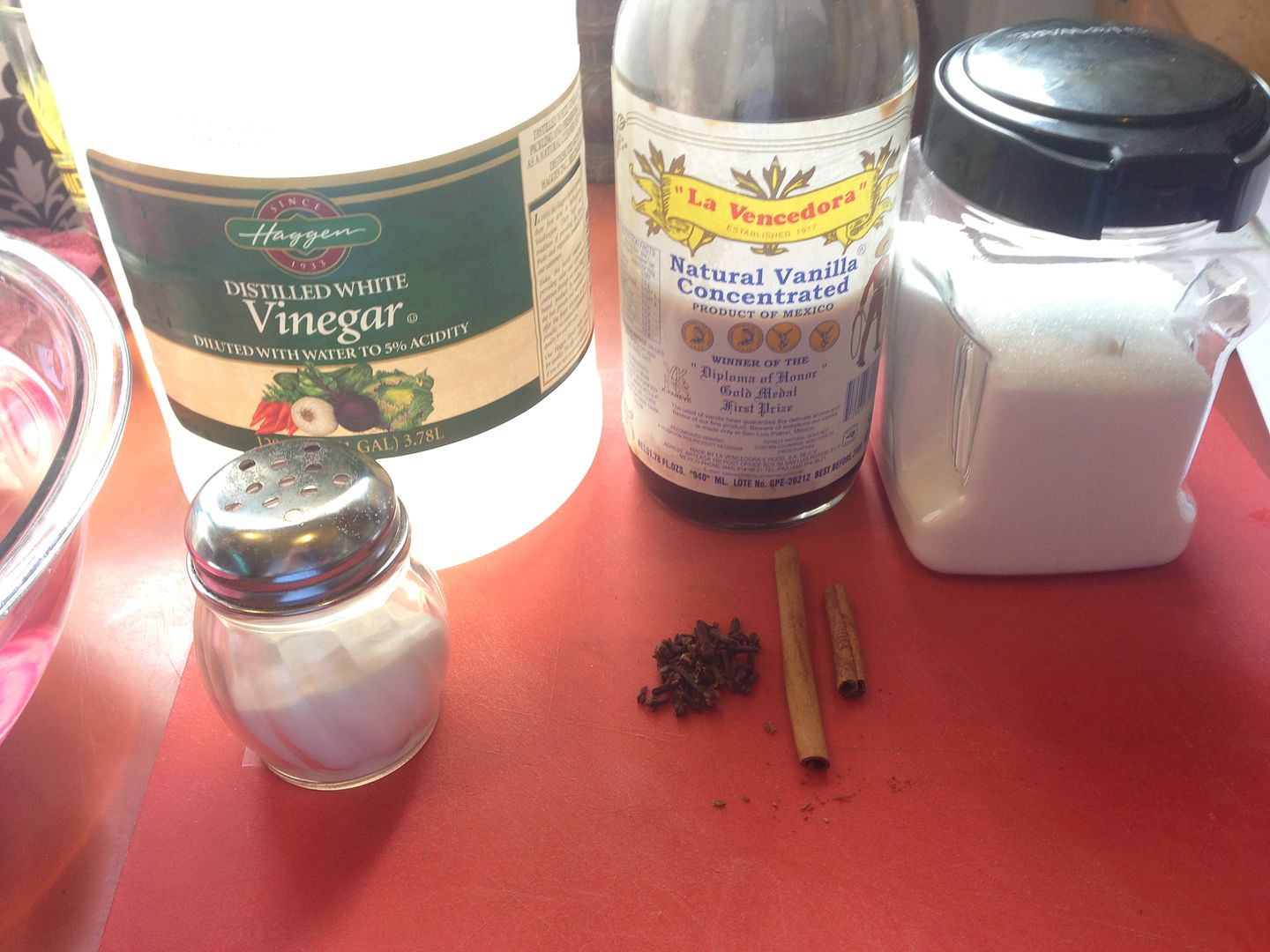
1 3″ stick Cinnamon
Juice of 1 medium Lemon
2 teaspoons whole Cloves
1 teaspoon pure Vanilla extract
1 Tablespoon Sea Salt

Sterilize jars, lids and rims in the dishwasher or a pot of water on a rolling boil, minimum of 10 minutes.

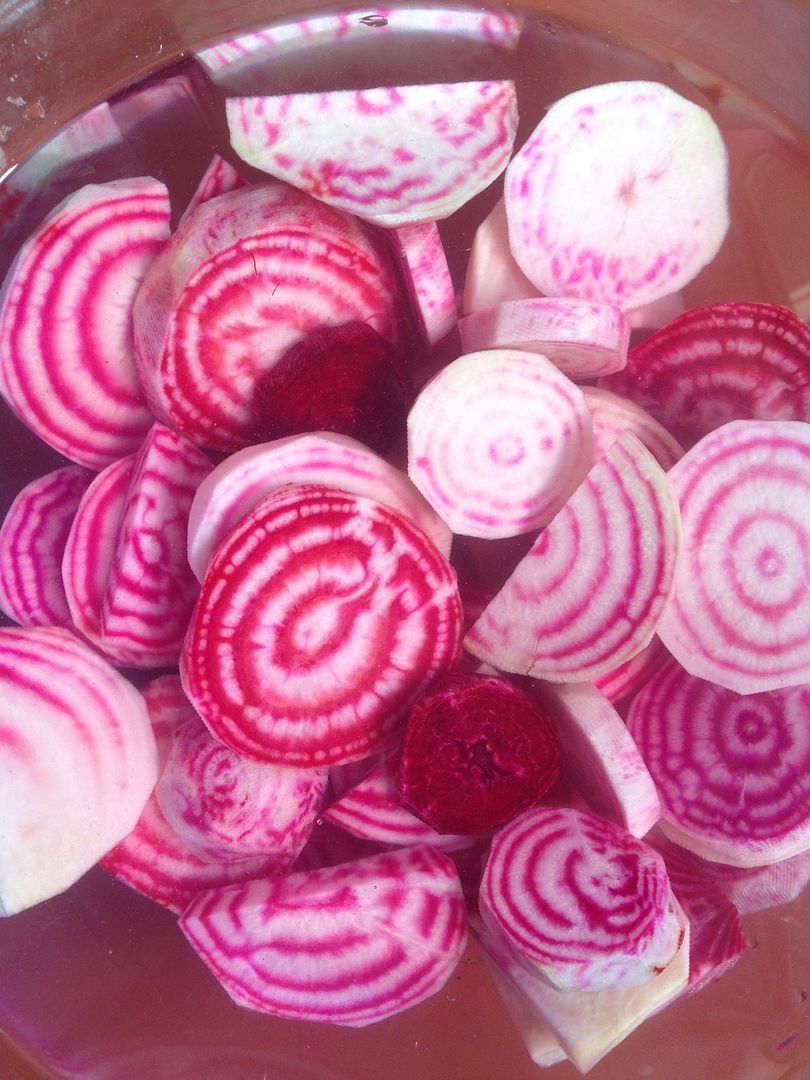
Peel beets and cut into 1/2″ thick slices; make sure your sizes will fit your jars, (Which is why I always get wide mouth).

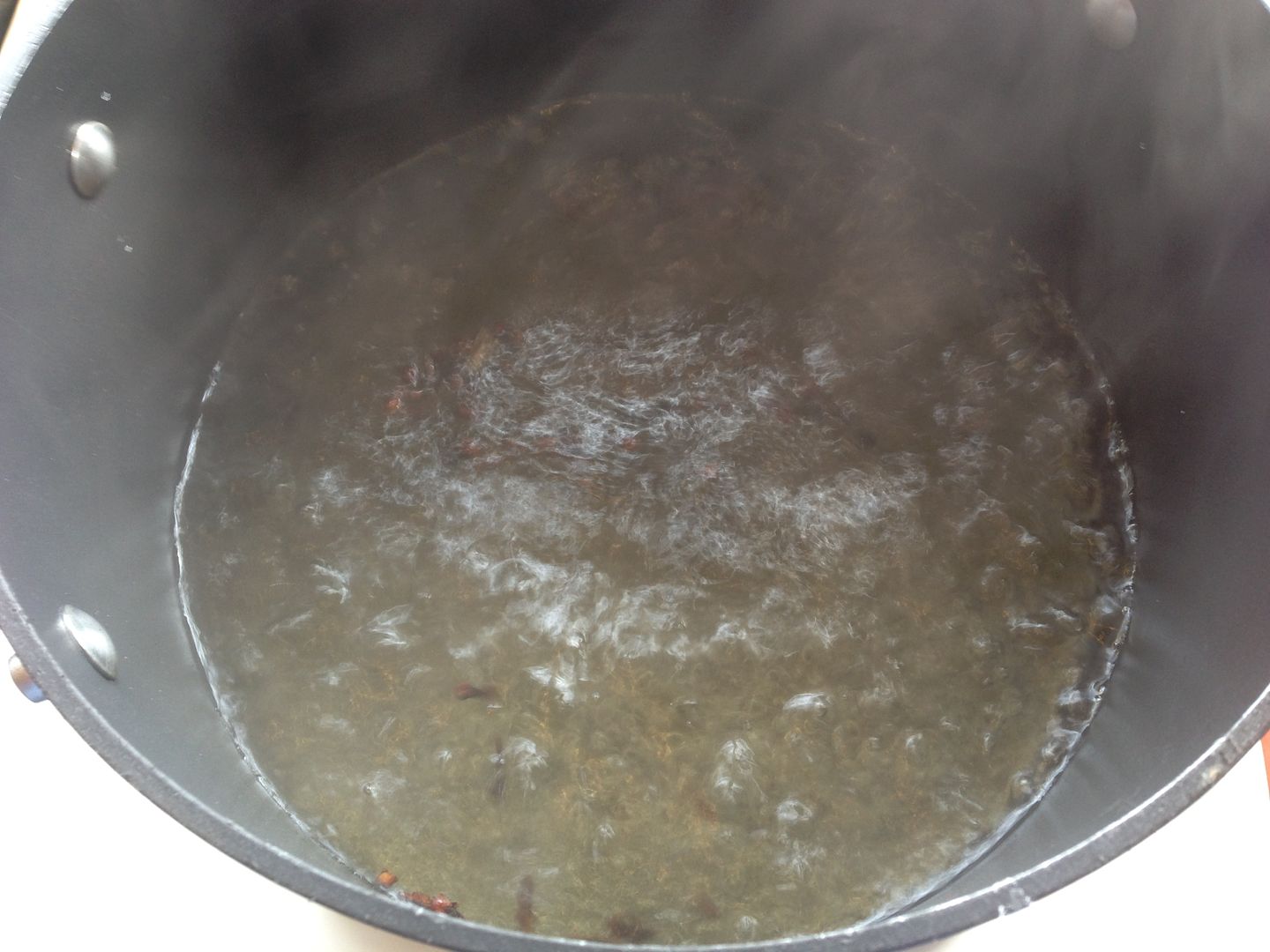
In a stock pot over high heat, combine all ingredients but the beets. Stir steadily until sugar and salt are completely dissolved.

Toss in the beets, reduce heat until you’ve got a nice even simmer, and allow the beets to cook for +/- 15 minutes, until the slices are fork tender.

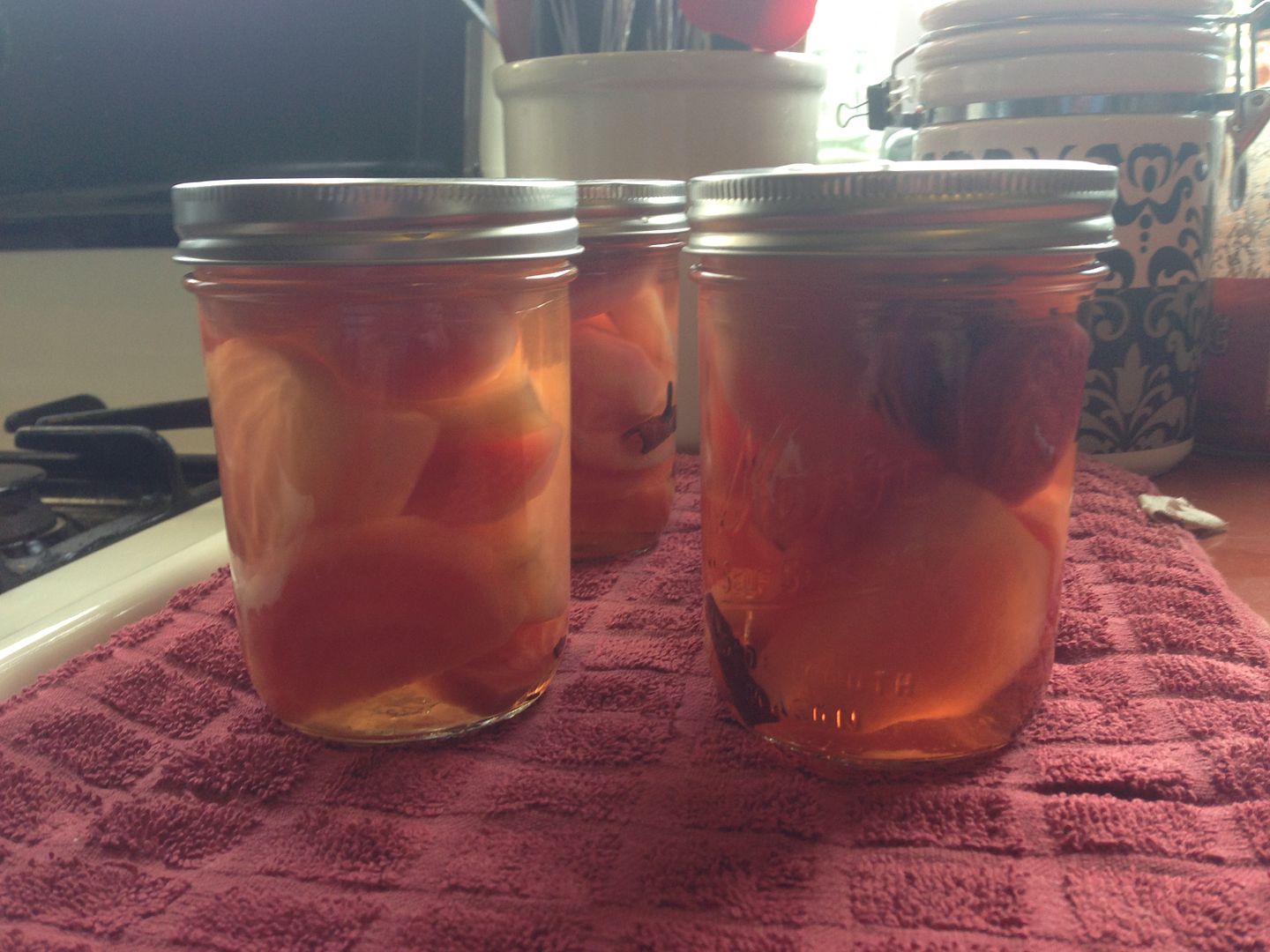
Carefully transfer the sliced beets into your jars, arranging so they’re filled to within about to where the neck of the jar starts.

Fill the jars with the pickling liquid to within 1/4″ of the top. Place lids and hand tighten each jar.

Process in a hot water bath, making sure your water temp remains above 180 F. throughout. Make sure that you’ve got at least a couple of inches of water above tops of your jars and leave an inch or so between each jar.

Process for 30 minutes if you’re below 1000 feet above sea level. If you live at higher altitude than that, refer to the NCHFP page for processing beets.

Store in a cool, dark spots and allow at least 6 to 8 weeks before sampling, so your beets get full advantage of the pickling.

E & M

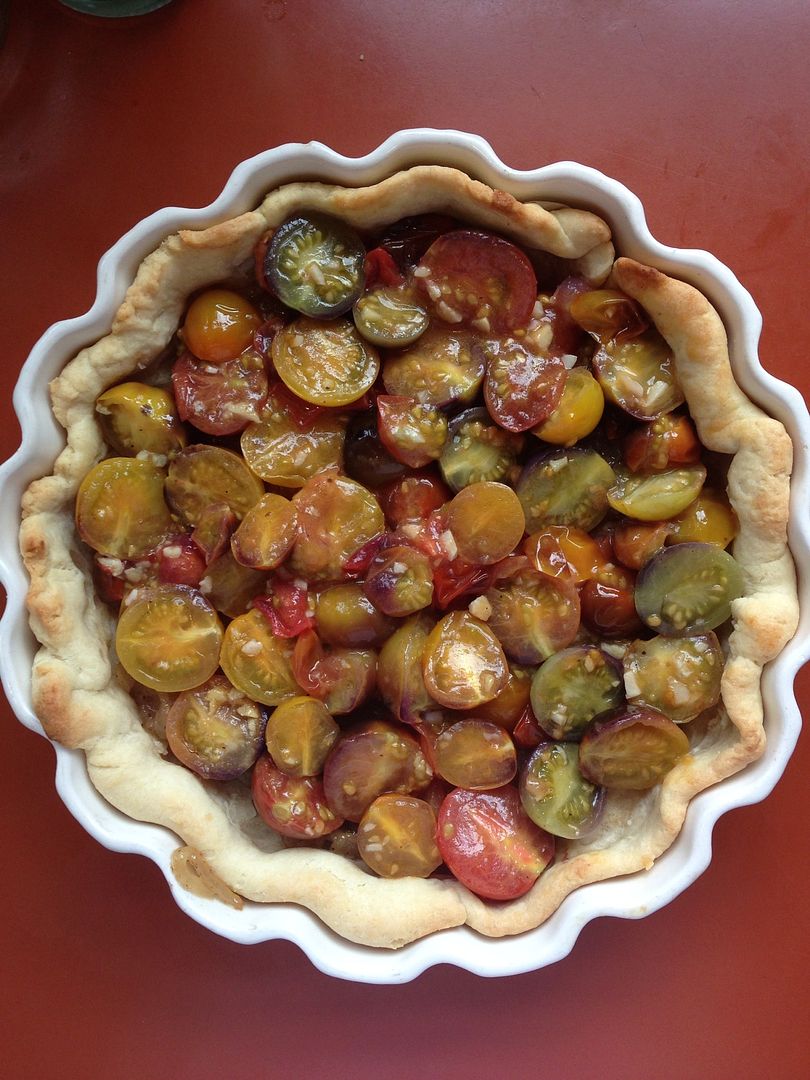
Tomato & Caramelized Onion Tart


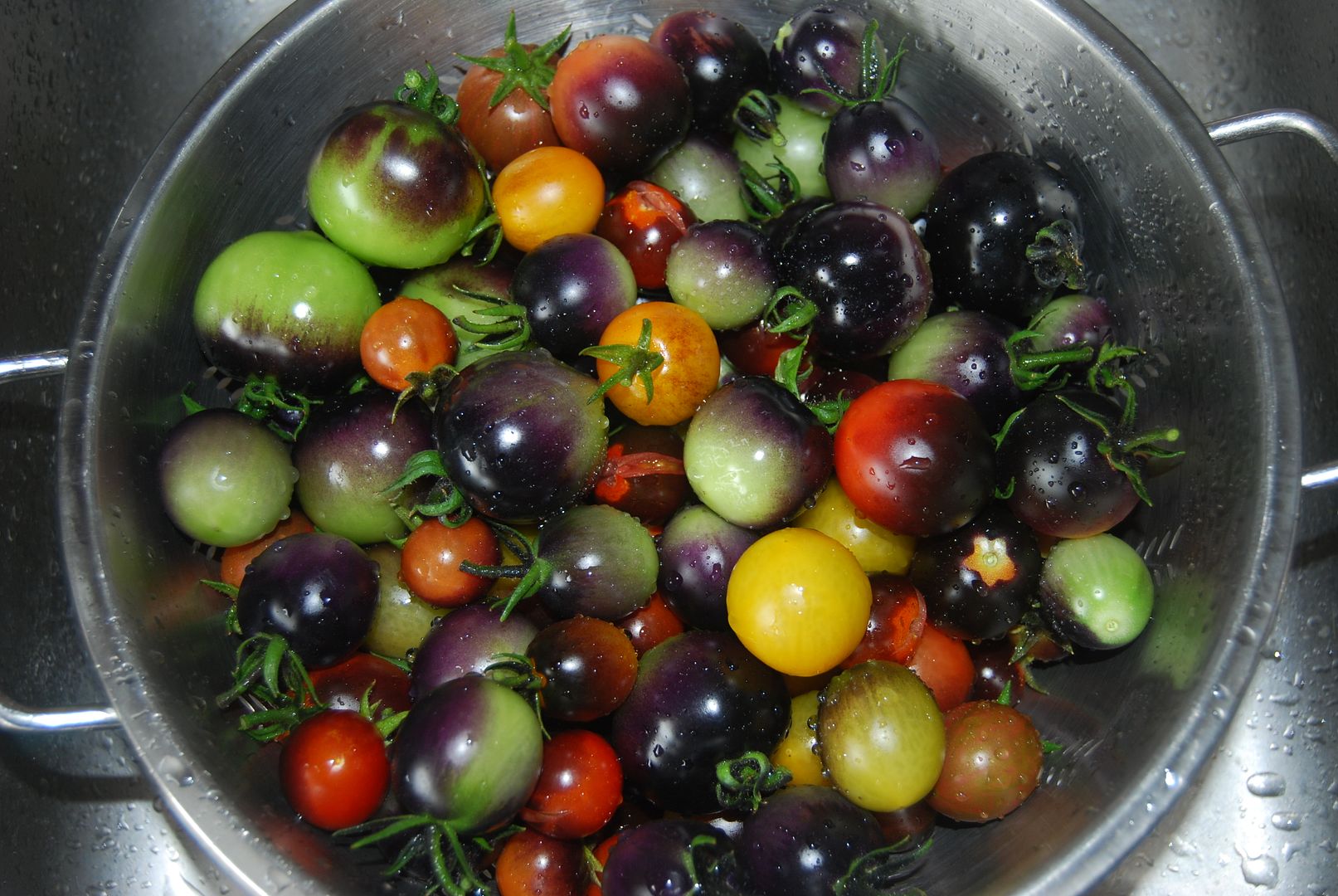
We’ve been graced with some amazing tomatoes through our friend Alice at Log House Plants; these are Might ‘Mato grafted varieties and they are simply stunning in taste, appearance and yield. Trust me when I say get you some!

We’refeaturing several recipes that take advantage of these lovely things; here’s a savory, sweet to-die-for tart, if we do say so ourselves!

For the Tart:
2 cups Flour
1/2 tsp. Salt
1/4 tsp. Sugar
12 Tbs. Unsalted Butter, well chilled & cut into 1/2″ cubes
6 to 8 Tbs. Ice Water

Combine flour, salt and sugar thoroughly.

With your fingertips, blend the butter into the flour mix until its has the even consistency of coarse corn meal.

Add water a tablespoon at a time and mix gently with your hands. Continue until the dough is thoroughly blended and moist but not sticky; STOP messing with it as soon as it gets to that stage.

Flatten the dough out into a disk about 6″ round, then cover with plastic wrap and refrigerate for at least 1 hour, (And up to overnight).

Roll the dough out to roughly 16″ round and about 1/8″ thick.

Carefully transfer the dough to a parchment-lined 12″ tart pan. Double back the rim to about 3/4″ high and trim away any excess, (Roll the excess back out, sprinkle with a little sea salt, garlic, pepper and hard cheese for a lovely little amuse bouché)

Stick the pan back into the fridge for at least 30 minutes.

Preheat oven to 425 F.

Remove the crust from fridge, fill with marbles or dry beans and blind bake for 15 minutes. Remove from oven, remove marbles/beans and get ready to fill ‘er up.

For the Caramelized Onions:
Slice a medium sweet onion into 1/4″ rounds.

In a large sauté pan, add 2 tablespoons each of extra virgin olive oil and butter over medium heat. Toss in onions, add salt and pepper to taste, reduce heat to medium low and Caramelized onions until golden brown and soft. Turn heat to high, briefly allow pan to heat through. Add two Tablespoons of Sherry, flame and allow the alcohol to burn off. Set onions aside in a non reactive bowl.

For the Tomatoes:
Add 1 fresh Tablespoon of butter and olive oil to sauté pan over medium low heat.

Slice about 24 small cherry or varietal tomatoes in half.

Mince two cloves of garlic.

Toss garlic and into pan and allow to caramelize slightly. Add tomatoes, blend with garlic for about 2 minutes. As soon as you see the tomatoes showing signs of getting soft, remove from heat, drain excess oil and set aside.

Set oven to 375 F.

Layer onions evenly over tart, then add an even layer of tomatoes.

Set oven racks at lower and upper third positions.

Bake tart for 15 minutes on lower rack, then spin 180 degrees and bake another 15 minutes on top rack.

Remove from heat and allow to rest for 10 minutes before serving.

Garnish with creme freche or Crema and fresh cilantro.

Be sure to pop over to this post for some truly wonderful Green Tomato Chuntney!

Lovely Variation:
Replace the lightly sautéed garlic with oven roasted garlic; gives a sweeter, deeper and more complex garlic note to the dish.

Preheat oven to 400°F.

Peel away the outer layers from a whole bulb of garlic bulb skin, (leave individual cloves skins intact). Do as many as you like this way – 1 large clove is enough for this tart.

Slice about 1/4″ off the top of the cloves.

Set garlic head up in a garlic roaster, (you can use a muffin tin if you don’t have a roaster; just cover each head with aluminum foil before roasting). Drizzle a bit of extra virgin olive oil over the top, then rub it in to the whole head by hand.

Bake at 400°F for 30-35 minutes, or until the cloves tops are caramel colored and feel soft to the touch.

Remove from oven and set to cool on a wire rack. When they’re cool enough to handle, you can grab a clove and squish the roasted garlic right out. Do that into a with as many as you like for your tart.

Spread the roasted garlic onto the tart crust prior to layering on the onions.

E & M

Green Tomato Chutney


I remember with great fondness making Chutney in the fall with my mom. Hers was a sweeter recipe, with very little bite. I love the stuff, but what really floats my boat are the layers of flavor and the interplay between savory and sweet, and the cold of the sauce versus the spiritual heat of good chiles.

This recipe has amazing depth, great balance and a delightful, subtle back-of-the-mouth heat. It’s simple to make and absolutely delightful with chicken, pork, and rice dishes. It also helps solve the problem of what to do with too many tomatoes, especially if you get caught with a bunch of green ones at the end of the season.

 photo null_zps7d6b7223.jpg

2 Cups Green Tomatoes, chopped and firmly packed
1 Cup Apple, rough chopped and well packed
1/2 Cup Brown Sugar
1/2 Cup Sweet Onion, chopped
1/4 Cup Apple Cider Vinegar
Rind of a small Lemon & Lime, fine grated
Juice of Lemon & Lime
2 Jalapeño Chiles, field stripped & diced
2 medium cloves Garlic, minced
1/2 teaspoon Sea Salt
1/2 teaspoon Coriander Seed, ground
1/4 teaspoon Cinnamon, ground
1/4 teaspoon Clove, ground

You may sub 1/2 teaspoon of dried red chile such as Tabasco or Cayenne if you prefer – If you do, add 1 diced small Green Bell Pepper to the mix.

If you buy whole spices as we do, combine salt, coriander, cinnamon and clove in a spice grinder and process until finely ground.

In a non-reactive saucepan over medium-high heat, combine all the ingredients and bring to a boil.

Reduce heat until mixture is just simmering.

Allow Chutney to simmer, uncovered, for about 45 minutes, stirring regularly, until the sauce thickens and absorbs pretty much all free moisture.

Remove from heat, pour into a glass bowl and allow to cool completely.

Refrigerate in an airtight glass container for up to 45 days.

Yields about 1.5 pints.

Can be done in volume and water bath canned for longer storage;
See this article at the NCHFP for more information.

Enjoy!

E & M

Tip Top Tri Tip


Ahhhh, yes, the noble Tri Tip cut!

Until Gundy told me, I’d didn’t know this was a west coast cut, I thought everybody was in on the fun! The tri-tip is a small triangular cut from down by the sirloin, usually about a pound to maybe three in size. It’s a very flavorful, lean and relatively cheap cut that deserves your attention. If its not readily available, approach your local butcher and ask them to cut you a couple.

Tri tip was relegated to mostly becoming burger or maybe cut into steaks when a California butcher decided to share the love with his customers. Lightly rubbed and grilled low and slow, sometimes on a rotisserie, the meat is slices thin across the grain and served nice and hot.

The real beauty of this cut is its versatility though; it’s a great choice for a grill night followed by a couple wonderful leftover meals.

Throw our basic beef rub on about thirty minutes before grilling for starters:
2 Tablespoons Sea Salt
2 Tablespoons Pepper Blend
1 teaspoon Onion powder
1 teaspoon granulated Garlic

Toss the tip onto the grill and go low and slow. Shoot for a 225 F to 250 F grill temp, and cook the roast with a single flip until you reach an internal temp of 145 F to 150 F; an internal probe thermometer such as you’ve seen us use here a bunch will be a big help.

Remove from the grill and allow to rest a full five minutes, then cut about 1/2″ slices across the grain and serve it up. You can do the traditional fare with this, but one of the best treatments I know is to provide everybody a nice, fresh crusty roll, and set out lettuce, onion, tomato, cilantro, sweet peppers, pickles, mustard, mayo and horseradish and let everyone make a big, hot, sloppy sandwich – Heaven!

And here’s the best part; the next day, the sky is the limit on great follow up fair. Cube up the remainder, toss it in a medium sauté pan and heat through with lime juice, garlic, cilantro and a little beer and you’ve got killer taco meat, or maybe go whole hog and make chili; it’s incredible!

Tri tip will soak up marinades like nobody’s business, so try something new for the next round.
Pop over to this Al Carbon recipe and do that up – your dinner crowd will give you a standing O.

Enjoy!

Homemade 4th


What American comfort food is rootsier than a burger? And what holiday is more deserving of a great burger than July 4th? I rest my case…

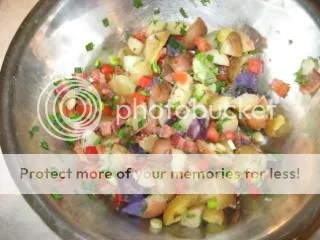
Of course a great burger needs great sides, so I suggest you head out and source some local corn on the cob and second, build a nice, fresh spud salad with olive oil, fresh citrus and vinegar, for a lighter take on potato salad that we’ll amp up with some fresh herbs.

If you’ve ever had a truly amazing burger at a local joint, I’ll bet you 10 to 1 that they either grind their own beef, or have their regular supplier do that for them: Custom ground and seasoned burger, done fresh, is what separates Holy Crud from Ho Hum in Burgerland.

At the market I found nice chuck steaks for $4 a pound, (They were marked ‘For marinating’); that’ll be the heart and soul of our burgers. The relatively high fat content coupled with nice big chunks of meat is gonna be great, but it does need a little help to put it over the top; I went with aged, Choice Tenderloin, which I found for $9 and change a pound, which ain’t bad, (And we’re only buying a half pound so…). I ended up with a mix of roughly 2:1 Chuck to Tenderloin.

I found a really nice medley of red, white, and blue baby potatoes that’ve not only pretty but real tasty.

Back home, I stuck the beef into the freezer for a little bit. Any time you’re grinding meat, making sausage, etc, you want your protein as cold as you can get it; this will help keep the fat in a proper matrix while you work with and, more importantly, cold keeps your food out of the temperature danger zone, thereby avoiding making you and your loved ones sick; always a plus, that, eh?

I set up the grinder attachment on the ol’ KitchenAid, cut the beef up into strips manageable for the hopper and got to seasoning. As with sausage making, you can season ground meat before or after you grind it; I prefer doing so before, because you get a more even distribution of spice as the meat is grinding. For these burgers, I went with Hawaiian flaked salt, fresh ground pepper blend, (Black, red, white, green; our go-to mix), onion powder, celery seed, granulated garlic, smoked paprika, and a dash of Worcestershire. I seasoned with a fairly light hand, because we just want to accent the meat’s great flavor, not blow it out of the water… So into the grinder she goes, using the coarser of the two plates I have available. I gave the freshly ground burger a few tosses to make sure everything was well blended, then covered it and stuck it in the fridge to think about things for a while.

While the burger was incorporating all those flavors, I put the spuds on to boil. Just a note on water; it’s sad to say that not all tap water is created equally these days, (Especially coming from a kid who grew up drinking from streams and lakes and even garden hoses!) My bottom line on cooking with stuff is simple; if it does not look, taste, feel and smell right, do not cook with it! The concept of taking, say, a nasty bottle of wine and cooking with it because it wasn’t good enough to drink also applies to a thing as elemental as water. If yours doesn’t taste good to drink, do what we did and get a decent filter for your kitchen tap; from home brewed coffee to things you boil for dinner, everything will taste better.

A trip out to the herb garden offered Garlic Chives and Cilantro, to which I added fine diced green onion, red bell pepper, and fresh tomato: All that, plus a few pieces of local Apple smoked bacon will go into our spud salad.

For the salad dressing, I squeezed the juice from one lime and one lemon, and then added a couple tablespoons of grapefruit juice; I whisked some nice extra virgin olive oil into that at a roughly 2:1 ratio, added a dash of sal de mere, fresh ground pepper, and celery seed, and there you have it. I quartered the spuds, put everything into a stainless bowl to mix and then into a ceramic bowl, covered in the fridge, for a good hour to allow everything to blend: As M rightly points out, stuff like this salad are gonna be great tonight but much better tomorrow; like good soup or stew, salads marrying a bunch of wonderful flavors are gonna be at their prime about 24 hours later…

For the burgers, I formed thin, wide patties, then cut up some of my stash of 2 year old WSU Creamery White Gold Cheddar and placed a nice layer of that in the middle of one patty, (use whatever cheese most floats your boat.) Then we assemble; a layer of burger, then cheese, then burger, seal and plump up the edges of each so we have a nice round patty of uniform thickness throughout. I let them hang in the fridge for 30 minutes or so to marry flavors further.

The burgers hit the grill over nicely glowing coals for about 4 minutes each side, with the cover on and vents wide open. I put the buns in a warm oven with a little dish of water to get nice, moist heat going. Finally, I sliced onion, tomato and pulled some lettuce leaves. M got condiments out and we were good to go.

At the point that she turned to me, burger in hand, with that serious knit-brow look and said, “This is, without a doubt, the best burger you’ve ever made; seriously…” I considered my mission a success… pair yours up with great local beer, and a Happy 4th to one and all!

BONUS: Here’s a link to another variation on the home ground burger, as well as our recipe fore house made buns!

Pesto über alles


Pesto – Say it and you get a love it or hate it reaction not dissimilar to oysters. The naysayers assumptions are that pesto is overbearing and hard to make, neither of which is true. Fact is, pesto is much more than you think it is and ridiculously simple to make. Let’s dig in.

OK, so classic pesto, the basil driven version, is in fact a delight and super simple to make. The potential variety is as broad as the options for the basil you grow. From Genovese to Holy, blue to Thai, the variety is broad indeed – African Blue, Purple, Red Rubin, Spicy Globe, Lemon, Lime, and Cinnamon all are readily available and truly speak to their names in taste and appearance. If you make identical batches changing just the variety of basil, each one will be completely distinct, and that’s just messing with the basil.

Toast the pine nuts, or don’t. Switch pine nuts for sunflower seeds, almonds, peanuts, Spanish peanuts, cashews, or brazil nuts and again, each and every one is completely unique.

Change garlic for sweet onion, red onion, shallot, or chive – Same deal.

Switch Romano to Parmiagano Regianno, Asiago, or Mizithra and again, totally new worlds.

So, here’s the basic:

Classic Pesto
1 Cup fresh basil leaves
1/4 cup freshly grated Pecorino Romano cheese
1-2 cloves garlic
2 Tablespoons pine nuts
1/3 cup extra-virgin olive oil
Sea salt and freshly ground pepper to taste

Combine basil, garlic, and pine nuts in a food processor or blender and pulse until coarsely chopped.

Now, with the processor or blender running, add a thin, steady stream of oil to the mix and continue until you reach the consistency you like – ‘Pesto’ is paste, so you can go from runny to stiff, as you see fit. Finally, add salt and pepper sparingly, to taste.

If you’re eating it now, chuck everything into a mixing bowl, add the cheese and combine thoroughly by hand.

If you want to freeze your stuff to use later, which you sure can do, then leave the cheese out, put the pesto into an air tight container, drizzle a bit more oil onto the top and you’re good to go for at least a couple months. Just thaw, add the cheese and you’re there. Consider putting pesto into ice cube trays for the freeze; just pop out however many you need and off you go.

What to do if, regardless of variety, basil just don’t float yer boat? No worries; again, ‘pesto’ is just a paste, and you can make it with a bunch of alternatives – Here’s a few to getcha started.

Use parsley instead of basil, (Preferably home grown!) and walnuts instead of pine nuts, (Cheaper if nothing else) and you’ve got yet another new world to explore.

This is one of our personal faves; sub Cilantro for basil, pistachios for the pine nuts, and Queso Fresco for the Pecorino. Try it, you’ll like it.

Wanna try the Greek version? Sub Myzithra for the cheese and walnuts for pine.

Got the idea? I knew ya would – Here’s a raft of others for you to explore. All the procedures are the same as for the basic recipe.

Sub spinach for the basil, with any nut and cheese combo you like.

For a Great Northwet variation, try this.
1/2 cup fresh sage leaves
1 1/2 cups fresh parsley leaves
1/2 cup Hazelnuts
1/2 cup Parmiagano Regianno
1/2 cup Extra Virgin Olive Oil
2-3 Cloves Garlic
Sea salt and freshly ground pepper to taste

Finally, here’s a great Thyme variant.
2/3 cups parsley, chopped
1 tablespoon fresh lemon or lime thyme
1/4 cup pine nuts
1/4 to 1/3 Cup Extra Virgin Olive Oil
1 Tablespoon grated lemon peel
1 Tablespoon lemon juice
Sea Salt and Fresh Ground Pepper to taste

There’s enough to get y’all started; beyond that, you’re on your own, but share the good ones, OK?