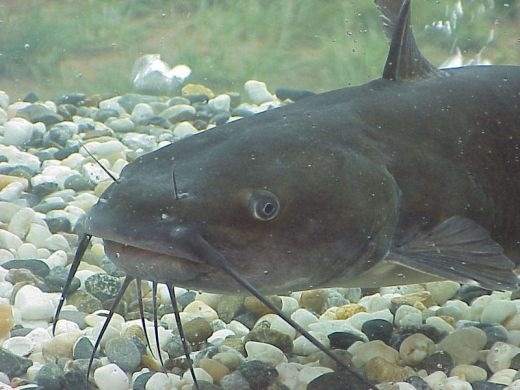
Catfish? yeah, catfish!


I’m a goin’ fishin’…

Catfish kinda piss me off fishing-wise. I’ll do the bobber thing and all, but when those big suckers hit, they just kinda tug, ya know? I’d like a little more action, personally. That’s probably because once, and once only when fishing for bass, one hit my fly and took me for a ride that was better than the large mouth I was after. He was 6 pounds and fought like a real cat – why can’t they all do that?

Anyway catfish is one of those things people either like or they don’t, like oysters or single malt scotch. I think it’s the gamy flavor that does it. There’s not a lot about the fundamentals of that taste you can alter, because they’re bottom feeders, and as such, wild or farmed, they taste like they do. Here are a couple recipes, one for purists, and one for the not-so-sure.

Love Catfish? Then this ones for you. All too often, catfish is overloaded with breading and heavy flavors that disguise the fish. Strip all that away and try this; the butter poach, fresh citrus and light herbs will complement rather than cover.

4 Catfish fillets
1 fresh Lemon
3 Tablespoons Butter
1 Tablespoon dry white Wine
1/2 teaspoon Sea Salt
A few twists fresh ground Pepper
A shake or two Tabasco Sauce

Preheat oven to 200° F

Heat a cast iron skillet large enough to handle all 4 fillets over medium flame.

Cut lemon in half, then cut half into 1/8 pieces for the table. Zest and juice the other half and set aside.

Melt butter in skillet; watch the butter closely. As soon as it finishes foaming, put the fillets into the pan.

Tilt the pan enough to make the butter pool; with a spoon, ladle hot butter over the fillets repeatedly, as the butter begins to brown. Continue ladling evenly over all the fillets until the butter is quite brown, but don’t let it start to burn. This poaching process will take about 4-5 minutes.

Transfer the fillets to an ovenproof platter and slip that into the oven. Turn the oven off and keep the door closed.

Return the skillet to a medium-low flame. Add the white wine, lemon zest and juice, salt, pepper, and. Tabasco. Whisk with a fork to incorporate. When all is well blended, add one more tablespoon butter, blend that and heat through, then remove the skillet from the heat.

Serve a fillet or two each, as you see fit. Drizzle each fillet with the pan sauce. Serve promptly with some more of that dry white wine, fresh crusty bread, and a nice green salad.


Not so sure you love catfish? Try this zippy cornmeal fried version. Between the buttermilk soak, crunchy light coating and the house made rémoulade, you’ll be hooked for sure.

4 Catfish fillets
1/2 Cup fine ground Yellow Cornmeal
1/2 Cup Wondra Flour
1-2 teaspoons flaked Tabasco Chile, (crushed cayenne chile is OK, but not as fruity)
1 teaspoon sweet smoked Paprika
1 teaspoon Sea Salt
1/2 teaspoon freshly ground Pepper
2-3 Cups Vegetable oil for frying
1 fresh Lemon

Place oil in a 10″ to 12″ cast iron skillet over medium-high heat, with a candy or heat-proof thermometer handy.

Preheat oven to 200° F; fit a wire cooling rack within a baking sheet lined with paper towels and have that ready beside your skillet.

In a mixing bowl, add the cornmeal, flour, chile, paprika, salt, and pepper in a shallow dish and combine thoroughly.

Cut fillets in half lengthwise, so you’ve got 8 pieces total. Pat each half fillet dry with a clean paper towel.

Toss each fillet one by one into the coating mix, making sure they’re evenly and thoroughly covered. Tap each fillet off on the edge of the bowl to remove excess coating.

Check your oil temp; when you’ve got 350° F, adjust your heat to maintain that.

Fry fillets in twos, so that the oil doesn’t lose temperature to too much fish being introduced. Fry each side for about 2-3 minutes until golden brown, flipping once.

Use a slotted spoon or tongs to transfer finished fillets to the wire rack. Sprinkle each lightly with a but more sea salt. Place in the oven to stay hot until all your fillets are done.

Serve piping hot with lemon wedges, rémoulade, and a cold, local Extra Special Bitter Ale.


House Made Rémoulade

Rémoulade is, at heart, a mayonnaise with more goodies added to the mix. This classic sauce was created in France, but it’s been adopted and adapted to New Orleans cookery in many forms. Our take has a little sweet and a little heat and goes perfectly with cornmeal crusted catfish. If you’ve never made rémoulade at home, it’s time to try; it’s one of those little secrets that separates the pros from the wanna bees, and it’s really pretty easy to do. Here’s how.

PRODUCTION NOTES:
1. Get the freshest eggs you can when making mayo or rémoulade at home. This is an emulsion, which depends on the ability of the proteins in the egg yolks to stretch and encompass the oil; old eggs just don’t have the elasticity you need for this dish.
2. Have all your ingredients at room temperature before you start; that’ll allow the primary ingredients of this emulsion to mesh readily.
3. While you can make mayo or rémoulade with olive oil, the stronger flavor isn’t always complimentary; a light vegetable oil like canola will better allow the herbs and spices to shine in this recipe.

1 Cup Vegetable Oil
2 fresh, large Egg Yolks
1 tablespoon Dijon Mustard
1 fresh Lemon
1 teaspoon Tabasco Sauce
1 Jalapeño Chile
1 small sweet Onion
2 teaspoons Capers
1/4 teaspoon Sea Salt
1/4 teaspoon freshly ground Grains of Paradise

Zest and juice one half of the lemon.

Top, core, seed, and mince the jalapeño.

Mince 1 packed tablespoon of the onion.

Mince the capers.

Those ingredients can all be combine and set aside at this point.

In a non-reactive mixing bowl, combine the egg yolks and the Dijon mustard; whisk to incorporate thoroughly.

Continue whisking and slowly add the oil by pouring a very thin stream into the middle of the yolk and mustard blend. Watch the mixture, and pour slowly enough that the oil is constantly fusing with the yolk and mustard blend. Those proteins in the egg yolk, uncoiled by your whisking, are wrapping around air bubbles and the oil, allowing all of that to blend and remain combined. You’ll progress from a little yolk and mustard to a thicker, deeper pool of liquid with that mayo consistency you know so well.

Once all of the oil has been incorporated, whisk in the lemon juice and zest, Tabasco, salt and grains of paradise, until thoroughly combined.

Add the onion, jalapeño, and capers and blend thoroughly. Taste and adjust the seasoning with additional salt and grains of paradise as needed.
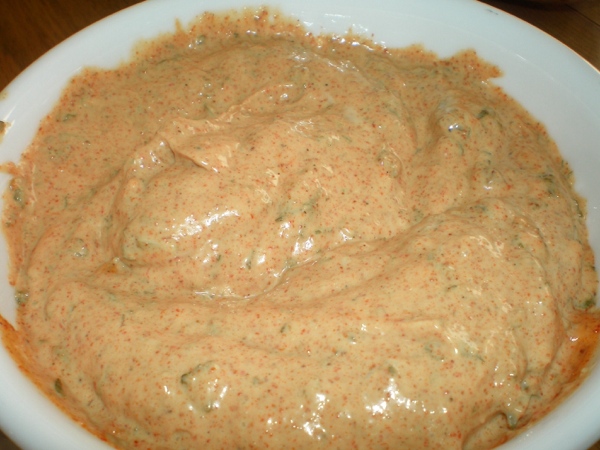
Transfer the rémoulade to an airtight container and refrigerate for at least an hour to allow the flavors to marry. Rémoulade will keep refrigerated in that airtight container for 2 or 3 days.

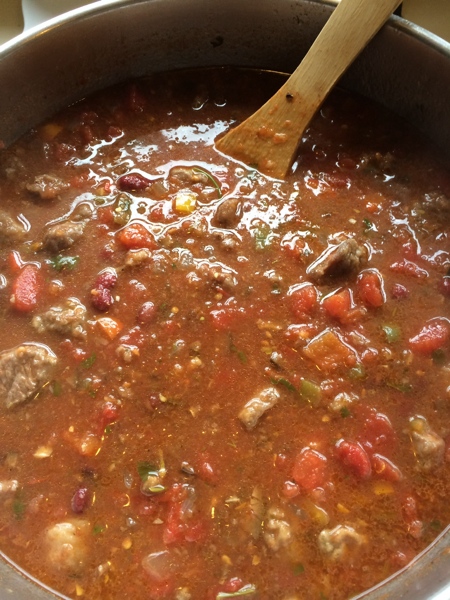
Tomato Time


We’re up in northern Minnesota for a gathering of the Luthier Community, and the heirloom tomatoes at Grant and Christie’s, some 25 varieties, are coming ripe every day. I’ve been in hog heaven cooking for the gang, let me tell you.

Here’s a post over on Big wild Food for you to play with.

E & M

Urban Chili


Ask the question, “What is Chili,” and you might has well have asked, “Is Tex-Mex a real cuisine?” You’re in for an earful either way.

Chili con carne is essentially a stew containing chili peppers and meat, usually beef. The Spanish word chile stems from the Nahuatl language and refers to those glorious fruits of the genus Capsicum, family Solanaceae. Carne is Spanish for meat, of course, and there you have it. The original recipe was basically Tex Mex pemmican, a blend of dried beef, suet, dried chili peppers and salt, pounded together, formed into bricks and left to dry; out on the trail, you’d just add water and boil up a pot of the real deal.

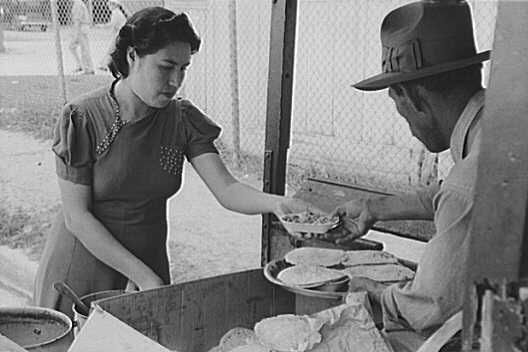
In 1893, at the Columbian Exposition in Chicago, The San Antonio Chili Stand gave a bunch of Americans their first taste of chili. The passion spread like wildfire and Texas-style chili subsequently conquered the Southwest. In 1977, Concurrent Resolution Number 18 of the 65th Texas Legislature made Chili con carne the official Texas state dish.

Chili has migrated in every direction since and changed according to whim and region. Even in Texas there are folks who add, (Gasp! Blasphemer!), tomatoes and even beans to their recipe. Other common seasonings include garlic, onions, and cumin. The variations are endless and it’s a guarantee that any and all of them provoke heated debate among aficionados as to what, if anything other than their tried and true variant, is actually chili. If you want to really see culinary sparks fly, go to a chili cook off, anywhere, and just taste and watch…

All that venerable history aside, I am a damn Yankee. My first taste of chili was fairly true to its roots, courtesy of the Mountain Pass Canning Company, who bought and greatly expanded the Old El Paso brand, the first company to offer a full line of Mexican cuisine in the US. That was the gateway; fifty years later, here’s where I’ve taken it. This is a bean and vegetable chili, because that’s how I like it. You can omit any veggie or bean in it that offends your righteous sense of chiliist tendency, and it’ll still be good; not as good as mine, but good.

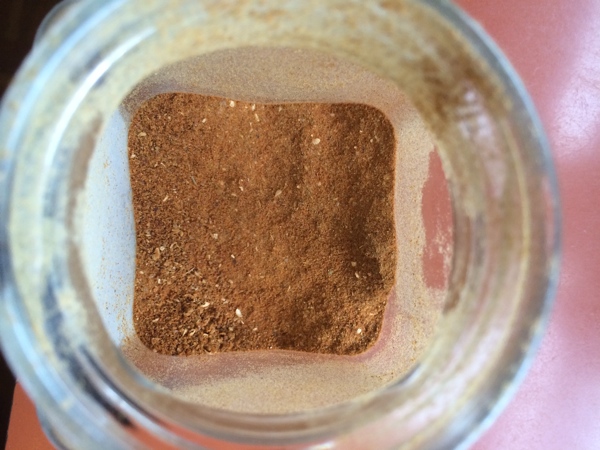
The key to chili seasoning is, of course, chili powder. Store bought, even if it’s ‘gourmet’ is more often than not crap, in my not even close to humble opinion. The key to great chili powder is to use only freshly blended, house made chili powder from top notch ingredients. Below you’ll find my preferred formulation. I suggest you try this first in a small batch and see how you like it; then tweak it as you prefer, put your name on it, and share it with your pals. The first and most important decision to make here is what chiles to use; the heat factor and major flavor note of your chili powder will be determined by that. I use our home grown and preserved chipotles for our powder; this gives a nice fruity, smoky flavor that I like a lot. Changing just this aspect of your homemade powder will make major differences in your final product. Chiles and Cumin are an absolute necessity, as is some amount of Mexican Oregano, the rest is up to your imagination; have fun with it.

Urb’s House Made Chili Powder
3 Tablespoons ground Chiles of your choice
1 teaspoon ground Cumin
1 teaspoon Smoked Sweet Paprika
½ teaspoon ground Mexican Oregano
½ teaspoon ground Garlic

Combine all ingredients in a spice grinder and process until you’ve achieved a uniform, smooth powdered texture. Store in an air tight container for up to 2 or 3 months.

Alright, on to the chili; what I hope you’ll find is some steps that maybe are new to you, overall or for this recipe. It may seem a bit labor intensive, but i think you’ll find it pays off in terms of the surprising depth of flavor you’ll achieve.

1 to 1.5 Pounds Beef, (I like Sirloin for mine)
2 28 Ounce cans RoTel Diced Tomatoes & Green Chiles
1 15 Ounce can Black Beans
1 15 Ounce can Dark Red Kidney Beans
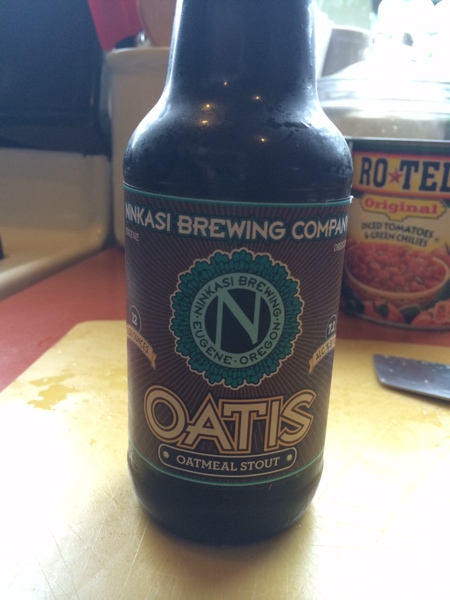
1 12 Ounce bottle Dark Ale, (Porter or Stout)
2-5 Jalapeño Chiles
4-5 miniature Sweet Peppers, (Vary the colors, because it looks nice and that matters)
1 small Sweet Onion
12-16 large Black Olives
6-10 sprigs fresh Cilantro
1 fresh Lemon
1-2 Tablespoons House Made Chili Powder, (See above)
1/2 Cup Wondra Flour for coating
Vegetable Oil for sautéing
1.5 Ounces Dry Sherry
2 Bay Leaves
Sea Salt
Fresh Ground Pepper

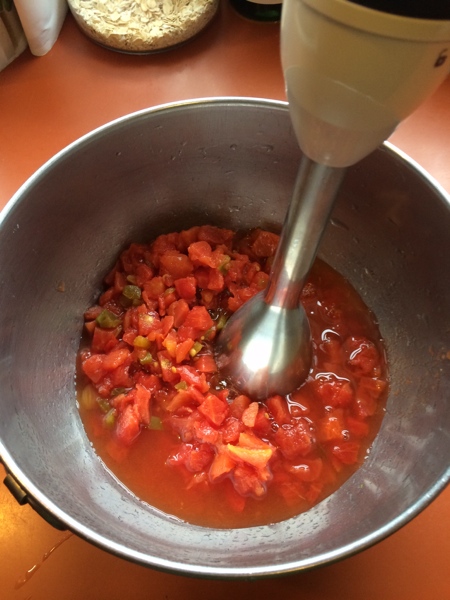
Empty the tomato and chile blend into a large mixing bowl and process to a smooth consistency.

Pour the stout or Porter into the pot. Let it simmer and foam until the raw alcohol smell has burned off.

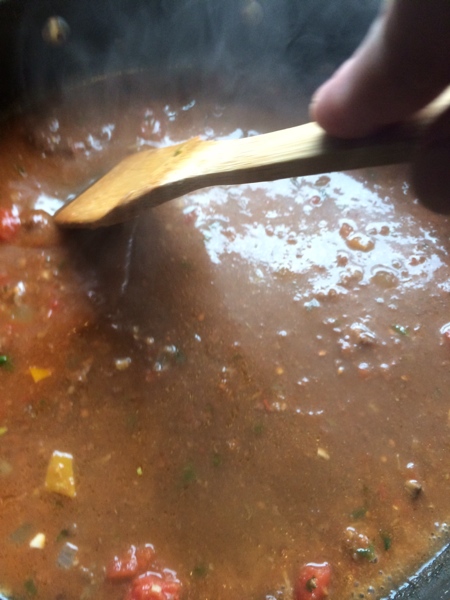
Reduce the heat to medium low, then toss the tomato chile sauce in with the beer.

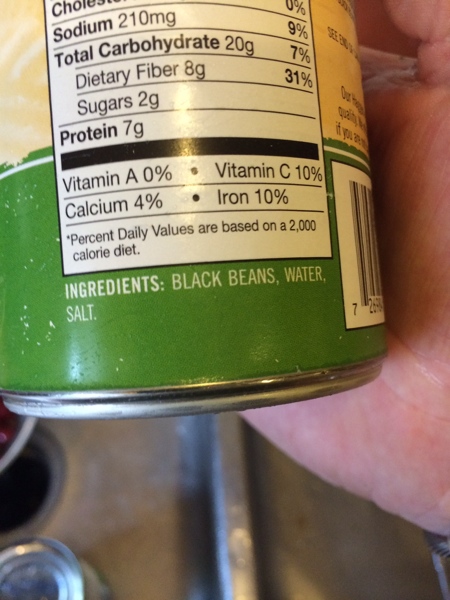
Empty the beans into a single mesh strainer and rinse thoroughly, then add them to the pot. And by the way, do you read the ingredients on the cans you buy? Do so. As you can see here, there’s nothing weird in here, but it’s nice to be sure, and nicer yet to rinse and just deal with the ingredient in question, yes?

Rinse all veggies. Skin and top onion; top and deseed and vein the chiles and peppers, (If you really like your chili hot, leave the seeds and membranes on the jalapeños). Cut all those veggies into a uniform fine dice, as well as the olives.

Skin, tip, and mince garlic. Chiffonade the cilantro. Zest the lemon, cut it in half, juice both halves and set the juice aside.

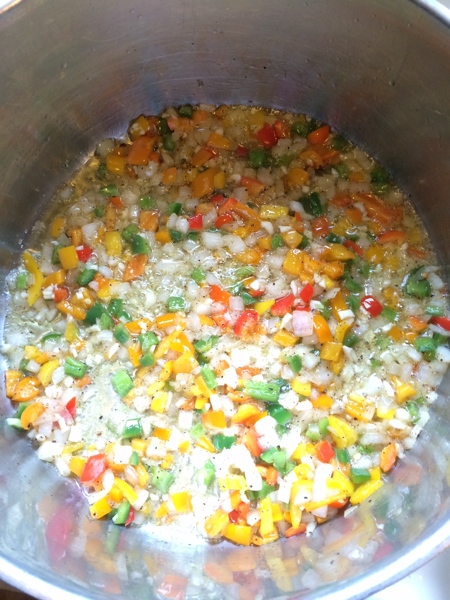
Place a large skillet over medium high heat with a tablespoon of oil therein and allow the oil to heat until it shimmers. We’re going to build a variant of a sofrito. Not to be confused with the Italian Soffritto, this South American/Mexican/Caribbean aromatic base consists of, in this case, the onion, jalapeño, sweet peppers, garlic, and bay leaves.

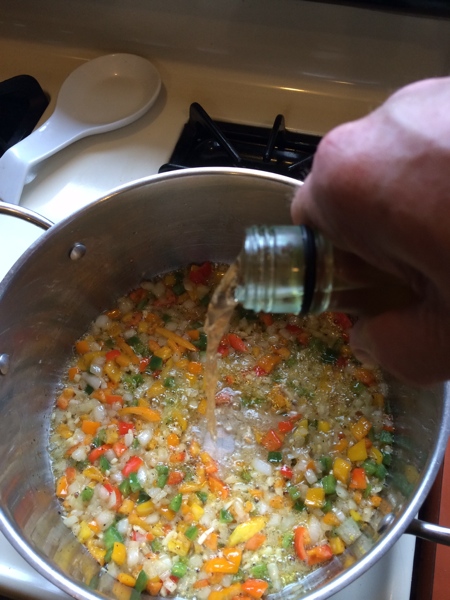
Toss the onion, jalapeños, and sweet peppers into the heated skillet and sauté until the onions begin to look translucent. Add the garlic and continue to sauté. When the garlic has lost its raw smell, add the sherry and stir steadily. The sherry will deglaze the pan, and combine with the oil and notably thicken; once that happens, toss the sauteéd veggie blend into the pot.

Cut the beef into roughly 1/2″ cubes. Place Wondra into a large ziplock bag. Add the beef and shake until all the flour evenly coats the beef.

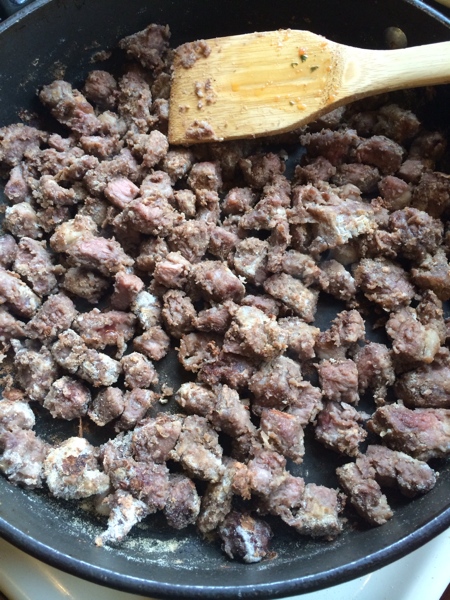
Place the beef into the skillet, evenly spaced so all your chunks have direct contact with the heated surface. What you’re going to do now is critical to the flavor and thickness of great chili. You’re going to sear that beef, and that means truly sear, not just brown. If this goes as it should, almost no fat or juice will render out of the beef; all that flavor is retained and gets transferred to your chili. You need to allow at least 5 minutes for each side, and maybe even up to 7 or 8. Let it cook for as long as it takes for a truly dark brown, crisp crust to form, then turn all the pieces and start work on a new side. Work the beef until each and every side has developed a nice, deep brown crust, then toss it into the pot.

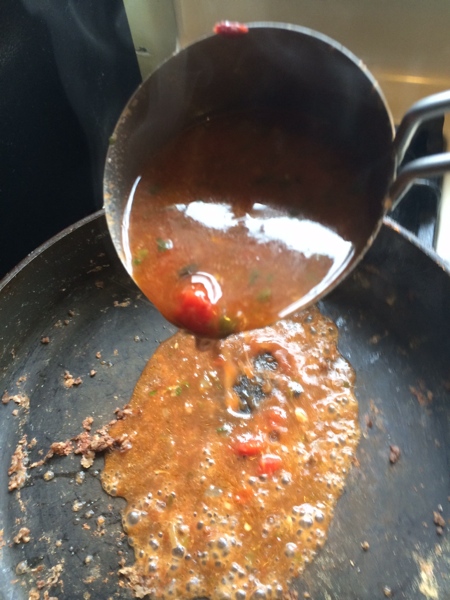
Now grab a ladle full of the tomato/chile/beer blend and toss that into the hot pan the beef was cooked in. It’s gonna sputter and his a bit, so keep on your toes. Deglaze the pan with the mix, scraping up all that good stuff left behind by the beef cooking. Once it’s all incorporated, pour it into the chili pot.

And finally, it’s top off the seasonings time; start with the cilantro, lemon rind and juice. After stirring that well into the chili, it’s time for chili powder. Use 1 tablespoon first, let that blend for about 30 minutes, and see how that strikes you; add more if you like. Adjust salt and pepper as desired.

And then it’s time to simmer. Turn the heat down to low and let ‘er go. I like to leave the pot uncovered, but that’s me. You can cover or not as you see fit. Take a look and have a taste, and give a stir every hour or so. I call 4 hours the absolute minimum, and 6 to 8 far better. Built like this, the depth, breadth, and intensity of flavors is truly spectacular.

Serve it with house made cornbread, extra cheese, jalapeños, onions, cilantro, and sour cream. Ice cold beer goes great too, especially the lighter stuff like a nice pilsner or lager.

Then just wait until tomorrow, because it gets even better.


Corn, by any other name


Far and away, the questions I hear most often when it comes to cooking with milled corn products are these;

‘What’s the difference between corn meal and corn flour’,
‘Can I make the same recipe with either,’
‘What’s the difference between corn meal and grits, or polenta,’
‘What’s the difference between white and yellow corn meal or flour,’
‘What’s the difference between corn flour and Masa?’

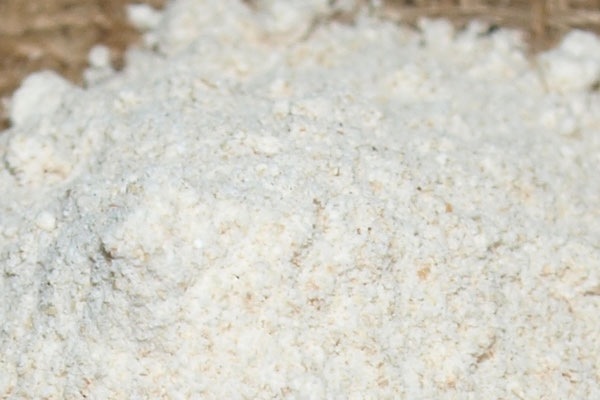
The answer to the first is, the degree of milling – meal is coarser than flour, and to further confuse things, there is quite a bit of variety of meals out there. Steel ground yellow cornmeal, probably the most common variant found in the U.S., has the husk and germ of the corn kernel almost completely removed. As such, it’s kind of the equivalent of bleached, enriched wheat flour; a lot of the stuff that is good for you, along with a chunk of the taste, has been removed. Stone-ground cornmeal retains some of the hull and germ, and as such also has better flavor and nutritional properties. It is more perishable, but will store longer if refrigerated. White cornmeal, made from white corn, and also can be found in steel ground or stone ground variants.

The answer to the second is, technically, I guess you could, but you wouldn’t get the same results, and you probably wouldn’t like one of the variants. Recipes designed for meal want a different texture than those made with flour; think cornbread versus a biscuit, and you get the gist.

The answer to the third is, maybe nothing, but if there is a difference, it’s a pretty fine point of variance in the coarseness of milling. Google the difference between grits and polenta and you’ll see a firestorm of opinion akin to asking ‘What is real chili?’ I have the solution for you; avoid the controversy and go find a bag of Bob’s Red Mill Corn Grits, also know as Polenta. Works great for both; debate over…

The answer to the fourth is, it depends on who you ask. Some will tell you that the only difference between the two is the the color; that may or may not be true, as there is more than one variety used for making the things we eat. In any case, the bottom line is that they are absolutely interchangeable in recipes.

And finally, for question five, corn flour and masa harina are quite different preparations of corn. Masa harina is corn flour that is ground from dried hominy. White, yellow, or blue corn is used for making hominy, also known as posole or pozole. The corn is boiled in a solution containing powdered lime, then washed, dried, and ground to form masa harina. Masa is the only thing to use for making corn tortillas and tamales, far as I’m concerned. Untreated corn flour is basically fine-ground cornmeal. I use it in recipes where I want corn flavor without the gritty texture of corn meal. Corn flour contains no gluten, so makes a good substitute for wheat flours in pan and short bread and cake recipes, though the proportions may need a bit of tweaking to get just right. If you sub corn flour for wheat flour in a rising bread or cake recipe, you need to add vital wheat gluten, since corn has none.

While we’re describing the various things corn is made into, let’s not forget cornstarch. Cornstarch is obtained from the white heart of the corn kernel. It’s a tasteless, fine powder that is very useful as a thickener; it boasts twice the thickening power of wheat or corn flour. It’s best to stir cornstarch into water first before it is added to other foods, so that it can be incorporated without getting lumpy; use enough water to make a loose slurry as opposed to a paste when you mix it. One thing to note if you’re on the other side of the pond; cornstarch is referred to as corn flour in England.

There is a broad assumption that white corn meal is preferred in the South and yellow is preferred in Texas and the rest of the U.S. While that statement certainly was true in the past, it’s not so valid as it used to be. The population base that made that a fact has aged and died, frankly, and the following waves are more likely to experiment, mix, and match.

All your meals, flours, and masa should always be relatively fresh. Stored in a cool, dry place in an airtight container, you can expect around 6 months of use from them.

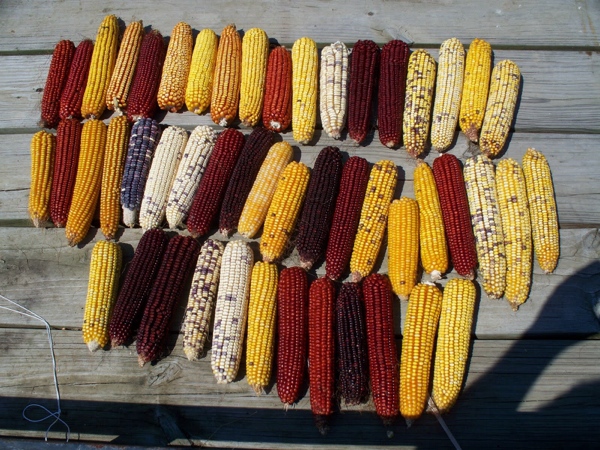
As mentioned above, there are several varieties of corn used for making the stuff we eat and cook with. Here’s a brief primer that will help you get a better grasp on things. This is a fairly rudimentary outline. For many decades, corn in America, like beer and cheese, was reduced to a few basic varieties; that trend has changed radically in the 21st Century. Heirloom varieties have exploded in the last 15 years; this has tumbled out to the folks growing their own, as well as to small cottage industries. As such, varieties have expanded and reemerged in unprecedented numbers. This is most definitely a good thing.

Dent (Zea mays indenata)
Dent or Field corn may be either white or yellow, and is predominantly used for processed foods, industrial products, and as livestock feed often used as livestock feed. No-name, really cheap corn meal or flour may be made from this variety. Dent kernels become notably indented at maturity, hence the name for the variety.

Flint (Zea mays indurata)
Flint or Indian corn is used for similar purposes as dent corn, as well as for decoration come fall. This variety is distinguished by a hard outer shell and kernels with a wide range of colors. When you see blue, red, or white flours, meals, chips and tortillas, you’re looking at flint corn. The variety is named for it’s hard or ‘flinty’ exterior.

Sweet (Zea saccharata or Zea rugosa)
Sweet corn is the variety we eat as corn on the cob. It is also canned and frozen. Seldom used for feed or flour, this variety is named for its higher sugar content, (around 10%, versus maybe 4% for Field corn). THE thing to remember is that roughly half the available sugars in sweet corn degrade notably within 24 hours of picking; if ever there was a thing you wanted to get locally from a good CSA, sweet corn is it.

Flour (Zea mays amylacea)
Flour corn has a soft, starchy kernel that lends itself well to grinding, so it is the primary variety used by companies in the U.S. to make meal and flour. Flour corn is primarily white, although it can be grown in other colors, including yellow, red, and blue. One of the oldest varieties, flour corn was grown by Native Americans before the rest of us showed up here.

Popcorn (Zea mays everta)
Popcorn is a variant of flint corn, with a soft starchy center surrounded by a very hard exterior shell. When heated, the natural moisture inside the kernel quickly turns to steam and builds up enough pressure for the kernel to explode, exposing the white starchy mass we like to graze on. All types of corn will pop to some degree, but they won’t necessarily have enough starch to turn inside out, or an outside layer that will create enough pressure to explode. One of the oldest forms of corn, evidence of popcorn over 5,500 hundred years old has been found in New Mexico.

OK, so enough learnin’, lets talk about what you should have in your pantry if you want to build corn recipes. The bottom line is that corn flours and meals are cheap and readily available, so you should aim for stocking the same stuff I do. Remember that quality counts; opt for fresh and local whenever you can and you’ll never go wrong. I stock white corn flour, masa, and white and yellow corn meal, and grits/polenta.

Alright, now we’re ready to cook. Here’re my go-to recipes for corn bread, tortillas, grits, and polenta.

Urb’s Corn Bread
1 1/2 Cups Yellow Corn Meal
1/2 Cup Corn Flour
2 teaspoons Baking Powder
1 Cup Whole Milk (or, in order of rising decadence, Half & Half or Buttermilk)
1 Egg
4 Tablespoons Lard (Unsalted Butter is fine)
1/2 teaspoon Sea Salt

Optional Additions:
Add 1/2 Cup extra sharp Cheddar or Pepper Jack cheese.
Add 1 – 3 seeded, cored and diced Jalapeño chiles.
1 ear of corn on the cob, cut down to kernels

Preheat oven to 400° F

Pour cornmeal into a bowl and add the milk; mix well and allow to sit for 15 minutes. This is a biggy in terms of making moist cornbread.

Mix remaining dry ingredients in a large bowl.

Melt the fat, then combine all ingredients and mix by hand to a nice, even batter consistency.

Place the pan(s) you’ll do the bread in into the oven, with a small dot of fat in each pan, (Or a tablespoon full if using a single pan).

When the fat is melted and sizzling, remove the pan, pour in the batter and return to the oven.

Bake for 20 to 25 minutes, until golden brown.

Serve Hot with, as Julia Child would say, ‘lots and lots of butter!’

Corn Tortillas
2 Cups Masa Harina
1.25 to 1.50 Cups hot Water

In a mixing bowl, combine the Masa and water by hand and blend until you get a nice, consistent dough that does not stick to your hands. You don’t want the dough too dry, either; shoot for a dough that holds together, isn’t sticky, but feels moist to the hand.

Roll the dough into 12 equal balls and allow to sit for about 10 minutes.

Whether you use a pin or a press, cut a gallon plastic storage bag into two equal sheets and place a ball of dough between them, then press or roll to roughly 6″ around.

In your pan or comal over medium high heat, cook the tortillas until you see that nice brown blistering form on each side. Each side will get 30 to 60 seconds of cooking time.

Stack your finished wrapped tortillas on a warmed plate under a clean towel to keep them warm.

Grits
1/2 Cup Bob’s Red Mill Grits
1/2 Cup whole Milk, (Half & Half, Whole Cream, and Buttermilk all work even better)
1 3/4 Cups Water
3/4 teaspoon Sea Salt
1/2 teaspoon freshly ground Pepper

Options:
1/4 Cup grated Extra Sharp Cheddar Cheese
2 Slices crisp cooked, thick cut bacon, chopped

In a saucepan over medium high heat, combine milk, water, salt, and pepper and bring to a rolling boil.

Shake grits into the center of the pan, stirring constantly to avoid lumps.

As soon as all the grits are incorporated, reduce heat to low and cover. You want your grits to cook at a low simmer, so keep an eye on that and adjust heat as needed.

You’re going to cook your grits for 20 minutes, but set a timer for 5 minutes and stir the grits, (So, you’re going to stir every 5 minutes for a total of 20 minutes).

After 20 minutes, taste your grits; if they’re not tender enough, cook for another 10 minutes, stirring after 5 minutes.

If you’re adding cheese and bacon, you can toss it in for the last 5 minutes of cooking, or offer it at the table with butter.

Leftover Grits?

Spread grits about an inch thick in a glass baking pan or oven proof skillet and refrigerate until firm to the touch.

Cut grits into roughly 4″ squares, season lightly with salt and pepper, then dust both sides with Wondra flour.

Fry in 2 ounces of butter and 1 ounce light vegetable oil, turning once, until golden brown. Served with red eye gravy, this is the bees knees.

Red Eye Gravy (Serves 2)
1/4 Cup Vegetable Oil
1 smoked ham steak, (About 1/2 Pound)
1 1/2 Cups brewed Coffee
1/2 teaspoon Sea Salt
1/4 teaspoon fresh ground Pepper
1-2 shots Tabasco Sauce

In a cast iron skillet over medium high heat, heat oil until shimmering.

Fry ham steak until nicely browned, remove to a warm oven.

Deglaze skillet with the coffee, stirring to incorporate all the juices and little bits of ham stuck to the pan. Season with salt and pepper

Bring liquid up to a high simmer and cook until gravy reduced by 1/3 and nicely coats a spoon.

Serve with grit cake, game and a over medium egg for a true little slice of breakfast heaven.

Basic Polenta
6 Cups Water
2 cups Bob’s Red Mill Corn Polenta
3 Tablespoons Unsalted Butter
1 teaspoon Sea Salt
1/2 teaspoon fresh ground Pepper
1/2 Cup hard Cheese for topping, (Parmesan, Romano, Asiago)
1/2 teaspoon Extra Virgin Olive Oil

In a large, deep sauce pan over high heat, bring water and sea salt to a boil.

Add polenta gradually, stirring constantly to blend.

Reduce heat to a low simmer; you’ll cook polenta for about 30 minutes, so set a timer to stir and check the progress of the dish every 5 minutes. Make sure to stir gently but thoroughly, all the way to the bottom to check for sticking and burning.

When the polenta is very thick, stir in the butter and then season with salt and pepper.

Oil a glass baking pan; spoon the polenta into the pan, even out with a spatula, and allow to set for 15 minutes, until very firm to the touch.

Cut polenta into thick slices and serve hot.

Top with freshly grated cheese.


Bahstun Brown Bread


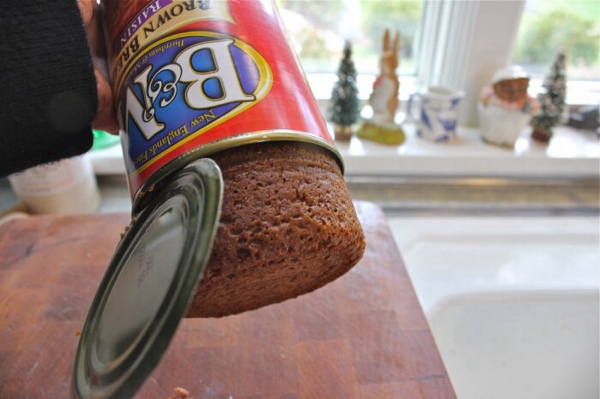
If you’re from New England, you know about the B&M company, not to be confused with the huge British food conglomerate. A lot of folks, even locals, think that B&M is a Massachusetts based enterprise, but it ain’t so. Way back in 1867, George Burnham, started a canning business, was then joined by Charles Morrill, and Burnham & Morrill was born. B&M has been a fixture in Portland, Maine at One Bean Pot Circle, ever since. Their rightfully famous beans are still slow cooked in brick ovens, and their brown bread is the one, as far as I’m concerned. Their cans are filled with batter and the bread is baked in the cans, and that’s just how you do it.

If you’ve never tried it, do. Served with ham, baked beans, and cole slaw, you got your traditional Saturday Night Suppah.


8 1/2 ounces Buttermilk

6 ounces dark Molasses, (by weight)

2 1/2 Ounces Whole Wheat Flour

2 1/2 Ounces Rye Flour

2 1/2 ounces Yellow Corn Meal

1/2 teaspoon Baking Soda

1/2 teaspoon Baking Powder

2″ fresh Vanilla Bean, (or 1 teaspoon Vanilla extract)

1/2 teaspoon freshly ground Allspice

1/2 teaspoon Orange Zest

1/2 teaspoon Sea Salt

2 empty 26 ounce metal cans with one end of each cut off.

Move a rack to the bottom third of the oven and heat the oven to 325° F.

Choose an oven safe pot or dish deep enough so that you can fill it with water to about halfway up the sides of the cans. Boil enough water on the stove top to fill that pot or dish. 

Lightly coat the insides of the cans with vegetable oil.  

In a mixing bowl, combine wheat flour, rye flour, cornmeal, baking soda, baking powder, allspice, and salt. 

Add the molasses, buttermilk, vanilla and zest to the dry ingredients and thoroughly combine.  

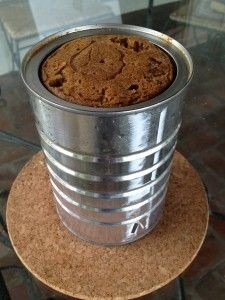
Divide the batter evenly between the prepared cans. Cover the top of each can with a double thickness of aluminum foil and tie securely with kitchen string. Place the cans in your deep pan and slide that into the preheated oven.


Carefully fill the pan with boiling water to about halfway up the sides of the cans.

Bake for 70 to 75 minutes. At seventy minutes, remove the foil tops. When the edges of the bread begin to pull away from the sides of the cans, you’re there. 


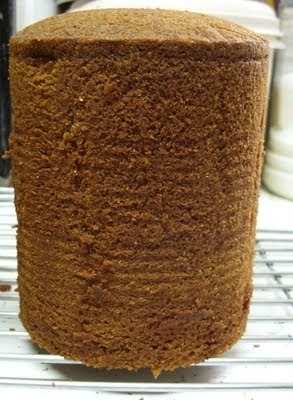
Remove the cans from the oven, place on a wire rack to cool for 1 hour before sliding the bread out of the cans. If the bread is a bit sticky, a thin bladed knife run around the can will free it up.


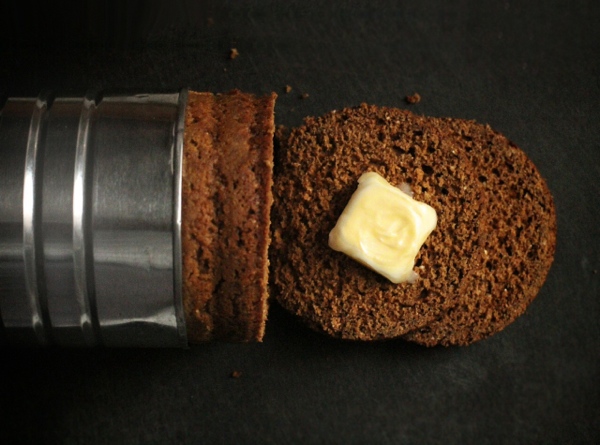
Don’t forget to have plenty of fresh, local butter on hand…