Brine That Turkey!


Truth or dare time – How many of y’all, when it comes to your Thanksgiving turkey, do not show the bird the proper love? Tell the truth, now… Do you simply throw a bird in to the oven? Do you fill it with stuffing? Thought so… truth be told, even if you rub it with something nice, you’re still not giving that poultry it’s holiday due. If you want to serve the best bird, you’ve got to brine that turkey. I’m gonna tell you how, but first, here’s why.

Turkey is an extremely lean protein. If you doubt that, buy some ground turkey, do nothing to it but cook it, and see what you get – unlike good, fresh hamburger, there’ll be no moisture in the pan, and the taste will be, well… less than optimal. Let’s face it, we don’t need fat from our bird, ‘cause we’re gonna get that from all the sides we make. What we do need is a tender, juicy bird, and again, brining is the way to get there. Now, I know there are some of you out there thinking, ‘yeah, but if I cook it right and season the skin nicely before hand, it’ll still be great,’ right? Well, no, no it won’t – it might be good, maybe even really good, but it won’t be great.

Seasoning right before you cook, or even an hour or two before you cook, doesn’t allow the salt you’ve added enough time to do its thing. It won’t penetrate the flesh at all, really, especially with a hunk of meat as thick as a turkey breast. It’ll do a bit of work on the surface, but no more. Truly, the only way to allow seasoning to work is to give it the time it needs – And that means you need to brine that bird.

Traditionally, brining is a wet process. We submerge the bird completely in a brine, and give it anywhere from eight to twelve hours to do its thing. That works great, frankly, and it really isn’t hard. Brined birds weigh more after cooking than a dry bird does – Up to 8% more, and that’s virtually all added moisture, which is very good indeed. The wet brine process also acts chemically to break down some of the tougher proteins within the bird’s muscle fibers, leading to tender flesh – Also good. So, if you’re of a mind to wet brine, here are some basics.

If you buy a frozen bird, you can thaw it while brining, which saves you some time, (if you buy a fresh turkey, you don’t need to worry about that.)

Proper brining is a function of both brine strength, the weight of the bird, and brining time. What you’re doing at home is technically called gradient brining – That is, putting food in a higher salt concentration brine than you really want in the food, because you don’t have the time to do what’s known as equilibrium brining – That’s when you use a lower salt concentration and allow the time needed for the salt content in the brine and the food to equalize. When you see or read about something like pastrami being brined for a week or longer, that’s what they’re doing, and that’s also why the Pro’s make stuff that consistently tastes better than what we do at home. All that said, don’t fret – What we do at home is safe, and it really does make a better bird. So, for reasonable gradient brining, we brine whole turkeys for about an hour per pound, in a 5% to 6% brine concentration.

Basic brine ratio is often shown as ‘1 cup salt to 1 gallon of water’, but not all salt weighs the same – what we really want is about 7 ounces of salt per gallon. When you brine, use kosher salt – The larger crystal size means it dissolves faster in water than fine grained stuff, and there’s nothing in there but pure salt, so it wont taint your brine. If you don’t have a kitchen scale, (And frankly, you should), then Morton Kosher weighs 7.5 ounces per cup, and Diamond 5 per cup. For the record, there’s nothing wrong with adding herbs or spices to a brine – If you like it, do it.

Basic Wet Poultry Brine
For each Gallon of water, add
7 Ounces Kosher Salt
1 Tablespoon crushed Sage
1 Tablespoon Lemon Thyme

For a nice twist,

Cider Brine for Poultry
For each Gallon of Apple Cider, add
7 Ounces Kosher Salt
1 Tablespoon ground Black Pepper
2-3 dashes Tabasco sauce

For a 15 to 18 pound turkey, you will need a couple of gallons of cider or water, and a clean, food grade 5 gallon plastic bucket. You don’t need to heat the water or cider. Just make sure all the salt has completely dissolved before you proceed.

You need to plan ahead for wet brining. You’ll want an additional 6 to 12 hours between the brining and the cooking, so, if you’re thawing and brining, your process needs to begin nice and early on the day before turkey day.

Pay attention to food safety procedures during brining, without fail! Your brine and bird must remain under 40° F at all times, period; if you need to add a little ice, do so. If you need to add a lot, compensate with a bit more salt. When your brining period is done, pour out the brine, (NEVER reuse it.) Gently rinse the bird in clean, cold water, then pat it dry with clean paper towels and then transfer to a roasting pan.

Now comes the secret to gloriously golden, crispy skin. Allow an air rest for your bird, by letting it sit, uncovered in the refrigerator, for 4 to 6 hours after brining. This will help moisture evaporate from the skin, and allow the meat to reabsorb some moisture as well.

Now, if all that makes you paraphrase George H. W. Bush, ‘Not gonna do it, not gonna go there,’ then here’s an even easier option that works just as well. And it’s funny that, right at this point, literally right at this point in today’s narrative, I got this text from my friend John Joyce, a fine guitar maker from the Twin Cities in Minnesota – ‘Hey E what do you think: dry brined or wet brined turkey. I’ve done wet for years but I’ve read a lot of good stuff on dry brining.’ Yep, dry brining is exactly what I was about to type, so, here ya go JJ.

While the term ‘dry brining’ might seem kinda oxymoronic, i assure you it’s not. In restaurants, this has been done for a long, long time. Often called ‘pre-salting,’ it acts on a protein more or less as a wet brine does, albeit without the water, equipment, or hassle. Think of it as a dry rub, like we use on poultry, ribs, and the like, and it’ll come to light for you.

The chemistry here is very cool, too. When we first apply a dry brine, osmosis occurs, meaning the moisture within the bird is drawn toward the higher salt concentration rubbed on the skin. As that moisture reaches the surface, it dissolves the salt and sugar in the brine. In the final stages, the liquified brine is draw back into the bird as things equalize. There, the solution acts as a wet brine does, breaking down those tough muscle proteins and acting as a tenderizer – Pretty cool, huh? And to top it off, all this is done in your fridge, during a simultaneous cold rest, so you get that crispy skin, too – Two birds with one rock, if you will.

Dry brining does require time, and in fact, more time than wet, usually. Since there’s no added water, you’ll need two to three days to let the process do it’s thing, so once again, plan ahead.

It’s also important not to get a bird that’s been pre-seasoned in any way, since that can and will upset the balance of things – Avoid anything that says kosher, re-seasoned, or self-basting. You’ll also want a fresh bird, or at the very least a fully thawed one.

Basic Dry Turkey Brine
5 Ounces Kosher Salt
1 teaspoon crushed sage
1 teaspoon Lemon Thyme
1 teaspoon ground Black Pepper

Sweet Dry Turkey Brine
5 Ounces Kosher Salt
2 Tablespoons Dark Brown Sugar
1 teaspoon Smoked Paprika

Prep your bird by removing any of the extraneous bits, then pat it dry with clean paper towels.

Gently gently separate skin from flesh over the breast area, taking care not to rip the skin. It’ll work much better in direct contact with the meat.

Rub a teaspoon or two of the mix into the bird’s cavity, then do the same all around the drumsticks. Rub 3-4 tablespoons of the mix onto the breast meat, and use the rest evenly across the skin.

Ct a small slit in each side of the bird about half way along the wing tips and then slide the tips into that cut.

Put the bird on a roasting pan or rimmed baking sheet, and into the fridge for at least 2 days, and 3 is better.

When the time’s up, you’re ready to cook. You can roast, deep fry, whatever floats your boat.

Keep your bread stuffing in a casserole dish, and prepare a nice juicy cavity filler for the bird.

1 Apple of your choice
1/2 Sweet Onion
1 stalk Celery
Tablespoon Canola Oil
1/2 teaspoon Sage
1/2 teaspoon Sea Salt
1/2 teaspoon ground Black Pepper

Rough chop the orange, onion, and celery, (and if you have celery leaves, use those!). Throw those in a mixing bowl, then add oil, Sage, salt and pepper, then combine thoroughly. Stuff your bird’s cavity thoroughly. Place the bird on a rack in a roasting pan, and add 2 cups of clean water to the pan. Insert an internal thermometer to the thickest part of the breast.

Preheat your oven to 350° F.

Standard roasting times, stuffed, at 350° F follow; that said, the only real way to know when the bird is done is by internal temperature, and we’re looking for 165 F.

10 to 18 pounds 3-3/4 to 4-1/2 hours

18 to 22 pounds 4-1/2 to 5 hours

22 to 24 pounds. 5 to 5-1/2 hours

Start your roast with the bird uncovered, then cover loosely with foil for the last hour. Basting isn’t necessary, but it sure doesn’t hurt.

When the bird is done, remove it from the oven and let it rest for 15 minutes prior to carving – That rest is vital to allowing juices to equalize throughout the cooked bird, so don’t cheat!

Carve, admire, enjoy, and get ready for leftovers,

Later in that text, JJ wrote, ‘I like those ingredients. I usually do two birds. I’ll do one dry and one wet. Is the cider recipe on your site?’ It’s right here for ya, Buddy! He ended with this – ‘I’m also making your ginger ale recipe. So I guess that means you’ll have a virtual seat at our table. ?’

I told him I was honored and pleased by that to no end, and I truly am.

Salt Cured Egg Yolks


There’s no telling how long people have been preserving eggs. As one of natures most amazing sources of energy and great taste, there’s always been great interest in having them available whenever desired. Whether by brine, smoke, or chemistry, there are a bunch of ways to do it. And it’s a natural progression to go from preserving the whole egg to just focusing on the yolk, since that’s where all the really good stuff is – and if you’re going to do that, there’s nothing easier or more effective that a simple salt cure.

Egg yolks are a nutritional powerhouse. All the fat and roughly half the protein an egg possesses is in there, along with a very long list of other things – carbohydrates, amino acids, vital trace nutrients, minerals, vitamins, and yeah, a healthy shot of cholesterol, but that’s had a bad rap for far too long. Donald K. Layman, Professor Emeritus of Food Science and Nutrition at the University of Illinois has gone so far as to say that, “cutting dietary cholesterol is almost irrelevant when it comes to promoting healthy blood cholesterol levels and heart health.” While that’s not an endorsement to go off and start an all Twinkie diet, it does get eggs and a bunch of other formerly vilified foods off the hook.

Century Egg - Seriously acquired taste
Century Egg – Seriously acquired taste

There are a raft of preserved egg and yolk examples out there. The Chinese alone have been doing this for hundreds of years, exemplified by the so called Century Egg, which appeared in Hunan province during the Ming Dynasty. This, like rotten shark, is an acquired taste to say the least – They make durian seem tame – and yes, I’ve tried one, and I won’t do it again. To be fair, it’s the smell more than the taste that’s severely off-putting – think of a multi-feline cat box unchanged for weeks, and you get close.

Smoked eggs are sublime

Smoked eggs are as they sound, done either with cold or hot smoke. They too are sublime – The smoke, and as such choice of wood used, adds a lovely depth and complexity to the egg – It exemplifies egg versatility to a surprising degree.

Salt cured whole eggs

Then there’s the brined or salt cured whole egg, which is an entirely different experience – good ones are lovely, like a really good egg with over the top concentrated richness and umami. The star of course, is the yolk.

This whole exercise begs the question – why would I want to do it? Well, you either love egg yolk or you don’t – If you don’t, go out and play – if you do, read on. Egg yolk has a savory, smooth taste absolutely brimming with umami, and they’re pretty, to boot. If we can create a version of that which intensifies the umami, and makes them instantly usable whenever the whim hits, it’s worth doing.

There’s also the transformational consideration – Great food is all about taking something common and doing uncommon things with them – When the whole process is stunningly simple, it’s that much sexier in the end run – And salt cured egg yolks are very sexy indeed. What you end up with is something that you can and will grate, with a gloriously bright yellow color. Preserved yolk tastes like buttery cheese – rich but not cloying – with a high level of umami added to whatever floats your boat – And it will, believe me – On pasta, pizza, salads, veggies, you name it, a little grating of this is stunningly good.

On to the process. It is a very simple thing, albeit there are a couple of versions, and we’ll cover both herein. As with all things simple in cooking, the first and most critical consideration is ingredient quality. If ever there’s a time to buy the freshest, most local eggs you can, this would be it. Since we’re merely concentrating that which already exists, mediocre will certainly breed mediocre. What you want is a stellar egg, one with a lovely orangish-yellow yolk, as fresh as you can get. Ditto for salt – you don’t need fancy, but you do want pure – high quality, coarse kosher or sea salt, with absolutely nothing else in it, is the key. Once you’ve got these together, do the deed the same day – It doesn’t take long, and that way you’re assured of taking full advantage of fresh stuff.

Set yolks in the salt cure

As for specific methodology, as mentioned, there are two primary schools – One uses just salt for the cure with passive secondary drying, while the other employs a salt and sugar cure coupled with mechanical drying in an oven or dehydrator. Both work fine, so it comes down to your predilection, and how fast you want to get done. Again, it’s so simple, it’s highly worth trying a batch of each and making your own comparison. From there, you can tweak whatever you like best to make it yours. Here’s the drill.

In both methods, the first step is the cure. You need a bunch of salt for this, depending on how many yolks you plan to do. Again, it’s super easy to do, so start with maybe four yolks, try out the results, then try the other method, pick your fave. To process a dozen yolks, you’ll need a pound of coarse kosher or sea salt. If you use the sugar/salt cure, it’s a 50%-50% blend of each – Use regular old cane sugar for that – Nothing fine or fancy needed. That’s the only difference in the cures.

Once you’ve chosen your cure, get an appropriately sized container big enough to hold how ever many yolks you want to process, as well as a bunch of cure. I like food storage containers with a snap fit lid for this – It’s gonna go in the fridge for a week, so it’s nice to have something that’ll stand up to daily use and exploration. Word to the wise, if you’ve got a bunch of folks in your house, tell them what you’re doing and point out the container – that can go a long way toward not having your stuff tossed or played with.

Pour an even layer of cure about 1/2″ thick into the container, then form a series of evenly spaced divots to receive how ever many yolks you’re gonna cure.

Have a second airtight container ready for your egg whites. Carefully separate yolks from whites, (You can and should freeze the whites for a future endeavor.) Slide a yolk into each little depression in the cure.

Now carefully cover the yolks with a nice, even layer of cure – Here again, you want about 1/2″ or so of cure over the tops of the yolks.

Seal up the container and slide it into the fridge, and leave it alone for a week.

Once your week is up, pull the yolks. Fill a small bowl with warm water, and have a clean piece of cheese cloth handy.

Cured
Cured

Take each yolk out of the cure, and brush excess cure off. Dip the cheese cloth into the water and use that to gently clean as much cure off of the yolks as you can – At this stage, they’re still a little tacky, which is just fine – Don’t freak out if the cleaning process is taking a bit of yolk with it, but again, be gentle.

Now comes the division between finishing steps.

If you’re going the passive route, then all you need is some more clean cheese cloth. Wrap each yolk in a hunk of that and tie it off with kitchen twine.

After that, hang it from a shelf in your fridge so that each yolk has good air flow all around it. Leave them there for at least a week, and two is better. When that’s done, you’re done, and you can go to town with them.

If you prefer the faster mechanical method, then you’ll set your oven or an adjustable dehydrator to 200° F. Put the yolks on a silicone pad or parchment if you’re using the oven, onto a rack if you’re going dehydrator. Let the yolks dry for 45 minutes. Remove from heat, allow to cool to room temp before refrigerating.

Grated salt cured egg yolk

Either way you choose, the yolks, refrigerated in a non-reactive, airtight container will last at least a month, (but they won’t, ’cause you’ll scarf ’em down.)

Salt cured egg yolk on house made pizza - Si!
Salt cured egg yolk on house made pizza – Si!

Now, back there a ways I mentioned that you can tweak things, and you can – herbs and spices in the cure are par for the course, so have some fun, use your imagination, and let me know what you come up with, yeah?

Champagne Mangoes Three Ways


You might have been perusing the produce aisle recently and seen a fruit called a Champagne Mango. They’re somewhat new to many parts of the US, but they ain’t new in the Big Picture view. The Champagne, also known as an Ataúlfo, (and young, baby, yellow, honey, or adolpho), is a well established Mexican cultivar. Champagnes are gorgeous; big, heavy, golden-yellow beauties that are somewhat pear shaped. They’re thin skinned, with deep yellow, rich flesh and a very skinny pit. They’re quite high in sugar, with a tangy-sweet flavor, rich in vitamin C and dietary fiber.

Down in the Mexican state of Chiapas, when Ataúlfo Morales bought Some land back in 1950, there were already bearing mango trees on the property. Around eight years later, a researcher from the Mexican Commission of Pomology heard of Señor Morales’ mangoes and came to have a look. He went off with samples and stock which he named Ataúlfo, in honor of the property owner, and the rest is history.

If you like mangoes, (and even if you don’t), you owe it yourself to try these beauties. While they’re a real treat to peel and eat straight away, here are three of our favorite things to do with them.

Fruit Curds go back quite a ways in history. Technically, since they include eggs, butter, and require preparation like an emulsion, they’re probably more of a custard than a preserve, I guess. The 1844 edition of The Lady’s Own Cookery Book included a primitive version of a lemon curd;, using lemons to acidify cream, then separating the lemony curds from the whey. Further back yet you’ll find recipes for ‘lemon cheese’, used to make what was called a lemon cheese cake, but reads like what we’d call a lemon tart these days. Our version of Mango Curd is stunningly good, if we do say so ourselves…

2 ripe Mangoes
3 large Eggs
6 Tablespoons unsalted Butter
1/2 Cup Agave Nectar or Honey
1 fresh small Lemon
1 fresh small Lime
Pinch of Sea Salt

Rinse, Peel and roughly chop the mangoes; you’ll want to kind of shave the meat away from the skinny pit.

Purée the mango chunks with a stick blender or food processor. You want to end up with about 1 cup of purée.
Set that aside.

Rinse, zest and juice the lemon and lime, then set juice and zest aside.

Cut very cold butter into about 1/2″ cubes.

Crack eggs into a mixing bowl and whisk lightly.

For cooking the blend, a double boiler is best. If you don’t have one, work with a bowl or pan that will fit comfortably inside a larger one. Fill your double boiler bottom or pan about 2/3 full of water and heat over medium flame. You want the water steaming, but not simmering when you’re ready to cook.

Combine the eggs, lemon and lime zest, citrus juice, the agave nectar or honey, and a pinch of salt. Whisk the mixture until fully incorporated and evenly colored, about 2 to 3 minutes.

Add the mango purée to the blend and whisk for about a minute to fully incorporate.

Put your bowl with the blended ingredients over your pan filled with hot water, (Or double boiler). Allow the mixture to heat, stirring gently but continuously, for about 3 minutes. Start adding the butter in small batches of 6 to 8 cubes, whisking steadily and allowing each batch to melt and incorporate before adding the next.

Again, a curd is an emulsion, so the butter, (fat), needs time and gentle whisking to properly marry with the egg and fruit blend.

When all the butter is melted, continue whisking gently and steadily until the curd begins to thicken noticeably, about another 2 to 3 minutes.

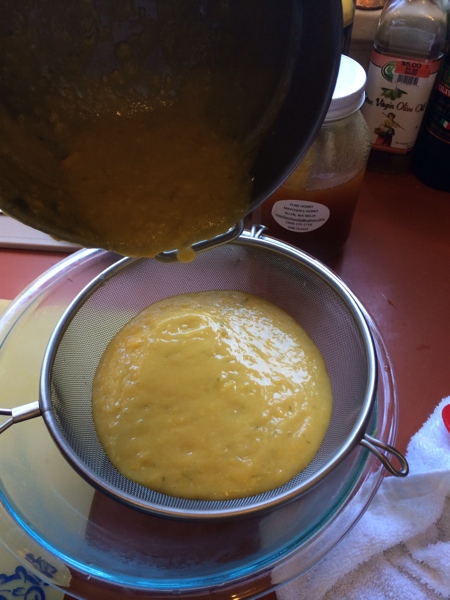
Remove the curd from the heat. Transfer the curd to a fine mesh strainer over a glass or steel bowl and use a spatula to gently strain the curd through the strainer. You’ll end up with some zest and fiber that doesn’t make it through.

Refrigerate in a glass jar or airtight container for at least four hours. The curd will keep for about a week refrigerated, but I’ll bet it won’t last anything close to that long…

A small dish of this lovely stuff is a remarkably delicious desert, or an excellent palate cleanser after a heavy course in a fancy meal. Try it on freshly made shortbread with strawberries for a real treat.

NOTE: You may substitute coconut oil for butter for a dairy free variation.


Granitas are the pure essence of fruit and natural sweeteners. With no diary on board, they’re actually not at all bad for you either. This version was the best we’ve made, of any fruit.

2 ripe Champagne Mangoes
2 Cups Water
1 fresh small Lemon
1 fresh small Lime
3/4 cup Agave Nectar or Honey

Rinse, peel and rough chop the mango flesh.

Rinse, zest, and juice the lemon and lime.

In a food processor or blender, purée the mango until smooth and uniform, about 1 to 2 minutes, stopping to scrape down the sides with a rubber spatula as needed.

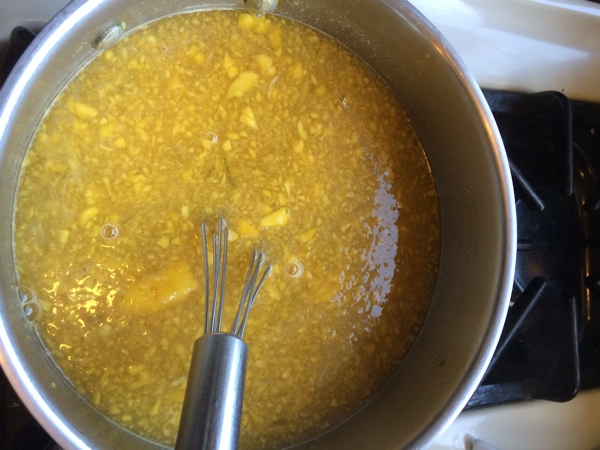
Add the water and honey or agave to a sauce pan over medium heat. Thoroughly melt the sweetener, then add the purée, zest, lemon and lime juice, and stir to incorporate.

Add the puréed mango and stir steadily and gently until the blend starts to simmer. When the whole blend is evenly mango colored and starts to thicken slightly, remove it from the heat; the whole heating process will take around 3 to 5 minutes.


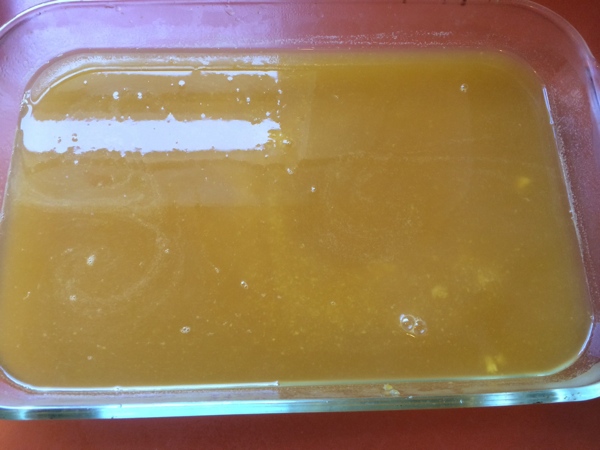
Remove the mixture from heat and pour the blend through a single layer strainer into a 9-inch-square shallow baking pan. This pan size works best ­because it provides a large surface area, a key point in speeding up the freezing process. To further hasten freezing, use a heavy steel or glass pan.

Put the pan in the freezer and stir about every hour with a large fork, times down like you’re raking the granita. Depending on your freezer temp, it will take around 3 to 5 hours for the granita to freeze completely.

You can eat the granita as soon as it’s frozen through, but the flavor will genuinely develop appreciably if you transfer it to an airtight container and freeze it over­night.

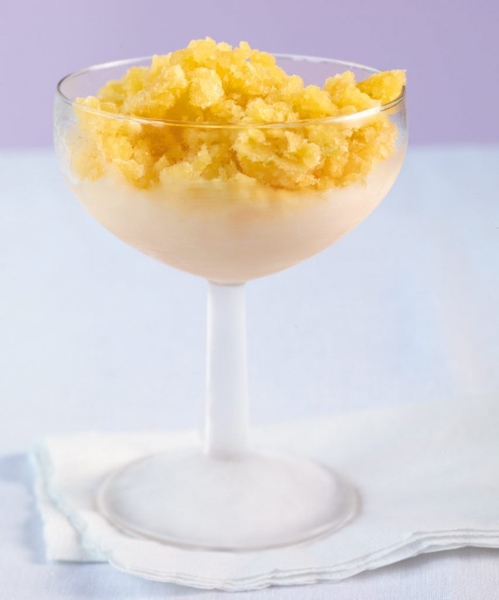
When you’re ready to serve the granita, just scape up the shaved ice and fill a chilled margarita glass, band top with a mint sprig.


Mango salsa is a real treat; the counterpoint of sweet and heat is great with fish, poultry, and pork. Try it on freshly scrambled eggs too.

1 Champagne Mango
2 ripe Roma Tomatoes
1/2 Red Onion
1-3 Jalapeño Chiles
2-4 sprigs fresh Cilantro
1 small Lemon
1 small Lime
Pinch of Sea Salt

Rinse all fruits and veggies. Peel and dice mango. Core, seed and dice the tomatoes. Dice the onion. Chiffonade the cilantro. Juice the citrus.

Combined all ingredients in a non-reactive bowl. Cover and chill for at least 30 minutes, (and as long as overnight – The flavors just get better.)

A Great Share from Ann Lovejoy


A celebrated author, cook, and all round good soul, who also happens to be my Sis!

Green Gardening with Ann Lovejoy

Check out this gem from her Blog – great stuff for mixologists and cooks – these augmented syrups will shine in a bright gastrique, or when adding a hint of sweetness to dressings, sauces, marinades, and wet rubs.

This is a perfect example of a thing that separates good cooks from great ones – that little transformative twist that makes for extraordinary results.

Infused simple syrups are golden for many, many things

Check it, give them a try, and sign up to get her blog fresh to your email so you won’t miss a one!

P.S. And if you’re a gardener and don’t have her books, well, shame on you! Get crackin’!

?

So You Think You Know Ketchup?


So, you think you know ketchup, huh? Recently, we posted on Salsa, as well as the most popular derivative thereof, Sriracha, and noted therein that both those condiments actually outsell ketchup in the U.S., which might surprise some of y’all. Yet the ubiquity of American fast food concepts has done much to spread the red stuff worldwide, which then begs the question – How popular is ketchup worldwide? The answer is very.

Ketchup, it's everywhere, and growing by leaps and bounds
Ketchup, it’s everywhere, and growing by leaps and bounds

Global market research by respected industry watchers pegged ketchup as a $4.15 billion dollar commodity in 2015. With an expected annual growth rate of 3.8%, sales of ketchup worldwide are expected to hit $5.6 billion by 2022 – Billion with a B – That’s a lotta ketchup, gang. And what are the biggest trends in that friggin’ huge market? So called ‘exotic ingredient’ ketchups, and organic offerings. Interesting, no? The Big Four primary derivatives of the ketchup trade are as follows – Tomato, mushroom, fruit and nut, and ‘other.’ The latter leaves quite a bit to the imagination. Ironically, these popular trends lead us in a perhaps unexpected direction – Backwards, to the origin of the stuff.

It should come as no surprise that tomato ketchup, far and away the most popular version today, was not the first one to be so named. In England of the 1700s, sauces called catsup, ketchup, or katchup were anchovy based things, seasoned with vinegar, shallot, ginger, clove, nutmeg, lemon, pepper, and wine. The results were more like Worcestershire sauce than the stuff we know today as ketchup. The name for these lovely things comes from, of all places, Indonesia, where kecap, (pronounced ketchup), means a dark, thick, soy based sauce, (And remains immensely popular there to this day). The leap from the East back to England occurred because that’s where the Brits got a lot of those exotic spices they threw in with them salty little fish. And not surprisingly, derivations of the stuff came out featuring, you guessed it, mushrooms, fruit, and nuts.

Tomato ketchup, on the other hand, took a while longer to circulate, as the ‘love apple’ was a native to Central and South America, and as such didn’t appear in Europe until (probably) the Spaniards brought them back over the big pond in the 16th century. Tomatoes were readily embraced by most countries around the Mediterranean, which it took somewhere around 150 years or so to spread and become accepted. That acceptance was not so forthcoming from the Northern Europeans, including the British, (who initially though the fruit to be poisonous). The first acknowledged tomato ketchup recipe came from the American colonies, during the revolutionary war, and the first published version came out while Lewis and Clark were traipsing west, in 1804, by physician/horticulturist James Mease. His version salted sliced tomatoes and let them sit for a day, then added mace, allspice, shallot, and brandy, and cooked it all down. Meade claimed the French loved the stuff, which is patently bullshit – More likely, given the spicing he employed, he’d been handed something from the Caribbean, because it sounds a lot like Sauce Creole. In any event, the stuff caught on in a big way, and the rest is history.

Ketchup, especially the tomato variety, came about as one way to preserve things through the cold months, and frankly, that’s why I’m writing about it here and now. A whole bunch of us have gardens, and what is almost guaranteed to be one of those crops you sew and then some time later are offering to any friend, neighbor, or willing perfect stranger you can find, due to relative overabundance? Yep, love apples. As such, it’s a great time to visit some recipes for the stuff. Sure, there are ‘natural’ and organic versions out there in the stores, as well as those exotics styles – But frankly, while the natural stuff is far better for you than the old standard, they’re not exactly using fresh, home grown tomatoes that could and should be several varieties – And that means you can make better at home. And as for the exotics, take a look at the prices, and you quickly discover that in this regard, you can make better at home for a hell of a lot less dough. So let’s do that.

First off, let’s address the elephant in the room – There are two, when it comes to ketchup making at home.
1. Making ketchup takes an incredible amount of tomatoes – True and not true – If you’re wanting to can a whole bunch in order to enjoy house made through the cold months, then yes, it will take a lot of tomatoes. If you’ve got them, and you’re of a mind to preserve, then you should definitely throw ketchup into the mix, along with whole and sauced. That said, what you’ll see below are small batch recipes that don’t take a whole lot of tomatoes – And frankly, making a batch to last a week or two is well worth the effort, especially if you’re growing your own.
2. Making ketchup at home takes forever – Well, not forever, but all day, yeah – As mentioned, the recipes we’ve got for you here are small batch stuff, and can easily be done in under an hour or twos worth of actual work, but some of the prep and cooking does take a long time – We’re radically changing the stuff we start with, and that just can’t be rushed – So, you’d best be planning for a whole day, but it’ll be a great day, guaranteed, (and you can do other stuff, or even take off while things are cooking, if you use a slow cooker, as noted). And finally, if you’re canning, it’s gonna be an all day thing, guaranteed – And always review proper method and cooking times when doing so.

House made tomato ketchup - All other bow before it.
House made tomato ketchup – All other bow before it.

Classic Tomato Ketchup
2 28 oz cans Peeled Tomatoes, (Any version is fine so long as they’re peeled)
3/4 Cup Distilled White Vinegar
1/2 Cup Bakers Sugar
1/2 Cup Water
1 1/2 teaspoons Pickling Salt
1 teaspoon Onion Powder
1/2 teaspoon granulated Garlic
1/4 teaspoon ground White Pepper
1/4 teaspoon ground Mustard
1/8 teaspoon Celery Salt
1 whole Clove

In a slow cooker set to high, add the tomatoes. If you found ground, peeled tomatoes, you’re good to go. If you have whole, or crushed, you need to process them first. Pulse with an immersion blender to achieve a nice, rough sauce consistency.

Rinse each can with a quarter cup of water and add that to the cooker, along with all other ingredients.

Cook uncovered for 8 to 10 hours, giving the sauce a good stir roughly every hour.

When the sauce is reduced in volume by roughly 50%, and is quite thick, turn off the heat and process the sauce again with the stick blender until very smooth.

Run the sauce through a single mesh strainer, into a nonreactive mixing bowl, removing any bits of skin, seeds, and the clove.

Allow to cool to room temperature.

Taste and adjust salt and pepper balance as needed.

Transfer to a clean glass jar and refrigerate. It’ll last a good week, (if it survives that long.)

Mushroom ketchup hardens back to Medieval English sauces

Mushroom Ketchup (NOTE: This recipe requires advanced prep for the shrooms, so plan accordingly)

1 Pound fresh Mushrooms, (Portobello, Shiitake, button, or wild, of course)
2 Cups Water
1 1/3 Cups Champagne Vinegar
2 medium Shallots
1/2 Ounce dried Mushrooms
2 Tablespoons Dry Sherry
1 Tablespoon Pickling Salt
1 small clove Garlic
6 Tasmanian Pepperberries
2 whole Cloves
1/4 teaspoon ground Ginger
1/4 teaspoon ground Black Pepper
1/4 teaspoon ground Nutmeg
1 Bay Leaf (California or Turkish as you prefer)

The day before you plan to cook the sauce, carefully wipe shrooms clean with a damp cloth, and trim away any bruised bits.

Slice mushrooms to roughly 1/4″ thick. Toss shrooms into a nonreactive mixing bowl, add the tablespoon of Pickling Salt and toss gently to incorporate.

Cover the bowl with a clean, dry cloth and allow shrooms to sit for 24 hours. Stir gently 3 or 4 times through the rest. Note that the shrooms will become quite dark during this process, and that A-OK.

An hour or two before the end of the 24 hour rest, heat 2 cups of water to about 110° F. Pour that into a mixing bowl and add the dried mushrooms. Stir to incorporate and let them steep until their nice and soft.

Trim, peel and mince garlic and shallots.

With a slotted spoon, transfer the reconstituted dried shrooms to a blender vessel or food processor. Carefully pour the soaking liquid into the blender, leaving any pooled gritty stuff out of your pour. Process the blend into a smooth mix, and transfer that to a large sauce pan.

Dump the salted, fresh shrooms into the blender, (don’t rinse it first), and process that to a smooth mix, then add them to the sauce pan.

Add 1/3 cup vinegar, the garlic, and shallots to the un-rinsed blender vessel and process to a smooth purée. Add this to the sauce pan, along with the rest of the ingredients, except the sherry, and stir to incorporate.

Bring the mix to a simmer over medium high heat, then lower heat to barely maintain the simmer. Cook for 1 to 1/12 hours, until the Mushrooms are very soft and the sauce has thickened notably.

Now’s the time to test for proper consistency – remove sauce from heat and take a spoonful of the sauce and place it on a clean saucer. Let that sit for 10 minutes – If at that point the sauce has remained homogeneous, it’s thickened enough. If a notable amount of liquid leaches out of the sauce, more cooking is needed. Continue cooking for another 15 minutes and retest until you reach proper thickness.

Run the sauce through a single mesh strainer to remove the whole spices, then process in a blender or with a stick blender to a nice, smooth consistency.

Return the sauce to a clean sauce pan over medium high heat and heat through, stirring constantly. When the sauce simmers again, add the sherry. Cook on a low simmer for 5 minutes, then remove from heat.

Transfer sauce to clean, sanitized half pint jars and process in a hot water bath for 15 minutes, (Again, consult CFHFP for more specifics and altitude adjustments).

Allow sauce to marry for at least 8 weeks before use. The well sealed jars will last all winter, (but probably not!)

Green walnuts are a summer crop that make a wonderful earthy kethcup

Walnut Ketchup
This one goes way back to ketchup’s English roots, right down to those salty little fish. It’s admittedly a lot of work, but the reward is huge. Canned in half pint jars, they’re an amazing house warming gift – The taste of the 17th century brought to life. Green walnuts are a summer crop, usually available only from June through August, and maybe into September some years, so plan ahead.

45-50 Green Walnuts
3 1/2 Cups Cider Vinegar
1 1/2 Cups Malt Vinegar
1 Cup Dry Sherry
1 large Sweet Onion
1/4 Cup grated Horseradish, (straight – not mixed ‘sauce’)
2 ounces Anchovies (in oil or salt)
2 teaspoons ground Black Pepper
1 teaspoon dried ground Chile (hot or mild as you like)
1″ fresh Ginger root

The tough stuff goes first! Opening walnuts, especially green ones, isn’t easy, and it’s messy – Keep in mind that wood stains are made with these guys, so dress and guard your kitchen surfaces accordingly – They WILL stain hands, counters, etc, and it will NOT come off your skin! Some folks use a knife, others a hammer – Choose your weapon and cut, crack, or crush those things.

Place nuts in a nonreactive container, (a 1/2 gallon mason jar is perfect), and cover completely with the vinegars. Tightly cover your container and let them steep for a week – 7 full days.

On Day 8, transfer nuts and liquor to a large stock pot over medium high heat. Add all remaining ingredients and stir to incorporate. When the mix starts to boil reduce heat to maintain a vigorous simmer and cook for 45 minutes.

Remove sauce from heat and allow to cool to room temperature.

Process the sauce with a stick blender to a nice, smooth consistency.

Run the sauce through a single mesh blender to remove any solids.

Carefully pour into clean, sanitized bottles or jars with air tight lids and seal.

Will last a good 6 months stored in a cool, dry, dark place.

Cranberry ketchup is amazing on pork, chicken, or roasted Brussels sprouts

Cranberry Ketchup
2 Cups Canberries, (fresh or frozen)
11/2 Cups Raw Cider Vinegar
1/4 Cup Balsamic Vinegar
1 large Navel Orange
1 small Sweet Onion
2 Tablespoons Agave Nectar
1/4 teaspoon Allspice
1/4 teaspoon ground Black Pepper
1/8 teaspoon ground Black Cardamom
1/8 teaspoon Sea Salt

Peel, trim and fine dice onion.

Zest and juice orange.

In a large sauce pan over medium high heat, add cranberries, onion, and cider vinegar, stir to incorporate. Reduce heat to maintain a bare simmer and cook until cranberries are popped and soft, about 4-6 minutes.

Remove sauce from heat and process with a stick blender to a smooth consistency.

Return sauce to heat and add balsamic, orange juice and zest, allspice, cardamom, pepper, and salt. Stir to incorporate. Cook on a low simmer for 15 to 20 minutes, until sauce is notably thickened.

Remove from heat and process again to smooth the sauce out. You can run it through a single mesh strainer if you prefer a liquid, smooth sauce, or leave it rustic – It’s incredible on chicken, or pork, or roasted Brussels sprouts.

Store in a clean, nonreactive container, refrigerated. Will last a couple weeks, easy.

Brines, Marinades, Rubs, and Glazes


Here in the Great Pacific Northwet, it’s beginning to look like maybe, just maybe, it’ll stop raining one day. As such, it’s time to think about grilling again. When we do that, there’s a veritable cornucopia of cool things to do with the stuff we grill, like brines, marinades, rubs, and glazes.

First things first, though – Time to clean and inspect your grill, before you light the fires – Here’s a pretty good primer for that.

Next question, how are you grilling? In a big way, the answer to that question will determine what to do before your food hits the fire. Grilling is, for most of us, far less controlled than cooking in an oven or on a stove top. As such, knowing how to properly set up a charcoal grill, or use a gas one, makes a big difference to your end results. The back end of this Char Siu post has clear directions for setting up a two zone charcoal grill.

Brines, marinades, rubs and glazes will all contribute to the food we grill, especially proteins and veggies. Some of those contributions will alter proteins by tenderizing, or add moisture to help foods that tend to dry out in high heat stay juicy, and all these potions can add big flavor punch when you want or need it. What’s best depends on what’s cooking.

Brining is, in simplest term, utilizing a salt solution to add internal moisture to foods that have a tendency to dry out when grilled – It’s also a great way to add some subtle flavor notes from herbs and spices. Poultry, pork, and firm fish like cod, salmon, and swordfish do especially well with a brine. This little primer will give you some great base knowledge and ideas.

Marinades combine an acid and a base, just as we do for vinaigrettes. Marinating can take anything from a few minutes to days, depending on what you’re working with. Marinades generally carry bolder flavor profiles than a brine does, although those flavors may or may not get as deep into a protein, veggie, etc, depending on how long they work. Beef works great marinated, as do some of the gamier meats like lamb, game, and field poultry. A general search on the site here will provide a bunch of options from which you can springboard to your own thing.

A rub can be either dry or wet, and is what it sounds like – Where marinades are meant to get deeper into the meat somewhat as a brine does, rubs sit on top and do their work right there. Salt and pepper are most common, and fact is, if you’ve got a really lovely fresh protein or veggie, may be all you need or want. More stuff can certainly be added, and doing so can help a bunch in forming a nice crust on your food, and sealing in moisture on that relatively hot grill. Here’s a bunch of ideas to get you started.

Finally, we’ve got glazes. Generally speaking, glazes employ some sugar or an analog, and maybe some fat, like butter, which are integral to making things stick to your food. They also are quite prone to burning, however, so glazes are generally done last, and watched closely to make sure they do their thing properly. M came home with some incredibly pretty local pork chops, which prompted this whole post. I decided to wing a sweet and sour glaze for those bad boys – Here’s what I came up with.

Sweet and Sour Pork Glaze

1/4 Cup Balsamic Vinegar
1/4 Cup Ketchup
1 Tablespoon Honey
1 teaspoon Yellow Mustard
1 teaspoon Dark Molasses
1 teaspoon Worcestershire Sauce
1 teaspoon granulated Onion
1 teaspoon granulated Garlic
Pinch Lemon Thyme
Pinch Sea Salt

Combine all ingredients in a non-reactive mixing bowl and whisk to incorporate thoroughly. Allow to sit for 15-20 minutes at room temp for flavors to marry.

Bast pork with glaze liberally in the last 3-5 minutes that it’s grilling, and keep a close eye on things so the sugars don’t burn.

Feel free to leave some at table as well.