Tomato Time


We’re up in northern Minnesota for a gathering of the Luthier Community, and the heirloom tomatoes at Grant and Christie’s, some 25 varieties, are coming ripe every day. I’ve been in hog heaven cooking for the gang, let me tell you.

Here’s a post over on Big wild Food for you to play with.

E & M

Ghost Chile Madness


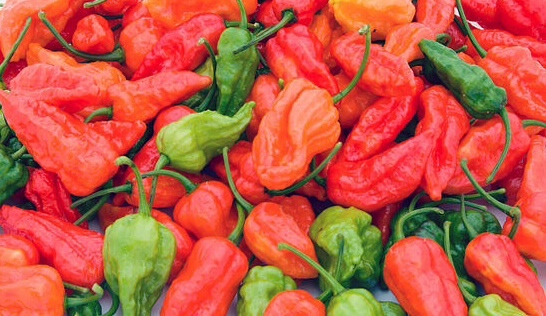
It’s not a disease really; wait, maybe it is… Heat and the pursuit of such in food. Not physical heat, spiritual heat. That brings us to the legendary ghost chile… It’s no longer the top puppy on the Holy Shit Ridiculous heat scale; a new kid in town has displaced it. 

My friend and fellow cook/luthier David Berkowitz brought these to mind today, so let’s have him put them in their proper place on the scale of Capsaisin Pain for you:

“A jalapeño is around 5-10,000 Scoville units ( a measure of heat). A Habanero, 100,000. The Ghost pepper, 855,000 – 1,041,427 Scovilles. Trinidad Scorpion Maruga up to 2,000,000!”

So there you have it, or, as a waiter at a serious Thai restaurant once told me, “The stars for heat aren’t additive, they’re exponential…”
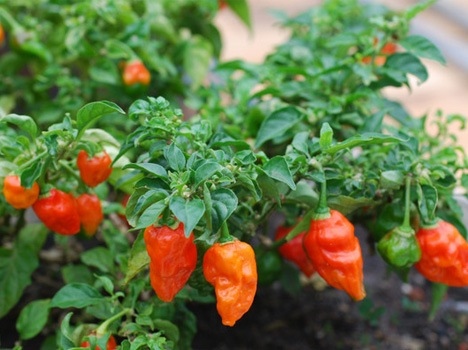
It may not be the hottest, but trust me when I tell you that these aren’t for amateurs. They’re serious shit, indeed. A friend of David’s was graced with a case of these bad boys, and I pitched in on what do with them. That said, these suggestions will work for any hot chile, and if you’ve not done these things, ya aughta.

On top of being ridiculously hot, like the Scotch Bonnet, Ghost chiles are very fruity and fragrant so, with a bit of taming, they’re really nice even for the fainter of heart; brining, marinated or pickling will do the deed for us.

To brine chiles, thoroughly mix 1/2 Cup kosher or sea salt, (NEVER iodized!), with 4 cups water. You can leave the chiles whole or chop off the stem ends. Immerse fully in the brine for 24 hours, (weight with a plate if they want to float). Pour out brine, rinse thoroughly, and you can then pickle, freeze, vacuum pack, or cook them as you see fit.

To pickle, use a ratio of 1.5:2 vinegar to water, and 2 tablespoons of pickling or canning salt per quart of water. You can use white, red, or cider vinegar as you please; white will give a more sour pickle, red and cider a sweeter. If you like sweeter yet, add honey or agave nectar, but never reduce the brine ratio, so that you avoid the potential for spoiling.

For a quart jar, about a tablespoon of spices will do; use stuff like whole peppercorns, coriander, mustard seed, juniper, fennel, cumin, bay leaf, cloves, cinnamon stick – whatever floats your boat.

Bring the blend to a brief boil with whatever spices you like, then allow to cool completely before pouring over the chiles. For spices, you can add fresh or dried directly to the jar.

You can fridge pickle for quick results; just pack chiles in glass jars, cover with brine and refrigerate. Allow at least 48 hours prior to eating. For long term preserving, chiles require pressure canning techniques, which further require specialized equipment and experience; check it out here if you’re interested in learning more.

So, what else to do with a bounty of chiles? Here’re some options for ya.

1. Dry some, both whole and to grind up – just a little shot will add a lovely je ne sais quoi to many things.

2. Smoke some prior to drying as well, for your own version of chipotle.

3. Freeze some whole and raw,

4. Roast and freeze some,

5. Salt ferment some for a ghost chile sauce, Louisiana style,

6. And of course, I’d make sauce for now!

And a note to ALL – WEAR GLOVES AT ALL TIMES WHEN HANDLING THESE BAD BOYS...

Here’s my quick sauce recipe, and again, this’ll work with any chile.

6-8 Ghost Chiles
3-4 Roma Tomatoes
1 Yellow Bell Pepper
1 small sweet Onion
6-8 stalks Cilantro
2-3 cloves Garlic
2 Tablespoons Apple Cider Vinegar
1 Tablespoon Agave Nectar
Pinch of Sea Salt

NOTE: Feel free to roast all these for about 15 minutes in a 275° F oven, for a more intense flavor profile.

Field strip and dice chiles; leave the seeds if you’re sadistic, remove if not – It’ll still be way hot, believe me.

Rough dice all other veggies.

Throw everything into a heavy bottom sauce pan over medium heat. Once the mix starts to simmer, reduce to low and simmer for 15 to 20 minutes, until all veggies are cooked through and soft.
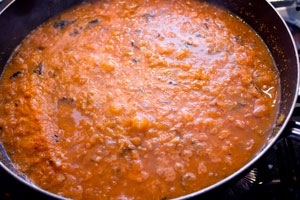
Remove from heat and process with an immersion or standard blender until smooth and uniform in texture.

Store in a glass jar or container. Refrigerated, it’ll last a month, easy.

Combine all ingredients in a medium saucepan and add enough water to cover. Bring to a boil, then reduce heat to low and continue to simmer for 15 to 20 minutes, until all veggies are cooked through and soft.

Remove from heat and process with a stick or regular blender until smooth and uniform in texture.

Store in glass, refrigerated. Will last about a month as such.

Great with chicken and pork, especially.

Indigo Grafted Tomatoes


Ah, spring, the time when all garden fancier’s thoughts turn to planting. Here in the Great Northwet, the snows are receding, rains are nourishing the soil, and it’s time. Our planting beds, resting under straw all winter, are begging to be turned and filled.

If you’re a lover of great tomatoes, then fact is, you simply must be a grower of great tomatoes. Whether you occupy acres or square feet, there’s always room for your favorites and if, as for many of us space is an issue, tomatoes that bear well in a compact space are best yet. Which brings us back to the love of those little globes of wonder. Enter the Indigo grafted tomato.

First and foremost, one wonders, why grafted? The simple answer is, because it works. Grafting is neither new nor done as a novelty; it’s sound practice with a long history of success. The technique, as applied to these Indigo tomatoes, involves mating the root stock of one variety with the leafy stem of another.

My hands down favorite college horticulture course focused on grafting. That was back in the late ’70s and I hate to admit it, but even though our back yard apple tree is a grafted wonder offering four distinct varieties, I’d not thought much of the technique in terms of tomato plants until these Indigos came along. My Professor at the University of Washington, fondly referred to as Master Nishitani, explained that the Japanese had been successfully experimenting with grafting herbaceous edibles since the early 1900s. Still, grafted veggies been slow to catch on in this country, due predominantly to the supposed greater advantages offered by green revolution dependence on chemistry and standard hybridization techniques. Thankfully, a general return to sound environmental practices has lead naturally back to grafting as well

What grafting provides, in a sustainable and eco-sensitive manner, is the marriage of hearty rootstock to a bearing variety chosen for flavor and high yield. The rootstock variety offers a larger, more vigorous root system bred with greater resistance to fungi, bacteria and parasites; truly a godsend, given many tomato varieties susceptibility to such ills. Customized rootstock furthermore yields plants that can and will thrive in a myriad of environmental conditions, a gift any gardener can appreciate.

Indeed, and so it is with these wonderful little Indigos. Monica and I were blessed with several plants from our dear friends at Log House Plants. We picked them up and admired healthy, happy starts, but apparently nothing out of the ordinary, yet… It was after planting and those tenuous weeks of waiting for things to happen that we first noticed a difference; not just blossoms, but lots and lots of blossoms! As fruit began to form, these compact plants, topping out at about 2 1/2′ here in our little USDA Zone 7b garden, were absolutely loaded. I place purposeful emphasis on the word compact; regardless of the space you dedicate to tomatoes in your garden, these Indigos will provide enviable bounty and variety.

And such fruit! The Indigo varieties are named for that hue, naturally occurring in tomatoes, fully expressed in these little guys. Right away the colors just floored us; perfect little globes of deep purple-black, yellow-gold and seriously rich reds. Any honest lover of tomatoes will admit that color and shape have darn near as much to do with desirability as taste. These things were like candy as they matured, the colors becoming deeper and glossier as the days progressed. Photographing them wasn’t a chore, it was a treat.

Our favorite thus far is the Indigo Rose, a stunning blend that starts out purple-almost-black with brilliant green highlights, and matures into a deep purple-red with stunning crimson flesh. This first true purple tomato also contains anthocyanins, a potent antioxidant found in blueberries, raspberries and cranberries.

The real treat, of course, is the taste. These Indigo varieties are simply amazing. Plucked off the vine and popped into your mouth on a cool, quiet morning, this is the kind of rich, complex taste that forms lasting memories. cooking, preserving and eating these beauties is a joy, and therein lies the only other impetus you should require for growing your own Indigos. Variety is indeed the spice of life; these hardy, high-yield varieties offer the perfect home grown, home cooked solution.

Do yourselves a favor, and look these little guys up by name. Chances are a nursery near you will have them, and if not, you can find an online source to hook you up. If you have any problem finding them let us know and we’ll get you squared away.

So, type in the search terms ‘tomato’ and ‘green tomato’ up there on the little search box to the right; you’ll find lovely recipes featuring these wonderful Indigos, including a tomato and onion tart, chutney, relish, and some ideas on preserving your bounty as well.

Happy planting, harvesting, and cooking!