Doin’ The Soy Sauce Shuffle


Christy Hohman is our tribal Sister, archeologist extraordinaire, and a wonderful cook to boot. She also keeps me honest here, and recently came through again – she wrote, ‘I was stumbling through soy sauce on Amazon today and thought: I bet Eben could steer me through this maze. So, maybe a post on Urbanmonique? Different kinds of soy sauce? Different uses? And what about that amino stuff that some people use instead? From an inquiring mind in Minnesota where the closest Asian Market is at least three hours away.’ The topic turned out to be another one that I thought I had covered in depth, only to find out that I really had not. So it’s definitely time to fix that, so strap in – here we go.
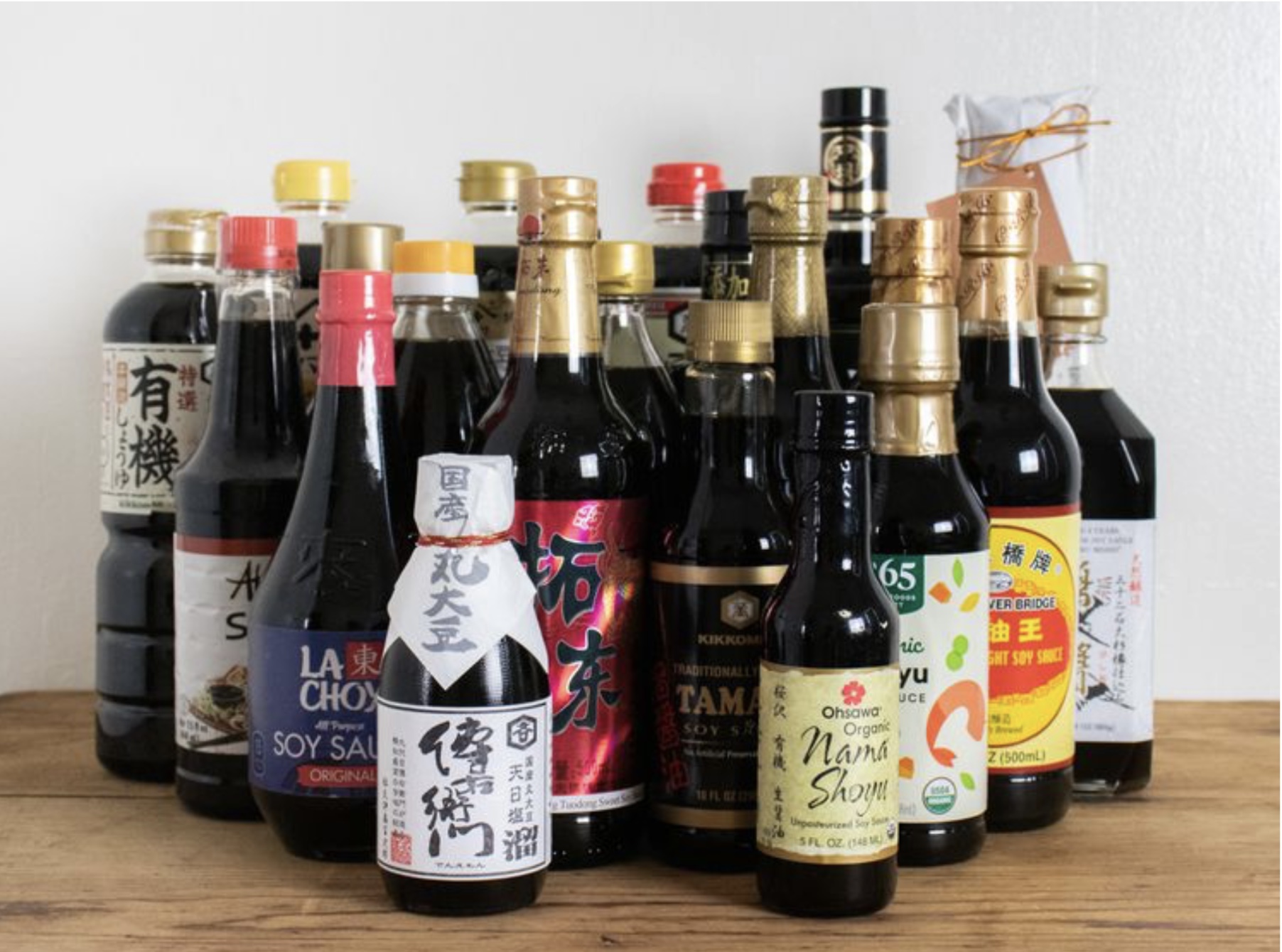

Soy sauce originated in China, with references as far back as the third century BC. In the mid 13th century, a Zen Buddhist monk, Shinchi Kakushin brought the recipe for the precursor of modern soy sauce back to Japan.


This sauce, jiàngyóu, was quite thick, kind of like Moromi miso is today and very similar to the consistency of the mash from which modern soy sauces are pressed. Eventually it was noted that the liquid that leaked out of that thicker stuff was really tasty, and the making of thinner soy sauces began.


Traditional soy sauce is made with soy beans and wheat, or just soy, depending on the country and sauce desired. These ingredients are cooked down into a thick paste. After the mash cools, a salt brine inoculated with the natural fungus Aspergillus sojae is introduced, and carefully controlled fermentation follows. When fermentation is completed, the mash is pressed to expel soy sauce. 

Soy sauce spread widely across the Far East, and as it did so, it changed to reflect the preference of the various countries it landed in. We might think that soy sauce is the same stuff everywhere, but that’s not so. Every iteration of it is unique, and variants abound.
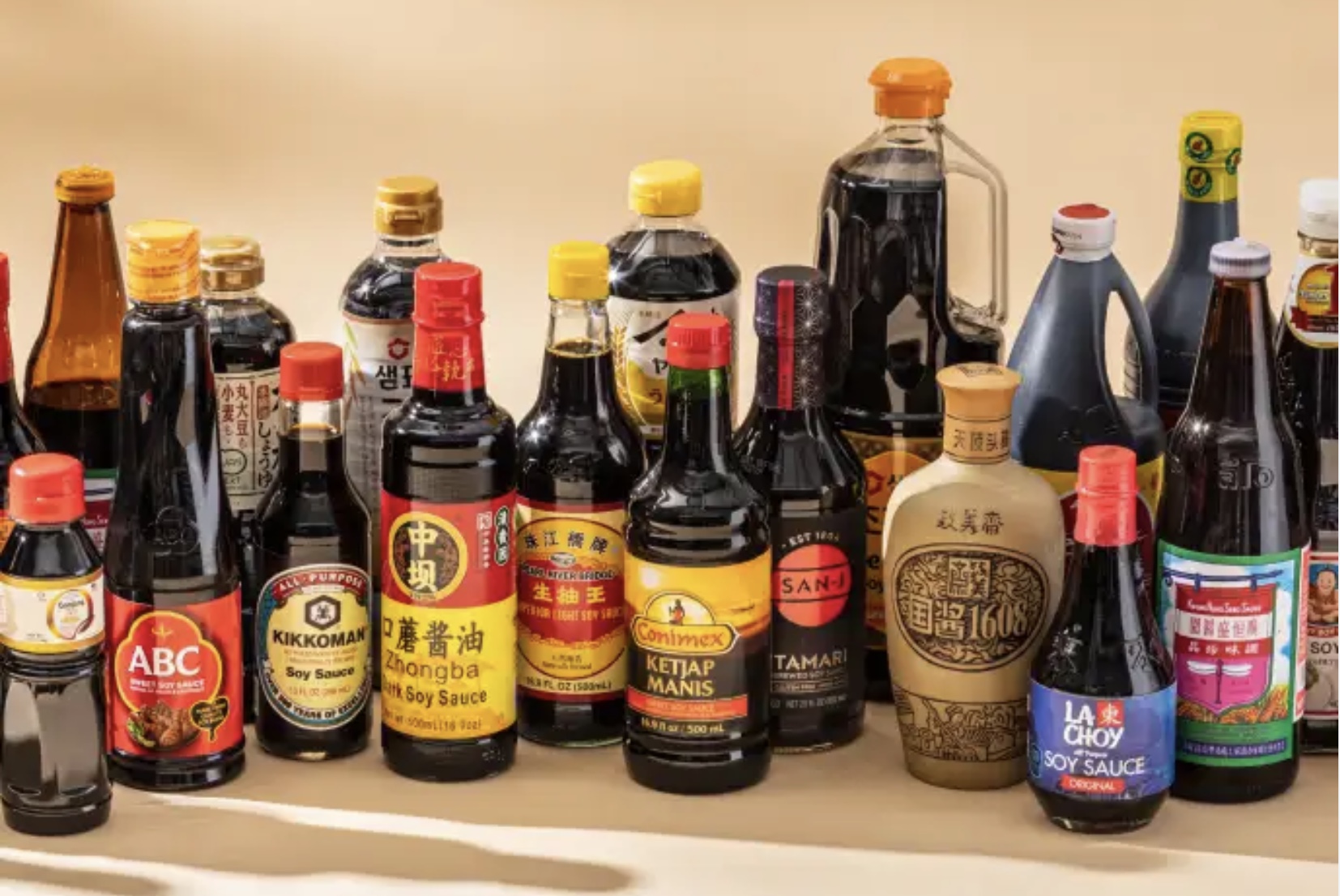

The good news is that real deal soy sauce is widely available and well worth you searching it out. Between a blossoming of interest here and the expansion of global economies, some really good stuff can be found. So let’s look at some of the varieties of soy sauce you can find readily, what makes them different, and what they’re really good for.

First rule of thumb – if you’re cooking Chinese, use Chinese sauce, and so on – whatever regional or National cuisine you’re cooking will have its own sauce, and if you want to make that taste authentic, you want the right soy sauce. These options are generally not expensive, and will last a good long time, so if you’re into it, go for it.

Some Important Caveats – 

1. What I’ll outline is what floats my boat, and your mileage may vary – plan on doing some experimenting, especially if something I recommend really doesn’t sit well with you. If you Google ‘great soy sauce from ______,’ you’re gonna find more than a few rabbit holes to wander down. 

2. This surge of availability for great soy sauces also means that you can spend a hell of a lot of money – if you can and want to, go for it – but you needn’t do so to have good options at home. Yes, chefs in high end restaurants are using better stuff than you will be, and that’s OK – that’s why we go out to eat now and again.

3. What most Americans are familiar with when we speak of soy sauce is, at best, a pale shadow of the real stuff. It’s the equivalent of ultra light beer – it really doesn’t have any flavor other than salty – and that’s a shame. If you think you don’t like soy sauce, that’s probably why.


Chinese soy sauce can be a bit challenging – there are so many versions, and depending on the region and language dialects, it can be hard to know exactly what you’re getting. Narrow things down to two or three good quality options, and you’ll be set.

Light Chinese – This is kinda the EVOO of Chinese soy sauce. It’s a first pressing sauce, and if a recipe you’re working with simply calls for soy sauce this is your go to. It’s perfect for marinades and stir frying, and will do OK as a table condiment. My go to here is Pearl River Bridge brand – so much so I buy it in 60 ounce bottles…

Dark Chinese – This sauce is darker, thicker, and sweeter than Chinese light, usually due to added sugar – it tastes less salty because of that addition, but it is in fact higher in sodium. Dark is used as a finishing element to a sauce or stir fry, to add color and mouth feel – Whereas light soy gets used a lot, this sauce is deployed a bit more sparingly. Again, I opt for Pearl River Bridge.

Double Black Chinese – sweeter and thicker than dark, due to added molasses. Used much as black is, where additional thickness and sweetness is desirable, say for pork belly, or a simple noodle dish where you really want sauce to stick. I like Koon Chun brand here, but you could just as easily add molasses to dark and do just fine.
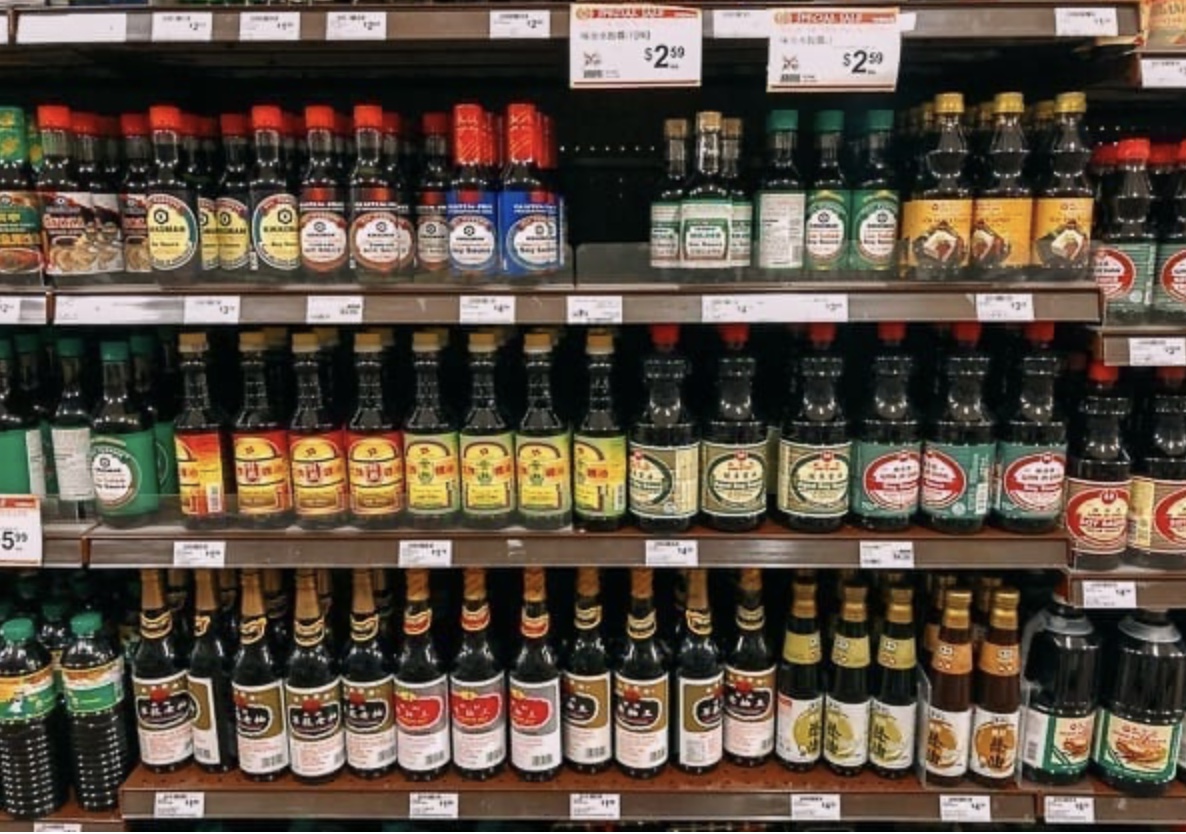

Japanese soy sauces are almost as challenging as Chinese – there’s a lot of variety, and you can get into über expensive artisanal stuff real fast. That said, there are five variants to consider if you’re diving into the deep end. Note that if you really wanna get authentic, Kikkoman offers Japanese made versions of their sauces that I recommend here.

Koikuchi Shoyu (dark) – easily 80% of Japanese soy sauce produced is this version. A blend of soy and wheat yields a nice balance of salt, sweet, bitter, and umami – it’s used broadly for cooking and as a table condiment. For every day use, I like Kikkoman Organic.

Usukuchi Shoyu (light) – Very salty, light colored sauce, used sparingly in cooking to add flavor without altering color a bunch. Some brands get the salty, slightly sweet flavor here by adding mirin or sugar. I like Kikkoman here again, but make sure you’re getting Light, not Lite – the latter is a low sodium product with less than optimal taste.

Tamari Shoyu – The Japanese version of Chinese dark soy – thicker, denser, a bit sweeter and less salty than koikuchi shoyu, the good stuff is made with just soy beans and no wheat. For building marinades that pack flavor and stick well, like teriyaki, this is what you want – it’s also great as a table condiment. I really like Kishibori brand – it’s a 1 year barrel aged sauce with no junk in it, and has fantastic taste.

Shiro Shoyu (white) – Used almost exclusively for flavoring soups, this is not a must have, but is a great thing to have when you want to get soy sauce flavor with virtually no dark coloring. Almost golden in color, it packs plenty of flavor. I like Takuko brand here – good flavor and won’t break the bank.

Saishikomi or Kanro Shoyu (twice-brewed) – This stuff is amazing – it’s dark, thick, slightly sweet, and packs an intense umami burst. This is pretty much purely a table condiment, used for dipping – it’s excellent with fish and beef. It’s pricy, so not an everyday thing in my book. Yamasan Kanro Shoyu is my go to.


Korean Soy Sauces – Korea makes great soy sauce, different enough from either Chinese or Japanese to matter. There are a couple variants here, depending on what you’re fixing to make.

Ganjang or Whe-Ganjang – This is the every day soy sauce to reach for when you’re cooking Korean. Used for marinating, stir frying, grilling and sashimi. Read labels buying here, as added high fructose corn syrup is kinda common. Chung Jung One Naturally Brewed is my go to – no junk and great flavor.

Guk or Jip Ganjang – Used almost exclusively for cooking in soups, stews, and veggie sides. This version is made with nothing but soybeans and is aged for 3 months or longer – it’s the modern swing at what used to get made at home, hence gip (house) ganjang. I really like Wholly Ganjang if you can find it – nothing there but water, soybeans and salt, and aged 3 years, outstanding flavor. If you can’t find that, Q-Rapha Premium is also outstanding stuff.
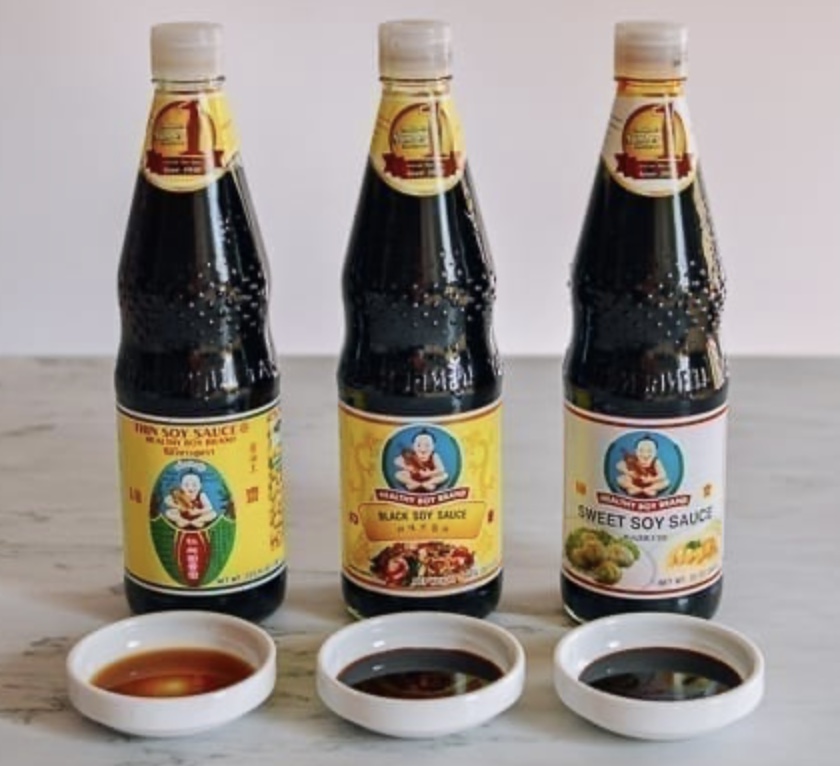

Thai soy sauce – there are four major variants here – light, black, mushroom, and sweet. The light is the every day cooking and table sauce. Black is thicker and sweeter and used for coloring dishes and adding a little stickiness, just like the Chinese version. Sweet is, well, sweeter, with often quite a bit of sugar, and the mushroom is what it says it is. There is a subtle, fundamental difference with base Thai sauce versus Chinese or Japanese – Thais traditionally make their sauce with a mix of soy and wheat, with a fairly high soy ratio – it’s also notably thinner. FM2¢W, I buy a very decent light sauce, Golden Mountain, and then sweeten, thicken, or flavor that as I see fit. I get a fresher taste, frankly, because there’s a lot of junk in a bunch of those alt sauces.

Without short changing to much, I’ll just say that’s a pretty good tour. There are more, believe me! From Datu Puti in the Phillipines and Jalen dark in Malaysia, to Myanmar and Cambodia, there are variants all over the place, let alone in well established expat communities. Like I mentioned, you can go way deep worm-holing this stuff, so unless you’ve got a cabinet space ready just for soy, pace yourself. Oh, and for the record – yeah, I do…

Now, just in case you thought I forgot, here’s a few words on, ‘that amino stuff that some people use instead.’ As I often do here, I’ll leave the final word to Guru Harold McGee, who has this to say about ‘chemical soy sauce’ in On Food and Cooking – ‘Industrial producers have been making nonfermented approximations of soy sauce since the 1920s, when the Japanese first used chemically modified soy protein (“hydrolyzed vegetable protein”) as an ingredient. Nowadays, defatted soy meal, the residue of soybean oil production, is broken down—hydrolyzed—into amino acids and sugars with concentrated hydrochloric acid. This caustic mixture is then neutralized with alkaline sodium carbonate, and flavored and colored with corn syrup, caramel, water, and salt. Such quick “chemical” soy sauce has a very different character from the slow fermented version, and is usually blended with at least some genuine fermented soy sauce to make it palatable.’

As Clint Eastwood has been known to say when directing a film, ‘that’s about enough of that.’

Mignonette Ain’t Just for Shellfish


Are you a raw oyster fan? If so, chances are good you’ve tried sauce mignonette. This brilliantly simple concoction adds a perfect tangy, bright note to shellfish. Look this stuff up, and you quickly find that the buck literally stops right there – Google alternate uses for mignonette, and you get next to nothing. I have no idea why that’s the case, because mignonette is fantastic on a bunch of other stuff as well.

Classic Mignonette


A classic mignonette is a paean to simplicity. Just three ingredients – red wine vinegar, shallot, and black peppercorns are all it takes to make the magic happen. With three fairly potent constituents, proper ingredient ratio is critical to preparing great sauce  – for every quarter cup of wine vinegar, you add a tablespoon of shallot and a two to three twists of pepper, about a quarter teaspoon. Combine, let them sit for a bit to marry, and you’re there. 


Tweak things a bit, and you have a whole bunch more options. Change the vinegar to white wine, champagne, cider, sherry, or balsamic – or mix vinegar 50%-50% with wine or fresh fruit juices. Change shallot to sweet onion, or red, or white, or go wild and sub jalapeño or serrano chiles. Change black peppercorns to a fragrant 4 pepper blend, or Tasmanian pepperberry, grains of paradise, or Szechuan. Each variant reveals entirely new flavor notes and combinations – find yours, name it, and share it.


Damn near any simply prepared fresh fish will pair nicely with mignonette, as will chicken, pork, extra firm tofu, and sautéed veggies. Below you’ll find a solid basic recipe to start playing with as well as a great twist for hot summer months, a mignonette granita – freezing and shaving the mix intensifies the sauce, (at least to my palate) – Allow a generous spoonful of that to melt on top of freshly grilled fish or poultry at table side, and you’ve got a truly lovely treat.

Classic Mignonette 

1/4 Cup Red Wine Vinegar

1 packed Tablespoon minced Shallot

2-3 twists Telicherry Pepper (about 1/4 teaspoon)

Combine all ingredients in a small, non-reactive bowl and whisk to thoroughly incorporate.

Allow to marry at room temp for at least 15 minutes before serving. The longer you allow for marriage time, the better your overall incorporation – you can’t really go overboard in that regard.


Lemon Mignonette Granita

NOTE – Works great with lime, blood orange, tangerine, grapefruit, or pineapple too.

1/4 Cup Red Wine Vinegar

1/4 Cup fresh Lemon Juice

2 packed Tablespoons Minced Shallot

5-6 Telicherry Peppercorns, crushed or ground

1/4 teaspoon sugar

In a small saucepan over medium heat, combine all ingredients and bring to a vigorous simmer for about 30 seconds.

Remove from heat, pour sauce into a non-reactive bowl and allow to cool to room temp. 

Pour cooled sauce through a single mesh strainer into a freezer safe pan or dish with a flat bottom.

Place in freezer for 2-3 hours until well frozen, scraping the sauce down with a fork every hour to to keep it shaved.


Serve in a small, well chilled bowl.

Roots Teriyaki


Yesterday was serendipitous, in teriyaki terms. First off, I received a message noting that someone poking about here couldn’t find a recipe for teriyaki marinade. I was sure there was one, right up until when I poked around and couldn’t find one either. 692 posts over 13 years, and I never wrote about teriyaki? Wow – time to fix that.


Teriyaki is Japanese in origin, and its roots stretch back hundreds of years. At heart, it’s a blend of  sake or mirin, soy sauce, and a sugar. Done right, it’s a perfect tangy balance of sour, salty and sweet – and that balance is the key.


Nowadays, there are myriad variations on the theme, but it’s those roots I’m most interested in. Teriyaki can be done very well with just three ingredients. If you’re diving in to making your own, you should start there. Oh, and come to think of it, it’s grilling season again, too – serendipity redux.


Starting simple doesn’t mean you’ll stay there – in fact I encourage you not to. I’m sure you’ll find a three ingredient version that you really dig and do again and again – there’s a soul satisfying quality to teriyaki made this way. That said, there are lots of other things you should experiment with – Lemon, lime, pineapple, yuzu, sudachi, mandarin orange, ginger, garlic, and chiles come to mind. So long as you keep the ratio of ingredients properly balanced, you’ll love the results.

Ratios lie at the heart of cooking, and teriyaki is no exception. Starting with the three ingredient version, you’ll want 4:2:1 for acid, soy sauce, and sweetener. If you’re looking to marinate a couple pounds of protein, (chicken, beef, pork, fish, extra firm tofu, or veggies), you might go with this

Roots Teriyaki

1 Cup Sake or Rice Vinegar 

1/2 Cup Soy Sauce 

1/4 Cup Agave Nectar 

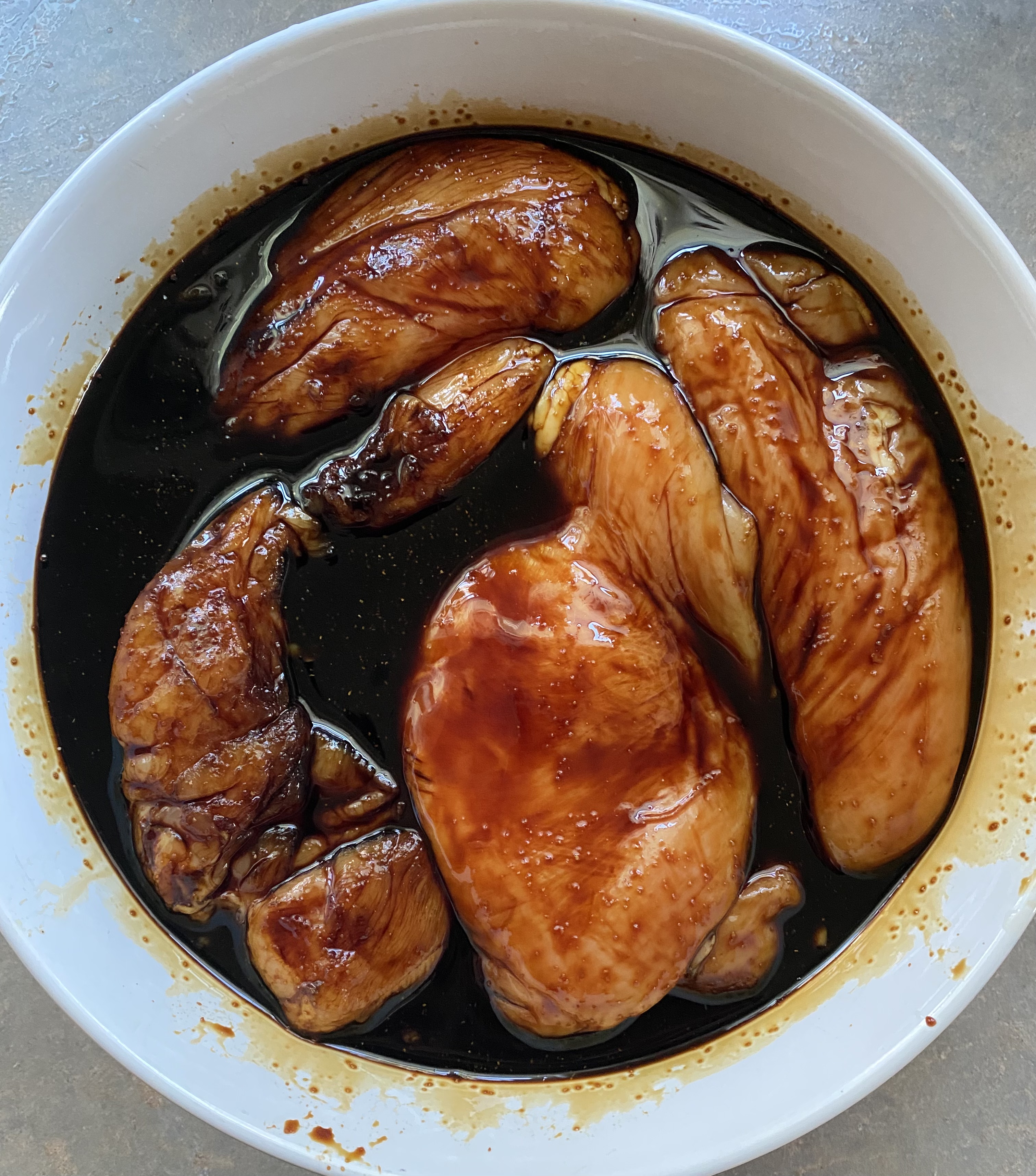
Thoroughly whisk all three ingredients with a fork, and let them sit for about 15 minutes to get acquainted, then marinate for at least an hour, and as long as 3 hours – Note that fish and tofu should marinate for 15 to 20 minutes, tops. Yes, I know some folks swear by overnight, etc, but – there’s a lot of acid in this sauce, and if you go too long, it’s going to alter the texture of your protein in unpleasant ways.

Seen recipes out there that call for cooking the sauce? That’s done because granulated sugars simply will not dissolve in room temperature acid/soy mixes. If you want to use granulated sugars, you’ll need to simmer your sauce over medium low heat for about 5-7 minutes to dissolve the sugar completely. Cool to room temp before deploying. 

If you’re adding ginger, garlic, chiles, etc – start small. For the base recipe above, a half teaspoon of minced, fresh will deliver the flavor notes without overwhelming the balance of the sauce.


Now, variety – change the acid, see what you think. Sake versus mirin or rice vinegar, and different varieties of same. Switch to citrus or pineapple and you’re in a whole other ballpark. Go way out in left field and try Chinese black vinegar, or balsamic, and you’re in another world altogether.


Change the soy sauce from koikuchi shoyu (dark) to usukuchi shoyu (light), shiro shoyu (white), tamari shoyu, or saishikomi shoyu (twice-brewed). Try Chinese, Thai or Korean soy sauces – whole nuther show there.


A note on Mirin – when you find and try the good stuff, it’s revelatory. Unfortunately, most of what you find in general grocery stores is crap – a pale shadow of the real thing with a bunch of preservatives added. If you have a good Asian grocery nearby, you can get the good stuff, and you should. Real mirin is slightly less alcoholic than sake, and subtly sweet/savory in flavor – it’s a vital ingredient in a lot of Japanese cooking, and it’s absolutely worth it.

Why Agave nectar for the sweetener? Because it‘s a light, neutral flavor and a decent coater/thickener, and makes teriyaki production super easy. For a more authentic option, ask for Mizuame (also known as Millet Jelly), or black sugar syrup (there’s a bunch of makers) at your local Asian grocery. You can use honey or maple syrup as well, with very intriguing results. 


Have some fun, come up with what you dig most, and then call it yours.

Easy Eggs Benedict at Home – No, Really


It’s the youngest’s Birthday, and he’s up for a visit, so I offered several options for breakfast – he landed on Eggs Benedict. It’s also Palm Sunday, which means that this weekend and certainly next, a lot of folks are gonna think about going out for a special breakfast, and often enough, for the same dish. That’s all the reason you should need to make it at home.

Few breakfast dishes are more celebrated than Eggs Benedict. This is as it should be, because when done well, there are few things more delightful. And yet they’re rarely done at home, due to the assumption that they’re a royal pain in the ass to make. They’re really not if you go in understanding what you’re gonna do and have a pretty simple mis en place ready – do that, and they can and will be pretty easy.

There’s a couple versions of Benedict that claim to be the original out there. What’s generally agreed to is that it is an 19th century American dish and that hollandaise is involved. I was raised believing in the Lemuel Benedict version, named after a retired stockbroker with a hangover who wobbled in to the legendary Waldorf one morning in the late nineteenth century and ordered toast, bacon, poached eggs, and hollandaise. The Maître d’ on duty liked the idea and put it on the menu, subbing English muffin for toast and ham for the bacon.

The competing ‘original’ Benedict came from Elias Cornelius Benedict, a New York City banker – his version included a mixture of chopped, hard boiled eggs and minced ham topped with hollandaise. 

With this post as an excuse, we tried both versions. We found them both delish, but it was agreed that Lemuel’s version is best. In any event, it’s quite obvious who has won at least the popular vote, if not the naming rights.

There’s a boatload of variants, from Florentine to mournay and Chesapeake to Hebridean. As far as I’m concerned, any variant is still Benedict so long as it involves eggs, bread and hollandaise.

So why does the dish have such a bad rep for home kitchens? The overall sense of fussiness and time pressure when constructing the dish, (largely due to a broad belief that you must make the hollandaise last), and mixed results when poaching eggs are the top complaints.

What you’ll find here does away with all that, and produces consistent, pretty results. We’ll build the hollandaise first, with a grounding in how and why it works, which makes for an unfussy, unhurried brunch. We’ll also deploy a skillet instead of a sauce pan to poach – that way you can clearly see how your eggs are cooking and have a much easier time with assembly.

First a bit about hollandaise. This is an emulsion, not much different than salad dressing in what we’re after getting it to do for us. The egg yolks we’ll use are basically protein rich water, and butter is our fat.

Successful hollandaise involves giving egg yolks, a little water, and lemon juice the time and gentle heat needed to allow us to gradually add butter and end up with a delicious, stable emulsion.

A couple tablespoons of water isn’t much, but it’s key to allowing the proteins in the yolks to relax. For the life of me I can’t understand recipes that omit it. Acids like lemon juice or vinegar also help relax yolk proteins, but the real protagonist here is gentle heat, with a strong emphasis on gentle.

Heating that mixture too much or too fast is the top cause of Hollandaise failure for home cooks. I’ll have you use far less heat than most recipes, and none if it direct -that’ll solve the overcooking problem. The indirect, (mostly steam), heat in the double boiler, coupled with the latent heat of the melted butter is more than sufficient to get the job done. Here’s how you do it.


Painless Hollandaise

4 large, fresh Egg Yolks

1/2 Cup fresh Butter

2 Tablespoons Cold Water

2 teaspoons fresh Lemon Juice

2-3 shakes Tabasco Sauce

Separate eggs. Place whites in an airtight container and refrigerate or freeze for future projects.

Put about 2″ of water in a sauce pan sized such that a mixing bowl or double boiler will fit within. You want the bottom of the bowl you’ll work in to be above the water by a good 2″. Not doing this right is a primary cause of failed hollandaise – Too much heat, and/or heating too fast.

Turn heat to medium low.

In a separate sauce pan, melt butter over medium low heat.

When the water starts to simmer, turn off the heat.

In a small mixing bowl, combine egg yolks, water, and lemon juice.

Whisk briskly by hand to combine, until blend thickens and the volume has increased notably, about 2 minutes.

Place bowl over the hot water pan.

Gently but steadily whisk the egg yolk mixture to heat it through, about 1 – 2 minutes.

Begin slowly adding butter in a thin stream; add a few seconds worth, whisking gently but constantly, until the yolk mixture has incorporated the butter, then add a little more, and keep doing so until all the butter is absorbed.

The sauce will thicken somewhat, but possibly not as much as you like it to end up, but don’t sweat that point; as the sauce sits while you prep the rest of the dish, it’ll thicken a bit more.

Whisk in the Tabasco, then set the whole double boiler rig on the back of your oven, and cover with a clean towel.

What to do if your Hollandaise breaks – It’s gonna happen some day, so just accept that and be prepared. It’s not the end of the world, and you can fix it, so – deep breath! Broken hollendaise looks like oil with little bits of egg in it – fear not. Grab a small spoon and snag a little hot water from your double boiling rig. Add a couple of those to the hollandaise and slowly, steadily whisk it in. Add a couple more and repeat. You can go as high as 25% of the volume of your sauce, but you probably won’t need to. Be patient – keep adding a couple small spoons of hot water and whisk slowly and steadily until your sauce emulsifies and takes on the smooth texture you’re after. Taste it, adjust lemon and Tabasco balance, and carry on – all is well again.


Eggs Benedict – Serves 2

4 large, fresh Eggs

2-4 slices thick cut Ham, (Cooked)

4 slices thick cut Sourdough Bread

Tablespoon of White Vinegar

Optional: Pinch of fresh Dill

Preheat oven to Warm.

Cut sourdough into roughly 4″rounds, and do the same with the ham.

Toast sourdough lightly, then place ham onto plates in the oven to heat through.

In a large skillet over medium heat, add about 2″ of hot water, and the vinegar.

When the water starts to simmer, roll the heat back to medium low.

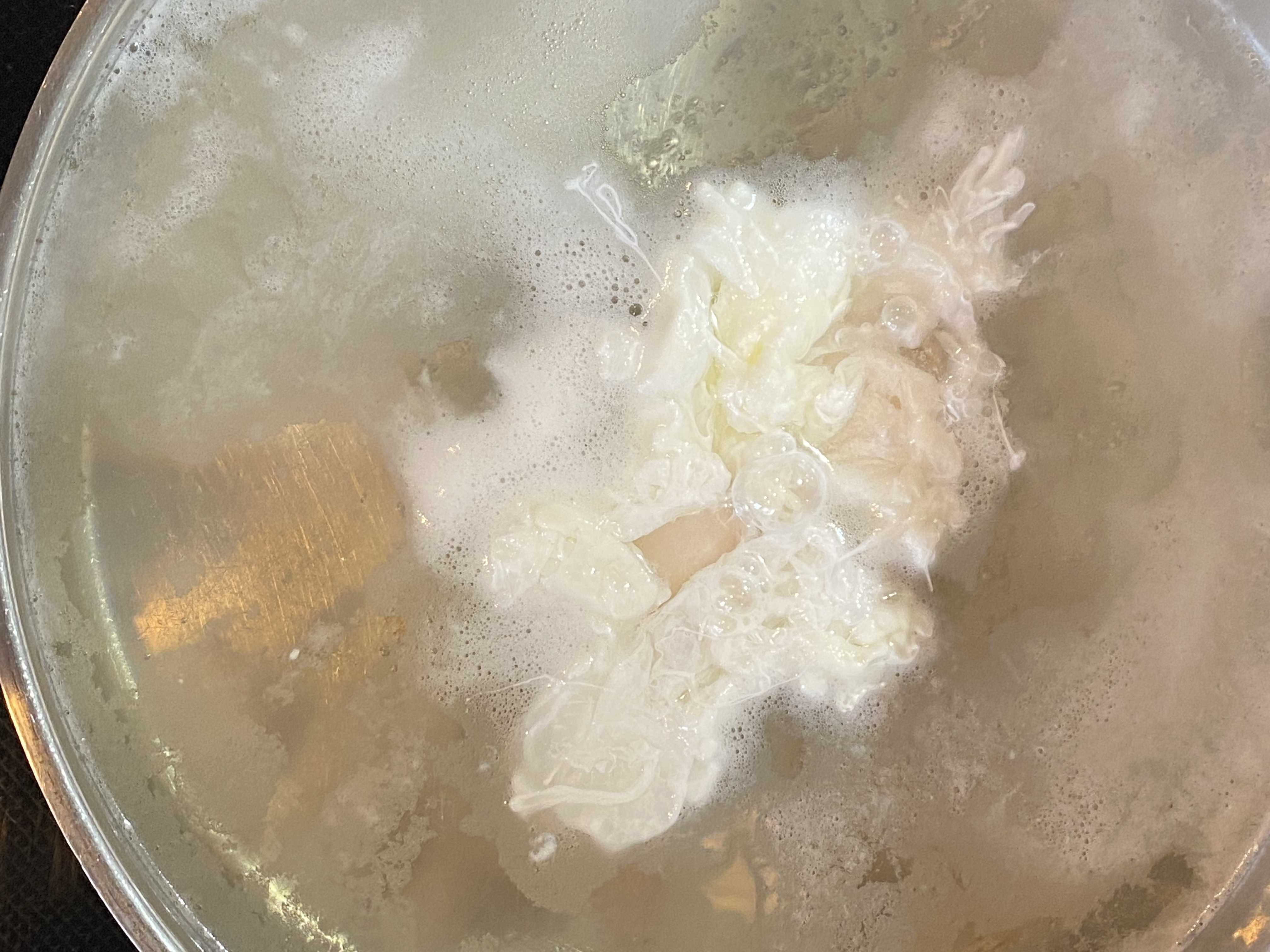
Gently crack an egg and, with the shell just above the water, slowly release it into the pan. The vinegar will help the whites to solidify quickly, keeping your eggs together. Repeat with the other three eggs.

Poach eggs for about 3 minutes, until all the whites are nicely set and the yolks are still semi-liquid.

Remove plates, toast, and ham and set up two of each on warm plates.

Use a slotted spoon to gently corral eggs and set them carefully on the ham and toast stacks.

Uncover hollandaise and whisk to loosen it up a bit. If it’s a bit too thin, a little burst of heat and whisking will take care of that in less than a minute. If perchance it’s thickened too much, a teaspoon to two of milk whisked in will bring everything back to status quo.

Spoon generously over eggs and garnish with a little fresh dill if you wish.

 
The pretty plate up there? That was the Birthday Boy’s – here’s mine.

Molé Making Brilliance from Megan Heberlein


A couple of things, for the record – I know Megan Heberlein through social media, and this post is written with her blessing – albeit she wanted to make sure that I did not refer to her as ‘any kind of expert,’ so I ain’t.


I connected with her through the Rancho Gordo Bean Club Members group, a gang of folks who share recipes, questions, techniques and all things bean-loving over on FB. Unlike a lot of social media in broad strokes and FB in particular, this group is fun, friendly, supportive, and ridiculously wholesome – I love it to pieces.


What drew my attention to her was a well thought out piece of advice on making and storing molé – one of those why didn’t I think of that cooking moments that you instantly want to adopt and turn others on to.


Her molé strategy is nothing short of brilliant, far as I’m concerned. As she notes below, this sauce is ubiquitous in Mexican regional cookery, and every family really does have their own fave – just like pasta sauce in Italy or bourguignon in France. I couldn’t say it any better than she does when she exhorts us to try a bunch and make a fave or three ours. So without further ado, here’s Megan’s stellar advice.


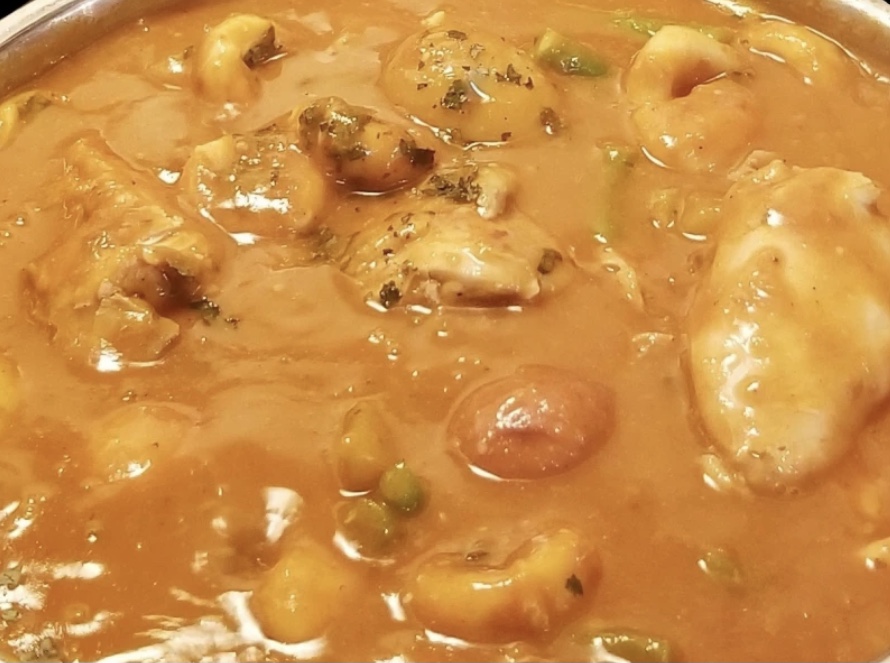
1. Make a big batch – a really big batch – as big of a batch as you are willing to deal with. It doesn’t take much longer, and mole freezes really well.

2. Use gloves for the chili handling. If you’re not already, it really does help keep the burn down!

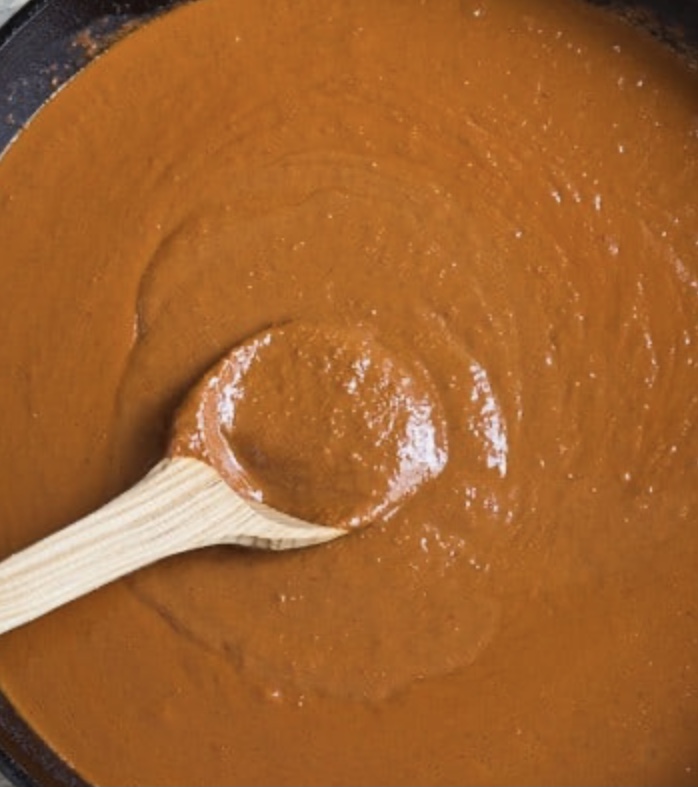
3. Once everything is together and run through the blender to smooth it out, don’t pour it back into the pan. Set the oven for 250, and pour the mole into a roasting pan, or something similar that is size appropriate. It will take longer to cook down, but you don’t have to hover over it. Just walk away from it, give it a stir every couple hours – or even set your oven lower, and go to bed! The other great thing about this method is that you don’t have to worry about cleaning mole splatters off your walls and ceilings for months. 🙄

4. Cook it down. Cook it way down, and turn it into a paste. This will take up less space in your freezer, and is easy to turn into a sauce with the addition of stock.

5. Glass jars are your friends for storage. I usually pack mine into pint jars, and 1 pint jar plus stock is plenty to use on a family size package of chicken thighs. Come time to use, you can either thaw on the counter (if you’re one of those people who actually plan ahead), or stick in the microwave without the lid (if you’re me).  I haven’t tried it, but if you’re good with liquids in vacuum seal bags,  that would probably store really well, and just throw it into warm water to defrost.

6. Freeze, don’t can! I’ve got it on very good authority that canning mole at home is right out, even with a pressure canner – Apparently it’s too dense to be safe.

7. Every region of Mexico has it’s own style of mole, and every family has their own recipe.  Try various recipes, and find the style(s) you like! One of the most fun things about mole is that, because they are so varied, you can change up recipes as you’d like. Change up the peppers, the amounts of onion/garlic/tomato/tomatillo, the fruits, the nuts/seeds, whatever.

8. Know that every pepper has it’s own flavor profile, and playing with the peppers can change up the flavor. Ancho is fruity, chipotle is smoky, etc.

There you have it, with big thanks to Megan. What I love about her strategy is how demonstrative it is of the innovative capability of us home cooks – and it’s a great reminder to always be on the lookout for better ways to do stuff in your busy home kitchen – now y’all go have some fun!

What does bay leaf do for our cooking, anyway?


When you make soup, or stew, or any number of sauces at home, you add a bay leaf or two, right? Ever wonder why you do that – I mean, really give it some thought? I’ll be honest – I hadn’t, so I guess it’s time to ask – What does bay leaf do for our cooking, anyway?

Full disclosure, a social media acquaintance sent me a link to a new-agey treatise on bay leaf. This thing claimed that, ‘recent scientific studies have proven’ that bay leaf converted triglycerides to monounsaturated fats, eliminates heartburn, acidity, and constipation, regulates bowel movements and blood sugar, makes the human body produce insulin, eliminates bad cholesterol, protects the heart from seizures and strokes, relieves insomnia, anxiety, kidney stones and cures infections – No freakin’ wonder we put them in soup!

Most if not all of those claims are, at best, gross exaggeration and distortion of facts. The real dead giveaway was this line – ‘Do you know that if you boil some bay leaves in a glass of water and taste it, it will have no flavor?’

My answer to that is, ‘do you know that this statement is complete bullshit?’ Either the author has never actually done the experiment, or did so with bad bay leaves. Had they done it properly, they’d have discovered a much more potent and nuanced result.

Sweet bay laurel tree

Before we dive into that, let’s define what exactly the bay leaf in our pantry is – it’s Sweet Bay, AKA Bay Laurel, or Lauris nobilis. It’s native to the Mediterranean, and cultivated commercially all around that region, as well as France, Spain, Mexico, and Portugal. Now for the record, the other bay we see in a lot of pantries is California Bay, and that’s a whole different beast, Umbullularia californica – it’s far more potent than sweet bay, with longer, narrower leaves.

Dried Sweet Bay leaves Dried Sweet Bay leaves
Dried California Bay leaves Dried California Bay leaves

Problem is, a lot of purveyors just call their stuff ‘Bay Leaf,’ and that can make things tough on us home cooks. Different growing areas produce leaves with subtle differences you may or may not like. In any event, it’d be nice to know from whence yours came, wouldn’t it? Good outfits like World Spice and Penzey’s will tell you that. 

It’s good to keep both the sweet and California versions on hand, by the way. While California bay is intense and medicinal, the sweet, (often called Turkish), is lighter, more nuanced and savory. The latter is far and away my personal go to, for the record. California bay is nice, in moderation, in low and slow soups and stews where time and temperature can simmer out the lion’s share of the more volatile constituents that spring forth early on in the cooking process. In any event, you’d be well advised to find out what variety you have, and like best.

Sweet Bay is complex, with dozens of volatile compounds onboard each leaf. The heavy hitters are cineole, pinine, linalool, and methyl eugenol. Interestingly enough, most of those compounds are also found in basil. California Bay is a bit different, packing cineole, pinine, and sabinine – that last one is responsible for things like the spiciness of black pepper, nutmeg, and carrot oil. Cineole, linalool, and pinine are terpenes, a rather volatile chemical family that has much to do with a wide variety of powerful scents in the natural world. Their highly reactive nature makes them some of the first things we smell when bay leaves are used in cooking. Methyl eugenol is a phenolic found in over 450 plants, and plays a vital role in pollination – how about that in your spaghetti sauce? These compounds are fascinating, especially when we think about how they’ve made that journey from chemical warning sign, or pollination attractor, to our dining table.

On to that experiment then, since that’s the best way to ascertain that what you’ve got in your pantry is packin’. Set a small pan of water to boil and then reduce the heat to maintain a simmer. Toss in a couple bay leaves of your choice, let them do their thing for 3 to 5 minutes, and then stick your nose down there.

The first things you get will be those fleeting terpenes. If you’ve got California bay, those notes will be the big medicinal ones, menthol and camphor. If you’ve got sweet bay, you’ll still get some hefty initial notes, like camphor from the cineole, but as simmering time progresses, you’ll catch a sort of floral skunkiness – that’s the linalool’s influence. Piney, sagey notes come from the pinine, while the methyl eugenol might remind you of general earthy, savory notes. If you let that simmer go for 45 to 60 minutes, as you would for a soup or stew, and then taste your bay leaf tea, you’ll get hints of all these things – If you don’t, then what you’ve got is old, or old, crappy bay leaf – and that’s not at all uncommon.

Bay leaf’s contribution to your cooking is subtle – it’s a background stalwart, not a lead singer. What makes a sauce, soup, or stew great is the layering of flavors, and for that, a solid aromatic base is critical. Bay lends a raft of minor notes that, while perhaps not missed in and of themselves, certainly will be if they’re absent from the mix.

So what to do in your kitchen? Start by finding your bay leaf, opening the jar and giving it a big sniff. Do you get a nice, complex but subtle whiff of the stuff discussed herein? Do you remember where and when you bought those leaves? Does the container say anything about provenance? If the answer to those questions is, ‘no,’ then trash what you’ve got and get some fresh stuff. World Spice is a great go to for bay leaf – They carry both Turkish and California, and they’re always top notch quality. 

Bay does just fine as a dried herb, by the way. If you keep them in a clean, airtight glass jar, out of direct sunlight and wide swings of temperature, they’ll be good to go for 6 months, easy. If you want more from your bay, store them in your freezer and they’ll last for years.

Fresh Sweet Bay leaves Fresh Sweet Bay leaves

You can use fresh bay leaves in cooking, but know that their potency is quite a bit higher than dried leaves, so adjust accordingly, and again, be sure you know what you’ve got – A freshly crushed leaf of fresh bay from our garden smells subtly savory and complex, just as described, whereas, at least to me, fresh California bay smells like a medicine cabinet – an overdose of the latter will ruin a meal really quickly.

Tej patta, or Indian bay leaf

Then there’s Tej Patta – Indian Bay leaves. Indigenous to the southern slopes of the Himalayas, Indian bay is mostly wild brown, and can be identified by the 3 distinct veins running down each leaf. Seminal to Terai cuisine from the area around the mountainous northeast of the country, and to Moghul dishes like biryani and korma, Indian bay has notes of  cinnamon, clove, and cassia. It’s a must have if you’re to do those regional cuisines justice.

Grow your own bay leaves

Finally, you can grow your own if you’re living in a USDA Plant Hardiness Zone 7 or thereabouts – We’re a 7+ here in the northwest corner of Washington State, and our little sweet bay plant is doing fine, even with a couple of hard frosts under its belt. Granted, it’s a small bush and not a tree – in its native turf, it can reach over fifteen meters in height. Here’s a very nice primer on doing so.