A Story of Bitter Orange


This is a story of bitter orange, naranja agria. I came to love this little bundle of pucker power through the cuisine of the Yucatán peninsula. There, bitter orange is everywhere in the food, most famously in the signature dish, conchinita pibil, an intoxicating alchemy of naranja agria, chile heat, and low and slow pit cooking. While chiles and the Yucatán swing on pit barbecue are critical elements here, the one thing you absolutely can’t do pibil without is bitter orange.

Bitter Orange is seminal to a bunch more cuisines as well, from Cuban and other Caribbean islands, to Spanish, Moroccan, and Persian. This is not, for the most part, an eating or drinking orange and juice, although in Mexico, I wouldn’t be entirely surprised to see them sliced, salted, and slathered in chile paste as a snack. These oranges are very bitter indeed, and sour to boot – Think more lemon or lime than orange in that regard. Yet the orangey notes are most definitely there, and that’s what brings the magic.

Naranja Agria - The noble bitter orange

Also known as Seville orange, sour orange, marmalade orange, naranja acida, naranji, melangolo, and even soap orange, Citrus x aurantium originated in Southeast Asia and spread rapidly around the globe. Natives of the South Sea Islands believe it hit their shores prehistorically. It was the sole European orange for hundreds of years, and the first to arrive on this side of the pond. Now grown commercially virtually worldwide, bitter orange trees range from maybe 10 feet to over 30 feet. It’s generally a thorny evergreen tree, with leaves and flowers that smell absolutely delightful, and smallish fruit, 2 to 4 inches or so, and thick, wrinkly, oily skins, (that make great marmalade, of course.)

The noble bitter orange tree

As favored as these fruit are to so many cuisines, it’s natural that numerous varieties have been established. Seville is probably the most internationally recognizable, but there’s also the English bergamot (bouquet here in the states), the chinotto from the Mediterranean, the daidai from Japan and China, the Californian goleta, the South American Paraguay, and the Indian karna – There’s a bunch more than this, but you get the idea – They’re beloved all over the place.

There’s a nice range of notable food uses for sour orange, other than powering sauces and marinades – The peels make amazing marmalade, of course. Oil squeezed from the peels is a signature orange flavoring for curaçao liqueur, candy, soft drinks, ice cream, and a bunch of other stuff. Orange blossom honey is a treat wherever you can find it. Orange flower water finds its way into Middle Eastern and Persian food. In quite a few places, the juice is fermented into wine – I’ve never tried that, but I’d like to.

There are some very interesting non-food uses for naranja agria, tambien – when the fruit and leaves are crushed together, they’ll lather in water, and are sometimes used as soap. The perfume industry loves the oil and flowers. The juice has antiseptic and hemostatic properties. And finally, the wood is nice stuff – Dense and hard, it was used in Cuba for baseball bats.

So, now that you’re all excited to join the party, it’s time for some good news/bad news – First, the bad – in all likelihood, you won’t find decent sour orange juice anywhere near you – In fact, you probably won’t find it at all. Oh sure, there’s stuff out there called bitter or sour orange – Goya, Badia, and Lechonera are the brands you’re most likely to see – But the fact is, none of them are bitter orange juice. They contain, variously, orange juice concentrate, other juices like lime, lemon, or grapefruit, and at best, a little bit of sour orange oil, and a bunch of stabilizers and preservatives – the Lechonera brand, in fact, has lists propylene glycol as the seventh ingredient therein – In other words, at best these are shelf stable, pale shadows of the real thing.

So called ‘bitter orange’ marinade is anything but

The good news is, if you have a decent Latin grocery near you, there’s a 90%+ chance they sell fresh naranja agria, (and same goes for a Persian or Middle Eastern grocery, where they’ll probably call them Persian oranges). I get plump, juicy Valencias for around 50¢ a pop at La Gloria in Bellingham, WA. Do make sure you confirm they’re agria, (albeit they’ll probably have the little sticker on them telling what variety and place of origin they are). They’ll last like most citrus, good for three to four weeks refrigerated in a drawer designed for holding produce. Four or five is plenty to provide enough juice for most recipes. As with all citrus, look for firm, heavy fruit. More so than sweet oranges, bitters may have some green on their skins and still be ripe.

Now, what to do if you get a sudden hankerin’ to build something that calls for bitter orange when you ain’t got none? Then, it’s definitely time to fake it. As those commercial marinades indicate, the proper substitution is a combination of citrus juices, and maybe even some vinegar. The key here is the taste of orange forward in the mix, with the sourness of lemons, limes, and maybe vinegar – Again, naranja agria is really, really acidic – truly sour, with bitter notes from the oils. What you really need to do, assuming you’re into this, is try fresh squeezed sour orange juice, and then concoct what most closely resembles that to your taste – Everyone’s different, so your mix shall be your own.

When I posted a piece on pibil back in May of ‘17, I was using a mix of orange juice, lemon juice, cider vinegar, and tequila – And for the record, no, I don’t do that any more, and yes, I’ve revised that post. My current, (and consistently used), go to sour orange sub mix has morphed into equal portions of orange juice, lime juice, grapefruit juice, and a minor share of pineapple vinegar, (the latter comes from Rancho Gordo and is worth its weight in gold). I build it in just shy of one cup batches, like so,


Urban’s Faux Sour Orange

All juices fresh squeezed

1/4 Cup Orange Juice

1/4 Cup Grapefruit Juice

1/4 Cup Lime Juice 

2 Tablespoons Pineapple Vinegar (Good Cider vinegar is just fine)

Again, you’ll have to experiment and tweak things to your liking. Finally, here’s a Cuban inspired chicken dish that’ll take full advantage of naranja agria you can give a try to.

Urban’s Pollo Cubano

Urban’s Pollo al Cubano 

1 whole chicken, around 3 pounds

1 Cup fresh Bitter Orange Juice (or Sub)

1/2 Cup Avocado Oil

1-3 Hatch or Anaheim Chiles, (Assuming you can’t get fresh Cubanelles – If you can, do)

1 small Sweet Onion

1 Red Bell Pepper

4-6 fat cloves Garlic

1 Tablespoon Mexican Oregano

2 Bay Leaves 

Salt and fresh ground Pepper

Butterfly the chicken, (if you don’t know this trick, check it out here)

Skin and trim onion and garlic. 

Fine dice onion, and mince the garlic.

Stem and seed chiles, then fine dice.

Stem, seed, and fine dice the bell pepper.

In a heavy skillet over medium heat, add 2 tablespoons of oil and allow to heat through. 

Add chiles, peppers, and onion. Sauté until the onion starts to turn translucent, about 3-5 minutes.

Add the garlic and continue to sauté until the raw garlic smell dissipates, about another 1-2 minutes.

Remove veggie blend from heat and allow to cool to room temp.

Zest and juice whatever citrus you’re using.

In a non-reactive bowl, combine juice, zest, remaining oil, the cooled sofrito, oregano, bay leaves, a pinch of salt, and a few twists of ground pepper. Whisk to fully incorporate.

Place the chicken in a baking dish as close to the size of the butterflied bird as you’ve got.

Pour the marinade on the chicken, and then rub it in by hand, making sure all exposed surfaces get coated, including underneath.

Allow the bird to marinate for at least 1 hour and up to 3 – Any more than that can lead to a mushy chicken.

Bake the bird on a middle rack in a 350° F oven, or grill it if you prefer – 

I like to bake, because more of the marinade stays with the chicken.

Serve with rice, black beans, and cold beer.

Sauce Grenobloise is a delight!


There’s an old assumption that French sauces are all heavy handed and overbearing, but nothing could be farther from the truth. There are a bunch of variants, many of them light and delightfully complimentary. One of my absolute favorites comes from Grenoble, the city tucked up into the edge of the French Alps. Sauce Grenobloise is a delight, and it’s great for so much more than fish.

Gratin dauphinois, Grenoble’s signature dish

Grenoble is perhaps most food famous for gratin dauphinois, that decadent potato dish, and frankly, that makes sense – The Rhône-Alpes region of France favors such hearty delights, without a doubt. It’s interesting to me that sauce grenobloise hails therefrom. Yes, it’s a butter sauce, but it’s simple and light-handed, complimenting a dish while staying in the background, as a good sauce should, oui? Ah bon – and it’s pronounced, grehnoh-blewahs-ah, by the way.

Grenobloise, (a play on sauce Meunière), is comprised of butter, lemon, parsley, capers, and some croutons. Almost always paired with fish, it imparts a subtle richness and a truly delightful tang – But its charms are wasted if limited to only piscine pairings – Grenobloise will compliment a wide range of foods and dishes, and is a perfect vehicle for raising leftovers to new heights.

First off, some great target fish pairings, oui? Personally, I favor firm fleshed white fish, like halibut, tuna, and cod, but salmon, flounder, sole, rockfish, bass, trout, catfish and panfish will also shine. Lobster, crab, clams, and mussels are also great pairings.

We eat very, very little fish because of the delicate condition of our oceans and fisheries, so we’re more likely to pair grenobloise with chicken, pork, or lamb, and it’s sublime on freshly scrambled eggs. Let us not forget the non-animal based proteins – fresh, firm tofu and beans are great. There’s also some wonderful pulse, grain, and cereal options, like lentils, beans, rice, and wild rice. And grenobloise is a delight with veggies like asparagus, spuds, artichokes, brussels sprouts, and lettuce salads.

potatoes with garlic, celery leaf, and Korean chile flake

Making grenobloise couldn’t be easier, albeit there are plenty of opportunities for tweaking the recipe. Ratios must be a bit fluid, as the power of parsley, lemons, and capers will vary. In the purest incarnation, the sauce is made solo, on the stove top, and added to whatever you wish. If on the other hand, you’re sautéing or pan frying something, making the sauce in that same pan when your other stuff is done isn’t a bad idea at all – It’ll lend some subtly married flavors to the finished dish.

Pan seared chicken, finished in the oven

Obviously, freshness and quality matter here. The better your ingredients, the better the sauce. It’s hard for most of us to get fresh butter, so this might be a great time for you take a swing at making your own – The results will reward you richly. Likewise, fresh green parsley from your garden is best – Most French recipes call for flatleaf, but if curly is what you’ve got and/or prefer, by all means use that. 

Finally, if you’ve ever wondered what ‘nonpareil,’ or sometimes ‘Non Pareil’ on a jar of capers means, it means they’re way good. After they’re picked, capers are sorted by size, then brined or dried or salted. The smallest are the priciest, one that ‘has no equal,’ as the French put it – They’re the best for taste and texture, and that’s what you want.


Sauce Grenobloise

1/4 Cup fresh unsalted Butter

1 small fresh Lemon

2 Tablespoons Nonpareil Capers

2 Tablespoons fresh Parsley

1/2 Cup Croutons

If you don’t have croutons handy – 

Preheat oven to 300° F and set a rack in the middle position.

Grab a nice, thick slice of densely crumbed bread, (whatever you like – Let’s not get fussy…)

Cut bread into roughly 1/2” squares.

Spread croutons on a baking sheet and bake until light golden and crunchy, about 4-7 minutes.

Remove from oven and set aside to cool.

For the Sauce – 

Zest the lemon and cut it in half. Reserve half for the juice, and carefully slice out the flesh from the other half, removing pith and fibrous stuff. Dice the flesh.

Mince the parsley.

Drain the capers.

Mise en place for sauce grenobloise

In a heavy sauté pan over medium heat, add the butter and melt. Again, if you sautéed or pan fried something, by all means use that pan to make the sauce in.

Melting the butter for sauce grenobloise

Whisk the butter steadily, and take care that it doesn’t burn. Cook until the butter is golden brown, about 3-5 minutes.

The butter will likely foam when you add lemon

Add the lemon zest, juice and flesh, capers, and parsley. Whisk to incorporate and allow all that to heat through, about 1-2 minutes. NOTE: The butter may foam up when the citrus juice hits it, so be careful.

Sauce Grenobloise

Remove sauce from heat.

Arrange croutons on whatever it is you’re saucing and apply sauce liberally.

Sauce Grenobloise deployed

Enjoy – and you’ll need a piece or two of fresh, crusty bread to sop up every last drop with. 

A crisp, cold Pilsner, or Provençal rose wouldn’t hurt either.

Cilantro Pesto III


Some of you know that I make guitars. Among luthiers, there are factions referred to as right and left brainers. The left brainers tend toward strict mathematical method, while right brainers work more organically from intuition. Truth is, few builders are purely one or the other. The same thing can be said of chefs. In both pursuits, I tend toward right brain creativity, informed by formal training, experience, and the hard and fast science behind cooking. Add to that the fact that I really don’t care for being told what to do without some information behind the direction, and you’ve pretty much got the heart of what drives UrbanMonique.

When a recipe shows up here, trust that it’s been researched and made more than once before you see it, the same thing that’s done in professional kitchens around the world. Even if a dish is a daily special, offered only once, there will be a process of discussion and some refinement done prior to it being chalked onto the board. Fact is, the daily specials are often driven by product that needs to be used right now. Chefs will discuss what to do, maybe coming up with something genuinely new, but more often arriving at that new special after someone says, “Remember that Provençal fish thing we did? We could do a take on that here..”

I’m blessed with a very talented, honest, and passionate muse in the kitchen; she goes by the name of Monica. Not a day goes by that we don’t discuss what we did last and how we might improve it, what we’re doing next, how we’ll do it, what we expect to attain. For my mind, that process is critical to success. If you love to cook, and you don’t practice some like form, start. If you don’t have a human partner, then write down what you do, and go from there. Even better, email or tweet me, and we’ll tweak it together. Passion and love of cooking is at the core of creativity and exploration. We were discussing our next opus last night, when I blurted out “God, I love food!” M laughed, nodded and said, “That’s funny coming from you, but yeah!”

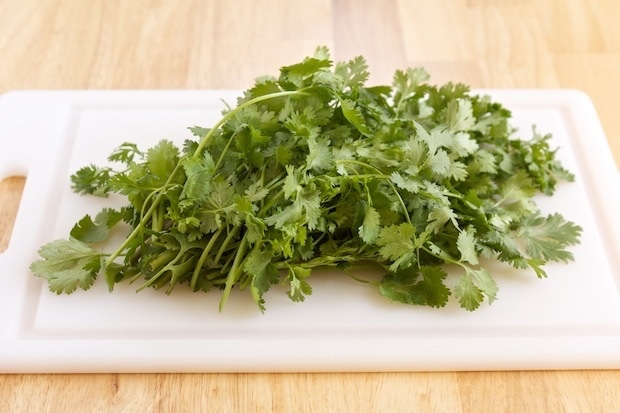
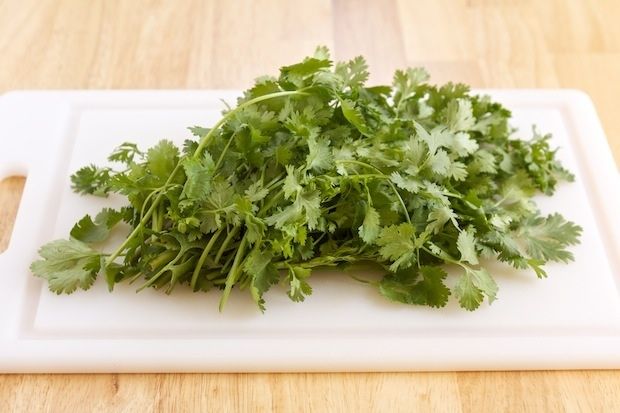
Now about that cilantro. I love the stuff, so it’s always in our kitchen, fresh and/or dried. Recently, plans that included a lot of cilantro fell through, so we had too much on hand. This herb has a short shelf life, so something needed to be done right away to preserve rather than waste. We decided on pesto, and that we’d use whatever else was on hand, building a variant we’d not done before. This is what we came up with, and it’s stellar, frankly. The rich, buttery flavor of the avocado oil and feta balances perfectly with the tang of the lemon and herbaceous base of cilantro. Here’s what we did.

P.S. Yes, I know some of you don’t like cilantro. Tough luck, that… We are working on a piece that speaks to the science behind your malady, so stay tuned.

 photo image-17.jpg

1 well packed Cup Cilantro
1/4 Cup Avocado Oil
1/4 Cup Feta Cheese
Juice & Zest of 1/2 fresh Lemon
2 small cloves fresh Garlic
Salt and a few twists of ground Pepper

Zest and juice lemon.

Process everything but the oil, salt, and pepper in a food processor or blender until thoroughly incorporated.

With the processor or blender running, (Low speed if you’ve got one), add the oil in a slow, steady stream.

Stop when you hit the consistency you like.

Taste and season to taste with salt and pepper, and adjust lemon if needed.

Freeze leftovers as needed. Pesto works great in an ice cube tray, frozen. Just pop out a cube when you need one.

Here are Cilantro Pesto I and Cilantro Pesto II if you’ve not tried them already.


A Couple of Rancho Gordo Tweaked Recipes


I wrote about RG beans not long ago, and frankly, they’re still on my mind, as is their stunningly good Pineapple Vinegar. That combo had me digging through old favorite summer recipes and tweaking them for these newfound delights. So here, for your reading and eating pleasure, are a revamped teriyaki marinade, and an incredible three bean salad. Enjoy!

Summer is grilling season, and it wouldn’t be right without teriyaki in the mix. That pineapple vinegar inspired me to alter my go to marinade thusly.

Rancho Gordo Pineapple Vinegar powered teriyaki marinade

RG Pineapple Vinegar Teriyaki Marinade

1/2 Cup Chicken Stock, (Veggie stock or water are both fine too)

1/4 Cup Tamari

1/4 Cup Pineapple Vinegar

2 Tablespoons Agave Nectar

2 Tablespoons Rock Sugar (Dark Brown Sugar is fine too)

1 Tablespoon Toasted Sesame Oil

1 Tablespoon Arrowroot

2 Cloves fresh Garlic

1” fresh Ginger Root

Trim, peel, and mince garlic and ginger.

In a sauce pan over medium heat, combine tamari, vinegar, agave, sugar, sesame oil, garlic, and ginger.

Whisk to incorporate – When sauce begins to scale, reduce heat to low.

Combine arrowroot and stock, which to incorporate thoroughly.

Add stock mixture to sauce and whisk thoroughly. Allow sauce to heat through, whisking steadily, until it reaches the thickness you like, about 2-4 minutes.

Remove sauce from heat and transfer to a non-reactive bowl, allow to cool to room temperature before use – You can set up an ice bath in a second bowl to hasten that process if it’s hot where you are, like it was today where we is…

marinated skewers, full of summer goodness!

Separate some to use as a dipping sauce if desired.

That same stuff, along with dang near any or all RG beans, inspired this twist on Three Bean Salad.

Classic Three Bean Salad

Three bean salad is a delight in the dog days of summer – Cool, tangy, and hearty to boot. While I truly love the traditional base of pinto, wax, and green beans, you can and should do whatever mix you like – This is the perfect time of year to play with whatever is fresh at hand. The beauty of that freedom is that the dish really does change in very fundamental ways when you vary the bean trio, even with the same dressing. What I show below is my personal fave, but there too, you can and should go with what you’ve got fresh in the garden whenever possible. The mainstays to me are the rhythm section of that dressing – Rancho Gordo’s incredible Pineapple Vinegar, and fresh avocado oil – It creates a beautiful base to go just about anywhere from – I just got this stuff, and am absolutely enamored with it, so I re-did my go recipe, (which used live cider vinegar), to reflect same.

Bean salad should have whatever you love in it, period.

Speaking of Rancho Gordo, it’s there that a raft of stunningly delicious bean options await – Their heirloom stuff is so good, you can easily hop down the rabbit hole trying out different combinations. Their garbanzos, limas, and yellow woman beans make an incredible trio, with a delightful depth and breadth of flavors and textures, and again – That’s just one of many, many options. The quality of these beans is so far above anything else, you truly must try them.

Yet another combo...
Yet another combo…

Three bean salad definitely likes a little time for things to marry, so it’s a great dish to make ahead. And of course, if you have other veggies you love, that are ready to rock, add those too – You sure don’t need my permission!

Urban’s Go To Three Bean Salad

1 Cup Rancho Gordo Rio Zape Beans

1 Cup Fresh Green Beans

1 Cup Fresh Wax Beans

1 Cup Sweet Onion

1 stalk fresh Celery, with leaves

Sea Salt and fresh ground Grains of Paradise, to taste

For the Dressing

1/2 Cup Avocado Oil

1/3 Cup Pineapple Vinegar

2 Tablespoons fresh Shallot, minced

1-2 cloves fresh Garlic, minced

2 Tablespoons Agave Nectar

1 teaspoon fresh Thyme

1 teaspoon fresh Dill

1/4 teaspoon Chile flake

Rio Zape Beans should be cooked to al dente.

Blanch green and wax beans in boiling water until al dente, about 2-3 minutes – Have a bowl of ice water ready beside the stove, and plunge the beans into that as soon as they’re right.

Rinse and stem onion and celery, and then medium chop, (chiffonade celery leaf).

Rinse, stem and mince garlic, thyme, and dill.

In a large, non-reactive bowl, combine all beans, onion, and celery. Season with a three finger pinch of sea salt and a half dozen twists of grains of paradise – Gently toss to thoroughly incorporate.

In a second non-reactive bowl, combine all dressing ingredients and whisk to incorporate thoroughly.

Allow dressing to marry for 15 minutes, then dress salad with a steady drizzle – You may or may not want to use all of it, so stop when you’re happy with the ratio.

Allow salad to marinate, chilled, for at least 2 hours prior to serving.

Will do fine refrigerated for a couple days, if it lasts that long…

Spring Rolls – Delicious and Easy


Nobody truly knows the origin of the spring roll. While we here in the U. S. see them as Asian food, they are, In fact, a worldwide treat, and not all those threads lead to the Far East. One thing’s for certain, though – Spring rolls are delicious, simple to make, and a fantastic way to clean out the fridge and garden, especially during the heady growing months of summer.

Spring Rolls a la Urban

Spring rolls are usually dim sum, an appetizer, although as anyone knows who’s tucked into a freshly made batch, they can and should be a meal whenever the mood strikes. If we had to posit on a point of origin, China would probably get the nod. Chūn Juǎn, 春卷, means spring or egg roll, and they go back a spell in Chinese history – The popular version of things traces them back to the Jin Dynasty, which ruled from the mid third century to the early fifth. It is said that to celebrate the first harvests of spring, thin cakes would be filled with fresh vegetables and served with various sauces. Later, during the Tang Dynasty, (early 600s through early 900s), spring rolls got a bit hotter, as the advent of imported foods like chiles and garlic made their way into the Chinese culinary lexicon. By the Ming and Qing Dynasties, the thin cakes had gotten notably thinner, much more like wonton, egg roll, and spring roll wrappers are today.

Spring rolls may be fried, deep fried, steamed, or cold, depending on the fillings, region, and history they reflect. In general, the fried and steamed versions are smaller – bite or a coupla bite sized things. The fresh versions, served cold and wrapped in rice paper – those translucent, ethereal wrappers that let the beauty of fresh ingredients shine – And that’s what we’ll be featuring here today – It’s hot, in fact, record hot here in the Great Northwet, with a lot of smoke in the air from fires up in British Columbia – A perfect time for a cool, savory treat. In China, there is still a Cold Food Festival Day, so we’ll honor that.

There is great diversity on spring rolls around China – they reflect the regions they’re known for – Szechuan and Hunan versions are fiery, with sauces to match. Shandong, in the northeast, favors seafood. Fujian is river fish, crawfish, and fowl. Jiangsu might feature duck or pork, with richer sauces leaning toward Sweet and sour. And Cantonese boasts sauces and spice blends of dizzying complexity, and more beef than anywhere else in that big country.

Continue through Asia, and it’s a sure bet that every country has a spring roll, and will claim theirs as first and best, (and who knows, they well could be right). In Taiwan, Singapore, Malaysia and Thailand, spring rolls are generically called popiah. They’re usually fresh, and almost always wrapped in rice paper. Peanut sauce becomes the most popular dip, and is absolutely delicious in several iterations – We’ll also be making that today. It’s in Vietnam that you find gỏi cuốn, the summer roll – These usually feature pork, along with fresh veggies, some of which may, (and aughta be), lightly pickled for a lovely interplay of tastes.

As Chinese and other Asian expats spread out, they brought their cuisine with them, of course – Once reestablished, they had to make some adjustments for local ingredients, as well as for the things they used at home and couldn’t find in their new environs. Thus, innovation is born – From Korea to the Philippines, all across Europe, into South America and the Caribbean, there are variations on the spring roll theme, many found as inspired street food.

Design and construction couldn’t be easier. Spring rolls lend themselves to last minute inspiration really well, and appropriate dipping sauces can be whipped up in short order, assuming you’ve got a decent pantry, (and you should – Hoisin sauce, water chestnuts, bamboo shoots, and various wrappers are now fairly ubiquitous at even small town grocery stores, and if not, readily on line.)

Have your mis ready when it's time to roll
Have your mis ready when it’s time to roll

When you’re picking ingredients, consider color and texture as much as taste – When you’re working with the ethereal rice paper wrapper as your canvas, everything is visible, and so those Asian cooking concepts of season, color, and flavor balances make perfect sense. Crunch might come from lettuce, cabbage, onion, carrot, water chestnut, daikon or salad radishes, fennel root, celeriac, celery, or cucumber, just to name a few. Pork, chicken, shellfish, or tofu adds a nice protein base, as well as a sweet/savory balance. Fresh mint, cilantro, watercress, or arugula can add an herbal note.

For cold, rice wrapped spring rolls like we’ll build, a quick pickle is a must do, for my my mind – pick two or three things that take nicely to pickling and give them 30 minutes or so in a nice bath – Onion, carrot, and radishes are great, and reward with a crisp tang that helps cut though heavier proteins and dipping sauces.

A quick pickle is a must

For lettuces, cabbages, and sprouts, light seasoning helps wake up fresh flavors. Since you’ve already got a couple vinegar notes, just a very light drizzle of avocado or sesame oil, salt, and pepper will do the trick. While all this might seem a bit busy, it really does make the difference between making something that tastes like you paid for it and a so-so meal – And I’ll guarantee the results will be well worth it.

Salt, pepper, and a splash of oil to season your crunchy stuff

When prepping for spring rolls, keep in mind that marrying flavors is the goal. Spend a little time making nice, uniform cuts of all your ingredients, and keep things small – fine dice, julienne, or matchstick cuts are best for most firm veggies, and a chiffonade for the leafy stuff.

Dice, or julien - Make everything fit in that spring roll
Dice, or julien – Make everything fit in that spring roll

Small bowls are perfect for arranging your mis en place. Have everything ready to go when you feel like it’s time to stuff some wrappers. Make your dipping sauces and pickles first, to allow flavors to marry, and your quick pickle to work its magic.

Wrappers do offer some variety, but again, if you’re going to do a cold presentation, rice paper is what you want. They’re cheap, don’t need to be refrigerated, and pretty easy to work with once you know the rules.
1. Set up a bowl of warm water big enough to immerse your rice wrappers in.
2. Set up a non-stick cutting board or two for rolling/stuffing
3. Dip a wrapper into the water for 5 seconds.
4. Pull the wrapper out of the water and let excess water drip off.
5. Lay the wrapper flat and let it sit for about 45 seconds, while it absorbs water and gets fully pliable.
6. Stuff away.

Rolls can certainly be made ahead, but when you’re blending fresh flavors and ingredients, eating them ASAP after construction pays off big time.

Now, about those dipping sauces. You can use dang near anything, and if in a pinch, good soy sauce, straight hoisin, or that awesome Yakitori sauce we made last week would all do just fine. But really, if you’re building, you should build some fresh sauce – For the most part, they’re easy and quick to make, and will reward with a much more expressive presence than anything store bought. Here are two different peanut sauce variants, one with fresh whole peanuts and one with peanut butter, as well as a simple ginger-soy version. The whole peanut version is amazing, but not as smooth as the peanut butter version, fyi.

The fresh peanut version

Urban’s Fresh Peanut Sauce

1 Cup fresh roasted Peanuts
1/3 Cup Chicken Stock
1/3 Cup Coconut Milk
2 cloves Garlic
1 Tablespoon Honey
2 teaspoons Tamari
2 teaspoons Fish Sauce
1 teaspoon Tamarind Paste (1 Tablespoon Lime Juice is an OK sub)
1-2 teaspoons Sriracha

Peel, trim and mince garlic.

If your peanuts are raw, roast in a heavy skillet, 350° F oven until golden brown, about 15 minutes.

Throw everything into a food processor or blender and process until you’ve got a smooth sauce – if things are a bit too thick, add a drizzle more chicken stock until you hit desired consistency.

Taste and adjust as needed, (fish sauce, sriracha, honey).

Allow to sit at room temperature for 20-30 minutes so flavors can marry.

Will last for a good week refrigerated in an airtight container.

The smooth version of peanut sauce

Peanut Sauce II

1 Can Coconut Milk (12 to 14 ounces, unsweetened)
1/2 Cup Chicken Stock
3/4 Cup creamy Peanut Butter (Use something natural, with a lot of oil – No cheap stuff here.)
1/4 Cup Thai Red Curry Paste
1/4 Cup Honey
2 Tablespoons Cider Vinegar
1 teaspoon Sea Salt

Add all ingredients to a heavy sauce pan over medium heat, and whisk to incorporate.

When the sauce begins to simmer, reduce heat to just maintain that and cook for 3-5 minutes, whisking constantly.

Remove sauce from heat and transfer to a non-reactive bowl.

Allow sauce to cool and flavors to marry for 30 minutes prior to serving

Will last a week or more refrigerated in an airtight container.


Urban’s Ginger Soy Dipping Sauce

1/2 Cup Tamari
1/4 Cup Rice Vinegar
1″ piece of fresh Ginger Root
1 Green Onion
2 Cloves fresh Garlic
1 teaspoon Agave Nectar
1 teaspoon Sesame Oil

Peel, trim, and mince garlic and ginger.

Peel, trim, and cut into roughly 1/4″ rings.

Combine all ingredients ingredients in a non-reactive bowl and whisk to incorporate.

Allow flavors to marry for 15-20 minutes prior to serving.

Will last a couple of weeks refrigerated in an airtight container.

Yakitori, Japan’s Answer to the Kebab


If it seems as if you’re seeing a trend in my posts lately, you are. I just finished rereading Mark Kurlansky’s, Salt – A World History, and find myself inspired. It’s a great read, and you should give it a spin. Like John McPhee, Kurlansky has the ability to write volumes on a seemingly mundane topic and come out with a page turner. When I first read it years ago, I wasn’t writing about food as much as I do now, so this go ’round lead to a fascinating bout of exploration. Recent posts on salt potatoes, ketchup, and fish sauce were all inspired therefrom, and this week, I bring you Yakitori, Japan’s answer to the kabab.

Hey, if they serve it at the ballpark, it's gotta be great, right?
Hey, if they serve it at the ballpark, it’s gotta be great, right?

Casual observers are often surprised by how much meat is involved in Japanese cooking. Certainly Japan did have a rather protracted period of fundamental vegetarianism. The broad adoption of Chinese Buddhism in the 7th century sealed the deal – in the late 670s, the Emporer Tenmu proclaimed a prohibition on eating animal flesh, fowl, fish, and shellfish, and Shojin Ryori was born – Japanese vegetarian cuisine as cultural touchstone. Not all of that motivation was spiritual, though – The powers that be realized that eating draft animals seriously impaired the country’s ability to adequately feed its people. Nonetheless, the edict more or less persisted for some 1200 years. Clearly, the increasing presence of westerners on Japanese shores had a bearing on the resurgence of meat eating, a process that began with Portuguese traders in the middle of the 16th century, and continues to this day.

While eating food cooked on a stick undoubtedly goes back to the harnessing of fire, the Japanese have a pretty clear recollection of when yakitori first appeared. It was in the Edo period, around the middle 1600s, and initially it was game birds roasted on sticks – quail, pheasant, pigeons and the like. As European influence increased, chickens became more common, eventually making it on to a stick as well. Beef and pork followed over time. As is oft the case, how good your yakitori was back when depended on your income and social status – While the rich ate the best stuff, the poor folks were grilling offal, and all the other little weird bits the beautiful people didn’t want. In any event, those sweet, smoky flavors, basted in soy, sake, and spices, was and remains hugely popular, and the regional variety is as rich as the country that spawned it.

Season lightly with salt and pepper before grilling

Just covering the chicken versions of yakitori can be a bit dizzying – Our preference is for the ever popular chicken thigh version, called momo, along with negima- chicken and spring onion, and kawa – Chicken skin, (seriously, it’s amazing done up with bacon, spring onion, and water chestnuts). There’re many more, from chicken and leeks (hasami), to breast meat (sasami), chicken meatball (tsukune) and chicken wings (tebasaki). Then there’s all those former peasant versions, which are still quite popular – Kawa is skin, bonjiri is tail, shiro is guts, nankotsu is cartilage, hāto is heart, rebā is liver, and sunagimo is gizzards – nummy.

Then there’s that seasoning and/or sauce – Yakitori is typically done salty, or salty-sweet. The salty version is, more often than not, just sprinkled with sea salt and grilled, end of story. The salty-sweet, called tare, is a whole ‘nuther ballgame. In Japan, you can bet that dang near every yakitori stand and joint has their own version, and they’re all top secret. Fortunately, we can suss out the basics – soy sauce, mirin, dry sake, and some form of sweetener are added to freshly made bone stock, and that more than gets the job done. Of course there are variants – Everything from spring onion and garlic, to ginger, hot chiles, pepper, and even wasabi might be found in there. That’s good news for us, because making a very nice basic sauce is easy, and more to the point, poetic license is fully authorized.

Protein or veggies, anything you've got will make fine Yakitori
Protein or veggies, anything you’ve got will make fine Yakitori

The real beauty of yakitori is that it makes a great last minute dinner, or a perfect vehicle for fridge cleaning – You can and should use whatever you like, in whatever combinations please you. Sure, a lot of ‘real’ yakitori is either just one thing, or maybe a couple skewered together, but there’s nothing at all wrong with doing them up like little shish kebab. The bottom line is that the cooking method and saucing has as much or more to do with the overall taste as the things you decide to grill, so go wild. By that same rule, if you’re pressed for time, there’s nothing wrong at all with using straight soy sauce, teriyaki sauce, or bottle yakitori sauce, (and the former is now quite easily found in the Asian food section of your local market.

Yakitori does not require any marinating prior to cooking. You need to merely slice stuff up into bite sized pieces and shove them onto sticks. Couldn’t be easier. One note on cutting stuff – the preferred method is known as sogigiri, AKA cutting on a roughly 30° angle with the food lying flat in a cutting board. Cut toward yourself, starting at the upper left of your intended slice and working down and across. What that does is maximize surface area on relatively small chunks of food, giving more space to add sauce and heats from the grill to.

The Sogigiri cut maximizes surface area

Speaking of grilling, while traditional yakitori is done on a brazier or charcoal grill, the desired technique employs no smoke and moderate heat, which means you folks who only have a gas grill, or a broiler in your oven, are gonna be just fine.

When skewering your goodies, do take the time to make sure every piece is snuggled right up tight against the next one – With small, relatively thin cuts of flesh and veggies, dried out food is a real possibility – Keeping them tight helps retain the baste better, and keeps things moist and juicy as well. Give whatever your skewering a light dusting of good salt and fresh ground pepper after you’ve got them done up. If you’re wanting to go all out, take a trip to the market and find fresh, seasonal veggies, meats, and poultry. Like the Vietnamese, Japanese cooks pay special attention to color and season – Spring is green, summer dark green, fall is orange and red, winter is white. Have some fun with it, and let your plates reflect your findings.

Place skewers close together to help keep things moist and juicy

Brush on your basting sauce after you’ve placed the skewers on the grill. With chicken, pork, or beef, you’re going to want in the neighborhood of 5 minutes or so cooking per side, with another baste application at the turn. Again, don’t run your grill flat out – You want to cook these on medium-low heat, allowing time for things to cook through and absorb all the goodness from your baste. If you’re using a charcoal grill, set up a two zone configuration, start the skewers on the cooler side, and finish with a couple quick flips on the hot side. If you’re using wooden skewers, soak them for about half an hour prior to loading them up. Lightly oil your grill surface prior to placing skewers, to help keep them from sticking – Use a neutral vegetable oil so you don’t adulterate your taste profiles.

House made Yakitori Sauce - Black gold.
House made Yakitori Sauce – Black gold.

That sauce, that amazing sauce. We’ll start here, because this stuff really is magical. I made the batch done for this post on the same day I slow cooked a big ol’ pork roast. In the last week, that sauce went on the pork twice, into fried rice, was added to a teriyaki joint style salad dressing, and even made its way into tacos – Its that good, and that versatile. Many, many folks say that, over in Japan, cooks add to a big pot of their signature sauce every day, so that it effectively never runs out. We won’t likely go that far at home, but my oh my, do you want this in your fridge at all times. While the real deal is made with the bones from the chicken thighs you’re about to skewer, you can sub chicken stock for the water and bones if you’re in a hurry – But DO make the bone stock version just once, and you’ll be hooked – It’s super easy, incredibly delicious, and very rewarding for home cooks.

House made Yakitori
House made Yakitori

You can certainly use one sauce for all things, and well might – But we’re including some variants, to give you some ideas for future explorations.


Urban’s Go To Yakitori Sauce
(Makes enough for several meals, or one hell of a party)

Bones from 4 fresh Chicken Thighs or Legs
1 Cup Mirin
1 Cup Tamari
1/2 Cup Dry Sake
1/2 Cup Water (Chicken Stock, if not using bones)
6 Scallions
3 cloves fresh Garlic
1/2″ chunk fresh Ginger
2 Tablespoons Agave Nectar
1 Tablespoon Sesame Oil
1 teaspoon ground Szechuan Pepper (or anything hotter if you prefer)

Peel, trim and mince garlic.

Trim scallions and cut into roughly 1/2″ rings.

Dice ginger, (you don’t need to peel it)

On a baking pan lined with foil, under a high broiler, scatter bones and broil for about 10 minutes, turning with tongs so they brown evenly.

Transfer roasted bones to a heavy sauce pan over medium high heat.

Add all additional ingredients, stir well to incorporate, and heat through until a low boil is achieved.

Reduce heat to just maintain a steady simmer and cook until the volume of the sauce is reduced by 50% – You’ll note when you get there that the sauce coats a spoon with an even, viscous layer. The cook should take around 45 minutes to an hour, but keep an eye on things and give it an occasional stir.

Remove pan from heat and pour the sauce through a single mesh strainer into a non-reactive bowl.

Allow to cool to room temperature, then transfer to a clean glass jar. Will store refrigerated for 2 to 3 weeks.

Urban’s Pork Yakitori Sauce

1 Cup Mirin
1 Cup Tamari
1 Cup Dry Sake
2 Tablespoons Hot Chile Paste (Gochujang, wangzhihe, harissa, or Sriracha will do just fine)
2 Tablespoons Sesame Oil
2 Tablespoons Honey
1 Tablespoon Rice Vinegar
3 cloves fresh Garlic

Peel, trim and mince garlic.

In a heavy saucepan over medium high heat, add all ingredients and stir to incorporate.

Bring to a boil, then reduce heat to maintain a simmer.

Allow sauce to reduce by 50%, remove from heat, run through a single mesh strainer, cool to room temp.

Store refrigerated for up to 2 weeks.


Urban’s Beef Yakitori Sauce
This is quite close to a typical sauce used for that deep fried wonder, Kushiage.

1/2 Cup Ketchup
2 Tablespoons Worcestershire Sauce
2 Tablespoons Tamari
1 Tablespoon Mirin
1 Tablespoon Honey
1 Tablespoon Dijon Mustard
1/2 teaspoon granulated Garlic

Mix all ingredients together and allow at least 30 minutes for the flavors to marry before brushing onto your skewers.

Refrigerate in an airtight container for storage.


Just in case you’re like us, and want a little something green with your skewers, here’s my swing on that great savory salad dressing you get from your local teriyaki joint.


Urban’s Teriyaki Joint Salad Dressing

1 Cup Mayonnaise
1/3 Cup Rice Vinegar
4 Tablespoons Agave Nectar
4 Tablespoons Sesame Oil
2 Tablespoons Yakitori Sauce
1 teaspoon granulated Garlic

Whisk all together in a non-reactive bowl, and allow flavors to marry for at least 30 minutes prior to use.

Store refrigerated for up to a week in an airtight, non-reactive container.