Hot Dogs


I love hotdogs, I surely do, buuuuuuuut… My Sis worked in a hotdog factory once; I don’t think she’s eaten one since. If you think pink slime is bad… And anyway, have you checked the prices on these pies lately? Nasty ones are going $4 to $5, and quality almost double that. Time to get busy then; you make ’em, you know what’s in ’em, and they’re way better than anything you can buy.

This is a take on the snappy, lightly smoked, garlic and paprika-flavored all-beef dogs served at Gray’s Papaya and Papaya King in New York City. Made with good local beef, these hot dogs are just about the juiciest, most flavorful you’ll ever enjoy. My version was adapted from Ryan Farr’s original recipe. Mine has some changes for flavor and to save you some time and effort; I’ve converted original weights to measures for almost all the ingredients, tweaked the process a bit for home cooks, and altered the spices; I also used powdered smoke from Butcher & Packer, which saves you a bunch of work smoking the dogs, (If you own a smoker and enjoy that process, by all means do that; the smoking/internal temps and times are the same, either way.) Here’s how you make them.

Preparing the Casings.

Casings can be found as both natural and collagen style; I really have not had very good luck with fake casings. They taste fine, but are much less forgiving than natural when it comes to stuffing. For hot dogs and franks, you need a roughly 24mm or 1″ casing. They generally are sold in pretty large volumes that are more than a casual user will need. This offer through Amazon is the best priced, moderately sized I’ve found.

Snip off about five feet of casing. (Better too much than too little; any extra can be repacked in salt and used later.) 

Rinse the casing under cool running water to remove any salt clinging to it. Place it in a bowl of cool water and let it soak for about half an hour. 

After soaking, rinse the casing under cool running water, (Under 70° F). Slip one end of the casing over the faucet nozzle. Hold the casing firmly on the nozzle, and then turn on the cold water, gently at first, and then more forcefully. This procedure will flush out any salt in the casing and pinpoint any breaks. Should you find a break, just snip out a small section of the casing with kitchen shears.

Place the casing in a bowl of enough water to thoroughly cover the casings. Add 1 tablespoon of vinegar per cup of water; this will soften the casing a bit, which makes it a bit more forgiving for us amateur stuffers. Leave the casing in the water/vinegar solution until you are ready to use it. 

Rinse casings thoroughly before stuffing. 


NOTE ON MEAT: If you can’t find the neck, plate, or shank cuts, you can substitute chuck for all of the meat and fat called for; they’ll still be spectacular dogs.  

2 Pounds boneless lean Beef, (Such as neck, plate, or shank), cut into 1-inch cubes

5 Ounces Beef Fat, cut into 1-inch cubes

2 teaspoons Murray River Flaked Salt

1 teaspoon Sweet Smoked Paprika

1/2 teaspoon Granulated Garlic

1 teaspoon coarsely ground Smoked Pepper

1/2 teaspoon Onion Powder

1/4 teaspoon Celery Seed

1 Gram Pink Curing Salt, (Weigh this, don’t try to convert to a volume!)

1/2 teaspoon Hickory or Mesquite Smoke Powder

8 Ounces crushed Ice

10 feet of rinsed sheep Casings


NOTE: 

The ice above if for the actual recipe, not for bowl chilling. Just want to be sure we’re all on the same page with that… 

Place the meat and fat on a rimmed baking sheet, transfer to the freezer, and chill until crunchy on the exterior but not frozen solid. 

In a small bowl, add the salt, paprika, garlic, pepper, onion powder, and pink salt; stir to combine. 

Nest a large mixing bowl in a bowl filled with ice.  

Grind the meat and fat through the small die of the grinder into the bowl set in ice. 

Add the spice mixture to the meat and stir with your hands until well incorporated; the mixture will look homogenous and will begin sticking to the bowl. 

Transfer the meat to the bowl of a food processor, add half the crushed ice and process until all of the ice has dissolved, 1 to 2 minutes. 

Add the remaining crushed ice and continue processing until the mixture is completely smooth, 4 to 5 minutes more. Note: The temperature of your meat during this mixing step is critically important. Temperature must never rise about 40°F. Work efficiently during this step of the process. This is as important for food safety as it is for a homogeneous blend. And yes, it looks kinda nasty raw; welcome to force meat…
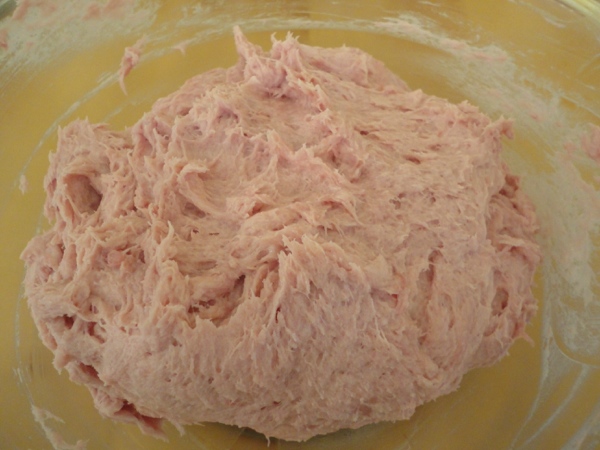
 

Spoon 2 tablespoons of the meat mixture into a nonstick frying pan and spread into a thin patty. Cook the test patty over low heat until cooked through but not browned. Taste the sausage for seasoning and adjust as necessary.

Press a sheet of parchment paper or plastic wrap directly on the surface of the meat to prevent oxidation, then cover the bowl tightly with plastic wrap and refrigerate overnight, (If you own a vacuum sealer, use that instead.)

Stuff the sausage into the sheep casings and twist into links about 5″ to 7″ long.


Preheat your oven to 175° F. Spread the links out on a baking sheet and slow cook them until the internal temperature of the sausages reaches 145°F, about 45 to 60 minutes. 

Remove the sausages from the oven, and transfer them to a bowl of ice water; shock for about 30 seconds, then set to cool on a wire rack for about 10 minutes. Refrigerate uncovered, overnight. Your dogs are now fully cooked and ready to be vacuum sealed, refrigerated or frozen. To prepare for eating just heat through on a grill or in a steamer.

Since you went to all the trouble, don’t you think homemade buns are in order too?


Smoked Chicken Stew


So, from last nights butterflied, grilled chicken, I saved the carcass and made stock and stew therefrom. If you’re not doing this kind of thing on a regular basis, you really need to be reading this blog more often.
Here’s how.

For the stock,
1/2 sweet Onion
1 Carrot
1 stalk Celery
2 Bay leaves

Rinse, trim and then chop veggies to uniform rough dice. Note: Can’t tell you how often I see home cooks throw out celery tops with leaves on them, or how wrong that is. Especially when using celery for mirepoix, making stock, etc, you want those leaves; they pack beautiful, delicate celery flavor, and impart it to other foods better than the stalks do.

Glean any appreciable meat from the chicken and reserve for lunch, (we didn’t have any left, frankly, and we’ll be using breast meat for the making of this stew anyway…)

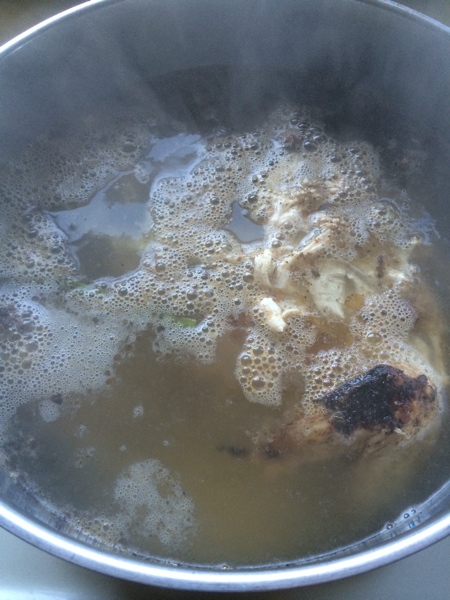
Everything goes into a stock pot over high heat with enough water to cover well, about 3/4 gallon. As soon as things start to simmer, reduce heat to just maintain that, and let it go for at least 2 hours and up to 4. As you lose water to cooking, gradually add more. Ideally, you want to end up with about 8-10 cups of lightly colored and flavored stock. That is rather light as stock goes, but we’re making a robust stew that will pack its own flavors; this is just the canvas…

Remove from heat, discard all the big chunks by straining through a colander. Chill the rough stock in a large bowl in the freezer until most of the fat has risen to the top. Skim that off, then clarify the stock once or twice by running it through a chinoise or strainer.

Return stock to a stock pot over medium heat.

For the stew,
2 Carrots
2 stalks Celery
3 Red Potatoes
1 Tomato
1 Lemon
2 cloves Garlic
1/4 sweet Onion
2 sprigs Cilantro
Extra virgin Olive Oil
White Wine
Black Pepper
Smoked Salt

Rinse and trim all veggies. Cut carrots, celery, potatoes, tomato, onion and cilantro to a fairly uniform rough dice, about 1/2″ pieces. Mince the garlic and cilantro and toss everybody but those into the stew pot.

Heat a tablespoon of extra virgin olive oil in a sauté pan over medium high heat. Toss in onion and sauté until it starts to go translucent. Add garlic and sauté about another minute. Add a splash of white wine and continue sautéing until the raw alcohol is burned off. Toss all that into the stew pot. This step, done with strong aromatic veggies like onion and garlic, adds a nice richness to a soup or stew, and helps tame the raw heat they can pack.

For the chicken, you can smoke it over your grill, barbecue or smoker with a bit of smoking wood, pellets, what have you, or you can cheat like I did. If you’re a regular here, you know how much I love Butcher & Packers hickory smoke powder. As advertised, it gives a pure taste of hickory smoke and nothing else. I’ve fooled Texas BBQ snobs with this stuff. Saves a bunch of time and sacrifices nada in the process; try it. They also make chipotle powder, and powdered mesquite, which are equally fabulous. 

Dirty Rotten Cheater’s Smoked Chicken,

2 Cups Chicken Breast
1/2 Cup Whole Grain White Flour
1-2 teaspoons Smoke Powder
1/2 teaspoon Smoked Salt
1/2 Teaspoon ground black Pepper
2 Tablespoons vegetable oil

Cut chicken into roughly 3/4″ dice.

Add 2 tablespoons of oil to a large sauté pan over medium high heat.

Combine flour, smoke powder, salt and pepper in a paper bag, (amount of smoke is up to you). Add the chicken and shake until all the chicken is thoroughly coated. Remove the chicken and tap/shake off excess dredge.

Add chicken to pan and allow it to cook long enough to sear well on all sides. You want to develop a genuine, caramelized crust, so don’t play with it too much or turn it too often. Keep a close eye on it so it doesn’t burn.

Once the chicken is well seared, transfer it to the stew pot and stir it in well. Turn heat down until you’re at a nice low and slow temperature, with no signs of simmering.

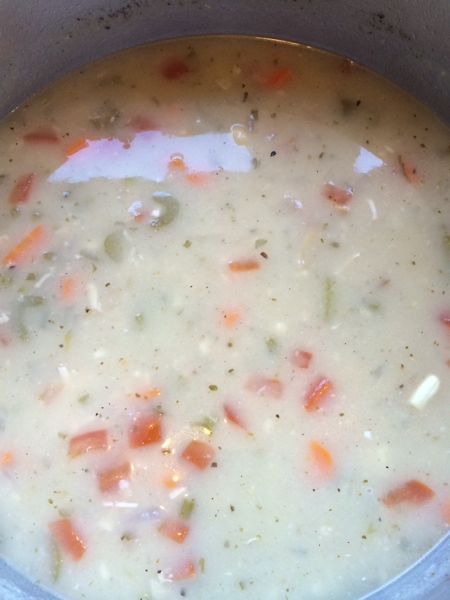
Let the stew cook for at least two hours. Slice the lemon into quarters. Add the juice from half to the stew, reserve the others for service. Adjust seasoning with smoked salt and pepper. Stir regularly, taking care to make sure stuff isn’t sticking to the bottom. The regular stir helps release the dredge from the chicken and combine it with fats, which is what is going to thicken your stew. If you like things thicker yet, microwave an extra Yukon potato, mash it with a tablespoon of butter, and stir that into the stew as well.

Serve with crema, sliced lemon, our jalapeño-cheddar cornbread, and a nice, cold Negro Modelo.

Stuff Them Peppers!


I love peppers, and I love chiles. Notice I separate chiles and peppers? Lots of us do, even though that’s technically incorrect; sweet peppers are the same genus and species, (Capsicum Annuum), as the hot peppers referred to as chiles.

When it comes to cooking, I most often use chiles for heat and the fruity, earthy flavors they provide. Sweet peppers to me are for salads and stir-fries, soups and breakfasts, (I love them with eggs), and especially for stuffing. Sweet peppers certainly do have flavor, even if it’s a relatively minor note compared to the knockout punch of a hot chile.

Just as hot chiles have expanded in variety over the last couple of decades, so have the sweets. If you’re my age or older, then you probably remember back when you might find green bell peppers in the grocery and nothing else like it, (and their flavor was, uh, shall we say, lacking… ) Now you can find sweet bells in green, red, orange, purple, yellow, and even brown and white, as well as some great non-bell sweet types. My favorite options lately are the bags of small, sweet peppers we’re seeing quite often in stores. They’re perfect for salads, salsas, roasting and even stuffing.

Sweet peppers are not only tasty, they’re good for you. In addition to containing notable amounts of Vitamins C and E, they pack abundant carotenoids, including alpha-carotene, beta-carotene, lycopene, lutein, cryptoxanthin and zeaxanthin, (Trust me, those are all good things).

Here’s a little primer on what’s out there these days, both for shopping and growing.

Green Bells.
These are the peppers so many of us grew up with. They too have grown up, and there’s a bunch of varieties out there to grow and enjoy. From the store, they have a slightly bitter, grassy flavor that goes great in salads, or as part of an aromatic base for sauces, stews and soups.

Purple & Chocolate Bells.
The least sweet of the bells other than green. They’re great raw in salads and probably are best left to raw uses, as that pretty purple hue turns to mud real quick when they’re cooked. They also tend to be wildly expensive, so if you love them, grow them.

Yellow & White Bells.
Mildest flavor of the bells. You may see whites as either a Bell variant, or referred to as a Hungarian Stuffing Pepper, (note that the white bells are often silly expensive…). Lightly sweet, with a nice hint of the grassy notes greens are prized for. These are great as part of an aromatic base, and for stuffing and roasting.

Orange Bells.
A bit less sweet and slightly more tangy than a red, orange bells are great raw in salads or roasted and stuffed.

Red Bells.
Far and away the most popular sweet peppers. Reds are genuinely sweet and fruity in flavor, and are fabulous in salads, with rice, or roasted.

Mild Hatch or Anaheims.
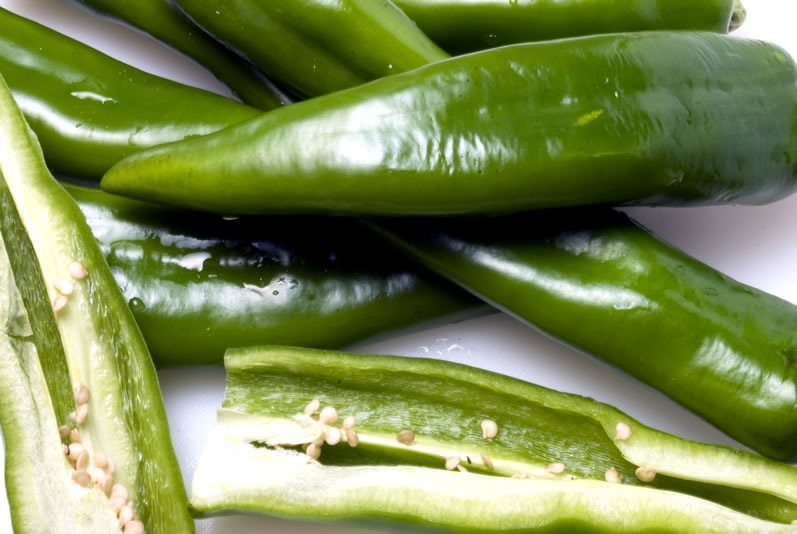
If a New Mexican chile lover reads that heading, I’m gonna get roasted…. Fact is, these long green and red chiles do come in mild form, but again, you need to take care when cooking with them, because hot ones can sneak in there. They’re wonderful for roasting, stuffing, salsa, and especially green sauces.

Red Pimento:
Sweet, yes, but some of these can be as much heat as sweet, so ask and try before you buy! Pimentos have an intense flavor base that holds up beautifully to roasting and preserving, (pickled peppers). They also are fabulous in aromatic bases, given their depth of flavor.

Sweet cherries.
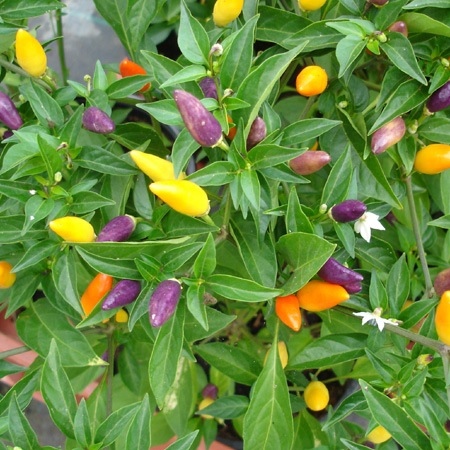
While called sweet, these little round guys can also pack a bit of fire in them, so if you’re not a lover of such, taste before you cook! They have a dense sweetness that is perfect for roasting, salsa, and other Mexican sauces.

Sweet Cubanelles.
These long, slender chiles look a bit like a Serrano or an Anaheim, but are a notable lighter pale green color, (If you’re growing them, they will turn red if allowed to mature on the plant.) Cubanelles have a light, grassy sweetness that is great for roasting and stuffing.

Sweet Banana.

Same warning as the other non-bell varieties; there are hot bananas as well, so be careful, and test before you eat. They have a nice veggie flavor with a hint of heat, which makes them great for stuffing.

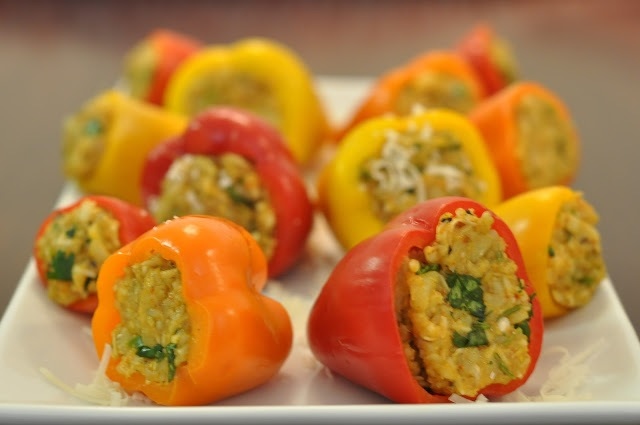
Notice how many of those guys up there I noted were great for stuffing? All the glory a sweet pepper has to offer comes out when you stuff ’em with wonderful things. Doing so and then slow roasting deepens the sweetness and intensifies minor flavor notes. And don’t make the mistake of thinking that this only works at home; you can slow roast on coals with aluminum foil, a Dutch oven, or a cast iron skillet. The sky is the limit on what you stuff with, but here’s a couple of my favorites to get the creative juices flowing.

1 Pound ground protein, (Beef, Chicken, Pork, Ground Turkey, Tofu, Cheese, or any combination thereof)
1/2 Cup Wild Rice
1 Cup Water
6 Sweet Peppers, (Bells, more if you’re using Cubanelles, Anaheims, etc)
2 large Tomatoes
1/2 Sweet Onion
1-2 cloves Garlic
1 Tablespoon extra virgin Olive Oil
1/2 teaspoon Oregano, (Hungarian is my favorite, it’s sweeter and milder than Mexican)
1/2 teaspoon smoked sweet Paprika
Splash of wine for deglazing, (Anything you’re drinking is fine, and if your drinking bourbon, etc, that’s fine too, if you’re willing to spare some…)
Sea Salt and fresh ground Pepper

Place rice and water in a saucepan over high heat and bring to a boil.
Reduce the heat, cover and simmer for 20 minutes.

Cut protein into bite sized chunks.
Lightly salt a large skillet or sauté pan over medium-high heat, and cook the protein until evenly browned.

Set the protein aside and leave the pan as is.

Field strip the peppers and keep the tops if you’re using bells. Arrange the peppers hollow side up on foil, or in a baking dish or Dutch oven. You may need to even out the bottoms a bit if you’re using a pan; thats just fine, but don’t cut through the peppers.

Dice tomatoes and onion, and mince the garlic.
Toss the olive oil into the pan you cooked the protein in. Once it’s heated through, toss in the onion and sauté until they’re starting to get translucent. Add the garlic and sauté for a minute or so, until the raw garlic smell is gone.

Time to deglaze. Splash whatever booze you’re drinking into the pan, (and it’s high proof and you’re cooking over flame, step back so you don’t burn your face off). Get a fork and work all the little bits of this and that loose in the pan; that’s some serious flavor you want in whatever you’re making. Any time you sauté an ingredient and then add that to a dish, deglaze, otherwise, you’re leaving good stuff out.

Add the tomatoes, rice, and protein to your pan and mix well.
Add oregano, paprika, salt and pepper; taste and adjust seasoning.

Remove the pan from heat and spoon the mixture evenly into your peppers, then pop the tops back on the peppers.

Roast in, ideally, 325° F heat for about 45 to 60 minutes, until the peppers are fork tender. If you’re doing this on a campfire, put the pan or foil bundle over low coals and let them work. If you’re on a grill, spread the coals or adjust flame and place your roasting pan on the side of your grate.

Serve with crusty bread, a green salad, and maybe a nice Wollersheim Prairie Sunburst Red. This winery is in Wisconsin and grows all their own stuff. Yes, Wisconsin, and they rock!

If you prefer a stuffed pepper with a little more pop, try our recipe for classic Oaxacan Chiles Rellenos. Trust me, it’ll knock your socks off in a good way!

Indigo Grafted Tomatoes


Ah, spring, the time when all garden fancier’s thoughts turn to planting. Here in the Great Northwet, the snows are receding, rains are nourishing the soil, and it’s time. Our planting beds, resting under straw all winter, are begging to be turned and filled.

If you’re a lover of great tomatoes, then fact is, you simply must be a grower of great tomatoes. Whether you occupy acres or square feet, there’s always room for your favorites and if, as for many of us space is an issue, tomatoes that bear well in a compact space are best yet. Which brings us back to the love of those little globes of wonder. Enter the Indigo grafted tomato.

First and foremost, one wonders, why grafted? The simple answer is, because it works. Grafting is neither new nor done as a novelty; it’s sound practice with a long history of success. The technique, as applied to these Indigo tomatoes, involves mating the root stock of one variety with the leafy stem of another.

My hands down favorite college horticulture course focused on grafting. That was back in the late ’70s and I hate to admit it, but even though our back yard apple tree is a grafted wonder offering four distinct varieties, I’d not thought much of the technique in terms of tomato plants until these Indigos came along. My Professor at the University of Washington, fondly referred to as Master Nishitani, explained that the Japanese had been successfully experimenting with grafting herbaceous edibles since the early 1900s. Still, grafted veggies been slow to catch on in this country, due predominantly to the supposed greater advantages offered by green revolution dependence on chemistry and standard hybridization techniques. Thankfully, a general return to sound environmental practices has lead naturally back to grafting as well

What grafting provides, in a sustainable and eco-sensitive manner, is the marriage of hearty rootstock to a bearing variety chosen for flavor and high yield. The rootstock variety offers a larger, more vigorous root system bred with greater resistance to fungi, bacteria and parasites; truly a godsend, given many tomato varieties susceptibility to such ills. Customized rootstock furthermore yields plants that can and will thrive in a myriad of environmental conditions, a gift any gardener can appreciate.

Indeed, and so it is with these wonderful little Indigos. Monica and I were blessed with several plants from our dear friends at Log House Plants. We picked them up and admired healthy, happy starts, but apparently nothing out of the ordinary, yet… It was after planting and those tenuous weeks of waiting for things to happen that we first noticed a difference; not just blossoms, but lots and lots of blossoms! As fruit began to form, these compact plants, topping out at about 2 1/2′ here in our little USDA Zone 7b garden, were absolutely loaded. I place purposeful emphasis on the word compact; regardless of the space you dedicate to tomatoes in your garden, these Indigos will provide enviable bounty and variety.

And such fruit! The Indigo varieties are named for that hue, naturally occurring in tomatoes, fully expressed in these little guys. Right away the colors just floored us; perfect little globes of deep purple-black, yellow-gold and seriously rich reds. Any honest lover of tomatoes will admit that color and shape have darn near as much to do with desirability as taste. These things were like candy as they matured, the colors becoming deeper and glossier as the days progressed. Photographing them wasn’t a chore, it was a treat.

Our favorite thus far is the Indigo Rose, a stunning blend that starts out purple-almost-black with brilliant green highlights, and matures into a deep purple-red with stunning crimson flesh. This first true purple tomato also contains anthocyanins, a potent antioxidant found in blueberries, raspberries and cranberries.

The real treat, of course, is the taste. These Indigo varieties are simply amazing. Plucked off the vine and popped into your mouth on a cool, quiet morning, this is the kind of rich, complex taste that forms lasting memories. cooking, preserving and eating these beauties is a joy, and therein lies the only other impetus you should require for growing your own Indigos. Variety is indeed the spice of life; these hardy, high-yield varieties offer the perfect home grown, home cooked solution.

Do yourselves a favor, and look these little guys up by name. Chances are a nursery near you will have them, and if not, you can find an online source to hook you up. If you have any problem finding them let us know and we’ll get you squared away.

So, type in the search terms ‘tomato’ and ‘green tomato’ up there on the little search box to the right; you’ll find lovely recipes featuring these wonderful Indigos, including a tomato and onion tart, chutney, relish, and some ideas on preserving your bounty as well.

Happy planting, harvesting, and cooking!