Salt Cured Egg Yolks


There’s no telling how long people have been preserving eggs. As one of natures most amazing sources of energy and great taste, there’s always been great interest in having them available whenever desired. Whether by brine, smoke, or chemistry, there are a bunch of ways to do it. And it’s a natural progression to go from preserving the whole egg to just focusing on the yolk, since that’s where all the really good stuff is – and if you’re going to do that, there’s nothing easier or more effective that a simple salt cure.

Egg yolks are a nutritional powerhouse. All the fat and roughly half the protein an egg possesses is in there, along with a very long list of other things – carbohydrates, amino acids, vital trace nutrients, minerals, vitamins, and yeah, a healthy shot of cholesterol, but that’s had a bad rap for far too long. Donald K. Layman, Professor Emeritus of Food Science and Nutrition at the University of Illinois has gone so far as to say that, “cutting dietary cholesterol is almost irrelevant when it comes to promoting healthy blood cholesterol levels and heart health.” While that’s not an endorsement to go off and start an all Twinkie diet, it does get eggs and a bunch of other formerly vilified foods off the hook.

Century Egg - Seriously acquired taste
Century Egg – Seriously acquired taste

There are a raft of preserved egg and yolk examples out there. The Chinese alone have been doing this for hundreds of years, exemplified by the so called Century Egg, which appeared in Hunan province during the Ming Dynasty. This, like rotten shark, is an acquired taste to say the least – They make durian seem tame – and yes, I’ve tried one, and I won’t do it again. To be fair, it’s the smell more than the taste that’s severely off-putting – think of a multi-feline cat box unchanged for weeks, and you get close.

Smoked eggs are sublime

Smoked eggs are as they sound, done either with cold or hot smoke. They too are sublime – The smoke, and as such choice of wood used, adds a lovely depth and complexity to the egg – It exemplifies egg versatility to a surprising degree.

Salt cured whole eggs

Then there’s the brined or salt cured whole egg, which is an entirely different experience – good ones are lovely, like a really good egg with over the top concentrated richness and umami. The star of course, is the yolk.

This whole exercise begs the question – why would I want to do it? Well, you either love egg yolk or you don’t – If you don’t, go out and play – if you do, read on. Egg yolk has a savory, smooth taste absolutely brimming with umami, and they’re pretty, to boot. If we can create a version of that which intensifies the umami, and makes them instantly usable whenever the whim hits, it’s worth doing.

There’s also the transformational consideration – Great food is all about taking something common and doing uncommon things with them – When the whole process is stunningly simple, it’s that much sexier in the end run – And salt cured egg yolks are very sexy indeed. What you end up with is something that you can and will grate, with a gloriously bright yellow color. Preserved yolk tastes like buttery cheese – rich but not cloying – with a high level of umami added to whatever floats your boat – And it will, believe me – On pasta, pizza, salads, veggies, you name it, a little grating of this is stunningly good.

On to the process. It is a very simple thing, albeit there are a couple of versions, and we’ll cover both herein. As with all things simple in cooking, the first and most critical consideration is ingredient quality. If ever there’s a time to buy the freshest, most local eggs you can, this would be it. Since we’re merely concentrating that which already exists, mediocre will certainly breed mediocre. What you want is a stellar egg, one with a lovely orangish-yellow yolk, as fresh as you can get. Ditto for salt – you don’t need fancy, but you do want pure – high quality, coarse kosher or sea salt, with absolutely nothing else in it, is the key. Once you’ve got these together, do the deed the same day – It doesn’t take long, and that way you’re assured of taking full advantage of fresh stuff.

Set yolks in the salt cure

As for specific methodology, as mentioned, there are two primary schools – One uses just salt for the cure with passive secondary drying, while the other employs a salt and sugar cure coupled with mechanical drying in an oven or dehydrator. Both work fine, so it comes down to your predilection, and how fast you want to get done. Again, it’s so simple, it’s highly worth trying a batch of each and making your own comparison. From there, you can tweak whatever you like best to make it yours. Here’s the drill.

In both methods, the first step is the cure. You need a bunch of salt for this, depending on how many yolks you plan to do. Again, it’s super easy to do, so start with maybe four yolks, try out the results, then try the other method, pick your fave. To process a dozen yolks, you’ll need a pound of coarse kosher or sea salt. If you use the sugar/salt cure, it’s a 50%-50% blend of each – Use regular old cane sugar for that – Nothing fine or fancy needed. That’s the only difference in the cures.

Once you’ve chosen your cure, get an appropriately sized container big enough to hold how ever many yolks you want to process, as well as a bunch of cure. I like food storage containers with a snap fit lid for this – It’s gonna go in the fridge for a week, so it’s nice to have something that’ll stand up to daily use and exploration. Word to the wise, if you’ve got a bunch of folks in your house, tell them what you’re doing and point out the container – that can go a long way toward not having your stuff tossed or played with.

Pour an even layer of cure about 1/2″ thick into the container, then form a series of evenly spaced divots to receive how ever many yolks you’re gonna cure.

Have a second airtight container ready for your egg whites. Carefully separate yolks from whites, (You can and should freeze the whites for a future endeavor.) Slide a yolk into each little depression in the cure.

Now carefully cover the yolks with a nice, even layer of cure – Here again, you want about 1/2″ or so of cure over the tops of the yolks.

Seal up the container and slide it into the fridge, and leave it alone for a week.

Once your week is up, pull the yolks. Fill a small bowl with warm water, and have a clean piece of cheese cloth handy.

Cured
Cured

Take each yolk out of the cure, and brush excess cure off. Dip the cheese cloth into the water and use that to gently clean as much cure off of the yolks as you can – At this stage, they’re still a little tacky, which is just fine – Don’t freak out if the cleaning process is taking a bit of yolk with it, but again, be gentle.

Now comes the division between finishing steps.

If you’re going the passive route, then all you need is some more clean cheese cloth. Wrap each yolk in a hunk of that and tie it off with kitchen twine.

After that, hang it from a shelf in your fridge so that each yolk has good air flow all around it. Leave them there for at least a week, and two is better. When that’s done, you’re done, and you can go to town with them.

If you prefer the faster mechanical method, then you’ll set your oven or an adjustable dehydrator to 200° F. Put the yolks on a silicone pad or parchment if you’re using the oven, onto a rack if you’re going dehydrator. Let the yolks dry for 45 minutes. Remove from heat, allow to cool to room temp before refrigerating.

Grated salt cured egg yolk

Either way you choose, the yolks, refrigerated in a non-reactive, airtight container will last at least a month, (but they won’t, ’cause you’ll scarf ’em down.)

Salt cured egg yolk on house made pizza - Si!
Salt cured egg yolk on house made pizza – Si!

Now, back there a ways I mentioned that you can tweak things, and you can – herbs and spices in the cure are par for the course, so have some fun, use your imagination, and let me know what you come up with, yeah?

Champagne Mangoes Three Ways


You might have been perusing the produce aisle recently and seen a fruit called a Champagne Mango. They’re somewhat new to many parts of the US, but they ain’t new in the Big Picture view. The Champagne, also known as an Ataúlfo, (and young, baby, yellow, honey, or adolpho), is a well established Mexican cultivar. Champagnes are gorgeous; big, heavy, golden-yellow beauties that are somewhat pear shaped. They’re thin skinned, with deep yellow, rich flesh and a very skinny pit. They’re quite high in sugar, with a tangy-sweet flavor, rich in vitamin C and dietary fiber.

Down in the Mexican state of Chiapas, when Ataúlfo Morales bought Some land back in 1950, there were already bearing mango trees on the property. Around eight years later, a researcher from the Mexican Commission of Pomology heard of Señor Morales’ mangoes and came to have a look. He went off with samples and stock which he named Ataúlfo, in honor of the property owner, and the rest is history.

If you like mangoes, (and even if you don’t), you owe it yourself to try these beauties. While they’re a real treat to peel and eat straight away, here are three of our favorite things to do with them.

Fruit Curds go back quite a ways in history. Technically, since they include eggs, butter, and require preparation like an emulsion, they’re probably more of a custard than a preserve, I guess. The 1844 edition of The Lady’s Own Cookery Book included a primitive version of a lemon curd;, using lemons to acidify cream, then separating the lemony curds from the whey. Further back yet you’ll find recipes for ‘lemon cheese’, used to make what was called a lemon cheese cake, but reads like what we’d call a lemon tart these days. Our version of Mango Curd is stunningly good, if we do say so ourselves…

2 ripe Mangoes
3 large Eggs
6 Tablespoons unsalted Butter
1/2 Cup Agave Nectar or Honey
1 fresh small Lemon
1 fresh small Lime
Pinch of Sea Salt

Rinse, Peel and roughly chop the mangoes; you’ll want to kind of shave the meat away from the skinny pit.

Purée the mango chunks with a stick blender or food processor. You want to end up with about 1 cup of purée.
Set that aside.

Rinse, zest and juice the lemon and lime, then set juice and zest aside.

Cut very cold butter into about 1/2″ cubes.

Crack eggs into a mixing bowl and whisk lightly.

For cooking the blend, a double boiler is best. If you don’t have one, work with a bowl or pan that will fit comfortably inside a larger one. Fill your double boiler bottom or pan about 2/3 full of water and heat over medium flame. You want the water steaming, but not simmering when you’re ready to cook.

Combine the eggs, lemon and lime zest, citrus juice, the agave nectar or honey, and a pinch of salt. Whisk the mixture until fully incorporated and evenly colored, about 2 to 3 minutes.

Add the mango purée to the blend and whisk for about a minute to fully incorporate.

Put your bowl with the blended ingredients over your pan filled with hot water, (Or double boiler). Allow the mixture to heat, stirring gently but continuously, for about 3 minutes. Start adding the butter in small batches of 6 to 8 cubes, whisking steadily and allowing each batch to melt and incorporate before adding the next.

Again, a curd is an emulsion, so the butter, (fat), needs time and gentle whisking to properly marry with the egg and fruit blend.

When all the butter is melted, continue whisking gently and steadily until the curd begins to thicken noticeably, about another 2 to 3 minutes.

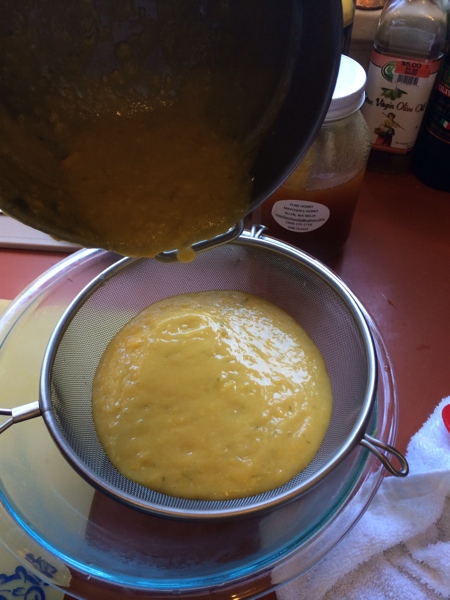
Remove the curd from the heat. Transfer the curd to a fine mesh strainer over a glass or steel bowl and use a spatula to gently strain the curd through the strainer. You’ll end up with some zest and fiber that doesn’t make it through.

Refrigerate in a glass jar or airtight container for at least four hours. The curd will keep for about a week refrigerated, but I’ll bet it won’t last anything close to that long…

A small dish of this lovely stuff is a remarkably delicious desert, or an excellent palate cleanser after a heavy course in a fancy meal. Try it on freshly made shortbread with strawberries for a real treat.

NOTE: You may substitute coconut oil for butter for a dairy free variation.


Granitas are the pure essence of fruit and natural sweeteners. With no diary on board, they’re actually not at all bad for you either. This version was the best we’ve made, of any fruit.

2 ripe Champagne Mangoes
2 Cups Water
1 fresh small Lemon
1 fresh small Lime
3/4 cup Agave Nectar or Honey

Rinse, peel and rough chop the mango flesh.

Rinse, zest, and juice the lemon and lime.

In a food processor or blender, purée the mango until smooth and uniform, about 1 to 2 minutes, stopping to scrape down the sides with a rubber spatula as needed.

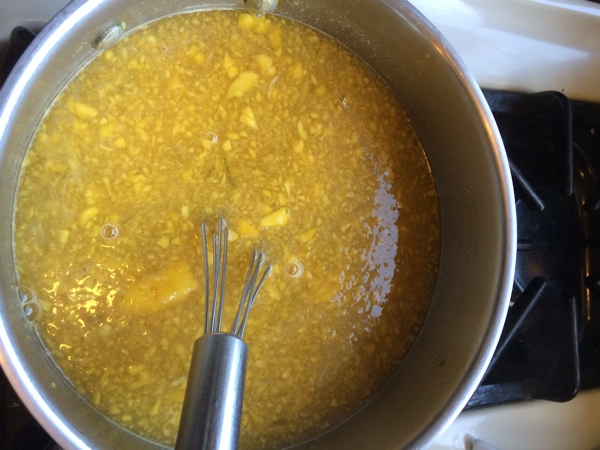
Add the water and honey or agave to a sauce pan over medium heat. Thoroughly melt the sweetener, then add the purée, zest, lemon and lime juice, and stir to incorporate.

Add the puréed mango and stir steadily and gently until the blend starts to simmer. When the whole blend is evenly mango colored and starts to thicken slightly, remove it from the heat; the whole heating process will take around 3 to 5 minutes.


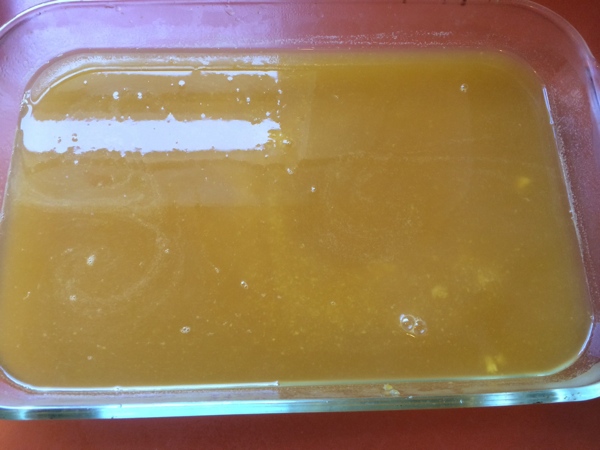
Remove the mixture from heat and pour the blend through a single layer strainer into a 9-inch-square shallow baking pan. This pan size works best ­because it provides a large surface area, a key point in speeding up the freezing process. To further hasten freezing, use a heavy steel or glass pan.

Put the pan in the freezer and stir about every hour with a large fork, times down like you’re raking the granita. Depending on your freezer temp, it will take around 3 to 5 hours for the granita to freeze completely.

You can eat the granita as soon as it’s frozen through, but the flavor will genuinely develop appreciably if you transfer it to an airtight container and freeze it over­night.

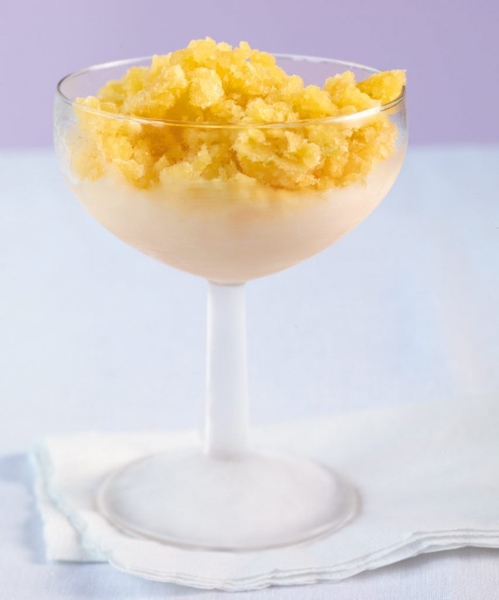
When you’re ready to serve the granita, just scape up the shaved ice and fill a chilled margarita glass, band top with a mint sprig.


Mango salsa is a real treat; the counterpoint of sweet and heat is great with fish, poultry, and pork. Try it on freshly scrambled eggs too.

1 Champagne Mango
2 ripe Roma Tomatoes
1/2 Red Onion
1-3 Jalapeño Chiles
2-4 sprigs fresh Cilantro
1 small Lemon
1 small Lime
Pinch of Sea Salt

Rinse all fruits and veggies. Peel and dice mango. Core, seed and dice the tomatoes. Dice the onion. Chiffonade the cilantro. Juice the citrus.

Combined all ingredients in a non-reactive bowl. Cover and chill for at least 30 minutes, (and as long as overnight – The flavors just get better.)

Yakitori, Japan’s Answer to the Kebab


If it seems as if you’re seeing a trend in my posts lately, you are. I just finished rereading Mark Kurlansky’s, Salt – A World History, and find myself inspired. It’s a great read, and you should give it a spin. Like John McPhee, Kurlansky has the ability to write volumes on a seemingly mundane topic and come out with a page turner. When I first read it years ago, I wasn’t writing about food as much as I do now, so this go ’round lead to a fascinating bout of exploration. Recent posts on salt potatoes, ketchup, and fish sauce were all inspired therefrom, and this week, I bring you Yakitori, Japan’s answer to the kabab.

Hey, if they serve it at the ballpark, it's gotta be great, right?
Hey, if they serve it at the ballpark, it’s gotta be great, right?

Casual observers are often surprised by how much meat is involved in Japanese cooking. Certainly Japan did have a rather protracted period of fundamental vegetarianism. The broad adoption of Chinese Buddhism in the 7th century sealed the deal – in the late 670s, the Emporer Tenmu proclaimed a prohibition on eating animal flesh, fowl, fish, and shellfish, and Shojin Ryori was born – Japanese vegetarian cuisine as cultural touchstone. Not all of that motivation was spiritual, though – The powers that be realized that eating draft animals seriously impaired the country’s ability to adequately feed its people. Nonetheless, the edict more or less persisted for some 1200 years. Clearly, the increasing presence of westerners on Japanese shores had a bearing on the resurgence of meat eating, a process that began with Portuguese traders in the middle of the 16th century, and continues to this day.

While eating food cooked on a stick undoubtedly goes back to the harnessing of fire, the Japanese have a pretty clear recollection of when yakitori first appeared. It was in the Edo period, around the middle 1600s, and initially it was game birds roasted on sticks – quail, pheasant, pigeons and the like. As European influence increased, chickens became more common, eventually making it on to a stick as well. Beef and pork followed over time. As is oft the case, how good your yakitori was back when depended on your income and social status – While the rich ate the best stuff, the poor folks were grilling offal, and all the other little weird bits the beautiful people didn’t want. In any event, those sweet, smoky flavors, basted in soy, sake, and spices, was and remains hugely popular, and the regional variety is as rich as the country that spawned it.

Season lightly with salt and pepper before grilling

Just covering the chicken versions of yakitori can be a bit dizzying – Our preference is for the ever popular chicken thigh version, called momo, along with negima- chicken and spring onion, and kawa – Chicken skin, (seriously, it’s amazing done up with bacon, spring onion, and water chestnuts). There’re many more, from chicken and leeks (hasami), to breast meat (sasami), chicken meatball (tsukune) and chicken wings (tebasaki). Then there’s all those former peasant versions, which are still quite popular – Kawa is skin, bonjiri is tail, shiro is guts, nankotsu is cartilage, hāto is heart, rebā is liver, and sunagimo is gizzards – nummy.

Then there’s that seasoning and/or sauce – Yakitori is typically done salty, or salty-sweet. The salty version is, more often than not, just sprinkled with sea salt and grilled, end of story. The salty-sweet, called tare, is a whole ‘nuther ballgame. In Japan, you can bet that dang near every yakitori stand and joint has their own version, and they’re all top secret. Fortunately, we can suss out the basics – soy sauce, mirin, dry sake, and some form of sweetener are added to freshly made bone stock, and that more than gets the job done. Of course there are variants – Everything from spring onion and garlic, to ginger, hot chiles, pepper, and even wasabi might be found in there. That’s good news for us, because making a very nice basic sauce is easy, and more to the point, poetic license is fully authorized.

Protein or veggies, anything you've got will make fine Yakitori
Protein or veggies, anything you’ve got will make fine Yakitori

The real beauty of yakitori is that it makes a great last minute dinner, or a perfect vehicle for fridge cleaning – You can and should use whatever you like, in whatever combinations please you. Sure, a lot of ‘real’ yakitori is either just one thing, or maybe a couple skewered together, but there’s nothing at all wrong with doing them up like little shish kebab. The bottom line is that the cooking method and saucing has as much or more to do with the overall taste as the things you decide to grill, so go wild. By that same rule, if you’re pressed for time, there’s nothing wrong at all with using straight soy sauce, teriyaki sauce, or bottle yakitori sauce, (and the former is now quite easily found in the Asian food section of your local market.

Yakitori does not require any marinating prior to cooking. You need to merely slice stuff up into bite sized pieces and shove them onto sticks. Couldn’t be easier. One note on cutting stuff – the preferred method is known as sogigiri, AKA cutting on a roughly 30° angle with the food lying flat in a cutting board. Cut toward yourself, starting at the upper left of your intended slice and working down and across. What that does is maximize surface area on relatively small chunks of food, giving more space to add sauce and heats from the grill to.

The Sogigiri cut maximizes surface area

Speaking of grilling, while traditional yakitori is done on a brazier or charcoal grill, the desired technique employs no smoke and moderate heat, which means you folks who only have a gas grill, or a broiler in your oven, are gonna be just fine.

When skewering your goodies, do take the time to make sure every piece is snuggled right up tight against the next one – With small, relatively thin cuts of flesh and veggies, dried out food is a real possibility – Keeping them tight helps retain the baste better, and keeps things moist and juicy as well. Give whatever your skewering a light dusting of good salt and fresh ground pepper after you’ve got them done up. If you’re wanting to go all out, take a trip to the market and find fresh, seasonal veggies, meats, and poultry. Like the Vietnamese, Japanese cooks pay special attention to color and season – Spring is green, summer dark green, fall is orange and red, winter is white. Have some fun with it, and let your plates reflect your findings.

Place skewers close together to help keep things moist and juicy

Brush on your basting sauce after you’ve placed the skewers on the grill. With chicken, pork, or beef, you’re going to want in the neighborhood of 5 minutes or so cooking per side, with another baste application at the turn. Again, don’t run your grill flat out – You want to cook these on medium-low heat, allowing time for things to cook through and absorb all the goodness from your baste. If you’re using a charcoal grill, set up a two zone configuration, start the skewers on the cooler side, and finish with a couple quick flips on the hot side. If you’re using wooden skewers, soak them for about half an hour prior to loading them up. Lightly oil your grill surface prior to placing skewers, to help keep them from sticking – Use a neutral vegetable oil so you don’t adulterate your taste profiles.

House made Yakitori Sauce - Black gold.
House made Yakitori Sauce – Black gold.

That sauce, that amazing sauce. We’ll start here, because this stuff really is magical. I made the batch done for this post on the same day I slow cooked a big ol’ pork roast. In the last week, that sauce went on the pork twice, into fried rice, was added to a teriyaki joint style salad dressing, and even made its way into tacos – Its that good, and that versatile. Many, many folks say that, over in Japan, cooks add to a big pot of their signature sauce every day, so that it effectively never runs out. We won’t likely go that far at home, but my oh my, do you want this in your fridge at all times. While the real deal is made with the bones from the chicken thighs you’re about to skewer, you can sub chicken stock for the water and bones if you’re in a hurry – But DO make the bone stock version just once, and you’ll be hooked – It’s super easy, incredibly delicious, and very rewarding for home cooks.

House made Yakitori
House made Yakitori

You can certainly use one sauce for all things, and well might – But we’re including some variants, to give you some ideas for future explorations.


Urban’s Go To Yakitori Sauce
(Makes enough for several meals, or one hell of a party)

Bones from 4 fresh Chicken Thighs or Legs
1 Cup Mirin
1 Cup Tamari
1/2 Cup Dry Sake
1/2 Cup Water (Chicken Stock, if not using bones)
6 Scallions
3 cloves fresh Garlic
1/2″ chunk fresh Ginger
2 Tablespoons Agave Nectar
1 Tablespoon Sesame Oil
1 teaspoon ground Szechuan Pepper (or anything hotter if you prefer)

Peel, trim and mince garlic.

Trim scallions and cut into roughly 1/2″ rings.

Dice ginger, (you don’t need to peel it)

On a baking pan lined with foil, under a high broiler, scatter bones and broil for about 10 minutes, turning with tongs so they brown evenly.

Transfer roasted bones to a heavy sauce pan over medium high heat.

Add all additional ingredients, stir well to incorporate, and heat through until a low boil is achieved.

Reduce heat to just maintain a steady simmer and cook until the volume of the sauce is reduced by 50% – You’ll note when you get there that the sauce coats a spoon with an even, viscous layer. The cook should take around 45 minutes to an hour, but keep an eye on things and give it an occasional stir.

Remove pan from heat and pour the sauce through a single mesh strainer into a non-reactive bowl.

Allow to cool to room temperature, then transfer to a clean glass jar. Will store refrigerated for 2 to 3 weeks.

Urban’s Pork Yakitori Sauce

1 Cup Mirin
1 Cup Tamari
1 Cup Dry Sake
2 Tablespoons Hot Chile Paste (Gochujang, wangzhihe, harissa, or Sriracha will do just fine)
2 Tablespoons Sesame Oil
2 Tablespoons Honey
1 Tablespoon Rice Vinegar
3 cloves fresh Garlic

Peel, trim and mince garlic.

In a heavy saucepan over medium high heat, add all ingredients and stir to incorporate.

Bring to a boil, then reduce heat to maintain a simmer.

Allow sauce to reduce by 50%, remove from heat, run through a single mesh strainer, cool to room temp.

Store refrigerated for up to 2 weeks.


Urban’s Beef Yakitori Sauce
This is quite close to a typical sauce used for that deep fried wonder, Kushiage.

1/2 Cup Ketchup
2 Tablespoons Worcestershire Sauce
2 Tablespoons Tamari
1 Tablespoon Mirin
1 Tablespoon Honey
1 Tablespoon Dijon Mustard
1/2 teaspoon granulated Garlic

Mix all ingredients together and allow at least 30 minutes for the flavors to marry before brushing onto your skewers.

Refrigerate in an airtight container for storage.


Just in case you’re like us, and want a little something green with your skewers, here’s my swing on that great savory salad dressing you get from your local teriyaki joint.


Urban’s Teriyaki Joint Salad Dressing

1 Cup Mayonnaise
1/3 Cup Rice Vinegar
4 Tablespoons Agave Nectar
4 Tablespoons Sesame Oil
2 Tablespoons Yakitori Sauce
1 teaspoon granulated Garlic

Whisk all together in a non-reactive bowl, and allow flavors to marry for at least 30 minutes prior to use.

Store refrigerated for up to a week in an airtight, non-reactive container.

Salt Potatoes


I have a favorite kitchen mantra that goes like this – Simple is always good, but not always easy. The implications are rife in that phrase – Simple is always good, but our inclinations sometimes work against it. And then as stated, simple just isn’t always easy, in fact sometimes it’s deceptively hard. Yet when we bow to the sublime, amazing things can happen. Salt potatoes are such a thing. Chances are you’ve never had them, and if you have, you’ve been given an origin story for the dish. It’s safe bet they’re far older than you were lead to believe, and more widely travelled to boot.

There are over 5000 potato varieties world wide

The potato, (most often Solanum tuberosum), is another gift from the Andes, specifically southern Peru and northwest Bolivia, where it was first domesticated somewhere around 8000 to 5000 BC – Yes, that means roughly 7000 to 10,000 years ago. Brought to Europe in the mid 1500s by, (yup, you guessed it), those marauding Spaniards, the spud is now cultivated worldwide, though of the roughly 5,000 varieties known around the globe, over 3,000 are still found in the Andes – Think about that the next time you’re picking between russet, gold, or reds at the store. If ever there was a crop begging to be expanded in your garden, this is it.

Initially, Europe wasn’t crazy about the potato, especially, and maybe most strangely, in the northern climes where potatoes do quite well. Part of the reticence may lie in their Solanaceae family roots, which includes some pretty dangerous plants, (and the leaves and green skins of potatoes exposed to light.) Over time, the nutritional punch made its way through the naysayers, and by the 1800s, potatoes were in heavy cultivation throughout most of Europe. A raw potato is 80% water, followed by 16% carbs, and about 4% protein, and are rich in vitamin B and C. While cooking degrades some of the nutrient value, they’re still a relatively good bang for the buck, which is why they’re the worlds forth largest food crop – And over 68% of those grown are eaten directly by humans, to the tune of an average of 72 pounds annually. These days, over 37% of world production happens in China and India.

And of all the myriad ways to cook a potato, who’d have thought to just boil them in brine? Turns out, pretty much everybody, although some lay heavier claims than others. Look up salt potatoes, and in this country, most of what you’ll find will claim that they were invented in Syracuse, New York. Now, that’s simply not true, but there is a reason that one of these far flung claims resides there – Syracuse was a major salt production and shipping center in the 19th century.

Syracuse New York, the American Venice.

In the fall of 1825, the last section of the Erie Canal was completed. Running east to west, the Erie connected to the north-south running Oswego canal at a little town called Syracuse. With canals running right through town, Syracuse picked up the moniker as the American Venice. The Erie Canal had been built to move Onondaga Salt to New York City and the world, and for a while, it worked really well. As fate would have it, bunch of those old Salt workers were Irish, and they truly loved their potatoes, and regularly cooked those and corn in brine, but they didn’t invent the dish.

Papas Saladas - Andean Magic
Papas Saladas – Andean Magic

Who did remains shrouded in mystery, but it’s a good guess it started down in South America. There, among many local versions, you’ll find papas saladas, that hail from, of course, another salt mining town. In the Canary Islands, they’re papas arrugadas, (which we mentioned in our Mojo post), and in the Guérande salt producing region of France, they’re patate cuit au sel. And of course there’s many more – Chances are very good you’ll find a version in every country, and many will claim origination – imitation is the sincerest form of flattery, right?

Papas Arrugadas - Canary Island Magic
Papas Arrugadas – Canary Island Magic

If you’ve never tried salt potatoes, trust me when I tell you it’s time. They’re a perfect summer accompaniment to grilled meats and veggies, and they’re delicious enough to stand alone. While the method and ingredients couldn’t be simpler, there is a bit of slightly complex chemistry going on under the hood of this one.

Right off hand, it’s not outrageous to question how good a potato boiled in brine will taste. The assumption is that way too much salt will get into that spud, making for an unpleasant, out of balance experience. Fortunately, that’s not what happens. Here’s the magic – One, cooking in a brine solution raises the boiling point higher than plain old water, (just as it lowers the freezing point when making ice cream), and two, the thin salt crust that forms on the spuds acts as a barrier, keep excess salt and water out. As a result, the potatoes effectively steam in their own skins, and you only end up with that thin layer of crystallized salt on the outside of the skins. That leads to an amazingly fluffy spud with a super tasty skin, just right for dipping in melted butter, gribiche, mojo, sauce diable, or chimichurri. As I mentioned, they’re stunningly good, good enough to eat as a meal, with little bowls of this and that to add as you please.

There are slightly different cooking methods around the globe – Some boil in brine and drain, (The Syracuse method), others boil the brine completely away with the spuds still in the pan, (I prefer the latter method.) They’re all worth trying, but this one will set you well for your first endeavor. As with all simple dishes, quality and freshness count – Freshly dug, local spuds from a farmers market deserve this dish – Old, soft, mealy, bulk spuds do not. Same goes for salt – This is the time to use something good – Sel de mere, Bolivian Sunrise, Himalayan pink, or Maldon – Whatever the unique signature the salt bears will play out beautifully. All salts do not have equal volume so you’ll be best served by weighing it out.

Perfect Salt Potatoes

Salt Crusted Potatoes

1 Pound fresh new or fingerling potatoes, (You want something in the 1″ to 2″ range, and pretty uniform in size)
1 Ounce really good Salt.

In a heavy sauce pan over high heat, add potatoes, salt, and just enough water to cover the spuds.

Once you reach a boil, reduce heat to maintain a steady simmer. Cook potatoes until fork tender, about 20 minutes.

Pour off all but about a half inch of water. Put the pot back on the burner and turn heat to high.

Use a wooden spoon to roll spuds through the remaining brine as it begins to boil off. You’ll see the salt crystalizing on your spuds as this occurs – It’ll take a few minutes for the brine to disappear.

Continue gently rolling the spuds in the dry pan for another couple of minutes, until the salt crust evenly coats each potato and the skins start to get slinky wrinkly.

Remove from heat to a serving bowl and serve promptly.

So You Think You Know Ketchup?


So, you think you know ketchup, huh? Recently, we posted on Salsa, as well as the most popular derivative thereof, Sriracha, and noted therein that both those condiments actually outsell ketchup in the U.S., which might surprise some of y’all. Yet the ubiquity of American fast food concepts has done much to spread the red stuff worldwide, which then begs the question – How popular is ketchup worldwide? The answer is very.

Ketchup, it's everywhere, and growing by leaps and bounds
Ketchup, it’s everywhere, and growing by leaps and bounds

Global market research by respected industry watchers pegged ketchup as a $4.15 billion dollar commodity in 2015. With an expected annual growth rate of 3.8%, sales of ketchup worldwide are expected to hit $5.6 billion by 2022 – Billion with a B – That’s a lotta ketchup, gang. And what are the biggest trends in that friggin’ huge market? So called ‘exotic ingredient’ ketchups, and organic offerings. Interesting, no? The Big Four primary derivatives of the ketchup trade are as follows – Tomato, mushroom, fruit and nut, and ‘other.’ The latter leaves quite a bit to the imagination. Ironically, these popular trends lead us in a perhaps unexpected direction – Backwards, to the origin of the stuff.

It should come as no surprise that tomato ketchup, far and away the most popular version today, was not the first one to be so named. In England of the 1700s, sauces called catsup, ketchup, or katchup were anchovy based things, seasoned with vinegar, shallot, ginger, clove, nutmeg, lemon, pepper, and wine. The results were more like Worcestershire sauce than the stuff we know today as ketchup. The name for these lovely things comes from, of all places, Indonesia, where kecap, (pronounced ketchup), means a dark, thick, soy based sauce, (And remains immensely popular there to this day). The leap from the East back to England occurred because that’s where the Brits got a lot of those exotic spices they threw in with them salty little fish. And not surprisingly, derivations of the stuff came out featuring, you guessed it, mushrooms, fruit, and nuts.

Tomato ketchup, on the other hand, took a while longer to circulate, as the ‘love apple’ was a native to Central and South America, and as such didn’t appear in Europe until (probably) the Spaniards brought them back over the big pond in the 16th century. Tomatoes were readily embraced by most countries around the Mediterranean, which it took somewhere around 150 years or so to spread and become accepted. That acceptance was not so forthcoming from the Northern Europeans, including the British, (who initially though the fruit to be poisonous). The first acknowledged tomato ketchup recipe came from the American colonies, during the revolutionary war, and the first published version came out while Lewis and Clark were traipsing west, in 1804, by physician/horticulturist James Mease. His version salted sliced tomatoes and let them sit for a day, then added mace, allspice, shallot, and brandy, and cooked it all down. Meade claimed the French loved the stuff, which is patently bullshit – More likely, given the spicing he employed, he’d been handed something from the Caribbean, because it sounds a lot like Sauce Creole. In any event, the stuff caught on in a big way, and the rest is history.

Ketchup, especially the tomato variety, came about as one way to preserve things through the cold months, and frankly, that’s why I’m writing about it here and now. A whole bunch of us have gardens, and what is almost guaranteed to be one of those crops you sew and then some time later are offering to any friend, neighbor, or willing perfect stranger you can find, due to relative overabundance? Yep, love apples. As such, it’s a great time to visit some recipes for the stuff. Sure, there are ‘natural’ and organic versions out there in the stores, as well as those exotics styles – But frankly, while the natural stuff is far better for you than the old standard, they’re not exactly using fresh, home grown tomatoes that could and should be several varieties – And that means you can make better at home. And as for the exotics, take a look at the prices, and you quickly discover that in this regard, you can make better at home for a hell of a lot less dough. So let’s do that.

First off, let’s address the elephant in the room – There are two, when it comes to ketchup making at home.
1. Making ketchup takes an incredible amount of tomatoes – True and not true – If you’re wanting to can a whole bunch in order to enjoy house made through the cold months, then yes, it will take a lot of tomatoes. If you’ve got them, and you’re of a mind to preserve, then you should definitely throw ketchup into the mix, along with whole and sauced. That said, what you’ll see below are small batch recipes that don’t take a whole lot of tomatoes – And frankly, making a batch to last a week or two is well worth the effort, especially if you’re growing your own.
2. Making ketchup at home takes forever – Well, not forever, but all day, yeah – As mentioned, the recipes we’ve got for you here are small batch stuff, and can easily be done in under an hour or twos worth of actual work, but some of the prep and cooking does take a long time – We’re radically changing the stuff we start with, and that just can’t be rushed – So, you’d best be planning for a whole day, but it’ll be a great day, guaranteed, (and you can do other stuff, or even take off while things are cooking, if you use a slow cooker, as noted). And finally, if you’re canning, it’s gonna be an all day thing, guaranteed – And always review proper method and cooking times when doing so.

House made tomato ketchup - All other bow before it.
House made tomato ketchup – All other bow before it.

Classic Tomato Ketchup
2 28 oz cans Peeled Tomatoes, (Any version is fine so long as they’re peeled)
3/4 Cup Distilled White Vinegar
1/2 Cup Bakers Sugar
1/2 Cup Water
1 1/2 teaspoons Pickling Salt
1 teaspoon Onion Powder
1/2 teaspoon granulated Garlic
1/4 teaspoon ground White Pepper
1/4 teaspoon ground Mustard
1/8 teaspoon Celery Salt
1 whole Clove

In a slow cooker set to high, add the tomatoes. If you found ground, peeled tomatoes, you’re good to go. If you have whole, or crushed, you need to process them first. Pulse with an immersion blender to achieve a nice, rough sauce consistency.

Rinse each can with a quarter cup of water and add that to the cooker, along with all other ingredients.

Cook uncovered for 8 to 10 hours, giving the sauce a good stir roughly every hour.

When the sauce is reduced in volume by roughly 50%, and is quite thick, turn off the heat and process the sauce again with the stick blender until very smooth.

Run the sauce through a single mesh strainer, into a nonreactive mixing bowl, removing any bits of skin, seeds, and the clove.

Allow to cool to room temperature.

Taste and adjust salt and pepper balance as needed.

Transfer to a clean glass jar and refrigerate. It’ll last a good week, (if it survives that long.)

Mushroom ketchup hardens back to Medieval English sauces

Mushroom Ketchup (NOTE: This recipe requires advanced prep for the shrooms, so plan accordingly)

1 Pound fresh Mushrooms, (Portobello, Shiitake, button, or wild, of course)
2 Cups Water
1 1/3 Cups Champagne Vinegar
2 medium Shallots
1/2 Ounce dried Mushrooms
2 Tablespoons Dry Sherry
1 Tablespoon Pickling Salt
1 small clove Garlic
6 Tasmanian Pepperberries
2 whole Cloves
1/4 teaspoon ground Ginger
1/4 teaspoon ground Black Pepper
1/4 teaspoon ground Nutmeg
1 Bay Leaf (California or Turkish as you prefer)

The day before you plan to cook the sauce, carefully wipe shrooms clean with a damp cloth, and trim away any bruised bits.

Slice mushrooms to roughly 1/4″ thick. Toss shrooms into a nonreactive mixing bowl, add the tablespoon of Pickling Salt and toss gently to incorporate.

Cover the bowl with a clean, dry cloth and allow shrooms to sit for 24 hours. Stir gently 3 or 4 times through the rest. Note that the shrooms will become quite dark during this process, and that A-OK.

An hour or two before the end of the 24 hour rest, heat 2 cups of water to about 110° F. Pour that into a mixing bowl and add the dried mushrooms. Stir to incorporate and let them steep until their nice and soft.

Trim, peel and mince garlic and shallots.

With a slotted spoon, transfer the reconstituted dried shrooms to a blender vessel or food processor. Carefully pour the soaking liquid into the blender, leaving any pooled gritty stuff out of your pour. Process the blend into a smooth mix, and transfer that to a large sauce pan.

Dump the salted, fresh shrooms into the blender, (don’t rinse it first), and process that to a smooth mix, then add them to the sauce pan.

Add 1/3 cup vinegar, the garlic, and shallots to the un-rinsed blender vessel and process to a smooth purée. Add this to the sauce pan, along with the rest of the ingredients, except the sherry, and stir to incorporate.

Bring the mix to a simmer over medium high heat, then lower heat to barely maintain the simmer. Cook for 1 to 1/12 hours, until the Mushrooms are very soft and the sauce has thickened notably.

Now’s the time to test for proper consistency – remove sauce from heat and take a spoonful of the sauce and place it on a clean saucer. Let that sit for 10 minutes – If at that point the sauce has remained homogeneous, it’s thickened enough. If a notable amount of liquid leaches out of the sauce, more cooking is needed. Continue cooking for another 15 minutes and retest until you reach proper thickness.

Run the sauce through a single mesh strainer to remove the whole spices, then process in a blender or with a stick blender to a nice, smooth consistency.

Return the sauce to a clean sauce pan over medium high heat and heat through, stirring constantly. When the sauce simmers again, add the sherry. Cook on a low simmer for 5 minutes, then remove from heat.

Transfer sauce to clean, sanitized half pint jars and process in a hot water bath for 15 minutes, (Again, consult CFHFP for more specifics and altitude adjustments).

Allow sauce to marry for at least 8 weeks before use. The well sealed jars will last all winter, (but probably not!)

Green walnuts are a summer crop that make a wonderful earthy kethcup

Walnut Ketchup
This one goes way back to ketchup’s English roots, right down to those salty little fish. It’s admittedly a lot of work, but the reward is huge. Canned in half pint jars, they’re an amazing house warming gift – The taste of the 17th century brought to life. Green walnuts are a summer crop, usually available only from June through August, and maybe into September some years, so plan ahead.

45-50 Green Walnuts
3 1/2 Cups Cider Vinegar
1 1/2 Cups Malt Vinegar
1 Cup Dry Sherry
1 large Sweet Onion
1/4 Cup grated Horseradish, (straight – not mixed ‘sauce’)
2 ounces Anchovies (in oil or salt)
2 teaspoons ground Black Pepper
1 teaspoon dried ground Chile (hot or mild as you like)
1″ fresh Ginger root

The tough stuff goes first! Opening walnuts, especially green ones, isn’t easy, and it’s messy – Keep in mind that wood stains are made with these guys, so dress and guard your kitchen surfaces accordingly – They WILL stain hands, counters, etc, and it will NOT come off your skin! Some folks use a knife, others a hammer – Choose your weapon and cut, crack, or crush those things.

Place nuts in a nonreactive container, (a 1/2 gallon mason jar is perfect), and cover completely with the vinegars. Tightly cover your container and let them steep for a week – 7 full days.

On Day 8, transfer nuts and liquor to a large stock pot over medium high heat. Add all remaining ingredients and stir to incorporate. When the mix starts to boil reduce heat to maintain a vigorous simmer and cook for 45 minutes.

Remove sauce from heat and allow to cool to room temperature.

Process the sauce with a stick blender to a nice, smooth consistency.

Run the sauce through a single mesh blender to remove any solids.

Carefully pour into clean, sanitized bottles or jars with air tight lids and seal.

Will last a good 6 months stored in a cool, dry, dark place.

Cranberry ketchup is amazing on pork, chicken, or roasted Brussels sprouts

Cranberry Ketchup
2 Cups Canberries, (fresh or frozen)
11/2 Cups Raw Cider Vinegar
1/4 Cup Balsamic Vinegar
1 large Navel Orange
1 small Sweet Onion
2 Tablespoons Agave Nectar
1/4 teaspoon Allspice
1/4 teaspoon ground Black Pepper
1/8 teaspoon ground Black Cardamom
1/8 teaspoon Sea Salt

Peel, trim and fine dice onion.

Zest and juice orange.

In a large sauce pan over medium high heat, add cranberries, onion, and cider vinegar, stir to incorporate. Reduce heat to maintain a bare simmer and cook until cranberries are popped and soft, about 4-6 minutes.

Remove sauce from heat and process with a stick blender to a smooth consistency.

Return sauce to heat and add balsamic, orange juice and zest, allspice, cardamom, pepper, and salt. Stir to incorporate. Cook on a low simmer for 15 to 20 minutes, until sauce is notably thickened.

Remove from heat and process again to smooth the sauce out. You can run it through a single mesh strainer if you prefer a liquid, smooth sauce, or leave it rustic – It’s incredible on chicken, or pork, or roasted Brussels sprouts.

Store in a clean, nonreactive container, refrigerated. Will last a couple weeks, easy.

¡Salsa Espectacular!


¡Esto es un Salsa Espectacular!

Raspberry Pico de Gallo - A slice of Heaven in a bowl
Raspberry Pico de Gallo – A slice of Heaven in a bowl

Open your fridge and look at the door side – Chances are good that what you’ll see there are condiments – in ours, you find mustards, relish, horseradish, harissa, ketchup, mayo, sriracha, and of course, salsa. Those last three illustrate big changes in what folks in this country like and buy most of, in the ever-changing condiment world. In 2011, mayo was King. By 2014, salsa had surpassed all, (for the second time – More on that later), and as of last year, sriracha topped regular old salsa for the win. Interesting, is it not? Think about it and it makes great sense. Sure, the old standbys still star on sandwiches, and as constituents in sauces, salads, and the like – but salsa can do much more than any of those, and, well, sriracha is good with damn near anything.

Of course, salsa is still king, because sriracha is, after all, exactly that – Salsa, and not very different from the predominantly Mexican varieties we’re used to here. I say varieties, but truth be told, us folks up here in El Norte are far from well schooled in the stunning pantheon that is Mexican salsa – And that’s just speaking of Mexico, let alone the rest of Central and South America. Trust me when I tell you that you’re really missing something spectacular if that’s the case for you. Today, we’re out to fix that.

I’ll provide links to several recipes that you’ll find here, and add a few new ones as well. The rest of this is kind of a primer, designed to hopefully show you something new, pique your interest, and get you digging for a variation you can call your own. You’ll also notice I’m not going to describe a whole lot of parings, and that’s done on purpose – What you like salsa on – what kind on what things – That’s your gig, and discovering for yourself is a hell of a lot more fun than reading what I think you should eat, yeah?

Many Americanos assume that the term salsa is purely Mexican, but it’s definitively not. Salsa means ‘sauce’ in Spanish, Italian, and Greek. The term derives from the Latin word ‘salsus’, meaning salted. I think it’s an interesting fact that, while touched with sweet, heat, herbs, and spices, it’s still that salty, savory bass note that defines the salsa rhythm section. Of course, sauces didn’t start out that way anywhere that lacked tomatoes – That makes the salsa we’re used to a true native of Mexico, Central, and South America. It wasn’t until the Spaniards caused all their mayhem in the new world that the tomato made its way over to Europe, and then basically conquered the world.

Salsa began with the Aztec, Inca, and Mayan peoples. The Spanish were intrigued, and termed the piquant blend of tomatoes, chiles, herbs, and spices ‘salsa’ as far back as the late 16th century – Then they took it back home with them. While those three legendary civilizations largely didn’t survive, their salsas did, and continue to flourish throughout the Americas. It’s these Mexican staples that largely flavor things up here in the north.

One version of the stuff, ubiquitously known as ‘hot sauce,’ ( Basically chiles, vinegar, and salt, AKA, what’s in sriracha), caught on quite early here in America – Maybe earlier than you’re aware of – That’s particularly interesting in light of the fact that, by the mid 20th century, a fair number of those chiles and brands were very hard to find, having been driving out by post WWII food homogeneity. Yet the first bottled hot sauce, powered by cayenne chiles, was offered for sale in Massachusetts, back in 1807. In 1849, Louisiana banker Colonel Maunsell White planted the first crop of Tabasco chiles north of the border – Ten years later, Maunsell marketed the first bottles of ‘Tobasco’ chile Sauce, and Edmund McIlhenny plants some seeds obtained from Maunsell on his property – Avery Island, Louisiana. In 1868, McIlhenny poured his aged sauce into used cologne bottles and sent it out as samples, resulting in thousands of orders. By the 1860s, you could buy bird chile powered sauce in New York City. By 1898, a former McIlhenny employee started up B. F. Trappey & Sons, and another legendary sauce was born.

¡Salsa Espectacular!

In 1917, Henry Tanklage introduced La Victoria Salsa Brava, a traditional Mexican style salsa still in production today. La Victoria’s red, green, and enchilada sauces, along with Old El Paso, (which was formed in 1917, but didn’t start making Tex-Mex stuff until 1969), are the stuff that introduced generations of gringos to Mexica and Tex Mex cooking. It’s reasonable to say that the full circle of originators can be closed with David and Margaret Pace’s introduction of his namesake salsa in 1947. Pace noted that, “In ’47, my sauce bottles exploded all over the grocery shelves because I couldn’t get the darned formula right.” Those were simpler time, without a doubt. By the mid 1980s, the salsa craze was in full swing, and by the early ’90’s, salsa outsold all other condiments for the first time.

Salsa, as most of us know it, is a play on Salsa Roja, a tomato based, cooked salsa, usually containing onion and chile, with hints of garlic and cilantro. It’s what you get when you sit down at damn near any Mex joint in the U.S. As simple as it is, the range of quality and taste is huge. I argue that you can reliably learn much about the restaurant you’re about to patronize by how good that first dish of salsa is – If it’s inspired – nuanced, with obvious care given to balance and the overall flavor palette, you’re about to eat good food. If it’s dull, lifeless, tastes old or made from crappy ingredients, well… I’ve been known to get up and go elsewhere. The lions share of American store bought salsa is salsa roja, regardless of how schmancy it may sound. Other popular roja derivatives include ranchera, taqueria, and brava. Many, many derivations on this theme have been made and are sold, most of which feature various levels of heat, (from mild to truly stupid), roasting of the constituents, or exotic additions. Those are all great, but if you find something you like, what’s far greater is for you to dissect that recipe and make one of your own – That’s what the folks who sell that stuff did, so why shouldn’t you?

Pico de Gallo - Delicious, whatever the root of the name
Pico de Gallo – Delicious, whatever the root of the name

Probably the next most well known version is Pico de Gallo, which literally translates to ‘rooster’s beak.’ There are competing tales for the origin of the name, from the fact that serrano chiles kinda look like a birds beak, to the ‘chicken feed’ consistency of well made Pico, to the early propensity to eat it by grabbing a pinch between dialing finger and thumb – You get to decide on that one… Pico is a Salsa Cruda, raw salsas that need nor want cooking. From a straight mix of tomato, onion, chile, and cilantro, to blends made with corn, fruit, seeds, nuts, or more exotic veggies, they’re a delight and a must make. Our raspberry Pico is stunningly good, and illustrates why you see some kind of acid in most of them – Be it citrus, mango, berries, or a splash of vinegar, that slightly sweet counterpunch and bite makes amazing things happen.

Salsa Verde, is, of course, green. Verdes are usually cooked sauces made with tomatillos, that pre-Colombian Nightshade relative native to pretty much everywhere in the Americas except the far north. Tomatillos have a bunch of pectin, so they gel up nicely and form a rich Sauce that sticks to what you put it on. Mixed with chiles, onion, garlic, and cilantro, they have a sublime, early flavor that goes well with many things.

Salsa Ranchera is a roasted red sauce made from tomatoes, chiles, and a spice blend. It’s typically blended to a smooth consistency and served warm. If you’re making huevos rancheros, it’s a must have.

Salsa Negra
Salsa Negra

Salsa Negra is not well know up here, but it should be. A combination of chiles, garlic, spices, and oil, it’s pungent and delightful, more like a Mexican style harissa or sambal than a salsa roja, and is much more potent. See our recipe below.

Farther south, there are many iconic salsas, some of which we’ve covered, and some you need to check out.

Chimichurri, that delightfully pungent mix of parsley, onion, garlic, and chiles in oil and vinegar, is the most popular thing in Argentina and Uruguay, and for good reason. Here’s a recipe for you to try.

Salsa de Lazano - Costa Rican gold
Salsa de Lazano – Costa Rican gold

In Costa Rica, the ubiquitous table condiment is Salsa Lizano, a smooth, delicate brown sauce that is, frankly, highly addictive. There’s a recipe below.

In Peru, the go to is Peri Peri. Its more like harissa than most South American salsas, mainly because the most fiery and traditional version is powered by African birds eye chiles, which truly do pack a wallop. You can make it with less incendiary stuff, and many folks down there do. Recipe down below for you.

And then, from the Caribbean, Cuba, and the Yucatán, there’s mojo, the heavenly marinade that powers great carne asada – You’ll find that over on this page.

So, there you have it, a salsa map to go wild with. Tonight, I’m gonna do pork tenderloin tacos, with two fresh picos, one corn, one berry – What are you making?


Carrot Salsa

1 Pineapple
1 large Carrot
1/2 small Sweet Onion
1-2 Jalapeño Chiles
1/4 small Red Bell Pepper
5-6 sprigs fresh Cilantro
1/2 fresh small Lemon
1 teaspoon Lemon Thyme
Sea Salt and fresh ground Pepper to taste

Peel, core, trim pineapple, and dice 2 Cups.

Peel, trim and grate 2/3 Cup of the carrot.

Peel, trim and fine dice the onion and pepper.

Trim, devein and de-seed the Jalapeño, (or leave all that if you like the heat, and you can always use hotter chiles – I should write this into every recipe, just for David Berkowitz – The DB Rule ?)

Mince the Cilantro.

Throw all that into a non-reactive mixing bowl. Add the lemon thyme, lemon juice, and zest. Season lightly with Salt and Pepper.

Refrigerate covered for at least an hour, then remove, remix and taste – Adjust seasoning as needed.


Salsa Negra

EThis stuff was born to power rice and beans, as far as I’m concerned, but it’s incredible on a whole lot more than that – Put this on roasted Brussels sprouts and suddenly, you live Brussels sprouts…

8-10 cloves Black Garlic (Readily available at many Asian groceries and online, this aged Garlic is more intense, sweeter, and notably darker, hence the name – It is basically slowly caramelized over a long period of time, and it’s amazing. If you don’t have that and the jones hits you, see below)
8-10 cloves fresh Garlic
2-4 fresh Chiles, (Guajillo, Serrano, or Árbol if you can get them, if not, use 1 ounce of guajillo and árbol each, reconstituted)
3/4 Cup Avocado Oil
1 Tablespoon distilled White Vinegar
1 Tablespoon Agave Nectar
1 teaspoon Cumin seed.
Sea Salt

* If you don’t have black garlic, in a heavy sauté pan over medium heat, add a couple Tablespoons of avocado oil and allow to heat through. Stem and peel a whole head of garlic, and slice big cloves in half. Pack a nice, solid layer of garlic onto the pan and reduce heat to medium low. Keep an eye on things and stir occasionally. Let the garlic cook until it’s deeply browned, aromatic, and soft, then use that for the recipe.

Peel, trim and mince black and fresh garlic.

Stem, seed, and devein chiles, (Or apply the DB rule)

Pulse the Cumin seed in a spice grinder until their roughly broken up, but not powdered.

In a heavy sauce pan over medium heat, add the oil and allow to heat through. Add the chiles and cook for 5 to 7 minutes, until the chiles start to brown and and are quite fragrant.

Remove from heat and pour into a non-reactive jar or bowl. Add the garlic, vinegar, agave, cumin, and a teaspoon of salt. Mix well, then allow to cool, covered, to room temperature.

Will last for a couple of weeks in clean glass, refrigerated.


Salsa Lizano

1 1/2 Cups Vegetable Broth
1-2 Chiles, (Guajillo or Serrano are both good)
1/2 small Sweet Onion
2-3 Baby Carrots
1 Tablespoon Agave Nectar
1/2 fresh Lemon
1 Tablespoon distilled White Vinegar
2 teaspoons Blackstrap Molasses
2 teaspoons pickling Salt
1/2 teaspoon ground Cumin


Peel, trim, and fine dice carrot and onion.

Stem chiles, cut in half, then devein and deseed.

In a heavy skillet over medium high heat, add the chiles and pan roast for 3-5 minutes until they start to blister and get quite fragrant.

Add the veggie broth, onion, and carrot. Allow to heat through until it simmers, then reduce heat to medium low and simmer for about 5 minutes. Remove from heat and allow to cool for a few more minutes.

Zest lemon half.

Strain the cooked veggies, reserving the broth. Add veggies to a large mixing bowl.

Add Agave Nectar, vinegar, lemon juice and zest, molasses, cumin, and salt to the mix.

Add 1 cup of the reserved broth to the bowl.

Process with a stick blender, (use your regular blender if, gods forbid, you don’t have a stick). Blend to a smooth, even consistency. If you want super smooth, run the processed sauce through a single mesh strainer, otherwise just leave it rustic.

It’ll last a good two weeks in clean glass, refrigerated.


Peri Peri Sauce – Peruvian Rocket Fuel

1/2 Cup African Birds Eye Chiles, ( árbol, birds beak, cherry, or red serranos will work fine too)
1 Red Onion
8 cloves Garlic
2 small Tomatoes
1 small Red Bell Pepper
1 large Lemon
3 Tablespoons Cider Vinegar
2-3 Tablespoons Avocado Oil
1 Tablespoon Agave Nectar
2 teaspoons Smoked Paprika
2 teaspoons Sea Salt
1 teaspoon Mexican Oregano
1/2 teaspoon ground Black Pepper
2 Bay Leaves, (Turkish or California, as you prefer)

Place whole chiles, onion, bell Pepper, chiles, and peeled garlic on a rimmed baking sheet under a high broiler. Broil for 2-3 minutes, until veggies start to blister, then turn – Repeat until all sides are done, remove from heat. Once the veggies are cool enough to handle,

Stem, seed, and devein chiles and bell pepper, mince garlic, fine dice onion, chiles, and pepper.

Set up to blanch tomatoes- One pot of boiling water, with an ice water bath next to that. Pop the tomatoes in for about 30-45 seconds, then remove with a slotted spoon and immerse them fully into the ice water bath until fully cooled.

Remove tomatoes, peel of skins, and rough chop.

Zest and quarter the lemon.

In a heavy sauce pan over medium heat, add all prepped veggies, agave nectar, paprika, salt, pepper, oregano, and bay leaves. Mix well, bring to a simmer, then reduce heat to just maintain that, and cook for 25-30 minutes.

Remove from heat and allow to cool for about 10 minutes.

Add cooked ingredients to a blender vessel, then add lemon juice, and vinegar, then process blender until the sauce is nice and smooth.

Finally, while processing add a slow drizzle of oil, allowing the sauce to take it up at its preferred rate.

You may run it though a single mesh strainer, or leave it rustic.

It’ll last a good week refrigerated in clean glass.

Try it on chicken, pork, or burgers.