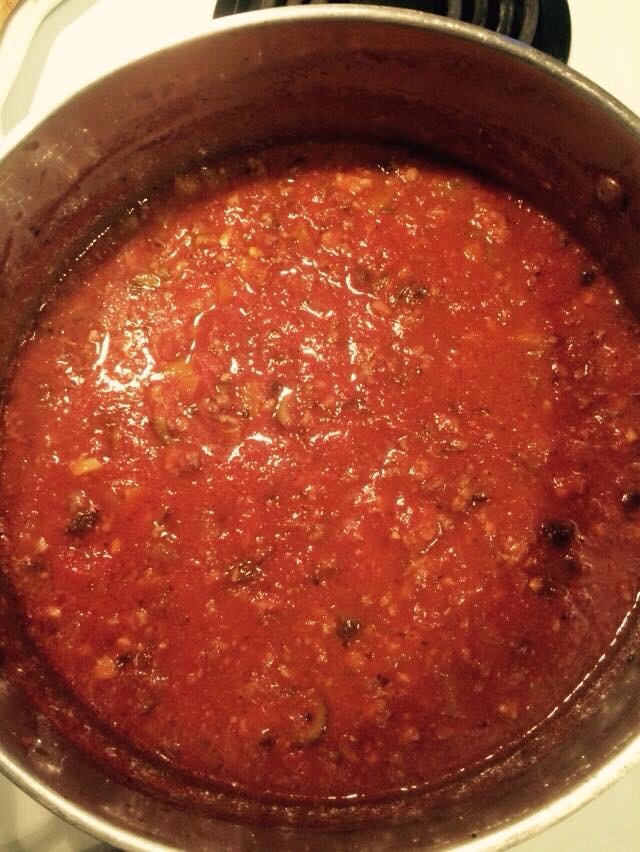
Spaghetti Sauce a la Urban


There’s no doubt that a great batch of homemade spaghetti sauce is serious comfort food. In an ideal world, you want to make something that cooks low and slow, developing serious flavors, but what about when you get a hankering at 4:45 in the afternoon? Here’s how I scratch that itch. This is a simple sauce that tastes much richer than it might sound, and I assure you, it’s incredible the next day. The fresh veggies, citrus, pungent lemon thyme, piney savory, and subtle, herby sweetness of the marjoram is the key – Spaghetti Sauce a la Urban.

For the proteins, keep in mind that you can and should grind your own at home; if you don’t have the capability for that, dice it and you’ll be fine. If you prefer a vegetarian version, I’d substitute firm local tofu, or eggplant. Make sure all your veggies and proteins are as fresh as can be. Do use whole canned tomatoes; they hold more flavor than stewed, crushed, diced, etc, the quality is often better than fresh at this time of year, and they’re certainly less expensive.

8 Ounces Fresh Angel Hair Pasta

2 20 oz cans Whole Tomatoes

1/2 Pound Ground Pork

1/2 Pound Angus Beef

1 Cup Black Olives

1/2 Sweet Onion

1/2 Sweet Pepper

1 Stalk Celery

1 small Lemon

1/2 small Lime

3-4 Cloves Garlic

2-3 Sprigs Parsley

1/2 – 1 teaspoon Lemon Thyme

1/2 – 1 teaspoon Savory

1/2 teaspoon Marjoram

2 whole Bay Leaves

1 Cup Red Wine

Extra Virgin Olive Oil

Dry Sherry

Sea Salt

Black Pepper

Toss the tomatoes into a large pot over medium low heat. Process with an immersion blender until you’ve got the consistency you like. I prefer to leave things a bit rustic, rather than going all the way to smooth sauce.

Rinse, peel, top and seed the onion, sweet pepper, celery, garlic, citrus, and parsley. Fine dice the onion, pepper, olives, and celery; if you have celery leaves, by all means, use them, that’s where the real flavor is. Mince the garlic, chiffonade the parsley. Quarter the citrus.

In a large sauté pan over medium high heat, add the beef and pork, and season lightly with salt and pepper. When the meats are nicely browned, add the cup of red wine and continue cooking until the raw alcohol smell goes away. Add the proteins to the tomato blend

Add a couple tablespoons of olive oil to the sauté pan and allow to heat through. Add onion and pepper and season lightly with salt and pepper. Sauté until the onion begins to turn translucent. Add garlic and continue to sauté until the raw garlic smell is gone. Add all that to the big pot

Add 1/2 Cup of Sherry to the sauté pan and deglaze, thoroughly scraping up all the little bits. Once the raw alcohol smell has burned off, add that to the pot as well.

Squeeze citrus into the big pot, stir to incorporate. Crush by hand and add the lemon lemon thyme, savory, and marjoram. Add parsley and bay leaves, stir to incorporate. Taste and adjust salt and pepper seasoning as/if needed.

Reduce heat to low and simmer for an hour or two, stirring regularly.

Serve Over fresh angel hair pasta, with freshly grated Parmegiano, crusty bread, a nice green salad and a glass or two of Old Vine Zinfandel.

The next day, add a cup of cheese to the blend, and bake for 30 minutes at 350° F. As promised, it’ll be spectacular.

Spare Ribs with a Citrus Fennel Glaze


We love ribs, especially when M does them up. This time around, we decided to do something we don’t do very often –  a wet treatment, as opposed to a dry rub – Our usual go to. A citrus fennel glaze is what we came up with.

Citrus Fennel Glazed Spare Ribs

The sauce is the star here, and for good reason. It’s a grade A example of the organic way M and I arrive at a dish, based largely on what we’ve got on hand, and often initiated by a single thing – In this case, a left over blood orange was the spark –  a leftover that had given up its zest for an earlier meal.

Initially, we were leaning toward a Chinese style rub, then veered off on a tangent. M found that blood orange and wondered aloud if we couldn’t do something with that. A short brainstorming session yielded what you see herein. This sauce could be used on a lot of things, from chicken or beef, to Brussels sprouts or carrots.

While this might seem like alchemy, I assure you, it’s not. Often, when we’re brainstorming things, I’ll whip out our copy of The Flavor Bible, a book that you aughta have in your kitchen, if you don’t already. You’ll find a wealth of parings and affinities therein that truly can and will spark your imagination and creativity.

And I can’t stress enough to be bold in endeavors like this – If you like stuff, and you think that stuff might go well together, then try it. If you’re at all nervous about committing to a full blown recipe, then cut off a little piece of this and a little piece of that,  pop them your mouth, and see what you think. If it’s good, go with it. If it’s not, search elsewhere.  That, in a nutshell, is how you build your own ideas into culinary reality.

We used a rack of spare ribs, but you can do any cut of rib you like, (Baby Back, St. Louis, Rib Tips, County Style, or beef ribs.)

Preheat oven to 250° F and set a rack in the middle slot.

Season ribs with sea salt and fresh ground pepper, (we use our go to seasoning salt for pretty much everything).

Wrap the ribs tightly in aluminum foil, fat side up and dull side of the foil facing out.

Set the package on a baking sheet, or the bottom of a broiler pan, and cook low and slow for about 2 hours, until the rib meat is very tender.

Citrus Fennel glaze is great for a bunch of dishes

Citrus-Fennel Glaze

Juice from one fat and happy blood orange.
1/4 Cup Orange Marmalade
1/3 Cup chopped fresh Fennel bulb
2 small cloves Garlic
1/4 to 1/2 teaspoon Tabasco chile flake, (Use any chile variety you like here)
1 Tablespoon butter
1 Teaspoon Arrowroot.

Remove ribs from oven, set a rack on a high slot, and increase temperature to 375° F.

In a sauté pan over medium heat, melt butter, then add fennel and sauté for a couple minutes until it has notably softened.

Add garlic and sauté another minute until raw garlic smell dissipates.

Reduce heat to medium low.

Add orange juice, marmalade, and chile flake, stir well to incorporate.

Cook, stirring constantly, for 2-3 minutes, until the sauce is quite liquid, (that’d be the marmalade relaxing a bit.)

Add half the arrow root and stir to incorporate. Allow the sauce to cook for another minute or so. Sauce will thicken slightly – Add the rest of the arrow root if you want things a bit thicker.

Unwrap the ribs, and flip them meat side up onto the pan. Baste or pour sauce liberally onto the ribs in an even layer.

Uncover your ribs and flip them meaty side up for glazing

Return the ribs to the oven on the high rack, and cook for about 10 minutes, until the sauce is bubbling and starting to caramelize.

Beautiful salad!
Beautiful salad!

We served ours with an gratin potatoes, a lovely green salad, and fresh, crusty bread. They were falling off the bone tender, and the sauce was a perfect foil to the richness of the meat.

Cilantro Pesto III


Some of you know that I make guitars. Among luthiers, there are factions referred to as right and left brainers. The left brainers tend toward strict mathematical method, while right brainers work more organically from intuition. Truth is, few builders are purely one or the other. The same thing can be said of chefs. In both pursuits, I tend toward right brain creativity, informed by formal training, experience, and the hard and fast science behind cooking. Add to that the fact that I really don’t care for being told what to do without some information behind the direction, and you’ve pretty much got the heart of what drives UrbanMonique.

When a recipe shows up here, trust that it’s been researched and made more than once before you see it, the same thing that’s done in professional kitchens around the world. Even if a dish is a daily special, offered only once, there will be a process of discussion and some refinement done prior to it being chalked onto the board. Fact is, the daily specials are often driven by product that needs to be used right now. Chefs will discuss what to do, maybe coming up with something genuinely new, but more often arriving at that new special after someone says, “Remember that Provençal fish thing we did? We could do a take on that here..”

I’m blessed with a very talented, honest, and passionate muse in the kitchen; she goes by the name of Monica. Not a day goes by that we don’t discuss what we did last and how we might improve it, what we’re doing next, how we’ll do it, what we expect to attain. For my mind, that process is critical to success. If you love to cook, and you don’t practice some like form, start. If you don’t have a human partner, then write down what you do, and go from there. Even better, email or tweet me, and we’ll tweak it together. Passion and love of cooking is at the core of creativity and exploration. We were discussing our next opus last night, when I blurted out “God, I love food!” M laughed, nodded and said, “That’s funny coming from you, but yeah!”

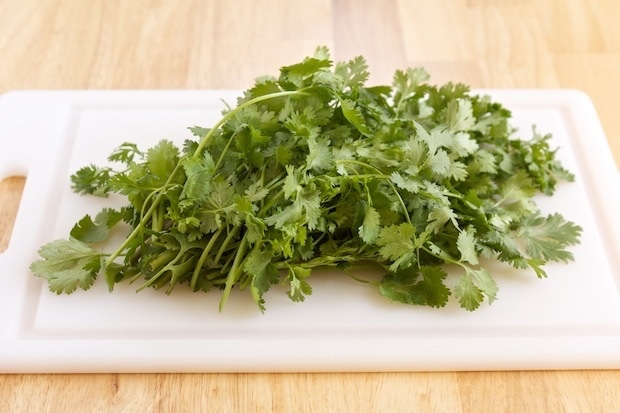
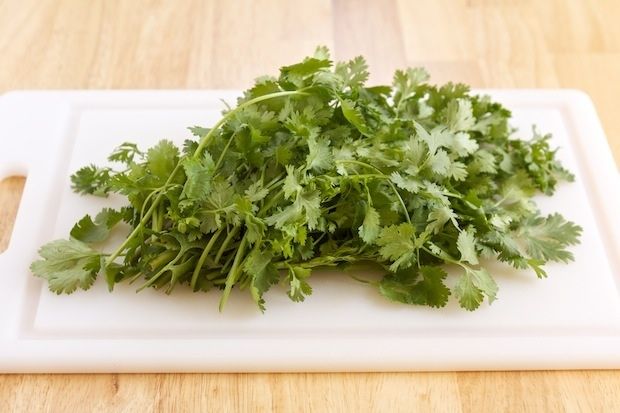
Now about that cilantro. I love the stuff, so it’s always in our kitchen, fresh and/or dried. Recently, plans that included a lot of cilantro fell through, so we had too much on hand. This herb has a short shelf life, so something needed to be done right away to preserve rather than waste. We decided on pesto, and that we’d use whatever else was on hand, building a variant we’d not done before. This is what we came up with, and it’s stellar, frankly. The rich, buttery flavor of the avocado oil and feta balances perfectly with the tang of the lemon and herbaceous base of cilantro. Here’s what we did.

P.S. Yes, I know some of you don’t like cilantro. Tough luck, that… We are working on a piece that speaks to the science behind your malady, so stay tuned.

 photo image-17.jpg

1 well packed Cup Cilantro
1/4 Cup Avocado Oil
1/4 Cup Feta Cheese
Juice & Zest of 1/2 fresh Lemon
2 small cloves fresh Garlic
Salt and a few twists of ground Pepper

Zest and juice lemon.

Process everything but the oil, salt, and pepper in a food processor or blender until thoroughly incorporated.

With the processor or blender running, (Low speed if you’ve got one), add the oil in a slow, steady stream.

Stop when you hit the consistency you like.

Taste and season to taste with salt and pepper, and adjust lemon if needed.

Freeze leftovers as needed. Pesto works great in an ice cube tray, frozen. Just pop out a cube when you need one.

Here are Cilantro Pesto I and Cilantro Pesto II if you’ve not tried them already.


Makin’ Bacon


Love bacon? Love good bacon? Seen the prices lately? Us too! That little revelation led us to home made, courtesy of Michael Ruhlman.

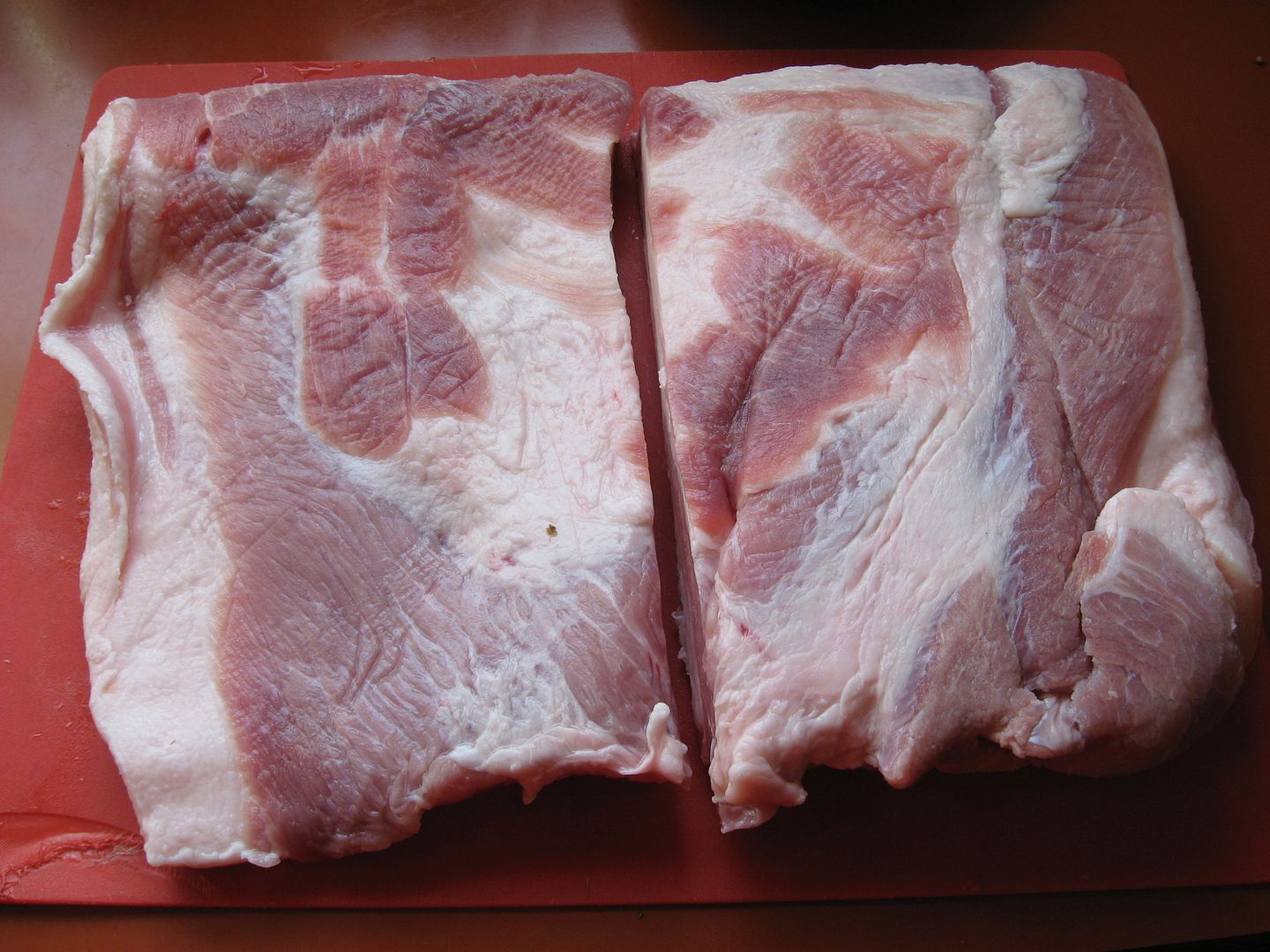
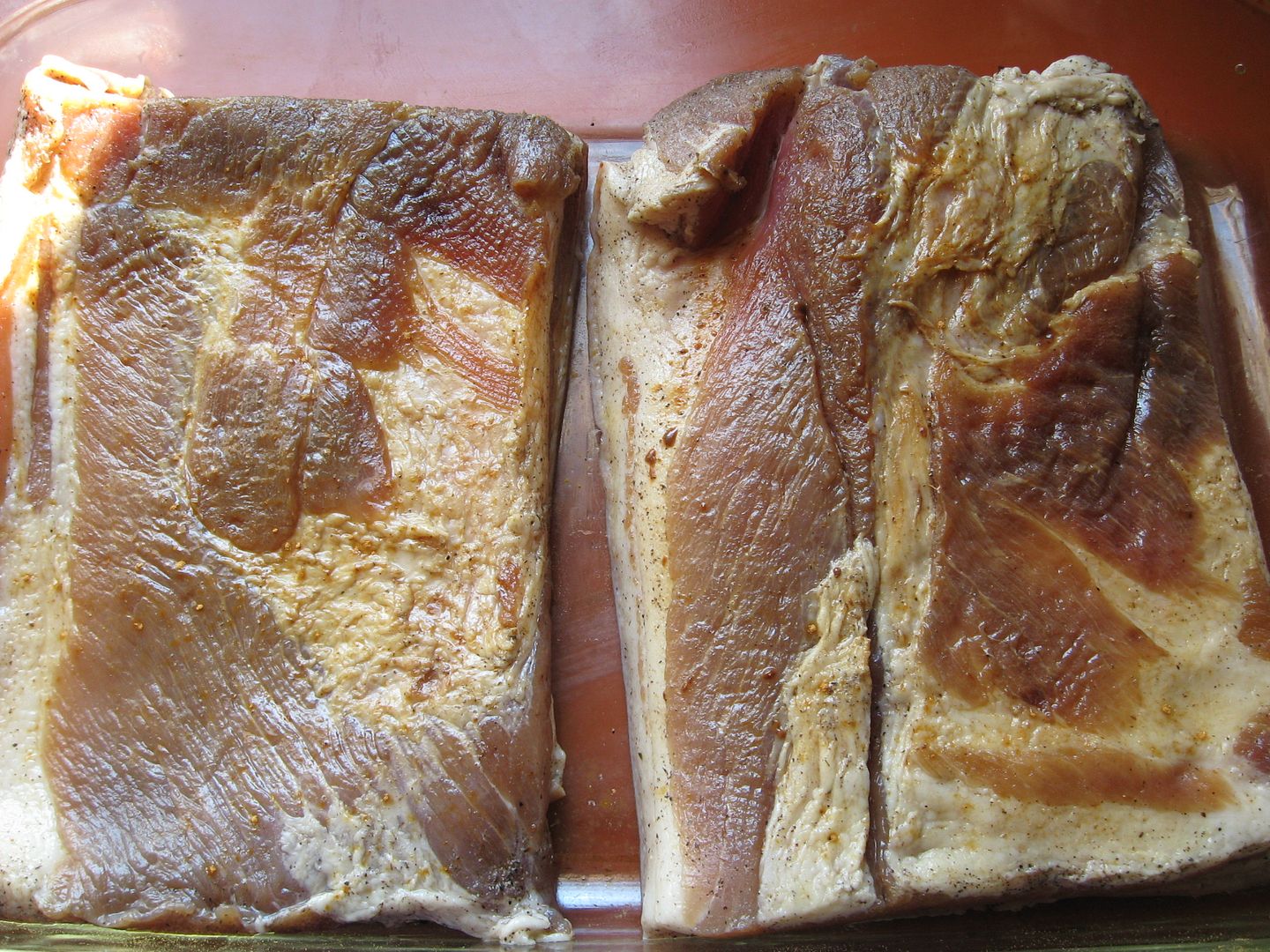
I started our odyssey with a search for pork belly locally, which wasn’t as easy to find as I thought it’d be. Eventually, we found roughly 15 pound packs at Cash and Carry for $3.15 a pound. We took that home, divided it into 2 1/2 pound batches, and went to town.

 photo IMG_0931.jpg

Our first batch was made straight from Ruhlman’s recipe. It turned out great, but it wasn’t exactly what I want in my perfect bacon. Having no doubt that experimentation is almost always a good thing, we analyzed the results and decided that Ruhlman’s would be, for us, perfect lunch and dinner bacon, but not breakfast. We found Michael’s recipe a touch salty, even when we’d carefully weighed the pork belly and salt; further, we felt that while the bay leaf, nutmeg, garlic and thyme in that recipe added glorious floral notes perfect for lardons, and stellar for carbonara, it was a bit much for our breakfast palate, so we set out to build our perfect breakfast bacon.

While one needs to stick pretty closely to the 1.5:1 salt to curing salt ratio for proper bacon, you have relative freedom with the other ingredients, so we revamped with our chosen notes, less salt, more sugar, Grains of Paradise for that unique pepper note we love, brown mustard seed for the tang, and a little smoke.

The results were spot on, and we’re happy campers!

2.5 pounds Pork Belly
1/4 Cup Dark Brown Sugar or real Maple Syrup
1 Ounces Flaked Salt
1.5 teaspoons Pink Curing Salt, (Sodium Nitrite)
2 Tablespoons Grains of Paradise, coarsely ground
2 teaspoons Brown Mustard seed, coarsely
1 teaspoon Smoke Powder

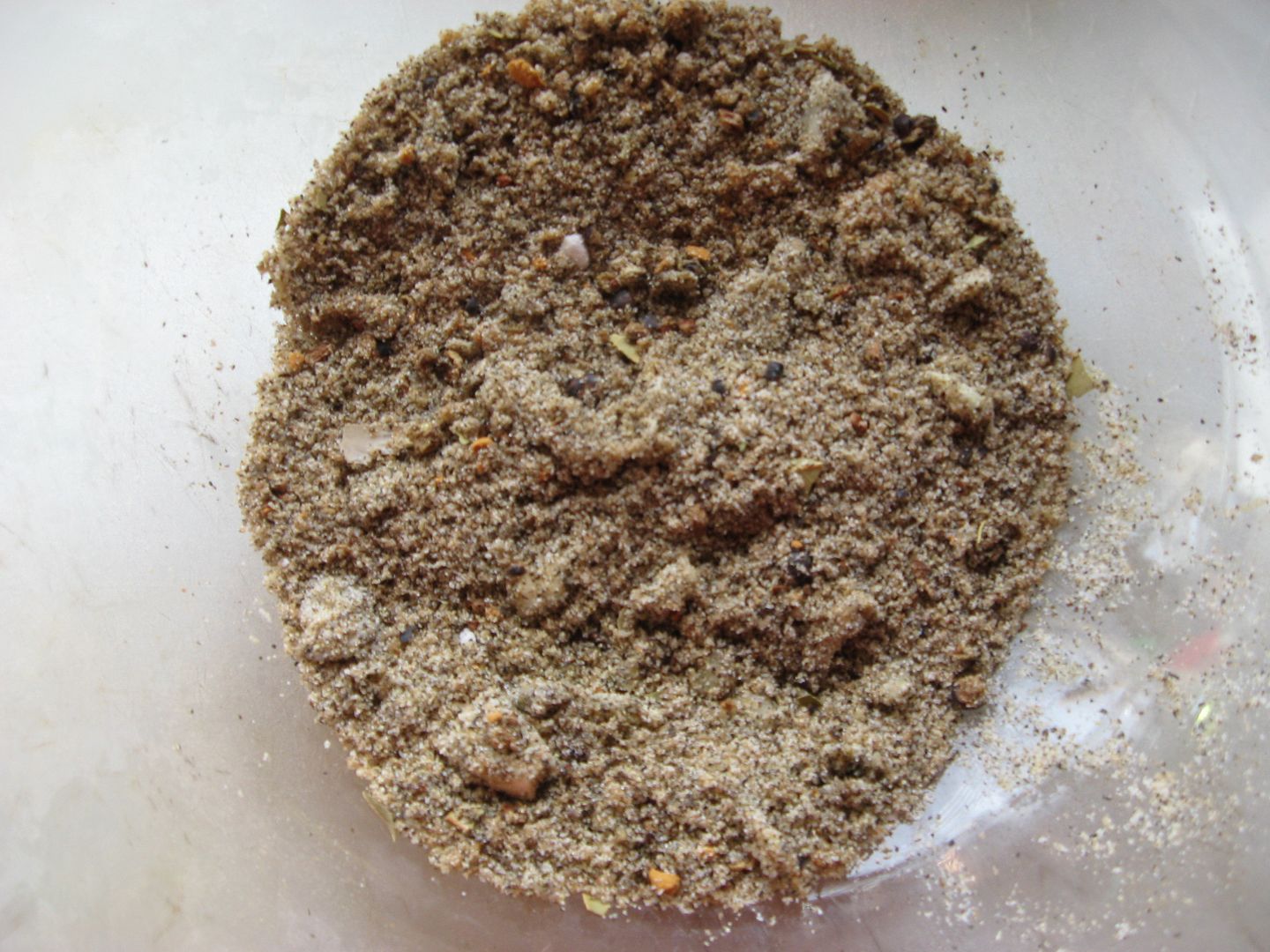
Mix all dry rub ingredients except the smoke powder together in a bowl.

 photo IMG_0930.jpg

Set your belly on a baking dish or sheet tray.

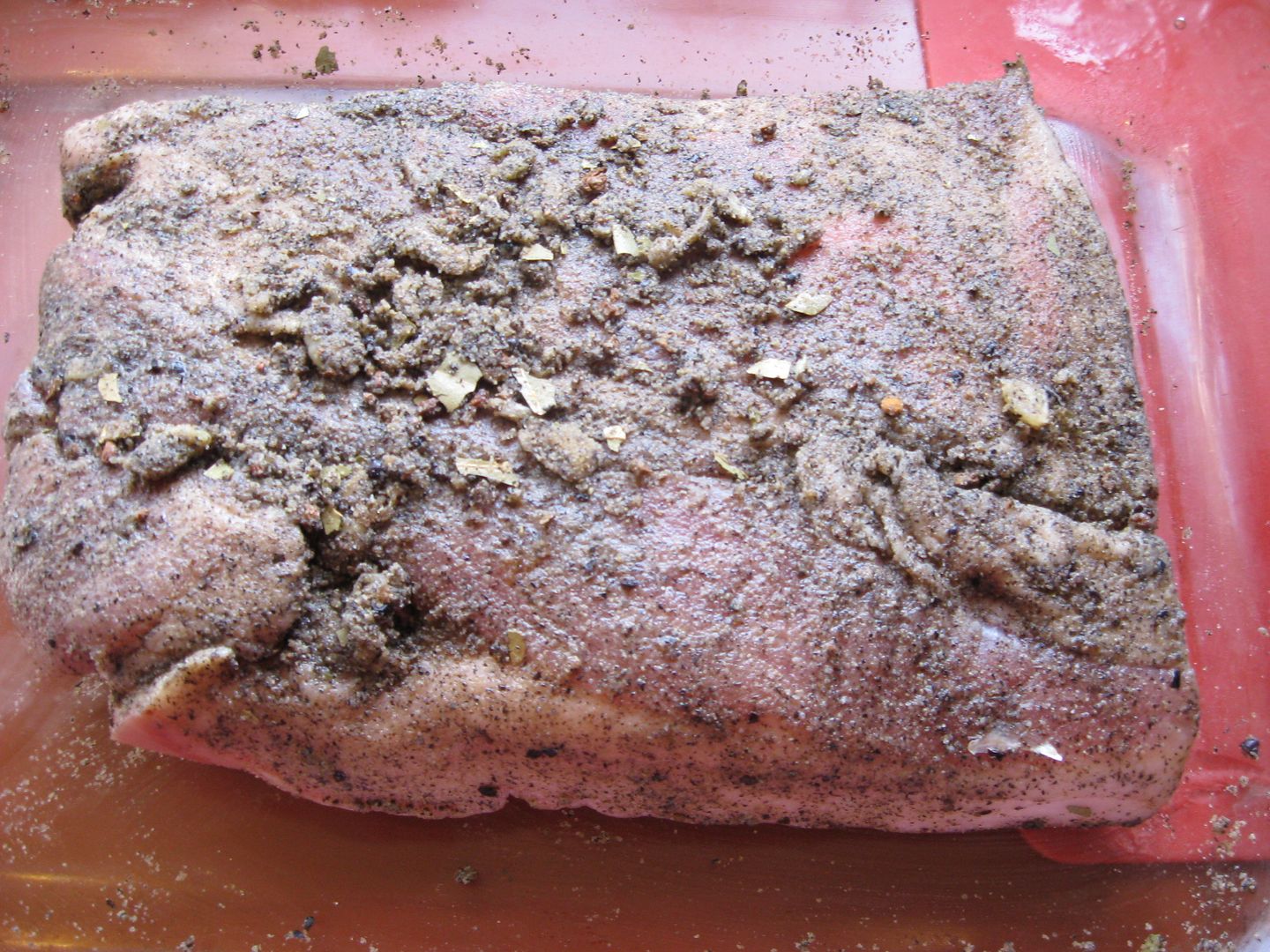
Rub the cure onto and well into all surfaces of the belly. Take your time and work it right in there evenly and completely.

 photo IMG_0932.jpg

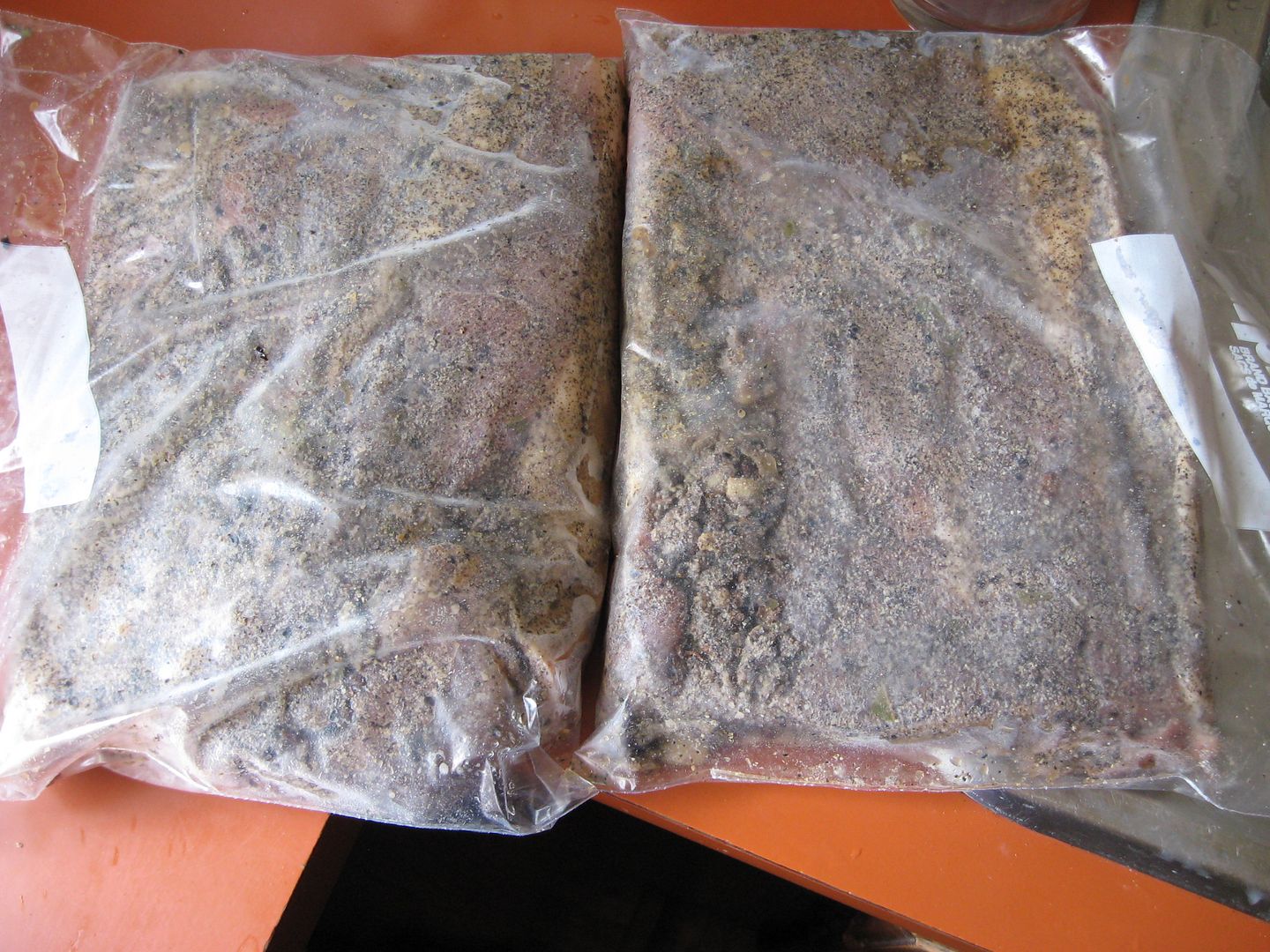
Place your belly into 1 a gallon Ziplock bag, press the excess air out, and set it in the back of your fridge for 3 days.

 photo IMG_0938.jpg

On day 4, pull out your belly and rub everything back into the flesh again. Set ‘er back into the fridge for another 3 days.

And on the 7th day, there be bacon…

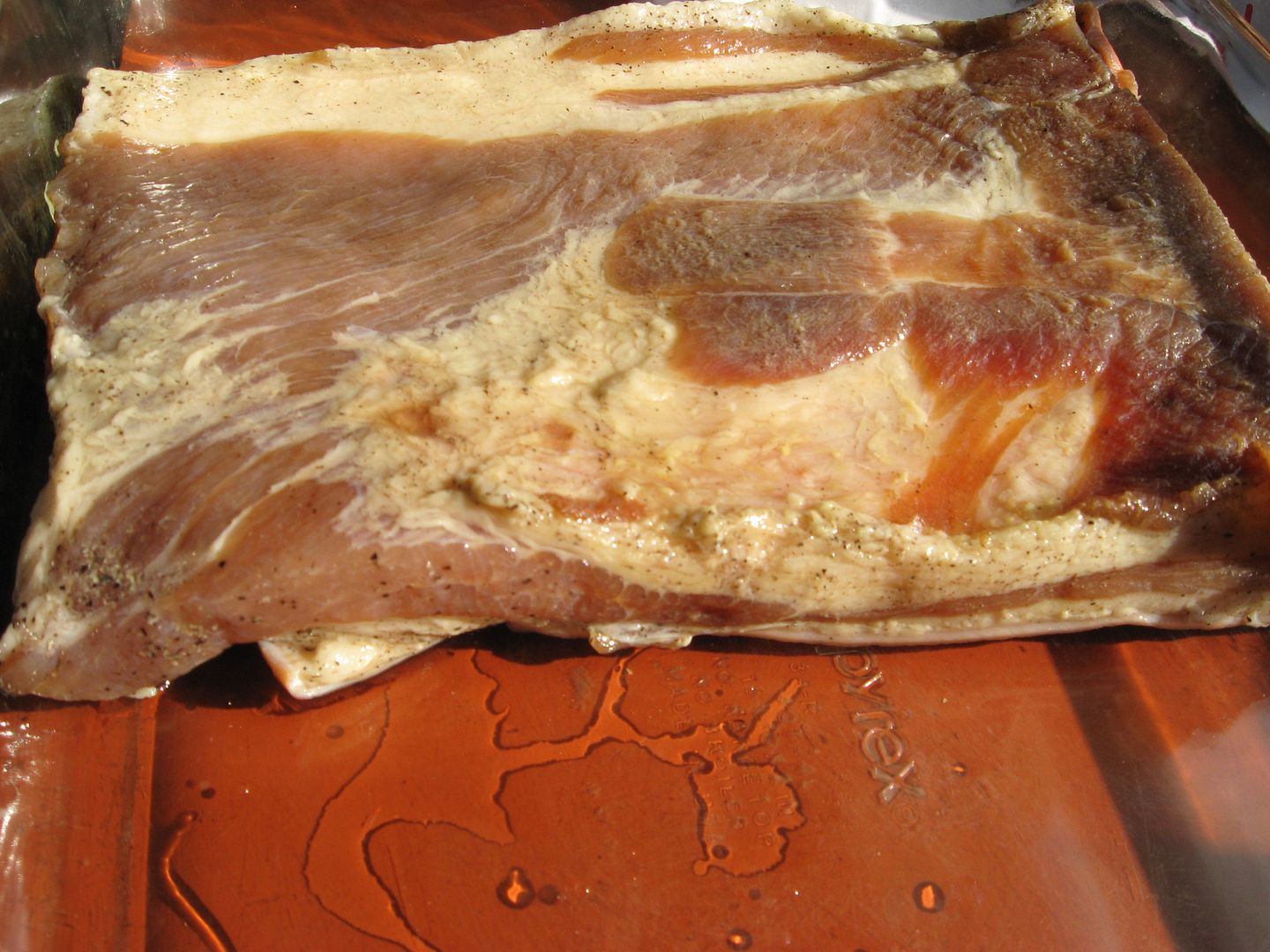
Pull your belly outta the bag, rinse your sink well and then stick the belly under nice, cold running water and rinse all the cure off, giving it a good rub as you do.

 photo IMG_0939.jpg

Preheat oven to 200 F.

Pat your belly dry with paper towels and set into a glass baking dish or a sheet pan.

Rub the smoke powder evenly and thoroughly into your belly.

 photo IMG_0940.jpg

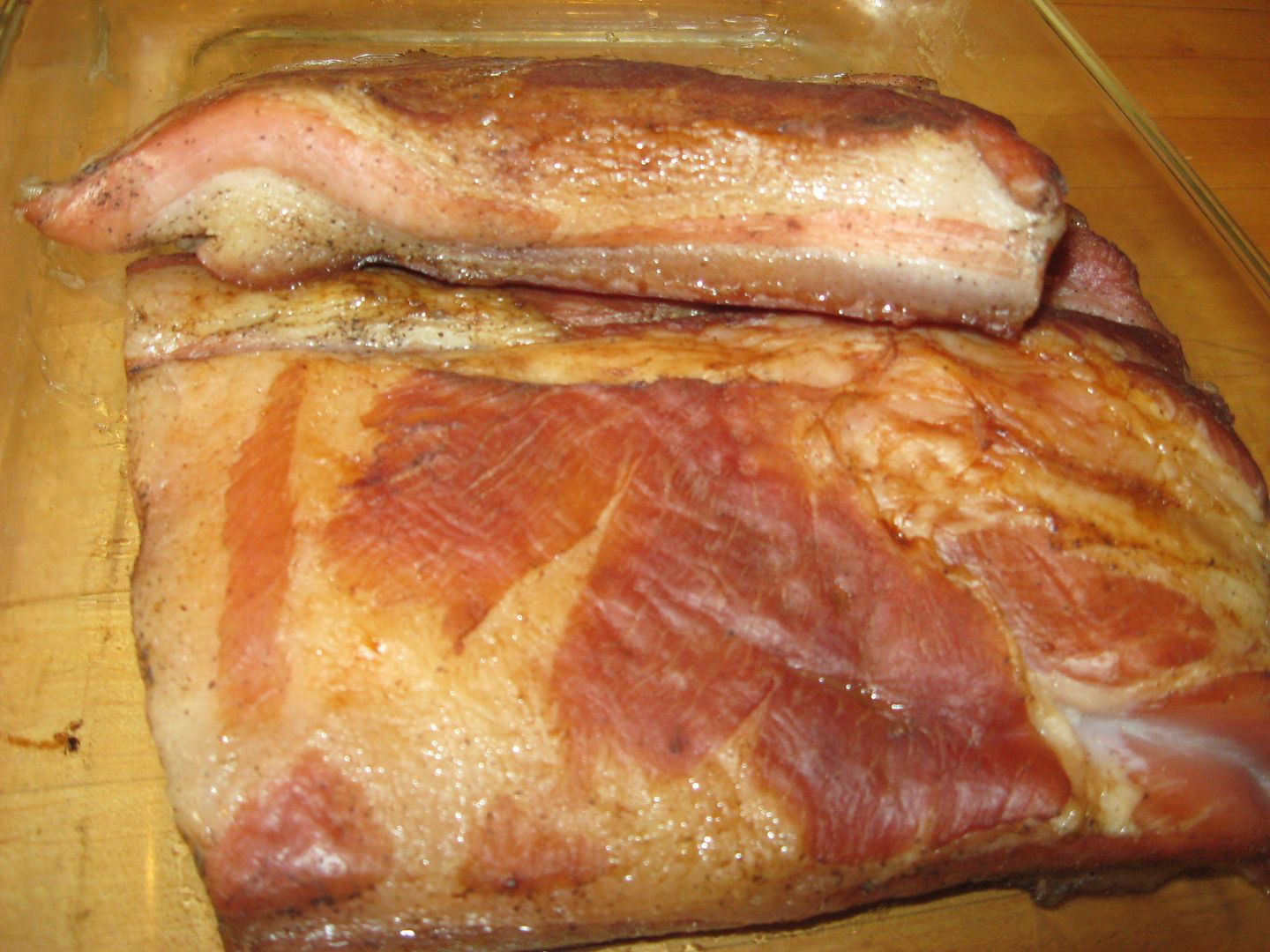
Roast for 90 minutes, or until your internal temp reaches 150 F.

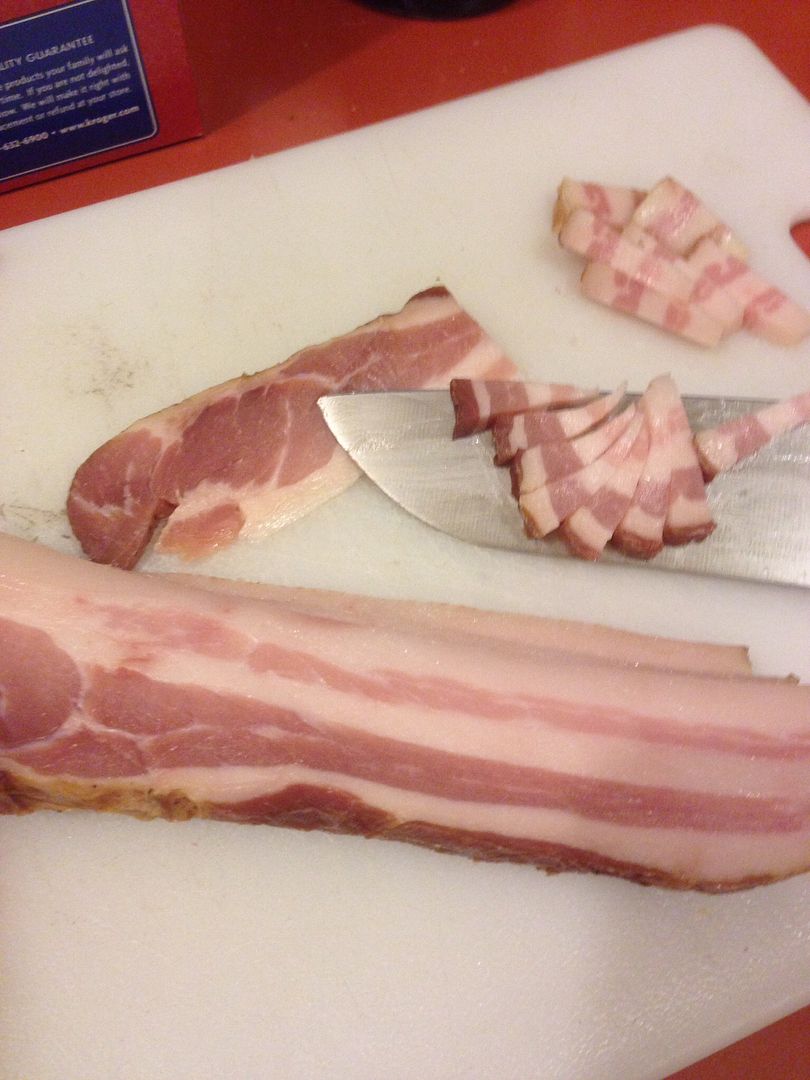
Remove from oven, allow to cool, and then repackage in a ziplock in the fridge. It’ll last as long as store bought, or maybe a bit less, since it has less bullshit stuff in it; anyway, I’d bet that after you try it, lasting long won’t be an issue…

 photo IMG_0944-1.jpg

 photo image.jpg

You can freeze bacon, but not for more than about a month. If you do freeze it, you’ll want all the air you can out of the bag so, again, vacuum sealing is best.

You can also sub Honey or Agave Nectar for the sugar and get some pretty nice flavor variations. Our family also likes peppered bacon, and for that we’ll layer on a bit of olive oil and ground, black pepper for the roast.

Big thanks to Michael Ruhlman for a wonderful charcuterie book, and for encouraging experimentation. Now it’s your turn, and make sure you try his recipe, because it rocks and it just might be your all-around fave!

Enjoy!

 photo image-1.jpg

Better Butter


Alert follower Jenn writes,

“I was surprised to see no post on fresh made butter in the UrbanMonique archives. Chris got me a rotary butter churn for Christmas and it’s been one of my favorite gifts in memory. Of course, we’ve done fresh pepper butter, dilly butter, rosemary and lemon peel, and obviously brown sugar and cinnamon. I know it can be done with ease in a stand mixer, but the rotary is fun to pass around at brunch parties or before dessert is served. I’m just curious to see what you’d put in butter given your expansive spice collection and superior wisdom.”

Knowing this young Texan as I do, I’m still not sure if that last line is her being a smartass or not… In any event, I’m cool with it, because she sent me filé that she grew and dried and powdered her very own self, and she’s a hell of a good cook to boot.

She’s also got an excellent point. Having relocated to an area rich in local dairy, we revel in fresh milk, cream, butter, and eggs. If you can get your paws on fresh cream where you live, making your own butter and compound butters is easy, and a true delight. We’ll cover both herein, as well as delving into the history and chemistry a bit.

First, let’s address a couple of core issues.

The Butter Is Evil mantra. If you’re late to this party, let me formally state for the record that it’s simply not so. The premise raised in the ’60’s and touted for several decades, to the effect that animal fats cause heart disease, has been roundly rejected. While it’s true that there are plenty of fine alternative vegetable fats, the artificial pantheon that replaced butter has been banned from our pantry for all time. The facts bear out that food from properly pastured animals is actually quite healthy. In particular, butter from grass fed cows is high in nutrients like vitamins E, A, beta carotene, and essential fatty acids. That last caveat, grass fed, also happens to yield butter that is notably tastier than that from grain fed cows.

The Cow Monopoly. There are thousands of species of mammal across our world, and all of them produce milk, yet here in the U.S.A., roughly 97% of our dairy products come from cows. Even at our quite enlightened local Co-Op, there are only a couple of goat milk options. Granted, when we turn to cheese, we find offerings from goat, sheep, and buffalo, but cow is still the king, hands down. Elsewhere in the world, folks drink camel, yak, water buffalo, elk, reindeer, and even mare’s milk on a regular basis. 99.9% of those critters are ruminants, mammals whose four-chambered stomachs yield prodigious quantities of milk from high-fiber, low-nutrient pasturage. On top of that feat, ruminants sport large, graspable teats that makes milking easy for humans, (hence, cats and dogs are safe for the time being). Goat, sheep, and cows were domesticated in the Fertile Crescent of the Middle East somewhere in the neighborhood of 10,000 years ago. While all three have since been intensively bred to improve temperament and output, cows have far and away ruled the roost.

The Middle Eastern ancestor of the milk cow was the auroch, which went extinct in the 17th century. While wild aurochs were a handful, domestication quickly yielded a critter that quietly lines up to be milked, and produces about 100 pounds of milk a day. That docile nature sets cows apart from most other ruminants, including, as a for instance, the water buffalo. Bred for milking to this day in Italy and India, water buffalo are notoriously cranky, and considering their size, quickness, and very large horns, they’re potentially downright dangerous to the milker.

Here in America, the last great ice age that swept through around 20,000 years ago effectively removed all large ruminants, with the exception of the bison. When Europeans showed up with cows, they not only did just fine, they genuinely thrived. The easy separability of cow’s milk lends itself to a broad spectrum of things humans like to eat, the fat content is quite close to human milk, and it’s widely tolerated by human digestive systems. Goat’s milk, on the other hand, is richer and more complex in flavor, predominately because the cream does not separate as it will in cows milk. Goats produce the most milk of any ruminant by body size, but they’re so much smaller than cows that the advantage is null. That lack of cream separation also means that goat milk won’t readily make butter, either. As for the third member of the Fertile Crescent troika, almost nobody in this country drinks sheep’s milk. With twice the fat of cow and human milk, it’s far too rich to be popular, and the overall low yield weighs against them from a commercial production standpoint. That fattiness does make sheep’s milk near and dear to cheesmakers, however, for obvious and good reason.

On then, to butter, a part of the human diet for nigh onto 7,000 years. Through 99% of history, butter was cultured to enhance shelf life. Culturing allowed milk gathered in multiple milkings to last longer in the days before effective refrigeration; it also encourages cream to separate relatively quickly when churned. Raw cream is blessed with ample benign bacteria, so it will ferment and sour without the need for added cultures. This natural fermentation notably alters its chemistry, generating much more complex and subtle flavor profiles. One such flavor note stems from lactic acid, so cultured butter tends to taste tarter than uncultured, or sweet cream butter.

Chemically, butter is a relatively stable mixture of triglycerides from several fatty acids – predominantly oleic 31%, myristic 19%, palmitic 15%, and stearic 15%. The natural color of butter derives from trace amounts of carotene. Over time the glycerides break down, releasing free fatty acids; two of these, butyric and caproic acid, are largely responsible for the nasty smell of rancid butter.

Butter is made by churning cream. Exactly how and why churning works is still somewhat of a mystery; if that sounds unlikely, rest assured that it’s not. Delve into the chemistry of churning at the university level, and you’ll find analyses filled with detailed supposition and almost universally followed by the phrase, “not well understood.” While the process is ages old, there’s still a PhD up for grabs there. What we surmise is that air is incorporated into the liquid matrix of cream as it begins to turn into butter. A foam forms, and fat globules collect in the walls of the bubbles. Churning warms the cream slightly, to the point that those fat globules soften and liquify. Further churning bounces the softened fat globules off each other enough to break their protective membranes, and liquified fat cements the exposed droplets together. Material from the broken membranes helps in this process, as it contains emulsifiers such as lecithin. Once enough of the liquified fats have been freed by the churning process, the air foam collapses and butter granules form into larger and larger masses.

Once thickened and separated into butter grains and buttermilk, the buttermilk is poured off. 50° F water, at 20% of the volume of the cream used, is then added to the fresh butter; this ‘wash’ helps it separate thoroughly from the buttermilk. Churning continues until the butter granules are about the size of wheat grains. As with many kitchen processes, precision is important, and often enough, the difference between a pro and an amateur. Making butter is easy; even little kids can do it. Making great butter takes a bit more discipline. If you buy really good, local Jersey cream as we do, you’ll find that it’s not cheap; it certainly deserves extra attention. Of course, back when everybody did this at home such knowledge was not as arcane as it is today.

A bit more on nomenclature: Sweet Cream Butter means simply butter made from cream that has not been fermented, or cultured. When first introduced to Americans in the late 19th century, it was not popular because consumers thought it tasted ‘flat’, a sentiment raised by the lack of complexity found in cultured butter. Nowadays, sweet cream butter in some form or another rules the supermarket roost, but not all are created equally. Sweet cream butter is the taste of the cream, pure and simple. If you make butter with fresh, local cream, you get the flavor of that particular terroir – The grass, sun, water, everything. It’s sublime and truly lovely. As the seasons change, so will your butter. Change sources, and you’ve got a whole new pallete; taste, smell, and color will all vary. This is how it was before industrialization, when all butter was made locally. Back then, early spring butter commanded and received a higher price than any other.

Making butter at home, starting right now, will bring you back to where you belong; trust me when I say you’ll be buying far less commercial butter in the days to come. From buttered veggies, to homemade baked goods, everything is notably better. And speaking of baked goods, expect the biggest difference therein. Homemade butter totes a higher percentage of butterfat than the industry standard 80%, so your baked goods will taste and feel better as a result. Cultured butter can also be made at home. If home made sweet cream butter is champagne, homemade cultured butter is caviar. Those subtly complex flavors must be experienced first hand. Doing so really isn’t very much more work than making sweet cream butter, so do try it once you get in the swing of the basic process.

So, we need good cream to make all this wonderful stuff happen; the fresher, the better. If you have a choice, donor cow breed matters somewhat. Our favorite local dairy, Twin Brook Creamery, milks Jersey cows, the winner of the milk fat award. According to Iowa State University, (A pretty good judge of things dairy), Jersey’s weigh in just shy of 5% fat in raw milk, as compared to Holsteins at 3.7%, which rounds out the two most popular milking cows – or put another way, the most popular breed’s milk contains about 30% less fat than those Twin Brooks Jerseys. While there are other breeds making inroads, it’s likely to take some time – the U.S.D.A. reports that Holsteins account for 90% of the U.S. milk cow population, followed by Jerseys at 7%, with all others at a paltry 3% combined.

Some of that milk gets made into cream, and at your local store or coop, the one you want for making butter is Heavy Cream. You may have heard or been told that this is synonymous with Whipping Cream, but it ain’t necessarily so. To be called Cream in this country, dairy must contain no less than 18% milk fat. Half & half can run anywhere from 10% to 18%, so it’s right out for butter making. Whipping Cream is at least 30% milk fat, and rarely more than that. Heavy Cream is no less than 36% milk fat, and that’s our cream. If you’re allowed to buy raw cream where you live, by all means do it. Raw cream needs nothing to yield all the glory of real, live butter. It’s literally biologically active, packing its own culture, and it is absolutely redolent of its terroir. Your primary guide for what to buy is, naturally, what tastes best to you. Keep your cream refrigerated until you’re ready to churn, and do so right away; time is the enemy of freshness.

OK, let’s make butter.

In addition to cream, you need some form of churn. That’s literally anything that can agitate the cream in until butterfat comes out of suspension and separates from the buttermilk. You can use a blender, mixer, food processor, canning jar, or a dedicated churn, (Lots of places sell manual and powered versions). Whatever you use should be in good working condition and clean before you start. I use a small processor powered by a stick mixer; it holds a pint of cream perfectly. I recommend a blender if you have one – they work well and keep everything nicely contained.


House Made Butter

1 Pint fresh Heavy Cream

Option: Pinch of Sea Salt

1/3 Cup 50° F Water


Remove cream from fridge and allow to stand at room temperature, in its carton, until cream temps at right around 60° F; the optimal range for butter making is 55° F to 65° F.

Pour cream into blender vessel.

Turn to highest setting that won’t splatter the cream and keep a close eye on things.

Within a couple minutes, the cream will begin to thicken visibly – Increase blender speed a notch or two.


You will see butter begin to form, as you do in the image below; turn the blender speed down several notches. As butter formation increases, you may need to use a spatula to scrape down the butter as it forms. This process will take about 3 to 5 minutes, maybe a bit longer.


When butter is well formed and buttermilk is clearly separating, turn blender off and transfer butter to a mixing bowl.


Add 50° F water and knead butter by hand, thoroughly washing the butter.


Pour off the water and buttermilk, and continue kneading by hand, removing very bit of moisture you can find – Both water and buttermilk will cause your butter to spoil relatively quickly, so be diligent in this process.


If you wish to salt, or add other ingredients to make compound butters, now is the time. Note: Finishing salts with distinct flavor profiles make fabulous salted butters.

When done, transfer butter to clean glass or ceramic containers and refrigerate.

Butter should last about a week, providing you were diligent about removing the buttermilk.


Ready to try your hand at cultured butter? Cultures that work on butter are referred to as mesophilic, meaning they will activate in relatively cool temperatures, (As opposed to the thermophillic, or high temperature cultures we use in cheesemaking). Again, raw cream cultures naturally, but most of what we have access to has been pasteurized, and as such, it will require additional cultures to come alive. Outfits like New England Cheesemaking Supply and Leeners sell a wide variety of cultures that will work for butter, but it is easier and cheaper to use good quality, local cultured yoghurt, buttermilk, or kefir; just make sure that what you buy specifically reads that it contains live cultures. Allowing pasteurized cream to just grab whatever comes along is not a good idea: Pasteurization kills all cultures, including the good ones, so without it, cream is stripped of its natural defenses – This is why a known, quality controlled culture is your best bet. Here’s how to do it.

Use one of the following options to culture your cream;

For pasteurized cream, add 1 Tablespoon of live culture yogurt, buttermilk, or kefir to each cup of heavy cream, and whisk gently to incorporate. Allow to culture for 12 to 24 hours.

For raw cream, culture for 12 to 48 hours.

Use a clean glass bowl or jar with a clean cloth or paper towel rubber banded to cover. If you use canning jars, boil them to sterilize, then allow to cool to room temp prior to filling.

Culturing needs to be done between 70° F and 75° F for the stated intervals. If it’s not that warm in your house, you’ll need to gently heat the cream in a sauce pan over low heat, to about 75° F before transferring it to a bowl or jar and adding culture. Find a warm, quiet spot for the process to work, (On top of the stove works nicely.)

When the cream has successfully cultured, it will be notably thicker.

Stir cultured cream gently but thoroughly, then put it in the fridge to cool down to around 50° F; this will stop the culturing process and prepare the cream for buttermaking. Once it’s cooled, churn it as per instructions above.


Note that you will typically not get enough buttermilk from a pint of cream to be worthwhile, but if you love the tangy richness of that wonderful stuff as much as we do, you can also use your favorite milk to create homemade.

1 Cup of cultured Buttermilk

3 Cups Whole Milk

Pour buttermilk and milk into a sterilized quart canning jar and seal tightly.

Shake vigorously to incorporate, then leave jar to sit at room temp for 12 to 24 hours. When properly cultured, the fresh buttermilk will nicely coat the sides of the jar when shaken.

Refrigerated, it’ll last a good week or so.


And finally, compound butters, or beurres composés, are simple mixtures of butter and whatever else floats your boat. They’re ridiculously easy to prepare, making them a nice, quick way to add a custom touch to many, many dishes. They’re perfect as a general flavor profile enhancer, or used as a sauce/condiment all by themselves.


Freshly made butter is in perfect condition to make compound butters. We boil half pint jam jars with our pint butter jar, and use the smaller for compound butters. You can also go the more traditional route, and wrap them in waxed paper – Either way, pop them in the fridge until they’re nice and firm.

Proportions and constituents are up to you. Plan on doing some tasting to get things where you like them, (darn…) I use a fork to whisk everything to a nice, uniform consistency, then scoop them into jars or waxed paper. You can use them to top hot meats or veggies, or as a base or finishing elements for a sauce.

Here are a few classics, as well as some our favorites; the rest I leave up to you – It’s a very personal decision, and too much fun to just use somebody else’s ideas. All are prepared as described above.


Classic French Compound Butters

Beurre d’Ail – Garlic Butter

For every 1/2 cup of butter, add

2-4 cloves of pressed or smashed garlic and blend thoroughly.


Beurre a la Maître d’Hôtel – Hotel Butter

To each 1/2 cup of butter, add

1 good pinch of sea salt

A couple twists of white pepper

Zest of 1/2 fresh lemon

2 tablespoons of finely minced, fresh parsley.


Beurre de Citron – Lemon Butter

For each 1/2 cup of butter, add the

Zest of 1 small, fresh lemon and blend well.

Note that any other citrus zest you like will also be delightful.


Beurre de Frais Herbes – Fresh Herb Butter

For each 1/2 cup of butter, start with a couple teaspoons of whatever fresh herb(s) you have on hand – Rosemary, parsley, chives, lemon thyme, marjoram, basil, tarragon, or oregano are all wonderful.


And here are a few of our faves.

Montmorency Cherry & Vanilla Bean Compound Butter

Cherry Vanilla Compound Butter

For each 1/2 cup of butter, add

2 tablespoons minced Montmorency Cherries

Seeds from 1 freshly scraped Vanilla Bean.


Deep Citrus Compound Butter

Deep Citrus Compound Butter

For each 1/2 cup of butter, add

Zest and juice of 1 small Lemon

Zest and juice of 1 small Lime

1 teaspoon powdered Kaffir Lime leaves

About 3″ of fresh Lemongrass, minced.

Add juice, zest, and lemongrass to a small bowl, mix well and allow to steep for 10 minutes.

Add butter and all other ingredients and mix well.

Squeeze butter by hand to remove all excess juice


Smoky Compound Butter

Smoky Compound Butter

For each 1/2 cup of butter, add

1/2 teaspoon Smoked Salt

1/2 teaspoon Smoked Paprika

1/4 teaspoon granulated Garlic

1/4 teaspoon granulated Onion

1/4 teaspoon fine ground Black Pepper


Best Veggie Compound Butter

Best Veggie Compound Butter

For each 1/2 cup of butter, add

1 teaspoon Lemon Thyme

1 teaspoon Savory

Zest of 1 small Lemon

Pinch Sea Salt


Filé Compound Butter

Jenn’s Filé Butter

For each 1/2 cup of butter, add

1 Tablespoon filé powder

1 pinch Sea Salt

Add to sauces, stocks, or soups as a thickener, or at table side for use in individual bowls.


Enjoy.


Gloria’s glorious Turkey Chile Verde with Heirloom Eye of the Goat Beans and Homemade Salsa Verde.


This week, it’s time for another special guest chef. One of the things I love about social media, when done right, is the meaningful and lasting relationships that can be formed. For me personally, some of my dearest and closest friends, members of my real family, were first met online. Now, we vacation with them every year, and I can’t imagine not having that in our lives. What we get from stuff like this blog, or food groups on FB, or any other decent source, can and should be genuine connections that grow and prosper, even when we live worlds apart. Here, as elsewhere, the six degrees of separation principle is very much in play – I became FB friends with Gloria Goodwin Raheja through our Soul Sister, Christy Hohman – They met at a house concert in Crosslake, Minnesota, which is just a bit southeast of where we conduct the annual Stringfest Gathering that y’all have seen posted here for many years now – Andy Cohen was playing, and we met him last year – at Stringfest. For the final degree, here’s Gloria’s glorious Turkey Chile Verde with Heirloom Eye of the Goat Beans and Homemade Salsa Verde.

Gloria is a Professor of Anthropology at the U of M, Twin Cities, from which she conducted many years of fieldwork and wrote extensively about rural northern India. For roughly the last decade, her research has been focused in Appalachia. Her front burner project is Logan County Blues: Frank Hutchison in the Sonic Landscape of the Appalachian Coalfields, a book about music and the coming of industrial capitalism to the mountains.

Harry, the de facto head of Gloria’s household.

Our online interaction is in keeping with many who haunt FB, namely what we’re cooking and what our pets are up to, (Her dog Harry, like our Bandito, is quite sure he is the de facto Head of Household, and strives mightily to train his humans on proper etiquette.) Like so many brilliant and driven people, Gloria loves to cook, and does so very well, indeed. She dabbles in Indian, Moroccan, Mexican, and Appalachian foods for people who like to eat, and she frequents the St. Paul Farmers Market, and other shops that offer local and ethically produced meats.

She has, of late, become a devotee of the incredibly popular kitchen tool, the instant cooker, (or multi-cooker). If you’re not familiar with this tool, then, well… I don’t know what to say – They’re ubiquitous in online cooking groups and sites. They are, fundamentally, programmable electronic pressure cookers. Instant Pot is a brand name, and hands down the most popular one out there. These things will pressure or slow cook, cook rice, sauté, steam, or warm, and advanced version add yoghurt making, cake baking, egg cooking, sous vide, and sterilizing to the menu.

While many a kitchen gadget gets bought or gifted and soon forgotten, these things seem to have serious legs. In a very authentic Vietnamese cooking forum I belong to, almost every home chef has and regularly uses an instant cooker. For dishes like Pho that normally take 24 to 48 hours to cook, an instant cooker can do the job in an hour or two – And believe me, if the folks on that site find the results not only acceptable, but preferable in many instances, there’s something to these cookers.

Regarding her Instant Pot, Gloria noted, “Well, we totally love ours, really. It’s so great for things like chili verde, ragus, and of course beans. Tonight we’re making black chickpeas with kale, Moroccan style. Chunks of lamb and pork turn out, well, divinely – I dislike having a lot of kitchen toys piling up, plus my counter space is quite limited, but I cleared a permanent space for it, after using it just once!” That’s a pretty solid endorsement, in my book.

Now, before we dive into that Chile Verde, let’s talk about beans, because this is another place where Gloria and I are much of a mind. When M and I lived down in Tejas, I became acquainted with Rancho Gordo, Steve Sando’s Napa, California based magnum opus of heirloom goodness, and specifically, with their heirloom beans – If you don’t know about them, y’all should. Steve took frustration with a lack of great local produce (while living in Napa, fer cryin’ out loud) from a gardening whim to a full blown conservation operation, and Rancho Gordo is the result. What Home roasting brought to coffee beans, Steve brought to heirloom beans. He writes, ‘All of my agricultural pursuits have been based on being someone who likes to cook but gets frustrated by the lack of ingredients, especially those that are native to the New World.’ What I learned living and cooking down south was a primal love for all things culinarily Mesoamerican, and frankly, no foodstuff speaks to that more clearly than beans do. Like tomatoes, beans were devastated by the green revolution, and it’s only through the tireless work of folks like Steve that we’re blessed with what was and what shall be, if we’re even halfway smart.

Rancho Gordo’s heirloom Eye of the Goat beans

And now, on to Gloria’s Turkey Chile Verde with Heirloom Eye of the Goat Beans and Homemade Salsa Verde. What I love about this, and I mean dearly love, is what she has to say about the genesis of this recipe, because folks? If you’ve been here at all, you know my mantra – Here’s a recipe, try it, and then do what you like to it and make it yours – That’s exactly what she did.

She writes, ‘I got the idea for this dish from Coco Morante’s “The Essential Instant Pot Cookbook,” but I modified it quite a bit. For one thing, I made my own roasted tomatillo and poblano and serrano chile salsa instead of used store-bought salsa, and for another thing I used heirloom Ojo de Cabra beans instead of canned pinto beans.’

Gloria’s glorious Turkey Chile Verde with Heirloom Eye of the Goat Beans and Homemade Salsa Verde.

For the tomatillo salsa.

1 1/2 Pounds Tomatillos
5 cloves Garlic cloves
2 Poblano chiles
2 Serrano chiles
1 bunch Cilantro

Remove papery husks from tomatillos, rinse well, and cut in half.

Rinse chiles and cilantro. Stem serranos and rough chop. Rough chop cilantro

On a foil lined baking sheet, arrange tomatillos cut side down, along with the unpeeled garlic cloves.

Position an oven rack 5” to 6” under your broiler. Broil for 5-7 minutes, turning evenly, until tomatillos are lightly blackened.

Remove from oven, set aside to cool.

Arrange poblanos on a foil-lined pan, place them under a broiler until blackened all around.

Transfer poblanos to a a paper bag with the top folded closed. This allows the cooling chiles to steep in their own steam as they cool, which adds a bit to their flavor, and helps loosen the skins – You can also do this in a baking dish or casserole with a tight fitting lid.

When the poblano are cool enough to handle, remove the skin, stem, and deseed.

Skin the roasted garlic.

Add all ingredients to a food processor or blender, and pulse until all ingredients are finely chopped and evenly mixed.

Transfer to a mixing bowl or glass jar.

For the beans.

1 Lb Eye of the Goat Beans (Yes, use what you’ve got, but honestly – Try these!)
8 Cups Water
3 cloves Garlic, trimmed and peeled
2 Bay Leaves
2 tsps Sea Salt

Gloria cooked her unsoaked beans in an Instant Pot, with all ingredients shown, for about thirty minutes, and used three cups of the cooked beans for this recipe.

If you don’t have an instant pot, the oven method works great and is pretty speedy to boot.

Set a rack in a middle position and preheat oven to 325° F.

Rinse beans in a single mesh strainer or colander, checking for debris.

Add beans, garlic, bay, and salt to a 4 quart (or larger) dutch oven, braiser, or baking dish with a tight fitting lid.

Add enough fresh water to cover the beans by 1”.

Cover and bake for 60 – 75 minutes. When beans are slightly firmer than you want them, they’re ready to go to the next step.

For the Chile Verde.

2 Tbsp. olive oil
1 Pound ground Turkey
3 Cups cooked Beans
1 3/4 Cups Salsa Verde
1 Cup Chicken Broth
1 medium Onion
1 bunch fresh Cilantro
2 Poblano or Anaheim chiles
2 Serrano chiles
3 cloves Garlic
2 Tablespoons Olive Oil
1 teaspoon Sea Salt
1 teaspoon dried Oregano
1 teaspoon ground Cumin
½ to ¼ teaspoon Cayenne Chile flake

Peel, trim, and dice onion, garlic, and chiles. Rinse and chop 1/4 Cup cilantro.

For an Instant Pot-
Select the Sauté setting on the Instant Pot and heat the oil.

Add the turkey and sauté, breaking it up with a wooden spoon or spatula as it cooks, for about 5 minutes, until cooked through and no traces of pink remain.

Add the onion, chiles, garlic, salt, oregano, cumin, and cayenne and cook, stirring occasionally, for another 5 minutes, until the onion has softened and is translucent.

Stir in the beans, salsa verde, and broth.

Secure the lid and set the Pressure Release to Sealing.

Press the Cancel button to reset the cooking program, then select the Bean/Chili setting and set the cooking time for 20 minutes at high pressure.

Let the pressure release naturally for at least 10 minutes, then move the Pressure Release to Venting to release any remaining steam.

Open the pot and stir in the chopped cilantro.

For stove top cooking –
Add oil to a stock pot or Dutch oven over medium high heat.

Add turkey and sauté until lightly browned and no pink remains, about 4-6 minutes.

Transfer meat to a mixing bowl. Add onion and chiles and sauté for 3-5 minutes, until onion begins to turn translucent. Season lightly with sea salt.

Add garlic and sauté until the raw garlic smell dissipates.

Add chicken stock and scrape the bottom of the pan to loosen all the good stuff.

Add beans, salsa verde, meat, salt, oregano, cumin, and cayenne and stir well to incorporate.

Reduce heat to medium low and cook, covered, for at least 1 hour, and more is fine.

Add cilantro, stir to incorporate, and serve.

And of course, Big Thanks to Gloria for this delightful dish!