Go To Seasoned Salt


Everybody has a go-to seasoning or two in their kitchen. My Sis, Ann Lovejoy, is a great finder and sharer of such things. The back of our stove is where our collection lies. There, you’ll find a couple of ground chiles, naturally – our homegrown Texas Tabascos and a smoked blend. There are three different peppers, a four berry blend (red, white, green, and black), Grains of Paradise, and smoked black. Far and away, the most common thing you’ll find are salts. There are two Annie found, from a cottage maker in Oregon, a fennel flower, and a basil variety. There’s also flaked, and kosher, Himalayan pink, house made celery, and our own take on Jane’s Krazy Salt.

Jane's Original Krazy Salt
There really was a Jane behind this cottage industry turned international food producer. Jane Semans, a “tiny white-haired, delightfully wacky grandmother,” mixed seasoning blends in her Overbrook, Pennsylvania kitchen, and began sharing the goods with friends and neighbors. In 1962, she trademarked Jane’s Krazy Mixed Up Salt, and the rest is history.
The company that bears her name now makes a myriad of seasoning blends that sell well all over the world. I like supporting good companies, and we’ve done so with Jane’s for years. Her Krazy salt has been our go-to blend, used every day, from breakfast through dinner. Why is it that salt, in some form, is far and away the most used seasoning?

Sodium Chloride, AKA, table salt, does far more than simply make food taste salty. Adding salt suppresses some tastes as well. It’s generally agreed that humans perceive five tastes, sweet, sour, bitter, salty, and umami. Salt acts to suppress bitter in many food combinations, making things palatable that might not be otherwise. Some have argued that salt also enhances other favors, but this is somewhat of a misnomer. Scientists who study such things have determined that salt does not chemically enhance anything – that said, it is known that adding salt reduces the activity of water within the ingredients we add it to, which allows us humans greater perception of various volatile aromatics – in other words, salt enhances by suppression, once again.

Here’s a practical example of this trait – Check out just about any jar of lemon pepper seasoning you can find – chances are good that the first ingredient in most of them is salt – that’s done not only because salt is tasty, but because lemon pepper is made with lemon peel, and if you’re not über careful about harvesting peel and not pith, (the yellow as opposed to the white), what you get is in fact quite bitter. Salt tames the potentially off putting bitter notes and generates a harmonious blend.
And then there are the health benefits – Yes, health benefits, of ingesting salt. Humans need water to survive, more than any other element. Salt plays a crucial role in distributing water throughout our bodies. Proper sodium content in our bods, (and potassium too), is critical to everything from digestion to brain function. Go a bit overboard, and your kidneys will excrete excess sodium for you.

On top of that little scientific aside, the profusion of natural salts for cooking available nowadays brings a wealth of trace flavor notes from the various minerals attached thereto. That is the root of why salts mixed with other things we like are so prominent on the back ledge of my stove.

What are your to-to seasonings?
As for that Jane’s, well, I like it a lot, so naturally, I poured a bunch of it into a glass bowl and poked around to see what made it tick. Once I knew what was inside, my gears started turning toward the thought of improvement. There are other analyses and recipes of Jane’s out there, for the record; I read none of them, preferring to let my eyes, fingers, and taste buds do the work. Here’s what I discovered.
Jane’s is, of course, first and foremost salt. What they use appears to me to be coarse kosher, which is perfect for herbed salt blends like this. The larger, jagged grains capture ground or crunched herbs and spices well, making for a blend that remains homogeneous in a shaker. The other ingredients are granulated garlic and onion, ground black pepper, celery salt, crushed red chiles, and sage. Knowing the proper percentages of each ingredient are of course vital to recreating a blend – you’ll see below, both what strikes us as a spot on duplicate of the real McCoy, and our preferred version.

While it might seem like plagiarism to copy such a thing, it’s really not. Sure, it’s somebody’s baby as it stands, but it’s also kinda like a guitar lick – Les Paul’s son Gene related his father’s love of all things Django Reinhardt. He tells of his father sitting at the kitchen table, practicing Django’s licks over and over again. One night, during a performance, the son heard the father unravel that lick in the middle of soloing for another song. When he asked about it afterwards, Les smiled and said, “It’s my lick now.” As a guitar player and chef, I know this to be true. It’s how things work. The fact is that the number of folks who can accurately play that lick, or dissect that recipe faithfully is relatively small. It’s a tribute, a nod, a starting point for other things – I’m sure Jane wouldn’t mind.

House made celery salt

Before we build the full meal deal, let’s address the celery salt that goes into it. You can buy this stuff, of course, but small batches of home made are far superior, and fun to make. Any herb(s), fresh or dried, can be mixed with salt to provide a nice, fresh, custom blend. How much you use depends on your preferred taste. In general, a ratio of salt to dried herb anywhere from 1:1 to 4:1 will work – that ratio depends on the potency of your herbs – for celery salt, you want quite a bit more than you would for, say, Rosemary. You’ll want to experiment a bit to determine the mix that best highlights the herb. If you’re using fresh, as with this celery salt, you’ll need to thoroughly dry the herbs before blending. Depending on what you’re using, you’ll want to prepare quite a bit more of the final volume you’re after – for the celery salt, you’ll see that I used about a lightly packed cup of fresh leaves in order to get an appropriate amount of dried.

House Made Celery Salt
1 Cup fresh Celery Leaf
1/4 Cup coarse Kosher Salt

Fresh celery leaves, ready for drying

Preheat oven to warm.
Trim celery leaves from stalks and excess stems.
Spread leaf on a dry baking sheet.
Allow leaves to dry thoroughly, about 15 to 20 minutes.
Remove from oven and allow to cool.
Hand crush leaves, then run them through a single layer mesh strainer. Discard the stuff that doesn’t make it through.
Blend leaves and salt in a small mixing bowl, transfer to a glass jar.
If the blend gets a bit sticky, gently tap the jar to loosen things up.

Dried celery leaves, ready for crushing


House made celery salt

Very Jane-Like Salt Blend
This is, for our taste, about as close to the original as you can get.
1/4 Cup coarse Kosher Salt
1 Tablespoon granulated Garlic
2 teaspoons ground Black Pepper
2 teaspoons granulated Onion
1 teaspoon Celery Salt
1/2 teaspoon crushed Cayenne Chile
1/4 teaspoon crushed Sage

Blend all, and transfer to a glass jar for storage.

House made seasoned salt

UrbanMonique’s Wacky Salt
This is our spin on the original – peppery, smoky, and bold.
2 Tablespoons coarse Kosher Salt
1 Tablespoon Alderwood Smoked Salt
1 Tablespoon Four Pepper Blend, (black, white, green, red)
1 Tablespoon Granulated Garlic
2 teaspoons granulated Onion
2 teaspoons Celery Salt
1 teaspoon Smoked Paprika
1/2 teaspoon ground Smoked Chiles
1/2 teaspoon crushed Sage

Blend all, and transfer to a glass jar for storage.

House made seasoning salt

Great Solstice Post by my Sis


Check out this wonderful post by my Sis, Ann Lovejoy  its full of great house made tips for making healthy and amazing goodies. 

And do follow the link to the fabulous story of the Japanese photographer who took some absolutely heartwarming pics of her Grandma and Grandma’s cat.

If this isn’t what holidays are for, then I don’t know what…

Happy Solstice to you all – it’s all warmer and brighter from here on!

Thanksgiving a la UrbanMonique


It’s that time again, that paean to indulgence in comfort food that is Thanksgiving. We have some favorites that make their way to the groaning board every year, and here the are. Try them all, or just one or two, but try them. Trust me when I say there are years of love woven into these recipes.
First comes turkey, of course. It’s such a lovely protein, you simply can’t pass up the opportunity to cook one. Chose a fresh, local bird, organic if you can find it. The differences between that and the mass produced stuff are notable and with the price. Take the time to brine your turkey and you’ll be rewarded with intense flavor and a tender, juicy bird. Brined meats end up 6% to 8% heavier, proof positive that they do indeed gain moisture from the process. Brining also dissolves some proteins in muscle fibers, turning them from solid to liquid, yielding a tenderer bird.

Determining brining time is a function of both brine strength and the weight of the flesh being brined. The mnemonic is one hour per pound of whole turkey; most of us will therefore brine for somewhere between 12 and 18 hours.

The ratio of salt to water in brine is critical to the success of the process. As such, you should weigh the salt you use to assure accuracy. A standard brine ratio is 10 ounces of salt to 1 gallon of liquid. Keep in mind that different brands and types of salts have different weights. If you don’t have a kitchen scales, you may safely assume that Morton Kosher salt weighs in at 7 ounces per cup, and Diamond Kosher salt is 5 ounces per cup. Pickling salt or plain sea salt is also fine for brining, albeit somewhat more expensive than kosher. Make sure your salt is not iodized, as that will generate undesirable colors and flavors to your brine.

For this bird, we replace water with apple cider, which contributes a delightful sweet, tart background note. The brine recipe per gallon is as follows:

1 Gallon Apple Cider

10 Ounces Kosher Salt

1 Tablespoon fresh ground Black Pepper

3-5 dashes Tabasco


For a 15 to 18 pound turkey, plan on 2 gallons of brining cider. The process is best done in a stainless steel stock pot, but a food grade, plastic bucket will work fine as well.

Plan ahead for brining. You will need brining time, plus an additional 6 hours or so before cooking to air dry the turkey; more on this in a bit.

Start out by prepping your brine. Combine all brine ingredients and stir thoroughly until all your salt has dissolved. You may heat the cider to facilitate the integration of the salt; make sure your brine is thorough cooled to room temperature if you do.

Unwrap, unpack, and rinse your bird. Make sure you find any little packets of giblets, neck, etc, (Don’t be the cook that misses those for some unlucky soul to discover on the festive day…)

Slide your turkey into the pot or bucket and gently pour in the brine. Make sure that the bird is fully submerged; weigh it down with a plate or two if needed, (Take care that whatever you use is sanitized first). Place your brine bucket in a clean, cool, dark corner.

Pay attention to the food safety temperature range during brining, without fail. Your brine and bird must remain under 40° F at all times; if you need to add a little ice, do so. If you need to add a lot, compensate with a bit more salt.

When your brining period is done, pour out the brine, (NEVER reuse brine.), gently rinse the bird in clean, cold water, then pat dry with clean paper towels and transfer to a roasting pan.

Let the bird sit in the refrigerator, uncovered, for 4 to 6 hours after brining. Air drying allows moisture to evaporate from the skin, and lets the meat reabsorb some moisture as well. The results are a crisp, golden brown skin, the hallmark of a perfectly cooked turkey.

Preheat your oven to 350° F.

Cook your bread stuffing in a casserole dish, and stuff the turkey with a nice juicy cavity filler; this helps regulate internal temperatures as the bird cooks.

1-2 Oranges

1/2 Sweet Onion

1 stalk Celery

Tablespoon Canola Oil

1/2 teaspoon Sage

1/2 teaspoon Sea Salt

1/2 teaspoon ground Black Pepper


Rough chop the orange, onion, and celery, (if you have celery leaves, use those). Toss those ingredients in a large mixing bowl, then add oil, sage, salt and pepper, then combine and stuff the bird’s cavities thoroughly.

Place the bird on a rack in a roasting pan, and add 2 cups of water to the pan. Insert an internal reading thermometer to the thickest part of the breast.
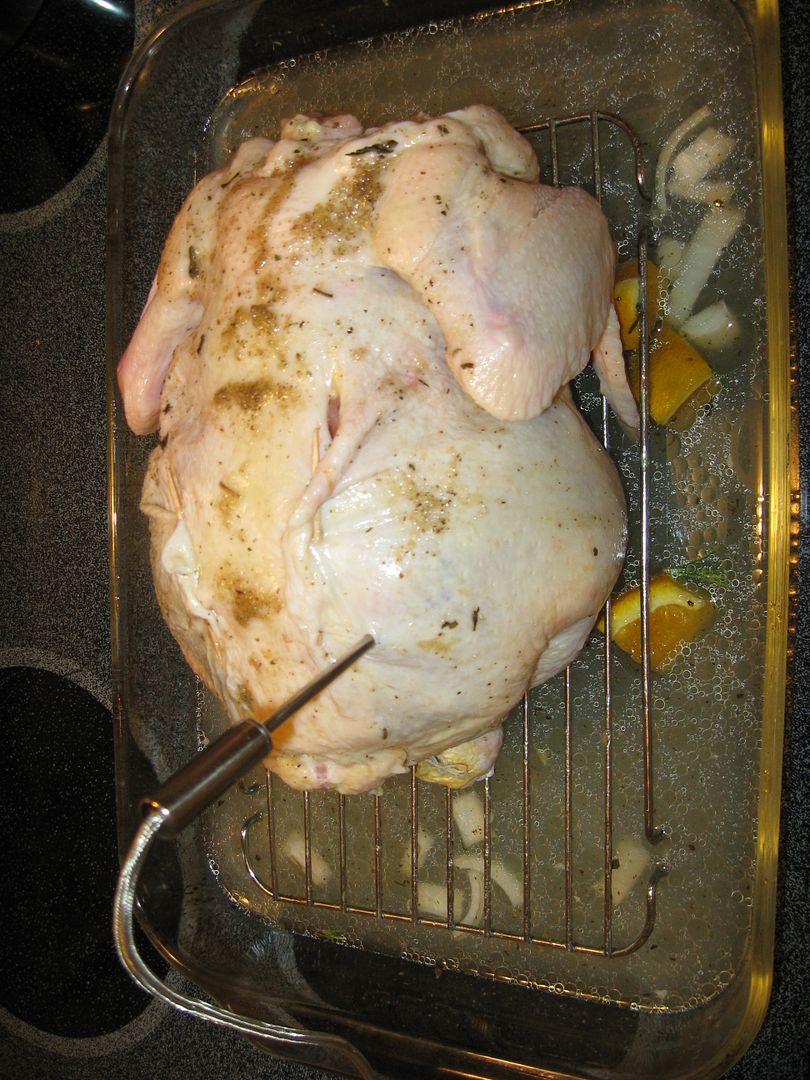
 

 photo IMG_3345.jpg

Roasting time for a stuffed turkey, at 350° F, is 20 minutes per pound; again, the best and safest method to determine when the bird is done is to measure internal temperature; for poultry, we want 165° F; the bird will continue to cook during a post-roast rest, with the internal temperature peaking at between 170° and 175° F.

Begin roasting with the bird uncovered, then cover loosely with foil for the last hour. Basting isn’t necessary, but it certainly doesn’t hurt.

When the bird is done, remove it from the oven and let it rest for 20 minutes prior to carving; resist the temptation to cut into it prematurely.

Carve, admire, enjoy, and get ready for the crown prince of leftovers, a lovely roast turkey sandwich.
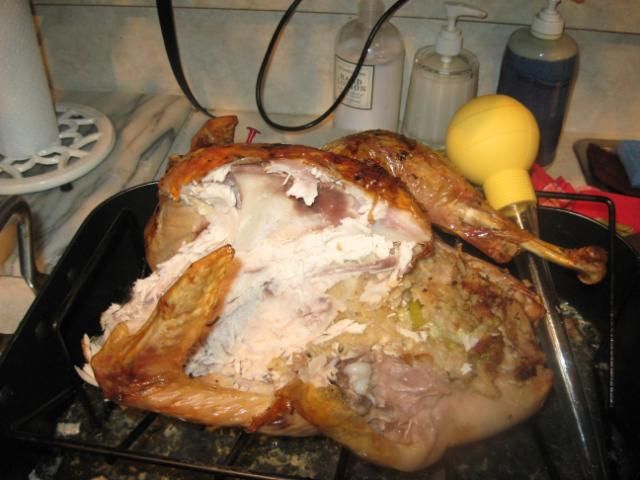
 

 photo IMG_0124.jpg


If you love cranberries, or even if you don’t, try this citrus infused version for a refreshing change. I’ve been making it for decades, and it’s still requested.

1 12-ounce bag fresh Cranberries

3/4 Cup Water

1/2 Cup Agave Nectar (You may sub Honey, Maple Syrup, or light brown Sugar)

1 large Navel Orange

1 Lemon

1 lime

1/4 teaspoon cinnamon

1/4 teaspoon Nutmeg

Shake of Sea Salt


Grate zest from all citrus; get all the nice bright orange, yellow and green, (Stop before you get to the bitter white part.)
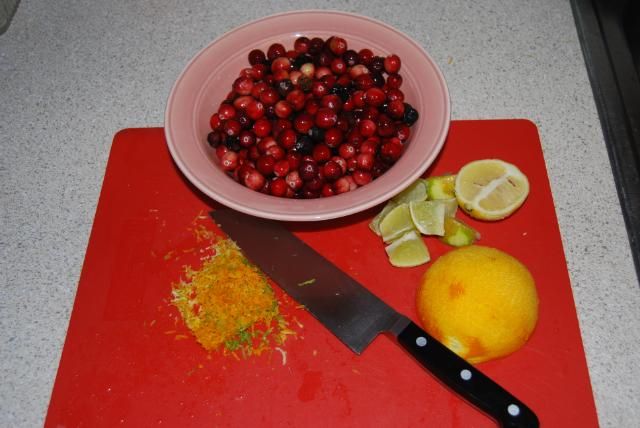
 photo DSC_0001.jpg

Juice lemon and lime. Peel orange thoroughly and rough chop the meat from that; set aside.

Bring water to a boil in a saucepan over medium high heat.

When water is boiling, add cranberries and return to a boil.

Reduce heat to medium and add citrus zest, orange, and juice.

Allow sauce to continue to boil, stirring occasionally until about 3/4 of the cranberries have popped.
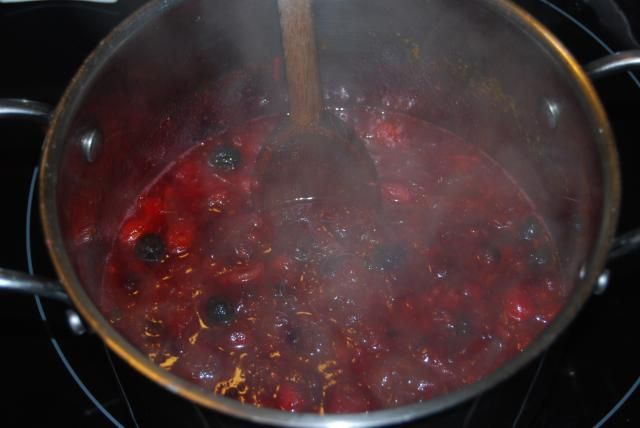
 

 photo DSC_0005.jpg

Add cinnamon, nut get and salt, stir in thoroughly.

Remove from heat and transfer to a glass or ceramic bowl.

Allow to cool completely at room temperature.
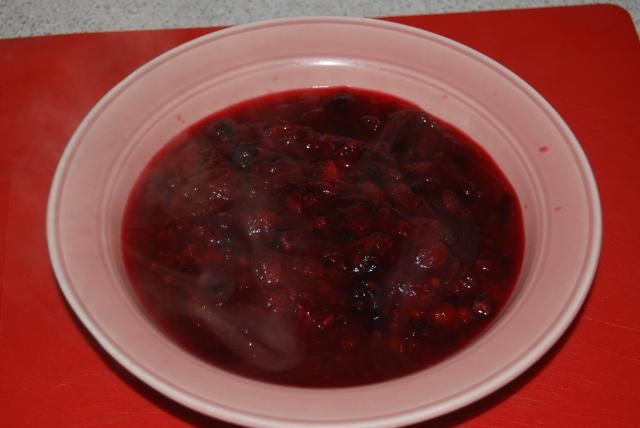
 photo DSC_0006.jpg

Cover and refrigerate until serving time. Will last in the fridge for about a week.


Since this is a meal designed for pulling out all the stops, try these twice baked potatoes instead of mashed. They’re easier to portion, which can help cut down on excess leftovers.


Russet Potatoes, 1/2 to 1 each depending on size and appetites; the rest of these ingredient amounts are based on a 4 large potato bake, so scale accordingly.

1 Cup heavy Cream

1/2 Cup Sour Cream

1 Cup Extra Sharp Cheddar Cheese

4 ounces unsalted Butter

2 strips thick cut Bacon

4 Green Onions

Sea Salt

Fresh ground White Pepper

Extra Virgin Olive Oil

Dash of Tabasco


Preheat oven to 325° F

Rinse your spuds and pat dry with a clean towel.

Coat whole spuds with olive oil by hand, place in a glass baking dish. Season the skins evenly with salt and pepper.

Slide the spuds into the oven and bake for about an hour, until the spuds are fork tender.

Fry bacon, dry on paper towels and fine dice.

Rinse, strip roots from green onions, and fine dice.

Grate cheddar cheese.

When the spuds are ready, pull them out of the oven and let them cool just long enough to handle with a clean towel, (in other words, still quite hot).

Reduce oven heat to 250° F.

Cut the spuds into lengthwise halves, then carefully scoop the guts into a mixing bowl, keeping the skins intact.

Add cream, sour cream, half the cheese, bacon, onions and butter to spuds and blend thoroughly. Add salt and pepper to taste.

Refill the skins with the spud mixture, top with the remaining cheese, then slide them back into the oven; bake for an additional 15 to 20 minutes.


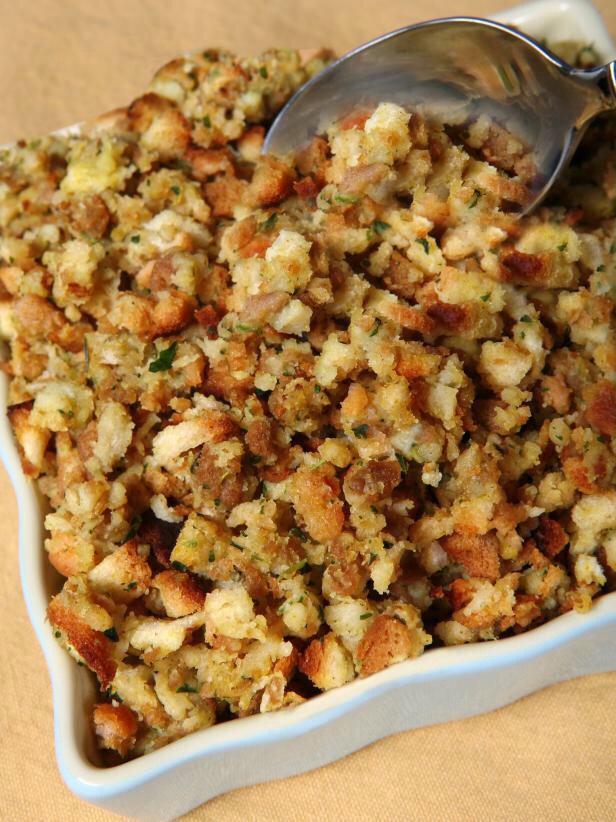
Stuffing is a must; try this recipe, redolent of herbs and citrus.

It’s actually desirable to use bread that’s a couple days old, so buy ahead. Stuffing can be prepared a day ahead of service and chilled, covered. Bring the stuffing back up to room temperature before you bake.


1 large Sourdough loaf

1 large Sweet Onion

1 stalk Celery, with leaves

3 slices thick cut Pepper Bacon

2 large Eggs

1 Cup Unsalted Butter

1 1/2 Cups low-sodium Chicken Stock

1 small Lemon

2 Tablespoons Lemon Thyme

2 teaspoons Savory

1 teaspoon Sea Salt

1/2 teaspoon Grains of Paradise


Preheat oven to 325° F

Cut bread into roughly 1/2″ cubes. Spread cubes on 2 baking sheets and bake until dry, about 15 minutes. Allow bread to cool on pans, then transfer to a large bowl. Crumble by hand and add the lemon thyme, savory, salt, and grains of paradise.

Rinse and dice onion and celery. Zest and juice lemon. Lightly beat eggs.

In a large saucepan over medium high heat, fry the bacon until crisp. Set that aside on paper towels to drain, and reduce heat to medium low. Add the butter to the bacon fat and melt thoroughly. Add onions and sauté, stirring steadily, until onions start to turn translucent, about 5 minutes. Add celery and continue to sauté, stirring occasionally, for another 5 minutes. Transfer all to the mixing bowl.

Crumble the bacon, then add it plus the eggs, stock, lemon juice and zest to the bowl and combine thoroughly.

Transfer stuffing to a lightly buttered, shallow baking dish, cover the dish with metal foil.

Bake, on a middle rack for 30 minutes; remove foil and continue baking until browned, about another 30 minutes.

Allow to rest for 10 minutes prior to serving.


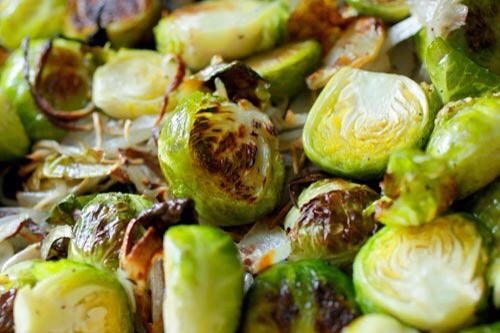
Brussels sprouts, the red headed first cousin of cabbage, get bad press far more often than they should. They’re truly a lovely vegetable and a perfect side for the big feast. It’s a safe bet that overcooking and poor seasoning have far more to do with negative reviews than the veggie itself. Brussels sprouts contain glucosinolates, compounds that offer abundant health benefits, but have the unfortunate tendency to release sulfurous byproducts when they’re overcooked. Avoiding the all too common boiling of sprouts is your first line of defense against bad taste. Here’s a preparation with bright and earthy notes guaranteed to please.


Roasted Brussels Sprouts with Almonds & Apple Cider Reduction


Brussels Sprouts, about 6 per person; the ingredient measures here are scaled for 35 to 40 sprouts.

1 1/2 Cups Honeycrisp Apple Cider

1/2 Cup slivered Almonds

Extra Virgin Olive Oil

2 small cloves Garlic

Unsalted Butter

Sea Salt

Black Pepper


Preheat oven to 375° F.

Remove sprouts from stem and soak in cold water for 10 minutes.

Inspect and trim any browned or yellowed leaves, and trim stems to about 1/4″. If your sprouts are large, you may halve them if you wish.

Mince garlic.

Place trimmed sprouts in a mixing bowl, and coat generously with olive oil. Add garlic and toss to incorporate. Add enough salt and pepper to lightly coat.

Roast sprouts in a middle rack for 35 to 40 minutes, turning once, until they’ve begun to brown.

While the sprouts are roasting, prepare the almonds and cider reduction.

In a sauté pan over medium heat, add the almonds and a tablespoon of unsalted butter. Sauté, stirring regularly, until the nuts and butter start to brown, about 5 minutes. Remove from heat and set aside.

In a sauté pan over medium heat, add the cider and bring to a simmer. Whisking steadily, simmer until the cider has reduced by roughly 50%. Add a tablespoon of butter and a very small pinch of sea salt. Whisk to incorporate, then remove from heat and set aside.

Combine all ingredients in a small bowl and whisk briskly to incorporate. Allow the dressing to sit while the sprouts roast.

When the sprouts are done, allow them to cool for about 5 minutes. Combine sprouts, almonds, and reduction; toss to thoroughly coat the sprouts, serve warm.


For drinks, definitely try the rest of the Honeycrisp Cider you used for the sprouts. It’s fabulous heated up with a cinnamon stick and a clove or two. Prosecco is an excellent sparkler if you prefer those with your meal. If not, try a nice, light white like Pinot Grigio or Fumé Blanc; both of those will cut rich food admirably. A hard cider is also a nice choice, lighter than beer and pairs well with thanksgiving fare. If you do prefer beer, keep it light here as well; a local Pilsner or lager will do the trick nicely.


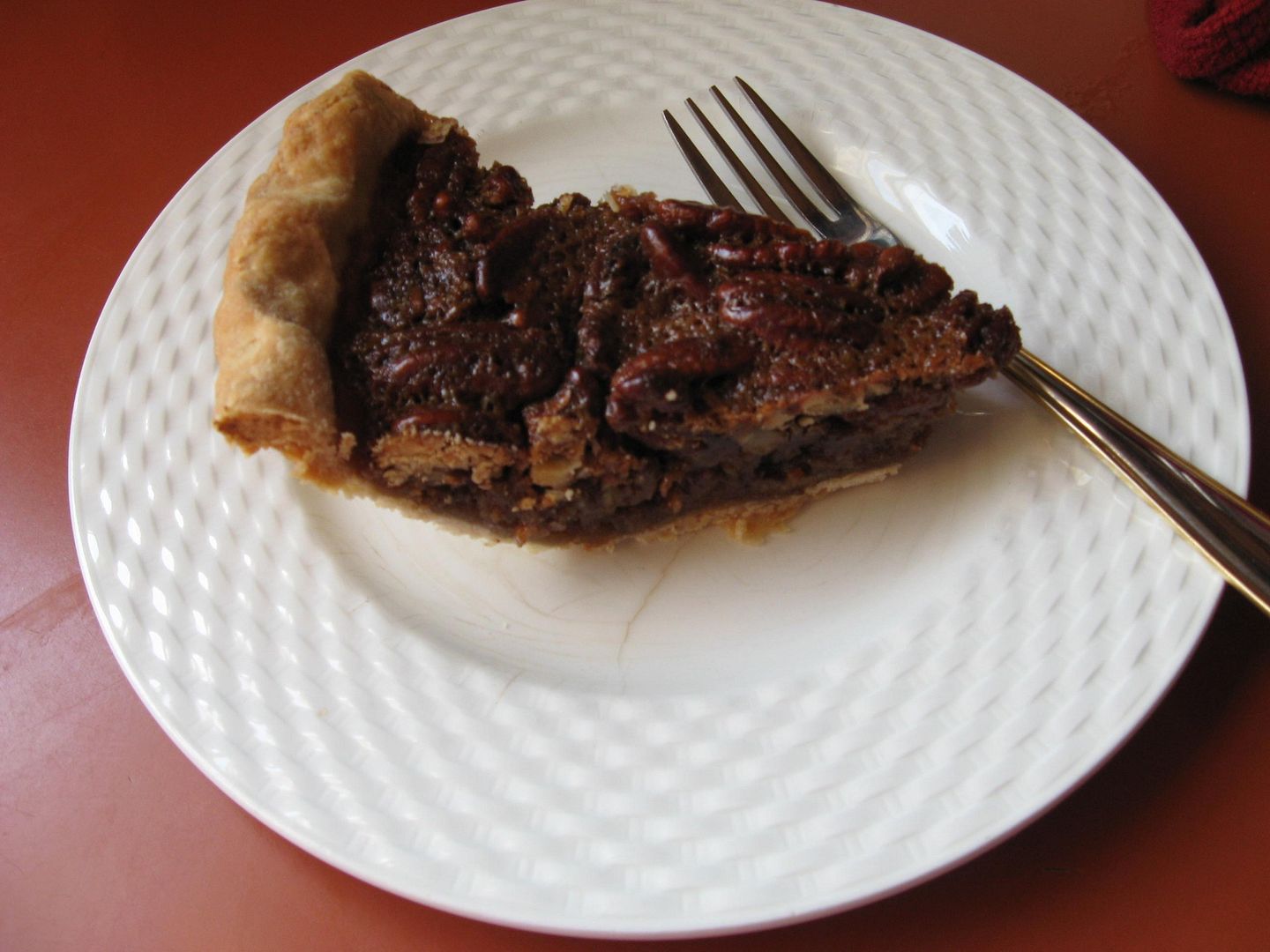
To finish, eschew pumpkin and make a lovely pecan pie. It’s our nod to 12 years in Texas, where truly great pecans come from. I’ve tried nuts from all over and the Texas nuts are best; sweet, rich and meaty. This recipe really does make a perfect pie; the nuts are front and center, it’s not too sweet, and it has great depth of flavor, with heady hints of vanilla and Whisky.

For the Crust:

2 cups all-purpose Flour

1/2 cup cold Lard

1/4 teaspoon Sea Salt

6 – 8 Tablespoons Ice Cold Water


Filling:

2 1/2 Cups Pecan halves

3 Eggs

1 Cup Agave Nectar

3/4 Cup Light Corn Syrup

3 tablespoons Butter

2 Tablespoons Sour Mash Whiskey

2 teaspoons pure Vanilla extract

1/2 teaspoon Sea Salt


Crust Prep:

Keep in mind that great pie dough is simple and minimally handled. Make your dough by hand; machines get between you and flaky crust.

In a mixing bowl, combine the flour and salt.

Add the lard and work it into the dry ingredients by hand until it resembles rough corn meal in texture.

Add the water a tablespoon at a time and stir the dough with a fork.

When the dough holds together as a ball, but isn’t wet or sticky, stop working it, cover it in plastic wrap and refrigerate for 1/2 hour.
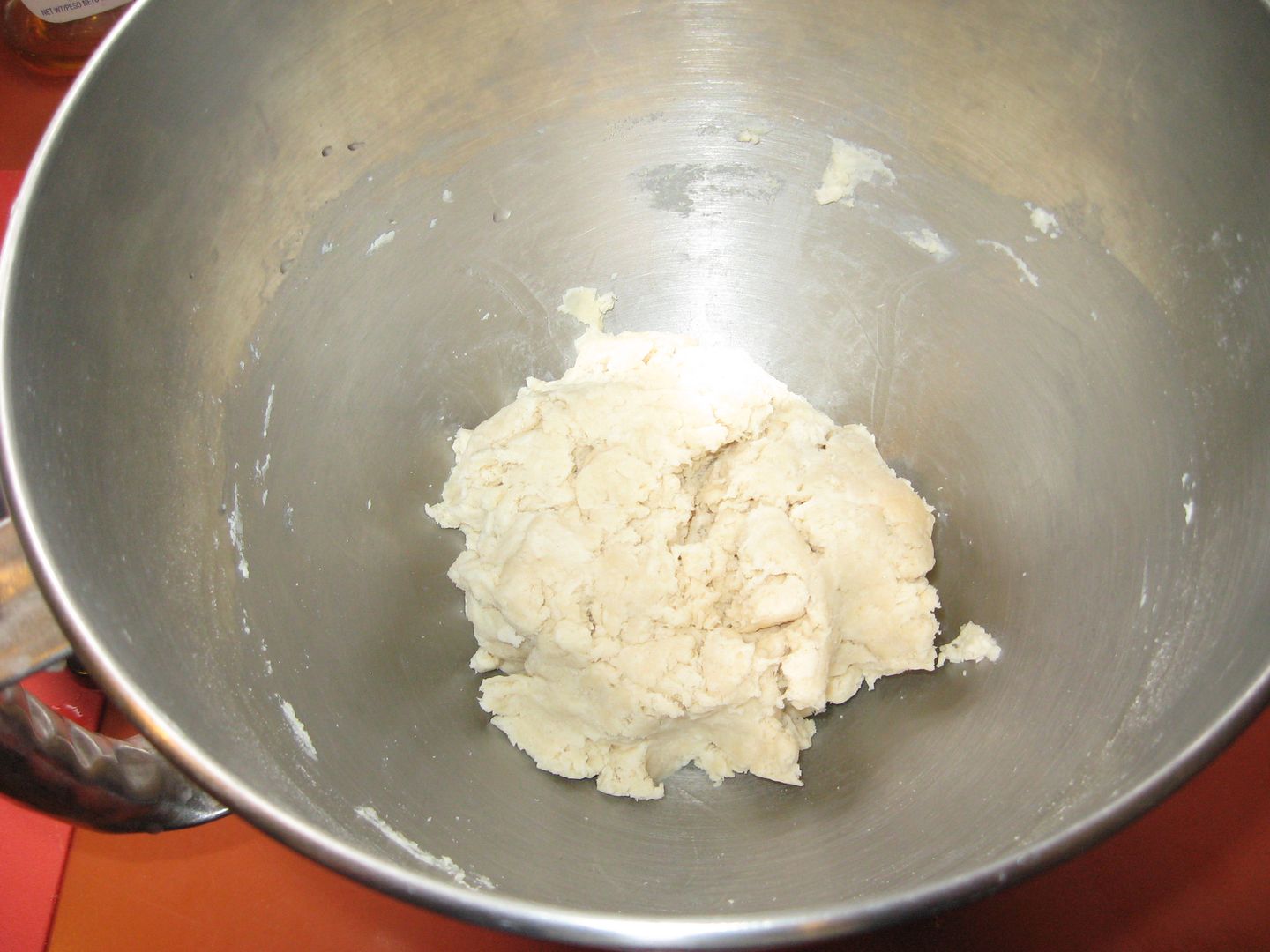
 

 photo IMG_0936.jpg


Form the dough into a disk about 3/4″ thick, then roll it out on a lightly floured surface, into 12-inch circle about 1/8″ thick. Lift an edge and carefully peel the dough free, then drape it onto a dry 9″ pie pan.

Trim the dough with a paring knife, leaving it about 1″ over the edge, then tuck the overhanging dough underneath itself to form a thick edge on the pan, and treat it as you see fit, (I like the classic thumb print myself).

Preheat your oven to 400° F, and position racks in the center and lower third of oven.

Put a piece of parchment paper or foil over the pie shell and fill with dried beans or pie weights.

Spread the pecan halves out on a baking sheet.

Blind bake the crust on the center rack for 15 minutes, and start on the filling.

In a sauce pan over medium-high heat, melt the butter, then add the sugar and corn syrup. Stir constantly with a whisk until completely combined.

Slip the pecans into the hot oven on the lower rack; let both nuts and crust bake for another 5 minutes.

Lightly beat the eggs and set aside.

Remove crust and nuts from oven and reduce heat to 350 F.

Remove filling mixture from heat. Add hot nuts to the hot mixture. Add Vanilla and Whisky carefully and slowly; the hot sugar can bubble up explosively if it’s too hot and it will scald and stick to skin!

Add eggs to hot nut mixture and incorporate thoroughly with a whisk.

Remove weight or beans from crust, then pour hot filling carefully to fill crust.

Place pie on center rack of oven with a baking sheet on the lower rack, centered under the pie.

Bake for 40 minutes and then take a peek; pie should look firm and nicely set at this point. If the edges are notably darker, line them with an edge guard or foil and bake another 5 minutes.

Remove pie from oven, set on a wire rack to cool.

 

 photo IMG_0937.jpg


 photo e6ab7993-89e9-4186-9bb2-5dc4777a89db.jpg


M and I wish you a holiday of peace and comfort.


Chocolate & Toasted Almond Tart


I went down to my Sis’s place this weekend. I always try to cook when I’m down there, and this time around, I was determined to make up for the failed tart fiasco from my last visit. I was going to do something savory, but then Annie said, “if you want to do some fantastic dessert, you sure can – I’ve got chocolate, and cream, and nuts…” A chocolate tart was the natural answer. I did this one up on the fly, and it turned out so good, I’ve been flooded with recipe requests, so here it is – It’s actually quite easy, so do give it a try.

Chocolate & Toasted Almond Tart

For the Tart
1 Cup All Purpose Flour
1/2 Cup Powdered Sugar
1/4 Cup Cocoa Powder
4 Ounces Unsalted Butter
1 Egg

1/2 Cup whole Almonds for topping.

Have all ingredients at room temperature.
In a large mixing bowl, combine sugar and butter, cream together with a fork until smoothly blended.
Add the egg and whisk it into the sugar-butter blend.
Add flour and cocoa powder and work by hand until fully incorporated.
Wrap dough in plastic and refrigerate for 45 minutes to an hour.

Preheat oven to 350° F.
Remove dough from fridge, flatten it into a roughly 6″ disk, and sandwich between sheets of waxed paper or parchment.
Gently roll dough out to about 1/4″ thick.
Carefully transfer dough to a tart pan, and gently press into shape.
Prick bottom of tart with a fork, across the entire bottom.
Bake on a middle rack for about 15 minutes, until tart looks dry and has started to pull away from the pan edges.
Remove and allow to cool.

Place almonds on a clean, dry baking sheet and roast for about 15 minutes at 350° F, until nuts start to brown slightly, and you can smell a nice, roasted nut smell.
Remove from oven and allow to cool.
When cool enough to handle, carefully rough chop nuts and set aside for topping.

For the Ganache
1 1/2 Cups Heavy Cream
8 Ounces Dark Chocolate.
4 Ounces Unsalted Butter
2 Tablespoons dark Karo Syrup.
Pinch Sea Salt

In a heavy sauce pan over medium heat, scald the cream – when small bubbles form at the edge of the cream, remove from heat.
Shave or grate chocolate, then transfer to the inner pan of a double boiler.
Carefully pour hot cream over the chocolate, and allow it to steep for 5 minutes.
Prepare bottom half of double boiler with a few inches of water and place over medium heat.
Place pan with cream and chocolate blend atop heated double boiler bottom, and gently whisk cream and chocolate together – take your time and let the chocolate determine the rate of incorporation – If you try to push things, your chocolate can seize, which is no fun…
When the cream and chocolate are fully incorporated, add the Karo syrup and a pinch of sea salt, and whisk them in.
Cut butter into 1/4″ cubes, then add a few cubes at a time to the ganache, and gently whisk them in until they’re melted and incorporated. Repeat until all the butter is worked in and the ganache is nice and glossy.
Carefully pour ganache into the tart.
Top ganache with chopped, toasted almonds.

Chocolate & Toasted Almond Tart

Allow to set at room temperature for two to four hours prior to serving.

Chocolate & Toasted Almond Tart

House Made Stock


Nephew Ian put in another topic request, this one for making homemade stock. If we had to pick one thing that separates really good restaurant quality food from most home cooked stuff, it wouldn’t be unreasonable to chose the making and judicious use of homemade stock.

Homemade Stock

The difference between homemade and anything store bought is night and day; you’ll enjoy far greater depth and breadth of flavor, as well as the common sense step of keeping and using the stuff you need to make stock with, instead of throwing it away – Everything from the ends of trimmed veggies, to fish racks, bones, and carcasses are the stuff of great stock. Making stock at home is neither particularly laborious or complex. Once you get in the groove of thinking about using your leftovers accordingly, it’s a pretty simple process.
First things first, let’s define stock, vis-a-vis its thinner cousin, broth, and thicker progeny, demi-glacé. In simplest terms, stock comes from bones, while broth comes from meat. Think of stock as the deeper and more complex root of superior soup, sauce, risotto, and a thousand other variants. When the first taste of one of those dishes blows you away, it’s a safe bet there’s rich, house-made stock at the core. There’s an enhanced mouth feel and richness to stock, brought forth by the gelatin released from bones, that you just don’t get anywhere else.
Preparation for making stocks begins with saving the ingredients; Don’t throw out the bones, carcass, etc of your last wonderful roast, chicken, turkey, ribs, etc – Keep ’em and freeze ’em and set ’em aside for future use. You can also certainly ask for beef/veal/etc bones from your butcher; with a resurgence in small, local butchers in full swing across this country, do your due diligence and see if you’ve got one close by – They’re sure to be prepared and happy to get you what you need.

Beef Stock
For hundreds of years, the go-to restaurant stock was veal, or beef. Nowadays, Dark Chicken Stock has replaced those more traditional variants as the root of great soup, sauce, etc.. It’s probably healthier for you than beef or veal, and frankly, it’s far more versatile; we use it almost daily in our kitchen. For the record – The sole difference between light and dark chicken stock is whether or not the bones have been roasted. Also, If you prefer to do beef, veal, pork, etc, you’ll want about 3-4 pounds of bones to substitute for the chicken carcasses used herein.
What you’re going to do is a three part process – slow roast, simmer, clarification. The slow roast will breakdown and deepen favors from the carcasses or bones and a trinity of aromatic bases, (in this case, mirepoix – onion, carrot, and celery), and a touch of tomato paste. The slow roast works on everything, breaking down cartilage, marrow, fat, skin – drawing out the essence of the veggies with slow caramelization. The tomato paste enhances color and flavor, and the acid therein helps break down connective tissue in the bones, aiding in the production of usable gelatin for your stock.

You’ll need the following to build a good stock pot worth of the real deal.

2-4 Chicken Carcasses
2 medium Yellow or Sweet Onions
3-5 Carrots
3-5 stalks Celery
Small can Tomato Paste
Olive or Avocado Oil
Sea Salt
Fresh ground Pepper

Mirepoix, the classic aromatic base

Decent Cheesecloth, (60 to 90 pound is best)
3+ Gallon Stock Pot
Colander, Strainer, or Chinoise
Slotted or perforated Spoon

stock 1

Preheat oven to 250° F.
Have carcasses or bones defrosted and close to room temperature.
Rough chop onion, celery, and carrots to a final mirepoix of 50% onion, and 25% each celery and carrot – You don’t need to be exact. Rough chop means fairly uniform pieces of each, about 3/4″ big.
Spread the mire poix evenly across a rimmed baking sheet.
Season veggies with salt, pepper, and a drizzle of oil.
Break down carcasses minimally, just enough that you can evenly cover the mire poix.
Using a spatula, dab a thin coating of tomato paste over the carcasses; this doesn’t have to be thick – use a whole, small can for a batch of this size, evenly spread.
Slow roast everything for about 3 hour, flipping once about half way through, until bones have browned, and veggies are caramelized.

Roasted carcasses and mirepoix

Remove everything from the oven and carefully transfer into a stockpot over medium-high heat. Add water until you’ve got a good two inches over the top of everything in the pot.
Add,
3-4 Bay Leaves
Teaspoon of Sea Salt
10-12 whole Pepper berries

Homemade Dark chicken stock.jpg

Once the water begins to boil, reduce the heat to low and continue simmering for at least 6 hours, (and as much as 8.)
As fat and associated scum rises to the surface, (If you see Dick Cheney, push him back under), skim that off with a slotted or perforated spoon.
You’ll lose water to evaporation; keep adding fresh to maintain that couple of inches over the contents.
Remove pot from stove, and allow the stock to cool to room temperature. You can place the whole pot in an ice bath, (50% – 50% ice and water), to cool it faster; this is also safer than simply waiting it out.
Cover and refrigerate overnight, (Or stick it out on the back porch, covered, if it’s cold enough out).
In the morning, you’ll find a nice, solid layer of fat has formed on the top of your stock; carefully ladle that off and discard.

Skimming fat off fresh stock

Now comes clarification;
Set up a colander, strainer, or chinoise, with a large mixing bowl beneath.
Pour the contents of your stock pot carefully through; this first pass will remove the big chunks from the stock.
Discard the bones, veggies, etc.

Clarifying homemade stock
Now you’ll need decent cheesecloth at this point, as it’s time to really clarify.
Line your straining device with a layer or two of cheesecloth big enough to drape over the edges somewhat; place the stock pot or mixing bowl underneath.
Slowly pour the stock through the cheesecloth.
After each pass, rinse the vessel you poured from, and the cheesecloth, before making another pass.
You’ll want at least 6 – 8 passes to get to reasonable clarity, something like this – beautiful, flavorful house made stock.

Glorious Homemade dark chicken stock

We freeze stock in quart sized freezer bags; this is a good size to use as the basis for soups and stews. You can store some refrigerated, in an airtight container, for up to 5 days. Some should most definitely be further reduced into demi-glacé, and here’s why.

Homemade dark chicken stock ready to freeze

In his epic tale of back of house whackiness, Kitchen Confidential, Anthony Bourdain wrote of demi-glacé, “Freeze this stuff in an ice-cube tray, pop out a cube or two as needed, and you are in business – you can rule the world.” And when you’re right, you’re right. If you knew how many amazing sauces spring from this one source, you’d be gob smacked. While demi-glacé is traditionally made from veal or beef stock, you certainly can and should make it from chicken stock – Like the stock, chicken demi-glacé is amazingly versatile. Traditional demi-glacé is served over beef, veal, or lamb – chicken glacé not only works on those proteins, it’s amazing with chicken, pork, veggies, potatoes, and rice or risotto.

Reducing stock to demi-glace
There’re a myriad of ways to make it; doing so with fresh stock is one of the easiest and most satisfying, and it only makes sense, when you’ve already been working through stock production. You can, if you like, simply return some stock to a sauté pan over medium heat, turn it down to a bare simmer after it gets bubbling, and reduce that by roughly 50% – What you’ll have is a more concentrated, intense iteration of the stock you just made, and that is indeed demi-glacé, no matter what pretentious foodies tell you. That said, putting a few more refinements in the mix will pay big dividends. Here’s how.

2 Cups fresh Chicken Stock
1 Cup Old Vine Zinfandel
2 Tablespoons minced Shallot
2 teaspoons Lemon Thyme
1 teaspoon Grains of Paradise, (Black Peppercorns are fine)
1 Bay Leaf

In a large sauté pan over medium heat, combine all ingredients, except the butter.
As the mixture comes to a boil, reduce heat to low and simmer, stirring occasionally, until the liquid has reduced by roughly 50%.
Test thickness by pouring some of the demi-glacé from a spoon; it should leave a noticeably thick, even coat on the spoon.
Remove from heat and cool to room temp, (again, a mixing bowl in an ice bath does a great job).
Transfer demi-glacé to a pop-out ice cube tray, filling evenly. Slip the tray inside a gallon freezer bag, press excess air out, (I suck all the air out to avoid freezer burn), and freeze.

Freeze cubes of demi glace and you own the world

When you want an amazing pan sauce, pull out your tray, pop out a cube or two, and melt over medium heat. Finish with a thumbnail sized hunk of butter, and viola. You can also add a cube to boiling water for rice or veggies. A cube add to your regular gravy ingredients is especially delightful – Potential uses are as broad as your imagination.

Cooking at the Gathering


So, a couple weeks ago, I didn’t post, because, as luck and joy would have it, I was 1600 miles from home, at my other home for a few precious days. Formally known as The Luthier Community Gathering, this is an annual event held in the north woods of Minnesota. Hosted by Grant Goltz and Christy Hohman at their incredibly eclectic and homey spread, this is several days of companionship, renewed and new friendships, music, incredible house made beer and ale, and of course, food.   

Over the years, I’ve become the official Chef de Gathering, and it is a joy of joys to do. Over the three days of the main event, we feed somewhere around 30 to 40 folks for dinner, and maybe 12 to 20 for breakfasts and lunches. While some folks bring a little of this and a little of that, Chris and I provide the mainstays, (and usually Monica, who couldn’t make the trip this year due to a new job). And rank has its privilege – I get my own incredibly cozy Chef apartment, and an incredible kitchen to work from.


 For such a big crowd, the process is incredibly easy. At some point, we’ll touch base and decide on theme, main ingredients, etc – it rarely takes more than a couple minutes. I say, “Hey Chris, what are we gonna build?” She fires off some options, inspiration takes hold, and off we go. 

 The real joy comes not only from feeding good friends in a great kitchen, but in the gathering of ingredients. Grant and Christy run a Community Supported Agriculture, (CSA), operation on their spread, so the variety and scope of produce is truly stunning, as you can see.  So, picking ingredients means just that; heading out on the trail with basket in hand, and coming back with the bounty. 


 This year marked the first truly amazing mushroom harvest, from logs inoculated and set up last season – Shiitakes, an almost embarrassing wealth of gorgeous, just picked beauties – I put them in everything I could think of, (and I did say ‘almost’).


Our mutual friends, John and Lissa Sumption, have a working CSA close by, (King’s Gardens), so literally anything we don’t have right on hand can be had with a phone call. During my visit, Mark, the very talented local butcher, stopped by and dropped off some goodies, for which he took produce in barter. The results speak for themselves.  

  
 Our recent piece on apples contains several of the recipes we did this year. Here’s the recipe for smoked Guacamole – It’s become a must-do for the event ever since we debuted it seven or eight years ago.


The Annual Gathering is open to any and all who love music, good friends, and good food. Here’s a video and a song that pretty well sums up the vibe. It’s held in August every year. This year, a dear friend from my wildfire fighting days, Nancy Swenson, made the trip out – First time we’d seen each other in thirty four years!