Salted WHAT?!


Easy answer; almost everything.

No, really; why do y’all think that salted caramel, chocolate and a hundred other deserts are hot right now?

One of my favorite authors, Mark Kurlanski, wrote a great book all about salt. Think that’d be a boring read? Think again, it’s a page turner. Salt has been used for money as well as for food, ya know…

So, naturally, the next logical question is, “I thought salt was bad for us?”
Answer: All things in moderation, Grasshopper!

We’ve been told that line, but is it true? Turns out the answer is, probably not.

The whole sodium leads to high blood pressure thing has never really been proven. Again, moderation is the key; high sodium diets aren’t any good for you, but neither is much of anything else, when taken out of balance.

Besides that, there are bunches of good things salt does for us, including;
Aids blood sugar control by improving insulin sensitivity.
Helps maintain the proper stomach pH.
Helps lower adrenaline spikes.
Aids sleep quality.
Helps maintain proper metabolism.
Supports proper thyroid function.

Look any of those claims up; there’re ample sources of support for them.

More to the point for our purposes here, salt makes food taste good. You might be shocked at how much salt is used in a professional kitchen. They don’t go crazy, mind you, but they sure do salt, and the primary reason is that proper salting makes food more enjoyable, and specifically, it enhances quality over quantity. In that light, you could argue that proper salting helps encourage weight management, too.

Next, you ask, “OK, let’s say I buy that, why is it so.”

Ahh, I nod sagely, it’s science time! (And if you enjoy this side of food study, you’ll want to look up Harold McGee)

Chemically speaking, table salt, is sodium (Na+) and chloride (Cl-).

Why do humans dig it so? Well, we came from it, in a very real sense; The Earth is made up of lots of minerals that get continuously washed into the sea, and sea water is, therefore, salty. Sea critters get raised in that, and they are from whence we came, si? As land-based critters who evolved from sea-based critters, we still rely on water and salt for many of our basic biological processes, as described in the last paragraph. Salt plays a crucial role in allowing water to diffuse throughout our bodies properly, and as such, being relatively intelligent, we’ve developed taste buds that dig what we need to survive. Neat, huh?

Now, taste wise, research suggests that salt has the effect of flavor suppression for what we perceive as bitter tastes. By doing that, it’s thought that salt thereby allows us a greater perception of sweet and sour. It’s not really clear why it is that salt lets us taste the caramel or a green bean more distinctly; there’s supposition that the presence of the salt suppresses water within the chemistry of the food, and thereby allows volatile aromatics to become more noticeable to us. As to whether or not salt actually does something like that, or just gets our brains to perceive it as such, your guess as good as mine; that might just be a dandy PhD subject.

“Alright,” you concede, “I’m in; so how do I do this right?”

Well, first off, use the right salt. For cooking, there’s a couple things to consider, source and grain size. For my mind, sea and kosher salts are best and anything that says ‘Iodized’ or ‘Table Salt’ I avoid like the plague. As for grain size, keep in mind that the larger they get, the slower the salt dissolves. If you’re doing rubs, big grains are fine, because that nice slow, time-released salting goes great with that process. If you’re making brine, you’d like the salt to dissolve pretty quickly, so smaller is better. And keep in mind that the same thing will happen on tongues as well.

Getting the idea that you might want more than one kind of salt in your pantry? I just went and looked at ours; we have 9 varieties of sea, kosher and various finishing salts. The latter has become popular lately, and they are, in fact, pretty cool. If you’re gonna finish a dish or garnish a hand made chocolate, why not Hawaiian black, Chilean pink, or Fleur de Sel? If you’ve never tried fish quick cooked on a heated block of Himalayan Pink Salt, you aughta; it’s not only cool, it’s seriously delicious.

We use kosher and sea salts as our primary cooking varieties, flaked for canning, pickling and brining, and the various others for special touches here and there. Once you get one you like, stick to it. All salts do not weigh the same, so for baking, brining, or any other recipe where the ratio really matters, you’ll want to know where yours hits the scales. The other great thing about kosher is it’s uniformity; you can grab it and send it to a dish with great control and repeatable uniformity, and that’s important.

So, how to use the stuff like a pro?

First and foremost, the rule is, do it, but don’t overdo it. You want to taste the food better, not the salt. The best way to achieve this goal is to salt throughout the cooking process, and taste what you’re making at every step. If what you’re adding is already salty, (bacon, olives, capers, etc), taste before you salt.

Do keep in mind that salt levels will change as your dish develops. If you reduce a liquid that’s salty, it’s gonna taste saltier. Ditto for stuff you make and then shove in the fridge for a spell. On the too light side, dairy sucks up salt like nobody’s business, so multiple checks are warranted with, say, a cream soup or stew.

Do it like this and your dishes will properly develop flavor as they cook, with the added fringe benefit that, if you screw up and hit it too hard at an intermediary step, you have time to fix it.

OK, so if you do screw up and over salt, whataya do? Adding cream and or butter, as mentioned above, reduces saltiness, so do that if your dish warrants it. Starch can do the same thing, so a piece or two of bread, soaked in milk for about 10 minutes, squeezed dry and added to the dish can help; note it also acts as a bit of a thickener though. The great Julia Child advocated grating a raw potato or two into a dish, allowing it to simmer for about 10 minutes, and then straining them out, noting that, “they’ll have absorbed quite a bit of the excess salt.” Anything good enough for Julia is certainly good enough for us, right?

 photo image-9.jpg

Now, one last tip, helped by this New Yorker cover; I know y’all have watched Food Porn TV and seen a bunch of chefs do this: get a nice pinch of that kosher salt, and raise your hand about a foot above the pan or bowl, and ever so slowly, release a dusting of salt from that lofty height. You didn’t really think those chefs do that just to look cool, did you? The increased drop height will allow you to better judge the amount of salt you’re adding, as well as allowing the salt granules to spread more evenly over the food.

Oh, and you’ll look cool when you do it, too.

Duck Fat!


Duck Fat! Duck fat? Really?!

Yeah, really. Now, I know what a lot of folks are thinking, so let’s get to the root first and foremost. “Duck fat (Or butter, or Lard, etc), isn’t good for you at all.” You’ve all heard this, right? The answer is more than a post unto itself, more like a book; thankfully, somebody already wrote it: Go find Gary Taubes’ ‘Good Calories, Bad Calories’ and read it. Check that out if you doubt me. Fact is, the whole saturated fat thing is likely the most pervasive nutritional myth there is. My summary is as follows – our fore bearers, and a lot of the world right now, still eat natural fats regularly and they ain’t dying in droves. As Kid Rock said, “All things in moderation, including moderation.”

So, back to duck fat – if you hunt ‘me, you got it, just like you got lard if you eat bacon. Don’t ignore either one, use them, enjoy them, revel in all that is real natural fat! There is literally nothing else out there that will impart such a gorgeous golden color and sumptuous taste.

Consider this;

Use duck fat like any other cooking fat; sauté anything and you’ll get the idea right away.

Potatoes fried in it are unbelievable; once you’ve tried it, you’ll know why…

Sub a couple tablespoons of duck fat for your regularly chosen one in a pie crust, especially for savory things like quiche.

Next time you roast a chicken, rub the skin with duck fat instead of butter; you can thank me later…

Duck fat will keep for a long, long time in the refrigerator, but you can also freeze it.

If you don’t hunt ducks and want in on this, just google duck fat; you’ll find plenty of sources to buy it, some probably right in your own town or nearby. It’ll keep just fine in the fridge, and it freezes well to boot. It’s another great candidate to freeze in a nice cube tray; just pop one out when you need that special touch and viola, you’re good to go!

Vas-y!

Saints Preserve Us


So, you’re bopping through the local farmers market and you see, lo and behold, late season, fresh corn on the cob, 8 for a buck. You wanna snap ’em up, but then your little voice of reason says, “Wait, that’s too much! What will you do with all that corn before it goes bad?”

Next time you find yourself in this scenario, slap that little dude off whichever shoulder he rides on and buy the produce, be it corn, beets, green beans, whatever.

Buy as much as you can handle and then preserve it for the cold months. Believe me when I tell you that, come January, corn that was local and fresh in September, properly preserved, is gonna shine all over that other stuff from God knows where.

It’s easy, fast, and actually fun, so let’s do it.

As we’ve been preaching here long and loud, there’s a bunch of way to keep stuff for later; whether you freeze, dry, can, pickle, ferment, or stick it in the root cellar just depends on what it is and how you’ll best be served down the line.

For corn, freezing makes great sense. If you do it right, you’ll have amazing fresh taste in the darkest months. Freezing takes no special equipment whatsoever. If you have a vacuum sealer, so much the better for product quality, but if not, no big deal, zip locks will do.

 photo IMG_0905.jpg

The basics are as follows: prep, blanch, shock, package – that’s it, easy as pie!

Prep is as easy as the veg you’re working on. With corn, you need to decide whether you want cob on or off, of course. Personally, I see no reason at all to save the cobs; they do nothing for flavor, and you’ll have less work before you if you get ’em gone now. That said, to do the preserving work, all you need to do right off the bat is shuck.

Blanching means just a quick heating through; the idea here isn’t to cook, it’s to stop enzymatic activity that can cause issues with flavor and appearance, and to give a really good cleaning to your veggies. Blanching time is critical, ’cause doing it too little can be as bad as too much. Head over to the NCHFP for specifics on time and methods other than hot water. I lightly salt the blanching water and let the salt fully devolve before you toss the veggies in. You want a nice, even rolling boil for your blanch, so let it get fully up to temp as well.

 photo IMG_0908.jpg

Stopping the limited cooking of a blanch is equally as important; that’s your shock, and you want to do that in an ice bath. Your bath should always be 50%-50% ice and water. Make your container big enough to completely immerse your food. The proper rule of thumb is to shock for the same time you blanched; that’ll assure that you put a proper habius stoppus in the process.

 photo IMG_0910.jpg

NOTE: Official Pro Secret Revealed.
Blanch and shock is great process not only for preserving, but for general meal prep as well. In fact, it’s another great secret to restaurant cooking that you’ll do well to know and employ. Come on gang, you didn’t really think that your fave eatery individually prepped and cooked each and every portion of perfect green beans one by one for 100+ covers a night right after you ordered it, did you? No sirree, I’ll guarantee you that the reason yours and everybody else’s looked and tasted great was due to blanching and shocking; try it, you’ll like it, and your guests will wonder how come your veggies look so much better than theirs do at home….

OK, so once that’s done, it’s time to get the kernels off the cobs. Set yourself up a production station, and be careful,

 photo IMG_0913.jpg

 photo IMG_0914.jpg

 photo IMG_0915.jpg

Last step, get ’em packaged for freezing. Air is the enemy of course, so vacuum sealing is best, but if you don’t have one, use ziplock bags and suck the air out manually; that’ll do a good enough job to get you throug the winter with nice fresh corn (or beans, peas, etc) at the ready.

 photo IMG_0917.jpg

Enjoy!

Gold Medal Pickles


Back in the day, you cold count on fall as canning season, making sure summer bounty got put up for the long winter months to come. Now, not so much and that’s a shame, ’cause there’s no better time than tough ones to take advantage of preserving good food.

Arguably the signature thing to can is the pickle, and why not? Like good mustards, I don’t consider our fridge full unless we’ve got a good selection of pickles onboard, and what better option therein than your own?

Choose your style: the pickles we’ll do here are referred to as Fresh Pack, which means they’re cured for a relatively short time, then covered in hot brine and processed in a hot water bath for canning. You can also do fermented pickles, which are the ‘barrel style’ from those old sepia toned pics you see now and then. There’s also fridge pickles that are super quick and easy, and you can find recipes for those right here.

Of course many things other than cukes can be pickled, from beets to watermelon rinds; once you get the bug, you can dive right on in. The NCHFP is where you wanna go for further research.

I’ve done pickles on my own for over 30 years now. Most have been great, a few have been awful, and I’ve learned from both. I’ve also plucked some juicy thoughts and practices from other good picklers I know to offer y’all a nice, dependable base to start your own explorations from, (Thanks to Dan, Carla, Christy, Annzie and anybody I forgot), so here we go…

Picking your pickles:
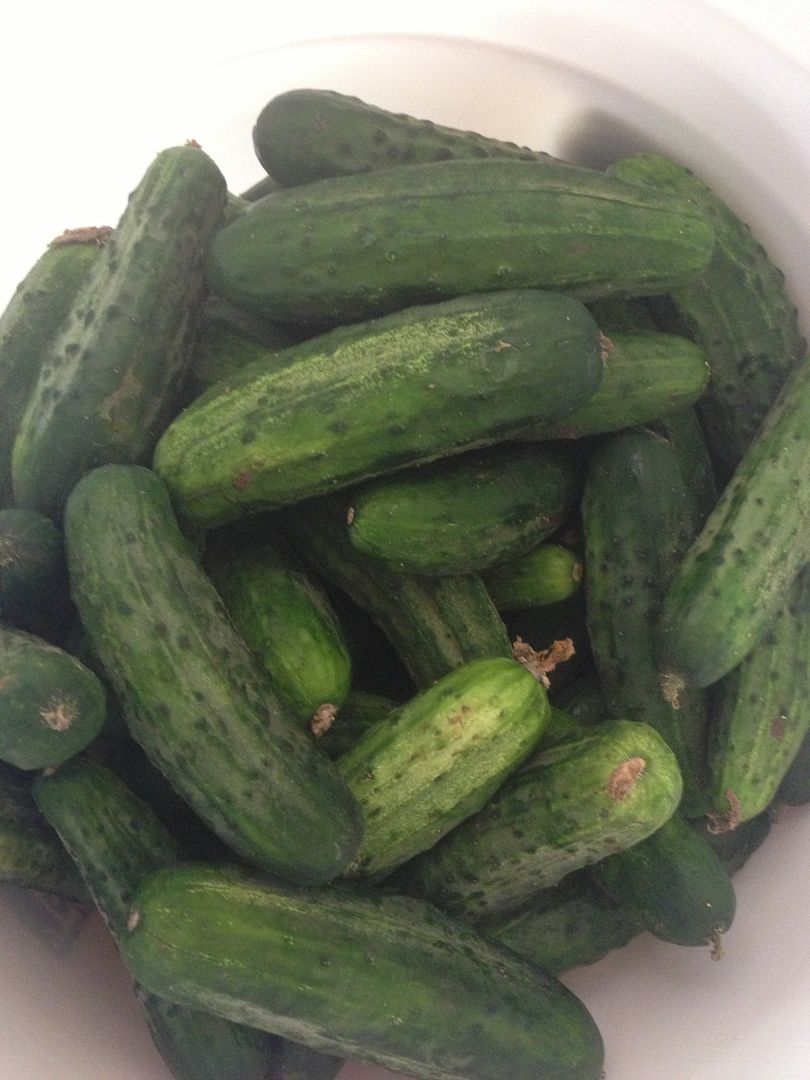
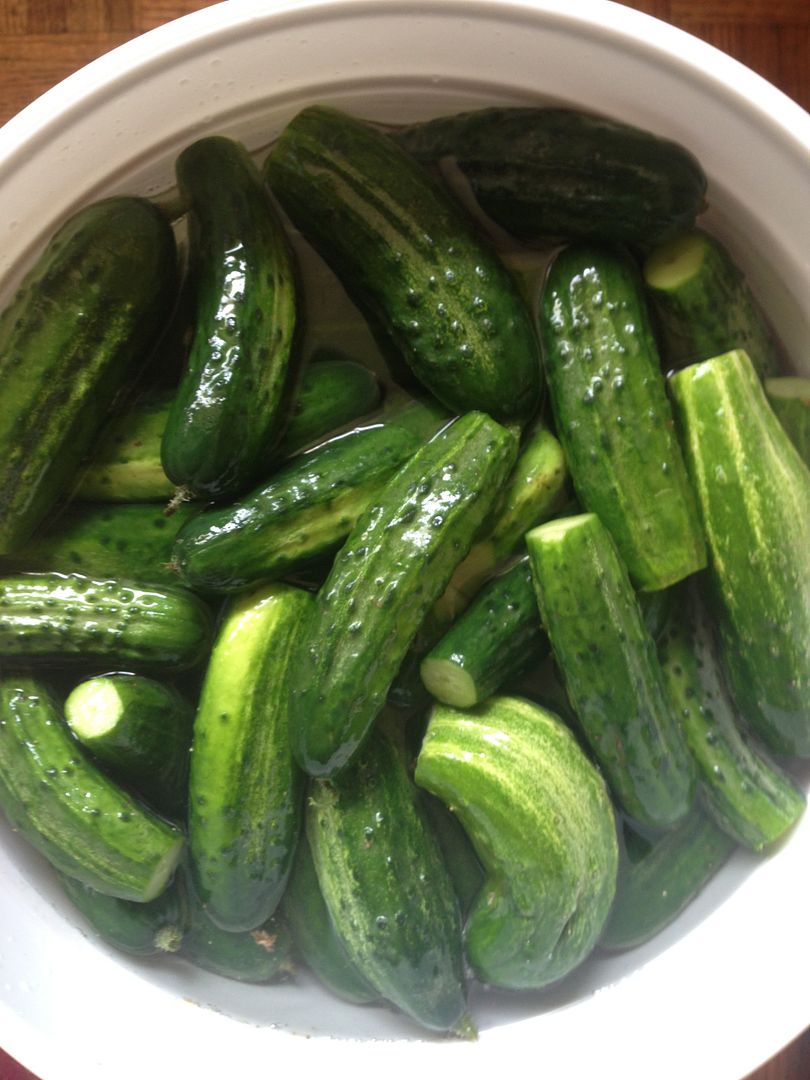
All cukes are not created equally. So chose carefully when your ready to can. Its great if you hit the timing right and can go to a you-pick outfit, or have your local CSA fill your needs. I missed the heart of the season a bit, so I did a little phone and neighbor recon work, then got ours from a grower who not only kept the cukes gently refrigerated, but separated them into basic size groups as well. That said, I still only paid $1.25 a pound, which was fair enough for us.

Choose cukes that are glossy and dark green, with distinct and plentiful knobs on ’em, just like you want to see on your finished pickles. Avoid ones that look bloated, as they are likely past their prime and going to seed; of course lesions, dark or soft spots are right out.

Does size matter? Yeah, to some degree; the bigger the cuke, the longer it takes the brine and spices to infuse. Of course, you can cut your cukes into spears or rounds if you like and bypass any size concerns.

As far as amount needed goes, I chose 20 pounds of cukes in the sizes I wanted most, ended up rejecting about a pound of those after initial processing, and ended up with 18 quarts of lovely pickles; you can gauge from there how much you want to do.

Initial prep and brining:
If this is your first time canning, head on over to the NCHFP and read up on Principles of Home Canning and Using Boiling Water Canners before you start.

You’ll want a container big enough to handle your desired crop size; I use a 5 gallon bucket for ours and if you’re doing anything over about 8 quarts, you’ll want to do something similarly sized; avoid aluminum for this process; ideally you’ll want glass or stainless steel.

Make sure you’ve checked on everything you’ll need, from jars, rings and lids to vinegar and spices, so you’re truly ready to rock when your cukes are.

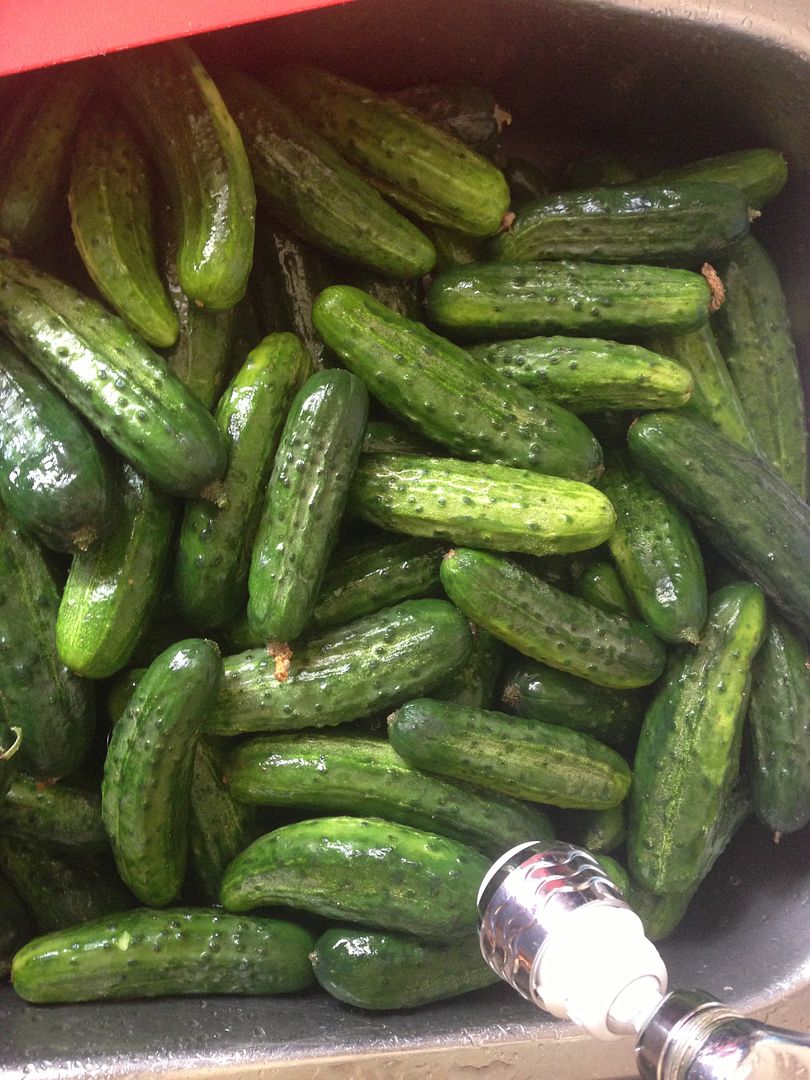
Toss your cukes into the sink and give the, a good rinse, as well as checking for bugs and other detritus…

For the initial brine, thoroughly dissolve 3/4 Cup of salt in 2 Gallons of water. Here, as with all things food, quality matters. If your tap water ain’t good to drink, don’t pickle with it. Use nice, fish water, not distilled. Salt should ideally be canning or pickling salt, which does not contain iodine or anti-caking agents; the iodine can impart a nasty, bitter taste to pickles and the anti-caking agents tend to make things cloudy, so they really are to be avoided. Read your labels carefully at the store, or head on over to Leeners and get the good stuff with no worries. You do not need to heat this brine, (which can also make pickles mushy), just make sure the salt is completely dissolved.

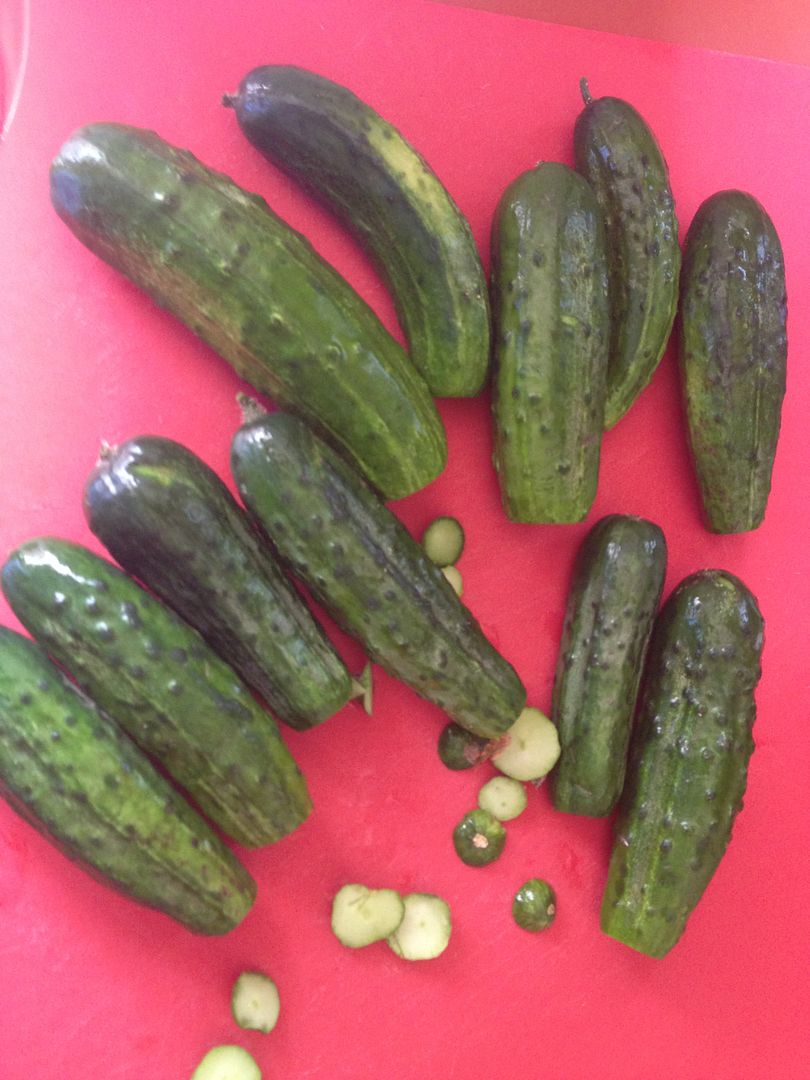
Trim all the blossom ends of your cukes by about 1/8″; the blossoms have an enzyme that can soften cukes, and nobody likes mushy pickles. You can leave the stem ends on so long as they’re not too long, (1/4″ or less).

Toss your cukes onto a bucket or non-reactive container, and makes sure your brine covers them completely. Use a plate and weight of some kind to make sure the floaters stay fully submerged. You should brine for at least 12 hours and up to 24 hrs.

When initial brining is complete, drain your cukes, fill your vessel with fresh, cold water and move on the fun stuff.

Pickling:
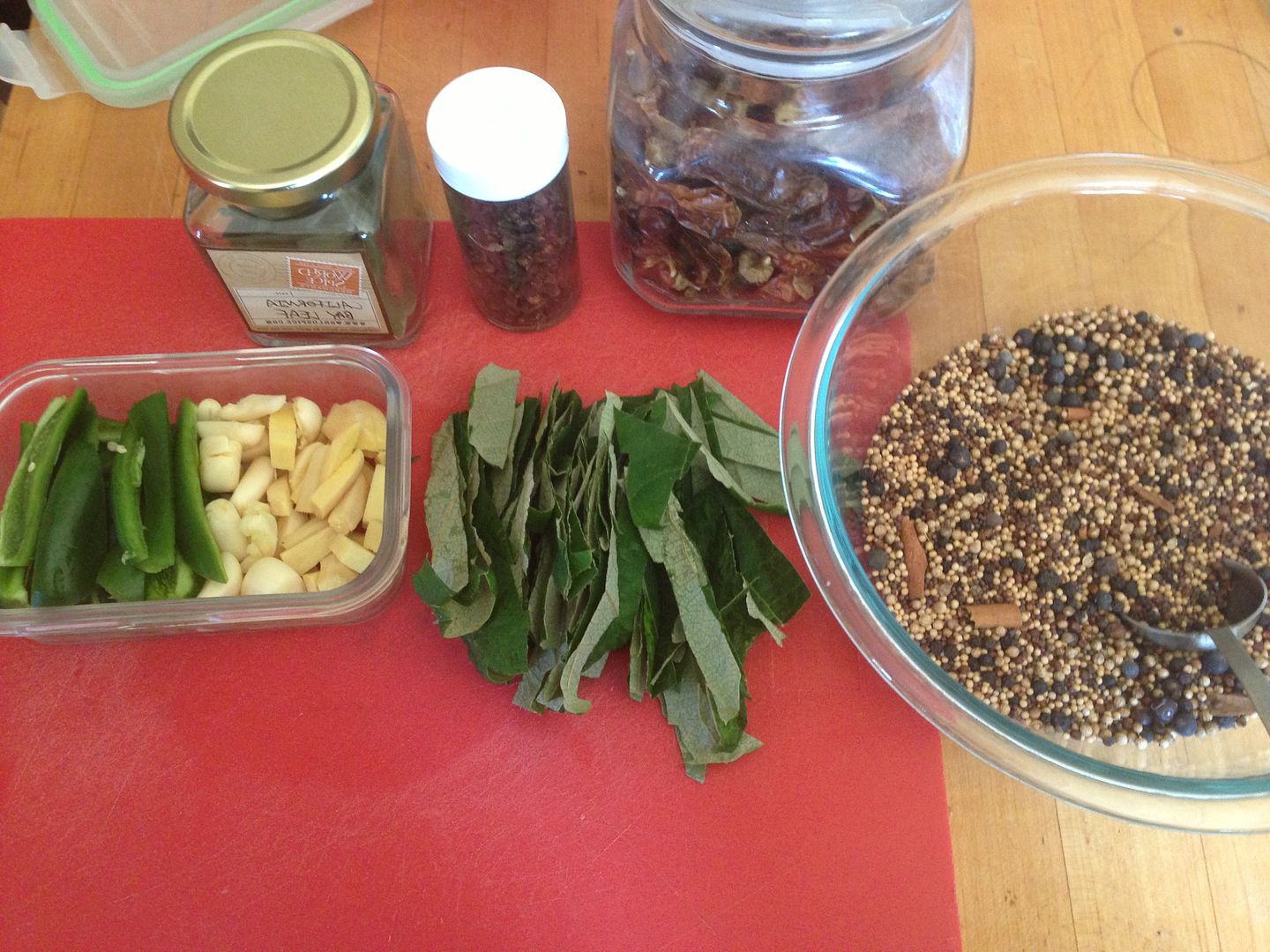
The ratios for pickling brine are somewhat flexible, depending on what you’re pickling. What I’ve got here is pretty uniformly reflected in my cohorts versions as well. Pickling spices are really wide open to interpretation; my fellow picklers choices run the gamut from nothing but salt to quite complex indeed; even dill isn’t a requirement unless you want dill pickles… Our spice blend is is a very nice blend of sweet, spicy and hot. Try this or make your own as you see fit.

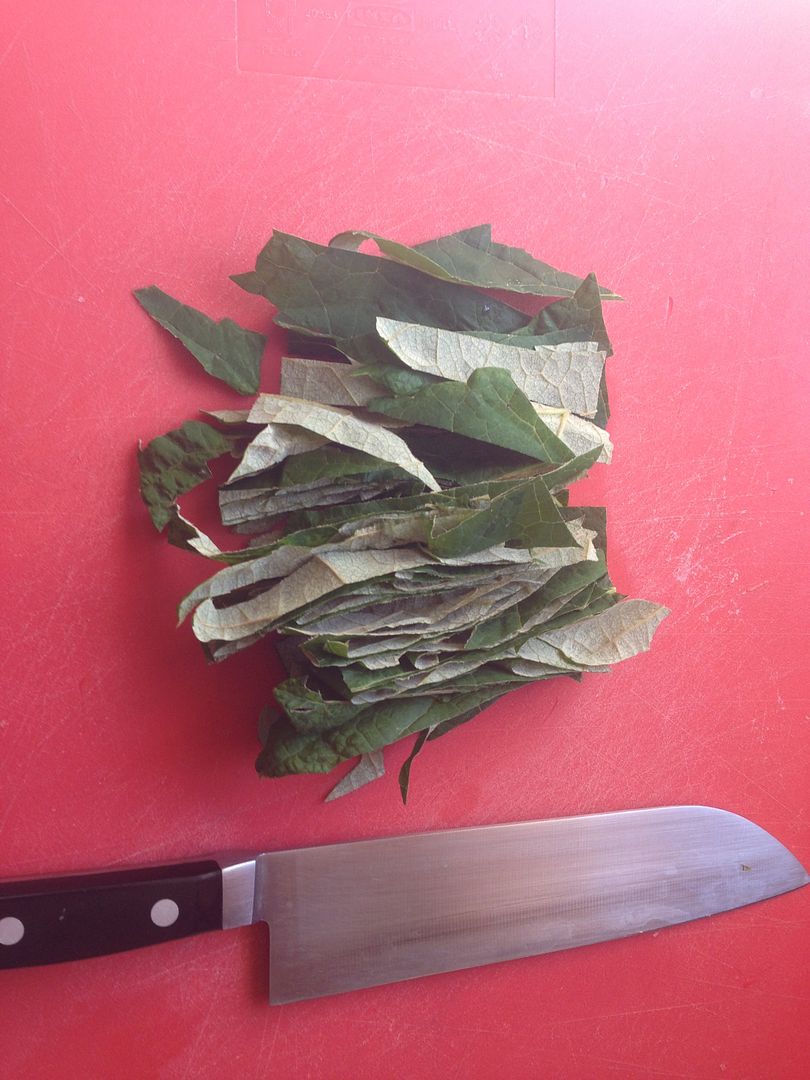
The one secret ingredient I’d advise you to find and use is grape leaves; they contain tannins that can do wonderful work toward keeping your pickles crisp. Rinse leaves well and trim off any browned or curled edges, then set aside.

The same rule applies for water used here. Additionally, I’d strongly advise that you do not buy pickling spices from the grocery. Get your spices as fresh as you can, get them while whenever you can, and blend/grind your own.

Vinegar should be 5%, but it’s up to you what version you use. We like good apple cider vinegar for the light, fruity note it imparts, but you can use white if you like. Avoid heavily flavored versions and create your own signature pickle.

The ratios detailed here are for about 5 – 6 quarts of pickles; scale up or down as you see fit. You’ll end up with a bit too much brine, but better too much than not enough, and you can always fridge pickle something with the extra.

Pickling Brine:
2 Quarts Vinegar
2 Quarts Water
1/2 Cup Pickling Salt
1/4 Cup Sugar, (You can sub Honey, Agave Nectar, etc, but be aware of altered flavor notes)

In a non-reactive stock pot over high heat, combine all ingredients and bring to a rolling boil. Make sure sugar and salt are completely dissolved.

You may add a sachet of 1 Tablespoon of pickling spices to the boil if you like; use fine weave cheesecloth or a tea ball to hold ’em.

Pickling Spices:
1 Tablespoon whole Yellow Mustard seed.
1 Tablespoon whole Brown Mustard seed.
1 teaspoon mixed whole Peppercorns.
1 teaspoon whole Grains of Paradise.
1 teaspoon whole Coriander seed.
1 teaspoon whole Juniper berry.
1 Bay Leaf, crumbled.

Optional, add to each quart as desired:
(We use the garlic, ginger, clove, cinnamon and dill in all ours, and add the Jalapeños and/or dried chiles just for our hot quarts.)
1 clove fresh Garlic, peeled and skinned.
Fresh Ginger root, peeled and chopped.
1 whole Clove berry.
1/2 fresh Jalapeño chile, stemmed, seeded and deveined.
1″ Cinnamon stick.
1-2 small heads fresh Dill

Sanitize your jars in the dishwasher, or in water held above 165 F for at least 5 minutes. Rims and lids get the same hot water treatment; set them aside on a clean towel.

Do a quick chiffonade cut to your rinsed grape leaves, and add about 1/2 a leaf to each quart.

Drain your brined cukes and add equal measures of the pickling spices to each sanitized jar. Carefully pack cukes into your jars. You want them full, but not jammed in there so tight that brine and spices won’t be able to freely do their thing. Leave the cuke level in each jar about 1/4″ below the start of the jar’s neck.

Seal your jars with the sanitized lids and rims, hand tight as you can get ’em.

Canning:
Set your jars on a clean towel right next to your brine on the stove. Carefully ladle brine into each jar, leaving 1/2″ of headroom per jar.

Now it’s water bath processing time. You’ll want canning tongs to safely handle the hot jars; if you don’t have ’em, get ’em!

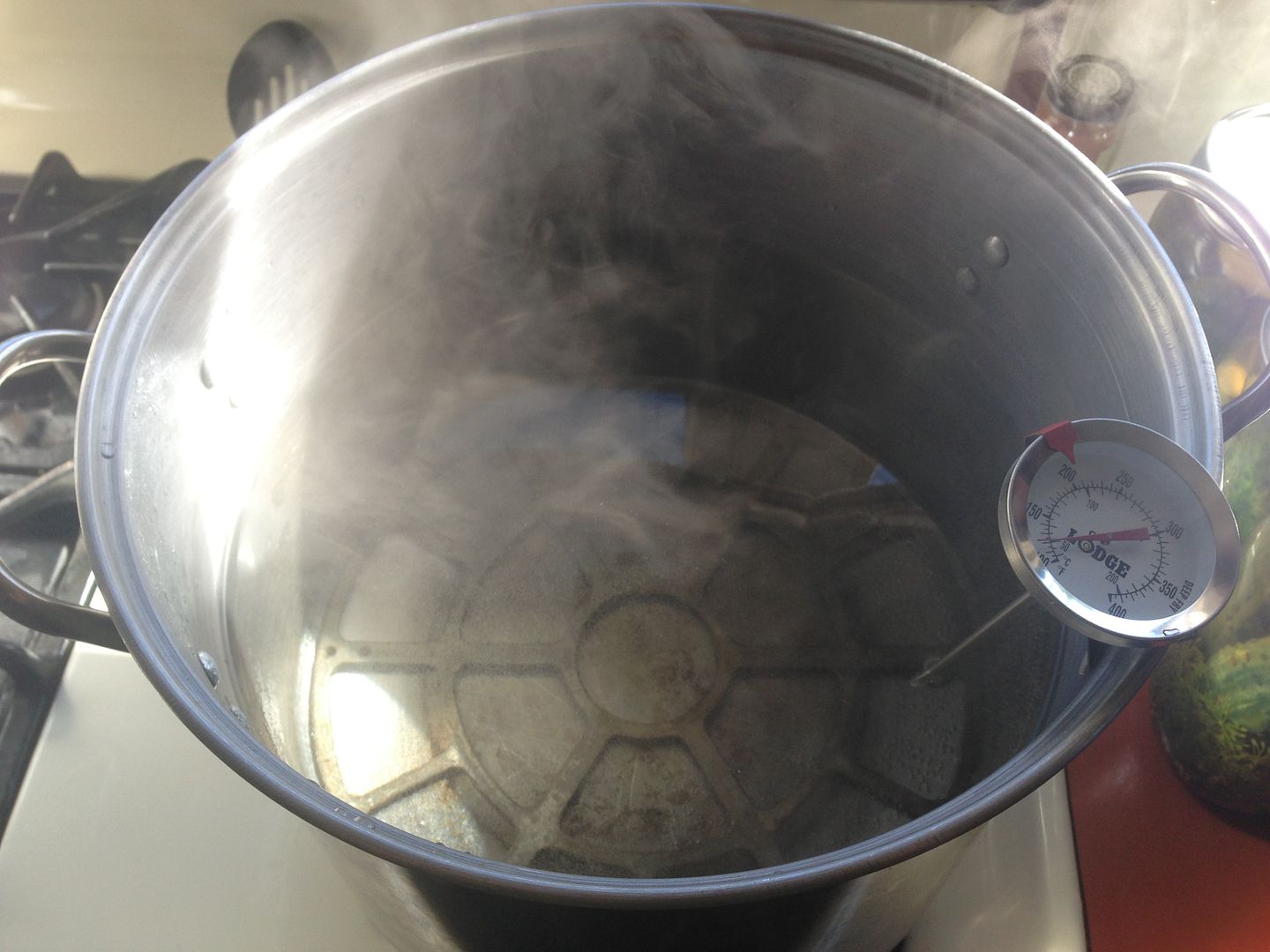
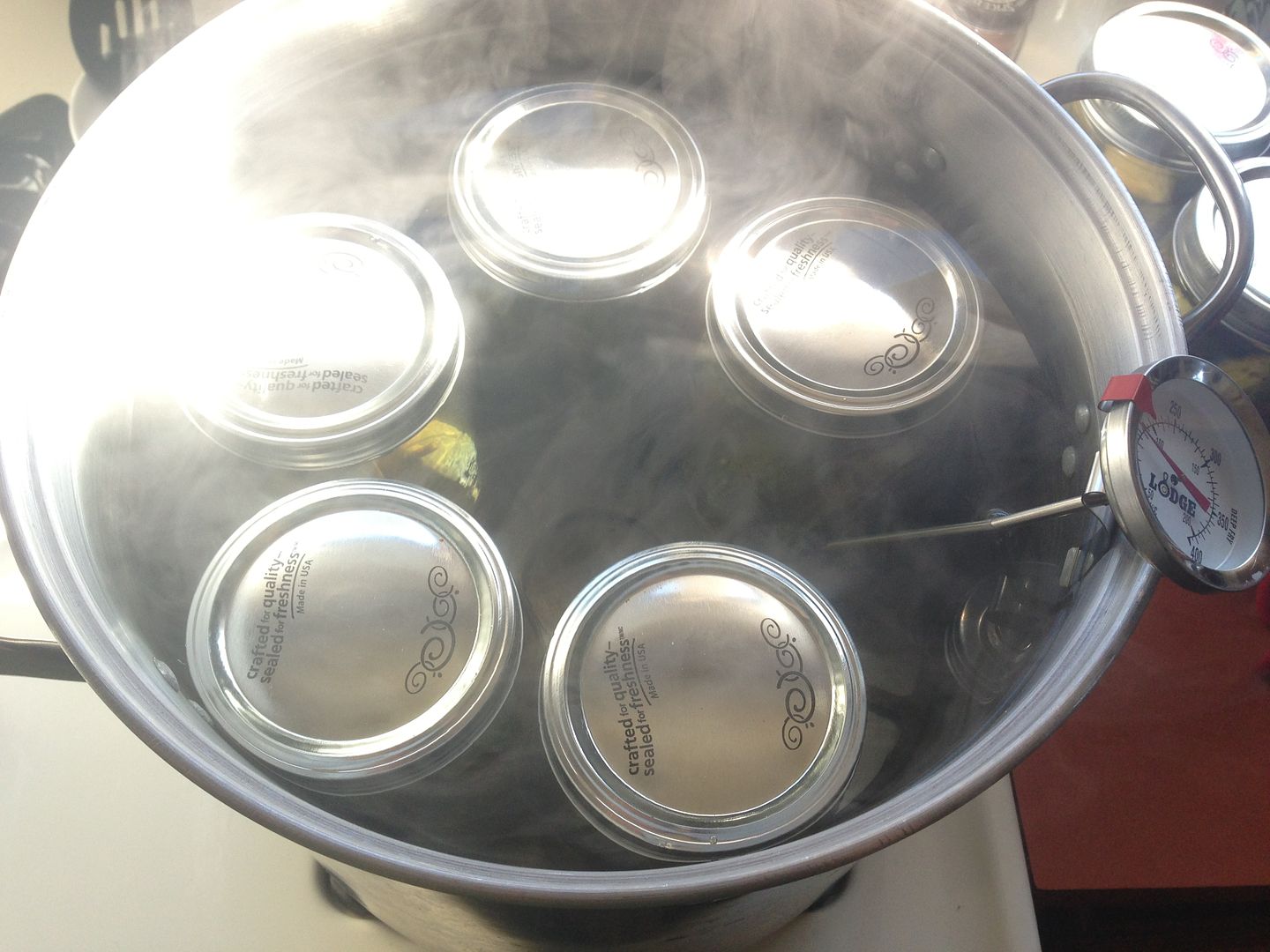
Have your canning pot filled with enough water over high heat such that a cycle of jars being processed will have at least 1″ of water above the lids.

Do not set jars on the base of your pot. Use a canning ring or basket to allow some space between the jar and the pot to minimize the possibility of jars shattering.

The recommended processing time for fresh pack Pickles in a boiling-water canner, per the NCHFP are as follows: water temperature MUST remain above 180 F throughout each processing cycle.
Process Time at 6,000 ft
Pints 10 min 15 20
Quarts 15 min. 20 25

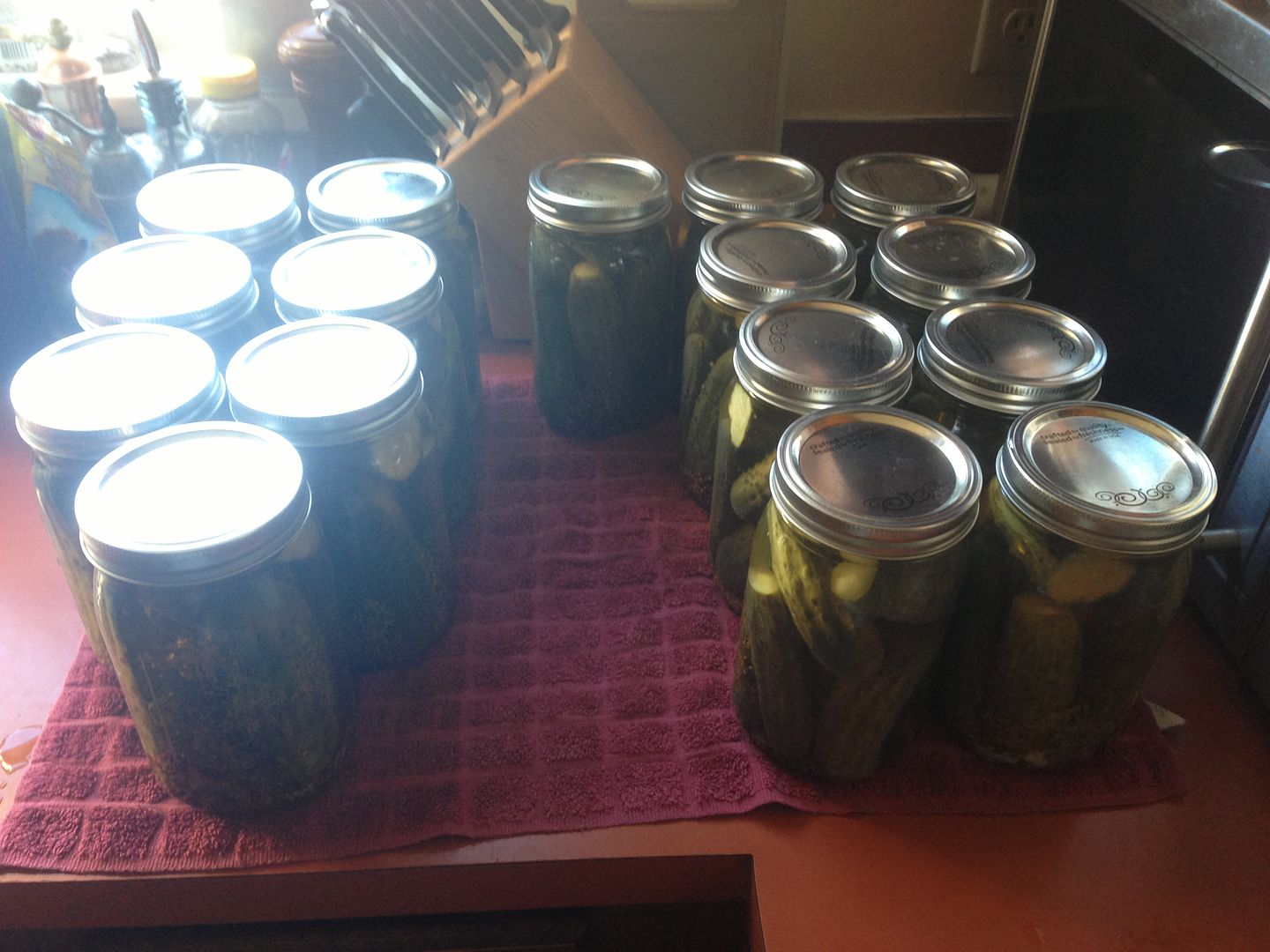
Carefully remove jars back to the clean towel after processing. Listen and watch for the telltale little metallic pop or click that ells you your lids have properly vacuum sealed. You will see a distinct small center ring in each lid when it’s properly sealed. Jars that do not seal properly are not safe for long term non-refrigerated storage!

When your jars have cooled completely, check all lids and rings for tightness, then store your pickles in a relatively cool, dark place and allow the to do their thing for at least 60 days before sampling, (And 90 is better yet). Once they’re opened, they’re fridge only storage, of course.

Enjoy, share and compare!

E & M

Perfect Pickled Beets


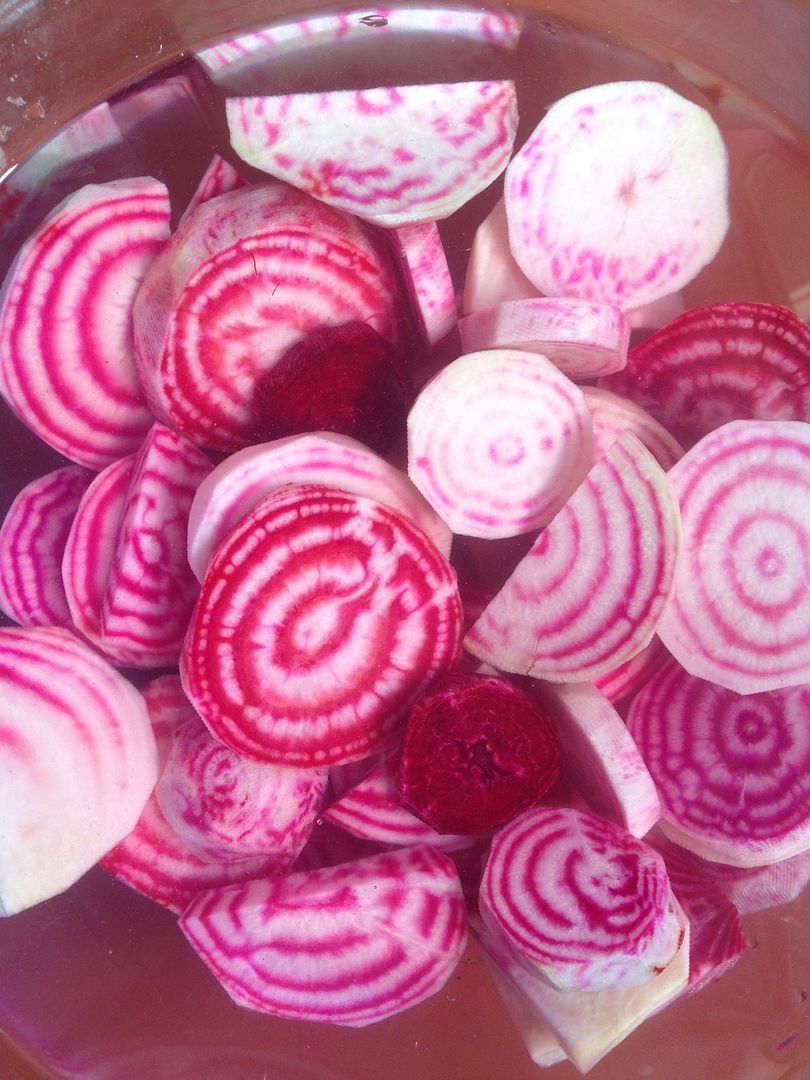
I love beets, but admittedly, not so much by themselves. The earthy notes, yes. The root veggie texture, yes. The sometimes muddy overtones, not so much. Hence pickling makes perfect sense, in that the added zing brings a nice snappy note to the flavor profile. I like the deep spice notes of cinnamon and clove in concert with the lighter, sweeter vanilla and lemon in that mix; together, they’re just really, really good.

As with all produce, chose your beets carefully; select nice, firm ones with no lesions or soft spots.

Pickled Beets, (Yield 5 – 6 pints)
5 Pounds fresh Beets
2 cups Granulated Sugar
4 cups White Vinegar, 5%
3 cups Water
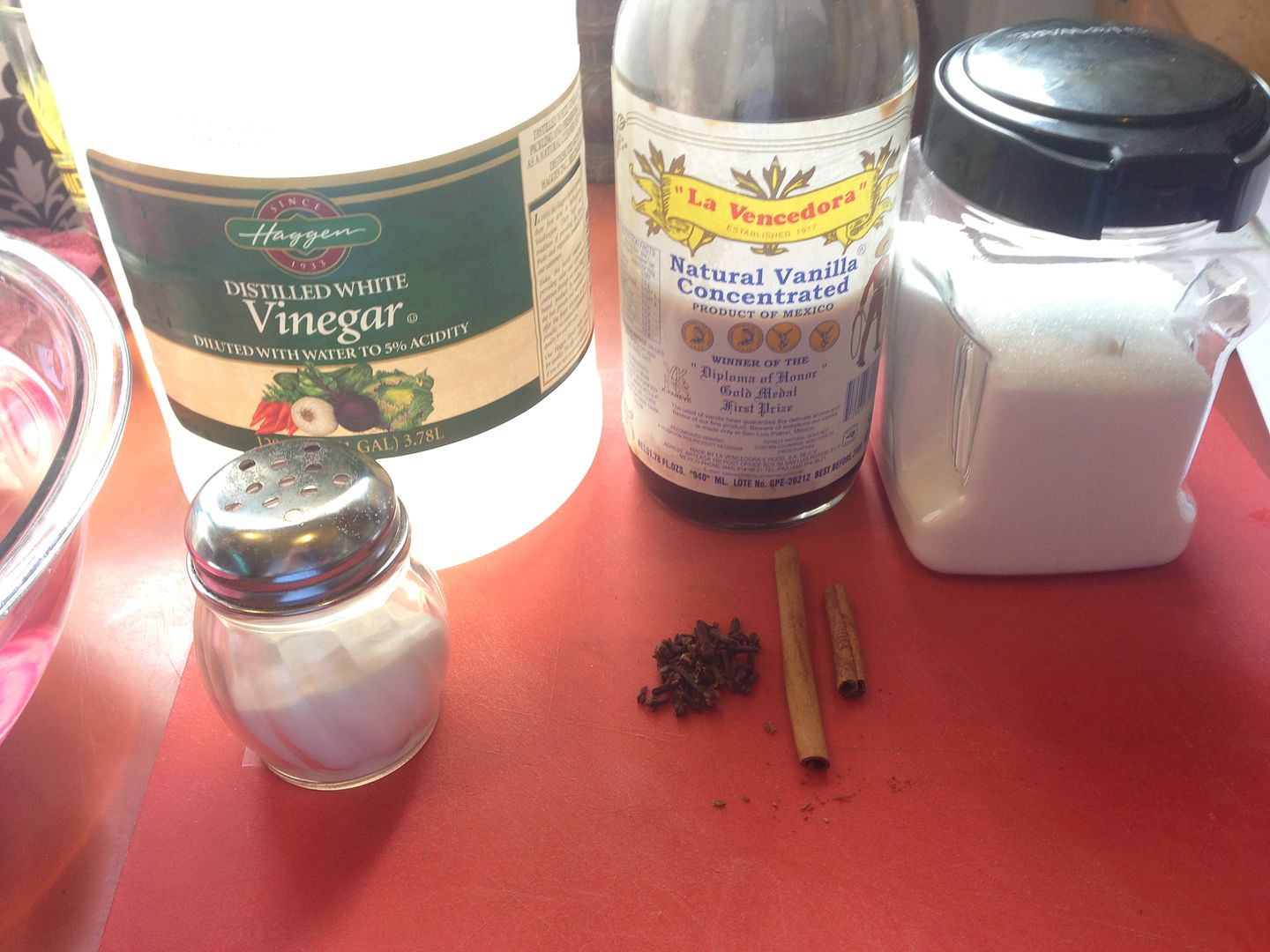
1 3″ stick Cinnamon
Juice of 1 medium Lemon
2 teaspoons whole Cloves
1 teaspoon pure Vanilla extract
1 Tablespoon Sea Salt

Sterilize jars, lids and rims in the dishwasher or a pot of water on a rolling boil, minimum of 10 minutes.

Peel beets and cut into 1/2″ thick slices; make sure your sizes will fit your jars, (Which is why I always get wide mouth).

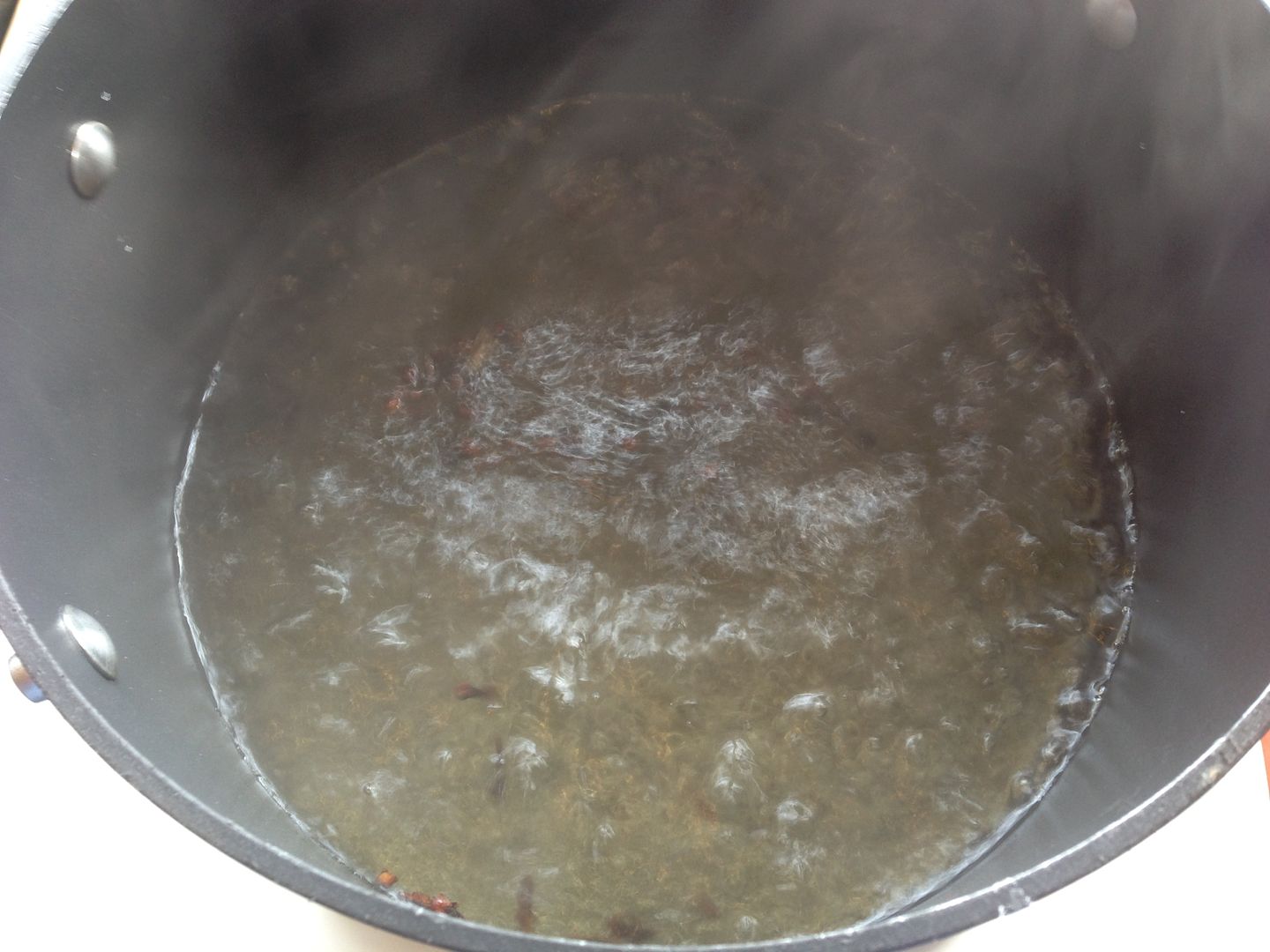
In a stock pot over high heat, combine all ingredients but the beets. Stir steadily until sugar and salt are completely dissolved.

Toss in the beets, reduce heat until you’ve got a nice even simmer, and allow the beets to cook for +/- 15 minutes, until the slices are fork tender.

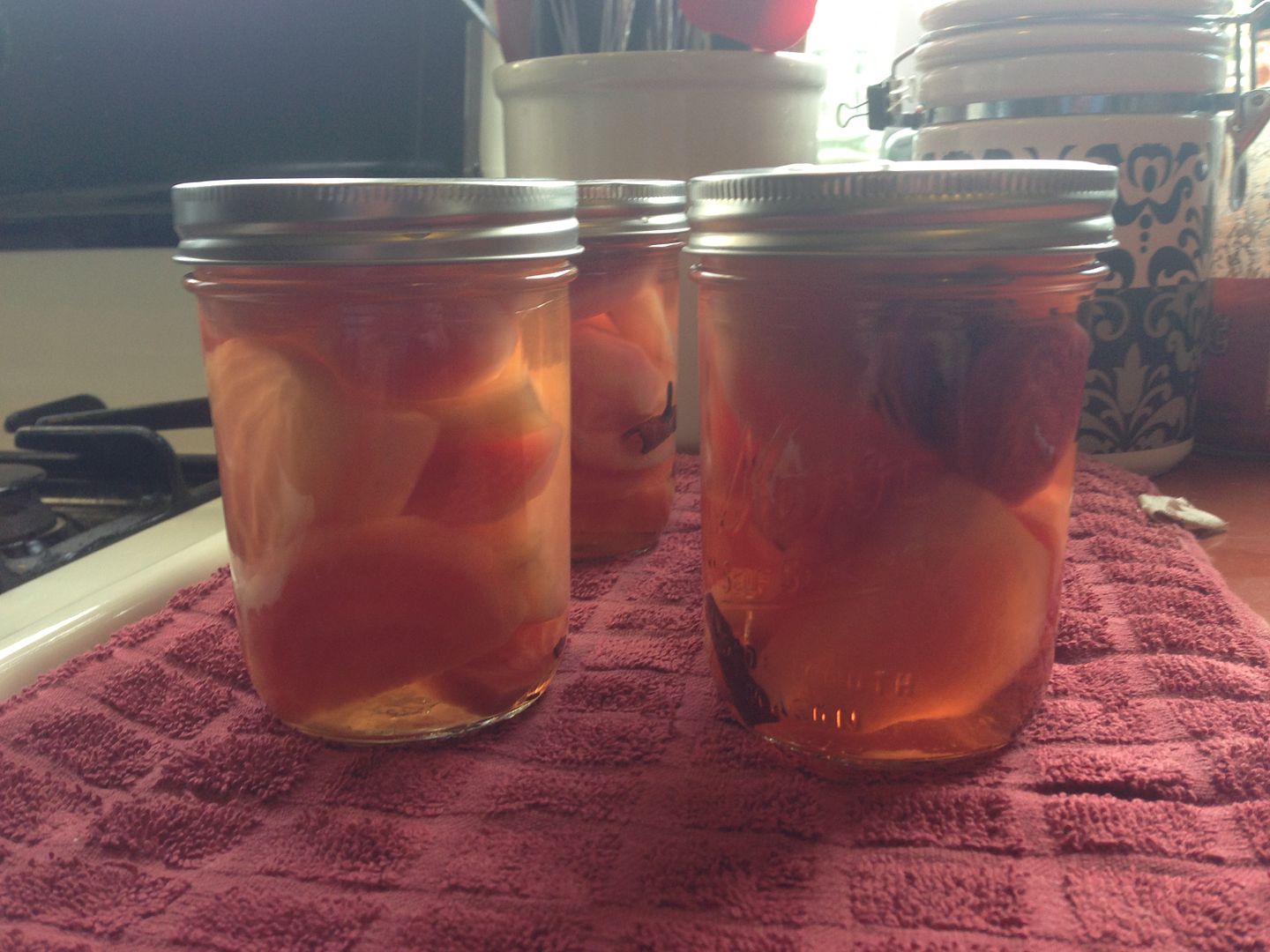
Carefully transfer the sliced beets into your jars, arranging so they’re filled to within about to where the neck of the jar starts.

Fill the jars with the pickling liquid to within 1/4″ of the top. Place lids and hand tighten each jar.

Process in a hot water bath, making sure your water temp remains above 180 F. throughout. Make sure that you’ve got at least a couple of inches of water above tops of your jars and leave an inch or so between each jar.

Process for 30 minutes if you’re below 1000 feet above sea level. If you live at higher altitude than that, refer to the NCHFP page for processing beets.

Store in a cool, dark spots and allow at least 6 to 8 weeks before sampling, so your beets get full advantage of the pickling.

E & M

It’s Hatch Time!


It’s a bit earlier than usual, but the bottom line is that nature does as she sees fit. It’s Hatch Chile time, folks. If you’re not familiar, you need to be. One thing I miss already about not living down in the southwest – When the season hits and you go to the store, you’re greeted by the roar of chile roasters in the parking lot, and that heavenly smell wafting toward you from therein…

The Hatch Chile is the Grandfather of the well known Anaheim Chile. That said, the two really are apples and oranges. While Anaheims are mild, relatively nondescript long, green chiles, Hatches are full of flavor and attitude.

I know New Mexicans will bristle at this next paragraph, buuuuut…. There is no such variety as a Hatch. They are a New Mexico variety and the Hatch itself is so named because that’s where it is grown. In this regard, Hatch, New Mexico,at be looked at as is the Champagne region of France; if you want a Hatch chile, you gotta get the, from Hatch, ’cause anything else is just a wanna-be. There is something to the climate and soil that makes them what they are, and the are simply no substitutes.

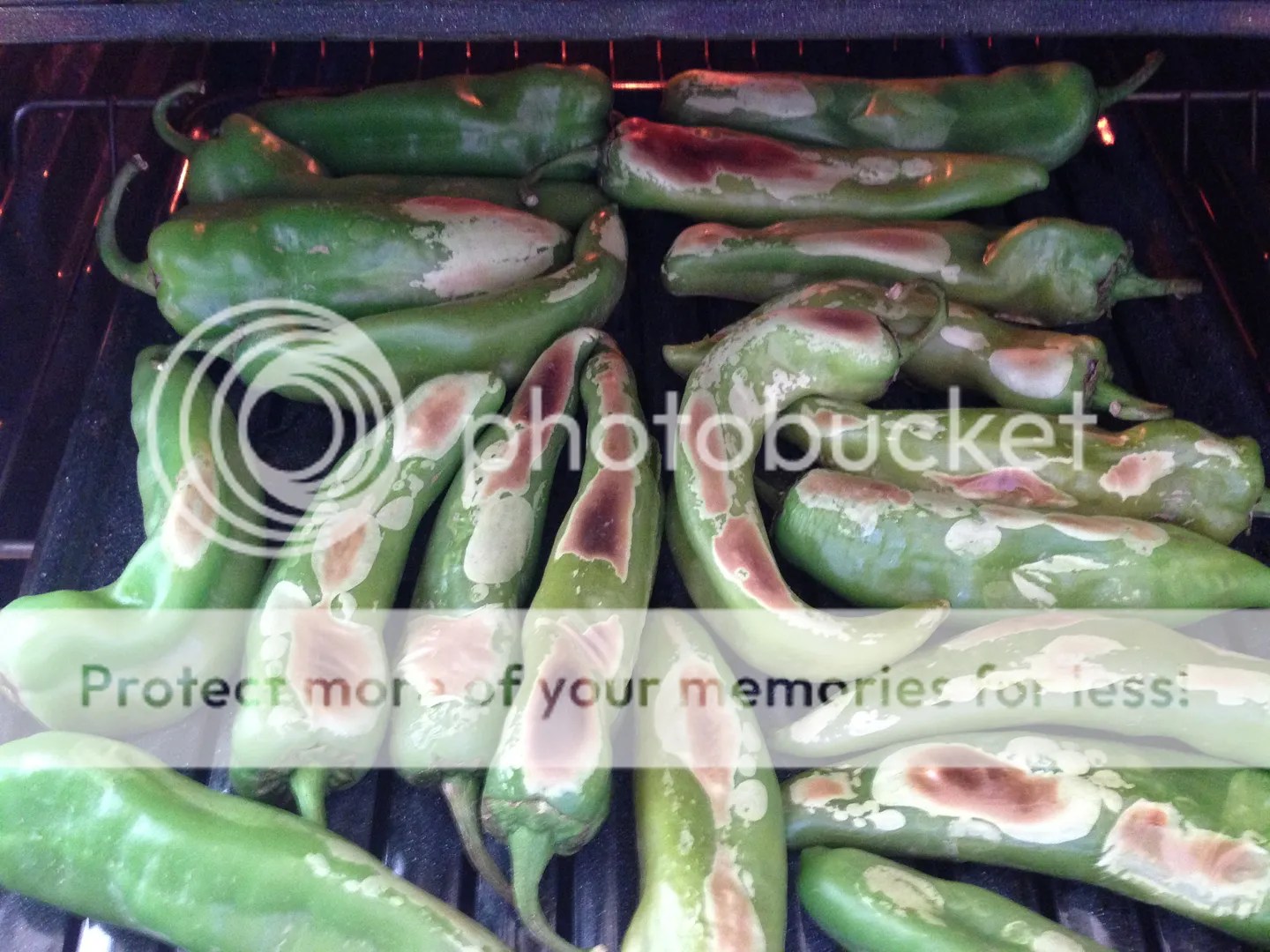
Hatches come in everything from mild to fire breathing. Usually, stores will separate them into at least hot or mild; if they don’t, you pays your money and you takes your chances. If you roast, peel, devein and deseed them you’ll be fine, but it’s always a good idea to sample a bite from the bottom for heat level.

Hatches start out green, and most get sold and cooked with that way. If they mature, they turn fire engine red, as you may have seen on the colorful ristras of chiles that come from the same town.

Hatches are the heartbeat of anything green chile as far as we’re concerned, but especially for true green chili and enchilada sauce.

If I can find them in the grocery in the farthest northern city in the continental U.S., which I did today, you should be able to as well. Look for shiny, firm chiles with no wrinkles, lesions or soft spots when you shop.

You can use them right away, but you’ll want to put some away for the rest of the year just as we do, I’m sure. You can dry, pickle, or can Hatches if you like; some folks make chile sauce and pressure can that. I prefer to freeze these guys, so I roast, vacuum seal and freeze around 20 pounds a year and that usually does the trick. I process them in bags of about 6 to 8 chiles per, which is a good base for sauces and whatnot for a family of four or so. If you don’t have a vacuum sealer, but them in ziplock freezer bags and suck as much air out as you can to help avoid freezer burn; they’ll easily last 6+ months in a good, cold freezer.

 photo null-8.jpg

For more on canning, check out this post.

For roasting and drying, check out this one.

And for some recipe ideas, go here and here as well.

Go get ’em!

E & M