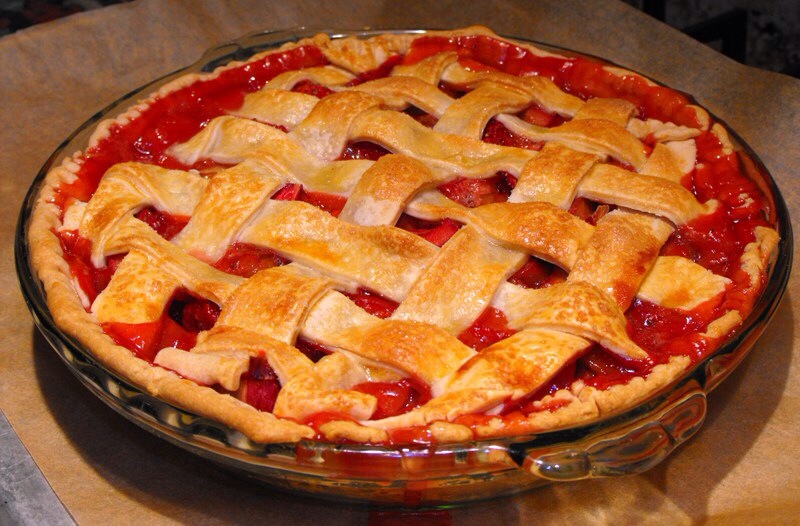
Perfect Rhubarb Pie


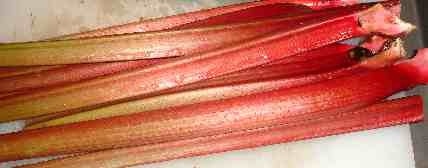
I love fruit pies. My personal fave is cherry, followed closely by rhubarb. I lean toward the rhubarb if I’m in a hurry, because it’s ridiculously easy to make. Pretty soon the season will be upon us when those big, prehistoric leaves and beautiful red-green stalks make their presence known.

If you grow rhubarb, extend the season for enjoying it by preserving some; it’s super easy to freeze.

For pie or preserving, the prep process is the same. Choose firm, healthy red-green stalks, wash them thoroughly, and if they’re a variety that has a tough outer skin, peel that off. Chop about 2″ off the top and bottom of each stock, then cut the stocks into roughly 1″ chunks.
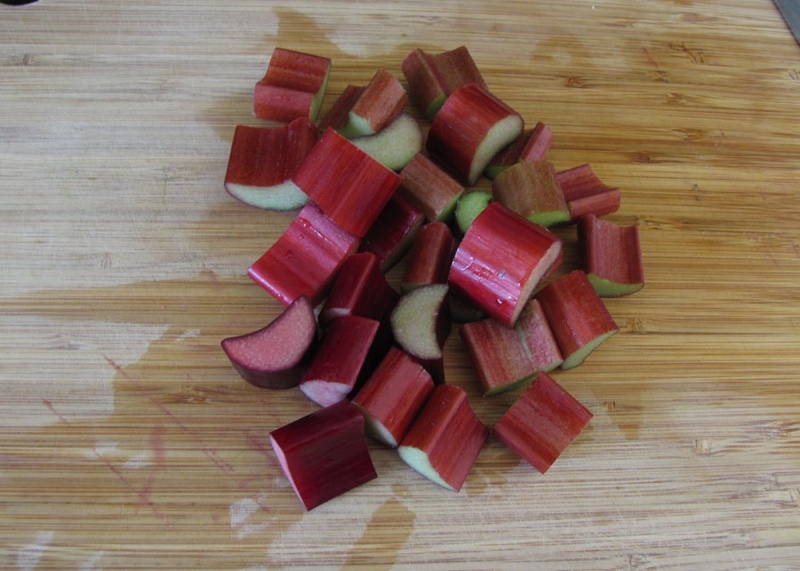
For preserving, if you’re just looking to save some for 3 or 4 months, you can simply dry freeze it as you’ve prepped it, tossed into ziplock bags with as much air sucked out as you can, or vacuum sealed. For longer term storage, prepare a light syrup by bringing 6 cups of water to a boil and dissolving two cups of white sugar in it. Let the syrup cool to room temp, then place the prepped rhubarb in canning jars or airtight plastic containers, and completely submerge them in the syrup. Those will stay good for up to 9 months in the freezer.

For the pie, The Kitchenaid crust recipe is my go-to, (If you don’t have a mixer, use your fingers or two butter knives to cut and mix ingredients and, as with the mixer version, stop playing with the crust as soon as it holds together).

Crust
1¼ Cups all purpose Flour
1 Cup Whole Wheat Pastry Flour
¾ Cup Shortening, chilled
2 teaspoons Butter, chilled
4–6 tablespoons Ice Water
Pinch of Sea Salt

Sift flour and salt, and pour into mixing bowl. Cut shortening and butter into roughly ½” cubes and add to flour. Using the flat beater, mix on low speed for about 30 seconds until shortening chunks are roughly pea sized. Slowly add water a tablespoon at a time until and only until the dough forms a ball.

Stop mixing, divide dough into two equal balls, wrap in plastic and refrigerate for at least 15 minutes.

Roll each of the dough balls out to roughly 1/8” thickness. Place one into a 9″ pie pan and roll, pinch, or fork the edge as you prefer.

For wet filling pies like this one, you need to blind bake the crust prior to filling. Place a layer of pie weights or beans over the crust and slip it into a preheated 425º F oven for 6 to 8 minutes until the edge browns lightly. Remove from the oven and allow the crust to cool for a few minutes before filling and baking.

The other crust is your top, so you can do what floats your boat with that; just use it plain if you’re in to hurry, or get fancy and weave or stamp a pattern out if you like.

Like I said, the pie is so easy, it’s scary. There are plenty of variations on the theme, but I like this for it’s simple ingredients and honest rhubarb flavor. You’ll need,

4 Cups chopped Rhubarb
1 – 1 1/2 Cups granulated Sugar
6 Tablespoons all-purpose Flour
2 Tablespoons Butter
Pinch of Sea Salt

Preheat oven to 425° F degrees, position a rack on the lower quarter of the stove, and place a cookie sheet in the middle of that.

Sift to combine the sugar, flour, and salt. Sprinkle 1/4 of that blend evenly over the bottom of the pie crust.

Evenly place the rhubarb over the dusted lower crust; you’ll have a pretty good pile of it, but no worries, it’ll cook down.

Now sprinkle the rhubarb with the remaining sugar and flour.

Cut the well chilled butter into roughly 1/4″ cubes and toss those evenly over the rhubarb as well.

Cover the pie with your top crust.

Slide the pie onto the cookie sheet in your preheated oven; that sheet is there to keep hot rhubarb from getting all over the bottom of your oven.

Bake for 15 minutes at 425° F, then rotate the pie 180 degrees and drop the oven temperature to 350° F.

Bake for another 40 to 45 minutes until the top crust is browned, the rhubarb has reduced and is bubbling nicely.

Pull the pie out and slip it onto a rack to cool.
Go wild.

P.S. If you prefer a nice strawberry rhubarb pie, don’t fret, just head over here for another great recipe.

Indigo Grafted Tomatoes


Ah, spring, the time when all garden fancier’s thoughts turn to planting. Here in the Great Northwet, the snows are receding, rains are nourishing the soil, and it’s time. Our planting beds, resting under straw all winter, are begging to be turned and filled.

If you’re a lover of great tomatoes, then fact is, you simply must be a grower of great tomatoes. Whether you occupy acres or square feet, there’s always room for your favorites and if, as for many of us space is an issue, tomatoes that bear well in a compact space are best yet. Which brings us back to the love of those little globes of wonder. Enter the Indigo grafted tomato.

First and foremost, one wonders, why grafted? The simple answer is, because it works. Grafting is neither new nor done as a novelty; it’s sound practice with a long history of success. The technique, as applied to these Indigo tomatoes, involves mating the root stock of one variety with the leafy stem of another.

My hands down favorite college horticulture course focused on grafting. That was back in the late ’70s and I hate to admit it, but even though our back yard apple tree is a grafted wonder offering four distinct varieties, I’d not thought much of the technique in terms of tomato plants until these Indigos came along. My Professor at the University of Washington, fondly referred to as Master Nishitani, explained that the Japanese had been successfully experimenting with grafting herbaceous edibles since the early 1900s. Still, grafted veggies been slow to catch on in this country, due predominantly to the supposed greater advantages offered by green revolution dependence on chemistry and standard hybridization techniques. Thankfully, a general return to sound environmental practices has lead naturally back to grafting as well

What grafting provides, in a sustainable and eco-sensitive manner, is the marriage of hearty rootstock to a bearing variety chosen for flavor and high yield. The rootstock variety offers a larger, more vigorous root system bred with greater resistance to fungi, bacteria and parasites; truly a godsend, given many tomato varieties susceptibility to such ills. Customized rootstock furthermore yields plants that can and will thrive in a myriad of environmental conditions, a gift any gardener can appreciate.

Indeed, and so it is with these wonderful little Indigos. Monica and I were blessed with several plants from our dear friends at Log House Plants. We picked them up and admired healthy, happy starts, but apparently nothing out of the ordinary, yet… It was after planting and those tenuous weeks of waiting for things to happen that we first noticed a difference; not just blossoms, but lots and lots of blossoms! As fruit began to form, these compact plants, topping out at about 2 1/2′ here in our little USDA Zone 7b garden, were absolutely loaded. I place purposeful emphasis on the word compact; regardless of the space you dedicate to tomatoes in your garden, these Indigos will provide enviable bounty and variety.

And such fruit! The Indigo varieties are named for that hue, naturally occurring in tomatoes, fully expressed in these little guys. Right away the colors just floored us; perfect little globes of deep purple-black, yellow-gold and seriously rich reds. Any honest lover of tomatoes will admit that color and shape have darn near as much to do with desirability as taste. These things were like candy as they matured, the colors becoming deeper and glossier as the days progressed. Photographing them wasn’t a chore, it was a treat.

Our favorite thus far is the Indigo Rose, a stunning blend that starts out purple-almost-black with brilliant green highlights, and matures into a deep purple-red with stunning crimson flesh. This first true purple tomato also contains anthocyanins, a potent antioxidant found in blueberries, raspberries and cranberries.

The real treat, of course, is the taste. These Indigo varieties are simply amazing. Plucked off the vine and popped into your mouth on a cool, quiet morning, this is the kind of rich, complex taste that forms lasting memories. cooking, preserving and eating these beauties is a joy, and therein lies the only other impetus you should require for growing your own Indigos. Variety is indeed the spice of life; these hardy, high-yield varieties offer the perfect home grown, home cooked solution.

Do yourselves a favor, and look these little guys up by name. Chances are a nursery near you will have them, and if not, you can find an online source to hook you up. If you have any problem finding them let us know and we’ll get you squared away.

So, type in the search terms ‘tomato’ and ‘green tomato’ up there on the little search box to the right; you’ll find lovely recipes featuring these wonderful Indigos, including a tomato and onion tart, chutney, relish, and some ideas on preserving your bounty as well.

Happy planting, harvesting, and cooking!

Carolina BBQ Sauce


Got a reader following our pulled pork recipe from a few years back enquiring about Carolina style BBQ sauce; who could say no to that?

Carolina style barbecue sauce is traditionally a thin, vinegar-based preparation that allows the ingredients to easily penetrate the meat. It has a tang and a touch of sweet heat that really complements good BBQ.  This version works well as a baste while cooking and as a table sauce afterwards; it was designed for pork, but it’s great on chicken and beef too.

1 1/2 Cups Apple Cider Vinegar
1/2 Cup Tomato Sauce
1/2 Cup water
1-2 Tablespoon(s) dark brown Sugar
1 teaspoon Smoked Paprika
1 teaspoon Sea Salt
1 teaspoon ground black Pepper
1/2-1 teaspoon powdered Cayenne Pepper, (flake is OK, just use 1/2 teaspoon

In a saucepan over medium heat, combine all ingredients.

Stir constantly as the mixture comes up to heat. When it shows signs of a low boil, reduce heat to a bare simmer and cook for 2 to 3 minutes, until all ingredients are heated through, fully dissolved and incorporated.

Allow to cool completely. If you used cayenne flake, strain the sauce through a sieve so the results are smooth and even in consistency.

Refrigerate for at least 8 hours to allow the flavors to marry. It’ll be even better after 24 to 48 hours, and will keep for a couple weeks refrigerated.

Place in a squeeze bottle and shake well before using.

VARIATION:
Replace the tomato sauce with yellow mustard, and this is still a damn good sauce!

UPDATE: Mark Fogleman was nice enough to send these comments. Here’s some great regional variations to try!

The Carolinas have 4 distinct BBQ sauce zones (don’t laugh…this is serious stuff ;’). 

Your recipe is similar to the thicker/sweeter/darker sauce we use in the western/mountain zone. 

Substitute 1/2 cup of catsup and 1tbs regular sugar for the tomato sauce and brown sugar if you want it to be authentic “Lexington” style sauce. 

Authentic “Eastern NC” sauce leaves out the sugar and the catsup/tomato sauce and adds 1tbs of salt. 

You nailed the Columbia, SC (Maurice Bessinger) style mustard sauce except his recipe uses regular sugar.

It’s also common to use the the Piedmont style sauce as the base of the accompanying cole slaw.

There are other regional differences… whole hog vs shoulder, picked vs chopped vs sliced (note “Pulled” is not included), charcoal vs gas vs Hickory vs Oak, yada, yada. It’s all good! 

BIG THANKS, Mark!

What’s your Cat Age?


A little fun for you cat owners and fanciers. 

Check out this nifty cat age page 

Determining cat age is not simply multiplying by 7; their age curve is somewhat more complex than that. This one has the added fun of the little calculator in the lower left quadrant; you can set it up to. Figure your age in cat years too. M turns 8.9 this May!

😉

Beautiful Baguettes


In France, every day includes a trip to a Boulangerie, the local bakery, for a baguette or two. If you love bread like I do, then there are few versions more likely to float your boat than this fabulous French staple. Now for a disclaimer; I took some baldy poetic license calling this post Baguettes, ’cause this ain’t Julia’s Pain Français. This is a quick and dirty, want some fresh bread now, rough loaf, but it’ll beat the shit outta anything from the store. That said, I’ve revised the process a bit to make this version a bit more flavorful and true to its name.

If you love bread like I do, then there are few version more likely to float your boat than this fabulous French staple.

This recipe came with my Kitchen Aid mixer; I know a bunch of y’all have one too, but it seems many have lost the little recipe book, which is really a wealth of good stuff. This one will make two beautiful baguettes.

7 cups all-purpose flour
2 packages active dry Yeast
2 1/2 Cups warm Water (110° F)
1 Tablespoon Sea Salt
1 Tablespoon Butter
1 Tablespoons Cornmeal
1 Egg White
1 Tablespoon ice water

As noted, this recipe is meant for a KitchenAid mixer, but you can certainly do it by hand.

Dissolve the yeast in the warm water in a mixing bowl that has also been warmed to about 100° F. Allow the yeast to bloom for about 5 minutes.

Add the flour, butter and salt to the water and yeast.

Using the dough hook for your KitchenAid, attach The bowl and slide the speed setting to 2; mix for 1 to 2 minutes, until everything is well incorporated.

Continue to knead on Speed 2 for 2-3 minutes longer.

Dough will begin to pull away from the sides of the bowl, but will still feel somewhat sticky; it’s important to make sure you stop kneading when the dough still is still sticky, 

Turn dough into a large lightly buttered bowl, and coat the dough evenly.

Cover with a clean, dry towel and allow to rise in a quiet, relatively cool spot, free from drafts, until the dough has doubled in bulk. You want a cooler, slower rise than you might be accustomed to. This helps the baguette develop is characteristic flavor and texture.

Punch the dough down gently and divide it in half.

Roll each half into a rectangle about 12″ x 15″.

Starting on a long side, roll the dough tightly and evenly into a baguette shape, about 15″ long and 2″ wide.

Cover with a clean, dry towel and allow to rise in a quiet, warm spot, free from drafts, for about 1 hour, or until the dough has doubled in bulk.

Preheat oven to 425° F. Place one rack square in the middle, with another below; leave enough room for a cast iron skillet full of boiling water. Ideally, you’ll have a heavy pizza stone or baking pan of the same material; this really makes a difference, just as the stone does for pizza. Put the stone or pan in the oven to preheat as well. 

Place a large cast iron skillet on the lower rack, filled with boiling water. If you want to go all out, find a nice big rock, clean it up,  and heat it separately through the preheat cycle, then carefully lower it into the skillet of water when you begin to bake. Our ovens at the bakery are stoned line, and have precise temperature and steam controls. We don’t at home, and just like Julia discovered 40 some years ago, this is the best way to approximate a real baking oven at home.

With a very sharp knife, make 4 diagonal cuts on top of each loaf, about 1″ long for each.

Carefully slide your baguettes onto the hot stone or sheet and bake for 20 minutes.

Combine egg white and cold water and whisk lightly. Pull the rack with your loaves on it out carefully, and brush each loaf lightly with the egg wash.

Return to the oven and bake 5 minutes longer.

Immediately remove baguettes from oven and transfer to a wire rack to cool.

Try not to eat it all before dinner.

By the way, those beauties at the top of the post were made by our Producer, Steve, right after we recorded; bread is powerful stuff!